Why Phoenix Office Conversions Are Rising Now
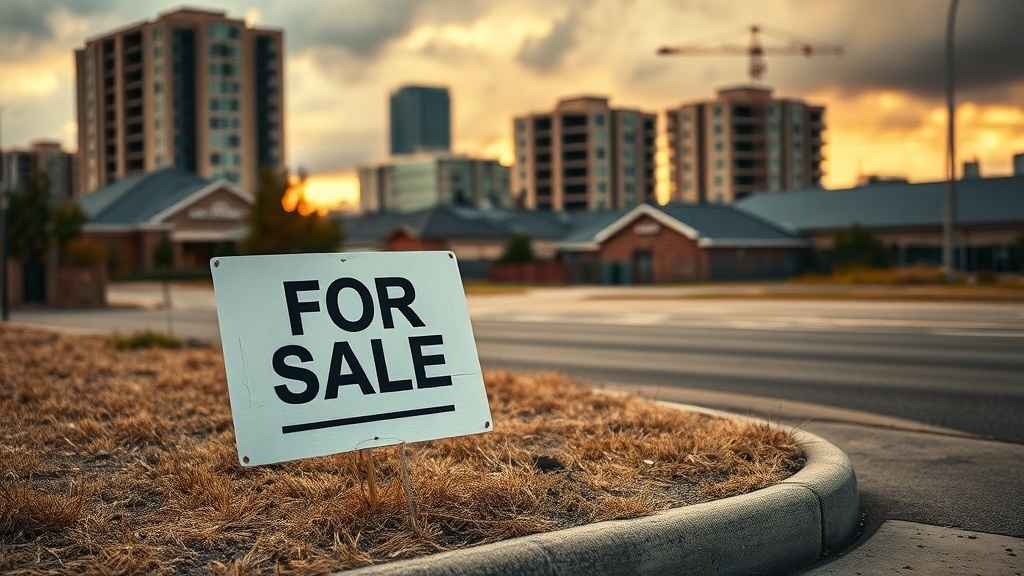
Amid elevated vacancy and worsening housing strain, Phoenix is seeing office-to-apartment conversions accelerate. Distressed commercial space is colliding with urgent residential demand.
Downtown vacancy has reached 23 percent. At the same time, rents climbed 33 percent in seven years to $1,385 by August 2025. This shift is unfolding as Phoenix faces a broader permit decline, with residential permits down sharply from their 2022 peak.
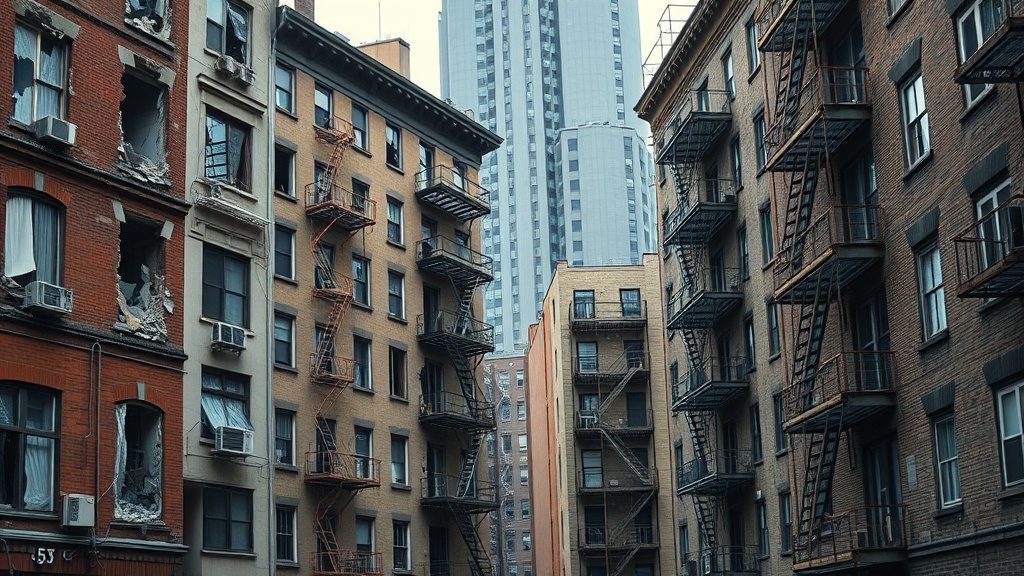
That imbalance is sharpening interest in adaptive reuse. It is especially strong in downtown high-rises built from the 1960s through 1990s. Phoenix ranks 20th nationally for planned conversions, with 2,463 adaptive-reuse apartment units in development across the metro.
Conversion Economics Intensify Pressure
Conversion economics are improving as owners face looming financial pressure. One-third of U.S. office loans mature by 2027, raising stress on underperforming buildings.
Phoenix also offers supportive conditions through relaxed density rules, a state adaptive reuse law, and the city program. Co-living models further strengthen feasibility because they cost far less than new studios.
They can also reach market faster with lower build-out expenses.
Which Phoenix Office Conversions Lead the Pipeline
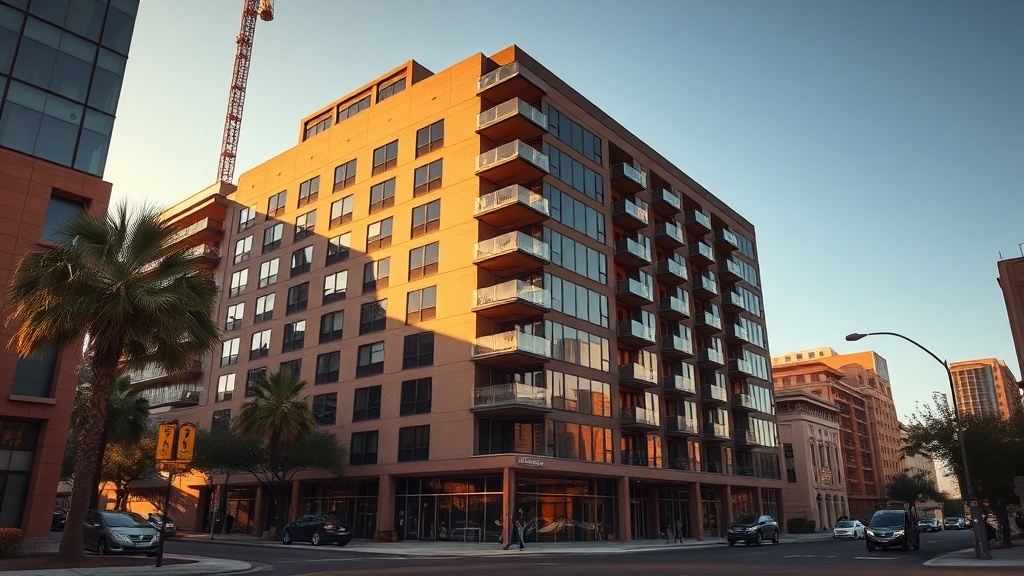
Dominating the metro pipeline, Scottsdale’s Kierland Sky stands as the region’s largest office-to-apartment conversion. It will transform former office space into 420 units and signals strong confidence in suburban adaptive reuse.
Other leading projects show the breadth of activity across both urban and suburban markets. They also reinforce market momentum around repositioning distressed or underused properties. Broader Sun Belt real estate momentum is also evident in Texas, where a 1,200-acre industrial park planned near Austin reflects sustained investor appetite for large-scale redevelopment and infrastructure-led growth.
- Kierland Sky, Scottsdale: 420 apartments, the largest pipeline project and a major suburban conversion.
- Canyon Corporate Center, Phoenix: 376 planned rental units in downtown Phoenix, with some reports placing the total at 400.
- One Camelback, Uptown Phoenix: Active conversion despite foreclosure, with leasing expected in fourth-quarter 2026.
A separate hybrid effort is also expanding the region’s adaptive-reuse playbook. The $120 million Sheraton Crescent redevelopment near Sky Harbor would add 258 apartments and further strengthen investor confidence.
How Phoenix Ranks in Office-to-Apartment Conversions
Phoenix’s office-to-apartment pipeline places the metro No. 11 nationally in 2025, with 1,634 units planned as adaptive reuse accelerates across the Valley.
That total sits well below New York’s 8,310 units, but it keeps Phoenix ahead of smaller conversion hotspots such as Kansas City and Cleveland.
In market comparisons, Phoenix also trails larger pipelines in Washington, Los Angeles, Chicago, and Dallas.
Growth Signals Intensify
The metro’s standing reflects rapid movement rather than sheer scale alone.
Office-to-apartment projects account for 71% of all adaptive reuse activity in the Valley, one of the highest shares nationally.
Phoenix also ranks ninth for repurposed square footage, with 3 million square feet shifting toward new uses.
A new Arizona law that allows many conversions without rezoning may strengthen future rankings further.
Why Co-Living Is Part of Phoenix Office Conversions
In downtown Phoenix, co-living has emerged as a practical conversion model because it cuts development costs while fitting the physical limits of older office buildings. With downtown office vacancy at 23%, the approach addresses empty space and housing demand at once.
Co-living units cost about $169,000 each to develop, versus $300,000 for a studio, making conversions roughly 30% cheaper overall.
Why the Model Fits
Older office floors can house about 50 residents, far above the 15 to 16 regular apartments usually possible.
Micro-apartments use private rooms and shared amenities, including kitchens and bathrooms, to lower rents to about $850 with utilities.
The format supports a broader resident mix, including students, service workers, and recent graduates. It also brings new foot traffic downtown.
How Zoning Changes Make Phoenix Conversions Easier
Amid persistently high downtown vacancy, recent zoning changes have removed several of the biggest legal barriers to office-to-apartment conversions in Phoenix.
A June 2025 City Council update eliminated density limits for downtown multifamily conversions in commercial buildings. Residential use is now allowed in the downtown business core without rezoning, a major zoning streamlining step.
State laws reinforce that shift. HB 2297 lets many outdated commercial properties convert without the usual rezoning process, reducing delay and cost.
HB 2110 also broadens adaptive reuse review to parcels, not just buildings.
Parking Rules Reduce Friction
Another important change is parking flexibility. Projects near transit can now remove on-site parking requirements, easing site design constraints and lowering redevelopment costs.
Challenges remain. Some properties still face private covenants, variances, or stricter residential fire and building code compliance.
Assessment
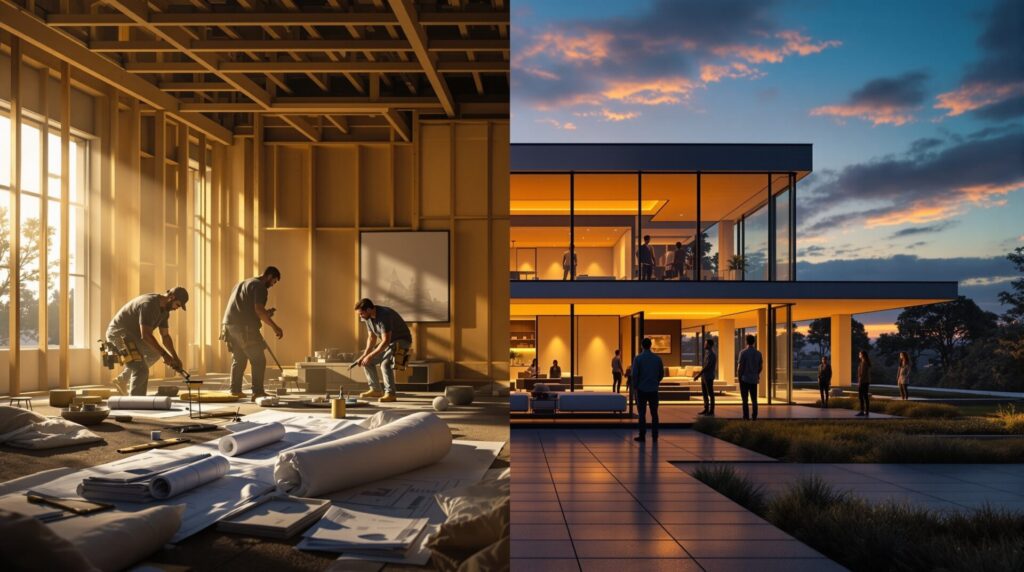
Phoenix’s office-to-apartment shift reflects mounting pressure in the office sector and a widening need for adaptive housing supply.
Conversions are advancing where vacancy, building design, and financing conditions align, placing the city among notable U.S. markets testing this strategy.
Co-living models and zoning changes are expanding the range of feasible projects.
The trend does not resolve broader housing shortages, but it signals a sharper real estate realignment with enduring implications for downtown assets and redevelopment policy.