

Key Takeaways
- Lender withdrawal at the final hour halts a major $88 million tower project, shaking up Market Square’s future prospects.
- Investor confidence in Providence’s development climate is severely impacted, raising concerns about the viability of large-scale projects.
- The abrupt cancellation triggers uncertainty in the local real estate community, casting doubts on upcoming financing and redevelopment efforts.
Fallout for Downtown Development
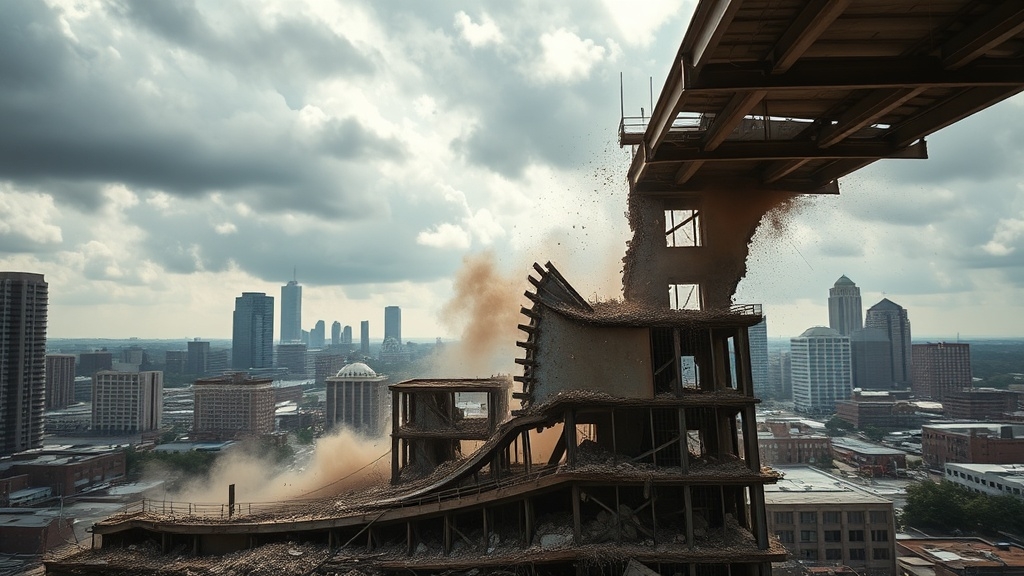
A sudden lender withdrawal has shattered hopes for Providence’s skyline near WaterFire, forcing developers to abandon the $88 million tower project.
Months of negotiations and city plans have crumbled overnight.
This leaves Market Square with uncertainty and the local real estate community shaken.
Financial Instability Derails Major Providence Development
A wave of shock ripples through Providence as developers abruptly abandon an $88 million tower project just blocks from WaterFire’s famed rivers.
The bold vision for a new skyline, a project set to redefine the heart of the city, is now left in limbo. The collapse began when a critical lender, holding the financial foundation of the project, withdrew unexpectedly in the final hour.
This created a devastating financial shortfall, instantly unraveling months of careful planning, negotiation, and anticipation for the city’s next chapter.
Recently, major corporate expansions and facility openings, such as those by manufacturers and tech companies in other parts of the country, have underscored the different outcomes that are possible when funding aligns with community vision.
How will Providence recover when financial stability in one of its most ambitious projects collapses overnight?
No warning was given to stakeholders; the decision left local authorities, contractors, and investors reeling.
Providence’s Market Square, once poised to benefit from renewed vitality and economic stimulus, now faces uncertainty and disappointment.
The void left by this decision sends shockwaves through the local development community.
Preservation of existing features, such as historical structures or industrial materials, often adds unique complexity and cost to large redevelopment projects.
Investor confidence suffers a major blow as the project’s abandonment introduces new volatility into Providence’s development climate.
The $88 million commitment originally signaled opportunity, job creation, and increased housing options, especially in the area surrounding WaterFire, a cultural hub for residents and tourists.
What does this failed project mean for regulatory compliance in Providence’s future construction initiatives?
Regulatory compliance sits at the core of any large-scale development, but it also presents layers of complexity that developers must carefully steer through.
Financial stability, often dependent on lenders’ rigorous assessment of market conditions and compliance, can unravel if even a single stakeholder falters.
Widespread consequences now threaten not just those directly involved but the broader construction and real estate sectors across Providence and potentially all of Rhode Island.
Every halted project risks market stagnation, diminished job prospects, and reduced faith among both commercial and residential investors.
Can the local real estate panorama withstand another massive withdrawal, or is a larger crisis looming above the city’s skyline?
Many in the sector are already asking if alternative sources of funding—like private investment or public-private partnerships—can fill sudden gaps.
Yet with lenders performing increasingly strict due diligence on financial stability and regulatory compliance, every inch of due process must be satisfied.
Developers throughout downtown Providence and along the Woonasquatucket River must now reevaluate risk, knowing last-minute withdrawals could strike any project.
Even successful projects elsewhere serve as stark reminders that unmitigated financial risk can shatter well-laid plans.
This episode exposes the precarious balance underpinning every phase of urban revitalization, more so in a city as fiercely proud of its traditions and landmarks as Providence.
Key stakeholders, from lenders to city officials, find themselves in urgent consultation, exploring alternative lending options or financing structures to rescue stalled dreams.
How many more grand projects will stumble before new safeguards for financial stability and regulatory compliance are cemented?
Key Takeaways: This highly visible failure highlights the interdependence of lenders, regulatory compliance, and financial stability in any major urban development.
The shadow of halted progress looms over Providence, warning that the city’s future hinges on a recalibrated, resilient approach to large-scale investment.
Assessment
Disaster has struck downtown Providence near WaterFire, as the sudden loss of an $88 million project sends shockwaves across the real estate community.
Money vanished overnight, derailing ambitious plans and shaking investor confidence.
Could your portfolio survive if risks hit as unexpectedly as in the shadow of the RISD Museum?
Developers, lenders, and buyers alike face new uncertainty.
PVD’s future skyline is now in doubt.
The news out of Providence is a big reminder: nothing in real estate is set in stone.
If a major tower can fall through overnight, even well-laid plans need backup.
Now’s the time to re-examine your risk tolerance and keep communication open with your lenders and partners.
See what lessons you can take from this setback to better safeguard your own projects and investments.
Don’t let Providence’s surprise setback catch you off guard—reach out, stay proactive, and make sure your next venture is ready for challenges that could come at any moment.













3 Responses
What if this lender pull-out is just a smokescreen? Maybe the developers realized their grand plan was a financial sinkhole. #foodforthought🤔
Isnt it fishy that the lender pulled out last minute? Maybe theres more to this story than financial instability. #DowntownDevelopmentDrama 🕵️♀️🏗️💸
Whoa, $88M down the drain just like that? This reeks of mismanagement. Are we sure theyre not laundering money through these failed projects?