
Key Takeaways
- Leadership begins by raising your hand and showing up for your community.
- Long-term success comes from intentional focus, persistence, and investing wisely.
- Authenticity and humanity will always outshine technology in building trust and legacy.
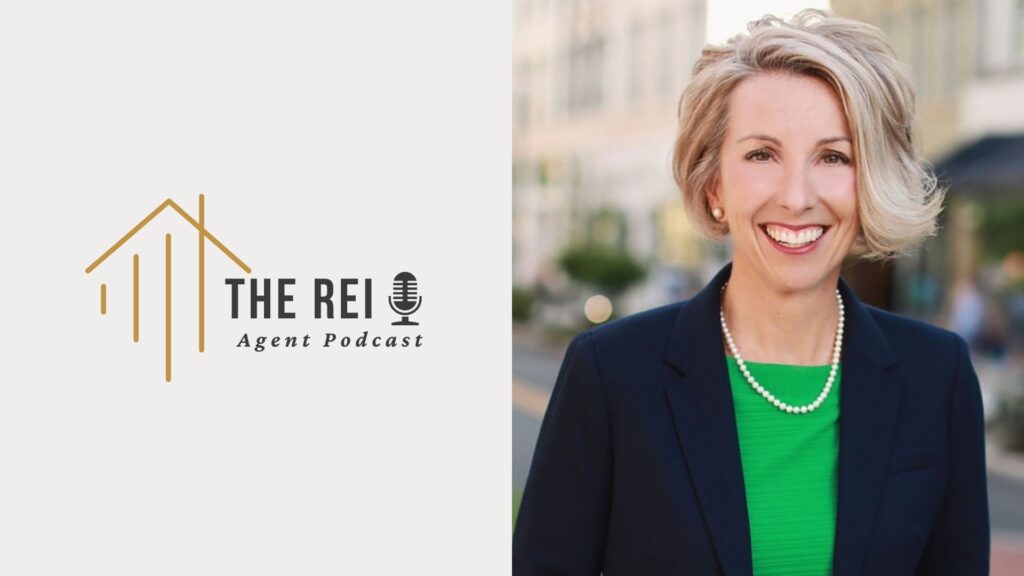
The REI Agent with Leigh Brown
Value-rich, The REI Agent podcast takes a holistic approach to life through real estate.
Hosted by Mattias Clymer, an agent and investor, alongside his wife Erica Clymer, a licensed therapist, the show features guests who strive to live bold and fulfilled lives through business and real estate investing.
You are personally invited to witness inspiring conversations with agents and investors who share their journeys, strategies, and wisdom.
Ready to level up and build the life you truly want?
Follow and subscribe to The REI Agent on social


A Voice That Shakes the Room
When Leigh Brown enters a conversation, something changes. Her energy, humor, and conviction cut through the noise, reminding everyone why real estate is more than business.
On this incredible episode of The REI Agent, hosted by Mattias Clymer, Leigh reveals her unfiltered truth about leadership, faith, and building a meaningful life.
She doesn’t just talk about transactions.
She talks about transformation.
Finding Purpose Beyond Balance
Leigh Brown doesn’t believe in balance.
“There’s no such thing as balance. I let go of that a long time ago.”
Instead, she believes in intentional focus. Whether she’s at work, with family, or in her community, she shows up fully present.
For her, success isn’t about doing it all at once. It’s about giving everything to the moment right in front of her.
From Wall Street to Real Estate Roots
Leigh’s path to real estate wasn’t typical. She tried Wall Street, then sales in the chainsaw industry, before coming back to North Carolina.
What began as a career shift turned into a calling.
“I own my brokerage. I’ve got a speaking and a coaching business. I’ve had the chance to give back through realtor associations all over the place.”
Her story proves that sometimes the detours are exactly what prepare us for destiny.
Speaking Truth and Lifting Others Higher
When Leigh first stepped on stage, she resisted the idea of being a speaker. But she quickly realized the power of authenticity.
“It is not for me. It is for the audience.”
Her voice resonates with everyday agents who feel overlooked, inspiring them to see themselves as leaders too.
She calls for abundance over competition, believing that when one realtor rises, the entire profession rises.
Raising Your Hand for Leadership
Leigh’s trailblazing style isn’t about titles. It’s about courage.
“If I am seen as a leader for being somebody who raises their hand so that somebody else can raise their hand, that’s the kind of leader I want to be known as.”
For her, leadership begins in local communities where real estate decisions shape lives. She urges agents to take responsibility for their neighborhoods and speak up where it matters most.
The Urgency of Housing and the American Dream
Leigh reminds listeners that housing isn’t politics, it’s humanity. Affordable homes, infrastructure, and property rights are foundational to freedom.
“The whole country itself was built on private property rights. That’s the Fifth Amendment.”
For her, real estate professionals are guardians of the American Dream, tasked with protecting opportunities for future generations.
Investing with Courage and Vision
Asked what she would do if she were starting over, Leigh didn’t hesitate.
“I would have bought more houses.”
Her advice is simple yet profound: buy more, sell less, and diversify.
From multifamily properties to commercial buildings, she stresses that ownership is the cornerstone of stability and long-term wealth.
Her story is proof that every property bought is a step toward freedom.
Adapting and Thriving in Today’s Market
Leigh doesn’t shy away from the challenges agents face now. She challenges them to do what others won’t.
“When you do things nobody else does, you get results nobody else gets.”
For her, that means knocking on doors, being honest with sellers, and offering real options in moments of crisis. She believes humanity and transparency are what set great agents apart.
The Human Edge Over Artificial Intelligence
Leigh acknowledges AI but refuses to see it as a replacement.
“I’m not scared of AI because it can’t replace me.”
She believes technology should never erase humanity from real estate. Emotion, trust, and personal connection will always matter more than data-driven scripts.
Golden Nugget (Three Calls That Change Everything)
At the heart of her wisdom is one powerful daily ritual.
“Three 1-phone-calls every single day, except for Sunday or whatever day you take off.”
One call to a past client, one call to a lender, and one call to someone you love. Simple. Intentional. Transformational.
The Books That Shape Leaders
Leigh is a reader at heart.
She names the Bible as her ultimate guide, Atlas Shrugged by Ayn Rand as her favorite for philosophy, and The One Page Marketing Plan by Alan Dibb as essential for every professional.
Each one has shaped how she lives, leads, and inspires.
Living Boldly, Giving Generously
Leigh Brown doesn’t just succeed in real estate. She succeeds in living. Her faith drives her.
Her leadership challenges the status quo. Her story is proof that a life worth living is one of boldness, generosity, and grit.
“At the core of it, I love what we do and who we do it for, and this is why our country has always been so strong, and this is what must be preserved.”
Leigh’s journey reminds us that real estate is about more than transactions.
It is about transformation, legacy, and the courage to show up fully alive.
Stay tuned for more inspiring stories on The REI Agent podcast, your go-to source for insights, inspiration, and strategies from top agents and investors who are living their best lives through real estate.
For more content and episodes, visit reiagent.com.
Articles Related to The REI Agent
- 10 Shocking Truths From the 2025 Global Housing Storm (And How Agents and Investors Can Thrive Through It)
- Shocking Balance Before Wealth (How Erica Clymer’s Holistic Practices Help Agents and Investors Thrive in Global Housing)
- Global Housing Storm (Holistic Solutions to Million-Dollar Dreams, Desperate Sellers, Rising Rents, and Shifting Wealth)
- Top 20 Terrifying Reasons Agents Will Never Be Investors (And How to Fix It)
- 10 Ways to Kill Real Estate Agent Burnout in 2025 (The Holistic Fix)
- Mattias Clymer is Silently Leading a $70M Movement That’s Changing Agent Lives
- Therapy You Didn’t Know You Needed (Holistic Wisdom for Real Estate Professionals)
- From For Sale Signs to Life Design (How The REI Agent Transforms Real Estate Into Holistic Wealth)
- Achieving Holistic Wealth and Success Through Real Estate (Insights from The REI Agent)
- Partnering with Investors (How Real Estate Agents Can Exponentially Maximize Profits)


Contact Leigh Brown
Mentioned References
Transcript
[Mattias]
Welcome back to the REI Agent. I’m honored to have Leigh Brown here with us. Leigh, thanks so much for joining us.
[Leigh Brown]
I’m super honored to be with you today.
[Mattias]
Leigh, you are a rock star in our industry, and so it is a huge honor. I’ve heard you speak multiple times, and yeah, I think NAR, I heard you in NAR, and you did a local thing for us once over Zoom, so always a great conversation. You’re an inspiring person and a lot of fun.
Can you give us a bird’s eye view to start, if anybody hasn’t heard of you, kind of what you do and what your world is all about?
[Leigh Brown]
Well, I’m a 25-year realtor, which means it’s my silver anniversary this year. I’m still a practitioner, which I think is my little difference maker when I go to do presentations. I’m still practicing real estate, although my team does the bulk of it.
I’m in Concord, North Carolina, which is our own city outside of Charlotte. We’re not a suburb, but we are part of the greater Charlotte region. I was North Carolina president in 2023.
I was the vice president of the National Association in 2021. I’ve spoken in 49 states and on five continents, trying to help real estate professionals, first of all, value what they do, because I think a lot of realtors forget that what they do is so critical to the American dream and to their communities, and then give them good practical tips for how to break through the space that they’re in, because it’s so easy to get blue and depressed about real estate when nothing feels right, but then as it turns out, you log into your MLS and somebody pinned something in the hot sheet and you realize it wasn’t you, so you got to do something. I want to give them that something.
I’ve got two grown kids. We’ve got one geriatric cat left. Then when she passes, we can get a new cat.
We have chickens. I don’t have goats yet, but when my husband retires, we’re going to have goats. He doesn’t think that’s going to happen, but he’s completely wrong.
He’ll just have goats to take care of when he retires. Life is wonderful. Everything I do, my one North Star is my Lord and Savior, Jesus Christ.
That’s what’s always driving me to be more encouraging, more helpful, and a better version of myself in real estate and everything else.
[Mattias]
You do everything. How do you manage it all? How do you keep yourself balanced and show up every day with a clear head?
You’re always positive whenever I see you interact.
[Leigh Brown]
There’s no such thing as balance. I’ve let go of that a long time ago because I enjoy what I do. I enjoy realtors and real estate and speaking and coaching.
I love all of it, which means it’s very easy to spend too much time in it. I know that I can do a lot through real estate. The first thing I would say is that you have to look at how your time is spent and where your calling is.
I know that I’m called to be helpful to people. Today, it’s real estate. Starting last year, it was the nonprofit that I started in the North Carolina mountains.
Tomorrow, it could be something else. I love what I do, so I have to pull myself back so I can breathe, which means that when I’m all in for my work, I’m all in. Notifications are off.
I’m not in my email nonstop. I don’t check notifications every two seconds. As we record this, I’m on a social media fast, which is so nice.
I’m going to hate going back into the devil’s swamp, but I highly recommend that to everybody. You’re more productive when you can turn off the noise. By the same token, my son’s in the marching band at North Carolina State.
When we go to watch my son march, because I don’t care about the football game. I’m with the band parents. We’re watching halftime.
I talk to my husband the whole way to the ballgame. He might rather listen to the radio, but we’re together, so I’m going to be focused. When I’m with my kids, I’m focused.
When I’m at church, I’m focused. I would say that the key to getting things done is to utilize your time really, really well. So much of y’all’s time, whoever’s watching this, you know that this is a cancerous little device.
You get scoliosis, and you’re just standing there doing this. You look up, and you’re like, oh, that light was red, then it went green. No wonder everybody’s honking at me because it’s red again, because you were responsible and checking your phone at the red light, but you completely lost everything.
I think that’s what’s happening to all of us right now. We’re too far distracted from what’s right in front of us. What’s right in front of me is my faith, my husband, my kids, my family, my business.
This has to be secondary to that. I’m still able to use this because if anybody’s followed me, you know I put out a video every single freaking day. We’ve got content, but that’s about being focused enough to create it at one shot, build the library, set the library on a schedule so that that doesn’t consume every ounce of energy that I have.
The other thing I will say is to get your time under control, know yourself a little better. I’m a morning person. I am not a night owl.
By 8.30, I’m really ready to go to bed, but I try to make it till 9 o’clock so I don’t pretend I’m my grandmother yet, but I’m up at 4, 4.30 to drink my coffee and do my devotions and play words with friends and get my brain going before I go exercise. If you’re a person who’s thinking, Leigh Brown, I could never do that. It’s probably because you’re a night owl.
If you get up at 9 and go to bed at midnight, then you structure your day accordingly. When I say that, my clients know if they want to call me at 7 a.m., I’m fine with that. 6.30, I’m good. If it’s 7.30 at night, they’re taking their chances because I’m going to be so low battery. They don’t get the best of me. When they get the best of me, they get better results, which also cuts my time in the interaction.
That’s a really long answer to your question.
[Mattias]
One of the things I want to pull out of what you said is there’s a book called Authentic Happiness. I think it was by Martin Silliman. I forget how to say his last name.
He was a president of the Psychological Association. He talks about ways, well, basically psychology for a long time was focused on the deficits and how do you get depressive people, how do you get the negative stuff back closer to zero, to baseline. He wanted to study what gets people happier.
One of the things that he talked about was flow, the state of flow, the state of being so focused on whatever you’re doing that nothing else, like time kind of stops. That’s a key indicator of how you can be really fulfilled. I think what it sounds like to you, like that you do very well is that when you’re doing the thing that you’re doing, you are there and you’re focused in on it.
I think so often we are trying to be a full-time agent that’s driving around from showing to showing, doing all the things while we still have to answer all the emails and do all the different things and our minds just pulled a million directions. I’m with you. If I’m at a showing and a phone call comes in, I mean, it’s very rare I take that phone call unless I know it’s a screaming emergency.
[Leigh Brown]
You twitch when the phone rings because you’re like, I don’t want to answer it because I’m with people. If I don’t answer it, then that person doesn’t feel valued because at your core, just like most realtors, you want to please the people that you serve through real estate.
[Mattias]
Yeah, it’s true. I think establishing that boundary, and it’s a great thing I should probably work into like a buyer consultation or whatever that when I’m with somebody, I’m with them. When I’m with you, I’m with you.
If somebody else calls in, unless it’s, again, a screaming emergency that I’ll get back to them, but it may not be right at that moment when they call.
[Leigh Brown]
Well, I know you saved your golden nuggets for the end, but one of my golden nuggets, I’ll give you another one. Your phone should be upside down. If you carried it into a meeting, put it upside down and then tell your buyers and sellers, look, this is here because I’m dealing with a hot mess of a dumpster fire on an inspection report.
If it rings, I may have to answer it, but that’s the only one that’s set to come through. Everything else, upside down, I don’t even want to see it flash. If you tell them that you’re being intentional, your value in their eyes just went up tenfold because they understand that you’re pouring into them.
That’s just one of those visual things that we can do is do the thing and then tell them why we’re doing it, but also give yourself permission to handle the things that only you can handle as the licensed person, as the negotiator, as the one that’s in the heart of the deal.
[Mattias]
No, that makes a lot of sense. I’m curious how your career went and what got you into real estate to begin with.
[Leigh Brown]
Well, I didn’t want to get into real estate because I’m the child of a realtor and like every other kid of a realtor, I don’t want to do what daddy does. That’s awful. Those people are terrible and he’s driving around all the time and he couldn’t come to my track meets because track meets last about four days and he had to show houses in the afternoon because I’m slightly older than you might think because I have a great hairdresser, but IBM was moving to Charlotte and my dad was working a lot of the relocation for IBM and so he was running people all day every day. I didn’t want to be in a grown up job that wouldn’t let me go to my kids track meet because we all believe real estate is that super freeing job, but it frees you up to work 24-7. When I got out of college, I didn’t know what to do with myself because I finished college a year early because I’m a super nerd and I was bartending to pay for college.
I kept bartending and one of my regulars hired me to go work on Wall Street. I went to work at 1C Port Plaza and used to have cocktails at Windows on the World every Wednesday night. When I told that to some young people, they look at me cross-eyed because I’ve realized now I’ve been in real estate longer than some of my fellow realtors have been alive and they weren’t alive for 9-11, much less have talked to somebody who worked in that area and went prospecting for clients up there.
While I enjoyed my time in Manhattan this much, it was not for me. I’m obviously not the person who belongs in New York City. When you hear how I talk, I do not belong in the city.
I wandered out of that and I went to work for Husqvarna, which is premium Swedish chainsaws, weed trimmers, and lawnmowers. I was the only woman on the sales force at the time. Their North American headquarters were in Charlotte.
I had walked in and said, are y’all hiring anybody in sales? I was so anxious for something besides Wall Street. I was at home for that weekend.
The sales manager came around the corner. He interviewed me and put me in inside sales to learn the SKUs and the business. Then they sent me out in the field.
I went to Iowa, went to Texas, and they were going to relocate me again. I said, I don’t want to move every 12 months. My boss said, that’s what you’re going to do.
You’re going to go in, clean up a territory, and then we’re going to move you. I said, I want to get married and I want to have kids. He said, that’s fine, but this is what you’re going to do for us.
I said, I’m not doing it. He said, but New Jersey is next. I couldn’t do New York City.
I can’t do New Jersey. He said, if you don’t take it, you’re going to get blacklisted. I said, then I’m out.
I called daddy and I said, I don’t know what to do. I’ve now changed jobs three times. He said, just get into real estate.
You’ll be fine. I came back to North Carolina, got my license. 25 years later, it’s more than buying and selling.
I own my brokerage. I’ve got a speaking and a coaching business. I’ve had the chance to give back through realtor associations all over the place.
I own rental properties and I’ve helped people become more financially stable because of investment properties. I can’t say enough about how glad I am that I finally listened to my dad. I’ll just add, one of the biggest blessings of my work life is that I got to work side by side with my dad for about 11 years.
He had a massive heart attack in 2011. He’s still alive, but he had to retire from real estate to keep himself alive. I’m so grateful because I can still talk to him about real estate.
He’s like, sure glad I’m not in it right now. I’m like, that’s not helpful at all because that’s what a retired realtor says. If y’all didn’t know that, they’re really glad not to be practitioners right now.
[Mattias]
Yeah. Anybody that got in during the pandemic and experienced that boom. It’s a hard time.
[Leigh Brown]
They’re learning, but we all have to learn. We’re refined by fire. You got to remind yourself of that.
Fire can be a refiner.
[Mattias]
Yeah. I’m building a team and I was mentioning to a sales agent that every time she’s working through her first contract, her first offer and all that stuff. Just think about it this way.
I know this is really stressful, but the next time it happens, you’re going to have that rep built in. You’re not going to be stressed the next time. Every time, there’s going to be the next thing.
You’re going to have another really stressful event, but everything else is going to feel less stressful.
[Leigh Brown]
You’re so right. The muscle memory matters, but then she’s also got to remember because she’s probably going to watch this being one of your team members. Hey friend, you know more than 99.9% of the public. Frankly, because you’re affiliated with someone who’s pouring into you, you’re probably doing better than 88% of realtors. Don’t belittle yourself because you’re learning, but be grateful that you have a support system that allows you to learn without endangering the consumer. It’s great.
[Mattias]
I love it. Leigh, what got you to owning your own brokerage? Did you start a team?
Did you hire a transaction coordinator? What kind of moves did you make along the way from being a sole practitioner to working beside your dad and then moving into the position you’re in now?
[Leigh Brown]
My dad was a little Mr. Groundbreaker. He was one of the first people in Charlotte to have his own website. He was one of the first to start a team.
This was back in the 90s. When I came in, he was already running a team. I started as a buyer’s agent, although my dad’s approach was very specific that I wouldn’t be allowed to talk to a member of the public until I had been adequately trained.
For 90 days, I had to live in his hip pocket. I wasn’t allowed to take a call, make a call. I went on every appointment he went on.
I sat beside him on the phone and took down notes until he felt like I was equipped enough to handle the public. My dad takes very seriously the Code of Ethics. He takes very seriously what it means to hold up real estate license law in the state.
He had two buyer agents and an assistant at the time. I’ve always known the team world. He and I then turned into eventually a father-daughter team, which of course ticked off some of our agents because they were mad that now he had a partner that was much younger than them.
That’s the nature of real estate agents come and go. I’m grateful that with most of them, we’ve been able to maintain good relationships. Over time, he started to pull back and my team started to grow.
My team got real big at some point. I guess we were probably up to 16 people on my team. Number one in Charlotte and killing it.
I discovered that when you do the big team thing, there is a point of diminishing returns, whether it’s your energy or monetary. I started scaling back. Then, of course, I’m maturing in my leadership and maturing in my walk.
That changes how you look at things. When I fast forward, it was 20 years with a franchise before I went independent. I went independent in January of 2020.
Good timing. Right before the COVID era started. I’m in an independent brokerage in a commercial building that I own, by the way.
We can talk any angle of real estate investing. I own the building, but I rent out the bulk of it and keep an office for myself. The team that I have now is comprised of four of us.
All four are highly productive. We do interview all the time, but we’re just not a fit for everybody because we are very high standards, very high volume, very high level of touch with our clients. We expect the best out of anybody who comes to work with us, which is why I would say we are intentionally boutique.
[Mattias]
I think that makes a lot of sense. Ultimately, it takes a lot of energy and you have a lot of responsibility for the people there. It makes a lot of sense that you’d be choosy.
[Leigh Brown]
The intention is a good way to put it. It’s not even about the amount of time they’ve been in the business. I’m sure you’ve seen that too.
You can have somebody that’s 10 years of bad habits and bad attitude and somebody who just got their license two minutes ago that is bright-eyed, bushy-tailed and ready to roll. I know exactly which one I’ll take.
[Mattias]
Yeah. No, totally. That makes a lot of sense.
What got you into speaking? Obviously, you have the gift. You probably was instrumental in all your sales positions, but what got you into speaking in front of people?
[Leigh Brown]
I didn’t want to, but I was so irritated by being a number one agent. Charlotte’s a big market. To get to number one here, you’re churning it out.
We were number one during the short sales and foreclosure era. We were killing it, but I’d have to take CE. I’d go to any event.
I’m listening to speakers. I’m like, seriously, you had your license 40 years ago. You don’t know.
You don’t understand. You don’t get me. I wanted to hear from people that were in my space.
I may have expressed that frustration a few times to a dear friend. He’s passed away now, but he was a CRS instructor from Virginia. His name was Alan Hange.
He was from out in the Norfolk area. Alan said, come get on this panel. You know what you’re doing.
You need to give back. I was like, Alan, I can’t stand these events. I can’t stand these speakers.
I can’t stand it. I can’t stand it. Let’s just be honest.
I thought I was too good for my own good. Alan peppered me, peppered me, peppered me. He said, there’s a reason you’re doing well.
You have to give back. You’ve taken all these years. Give back, give back, give back.
About the 83rd time he asked me to, I caved. I got on this panel. On the panel, you have country bumpkin girl here selling short sales and trailer houses.
You have a man from New York City who sold these luxury penthouse lofts. One of his clients was the B-52s. I didn’t even know him at the time, but I was scared to talk to him.
Now, he’s one of my dear friends. Then I have Mr. Fancy Chicago Condos who sells $100 million a year. Then there was a guy from Boston who sold these big luxury fancy things.
I’m like, I don’t belong here at all. All of my ego was immediately destroyed because I’m such a bumpkin next to them. Then we did our presentation.
At the end, if you’ve ever been in a class where you really wanted to get the business card of the speaker, you liked an idea, you wanted to ask them for their slides, whatever, people come up at the end. A whole lot of people came up to talk to me. I’m like, y’all sure about this?
They identified with the fact that they also worked the normal people market. They worked the hard stuff. I was like, oh, that’s why I speak.
It is not for me. It is for the audience. Once I had that mind shift of I do have something and I have an obligation to share it so that somebody else can feel seen, heard, and be better, that’s what sparked it.
It went from there to speaking all over the place. My business grew by word of mouth. I’m so grateful because every time I’m on the stage, I’ll have a conversation with somebody before or after.
They’ll ask a question or say, oh, I’m trying this. Have you heard of this? I’m over here.
Always got my notepad. I’m like, oh, tell me about that. I learn when I give.
Every chance I have, I will throw those people up on the screen and say, go follow this person too. There’s such an amazing change in your life and your business when you get into the attitude of abundance versus scarcity. It applies in the educational space and the speaking space and also in the professional space.
I love that you’re talking about your new agent who needs guidance on that offer to purchase paperwork because we see so many people come into the business. They ask for help and they get shunned because that other person sees them as competition. But if we realize in any market, none of us can handle all the listings and we can’t handle all the buyers and we actually need each other, then if we make the competitors around us better, it makes real estate better and that’s better for everybody.
[Mattias]
Yeah, that’s true. There’s always going to be people you just don’t want to work in a transaction in any market, I’m sure. But I’m sure that you’ve been an inspiration to so many people.
I know that. I would imagine especially women too. I would imagine having somebody in, I know that realtors are often seen as a higher population of women in the realtor space.
However, in leadership and all that kind of stuff, I’m sure that you’ve, I would imagine, have been seen as a trailblazer and somebody that’s been very influential for people. So, thank you for that. I hope you get that feedback.
[Leigh Brown]
Well, I think the only thing that makes me a trailblazer is that I’m a lot of a loud mouth and there’s so many women who have paved the way for the spaces looking like the organization’s members. But I would say that what makes me a little different is that I don’t belong to the industry. I don’t belong to any club of people.
I don’t kiss up to get a leadership position. I just go into a room and I do my homework and I read some research and I’ll raise my hand and ask the question. So, if I am seen as a leader for being somebody who raises their hand so that somebody else can raise their hand, that’s the kind of leader I want to be known as.
And that’s not necessarily got anything to do with my femininity, but it’s just, to me, the kind of leadership we desperately need right now as the profession changes and as we go through structural changes and the headlines are every day and they’re all over the place, who’s going to raise their hand to lead us? Because I do think there’s a bit of a vacuum in that space. So, for anybody who’s watching or listening to this, that means it might be you because a background from consulting, accounting, stay-at-home mom, teaching could bring in the perspective that we need to keep real estate focused on what we do.
And I’ll just say that if you raise your hand and start talking, even if one person listens, then that’s one person more than ever heard you before you opened your mouth.
[Mattias]
Yeah, I love it. Well, maybe that’s a natural transition to talk about the importance of leading in your local association. So, I served as president of my local association and then I was brought back in to not force somebody else up as another person got out of the business.
So, I served two years. I have not gone to the state at all yet. I kind of needed a little bit of a breathing period before I consider that.
But tell us a little bit about why you feel that’s important. You’ve done it. You’ve gone to the state, done national.
[Leigh Brown]
Well, I did it backwards. Most of the time, you’re told there’s a ladder in real estate. You do the local, then you go to the state, then you go to national.
I actually did national first because as I was out there speaking, there were some of the leadership who had heard my name and they said, well, call this one. There’s a producer over here you could talk to. So, I wound up in conversations and in some presidential advisory groups and then I’m on committees.
And the interesting thing was a lot of the existing leadership didn’t like me for that because I didn’t follow the rules. So, there are some unwritten rules in the business and I’m pretty much against all unwritten rules. The Bible is the only book of rules I think I have to follow.
The rest of this is all made up. And so, you think about it, you’re going to be told what you can and can’t do. And if you start listening to that, you’re going to lose the passion that gets you there in the first place.
So, what I would say is after having served on all these levels, what’s wild to me is that we act like you start at the local, then go to the state, then go to national like there’s a hierarchy and it’s backwards. Because as you look at the three levels of real estate, the most important part is the local association. That’s where decisions are made at the county commission with planning and zoning.
What are we going to do about smart growth? How are we going to build? What are we going to do about housing supply?
What do we do about infrastructure? What do we do? What do we do?
That is local, local controls. And so, what your county does is going to be wildly different than what say Loudoun County does. And that’s in Virginia.
Loudoun is going to have a big disconnect with any other part of the state. So, if you go to the state level, now you’re pleasing all those constituents. And it’s important because our state legislatures make decisions that impact housing in the state.
But it’s far more advocacy related when it comes to legislative action on the state level. So, your influence expands, but it doesn’t necessarily deepen. And on the local level, you might be an inch wide, but you’re going to be a mile deep, wildly important.
And when I look at the conversations happening in and around housing, affordable housing is on everybody’s campaign list. Blue, red, green, in between, they all talk about housing. And you can’t solve that from D.C. The national level can’t solve housing. The state level can’t solve housing because every state has a collection of counties except for Louisiana. If you’re in Louisiana, we know you have parishes. You’re special.
But you go down into your county, even in my county, Cabarrus County, right here, five municipalities plus the unincorporated part of the county, they don’t agree on anything. And so, I’m realizing as a realtor, this is who I buy and sell houses with. This is who I go to church with.
This is who my kids play ball with. I have a duty to be the most focused locally. And I wish I’d realized this years ago because what I thought was just the attitude at local didn’t matter because national mattered more.
You got to work your way up there was actually starting people off in the place where they matter most. We just didn’t ever tell them that. And I think that’s what’s going to happen as the industry changes.
I do think the three-way agreement is doomed. It’s going to break at some point. I thought it would die last year.
I was wrong, but I still think it’s going to go. And when I talk to any realtor and ask them, which of the three would you stay with for your business’s outcome? Would you stay with your local?
Most of them, yes. Would you stay with your state? It depends, but maybe, probably, yes.
Would you stay with national? And they aren’t sure if they should or not, which means, is national important? Absolutely, it is.
Are there benefits? Absolutely. Do they need to sell it to the members?
They sure do. They need to get back to demonstrating value so the members will stay because without the big national association, there is a gap in conversation around housing. We have to be in the room so the organization is necessary.
But if you’re talking about the limited amount of resources and time that you have, it’s that local that is the penultimate place to spend your time and get involved. And if you’re the person who says, I’m listening to you, Leigh, ma’am. I don’t like politics.
I don’t want to get involved. Well, get over yourself because this has nothing to do with the traditional campaign issues. Housing is not sexy.
It is only being talked about because the people are upset about it. But it’s only realtors who can be in the room and say, well, let’s consider the schools and the water and sewer and the elderly and the relocation people and the price points and the end. We see real estate so holistically, but every other crowd in your community sees their one little pet angle.
You are so valuable at bringing the whole picture. And so if you stop thinking about it as politics and think about it as the community, that’s where you can change things and you can change them for the good of your entire community.
[Mattias]
Yeah. I mean, just preaching the, you know, I can’t afford another house, but don’t develop in my backyard or don’t raise my taxes for the next school.
[Leigh Brown]
And that’s every county in the country right now. And I wish we were having more robust conversations about the fact that we are electing two extremes right now. And the two extremes are no more building ever, no growth, pull up the drawbridge and build it all because we need houses.
And there’s got to be a coalition in the middle that says, let’s start evaluating where we say yes and where we say no.
[Mattias]
A hundred percent. Definitely important conversations to have. And not all elected officials really understand the perspective of developers or what it takes.
[Leigh Brown]
They won’t do bad guys. I’m not a developer, but developers aren’t the bad guys and either are real person.
[Mattias]
I mean, everybody’s got to make a profit at some point to make it worthwhile. And if it’s insanely difficult and insanely expensive to get to building something, we’re just going to go somewhere else. We’re just going to go somewhere else.
[Leigh Brown]
Or your kids don’t wind up owning. And so we’ve, we’ve got to be cognizant of that. And it’s one of the things that, you know, Charlie Kirk, God rest his soul was really talking about in his last few months of interviews and speeches is the disconnect of the younger generation and their despair when it comes to housing.
And so if you want to understand how a candidate like Mondani has momentum in New York City, it’s because the young people have been told you’re never going to own the American dream. You’re never going to have a house. And so housing is so rooted in what we want as humans.
We want our little corner where we can, you know, plant a tomato plant and the, we have our little house and do whatever we want in it. But when that dream gets disconnected, then you’re losing an entire future piece there. So it’s, it’s got to be a really urgent conversation by all spectrums of age ranges and socioeconomics that we can figure this out, because the whole country itself was built on private property rights.
That’s the fifth amendment. Too many people think the fifth amendment is your Miranda rights. The fifth amendment says private property shall not be taken because the founding father said everybody should have a chance at owning a little piece of dirt here because you couldn’t do it anywhere else on earth.
[Mattias]
Yeah. If you could go back or if this was 25 years ago, but today, and you were starting off your career, how would you go about building up your pieces of dirt? Like if you were wanting to buy in today’s markets, you know, starting out as an agent slash wanting to maybe build up an investment portfolio as well, eventually, like what kind of path do you think you might take?
[Leigh Brown]
I would have bought more houses. And here’s the thing. When I bought my first house and let’s see, that would be 99.
No, 99, 98, 98 or 99 was when I bought my first house and we had no doc loans. We had stated income loans. I could have made up all kind of shit and bought all these houses, which I can’t because I was not raised that way, but good gravy.
The financing was so loose at that time that I could have bought more. And in retrospect, you could look at the market now and say, well, finance is tight. It ain’t tight like it was in 08 when the markets disintegrated because then there was no capital to lend.
So it’s all perspective. But when I look at what houses cost back then, I should have bought more and I should have looked in neighborhoods I was afraid to go into because sadly, there is a higher level of, well, the higher the crime rate, the lower the price point is how it goes in most areas, whether anybody wants to admit it or not. There were parts of town I couldn’t go into safely.
Well, that’s where I bought houses and figured out how to get the right property manager to help create opportunities for other people. And I say this because there’s nobody I’ve ever talked to that would go back in time and buy less real estate. They’d all buy more because it’s stable.
It’s the stable part of my portfolio. And so I had a plan back then, buy one house a year. And then the other thing I would go back and do is I wouldn’t buy as many single families because I built a single family portfolio and then after a good friend of mine educated me on multifamily because I needed to learn it from somebody who understood it.
He gave me so much knowledge. I started buying multifamily. So now I think in terms of doors instead of houses, I wish I’d been buying more multifamily because it definitely dilutes your risk a little bit.
And I wish I bought more commercial property because this has been just a huge gift to my business. First of all, to be in my historic revitalizing downtown, I’m a part of the future. And in addition to that, the building pays for itself.
There’s just no way to lose really. But the guy that you need to talk to is Matt Ritchie. He’s in Louisiana.
Matt’s my age and he started buying rental properties when he was in college at LSU. When he could buy a house on a credit card, he could buy a $10,000 house. And so for anybody out there who says those don’t exist anymore, I don’t know.
Take a look around at all kinds of places and look for duplexes. Look for rundown duplexes where at some point you can put in a little sweat equity and a little bit of lipstick and give somebody an affordable place to live while you fix it up. That’s where you find a way to get yourself started.
And it’s not going to necessarily be easy, but there is a way to get started if you go look for it.
[Mattias]
100%. And I think also probably every time somebody first buys a house especially, they think they’re overpaying. There’s so many different voices saying this is the wrong time, this is the wrong time, this is the wrong time.
And almost always, if you look back, you’re like, I should’ve just bought.
[Leigh Brown]
I mean, what we look back on is I should never have sold that because the other thing I should’ve mentioned is once you buy it, never sell it. And I’ve sold a couple of pieces over time that I should never go look at in Zillow because I’m like, well, I should never have looked.
[Mattias]
100%. Do you have any suggestions for agents to how to adapt in the current market as it is now? I know that every market’s a little bit different, so maybe you speak more to yours.
[Leigh Brown]
I mean, it’s just about showing up, right? So if I look at what happens in any community, especially where the senior citizens live, they’re getting beat down with investor letters and knock on the door, we’ll buy your house for cash. They’re getting so much from outsiders.
For most of you who practice real estate, you’re the insider in your community. But do the people who would like to sell and only think their option is we’ll buy your house for cash or we buy ugly houses, do they even know you’re an option? I’m a big proponent of door knocking.
And I know that makes me sound like an old person, but it’s freaking fun. And by the way, when you do things nobody else does, you get results nobody else gets. Knocking on doors, for me, it got even better during COVID when people were panicked to even go breathe outside.
But I’d go knock on the door, ring a doorbell, and wave at it because they’re ringing doorbells now. And I’d say, hey, I’m Leigh Brown. I’m the realtor from over here.
I just want to stop by and say, hey. Well, there’s a real reaction there. And generally, people come to the door and say hello because I’d have somebody to speak to, especially if you’re in an older folks’ neighborhood.
Whereas the investor who sent the fake letter, they’re immune to that. But they’re not immune to you. And if you say, look, I just wanted you to know that I’m in real estate.
And if you ever want to sell, let me know because either I might be interested or a friend of mine might be interested, but I’d love to help you if I can. And if you’ve come across a house that would be a traditional wholesaler house, and this might be referenced as a house with deferred maintenance or it’s got some major structural issues or it’s just full of stuff and it’s not really equipped for being photographed for the market. The reason wholesalers exist is because they are a viable option for somebody in a pinch.
But what if you are their other viable option? What if you go to them and say, look, you’re getting letters from a million people out of town. I’m down the street.
Can I help you? I would love to get into the market, but I’m struggling. You’d be surprised how many opportunities are out there if you’d lean on your own humanity.
[Mattias]
Yeah. And when you talk to people that are in a tight spot, you can offer options. You can offer if you are looking to invest as well, you can say, look, you’re probably going to get the most money if you are going to take the time to get your house ready and put it on the market.
That’s going to be probably the best option for you financially. But if you really for other reasons need to just leave and there are those situations, you might be able to help them in that way as well. And if you’re being honest and you’re telling them exactly what the options are and where you could get your real money for, there’s nothing wrong with that.
They can’t have showings. They have a ton of repairs that they can’t afford to make. There’s a lot of different reasons.
Or they’re facing foreclosure and they need to close in two weeks. There’s all sorts of different reasons for wanting to take less of a paycheck home and just selling it quickly.
[Leigh Brown]
And I love that you focus on doing it in the most broad way possible, which is yes, there’s this option that requires ABC and there’s this option that requires XYZ. If you give people all the options, they have the agency to choose and you can sLeighp at night, but you don’t go talk to people and they never find out that you’re an option. That is when the bad actors swoop in.
Never tell them about the retail market option. Never give them that exposure. Well, that’s why people get mad later when their house gets flipped for great money because nobody told them that that could have happened.
And let’s just be honest. If they’re going to go that route anyway, I will bet you dollars to donuts they would rather it be a local person who’s making it happen than some out of town or hedge fund backed investor club. They would rather work with you.
[Mattias]
100%. One other question I have for you is how do you see AI helping and hurting our business?
[Leigh Brown]
Well, the thing that helps me about AI is that it proves how right I am all the time because it’s so wrong. That’s another reason I love Zillow. I do love to pull stuff up in chat GPT and say, what do you think about the real estate market?
You’re wrong because I’m spiteful like that. But for me, I will get it to help me pull information together, give me some resources, and then I will go double check. You just have to know when you pull AI as a resource, you cannot rely on it.
I’ll tell you a little factoid you people might not know. Did you know that 61% of chat GPT’s data comes from Reddit? The official dumpster fire of the internet is where it gets its resources.
Now you all know why you got to fact check it. That being said, it’s a great tool. I’m not scared of AI because it can’t replace me because as a human, I’m going to react with humanity to the buyers and sellers who choose me because every seller has a different story, a different need.
You just mentioned timeframes versus money. It’s a human that helps them work through what the options are. AI might say, yes, you could do ABC and they might say it in your voice, but it’s not the same thing as you talking to them and working through it.
There is so much power to who you are and if you take this as the tool that it is, you’ll be fine. I have called it the instrument of the devil in the past and I probably stick by that to a large extent. I have to be thoughtful about my uses of it because I do think what it’s changing in real estate is it’s adding to the level of laziness with agents because they’re using it to write their descriptions.
Chat didn’t go in the house. What are you doing? You went in the house.
You know that the flow goes like this and that there’s this cool feature and this cool feature and yes, it might see it in the photos, but it’s not going to be able to say to the seller, what was your favorite thing about this house? Then you could spotlight that in your listing. I don’t want us to lose that touch that we’ve had to help our seller showcase their home so that a buyer can fall in love with it because at its heart, and I can’t stress this enough, real estate is a huge financial transaction and the whole thing is wrapped up in emotion.
Chat GPT has no emotion. If you allow AI to take the emotion out of real estate, you’re damaging the buyer and the seller and yourself. Then frankly, we hurt our communities because it’s so hard to dial in when you don’t understand humans.
The good thing about AI is I think it’s going to weed out for us pretty quickly because I think the public has figured out now the em dash is a sign that you wrote in the chat. They’re figuring out some of these little tips, all the emojis. We know you use chat.
Go ahead, whatever, but I like real and real is going to be easier and easier to spot, which means I’ll just stand out above my competition all day long.
[Mattias]
Yeah, that’s a good point. I think also the more you maybe replace yourself in the business, the more likely we are going to be replaced.
[Leigh Brown]
You don’t give the form away, people. Come on.
[Mattias]
Well, let’s move into, I mean, we could probably talk for two hours, but I know your time is very valuable. Let’s go ahead and move into a golden nugget. I know that you’ve already given one, you’ve given 100, but do you have any other ones you want to share?
[Leigh Brown]
Well, my golden nugget is actually a three-parter because the way to get your business under control and get your life management balanced out a little bit has to do with one phone call, but three of them. Three one phone calls every single day, except for Sunday or whatever day you take off. For me, I don’t work on Sundays.
Every day call us somebody that is a past client, future client, prospect, call one. For those of y’all that don’t know what to say, here’s what you say. Hey, it’s Leigh Brown with One Community Real Estate.
How are you? Although you should use your name. I was just calling to check in and see if you had any questions about anything real estate.
That’s my script. Then if they read a headline, they’re stressed out, they can ask a question. They might ask me what color is popular now.
They heard agreeable gray is out and we all celebrated. They’re going to ask a question. They might say, I’m good.
We’re not moving. What you doing? I’m like, I’m just kind of beating the bushes.
You know anybody? I mean, you could be so relaxed with people who know you. That’s one a day.
You do not have to do an hour of power because none of y’all are going to do it, but you can make one phone call. The second one phone call I make is going to be about money. I’m going to talk to my lenders.
What’s out there? Down payment assistance. If I talk to somebody who’s ready to buy their first investment property, what are we looking at?
A point difference? How much down are we talking? What if it’s tenant occupied?
I’m going to gather some dollar information on investments because I love investment properties. It’s the fastest way to double your business, by the way, if you sold a house to Bob and then Bob and Jane move in. A year from now, Bob and Jane get a raise at work.
Do they want to use the bonus and buy a beach property? I’m going to talk to them about it, but I need to know the nuts and bolts of the finance inside because that’s changing all the freaking time. Then the third one phone call I make is to somebody I love, whether it’s a family person or a friend person.
Today, I talked to one of my dear friends at about six o’clock in the morning because he’s always up and I love him. I just called to check on him and his husband and see what they’re up to and how’s life. That fills me up so that I can learn and then I can go meet new people.
If you’re empty, you won’t retain any information and then you won’t call any prospects. If you call the prospect first and they stump you, you won’t call to learn and you won’t call anybody you love. Get your life in order with three phone calls a day.
[Mattias]
I love it. That’s a great tip. AI can’t do that.
I mean, it can, but it won’t be the same.
[Leigh Brown]
It won’t be the same thing because they don’t know everybody’s backstory. I know it all. Maybe that’s the advantage of being Gen X.
My whole life is not on the internet, so I do feel sorry for my kids and the other Gen Zs because y’all got zero secrets. AI’s more trouble for you than for me.
[Mattias]
Absolutely. Then I want to ask if you have a favorite book that you think everybody should read, like a fundamental one that all agents should look into or just one that you currently really enjoy.
[Leigh Brown]
Well, I’m a book nerd. I always have about eight books going because I’ll read a different book based on what mood I’m in. My number one book of all time is the Bible because it’s business advice, life advice, and every time you read it, something different is going to jump out at you.
My all time favorite book that is not the Bible is Atlas Shrugged by Ayn Rand. If you’ve never read that, I know it’s intimidating because it’s 1,200 pages long. She was a Russian emigre.
What she talks about in these books was her personal philosophy known as objectivism, which I don’t agree with 100% because, spoiler alert y’all, if you think you’re supposed to agree with people 100% to call them human, you’re the broken one. I love her ideas. She talks about one of the fundamental things that she says is that if you think something is contradictory, check your premises because contradictions don’t exist.
I think that’s very important to consider in the social media world where you hear this and you heard that instead of finding out for yourself. It’ll get you regrounded, but also give you a solid sense of concern for why we turn over so much of our personal power to elites in any regard at all. From a business standpoint, if I’m going to recommend one business book, well actually I could recommend a million business books, but actually there’s a really good one I’ve read called The One Page Marketing Plan.
Have you ever read that one?
[Mattias]
I haven’t, no.
[Leigh Brown]
It’s so good. It’s a pretty fast, easy read. Since realtors are inherently marketers, but they don’t always remember that because they’re copying other people’s stuff, it’s a way to make you think about the people that you serve and also look at your KPIs because I found a lot of realtors never look at their KPIs, which is pretty dangerous stuff.
As a key performance indicator, by the way, where’s the cover of the book? Alan Dibb, The One Page Marketing Plan. I must have read this once a year for the last several years just to get my brain right when it comes time to get back in touch with my past clients and keep my mindset fresh because I might not be number one anymore, but I just want to make sure my phone rings enough to pay the bills and do what I want to do.
[Mattias]
Honestly, anybody that wants to be number one forever, that sounds exhausting.
[Leigh Brown]
It’s so exhausting. You can’t spend it. At a certain point, one of the interesting truths about real estate is that if you make it to the level you’re wanting and you are minting money, you will find out that you have no time left to spend it.
That’s not really a life worth living. You got to figure out what it takes to fund your life and then figure out how to make sure life happens along the way.
[Mattias]
I love it. When everybody that hears you talk wants to hear more of you talk and wants to follow you on social media, where can they find you? Also, you wrote a book as well?
[Leigh Brown]
I think we got three books and number four is coming out in the next month or so. The first book came out in 2016. It’s “Outrageous Authenticity.”
There’s “Seven Deadly Sins of Sales” and then my COVID-era book called “Peeling the Onion.” The next one is Next Is Now and we’re in final edits. Hopefully sometime in October, that’ll be hitting and I’m super excited.
I’m on all the social networks. I’m Leigh Brown or Leigh Thomas Brown. That’s my maiden name.
If you see that you’re getting a private message wanting you to go to Telegram and buy crypto, that is a scammer. That’s not me. I don’t do crypto.
I don’t do Telegram. Make sure you’re reading the handle. There’s no extra S’s or an extra T because holy crap, I am eat up with scammers.
Leigh Thomas Brown, L-E-I-G-H, like a girl, not like a pair of pants. Come follow me and I’ll do my best to encourage you and be a resource in any way that I can because at the core of it, I love what we do and who we do it for and this is why our country has always been so strong and this is what must be preserved.
[Mattias]
I love it. Well, thanks so much. This has been an amazing conversation.
I really, really appreciate you being here.
[Leigh Brown]
Oh, it’s a pleasure. Thank you for having me on.
[Mattias]
Thanks for listening to the REI Agent. If you enjoyed this episode, hit subscribe to catch new shows every week. Visit REIAgent.com for more content. Until next time, keep building the life you want. All content in this show is not investment advice or mental health therapy. It is intended for entertainment purposes only.






















6 Responses
Interesting read, but isnt living fully subjective? Leighs methods might not work for everyone. Not all about shaking rooms and Wall Street roots, right?
Interesting read, but isnt it ironic that a bold leader like Leigh Brown preaches balance, yet jumps industries so quickly? Consistency anyone?
Interesting read, but why is it always bold leadership? Cant we value quiet strength and humility as well? Just food for thought…
Bold leadership grabs headlines, but quiet strength shapes the world. Humility is underrated!
Interesting read, but isnt Leigh Browns bold living just a facade? Do her Wall Street roots compromise true legacy building? Just something to ponder!
Enjoyed the article but why is Leigh Browns approach hailed as unique? Isnt living fully subjective? Just a thought to stir the pot.