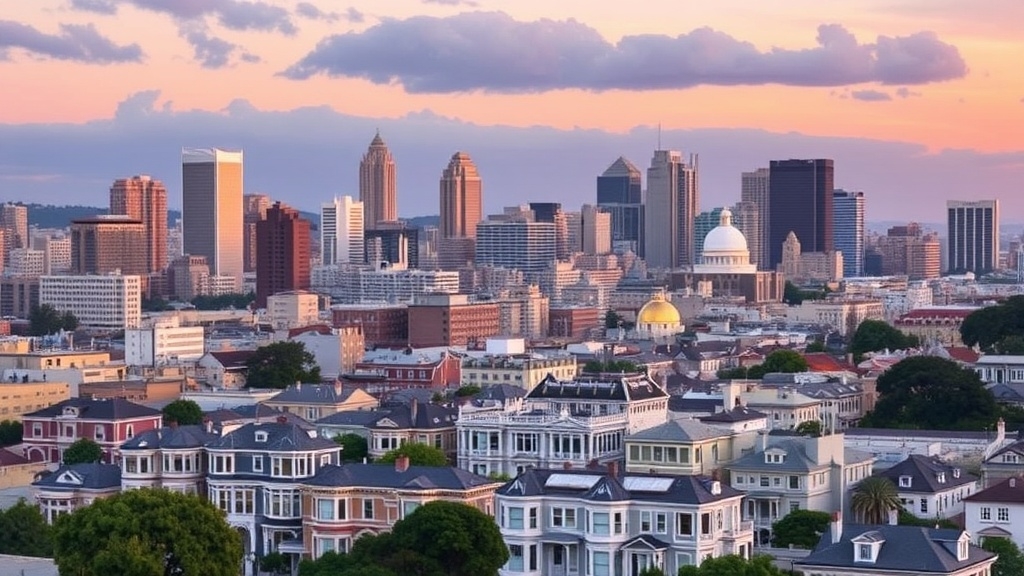
How Is AI Venture Funding Creating a Housing Shortage in San Francisco?
The surge of AI venture capital—$58 billion raised in San Francisco alone through Q3 2025—has ignited an unprecedented influx of high‑income talent.
The AI talent influx drives salaries above $300,000, prompting workers to seek housing near funded startups.
Remote work migration adds pressure, as employees split time between home offices and occasional on‑site meetings, expanding demand for both rental units and co‑living spaces.
Funding‑Driven Workforce Expansion
- Seventeen $100 M+ AI rounds in early 2026 forecast a 20‑30 % workforce increase.
- Bay Area AI firms capture 65 % of U.S. VC deal value, amplifying hiring needs.
- AI‑centric investment now represents 52 % of total SF funding, intensifying demand for local talent.
Housing Market Strain
- Rental rates climb 15‑20 % YoY in AI‑heavy districts.
- Vacancy rates drop 40 % since 2025, outpacing the 2 % supply growth.
These dynamics converge to create a sharp housing shortage, intensifying affordability challenges across San Francisco.
Which Neighborhoods Are Feeling the AI‑Induced Rental Surge First?
AI‑driven venture capital inflows have turned the Peninsula into a hotspot for rapid rent escalation. The most acute pressure appears in neighborhoods that combine transit access, proximity to tech campuses, and newly built luxury townhouses.
The surge reflects AI‑driven gentrification and rent‑price acceleration in three key zones.
| Neighborhood | Primary Driver |
|---|---|
| Fremont | New $1 M townhouses and data‑center workforce |
| Burlingame | Walkable downtown, Caltrain links, tech‑job proximity |
| San Mateo | Transit‑connected districts, innovation‑hub spillover |
These areas experience the earliest rental spikes as AI talent relocates.
Fremont’s manufacturing hub draws high‑income renters seeking proximity to new tech campuses.
Burlingame’s downtown amenities attract professionals with equity compensation.
San Mateo’s walkable corridors benefit from consistent hiring cycles and AI‑wealth creation.
The combined effect intensifies market pressure, signaling a broader regional disruption. The Oceanwide Center project illustrates how large‑scale, high‑rise developments can reshape urban density and influence housing supply dynamics.
What Developers Are Doing to Convert Office Space Into Ai‑Driven Housing?
Policy incentives and streamlined approvals have opened a rapid pipeline of adaptive‑reuse projects. Developers are pairing AI‑driven design tools with modular construction to accelerate office‑to‑housing conversions.
Financial models from HR&A Advisors pinpoint construction cost caps that keep projects viable under the Downtown Revitalization Financing District incentives.
AI‑Enabled Design Process
AI algorithms generate unit layouts that maximize daylight and transit access. Simulations test structural retrofits before on‑site work begins.
Modular Construction Strategy
Prefabricated modules are produced off‑site, reducing on‑site labor and timeline. Modules integrate smart‑home systems, aligning with the AI‑driven housing concept.
Current projects such as Hudson Pacific’s 114‑year‑old building and the Humboldt Bank conversion demonstrate the model’s scalability. They target the 11,000‑unit potential across vacant office stock. Co‑living’s higher occupancy rates further enhance the financial appeal of these conversions.
Which San Francisco Policies and Tax Incentives Can Balance AI‑Housing Demand?
How can the city’s regulatory toolkit keep pace with soaring AI‑driven housing demand while protecting affordability?
Zoning reforms
- The Family Zoning Plan, signed December 2025, expands density in Richmond and Sunset, targeting the state‑mandated 82,069‑unit goal by 2031.
- Accelerated permitting cuts approval time, reflected in a 27 % YoY decline in listings and a 19 % drop in new listings in January 2026.
- Transit‑oriented development ties housing to BART projects, proving viability and reducing reliance on scarce market‑rate units.
Rent incentives and tax measures
- No dedicated tax incentives for AI‑driven demand exist as of March 2026, prompting a need for rent incentives that reward developers for integrating affordable units.
- AB 325 bans algorithmic rent‑setting tools under collusive conditions, protecting tenants while allowing targeted rent‑incentive programs to stimulate supply.
- Potential federal moratorium on AI regulation underscores the urgency of local tax and incentive structures to balance growth with equity.
What Homebuyers and Renters Should Expect on Prices and Availability in 2026‑2027?
The surge in AI‑related employment has sharpened demand for both single‑family homes and condos, compressing inventory to historic lows.
Homebuyers face continued price volatility as single‑family median prices sit near $1.65 million, up 16 % YoY, while condos average $1.02 million, a 2.8 % rise.
Inventory remains constrained: single‑family supply is 0.8 months and condo supply 1.8 months, keeping the market firmly in seller’s territory.
Renters will feel a supply lag, as new units lag behind demand, pushing rents upward and limiting options.
Median single‑family price is $1,653,325, a 13 % premium over asking.
Condo price is $1,020,000, achieving 98 % of list price.
Total active listings stand at 435, down 38 % YoY.
Expect modest appreciation in 2026, but scarcity will sustain upward pressure through 2027.
Assessment
The AI funding surge has turned San Francisco into a high‑density rental market, outpacing supply and inflating prices.
Developers are rapidly repurposing office towers into AI‑centric housing, yet zoning constraints and tax structures lag behind demand.
Policymakers must act swiftly to adjust incentives and protect affordability.
Without decisive intervention, the city faces entrenched scarcity and escalating costs for homebuyers and renters through 2026‑2027.