
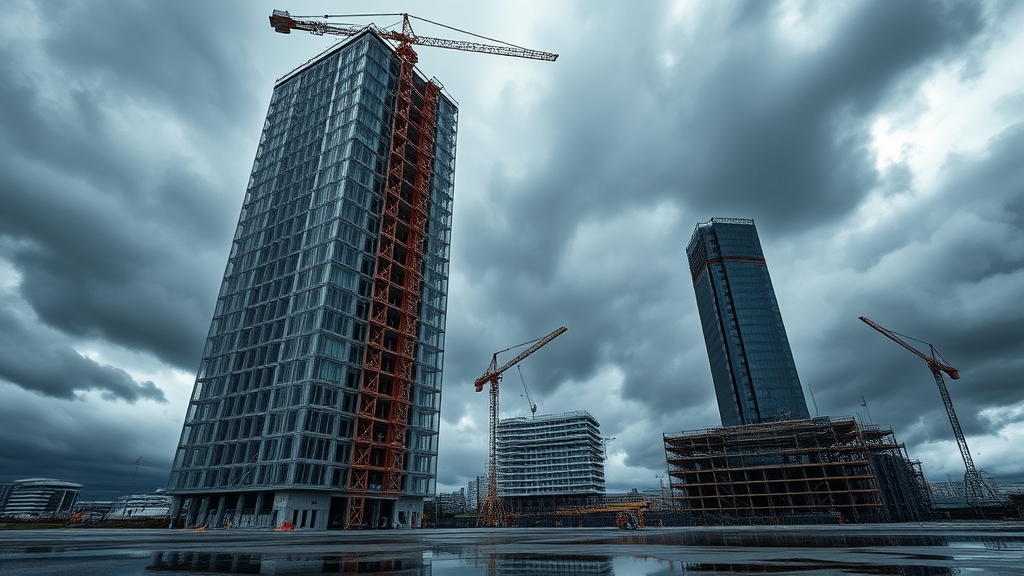
Financial Crisis Forces Construction Halt on Major Housing Projects
A perfect storm of economic pressures has halted Seattle’s ambitious housing development pipeline.
Developers across the region are abandoning multimillion-dollar tower projects that were cornerstone of the city’s growth strategy.
The financial crisis has triggered a catastrophic surge in interest rates. As borrowing costs skyrocket beyond sustainable levels, new construction projects become financially unviable.
Construction financing has become prohibitively expensive. This forces developers to shelve projects that cannot generate acceptable returns on investment. Rising mortgage rates have been a significant factor challenging both developers and potential homebuyers.
Market volatility intensifies as international tariffs drive materials costs to unprecedented heights. This compounds the financial strain on already struggling developers.
The combination of elevated financing expenses and construction cost inflation has created an economic environment where project profitability has evaporated.
Industry data reveals a devastating 47% year-over-year decline in residential unit permit applications. It reflects the widespread retreat from new construction starts.
Developer sentiment has plummeted due to economic uncertainty. Once-promising projects have turned into financial liabilities that threaten company stability. The Seattle City Council has responded by unanimously approving permit extensions to prevent developers from abandoning projects that would otherwise require costly redesigns under updated building codes.
Impact on Seattle’s Affordable Housing Supply and Development Timeline
Seattle faces cascading economic pressures, and the halting of tower projects delivers a significant blow to the city’s affordable housing pipeline. The pause in construction eliminates hundreds of anticipated affordable units from near-term delivery schedules.
Recent data shows that Seattle added 841 new affordable homes through various projects. However, the tower freeze disrupts crucial momentum towards the citywide housing goals outlined in the One Seattle Plan.
Housing Availability Crisis Deepens
The indefinite delay pushes projected occupancy timelines past 2025 targets. This creates severe shortages for seniors, veterans, and special needs populations.
Funding shortfalls compound construction delays. Progress stalls just as demand reaches critical levels.
Development Timeline Complications
Project completion faces uncertainty as funding recovery timelines remain unclear. The delays complicate coordination with HB 1110 compliance deadlines.
This may force potential zoning variance requests once construction resumes. The impact extends beyond housing numbers. The city must also maintain its 30 proposed Neighborhood Centers while addressing these development setbacks.
Vulnerable populations who depend on these specialized housing types face the greatest challenge. Their stability and access to support services are at risk.
Developer’s Funding Shortfall Highlights Industry-Wide Challenges
The tower project freeze unveils systemic financial weaknesses that reach beyond a single developer’s portfolio. Rising construction costs and regulatory complexities have created significant barriers to completing projects in Seattle’s affordable housing sector. For-profit real estate providers have taken legal action, claiming that Seattle’s regulations hinder their ability to develop affordable housing in downtown areas. Private investors are increasingly reluctant to participate due to the risk of financial losses and foreclosures, threatening a potential market withdrawal. Many regions across the U.S. are experiencing significant declines in housing affordability, impacting both homebuyers and investors nationwide.
| Financial Challenge | 2019 Impact | 2024 Impact |
|---|---|---|
| Operations/Maintenance Subsidies | $7.4 million | $52 million |
| Project Stabilization Costs | Minimal | $130 million since 2023 |
| Provider Budget Support | Not Required | $14 million allocated |
| Permanent Financing Access | Readily Available | Severely Restricted |
| Investor Confidence | Strong | Deteriorating |
The crisis necessitates urgent collaboration among developers and innovative funding solutions to prevent a complete market collapse. Prolonged funding shortages raise serious concerns about Seattle’s ability to meet the affordable housing production goals set in recent levies.
City Response and Emergency Measures to Address Project Suspension
Following the immediate suspension of construction activities, Seattle city officials have activated extensive emergency protocols. These measures aim to secure abandoned project sites and mitigate public safety risks.
The city has mandated immediate boarding and fencing of both tower sites. This is to prevent unauthorized access.
Multiple departments now coordinate around-the-clock monitoring of the partially completed structures.
Emergency demolition permits are under active consideration. Officials assess whether the abandoned towers pose immediate threats to surrounding properties.
Construction oversight teams conduct daily safety inspections. They evaluate structural integrity.
Police and public health agencies have classified the sites as potentially hazardous. This has triggered enhanced surveillance protocols.
The buildings face rapid-response inspection schedules. These will continue until final disposition decisions emerge.
City planning officials suspended all non-essential construction permits citywide. This pause will last pending thorough safety reviews.
Cross-departmental coordination extends to Sound Transit. They are monitoring potential impacts on nearby light rail operations.
Public safety remains the primary concern. Officials are determining whether emergency intervention measures will escalate beyond current containment protocols.
Long-Term Implications for Seattle’s Housing Market and Future Development
Beyond immediate safety concerns and containment protocols, Seattle’s development crisis threatens to reshape the city’s housing environment for years to come.
The suspension of two major tower projects exposes critical vulnerabilities in market stability as the city’s housing inventory tightens further.
With current supply levels at 2.5 months and average home values approaching $887,000, the development freeze amplifies existing affordability pressures.
Housing diversity faces unprecedented challenges as large-scale mixed-use projects remain stalled indefinitely.
Developer sentiment shifts indicate reduced confidence in major investments. There is potential for capital to be redirected toward safer markets outside Seattle.
The crisis demands immediate policy intervention across multiple fronts:
- Zoning reform acceleration to compensate for stalled high-density developments.
- Public-private partnership expansion to stabilize funding mechanisms.
- Diversified housing stock strategies to withstand future financial shocks.
- Contingency frameworks for development interruptions and market disruptions.
Urban planners must now prioritize smaller-scale incremental progress.
Addressing systemic funding vulnerabilities is crucial to prevent threats to Seattle’s long-term growth trajectory.
Assessment
The suspension of two major residential towers highlights critical vulnerabilities in Seattle’s development ecosystem. This halt magnifies the challenges within the industry as the city’s housing demands escalate.
Funding instability poses a risk of cascading impacts on additional projects. Lending conditions are tightening industry-wide, further complicating the development landscape.
Seattle’s housing shortage worsens as planned units disappear from the pipeline. City officials must now reassess their development incentive structures to address these challenges.
The developer’s collapse is indicative of broader market distress. This disruption could reshape the region’s construction environment for years to come.



















7 Responses
Isnt it odd how developers can freeze projects when funds run out, but tenants cant freeze rent when their income collapses? Just saying…
Capitalism isnt about fairness, its about profit. Harsh but true.
Is anyone surprised? Seattles over-reliance on private developers was bound to implode. Time to rethink affordable housing strategy, folks!
Its about time. Overdevelopment is ruining Seattle. Maybe this funding collapse will finally slow things down. Lets rethink urban growth, folks!
Isnt it ironic that a financial crisis halts construction, yet its the perfect time to invest in affordable housing? Just saying…🤷♂️
Perfect time for who? The big investors or the people losing their homes?
Is it just me or does it feel like these developers are using the financial crisis as an excuse for poor planning?