Key Takeaways
- The St. Louis and East St. Louis corridor was one of the most important industrial and warehousing hubs in the nation for more than a century.
- The recent Crunden-Martin warehouse riverfront inferno highlights the risks created by aging industrial buildings, cold weather warming fires, and increased pressure on vulnerable populations.
- Redevelopment efforts such as Gateway South face new challenges as investigations continue and infrastructure conditions reveal deeper regional needs.
Fire Incident Overview and Emergency Response
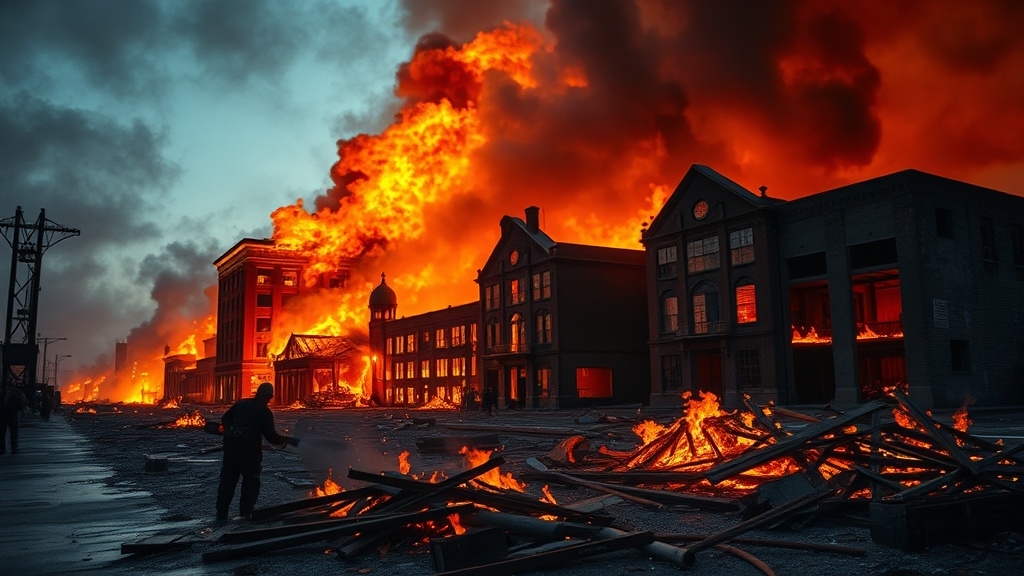
The Crunden-Martin warehouse complex became the epicenter of a dramatic early morning fire on Friday, November 28, 2025.
The blaze prompted a five- to six-alarm response. This underscored the urgency of established fire safety protocols.
Over 200 firefighters tackled the inferno. It rapidly enveloped multiple abandoned structures at the site.
Fire Chief Dennis Jenkerson confirmed that at least four vacant warehouses were fully involved. This was when the rescue operations commenced.
Multiple rescues occurred, focusing on securing unhoused individuals residing in and around the complex.
Despite the fierce flames causing partial or total collapse of several buildings, coordinated efforts guaranteed no firefighter injuries or civilian fatalities.
The fire’s intensity suggested smoldering, and flare-ups might persist for days. This necessitated ongoing vigilance.
Historic Significance and Community Impact
Shrouded in a cloud of smoke and history, the Crunden-Martin warehouse complex stands as a poignant monument to St. Louis’ rich industrial past.
Once a bustling hub of commerce, the recent inferno has threatened its very existence.
With it, the legacy of heritage preservation faces a profound challenge.
The community now faces a significant predicament.
The fire’s impacts transcend the structural damage, striking at the core of community resilience.
Preservation efforts have been dealt a significant blow.
Yet the spirit evident in past revitalizations may guide future endeavors.
This loss leaves an indelible mark on the collective cultural identity.
Heritage preservation, steeped in historical significance, is now at a crossroads.
The architectural value and cultural identity must be safeguarded.
Moreover, there is potential for adaptive reuse, fostering community resilience.
In adversity, unity can prevail, slowly rebuilding the collective memory.
The Century of Industry: The Rise of St. Louis and East St. Louis Warehousing and Manufacturing
For more than 100 years, St. Louis, Missouri and East St. Louis, Illinois formed one of the most important industrial corridors in the United States.
Their location on the Mississippi River, direct rail connections to every major U.S. region, and an enormous concentration of labor and manufacturing capacity turned the bi-state corridor into a national powerhouse of warehousing, logistics, and production.
This section provides a comprehensive, fact-based overview of how the region developed, expanded, and shaped American commerce throughout the twentieth century and into the early twenty-first.
Strategic Position on the Mississippi River
St. Louis became the nation’s fourth-largest city by 1900 and served as the primary inland port for the central United States. The port handled coal, grain, lumber, steel, petroleum, and manufactured goods.
By the mid-20th century, the Port of St. Louis was one of the busiest inland ports in the world, providing continuous north–south access from Minnesota to the Gulf of Mexico.
East St. Louis developed as the industrial engine directly across the river.
With fewer geographic constraints, lower land costs, and direct rail-hub linkage, it attracted heavy manufacturing, stockyards, aluminum and steel processing plants, rail yards, fertilizer producers, and large warehousing complexes.
Railroads and Warehousing Dominance
By the 1920s, St. Louis and East St. Louis together hosted one of the largest railroad complexes in the country.
More than 22 major rail lines intersected in the region, giving manufacturers unparalleled shipping options.
Large multi-building warehouse complexes such as Crunden-Martin, Liggett & Myers Tobacco, and the Cupples Station warehouse system emerged to store and distribute goods across the Midwest and the South.
The Cupples Station district alone spanned more than 20 massive brick warehouses and served as a centralized freight-transfer hub. St. Louis became a national leader in logistics innovations, including standardized freight handling and early intermodal operations.
Industrial Output and Major Sectors
Between 1900 and 1970, the region became known for its production diversity. Major sectors included:
- Steel and metalworking
- Food processing and grain milling
- Chemicals and refining
- Glass and ceramics
- Railcar manufacturing and repair
- Armaments and defense production during both world wars
- Automotive assembly and parts fabrication
East St. Louis became one of the world’s busiest livestock hubs through the National Stockyards and associated meatpacking operations.
Workforce and Population Dynamics
The industrial boom attracted workers from across the country.
African American migration from the South significantly increased the labor pool, and immigrant communities strengthened the manufacturing workforce.
Throughout the mid-century, these cities offered some of the highest industrial wages in the Midwest.
Slowdown and Transformation
After 1970, global competition, automation, and shifting transportation networks reduced manufacturing demand.
Many historic warehouses were abandoned or fell into disuse as logistics operations relocated to modern suburban distribution parks.
Despite decline, the region retained strong rail infrastructure and continues today as a vital freight corridor poised for redevelopment projects such as the Gateway South initiative.
Key Historic Metrics of St. Louis and East St. Louis Industrial Growth
The following table summarizes major economic and logistical indicators reflecting the region’s industrial magnitude over the last century.
| Time Period | St. Louis National City Rank | Port of St. Louis Annual Tonnage (approx.) | East St. Louis National Stockyards Annual Livestock Throughput | Major Manufacturing Employment (bi-state region) |
|---|---|---|---|---|
| 1900–1920 | 4th largest U.S. city | 10–15 million tons | Up to 1.5 million head of livestock | 120,000+ workers |
| 1920–1945 | 8th largest U.S. city | 20–25 million tons | 2+ million head annually | 150,000–200,000 workers (wartime peak) |
| 1945–1970 | Top 10 national freight center | 25–30 million tons | 1–1.5 million head | 200,000+ workers |
| 1970–2000 | Decline in manufacturing but strong logistics presence | 20–25 million tons | Stockyards close in 1997 | 80,000–120,000 workers |
| 2000–2020 | Shift to warehousing and distribution | 30+ million tons (modern port system) | N/A | 60,000–80,000 workers |
Understanding the Region’s Historic Scale
This century-long arc shows the extraordinary industrial significance of the St. Louis and East St. Louis corridor.
Few inland regions in America matched its combination of river access, concentrated rail power, diverse manufacturing capability, and warehouse infrastructure.
Its output shaped national supply chains, supported wartime production, and powered the Midwest economy for generations.
What Real Estate Investors Must Understand About the Riverfront Inferno and the Industrial Corridor
The Crunden-Martin fire did more than consume aging brick and timber.
It forced real estate investors to confront the deeper realities of a region built on 100 years of manufacturing power, warehousing dominance, and river driven commerce.
Understanding these dynamics is essential for investors assessing risk, opportunity, and long term positioning in St Louis and East St Louis.
Market Pressures in Aging Industrial Zones
The fire exposed the fragile conditions of older manufacturing corridors.
Many structures were built before modern codes, lack active fire suppression, and face decades of deferred maintenance.
For investors, this reality signals increased inspection requirements, higher insurance premiums, and the need for more rigorous due diligence when evaluating industrial acquisitions.
Distressed Assets and Redevelopment Windows
Properties tied to long standing industrial districts often carry undervalued land relative to potential redevelopment.
When events like the riverfront inferno occur, they can accelerate municipal interest in cleanup, rezoning, and public incentives.
Investors who monitor these triggers gain early access to transitional opportunities in logistics, mixed use development, and commercial conversions.
Infrastructure that Still Holds Value
While some buildings have deteriorated, the surrounding infrastructure remains powerful.
The region’s rail lines, port capacity, and highway connectivity continue to support freight based industries. Investors willing to reposition assets near these transportation advantages can tap into lasting demand created by shipping, warehousing, last mile logistics, and manufacturing support services.
Population and Workforce Considerations
The corridor’s long industrial history shaped workforce patterns and housing needs.
Even as manufacturing declined, the demand for affordable housing, workforce housing, and flex commercial space persisted.
Investors who understand these demographic pressures can identify stable buy and hold plays in neighborhoods closely tied to industrial employment.
Redevelopment Initiatives Worth Watching
Projects like Gateway South represent a major push to reimagine the riverfront.
These plans often require large partners, tax incentives, infrastructure improvements, and flexible capital. Investors positioned early can benefit from appreciation curves triggered by public private redevelopment cycles, especially in long overlooked industrial pockets.
Risk Awareness and Responsible Investing
Fires in vacant industrial buildings highlight the risks facing regions with aging structures and vulnerable populations seeking shelter inside them.
Responsible investors evaluate security, lighting, fencing, community conditions, and partnerships with local organizations to ensure safer environments and reduced liability exposure.
For investors who learn to see the region through its historical and logistical context, the aftermath of the riverfront inferno becomes more than a headline.
It becomes a strategic lens into where capital will flow next and where long term opportunity still lives.
Implications for Gateway South Redevelopment
A significant challenge now confronts the ambitious Gateway South redevelopment project.
The devastating fire at the Crunden-Martin complex has already compromised vital historic landmarks. This raises concerns over the preservation and integration of St. Louis’ cherished industrial heritage into the new urban redevelopment plan.
The burning question is how to maintain the spirit of community resilience while guiding the project forward.
The site was envisioned to blend historic reuse with modern infrastructure. However, the destruction forces stakeholders to reevaluate adaptive strategies for the remaining structures.
Good Development’s commitment to the $1.2 billion endeavor remains firm. Yet, maneuvering these setbacks will require reevaluating design approaches.
Ensuring community engagement and open dialogues about future steps could solidify support for the transformative project.
Assessment
The St. Louis riverfront inferno at Crunden-Martin marks a pivotal moment for the city. It highlights vulnerabilities in historical preservation and emergency preparedness.
The damage extends beyond the immediate loss. It shakes the foundations of community identity and future redevelopment plans.
As Gateway South redevelopment efforts strive to integrate historical integrity with modern advancement, stakeholders face a critical juncture.
Urgent reassessment of safety protocols and strategic planning will determine the trajectory of St. Louis’s economic and cultural revitalization.