Why Kolter Bought the Hilton St. Pete
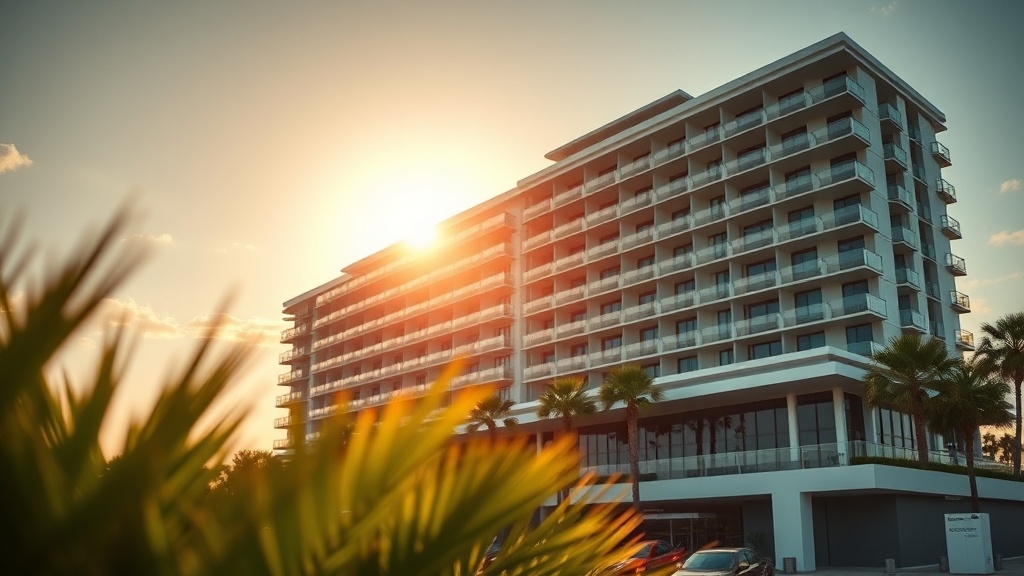
Against a tightening supply of prime downtown waterfront land, Kolter moved to secure the 15-story Hilton St. Pete.
The $96 million cash deal, signed December 12, 2025, fits a clear redevelopment rationale tied to control of a rare three-acre bayfront site. Saltaire was planned as a 35-story tower with 194 condominium units.
Its initial $500,000 deposit became non-refundable on February 20, 2026, with another $1.9 million due soon after, signaling firm intent.
Strategic fit
Kolter already knows this location.
It bought the adjacent parking lot in 2019, developed Saltaire there, and later sold 205 garage spaces back to the hotel for $4 million.
That history reduced execution uncertainty. It also reflects a leverage strategy in which prior site control and adjacent ownership can accelerate future development decisions.
The purchase also strengthens market positioning.
Kolter has delivered ONE, Saltaire, and Art House in St. Petersburg, building a concentrated luxury residential presence near key waterfront attractions and downtown demand drivers.
Why This Was Really a Land Play
The hotel flag mattered less than the dirt beneath it.
RADCO’s $29.1 million purchase of the Courtyard by Marriott at 300 Fourth St. N. signaled a premium for a scarce downtown parcel, not simply an operating hotel.
The property sits in St. Petersburg’s historic district, where historic preservation shapes what can change, but also protects long-term value.
That logic reaches back to 1926, when the Pennsylvania Hotel rose during Florida’s land speculation boom.
Its site was chosen near the emerging downtown core, and that location kept mattering through the Depression, forced sales, and multiple owners.
Blackstone bought the asset for $17.75 million in 2016 and exited near a decade later at almost double.
That price growth underscored how resilient well-located urban land can be across cycles.
Similar pressures are visible in other markets, where limited supply continues to support pricing even as rising interest rates soften demand.
Why Condos Beat Hotel Economics Here
For RADCO, luxury condos likely offer a cleaner, more lucrative path than continuing to operate a downtown hotel.
Sales to wealthy buyers can generate large upfront returns, while hotels rely on nightly rates, seasonal demand, and rising operating costs.
Recent Tampa Bay projects showed how quickly luxury inventory can move, with major towers selling out before completion at prices reaching several million dollars.
St. Petersburg also offers strong demand fundamentals.
Its walkable appeal, waterfront views, museums, marinas, parks, and access to regional job centers support premium pricing.
Second-home buyers and snowbirds add depth to the pool of purchasers seeking amenities such as concierge service, fitness centers, and rooftop pools.
Compared with older hotel assets, condos carry lower ongoing operational risk because owners absorb units individually and HOA structures handle shared services.
What DC-1 Zoning Lets Kolter Build
DC-1 zoning gives Kolter a relatively direct path to medium-density residential development. It allows apartments, flats, and similar housing types as matter-of-right if the project meets district standards.
That means a compliant proposal can move through zoning review without discretionary denial on zoning grounds. The district emphasizes residential use over broader commercial activity.
Key limits shaping the project
DC-1 permits up to 80% lot occupancy for residential buildings. That is a relatively high threshold compared with several conventional residential zones.
Height is generally capped at 50 feet and four stories. Floor area controls also reinforce medium-density outcomes.
Required setbacks shape the building envelope as well. Side yards must be at least eight feet, and rear yards at least twelve feet.
Non-residential office uses need special exception approval. Standard housing types do not under current district rules.
What the Sale Means for Florida Hotels
Across Florida’s lodging market, the St. Petersburg deals signal a firmer outlook for the state and improving market liquidity.
Recent trades show buyers are still underwriting hotel assets despite high rates, softer RevPAR, and ongoing operating pressure.
The Holiday St. Petersburg West sale at $145,349 per key and the pending Bayfront trade at $288,000 per key create a wide pricing band for investors.
| Property | Price | Signal |
|---|---|---|
| Holiday St. Petersburg West | $18.75M | Active select-service demand |
| Hilton Bayfront | $96M | Large asset liquidity |
| Carillon Park | Undisclosed | New capital entering |
| Ashford sales | $145M total | Deleveraging trend |
| 18 hotels marketed | Pending | More supply ahead |
For Florida hotels, the takeaway is clear.
Disposition activity is expanding, balance-sheet repair is driving listings, and transaction volume suggests capital remains available for well-located assets statewide.
Assessment
Kolter’s acquisition of the Hilton St. Petersburg underscored a broader shift in Florida real estate, where aging hotel assets increasingly trade on redevelopment potential rather than lodging income.
The site’s zoning flexibility, combined with stronger luxury condo economics, positioned the property for a far more valuable use.
The sale also signaled mounting pressure on urban hotel owners, especially where land values, insurance costs, and development demand are rapidly reshaping investment decisions across the state.