

What’s Happening With Atlantic Yards Now
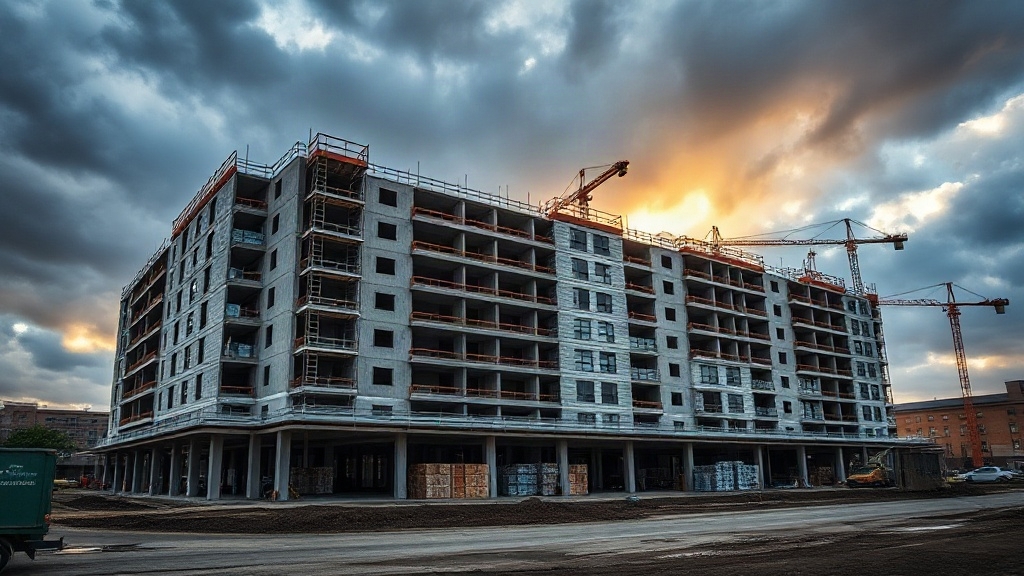
Atlantic Yards has entered another high-stakes shift as a new development team, Cirrus Workforce Housing and LCOR, assumed control in 2025 after years of delays and plan changes.
As of early 2026, the site includes Barclays Center and eight finished residential towers, while eight more towers from the original vision remain unbuilt.
The first phase produced 3,212 apartments.
Delays, Density, and Community Impact
The revised plan now targets about 9,000 apartments, adding more than 2,000 units beyond earlier approvals.
That second phase could bring roughly 5,000 more homes, but the construction timeline remains long and uncertain.
Platform work over the rail yard is expected to take about three years per section, pushing some tower occupancy to 2034 and full buildout into the late 2030s.
State oversight remains decisive because Empire State Development approved the Cirrus-LCOR joint venture in October 2025 to complete the rail yard and Site 5 parcels.
The community impact remains central.
Why Atlantic Yards Seeks $350 Million
As the unfinished second phase moves further into the 2030s, the project’s new development team is seeking $350 million in state aid to fund the platform over the MTA’s Vanderbilt Yard, a two-block structure required before five planned towers and six acres of open space can rise.
The request reflects years of financial stress. Forest City Ratner later acknowledged the project’s economics fell short, paused construction in 2016, and took a $300 million impairment that erased equity.
Greenland USA then defaulted on EB-5 loans tied to Phase II in 2023.
The subsidy push also follows a developer shift and broader finance restructuring. Cirrus and LCOR now face the cost of freeing stalled development rights.
Supporters frame that as necessary for future housing delivery, while critics question oversight, feasibility, and broader community impact.


What the Subsidy Would Actually Fund
Although the $350 million request has been framed as a housing-enabling investment, its immediate use would be much narrower: financing the platform over the MTA’s Vanderbilt Yard, the most complex and expensive part of the unfinished second phase.
The subsidy would not directly build apartments first. It would fund the deck, a prerequisite for later open space and nearby towers under revised design standards.
That shift moves costs once assumed privately toward public ownership of enabling infrastructure.
| Use | What it enables | Public feeling |
|---|---|---|
| Platform | Park above yard | Relief |
| Deck support | Future housing sites | Unease |
| State funds | Project viability | Doubt |
| Prior subsidies | Earlier progress | Fatigue |
Under review, the request could become the largest direct public investment yet. That is intensifying debate over taxpayer-backed completion now.
How the Revised Atlantic Yards Plan Works
Reshaping the long-stalled project, the revised Atlantic Yards plan keeps the Barclays Center and 16-tower framework. It changes how density, housing, and buildout are distributed across the 22-acre site.
State approvals preserved the arena and tower count, but shifted uses. Office space gave way to condominiums, reducing the job-producing portion of the original program.
The project remains split between completed buildings and eight remaining development sites. Investors may view the redesign through the lens of strategic foresight, as shifting market dynamics increasingly reward well-positioned assets amid uncertainty.
Density And Delivery
A central revision moves more than 800,000 square feet of bulk from the arena block to Site 5. That raises its allowed total to 1.2 million square feet and permits heights up to 910 feet.
Those zoning tradeoffs concentrate growth while leaving Site 5 without an affordable housing requirement. Elsewhere, delivery depends on platform engineering over the Vanderbilt Yard.
Six remaining parcels there still await construction.
Why the Atlantic Yards Subsidy Faces Backlash
Why has the proposed subsidy drawn such sustained resistance?
Opposition centers on history.
The Atlantic Yards plan promised 2,250 affordable units, yet hundreds remain undelivered beyond the 2025 deadline.
No affordable apartments were built above the railyard because the required platform was never constructed.
That record has deepened community distrust and sharpened concern over accountability gaps.
Key Sources of Skepticism
Developers missed housing deadlines while avoiding millions in penalties.
The arena opened first in 2012, reducing pressure to complete housing promises.
State agencies never produced a clear financial analysis justifying $350 million in public support.
Critics also note that the Community Benefits Agreement was largely unenforceable, and an Independent Compliance Monitor was never hired.
With multiple developers involved and public input often sidelined, taxpayers see risk without reliable guarantees.
As social media management shows in modern real estate branding, consistent communication and transparency are often essential to building public trust.
Assessment
The proposed $350 million lifeline marks a critical juncture for Atlantic Yards. It would help advance long-delayed infrastructure, affordable housing, and site obligations under a revised development framework.
At the same time, the subsidy has intensified scrutiny over public spending, developer commitments, and the project’s uneven record.
As approvals and financing decisions move forward, Atlantic Yards remains a high-stakes test of whether large-scale public-private development can deliver on promises after years of delays, revisions, and distrust.