The Moment Success Gets Honest
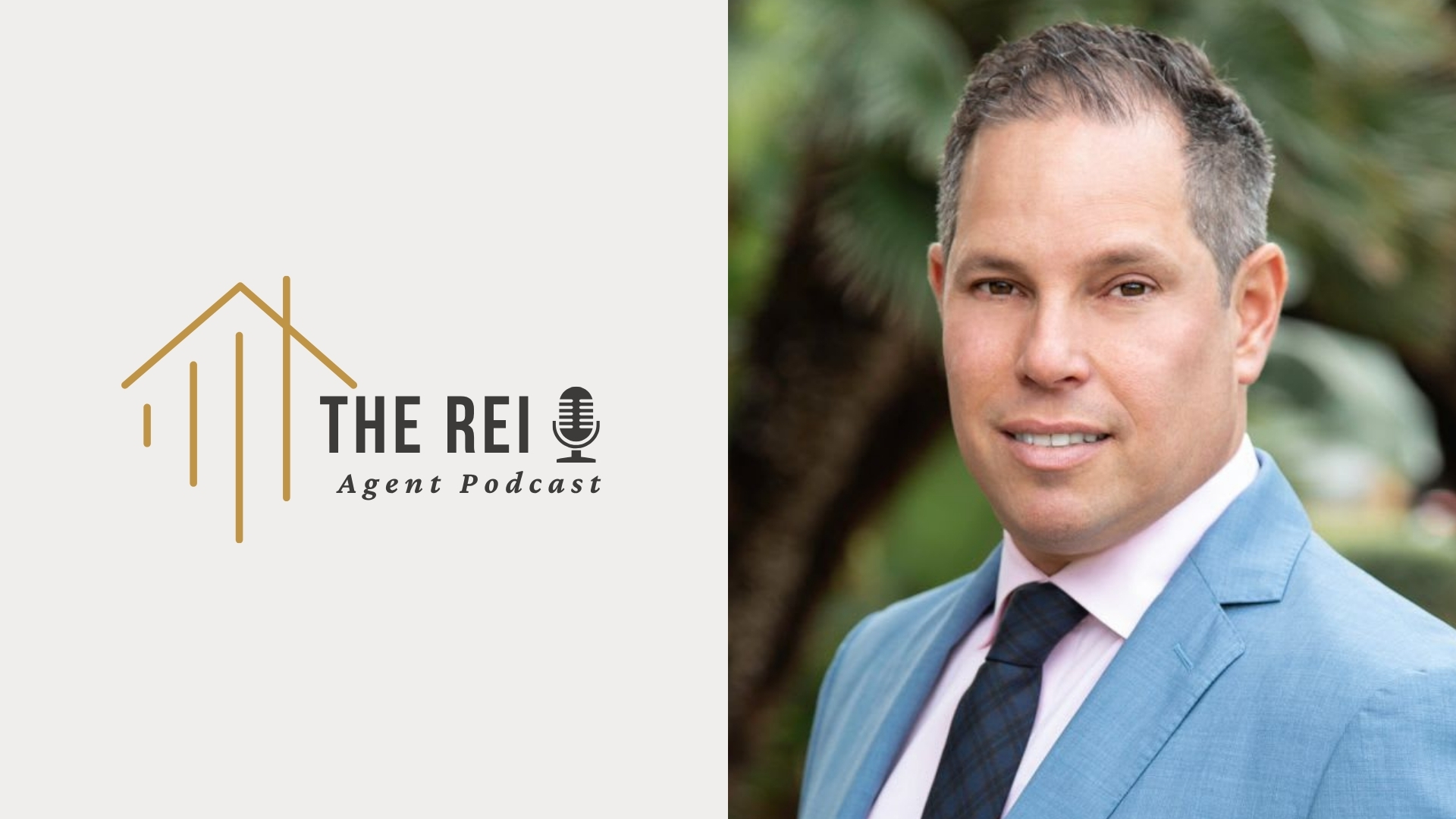
On this episode of The REI Agent Podcast, Mattias Clymer sat down with Danny Brown, Principal and Managing Partner of the Danny Brown Real Estate Advisory Group at Compass in Beverly Hills.
Danny has spent more than 24 years building a powerful career in one of the most competitive luxury markets in the world.
But his story is not the shiny, easy, overnight success story people often imagine when they think about luxury homes, celebrity clients, and Beverly Hills deals.
His story is about grit. It is about pressure. It is about rejection. It is about learning how to stay calm when the room gets loud and the stakes get high.
Danny did not walk into the business with million-dollar clients waiting for him. He built his career one relationship, one small deal, one uncomfortable conversation, and one hard-earned lesson at a time.
“Get comfortable with being uncomfortable.”
That simple line became one of the biggest themes of the episode. For Danny Brown, success has never been about pretending the business is easy. It has been about learning how to keep moving when it is not.
From Music Dreams to Beverly Hills Deals
When One Hard Business Led to Another
Before Danny became a major name in luxury property sales, he was chasing a dream in the music industry. Growing up in Los Angeles, he was drawn to hip-hop, DJing, bands, promotion, and the energy of entertainment. He had the hunger. He had the passion. He had the work ethic.
But the entertainment business taught him a brutal lesson early. Talent and effort do not always equal a paycheck. The dream can be real, but the odds can still be painful.
Danny worked for little money. Sometimes he worked for free. He chased opportunities, helped develop bands, and learned how hard it can be to survive in a business where only a tiny percentage of people break through.
Then real estate entered the picture. A close friend connected him to the business, and Danny started to see something different.
In entertainment, he could work hard for years and still have nothing show up in his bank account. In property sales, hard work could turn into a deal.
A deal could turn into a check. A check could turn into momentum.
“Work really hard, get a deal done, and a paycheck came in.”
That was not just money. That was proof. For Danny, it showed that effort could finally connect to results.
The Luxury Lesson Most Agents Miss
It Was Never About Flash
When Danny entered the business, he had a front-row seat to one of the most respected agents in the country, David Offer. Instead of watching someone play the role of a flashy luxury agent, Danny saw something far more valuable.
He saw consistency. He saw discipline. He saw someone who was first in, last out, and fully focused on giving sound advice. That became a blueprint.
Luxury, in Danny’s view, is not about a fancy car, a big watch, or a loud personality. That may look good on television, but it is not what keeps a career alive for more than two decades.
Real luxury service is built on knowledge. It means knowing the contract. It means knowing the market. It means knowing the off-market inventory. It means being trustworthy enough to tell a client the truth, even when the truth is not what they want to hear.
“You got to know the contract. You got to know every sale. You got to know the off-market listings.”
That is the part many people never see. The public sees the house. The public sees the commission. The public sees the polished photos.
But behind the scenes, Danny made it clear that the business is full of pressure, problems, difficult decisions, and unglamorous details.
“Termites, toilets, and mold are not that glamorous.”
That line cuts straight through the fantasy. Even in luxury, the fundamentals still matter.
Speaking Truth in Rooms Full of Power
The Courage to Advise People Who Are Used to Winning
Danny has worked with celebrities, family offices, ultra-high-net-worth clients, lawyers, business managers, advisors, and decision-makers with serious influence. That kind of environment can intimidate a lot of people.
But Danny explained that the job requires more than confidence. It requires emotional control. It requires humility. It requires the ability to read the room and know when to speak up, when to step back, and when to let the client feel heard.
In high-end transactions, the client often comes with a full team. Each person may have an opinion. Each person may believe they know the best path. Danny’s role is not to fight for ego. His role is to protect the outcome.
“You have to be able to read the room. You have to put your ego aside.”
That is one of the quiet secrets of long-term success. The loudest person in the room is not always the most valuable person in the room.
Sometimes the most valuable person is the one who stays calm, listens closely, and speaks only when the advice truly matters.
Danny also made it clear that being an advisor means being willing to challenge people respectfully. When he sees a client heading toward a bad decision, he believes it is his responsibility to speak up.
“Let me at least lay out why I think your approach is going to get us into a lot of trouble.”
That kind of courage is not arrogance. It is service. It is the difference between being an order taker and being a trusted professional.
The Climb from Small Deals to Big Rooms
Success Was Built One Brick at a Time
Danny did not begin his career by selling mansions to celebrities. He started wherever he could. He worked areas of Los Angeles that were unfamiliar to him.
He sold lower-priced properties. He chased small opportunities. He learned the city, the clients, and the business from the ground up.
He moved from smaller deals to condos. Then from condos to homes. Then from entry-level homes to larger luxury properties. The climb was not magic. It was strategy, consistency, and patience.
He used direct mail. He held open houses. He stayed in front of people. He followed up. He kept going.
That steady movement gave him a career lesson he still remembers clearly. Once an agent has a niche that works, that niche should not be abandoned too quickly.
Danny admitted that he wishes he had brought in junior partners earlier to help keep those earlier income streams alive while he moved up into higher price points.
That is a powerful lesson for ambitious agents. Growth should not always mean leaving money behind. Sometimes the smarter move is to build structure around what is already working.
The Brady Bunch House and the Power of a One-of-One Opportunity
When a House Became a Piece of American Memory
One of the most memorable stories from the episode was Danny’s role in the sale of the Brady Bunch house to HGTV. The house had been used for the exterior shot in the famous show opening, even though the actual filming took place on a set.
When the property came to market, it was not a normal listing. It was a cultural artifact. It was a house people had visited and photographed for decades. If it had not been the Brady Bunch house, it likely would have been viewed as a fix-up or teardown.
But nostalgia changed everything.
There was a bidding war. Celebrities and collectors were interested. Lance Bass even believed he had secured the house and announced it publicly. But HGTV had a much bigger vision. The network saw the property as more than a house. It saw a show, a restoration project, and a media opportunity.
“No crying in real estate, Lance.”
That playful line carried a larger truth. In competitive deals, nothing is finished until it is signed. HGTV won the property, restored it with extraordinary detail, and turned it into a time-capsule experience.
The house was later sold to a buyer who wanted to preserve it and share it with the public. For Danny, the experience stood apart from ordinary transactions.
“This is a piece of art. This is not a normal house.”
That is the beauty of the business at its highest level. Sometimes a property is not just square footage, land, and price. Sometimes it is memory. Sometimes it is culture. Sometimes it is a story people want to walk through.
Staying Relevant When the Market Keeps Changing
There Are No Silver Bullets
After more than 24 years in one of the toughest markets in the country, Danny has survived cycles, competition, technology changes, and shifting client expectations. His answer for how he has stayed relevant was refreshingly direct.
“There are no silver bullets. There are no shortcuts.”
That is not what most people want to hear. But it is exactly what most people need to hear.
Danny believes the business comes down to controlling what can be controlled. For him, that means mindset, health, market knowledge, relationships, and consistent prospecting. It means getting in front of people in an authentic way again and again.
“Focus on the controllables and ignore the noise.”
That advice matters because the noise is everywhere. New apps. New tactics. New trends. New distractions. New promises of easy success.
But Danny’s message is that long-term careers are not built on noise. They are built on fundamentals. They are built on relationships. They are built on showing up when nobody is clapping yet.
The Agent as a Chameleon, Therapist, and Calm Voice
Meeting People Where They Are
One of the most inspiring parts of Danny’s conversation was his honesty about the emotional side of the business. He described moving from one type of client to another, sometimes within the same day.
One meeting could involve a Fortune 500 CEO who wants every number explained. The next could involve an elderly widow who needs patience, compassion, and someone willing to listen. The next could involve a chaotic celebrity environment where the agent must calmly organize confusion into a clear path forward.
That kind of career requires more than sales skills. It requires emotional intelligence. It requires adaptability. It requires the ability to become steady when everyone else is spinning.
“Meet them where they are and then help them get what they say they want to get.”
That is a beautiful summary of service. The best professionals do not force every client into the same box. They learn the person, the pressure, the goal, and the moment.
Then they guide.
The One Thing That Still Moves the Needle
Prospecting Is Still the Foundation
When Mattias asked Danny about books, Danny mentioned Mark Hoppus of Blink-182 for entertainment, but his core business recommendation was The One Thing by Gary Keller. The lesson from that book connected directly to Danny’s own career.
The one thing, in his view, is prospecting. Not scrolling. Not chasing every shiny object. Not pretending to work while avoiding the hard part. Prospecting.
“The one thing is we all have to prospect.”
That does not mean every person has to prospect the same way. Danny’s version often includes breakfasts, lunches, dinners, drinks, home visits, and personal relationship-building. Other agents may use different methods. But the principle remains the same.
An agent must get in front of people. Consistently. Authentically. Repeatedly.
Danny also shared another hard truth that keeps even successful professionals grounded.
“You are only as good as the next deal.”
That line is not meant to create fear. It is meant to create focus. A hot streak can cool off. A slow season can test confidence. A strong pipeline can disappear faster than expected. The fundamentals protect the career when the applause gets quiet.
The Reality TV Myth Versus the Real Business
The Camera Does Not Show the Grind
Danny did not dismiss the success of agents who became famous through television. He acknowledged that some of them became extremely successful. But he also made it clear that reality TV is not the normal path for most agents.
The real business is not built in edited scenes. It is built in conversations, contracts, showings, follow-up, market knowledge, rejection, recovery, and hard emotional work.
For agents watching from the outside, this is a freeing message. They do not need to become TV stars to build a meaningful career. They need discipline. They need mentorship. They need fundamentals. They need to learn the language of the business and keep showing up.
Danny emphasized the importance of mentorship, especially for agents starting from scratch. Mentors can shorten the learning curve, provide perspective, and help new professionals avoid painful mistakes.
But mentorship is not passive. It requires humility. It requires effort. It may require working open houses, helping more experienced agents, studying contracts, and learning from anyone who has already walked the road.
The Real Win Is Staying in the Game
Why Danny Brown’s Story Hits So Hard
Danny Brown’s episode is not just a conversation about luxury property sales. It is a conversation about endurance.
It is about what happens when a person leaves one difficult dream and finds another path that rewards discipline. It is about learning from great mentors. It is about telling powerful people the truth without losing humility. It is about handling pressure without becoming bitter. It is about staying human in a business that can feel cold, competitive, and unforgiving.
His story reminds agents and investors that success does not always arrive with thunder. Sometimes it arrives quietly, after years of doing the right things when nobody is watching.
It arrives after the open houses. After the small deals. After the uncomfortable phone calls. After the rejected offers. After the pressure. After the setbacks. After the moments when quitting would have been easier.
“Be consistent day to day to day and be yourself.”
That may be the most inspirational part of Danny’s message. He did not tell listeners to become someone else. He did not tell them to chase a fake image. He told them to build around their values, their personality, their resources, and their version of authentic relationship-building.
For anyone trying to build a career, a business, or a better life, that is a powerful reminder. The goal is not to copy the loudest person in the room. The goal is to become the most trustworthy version of oneself.
Danny Brown’s journey proves that there is no shortcut strong enough to replace consistency. There is no image polished enough to replace competence. There is no trend exciting enough to replace relationships.
And there is no comfortable path to an extraordinary life.
“Get comfortable with being uncomfortable.”
Transcript
[Mattias]
Welcome back to the RAI Agent. My guest today is Danny Brown, Principal and Managing Partner of the Danny Brown Real Estate Advisory Group at Compass in Beverly Hills. With over 24 years of luxury real estate experience, on the west side of LA, Danny is one of the most recognized agents in the country, featured in Wall Street Journal, Forbes, The New York Times, and on CNN, Fox, and ABC.
He famously sold the Brady Bunch house on HG… To HGTV? Is that right, Danny? You sold it to HGTV?
[Danny Brown]
Yes, yes. They’re the ones that bought it and then sold it for them after they built it.
[Mattias]
Okay. You’re going to have to tell that story here in a second. But anyway, Danny, thank you so much for being on the show.
Welcome to the RAI Agent.
[Danny Brown]
Yeah, yeah. Great to be here. What’s going on?
[Mattias]
Danny, yeah. I mean, you came into real estate from the music industry. Tell us a little bit about that.
How did you get started?
[Danny Brown]
Oh, man. So growing up here in LA, I went to school, ended up at USC, chasing sports, dreams, baseball as a sport. When that seemed to end towards the end of my college career, I had a big dream for music.
Hip-hop at the time, I’ve been involved with DJing and hip-hop since elementary school, since it broke out in the West Coast in the mid-80s. And I’m like, oh, well, I should do this. It became natural to me.
I was very much in promoting through high school and college and bringing in rappers and bands and DJing and stuff. So I started into the music business. And for anyone that knows the entertainment business model, it is very challenging when you’re new and young.
It’s very much a long shot, one in a million business. You write the hit song, you sign the hot band, you write a hit script and boom, you could be a millionaire. But the odds of that happening, it’s probably not even one in a million.
It’s even less. So I was chasing that. I was chasing bands around, developing bands, working my way up, worked in the mail room, worked for free, worked for five bucks an hour, worked my ass off, ate a lot of shit.
Can I say explicit language here or is this family oriented? You take a lot of crap and you work really hard and there’s no upside unless you hit it big. So I started in that.
That’s where I got my start. This sort of randomly, many of us do. My best friend, who was the best man at my wedding, a guy named David Roberts, he worked as a right-hand man to David Offer.
And David Offer, who may not know that name, has been like the number one prudential birth control agent for 40 years in a row. He’s this Mr. And I thought, oh, you guys are killing it. Why don’t I just get in that business part-time and I can fund some of the bands, develop them and record demos and pay for this?
And he’s like, are you crazy? This business is so difficult. Getting into real estate is so challenging.
He’s like, the only thing harder is probably being in the music business. So he said, but if you decide to put, you’d be great. You know how to do, you put deals together.
You’re great with people. You’re good with numbers. You have a good network.
It’s like if you do, you’d be great. So I’m like, screw it. I’m just going to do a part-time and part-time spiraled into full-time really quick as I started getting deals done and getting paid paychecks.
And I built it up from there one brick at a time.
[Mattias]
Actually get, actually getting money. Makes sense why you’d be.
[Danny Brown]
Yeah. Yeah. It was very different, polar opposite.
I did a lot of work for a lot of years in entertainment and with no paychecks attached to it and no credit attached to it. So it was refreshing to be like, Oh, work really hard, get a deal done. And a paycheck came in.
It weren’t, they weren’t big paychecks, a couple thousand bucks. And I was like, I’m getting it all. I’m getting going.
I’m living large. I can pay some bills. Let’s go.
For real.
[Mattias]
Yeah. So you came into the real estate industry. You were kind of modeling your career after this David offer.
What did those early years teach you about the luxury market that most agents coming in through the traditional paths never learn? Great question.
[Danny Brown]
So I was placed outside David offers office by the manager, Nancy Beckerman, who’s a legendary manager who’s now retired, but I’m still very close to this. This is where you’re going to sit and you’re going to be around him. But first things first, he was the first one in last one out.
It was all about hard work, consistency, and giving sound advice and being the smartest person in the room, no matter what room you’re in having the knowledge in terms of not being the smartest of being the smartest about real estate and what we do and what the market is doing. And what I realized quick was, you know, this isn’t about having flashy cars and flashy washes and big boys, just personalities. David offer was just calm, still consistent, and just a grinder working hard and giving sound advice.
And I just, that’s what I watched. That’s what I soaked up. And I think what people miss, especially post 2010 or so, whenever the million dollar listing craze and the reality TV culture became mainstream, what people thought was, oh, luxury to get into luxury, you need to just have a fancy car and a fancy watch and a boy’s just personality.
And you just go from there and has nothing to do with it. And not that nice things and looking good and being professional don’t matter. They do.
But what matters is you got to know the contract. You got to know every sale. You got to know the off market listings.
You got to be trustworthy and you have to always give advice. That’s in the best interest of your client to achieve whatever that client wants to achieve. And you have to do that day in and day out and it’s exhausting and it’s a grind.
And, you know, what I also learned is termites, toilets, and mold are not that glamorous, contrary to popular belief. Everyone thinks it’s so glamorous to be a luxury Asian. I mean, it’s not glamorous.
That’s what I have to say about that.
[Mattias]
Yeah. Yeah. I mean, I guess when it boils, the brass tacks of it all definitely can, you have to grind your way through no matter what, even if it’s a, you know, if it’s a hundred thousand dollar house or if it’s a, you know, a hundred million dollar house.
[Danny Brown]
Correct. Correct. It’s the same, it’s the same values.
It’s the same sound advice. It’s the same sharpness and doing what’s best for your client and giving them the most sound advice you can to, to achieve what they want to achieve. And yeah, there are lots of differences, obviously, in dealing with super high end luxury clients, because they have a full team and business managers and lawyers and advisors and they have a whole team.
So you’re working with those people as well. So that’s very different than everybody else. So you have to learn how to really read the room and really understand who’s pulling the levers, who are the decision makers and the influencers.
And, you know, you also have to be confident and in what you know, and not just be a yes man. When you see a client or one of their high, you know, high end incredible advisors steering the ship into an iceberg, I have to be able to speak out and say, look, I beg to differ. Here’s why.
Doesn’t mean you should do what I’m saying. I’ll do whatever you advise you want to do, but let me at least lay out why I think your approach is going to get us into a lot of trouble and not achieve what you want to achieve. So you have to be able to step in and be able to be fearless with giving that good advice, even when you’re dealing with the most, the smartest, most successful billionaires and agents and business managers and all that.
So that’s part of it too. Now, the difference is, you know, if you’re not dealing at that rarified air, you know, the 99.9% of the clients that we deal with who are also very smart and successful, same deal. You’re just dealing one-on-one with them or if it’s a couple or a family, but you still got to do the same thing.
You got to let them know, like, I’m going to try to steer you away from those icebergs. I don’t want you going off the rails. If I see you taking us off the rails, I will have to step in and say, look, I think we need to try this approach based on hundreds of transactions.
This is what’s going to most likely happen if we go your way or this way, that ultimately I’m a vessel, I’m an advocate for you. If you insist on doing something some way that I disagree with, ultimately, of course, I’m going to do it. And I’m going to let them know that I don’t think it’s the right approach.
[Mattias]
Yeah. So that’s fascinating that like you have, you know, sometimes you’re working with a whole team of people that are advising. I mean, you represent a lot of celebrities, family offices, and ultra high net worth clients.
Are there any other differences and ways you have to approach those type of people in a transaction?
[Danny Brown]
I mean, look, the big difference is what I pointed out. There’s multiple people involved. And usually the multiple people involved think they know more than me.
And in some instances, they may know certain things more than me. I’m not going to claim that I know everything. But when it comes to my specific niche of understanding and expertise, I’m going to step in.
So besides that, I mean, look, there is you got to be able to read the room. You have to put your ego aside. I mean, because you’re going to deal with egos.
There’s big egos. You got the biggest lawyer in Beverly Hills. You got the biggest business manager in Century City.
You got their talent manager. Everyone’s got an opinion. You got to be able to have an ego, have no ego.
You have to be able to step back and read the room. And you have to be able to pivot and constantly pivot. And something I always say is like, you got to be comfortable with being uncomfortable with those type of clients, because the stakes are really high at that level.
And it’s a lot of money. And these people are used to getting what they want all the time. And everyone around them are generally yes men.
So that’s where you start from. And again, all the things I said previously, like you really need to be authentic to yourself, honest, giving sound advice based on my experience and what I know to be true. And you also have to know, you have to be able to read when to back down and when to step in.
Other than that, people are people. People want what they want. People think they know better.
People think they can get lucky. People all want the best deal possible. It doesn’t matter whether you’re buying the cheapest piece of property in the city or the most expensive.
There’s a lot of similarities with that. And there’s a lot of differences.
[Mattias]
Sure. What was your path to getting to some of these? I would imagine you weren’t landing big celebrities, high net worth people from day one.
I mean, how did you build that up? No. I wish I was.
[Danny Brown]
I wish I was. I always joke about, I came in the business at a time where it was like 10 years before reality TV. And now I’ve been in it 10 or 15 years since.
I am the reality TV about real estate because I spent my first 10 years in the business starting out in areas of LA that I didn’t know how to get to. And I grew up here. I’m talking Granada Hills, beyond East LA, Sylmar, $100,000, $200,000, $300,000 deals, which in LA, that’s as low as it gets.
And at the time, the internet wasn’t a big thing yet. Google Maps wasn’t such a big thing. So we were on the Thomas guides trying to figure out, okay, where’s this street way out there in Mount Washington?
Where’s this street? And so I started with that. I started with any deal I could.
And I built my way up from $200,000 to $500,000. I got into the condo market thinking that would be a strategic move for a young guy who doesn’t have a big network of people buying homes. And quickly over five, six-year period of hitting condos hard and doing mailers to the condos in specific neighborhoods, Brentwood, Santa Monica, Westwood, I started churning it out.
And my condo buyer would buy a $500,000 condo. And then a couple of years later, they’d sell it for 800,000. And then they’d want to buy a house for one five.
And then five years after that, one five, they’re now looking for four. And through all that, I stayed consistent with doing as many open houses as I could every weekend and meeting people that way and direct mail and being consistent with getting in front of people. And I slowly kept bumping the price point up.
Now looking back, now that I’m at a price point, and there’s always more to go. I haven’t sold a 60 or a hundred million dollar home. There’s probably a dozen or so people that have in LA.
I’m not one of them. I’d like to. So I’m still ratcheting it up.
But the thing that I look back on and regret through that process is I didn’t have the foresight to install a team member, bring on a team member, because I’ve always been a solo agent with an assistant. That’s it. I find it efficient.
Sometimes, and I’ll have a showing agent. Back then, once I had the condos up and rolling, all I wanted to do was jump from that million dollar condo to the three, four, five million dollar home. And I left that behind after five, six years of direct mail and investing and being the top condo agent.
I should have installed a partner, a junior partner, and kept that. And I should have done the same thing when I rolled into the entry level, the two, three, four million dollar range when I wanted to move up to the fives. That’s what I do regret.
If I have any lesson, I’d say, once you have something working in any niche, even if it’s not a niche that you’re passionate about or excited about, you should still try to strategically bring on somebody under you that could be excited about that and passionate about that and continue that business, because that would be an income stream forever. And that even if you’re taking 50% or 25%, that’s a cash cow over time. So that would be a lesson, advice on something that I think I could have done better.
[Mattias]
Okay. That’s interesting. And so are you still just a solo agent with an assistant, basically?
I mean, you said- Pretty much. Energy broker as well, right?
[Danny Brown]
Yeah. So I have an assistant, I have another, I usually have one or two showing agents, and that’s it. So a team of four and a marketing person, but usually it’s just me in terms of, besides the back office of an assistant and a transaction coordinator, and someone that does marketing and social media, besides that, this infrastructure is that, those three, and then it’s just me and a showing agent.
And I’m the rainmaker and I’m not counting on any junior agents, any agents I bring that I’ve brought on my team, I’m not counting on them to rainmake and bring in deals. It’s great if they do, but what I’ve learned is that I don’t believe in the big model and I’ve been just as profitable doing it this way as some of my peers that have 30 agents, 50 agents, 80 agents, because a lot of times, not a lot of times, almost all of those models, it’s a handful of agents or even less on those teams that are having any consistent business. And the rest is just dead weight and people that’ll do one offs and get lucky.
So yeah, that’s all I have. Now, if I had incredible people to bring on, I would bring on one or two others, because I do love mentoring and coaching and teamwork, but it is very challenging because I have done that in the past. And when people start getting successful and learn the business, if they can do it on their own, they want to do it on their own.
And I totally get that and support that. So I’ve had a handful of great team members over the last 20 years that I’ve mentored that have now gone on to be very successful on their own. And I’m obviously very close with them and I keep those relationships.
It’s awesome.
[Mattias]
Yeah. I do have to just ask, I’m very curious now, tell us a story about the Brady Bunch house. How did that come to happen?
Just give us a funny story. Yeah.
[Danny Brown]
Well, I mean, if you Google the Brady Bunch house and when it sold to HGTV, you can get the details of the story. But the quick story is the Brady Bunch house that was used in the credits that rolled in the beginning, there was a picture of a house. It was a house in Studio City.
They never shot the show in that house. The house was shot on the Paramount lot in a set and the house itself was just a set. So when this house came on the market, now it’s probably 10 years ago, eight years ago, it was just the actual house in Studio City, just on an average street.
And it was basically a fix or tear down. If it wasn’t the Brady Bunch house, it would have been torn down. But it was the outside of the Brady Bunch house.
It was known as that. People were always going to that house and taking pictures out front for 30 years. And I didn’t know that at the time, but I learned about that.
But anyway, so it went on the market. It was a crazy bidding war. I don’t have 30 offers, a lot of celebrities and home collectors.
And Lance Bass was one of them. And he announces on his social media towards like a week into the negotiation. And I’m negotiating still with them that with a representing HGTV, he announces that he’s got the house and he’s celebrating and popping champagne.
And it’s like a seven o’clock at night. And I just spoke to the owner of the house’s representative like 10 minutes ago. And I’m about to get on the phone with the CEO of HGTV, who’s on a jet flying somewhere in Aspen or Wyoming.
And I’m like, what’s going on here? So I get the guy on the phone, that representative, and I’m like, nothing’s been signed. I mean, they came in and they think they have it, but it’s not signed.
And I get on with my client and he’s like, we cannot lose this house because we have a plan to do a show and a plan to roll out all these other ancillary products and things and promotions with this house. The economics for us are well beyond what normal people would think. So he’s like, I give you the right to negotiate up to X amount.
So I get back on the phone with the other person like, we have to have this and we’re willing to go up to X amount. And he’s like, well, that’s just above where Lance is. And if that’s where you’re going, then we’re going to do a deal.
So we signed it, got the deal, and Lance was so pissed. And I’m like, sorry, Lance. No crying in real estate, Lance.
But we got it done and HGTV was the right buyer. They ended up, this is the great part. So they buy it.
The house was a total disaster. They hired the Property Brothers and a team of all-star designers in their network. And they looked at the TV show frame by frame and piece by piece to get every piece of the house looking exactly like it looked on the show on the set, including the furniture and the accessories and the tchotchkes and clothes that hanging up in the closets.
And man, it’s like a time machine when you walked in there at the end. It took them a long time to do. And they did a show about it and lots of other promotional things.
So after, I don’t know, four or five years of them doing promotions and shows, they’re like, Danny, okay, this is just sitting on our books. We don’t have any other plans for this. I’m like, really?
They’re like, yeah. So let’s just sell it. Let’s sell it like this.
I’m like, wow. This is a piece of art. This isn’t a normal house.
Same thing unfolded. Everybody, every TV outlet came to interview me and came to the house and everyone came to see the house and wanted it. It ended up going to an incredible, truly a home collector who collects historic homes and interesting homes.
And her vision, which was the right one, was like, I’m going to buy this and make it like a public museum and do a charity event. So just a few weeks ago, she was able to get the city of LA to designate it as a historic architectural property, which means you could not tear it down and it’s got to be preserved this way. And I think now that’s the right thing.
It’s making it a community gift. And so now you can buy tickets and go. It’s like a time machine when you’re in it.
It’s an incredible feeling. I’ve never experienced that with a house before. Unreal.
One of a kind, one of one, one of one for sure.
[Mattias]
What a story, David. I’m just curious what that house would have been worth when you were first buying it or first offering for HGTV and then how much more it sold for roughly? Because it was like a teardown.
[Danny Brown]
Yeah, roughly it was worth, yeah. It probably should have been $2 million as a teardown, plus or minus. And I believe we paid like three, five, maybe three, five.
And by the way, there was 20 people that paid between three and three, three. There was a lot of others lined up behind us because they wanted to do stuff with it.
[Mattias]
And then when it sold again, did it sell for a good amount? I mean, it was like, I mean, no, it sold for, I’m getting a little feedback.
[Danny Brown]
It actually sold for less than three, a little less than that. Sold for like three, three, I want to say. So it sold less.
That time around, like the reality was it was some people that wanted to make it like a boutique bed and breakfast. Most people thought they would turn it into some spectacular Airbnb, which sounds great, but it’s illegal in LA. So it’s very risky to spend $3.5 million on an Airbnb that can get shut down. So there weren’t that many true buyers that could do what she wanted to do, which was, hey, I have the money to do this and preserve it. But they made a ton of money on the TV shows and promotions and things they did with the house. So they worked out well for them.
[Mattias]
Yeah, it was still a great deal for them. That’s really fascinating. Danny, you have sustained 24 plus years at the top of one of the most competitive luxury markets in the world.
What has kept you relevant through market cycles, rising competition, and industry shifts that have pushed others out?
[Danny Brown]
There’s no silver bullets. There’s no shortcuts. It’s focusing on the controllables and ignoring the noise because there’s so much noise.
There’s so much negativity all around us. There’s so much rejection in this business, similar to entertainment, similar to the sports. If you’ve ever played competitive sports, there’s so much rejection.
So mentally, you have to be just a beast mode mental mindset because you’re getting torn down constantly. So focus on the one thing in this business. And the one thing is getting in front of people in an authentic way and consistently, whatever that means for you, whatever, however you do it.
For me, it was generally, to my bread and butter, we all prospect. But for me, it’s, I like breakfasts, lunch, dinners, drinks, going to people’s houses, having them come into my house. That’s how I’ve built my business.
And until this day, I still do that. I’m still every morning, have an hour where I’m locked after the gym and after I’m ready and dressed and I’m looking at, okay, let me try to set up lunches, dinners. And I’ve been doing that consistently.
So I think that’s part of the keys, focus, blocking out the noise and the distractions and the newest tech and the newest this and that, that’s not gonna sustain you for 25 years. We have to pivot and learn and grow and constantly add things, but you focusing on controllable. So like what’s between right here and getting in front of people and knowing my stuff, constantly learning and knowing my stuff and knowing what the market’s doing and knowing the nuances and knowing new laws that are coming, whatever that is.
So I don’t think it’s brain surgery. It’s a simple business, but it’s very hard to execute because of all those factors, because of the pressure you could work for months on end. Like I said earlier, be comfortable being uncomfortable.
You’re working months on end, long hours, seven days a week with no paychecks. That’s just a given at some point. And often that’s going to happen.
And it’s just not many people can act that. And as glamorous as it seems, that’s probably the reason why they say, I don’t know, 80% of agents are out on the business within their first two years and very few make it past five years. There’s a reason for it.
It’s very difficult to handle the kind of pressure and the unknowns and the negativities and just keep pushing forward. So that’s why I would guess that I’ve survived so far.
[Mattias]
It’s true. It sounds like you also have an understanding of the clientele you work with, the ability to know when to speak up and provide value. Like I think if you were probably constantly in an ego battle or something with somebody, you may not be winning business, but being able to step in at the right time to provide the value that’s needed, to provide your expertise, to know your stuff, et cetera, to be speaking with confidence because you know what you’re doing probably also speaks volumes.
Because I think there could be a lot of people that would get in their own way in that kind of market.
[Danny Brown]
Yeah, definitely for sure. You got to put your ego aside and it’s hard and it’s really hard, especially when you know deep down that you’re right and this person is so far off, but yet it’s not my place. This is their purchase.
It’s not my person or their sales. I can give them as much as I can, but yes, you got to put your ego aside and you got to learn how to be a chameleon and connect and understand that there’s so many different types of people and each person has several personalities and emotional ups and downs within their personality and you have to be able to track all that and react to all that and read the room in real time and you’re going boom, boom, room to room to room one after the other.
I can’t tell you how different the people are. I could be there with the CEO of a Fortune 500 company who’s just grilling me on numbers and grilling me on this. He knows his shit.
He’s as smart as it gets. I’m just giving him the information like I can and then the next meeting, I could be meeting with the sweetest 88-year-old lady who’s lived in this house for 60 years and just lost her husband and really just wants someone to listen and talk to her and it’s like, okay, I got this, treating her like it’s my grandma. I’m going to spend two hours in the Palisades talking to her and that’s what this relationship is about and then the next one could be the rock star who’s got drugs everywhere and girls running around naked and they’re telling you, I need to sell this house and I need to buy this thing and you’re in that chaos and you’re just trying to survive it and get the pertinent information you need so that you can coalesce that chaos, put it into a package that I can get to their advisor and go, this is what I think that he’s saying and the best approach.
So that’s a daily thing and you’re boom, boom, boom and then the next one is the next. There’s so much that you’re dealing with on a personal level. So I think being able to deal with so many, a variety of people from every walk of life and every type of personality type, maybe we’re like therapists, we’re kind of a therapist.
That’s been one of my secret weapons so to speak and I lean on that a lot. I’m like, you got to just put your ego aside and deal with what’s in front of you and help them through where they are, meet them where they are and then help them get what they say they want to get.
[Mattias]
Danny, you probably have some crazy stories. You probably sign a lot of NDAs. There’s probably a lot of stories you can’t tell, but are there any other stories you can that come to mind that would be entertaining to hear?
[Danny Brown]
Yeah, I mean that’s a whole other thing about selling in LA and a lot of stuff like the NDAs and the privacy and they can’t let it. By the way, if you haven’t figured it out, no matter what NDA you sign and regardless if I’ve never said a word to anybody, which I haven’t, it always comes out in the press because there’s people that are bloggers that spend their life investigating the LLC and the trust and the business manager’s name and who could it be. They all know and they’re out there following these people.
Like I always say, they’re taking pictures while we’re showing you houses. They know you bought something and when it closes, it’s… Anyway, so crazy stories.
There’s so many. What’s a good crazy story? There’s so many.
There’s so many. What is something that comes to mind that I can explain?
[Mattias]
Anything you’ve worked with or that you can share or anything like that?
[Danny Brown]
You know, I’ll tell a fun story that you could say it’s crazy. I recently sold… I’m a Paul Pierce, Celtic legend, NBA Hall of Famer.
He’s an LA kid. I’ve known him for years because we were both LA high school sports guys. So I’ve been working with him for a lot.
His mom passed away and we sold her house and before it closed, he’s like, we got to go through that. They had a whole storage area of memorabilia. He’s like, this is stuff that I haven’t seen and this is like my early memorabilia.
So we go in there and we’re going through all these stuff, posters and trophies and awards and this and that, and he pulls out this humongous shoe. I think it was like a Reebok pump shoe, you know, old high top shoe with signatures on it. The soul is coming.
He’s like, oh my God, I haven’t seen this since high school. This is the shoes I wore on my McDonald’s All-American high school team. And he starts looking, look at these signatures.
And it was like one NBA Hall of Famer after another, like five or six Hall of Famers on his team. Like this is incredible. I’m like, Paul, that’s been sitting there for this for 20 plus years.
Like clean it up, put it in a frame, you know, frame it or something or send it to the basketball hall thing. He’s like, yeah, I’ll do that. So that was something that just happened.
Not that it’s crazy, but that’s a pretty cool story. Most of the crazy stuff is like you said, you know, stuff that I probably can’t share and wouldn’t want to share. We’ve seen some wild stuff.
[Mattias]
Yeah, no, I’m sure the rockstar image is ingrained in my brain. It sounds like something out of a book or something, but, or a movie.
[Danny Brown]
Yeah, that’s, you know, that kind of stuff happens, you know, that kind of stuff happens. You think you’re watching like a Quentin Tarantino movie or, you know, that, yeah, that happens from time to time.
[Mattias]
Danny, that’s amazing. So what, what golden nuggets would you have for the listeners of the show?
[Danny Brown]
You know, I’ve probably been repetitive, but I like to say, get comfortable with being uncomfortable. You got to be able to compartmentalize under pressure and being able to just still be yourself and still be able to have a voice and opinion, because at the end of the day, they’re paying us and paying me for my guidance and expertise. So I need to block out pressure and the stress and the egos.
And so I think that’s one big thing is, you know, become, make sure you’re comfortable being uncomfortable. Another thing I said earlier was focus on the controllables. You can control your health, your mindset.
A big thing is you got to know when to read, you know, to rest and recover, you know, because this, excuse me, this business is high stress and it is seven days a week. And if you don’t have a plan for recovery and it’s not always easy, I know I, especially in my first 10, 15 years, you need to take that time off to recharge and be a better, you know, better agent, a better husband, better father, better friend, better human. You just can’t perform at that level.
You burn out. This is a burnout business. And when you’re taking on all that stress and negativity, you have to do that.
And, you know, so that’s what I’d say. Those are a couple of basic nuggets. I wish I could say there’s an easy, you know, app or an easy trick to do, but there isn’t.
It’s just be consistent day to day to day and be yourself because everyone’s different. So my version of being an agent and how I do it is different than different than them. There’s some, a lot of similarities and there’s only so many ways to get in front of people, but at the end of the day, you got to do it your way.
What aligns with your values, your personality, et cetera, your resources.
[Mattias]
Yeah, no, that makes a lot of sense. What about a book? Do you have a fundamental book you think everybody should read or just one that you currently really enjoy?
[Danny Brown]
Well, I just read the Mark Hoppus Blink-182 biography, which I loved because Blink-182, but it has nothing to do with real estate. It’s just an entertaining read. So a real estate book that I think anytime someone gets in the business or a team member that’s looking about how do I build my business?
It’s so hard. I say, get, you know, read the Gary Keller book, The One Thing, Do The One Thing. And what that focuses on is like, what is the one thing?
The one thing is we all have to prospect. If you focus on the one thing, you don’t have to be distracted by thousands of other things that are coming at us. Spend that hour.
If you have more, if you can do more than an hour, God bless you. You want to accelerate your career faster. Focus on prospecting for four hours, eight hours, God bless, whatever you can do.
But if you can just keep small, even if it’s 15 minutes, then reach out to three people. But for the most part, that’s it. That’s a good book to just get you started because everything else doesn’t matter unless you’re doing that first.
[Mattias]
Yeah, that’s really true. And I think, you know, we are in such a, everything is just fighting for our attention. And, you know, you could probably spend your whole real estate career and probably fail in it by like trying to find the next thing on Instagram and just keep scrolling the next tip or whatever, and then never actually take any action.
So what a great filter for your life to really just focus in and do what you know is the most important thing to move the needle. So I love it.
[Danny Brown]
If you’re not doing that, it’s hard to get a business consistent. And, you know, you’re only as good at the next deal. That’s another thing I learned, you know, from David Offer and growing up in this business.
You could go on a hot streak and get a ton of deals, but you got to keep up with the prospecting and the fundamentals because that hot streak can turn cold. Just like in sports, you can go in a slump and, you know, that happens. And you could be working your ass off prospecting and doing everything right.
And just, it’s not the right timing for a couple of months. And, you know, you can’t control, you can’t control your client’s timing or motivation. And you just got to be able to have the strength, tenacity, mental toughness to push through it.
So that’s all I got.
[Erica]
I don’t know.
[Danny Brown]
It’s not an easy business. You know, it really isn’t an easy business. And, you know, the reality TV culture, you know, that really helped a couple dozen agents become mega millionaires.
They’re not in our business. That’s a different business. And you can’t look at that and go, oh, that isn’t really how it happens.
You know, that’s not, it happens 20 people that way. And they’re, they’re incredibly wealthy and successful, but that’s not how everyone else has done it.
[Mattias]
Yeah. Well, I mean, you really touched on a really important element for a lot of people, if they can have, is to find that mentor that will guide them to, you know, who has experience, who has done the job for a long time. And they can, you know, you may end up doing a flavor of them.
You may not be exactly like them because, you know, we all, like you said, are different, but you know, that is certainly a way, especially, you know, that if that person’s in your market, they understand the market, all that stuff will really jumpstart your career faster than following HGTV to get a real estate sales advisor. Sure.
[Danny Brown]
I mean, mentorship is critical and, you know, it’s, it could be multiple people and you could take good things from even people you don’t relate to and make it part of your thing, especially when you’re starting, it’s so hard to just start cold in this business, except for an exception here and there, where you have a huge network of wealth. That’s the outliers, but for everyone else, find some network, find a mentor, whether it’s agents in your office or another office or managers and try to learn. If that means being an assistant or working for free and helping them, I did all those things.
You know, it helped everyone. You can get, do as many open houses as you can, learn the language, learn the contract in and out. I mean, there’s so much that you can learn and that’s all part of the controllable.
[Mattias]
A hundred percent. Danny, if anybody wants to follow you on social media or go to your website, where is a good place for people to find you?
[Danny Brown]
You can reach me anytime at @DannyBrownLA on Instagram at dannybrownla.com. I’m on YouTube, Danny Brown LA. You can find my podcast, The Deal, where we interviewed agents from all over the country.
[Mattias]
That was a six year podcast that we just finished and appreciate you having me. So thank you. Thank you so much for being on the show, Danny.
It was a lot of fun talking to you.