

Key Takeaways
- Much of America’s wealth can be traced to frontier land that became productive farms, towns, railroads, markets, and family property.
- Settlers created value through labor, tools, agriculture, timber, mining, and trade.
- Expansion created wealth quickly, but it depended on Native land loss and unequal access to opportunity.
How Frontier Expansion Built Lasting Wealth
You can trace much of America’s wealth to frontier land that became farms, towns, railroads, markets, and family property.
Settlers turned risk into value through labor, tools, crops, timber, mining, and trade.
Government policy opened paths to ownership, but Native land loss made expansion possible. Wealth grew fast, but access stayed uneven for many women, Black Americans, immigrants, and Native people.
If you follow this story forward, you’ll see how those early choices still shape America.
What Do We Mean by Frontier Wealth?
When Americans talk about frontier wealth, they don’t just mean gold, land, cattle, or timber. You’re looking at a larger idea: the value people imagined, risked for, and built from raw possibility.
You can see frontier entrepreneurship in that mindset. A trader, farmer, builder, or shopkeeper saw open space and pictured a future. They turned uncertainty into plans, labor, and local trust.
You also meet cultural mythology here. Stories of self-made settlers, brave risk-takers, and wide-open opportunity shaped how Americans understood success. These stories didn’t always match every person’s reality, but they gave people a powerful belief: you could move, work, and rise.
That same instinct appears today in adaptive reuse, where overlooked warehouses and factories are transformed into valuable spaces for living, work, and community.


How the Frontier Created American Wealth
That belief in possibility became real wealth when people turned land, labor, and risk into farms, towns, markets, and businesses. You can picture families planting fields, cutting roads, building mills, and opening stores where empty space once stretched wide.
You see frontier entrepreneurship in each choice to start before success looked certain. A blacksmith served settlers. A farmer sold grain. A merchant linked distant buyers to local goods.
Migration incentives also mattered because people moved when they saw a better chance ahead. You didn’t need riches to begin, but you needed courage, tools, and neighbors.
As each person worked, value spread. Crops fed towns, towns supported trade, and trade created jobs. Like modern investors watching infrastructure development, frontier families recognized that roads, markets, and community hubs could turn overlooked places into centers of opportunity. The frontier created wealth by turning hope into daily action.
Government Policy Opened Western Land
As the United States grew, government policy helped open western land to ordinary people with big hopes and tired hands. You could see a path from crowded towns to open fields, where effort might turn soil into security.
- You claimed public land through rules that made ownership feel possible.
- You used the homestead acts to turn work, patience, and risk into a family stake.
- You built farms, towns, roads, and markets that pushed wealth across the country.
These policies didn’t hand you comfort. They offered a chance, and you still had to plow, plant, build, and endure hard seasons. Yet that chance mattered. It told working families that land could become a ladder, and your labor could shape a stronger American future. Like later investment tools such as a 1031 Exchange, public policy could shape how families built and preserved wealth over time.
Native Land Loss Made Expansion Possible
Government policy opened western land to settlers, but it also rested on a painful truth: Native people lost the homelands they’d lived on, defended, farmed, hunted, and honored for generations. You can’t understand expansion without facing indigenous displacement.
Officials used treaty coercion, military force, and broken promises to push Native nations from rivers, forests, plains, and sacred places. You see maps change, but families felt hunger, grief, and fear.
This loss made room for roads, towns, farms, and markets that fed American wealth. Yet that wealth carried a cost that didn’t disappear.
Modern growth stories, including Texas cities racing toward new homes, industries, and investment, show how urban expansion still reshapes land, opportunity, and who bears the burden.
When you remember this history, you honor the people who survived it. You also see that progress can’t mean much unless you tell the full truth.
Frontier Land Turned Settlers Into Owners
Land ownership changed the frontier from a distant dream into a personal stake in America’s future. You didn’t just move west; you claimed a place where your name could matter. Homestead ownership gave you a legal path from laborer to landholder.
- You built security because land offered shelter, status, and hope.
- You shaped Property identity as your cabin, fence, and deed told others you belonged.
- You gained a voice because ownership tied you to local decisions and community respect.
This shift changed how you saw yourself. You weren’t only surviving on the edge of the nation. You were planting roots in U.S. soil, turning risk into dignity, and turning open space into a promise your family could carry forward with pride. Like modern real estate investors, frontier families used land ownership to build long-term security and pass opportunity to future generations.
Frontier Farming Fed National Growth
Ownership gave settlers roots, but farming gave those roots power. You plunged into open soil and turned it into food, income, and hope. Each harvest pushed more grain, corn, and livestock toward growing towns and busy markets.
You didn’t just feed your family. You helped feed a nation that needed strength to expand. Rural credit let you buy seed, tools, and animals before the harvest paid you back.
Crop diversification also protected your future. When one crop failed, another could carry you through hard seasons. You learned to grow smarter, not just bigger.
Frontier farming created wealth because it connected labor to land and land to trade. You planted more than crops. You planted confidence, independence, and the belief that hard work could build a stronger American life.
Timber Supplied the Materials for Growth
Axes rang through the forest as settlers turned trees into the bones of a growing nation. You can picture logs becoming cabins, barns, bridges, boats, and stores. Timber gave families shelter and gave towns a way to grow.
- You saw sawmill towns rise where rivers carried logs to spinning blades.
- You watched lumber markets connect frontier forests with busy U.S. cities.
- You felt opportunity build with every plank, beam, and wagonload.
This wood shaped daily life. You’d use it to fence fields, heat homes, and frame schools where children learned hope. Each board carried labor, risk, and belief in tomorrow. Timber didn’t just fill orders. It helped you turn wild land into enduring communities, and it made growth feel possible, practical, and close enough to touch.
Mining Frontiers Created Sudden Fortunes
Mining frontiers could create fortunes almost overnight—but they could take them away just as quickly.
Gold rushes turned rough camps into places full of hope, risk, and restless ambition.
Silver boomtowns lifted some families into wealth, while others lost everything chasing rumors of the next big strike.
In the end, mining was never just about digging metal from the ground; it was about courage, luck, timing, and the constant gamble of what might happen next.
That gamble shaped not only individual lives, but the towns and communities that grew around the mines.
Gold Rush Windfalls
Gold rush fever swept across America and turned rough mining camps into places where ordinary people chased life-changing wealth. You can picture dusty trails, crowded creeks, and hopeful hands shaking pans in cold water.
- You used placer mining to find loose gold in streambeds.
- You ran gravel through sluice boxes to catch bright flakes.
- You backed hardrock mining, where stamp mills crushed ore.
You didn’t need noble blood to dream big. You needed grit, tools, and courage. Some miners struck rich quickly, while others earned steady money by selling food, boots, lumber, and transport.
These gold rush windfalls pushed towns, roads, banks, and markets forward. When you see that frontier energy, you understand how sudden discovery could turn risk into lasting American fortune.
Silver Boomtown Profits
Silver strikes pulled miners, merchants, and dreamers into the high deserts and rugged mountains of the American West. You could enter raw mining camps and see tents become streets almost overnight.
| Group | Work | Profit |
|---|---|---|
| Miners | Dig ore | Wages |
| Millers | Silver processing | Fees |
| Merchants | Sell supplies | Sales |
You didn’t need to swing a pick to gain. You could haul timber, cook meals, run a store, or build rooms for tired workers.
Silver created fast wealth because every discovery needed people, tools, water, wagons, and mills. As ore moved from tunnels to furnaces, money passed through many hands.
You can see how frontier wealth grew when hard work met urgent demand in remote, risky places.
Speculation And Claims
A rumor could set off a rush before anyone proved a mine was rich. You watched men stake hillsides, trade papers, and bet savings on glittering hope.
- You claimed ground fast, because delay could cost a fortune.
- You sought claim validation, because a worthless hole could ruin you.
- You studied risk allocation, because partners shared danger and reward.
Speculation turned dirt into paper wealth overnight. You didn’t need a full mine to profit; you needed belief, timing, and a buyer.
Still, the frontier tested your judgment. Some claims became fortunes that built U.S. towns, banks, and rail links. Others vanished like dust in a dry creek bed. If you chose wisely, you turned uncertainty into power and hope into enduring wealth.
Railroads Turned Frontier Land Into Profit
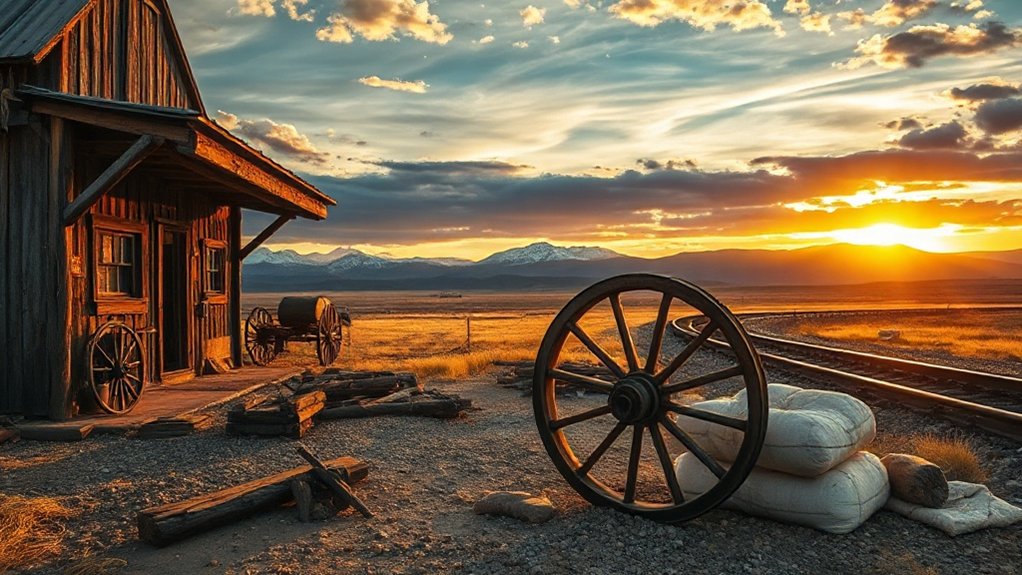
Railroads changed frontier land from empty distance into real money. You could see value rise where tracks crossed prairie, forest, and dry plains. Investors bought land near railroad corridors because trains made remote acres reachable, useful, and easier to sell.
You didn’t need a gold mine to profit. You needed access. Rail lines lowered shipping costs, brought buyers closer, and turned claims into assets. Depot towns formed near stations, and nearby land gained a clearer price because people could imagine farms, mills, and homes there.
You can see the deeper lesson in that steel path. Wealth grew when movement met land. Railroads gave the frontier a pulse, and that pulse helped ordinary dirt become opportunity for builders, farmers, and bold families.
Frontier Towns Expanded Domestic Trade
Frontier towns turned local effort into national trade. You can picture dusty streets where farmers, blacksmiths, boatmen, and shopkeepers met to exchange goods, news, and trust.
- You brought crops into local markets, where buyers turned small harvests into steady income.
- You used river trade to move flour, pork, timber, and tools toward larger U.S. cities.
- You built connections that helped frontier families sell more, buy better, and dream bigger.
These towns didn’t just serve settlers. They linked cabins, farms, mills, and ports into one growing American economy.
When you look closer, you see wealth forming through movement. Goods traveled, money returned, and confidence spread.
Frontier trade gave ordinary people a path from hard work to opportunity.
Land Speculation Inflated Frontier Wealth
Cheap frontier land could look like the start of everything: a farm, a town, a business, a whole new future. As more buyers rushed in, speculators pushed prices higher, and paper fortunes grew long before the land produced real wealth. It was a powerful reminder that American prosperity often began with hope—but hope could also run far ahead of reality. Next, that same mix of ambition and risk shows up in another force reshaping the economy.
Cheap Land, Big Promises
Land opened up a dream that felt bigger than the map itself. You could hear cheap promises in every glowing ad and town-lot poster. A few dollars seemed able to buy a future, not just soil.
- You saw acreage myths turn rough fields into imagined fortunes.
- You believed distance meant opportunity, even when roads, water, and markets stayed far away.
- You watched hope make empty acres feel rich before they produced a crop.
This belief shaped frontier wealth in the United States. You didn’t need gold in your hand to feel richer. You needed a deed, a story, and courage to keep going. Land carried emotional value, family pride, and national purpose. That promise lifted people, even when the ground demanded more than dreams.
Speculators Drove Prices
Prices shot up when speculators moved in with cash, rumors, and sharp timing. You could watch a quiet patch of prairie turn into a “future town” before a schoolhouse, road, or well appeared. Buyers didn’t always chase soil; they chased hope.
You saw bubble psychology at work when each sale made the next price feel smarter, safer, and more urgent. A neighbor’s profit pulled you closer, even if the land still sat empty under tall grass.
Wildcat banking added fuel because shaky local banks made credit feel easier than it really was. Speculators used borrowed money to grab acres, praise the location, and sell fast.
Frontier wealth grew, but you can see the risk: rising prices often measured excitement more than real progress.
Paper Fortunes Multiplied
Speculation didn’t just raise frontier prices; it created paper fortunes that made ordinary people feel rich before real wealth existed. You watched land claims turn into promises, and promises turn into wealth on paper.
- You saw paper currencies make buying easier, even when coins stayed scarce.
- You treated land notes as speculative instruments that could rise fast.
- You felt hope grow as maps, deeds, and rumors lifted prices.
But this wealth often floated above reality. A farm might still have no road, no house, and no crop. Yet you could sell the claim for more than you paid.
That dream pulled you forward. It taught you that frontier wealth often began as belief, then became money when enough people trusted it.
Why Frontier Wealth Rewarded Risk
When families moved toward the frontier, they accepted danger before they gained comfort. You faced rough roads, thin shelter, harsh weather, and uncertain harvests, yet you saw a chance to build something enduring.
Pioneer risk taking mattered because land, trade, and labor could grow in value fast where towns were new. You might clear fields, open a mill, haul goods, or start a store before safer investors arrived.
That early courage created Risk premiums. You earned more because you accepted losses others avoided. A wagon could break, credit could vanish, or a crop could fail.
Still, if you endured, your claim, shop, or route could become valuable. Frontier wealth rewarded you for stepping first, working hard, and trusting tomorrow.
Why Frontier Wealth Was Unevenly Shared
Frontier wealth wasn’t shared evenly, and you can see why. Some families got land and a fresh start, while others ran into high prices, legal barriers, or land already claimed by speculators.
Land Access Barriers
Although the frontier opened a powerful path to wealth, it didn’t open that path equally for every American. You’d to clear more than trees to claim land. You also had to face rules, fees, distance, and doubt.
- Legal barriers: Access restrictions kept many people from filing claims, especially women, free Black Americans, immigrants, and Native people.
- Paper barriers: You needed title deeds to prove ownership, but records could be confusing, missing, or costly to secure.
- Practical barriers: You needed tools, travel money, livestock, seeds, and time before land could feed your family.
Speculation And Inequality
Speculators often moved in before ordinary families could settle down, and they turned open land into a race for profit. You can picture buyers grabbing huge tracts, then waiting as roads, towns, and settlers raised the price.
You see how Credit bubbles made this worse. Easy loans let well-connected investors buy more land than they could use, while poorer families struggled to secure one farm.
Tax exemptions also tilted the field. When governments rewarded railroads, companies, or favored buyers, they helped wealth gather in fewer hands.
How Frontier Wealth Still Shapes America
The wealth built on the frontier didn’t fade away when the wagon trails grew quiet. You still feel it in land values, family fortunes, rail towns, and business networks that grew from early claims.
- You see it in cities, where urban migration turned old frontier gains into banks, factories, and real estate.
- You hear it in cultural mythology, where risk-takers became heroes and failure became a test of grit.
- You face it in inequality, where some families inherited land, while others inherited barriers.
You can understand America better when you trace today’s wealth back to yesterday’s choices. The frontier still shapes who owns property, who gets credit, and who feels welcome to build.
When you see that, you can push for fairer opportunity now.
Frequently Asked Questions
How Did Frontier Wealth Affect Early American Banking?
Frontier wealth pushed you toward credit-heavy banking: Land Banks lent against property, helping settlers expand, while Specie Shortages made hard money scarce. You’d see banks issue notes, fuel growth, and risk instability when confidence fell.
Did Frontier Expansion Influence American Ideas About Individualism?
Yes. You see frontier expansion strengthen rugged individualism as settlers prized independence, risk-taking, and personal effort. Frontier self reliance shaped beliefs that you could succeed through grit, hard work, and less dependence on institutions.
What Role Did Immigration Play in Frontier Settlement?
Ironically, immigrants “established” the frontier by constantly moving. You’d see labor mobility fill farms, mines, and railroads, while ethnic enclaves offered support, culture, and networks, helping newcomers survive hardship and build enduring communities.
How Did Frontier Wealth Affect Women’s Economic Opportunities?
Frontier wealth gave you more chances to earn, especially as women entrepreneurs. You could run boardinghouses, shops, farms, or household industries, turning domestic skills into income, independence, and stronger roles in growing local markets.
Did Frontier Expansion Change America’s Tax System?
Yes—like rivers carving new channels, you’d see taxation evolution as frontier expansion pushed governments to fund roads, defense, and land offices. It encouraged revenue decentralization, since local needs often shaped taxes before federal systems matured.
Assessment
Frontier wealth was both opportunity and loss. Land gave many settlers a fresh start, but it also took homes, resources, and sovereignty from Native nations.
By 1860, about 80% of U.S. millionaires had made their money from land. That shows just how deeply the frontier shaped American ideas of success and wealth.
When we look at today’s wealth gaps, we’re still seeing the effects of that history. We can learn from it, question it, and choose to build something fairer.