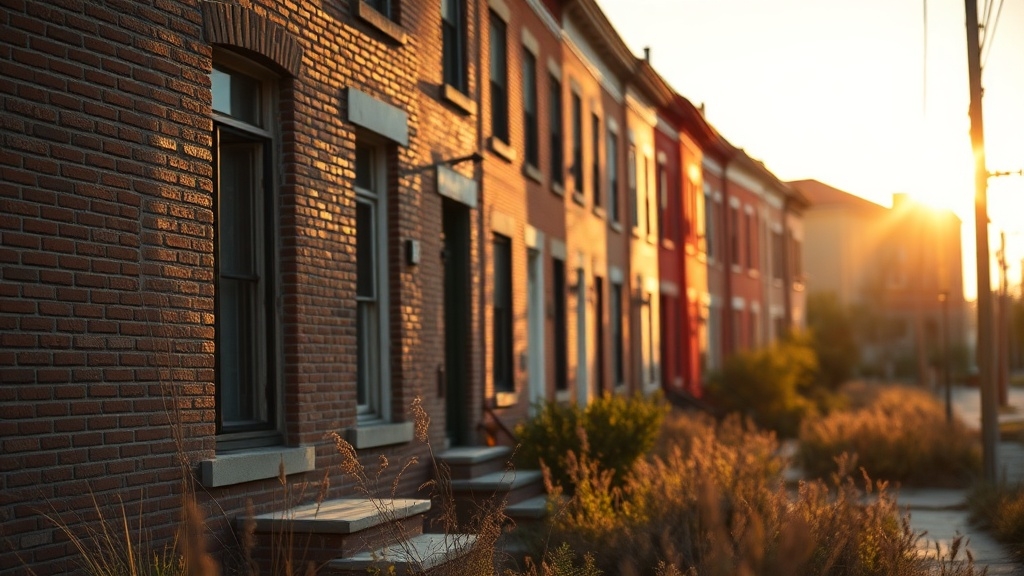
The Scope of Baltimore’s Vacancy Challenge
Baltimore’s housing environment faces a significant challenge with widespread vacancies. In 2020, the city had around 16,000 vacant properties, a number that had remained steady for decades. By August 2024, there was a 22% reduction, with vacancies decreasing to 12,510. Despite this progress, approximately 13,000 homes continue to be vacant or abandoned. This decline in vacancy statistics signifies notable change yet highlights persistent challenges. High vacancy rates disproportionately affect majority-Black, low-income neighborhoods, emphasizing stark disparities. Ignoring moisture levels in property renovations could worsen deterioration issues in such areas. The economic impact is substantial, with a $100 million annual tax revenue loss. Additionally, public costs equate to this amount. As part of an effort to address these issues, the Baltimore Vacants Reinvestment Council (BVRC) was established in October 2024 by Governor Wes Moore, with a dedicated objective to revitalize 5,000 vacant properties within five years.
State and City Initiatives to Revitalize Baltimore
While the city’s vacancy challenges are intimidating, there’s a strong push to revitalize Baltimore through various state and city initiatives. A concerted effort has emerged, aiming to address the issues systematically. The Baltimore Vacants Reinvestment Council was established by Governor Wes Moore. The council aims to guide investments into 5,000 vacant properties by FY2029. Efforts to enhance competitiveness include the reduction of property tax rates below $2 per $100 assessed value by 2028.
Community engagement plays a critical role as government, corporate, and philanthropic leaders collaborate monthly. The focus is on property-by-property renovations. The Council recently reported the allocation of $30 million to 20 Baltimore-based Community Development Organizations, which will spearhead community projects across the city.
The #Reinvest Baltimore Initiative further boosts these efforts. This initiative targets 5,000 properties for homeownership or positive outcomes. It coordinates partners to tackle vacancy concentrations through whole-block redevelopment. The initiative emphasizes tracking and prioritizing redevelopment areas.
Ensuring transparency and efficiency is key. Support for community-driven plans is strong in historically disinvested neighborhoods. Renovation and stabilization are encouraged in these areas, with an emphasis on community involvement.
Funding and Financial Strategies
Baltimore faces a major challenge with its vacant homes. To tackle this issue, substantial financial strategies are crucial for revitalizing the city’s environment.
Significant funding mechanisms have been initiated, with state funding allocations dedicating $100 million for demolition and renovation purposes. Starting in 2025, there will also be annual financial allocations of $50 million.
The city has also committed to a $3 billion plan spread over 15 years. Legislation is in place to triple taxes on vacant properties by 2026.
Collaborative financial strategies aim to leverage additional resources. The focus remains on funding mechanisms that support sustainable community enhancement.
Incorporating energy-efficient upgrades into renovation projects could reduce long-term costs and increase property attractiveness.
Here is a breakdown of fund allocation for different purposes:
| Fund Allocation | Amount | Purpose |
|---|---|---|
| State Funding Allocations | $100 million | Demolition & Renovation |
| City Financial Commitments | $3 billion | Vacant Home Reduction Plan |
| Philanthropic Contributions | $8.5 million | Nonprofit Support |
The Role of Private Investment
Mobilizing private capital is crucial for tackling Baltimore’s vacant housing crisis. The city is set to combine billions in private equity with public initiatives to invest in rehabilitating vacant homes.
Baltimore’s goal is to secure $5 billion in private financing. This effort will work alongside public funds to revitalize neighborhoods more effectively.
Structured investment vehicles, such as pooled funds, are suggested to make investments smoother and less costly.
Community collaboration plays an essential role, involving small developers and community development corporations for single-family and small multi-family projects.
Larger investors will focus on block-level redevelopments. Incentives, including tax tools and subsidies, are designed to reduce risk and attract private investors.
Philanthropic contributors are drawn to these ventures, seeking both social and financial returns.
Successes and Lessons From Past Efforts
Baltimore’s blend of private and public investments underscores the importance of drawing lessons from past endeavors.
The Vacants to Value program, launched in 2010, crafted strategies to combat vacant impacts through financial incentives and accelerated sales.
By 2018, it had rehabilitated 4,200 vacant buildings and demolished over 2,700 properties.
However, according to a 2015 Abell Foundation report, the program’s reach was overstated and spurred limited redevelopment beyond targeted areas.
Past initiatives recorded a 22% drop in vacant properties from 2020 to 2025.
Newark’s ongoing efforts to address water contamination through lead pipe replacements highlight the significance of proactive municipal policies in preserving neighborhood appeal and property values.
This history imparts critical lessons on addressing distressed blocks effectively, emphasizing the need for collaborative efforts and block-level strategies.
Baltimore remains committed to applying these lessons to achieve tangible improvements in its neighborhoods.
Assessment
Baltimore’s initiative to address the city’s 13,000 vacant homes is a pivotal moment in urban revitalization.
Through concerted efforts by state and city authorities, combined with strategic financial frameworks and private sector involvement, the potential for transformation is substantial.
Historical successes and setbacks provide critical learning opportunities. These illuminate pathways for future progress.
As Baltimore maneuvers through this complex challenge, the collective drive for renewal underscores an urgent need for innovative solutions.
The goal is to redefine its urban environment effectively.