Key Takeaways
- Building community-centered relationships creates long-term stability and fulfillment in business
- Consistent daily habits and mindset discipline compound into sustainable success
- A business should support the life you want, not consume your identity
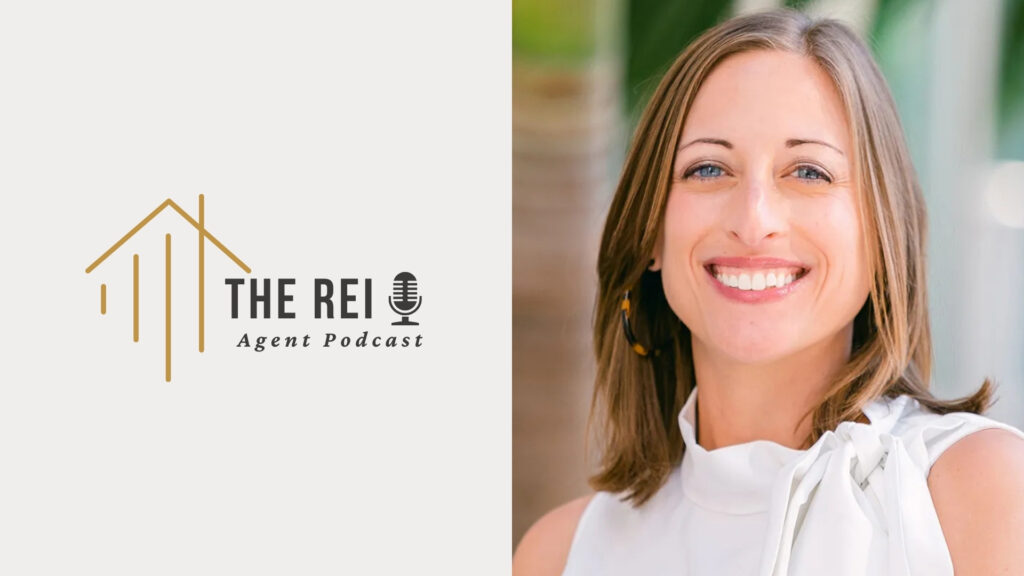
The REI Agent with Brittany Ranew
Value-rich, The REI Agent podcast takes a holistic approach to life through real estate.
Hosted by Mattias Clymer, an agent and investor, alongside his wife Erica Clymer, a licensed therapist, the show features guests who strive to live bold and fulfilled lives through business and real estate investing.
You are personally invited to witness inspiring conversations with agents and investors who share their journeys, strategies, and wisdom.
Ready to level up and build the life you truly want?
Follow and subscribe to The REI Agent on social


When Real Estate Becomes a Vehicle for a Bigger Life
An Introduction Rooted in Purpose
This episode unfolds as a deeply human conversation about purpose, patience, and building something that actually feels good to live inside.
Brittany Ranew is not chasing transactions. She is building a life, a community, and a business that supports both.
Through her journey, the conversation reveals how real estate can become fuel for a meaningful, balanced, and creatively rich life rather than a source of burnout.
“I have always looked at real estate as the fuel to create the life that I want.”
A Career Chosen With Intention
From Curiosity to Commitment
Brittany’s entry into real estate was thoughtful and deliberate. It came from a love of homes, a love of people, and a strong desire to build something independently.
Early entrepreneurial experiences helped her realize that fulfillment mattered just as much as income. Real estate became the vehicle that allowed service, creativity, and independence to coexist.
Learning the Business From the Inside Out
By working as a transaction coordinator early in her career, Brittany gained rare insight into how deals truly function.
She learned how emotions surface, how transactions derail, and how professionalism creates calm when stress runs high.
Those lessons later became the foundation of her concierge-level approach to clients.
Community First Changes Everything
Relationships Over Transactions
One of the strongest themes of the episode is Brittany’s belief that business should be relational, not transactional.
She focuses on making people feel welcomed, supported, and deeply connected to where they live.
“I do not view this business as transactional. I want people to feel welcomed into the community they are living in.”
This mindset naturally leads to repeat clients, organic referrals, and trust that compounds over time.
Rebuilding From Scratch in a New Market
When Brittany moved to Tampa Bay, she had no built-in network. Instead of forcing growth, she immersed herself in the local community, took a step back professionally, and invested in genuine relationships.
“If you move to a new market, you have to get plugged in. The work pays off if you stay consistent.”
The episode makes it clear that community immersion is not a shortcut. It is a long game that builds roots that cannot be shaken.
The Power of Ninja Selling and Daily Mindset
Structure Creates Freedom
Brittany credits Ninja Selling with helping her formalize what she already believed.
It reinforced the idea that consistent human connection and intentional conversations create predictable success.
“It helped me elevate my game and really focus on cultivating relationships.”
Daily disciplines like morning routines, gratitude, journaling, and movement are presented not as trends but as tools that keep agents emotionally grounded and mentally strong.
Small Actions Add Up
The episode repeatedly returns to the idea that success is rarely about massive breakthroughs. It is about stacking small, intentional wins over time.
“Incremental progress will take you farther than an all-or-nothing mindset.”
This philosophy mirrors both Ninja Selling principles and Brittany’s broader approach to life and business.
Thriving in a Changing Market
Setting Honest Expectations With Clients
In a slower and more complex market, Brittany emphasizes clarity and honesty. Pricing, presentation, and preparation matter more than ever. Sellers need guidance rooted in reality, not optimism.
“You cannot push the envelope on pricing right now.”
Professionalism becomes most visible when the market gets harder, and this episode highlights how strong communication builds long-term trust.
Marketing That Makes Homes Stand Out
Brittany stresses that buyers decide emotionally and visually. Strong staging, thoughtful presentation, and compelling online marketing are no longer optional.
“If it does not look good online, buyers are not coming to the house.”
Her approach positions agents as strategic advisors who understand how buyers actually think.
Living Beyond the Job Title
A Human First Philosophy
One of the most inspiring moments in the episode is Brittany’s refusal to tie her identity solely to real estate.
She is a writer, a creator, a partner, and a community builder.
“I am a human being first, not a real estate agent.”
Her upcoming fantasy novel represents a lifelong dream made possible by real estate, not replaced by it.
Redefining What Success Looks Like
Success, as framed in this conversation, is deeply personal. It is not rankings, volume, or comparison. It is alignment.
“Life is big and beautiful. It is not meant to be only one thing.”
The episode invites listeners to ask whether their business supports their life or consumes it.
The Long Game Always Wins
Going Deep Instead of Wide
Brittany believes depth beats scale. Fewer relationships, nurtured intentionally, create more fulfillment and stability than countless surface-level connections.
“I would rather go deep with people than go wide with superficial connections.”
This philosophy is evident in her client events, handwritten notes, and hyper-local focus.
Being a Good Human Is the Strategy
At its core, the episode delivers a simple but powerful truth. Integrity compounds over time.
“If you are a good human, you will attract the right people.”
That belief runs through every chapter of Brittany’s story.
A Life Designed With Purpose
Closing Reflections on What Truly Matters
This episode of The REI Agent is not just about tactics. It is about permission.
Permission to slow down, prioritize relationships, and build a business that supports a full and meaningful life.
Brittany Ranew’s journey shows that when community, consistency, and authenticity lead the way, success becomes sustainable, grounded, and deeply fulfilling.
“Real estate should serve your life, not replace it.”
Stay tuned for more inspiring stories on The REI Agent podcast, your go-to source for insights, inspiration, and strategies from top agents and investors who are living their best lives through real estate.
For more content and episodes, visit reiagent.com.
Articles Related to The REI Agent
- 10 Shocking Truths From the 2025 Global Housing Storm (And How Agents and Investors Can Thrive Through It)
- Shocking Balance Before Wealth (How Erica Clymer’s Holistic Practices Help Agents and Investors Thrive in Global Housing)
- Global Housing Storm (Holistic Solutions to Million-Dollar Dreams, Desperate Sellers, Rising Rents, and Shifting Wealth)
- Top 20 Terrifying Reasons Agents Will Never Be Investors (And How to Fix It)
- 10 Ways to Kill Real Estate Agent Burnout in 2025 (The Holistic Fix)
- Mattias Clymer is Silently Leading a $70M Movement That’s Changing Agent Lives
- Therapy You Didn’t Know You Needed (Holistic Wisdom for Real Estate Professionals)
- From For Sale Signs to Life Design (How The REI Agent Transforms Real Estate Into Holistic Wealth)
- Achieving Holistic Wealth and Success Through Real Estate (Insights from The REI Agent)
- Partnering with Investors (How Real Estate Agents Can Exponentially Maximize Profits)


Contact Brittany Ranew
Mentioned References
Transcript
[Mattias]
Welcome back to the REI Agent. I am here with Brittany Ranew. Oh, I almost did it.
Brittany, I almost did it. We just talked about it.
[Brittany Ranew]
Okay, you get a pass.
[Mattias]
Brittany, thank you so much for being on the show. You are coming out of the Tampa Bay area market, correct?
[Brittany Ranew]
Yes, yep. I live in St. Pete, but I cover all of Tampa Bay because it’s a very connected metro area.
[Mattias]
Brittany, if you can give us an elevator pitch about who you are in the real estate business, what’s like kind of that bird’s eye view of you in the real estate world?
[Brittany Ranew]
Yeah, I think I like to pitch myself as someone who really cares about community. So for me, I do not view it as transactional. If I am, particularly buyers who are relocating to the area and don’t know anything about it, I wanna bring people into the fold and make them feel welcome and connected to the community that they’re living in.
And I like to host client parties throughout the year. I just, you know, I really want my clients to feel like they are getting that full concierge experience.
[Mattias]
I love it. Almost Disney-esque.
[Brittany Ranew]
No, I’m a total Disney nerd and a pass holder, so you nailed it.
[Mattias]
Yeah, no, I love, I don’t know if you’ve looked at the different brand archetypes, but the Magician, I believe, is the one that is Disney and it’s all about the experience. And I think that’s definitely a niche that somebody can go if they find themselves connected to that kind of theme in the sales business. So it’s really cool.
[Brittany Ranew]
Yeah, I do believe that magic exists in the world. Thank you, Disney. So I like to sprinkle that little fairy dust on my clients as much as possible.
[Mattias]
I love it. And I’m sure that gives you raving fans then.
[Brittany Ranew]
Yeah, I mean, that has been cool. It’s been cool to build that kind of foundation of clients who come back and wanna work with me, you know, whether they’re buying additional properties because they’re building investment portfolio or they’re selling and upgrading. So that is cool to get repeat clients and then to have those clients refer business.
So that’s definitely my, that’s my bread and butter is just working with people that I know and people that are like a warm referral from something like that, so.
[Mattias]
Yeah, we can definitely get into that. I think that is my preferred type of business as well. But obviously a lot of people do different things with paying for leads or cold calling or door knocking, et cetera.
But before we go into that strategy, can we talk a little bit about how you got into real estate? What made you choose this crazy career?
[Brittany Ranew]
It is a crazy career. Yeah, I think really as I got into like young adulthood, I really just wanted to like branch out on my own and, you know, pursue entrepreneurship and always loved houses. I loved working with people.
I had started a event planning business. I’m originally from Mobile, Alabama. So this was, I lived in St. Pete now for 10 years. So back in Mobile, I had started event planning business and it, you know, kind of never really got off the ground. And I was just trying to like figure out what I wanted to do with my life, you know? And I was like, you know what?
I’ve always loved houses. I love people. I want to kind of do my own thing, blaze my own trail.
And real estate just felt like the perfect way, you know, vehicle to do that. And that’s how I got started. And it really has been that I have enjoyed, especially moving to St. Pete, I feel like I kind of entered a new era of my business and just being able to really come into my own and figure out, you know, what I wanted my life to look like and, you know, real estate is kind of the fuel to that.
[Mattias]
I love it. Yeah, I shared that when I think my whole life, I had that kind of entrepreneurial spirit and really didn’t do well with like confinement, but did really well with like, kind of being able to pursue what I found interesting and exciting and, you know, can work really hard at something that I’m wanting to do, but.
[Brittany Ranew]
Yeah, well, it’s rewarding at that point because you’re working hard for yourself. Like, you know, you’re putting all of that work into and it’s gonna be, you know, what you create it to be, so.
[Mattias]
Yeah, yeah, totally. And I think it’s such a good industry as well. I mean, I think we’re helping people with some really stressful times and being able to help them navigate that smoothly is very rewarding and it can pay well.
I mean, there’s definitely the financial benefit as well. So yeah, so you decided to get into real estate to pursue that. Did you join a team?
Were you on your own? What did you do there?
[Brittany Ranew]
Kind of like, kind of both. I ended up becoming a transaction coordinator for a team. So I would randomly help out on deals from like a licensed agent perspective, but it was more of just kind of behind the scenes work.
And then I was doing my own thing, building my business. And it was good because, I mean, it was good mentorship. Like I learned a lot of things, you know, the ins and outs of deals and what can go wrong and, you know, the best way to serve your clients and build that like concierge level experience.
So I definitely learned a lot through that. And when I moved to St. Pete and joined Premier Sotheby’s International Realty, I stayed on my own. So I haven’t had, I have not been on a team since, but I have a marketing assistant and I do have a transaction coordinator.
So again, just about being able to serve my clients the best way.
[Mattias]
Sure. Yeah, no, I think the, you know, that’s probably one of the most ideal kind of part-time or whatever jobs you can have if you’re trying to build your business and as well at the same time. That’s such a valuable way to get started.
How do you get your foot in the door? Like, I mean, if you didn’t have experience in that before, did you just express interest and somebody liked you?
[Brittany Ranew]
Yeah, I mean, credit to the brokers that hired me back in Mobile, that was at Better Homes and Gardens. I had a great meeting with the two of them. They’re business partners and they were just like, you know, we see like, you know, this sounds humblebrag.
We see like great things in you and we wanna be a part of that journey. It was that kind of thing. So it was really exciting to have someone be like, oh, like believe in me in that way.
So I think that was a lot of it. They just took a chance on me and kind of like, hey, we’ve got one of our top producers, you know, she needs some help. Would you wanna do that?
And it just kind of all, it all worked out, so.
[Mattias]
Yeah, very cool. That’s awesome. So you’re a Sotheby’s now.
Are you doing primarily luxury? Is that your niche?
[Brittany Ranew]
You know, the interesting thing about the Tampa Bay market is we really have the full range in spectrums of types of houses and price points. So yes, Sotheby’s is geared towards luxury properties and we have all of those amazing marketing tools and we like, even with our lending partner, like to be able to help affluent clients. So it’s definitely geared towards that.
But again, it’s like, we have this saying that luxury is not about a price point, it’s about an experience. And so that is what we strive to provide for our clients, no matter what the price point. So in Tampa Bay, I’m definitely doing the full spectrum for sure.
[Mattias]
Okay, interesting, yeah. And so, I mean, we can definitely get into a little bit about your idea of, you know, who you prefer to work with, giving that experience and getting warm referrals and that kind of stuff. Did you ever do more chasing of leads or door-knocking or farming or kind of the opposite approach, if you will, like from, you know, working the people that you know and nurturing the people that you know and your past clients, et cetera?
Was there a phase in your career that you explored other routes?
[Brittany Ranew]
Honestly, I really didn’t. And I think that’s because the top producer that I helped with back in Mobile, like that was her business of just referral base. And so I kind of learned that from the get-go.
And then in 2019, I got introduced to Ninja Selling, which I would hope a lot of people in your audience are familiar with. And that was such a mindset shift on a lot of levels, but it definitely helped me hone in on, okay, this is definitely the business I wanna be in with it being relational-focused and the best ways to just continue to cultivate those relationships. Ninja Selling does a great job of kind of giving you the tools, the framework for that.
So yeah, that’s, I kind of went all in on that and didn’t change. And I’m not, my personality is not really like, I’m not the cold-call door-knocking type person, so yeah.
[Mattias]
Well, I think when you’re in this, so yeah, I’ve read the book. I know the book, I’m a fan of it. I think when you’re in this type of business and you’ve built it on the warm referrals, it just seems really painful.
So we get rejected a million times. And it’s not that it doesn’t work. I mean, I think you definitely can make a business out of it.
And there’s something about, if I know if I make 100 calls or whatever it is, I’m gonna get two appointments or whatever the numbers are that you can kind of get some predictability in your business, but yeah, it can be painful. Whereas if you’re talking to people that you know or you’re engaging people in the community that, and you’re asking them things like the Ford, like your family, your occupation, let’s see if I can remember all of them, recreation and dreams. Those are the things that you ask.
That’s a much different conversation than like, hey, are you thinking about selling? Do you know anybody that’s selling? It just comes across different.
[Brittany Ranew]
Put a gun to your head. Do you know anyone that’s selling? No.
I think it didn’t work very well.
[Mattias]
So, okay, so at what point did you switch over to the Tampa Bay area? And were you able to then still, because you’d have had a new network at that point, right? Like, I mean, you wouldn’t have had, you’d had to build up your clientele, your database, et cetera.
So how’d you go about that?
[Brittany Ranew]
Yeah, completely. Yeah, we moved here for, my husband had a job opportunity, picked up and moved and didn’t know anyone. So yes, I had to start from the ground up.
And I actually ended up working as the office administrator in my office at Premier Sotheby’s when we first moved in 2015. And it was very nice to just kind of get acclimated with the Florida real estate market, which is very different than Alabama. And it gave me the space to build a community here.
So that’s the way I chose to do it. I got back into sales in 2017, and it was like off to the races at that point. I felt like, okay, I have this great foundation, and I was able just to invest in my community and keep going.
So that’s kind of, I think, regardless of whether someone did that, like if you moved to a new market and you decided to have another job and kind of get the ball rolling, I think the key is just to dive into the community. Like my husband and I, we went full force into it. We just really plugged ourselves in.
And I think that made a world of difference. So that’s my advice. If you’re going to a new market, you’ve got to get plugged in.
And it’s hard work, because you’re the new kid on the block. You’re the one initiating everything to try to build those relationships. But that work pays off if you stay consistent with it.
[Mattias]
Yeah, totally. I was just talking about this on another episode, or another interview, that I think going to a gym community is such a life hack for a lot of different reasons. But I mean, also, if you’re new to an area, that’s a great way to kind of build up another community that you just naturally bond with the people that you’re sweating next to.
[Brittany Ranew]
Yeah, yeah. It’s like the commonality. Find something like that that you have common interests with, and you’ll definitely build those relationships, for sure.
[Mattias]
Yeah, yeah. Okay, so you’re building up your sphere a little bit as you were there, decided to get back into real estate sales. And so at that point, you had also been introduced to the Ninja system.
[Brittany Ranew]
Yeah, so that was, yeah, 2019. The Seth DeVees International Realty brand became like, they were like, hey, we’re adopting the Ninja selling mindset. So they started like, sponsoring installations is what they’re called when you do that week long.
Yeah, so they started sponsoring those throughout the different offices. And yeah, so we became a Ninja company, as they say. And it was just, like I said, fantastic, because it drove home like, yeah, these are all the things I’ve been trying to do.
And it helped me elevate my game when it comes to digging into the community aspect. And I think the mindset part of it is another big piece, making sure that you are waking up, having a morning routine, taking care of yourself, exercising, having time to do gratitudes and journaling and just like getting your mind right. Because if you start the day off with your mind and body in the right place, you’re setting yourself up for a good day.
Well, if you do that five, seven days in a row, you’ve got yourself a good week, and that builds on from there. So that’s kind of the idea. And I definitely embrace that for sure.
[Mattias]
Yeah, I think there’s oftentimes when you get to that kind of space, gratitudes and journaling, and you hear people hear that, and they think self-help, and then they kind of get turned off. Like, I mean, if they haven’t gone through maybe those kind of practices at all and aren’t familiar with it, I think it’s an easy, I know when I first read anything in that kind of genre at all, I was kind of embarrassed. I never really wanna talk about it.
But I think like, it is really important. I think it’s really good. You are basically, you’re kind of brainwashing yourself in the right way.
Like, you’re training yourself. You’re kind of getting your horse blinders in, if you will. And like, you’re gonna make yourself go in the direction that you want to.
And so it’s not, yeah, I mean, it works. That’s why it’s around. And that’s why it’s in this book as well.
And I think also in the book, it gets into some of those daily practices. Like I know some people will say, I’m not gonna, my day’s not done until I’ve knocked on 20 doors or whatever. My day’s not done until I’ve made 40 phone calls or whatever.
But then this book will also give you those kind of daily and weekly kind of actions that you need to do. And some of those are like, what, the 50 live interviews, right?
[Brittany Ranew]
Yeah, yeah, they have that as part of that framework of 50 live interviews throughout the week. And it’s just, it’s either a phone conversation or if you were at a networking event and you had like five meaningful conversations with people or you went and had lunch with someone, like all of those interactions count because it’s about having that intentional conversation with someone no matter what the format is. So yeah, that’s kind of their mechanism.
Like, hey, if you focus on doing that on a weekend, week out basis, you’re building that foundation and you’re keeping that momentum going. And I think that’s also like what you said about having like daily things to do because it’s so easy with real estate or with anyone who’s an entrepreneur, like you’re your boss, like you’re answering to yourself. So to have some kind of discipline structure in place, I know I’m gonna do these things each day, it makes a world of difference versus waking up and like waiting for something to happen, you know?
[Mattias]
Yeah, yeah, totally. And just know that you’re kind of working towards something. If anybody’s in like trying to build their social media or kind of focused on their social media aspect of their business, the one hack that I heard is, and you could apply it to here, is if you actually reach out to people through their DMs, even if you have their phone number, if you’re looking, like a great practice could be just, hey, I’m gonna try to, let’s just do Monday through Friday, we’ll save the weekend alone. I’m just gonna like, you know, casually scroll Facebook like I might be doing anyway or Instagram and then see something that somebody is doing or posted and reach out to them and talk to them like in the direct messages. And start that conversation where you can like catch up and you can do the Ford thing and all that and have that live conversation through a DM.
And the point being is that that will connect you, that will achieve that. It seems maybe manageable. You have something to talk about.
There’s, you know, you’re not having to meet somebody for lunch 50 times a week.
[Brittany Ranew]
Yeah.
[Mattias]
It’s more manageable, but then they, in theory, then the algorithm will also push your content to them more after the fact because you have then reached out in that fashion. So I think it’s an interesting way of trying to, you know, systemize that aspect in the modern age.
[Brittany Ranew]
Yeah, that’s a good point. And I think, I mean, I like that idea of like, if you’re DMing them, then the algorithm does push, you know, your content to each other. So that, I think that’s good for sure because it’s easy to get lost in that.
And then the other flip side of that is if you are able to text them, so taking that offline, like if you saw, you know, maybe you saw on Facebook, they posted that, you know, they were pregnant, you know, you could text them and be like, oh my gosh, I just saw this, congratulations. You know, then maybe remembering to, because the other thing with ninja selling is like sending out personal notes and cards and things like that. It’s just that extra touch. Yes. To be intentional like that so that they know that you’re thinking about them. So I’ll do that too. I’ll like, if I see something like that, I will then turn around and go put a, you know, a congrats card in the mail or write a personal note or something.
And I think that’s another good way to do that.
[Mattias]
And I don’t know if you’re familiar with the seven levels of communication. That’s another pretty good book that they talk about some of the different, like the hierarchy of like, if you’re meeting with somebody in person one-on-one, that’s like the ultimate, like, you know, level of communication that you can have with somebody. And then, you know, going on down to like, you know, billboard or whatever, broad advertisements, you know, like the least personal.
So, yeah, I think that you definitely, it’s good to also mix in those higher levels of forms of communication, like you’re talking about, like a phone call even, or, you know, one of the things that I like to do is actually send, there’s a laundry service in our area, a friend of mine, a past client and friend, that we’ve actually worked out a bit of a deal where I can get a gift card for less than, you know, what we’re actually giving. And it’s a great introduction to their service. But, and so, yeah, I gave a gift card to a person who just had a baby or had a big life event or whatever for their laundry to be picked up and cleaned and folded and delivered.
And it’s like, what a perfect time for that, right?
[Brittany Ranew]
Yeah, yeah, I mean, it’s touches like that. Like we’re talking about, it’s something that’s intentional and personal. I think about the phrase like going deep instead of going wide.
And, you know, that’s a good way to like remember is like, I wanna go deep with all these people that I’m connected with versus just feeling like I gotta cast this huge wide net and have all these superficial connections and touchpoints. I mean, that’s not, you have to work way harder to get momentum from that side of it, yeah.
[Mattias]
Yeah, and so then, you know, the idea then too is if you are in doing all these kind things, being like intentionally a good friend too.
[Brittany Ranew]
Yeah, being a good human, you know.
[Mattias]
A big amount of people that, you know, if they do know somebody that might be looking and moving, they’re more likely to, you know, pass you along, your information along to them, even though you haven’t maybe directly asked them for it to do that.
[Brittany Ranew]
Yeah, exactly.
[Mattias]
It’s kind of some of the methodology and obviously you’d hope that they would use you as well.
[Brittany Ranew]
Yeah. Yes, for sure. But hey, I’ve had this happen many times where that person has some kind of longstanding relationship with an agent or maybe it’s a family member and they feel very obligated to use that person but they send anyone else they know to me, you know, in this example because they see that extra, you know, they see the extra layer of like, hey, I think, you know, this person’s gonna have that, provide that full experience and even though I feel like I need to use this person, I’m gonna refer over here.
I mean, I’ve definitely had that happen. So it’s, I think it really, yeah, it just comes back to like if you’re just a good human, you’re gonna attract the right people to you. That’s just, that’s my philosophy.
Yeah.
[Mattias]
And I mean, at the end of the day, like it’s nice to be at a point where you can work with just the good people.
[Brittany Ranew]
Yes. Yes.
[Mattias]
There is nothing like, yeah, some person that just is, everything they do is insanely stressful. You don’t know how people like, how they survive just living at that level all the time.
[Brittany Ranew]
Yeah, like at Defcon 10 or whatever. Yeah.
[Mattias]
But we’ve all worked with them.
[Brittany Ranew]
Yes.
[Mattias]
This business definitely brings out, I mean, like going through that stressful processes, it’s gonna bring out the worst in people it can for sure.
[Brittany Ranew]
So yeah, definitely brings out the emotions and we have to be, we’ve gotta be that calm, like voice of reason to try to, you know, deescalate the situation. Perfect.
[Mattias]
Yeah. What are some ways that you try to, I don’t know if balance is possible, true balance, but what are some of the ways you try to live a more holistic life in this crazy world of real estate?
[Brittany Ranew]
Yeah, I think for me, I’ve always, I mentioned this earlier, like I’ve always thought about real estate as kind of the fuel to create the life that I want. So, you know, having meaningful relationships and building communities is really important to me. So like, I’m definitely always gonna prioritize that, like spending time with my family, spending time with my friends, and then it enables me to do other stuff that I’m passionate about.
And I think that, like for me, I’m a writer, so I’ve actually published, or about to be published, fantasy author. That’s been a long time dream of mine. Nice.
Yeah, so it’s like being able to like take the time to do the things that fill my soul up, because I know that if my soul is full, then I’ll be able to serve my clients to the best of my ability. If I have a good relationship with my husband, if I have a good relationship with my friends, I know that it’s gonna enable me to be the best version of myself out in the world to serve my clients. So that’s kind of, I just look at it from like that holistic, like you said, the synergy between that.
I’m a human being first and foremost, not a real estate agent. So it’s, you know, my identity is not wrapped up in real estate agent. There’s a lot of different facets to me.
So that’s kind of how I view it. And to be honest, like having worked towards this goal to now be publishing a book and that’s been a long time dream of mine, it has really helped me understand that aspect of life. Like life, you know, life is amazing and beautiful and big, and it’s not all to like one point of the things that you do, you know, so.
[Mattias]
Yeah, no, I love it. I think that everybody should take, and should reflect on what’s important to them, take an assessment of their life and what direction they wanna go, what direction they have been going or they naturally go and see if they need to like, kind of put some things in place to alter the course if they tend to just work too much and that’s not, you know, giving them exactly what they want. And I think this business can be addicting.
I mean, it can be, you know, if you’re a really competitive person, you might be looking at the numbers all the time and seeing how other people are selling and wanna be the top. And you might, you know, be really driven to that goal. And I mean, if that’s your goal, if you’re good with it, that’s fine.
But I think it’s just important to not lose sight of the other things. And for a lot of others, like, you know, it’s a great vehicle to make good money. And some people, that amount of money is different for everybody.
And if you don’t need to be, you know, in the top 20% in your market, like, and you’re making good money and you’re able to do other things that are fun, that’s great. I mean, I think that’s one of the beauties of this business.
[Brittany Ranew]
Exactly, yeah. I mean, it’s, I think the older I’ve gotten, that’s definitely the more I’ve realized that it’s like, there’s just, like, life is short, you know? We need to, it’s important to, like, there’s nothing wrong with making money.
And yes, it definitely fuels all of our passions and things like that. But it’s like, to get caught up in, like, just, you know, the rat race and just making more money, I mean, that’s just not the philosophy that I have adopted. So I wanna live life to the fullest and there’s a lot of life out there besides real estate, so.
[Mattias]
Yeah, yeah, I think it’s definitely a great vehicle. But yeah, there’s so much more. I am curious about how your market’s doing.
I know that there are a number of markets that I’ve spoken to across the country throughout this whole year. And Florida has seemed to be impacted worse than some others, partially due to insurance costs. But you could speak to that more.
How are things looking in the Tampa area?
[Brittany Ranew]
Yeah, it’s been a very interesting year, very challenging. I’m probably about 70% listings, like 70, 30 listings to buyers. So, you know, it’s taking much longer to sell houses and, you know, having to have this conversation with sellers about price reductions and, you know, and all of that.
And buyers just have more options. So that’s also why we’re seeing the houses sit on the market longer. So that’s brought that pressure on pricing.
And I feel like the last few weeks or so, we’ve definitely seen a change. For us, we’re coming into snow, what we call snowbird season. So it’s definitely, there’s more people here.
You know, I think as we near the end of the year, people are starting to understand that interest rates are not gonna have this crazy dip. You know, what kind of is what it is. So I think it’s helping some of that level off, but it’s been a very roller coaster ride of a year, for sure.
And, but part of that too, is like Florida of all the markets saw one of the biggest spikes during COVID. So it makes sense that we had this huge surge in price appreciation and demand, and that’s leveled off. I mean, that’s just kind of the natural overflow of things.
It is, you know, we’re still above pre-pandemic levels as far as like price appreciation goes. Every, you know, we’re still in a good place. I think people just start to panic sometimes when they see a downward trend.
It’s like, it’s just part of it. You know, it cycles. And yeah, so it’s been challenging for sure.
[Mattias]
Yeah. What are some of the strategies you found in this market to, I don’t know, talk to sellers to kind of set expectations for your clients?
[Brittany Ranew]
Yeah, I think, yes. I think the expectations upfront is important. And I think the, how I try to preface it is if we price something right within the market or just below market value, then it’s gonna help us kind of get that big surge of activity upfront and help us not sit on market for too long.
It’s like you cannot push the envelope in pricing right now. You just can’t. And if you do that, then you’re gonna sit.
And it makes it harder than do price reductions at that point, you know, because it starts to get stale and more stale. I mean, the stats show that you get the majority of your showings for the first few weeks of a listing. You know, that’s just the way it is.
So that’s why you wanna hit the ground running because that’s when you’re getting like the biggest push. So and the longer it sits, you know, more price reductions come. So yeah, it’s like, I think just being, setting realistic expectations with sellers in that regard and trying to get them to price for, I guess, I think it’s more of thinking about, okay, we don’t wanna chase the market, you know, so we don’t wanna chase it down.
So if we can think about pricing something from like a month from now, that’s gonna help us out, you know, versus if we’re trying to push the envelope, then we’re gonna be chasing the market down when we’re having to do these price reductions. But yeah, it’s, you know, not every seller wants to hear that, you know? And it’s ultimately their decision when it comes to pricing, so.
[Mattias]
Yeah, have you come across people that are underwater from having bought a couple years ago?
[Brittany Ranew]
I’ve had a couple of those situations. I think, I mean, frankly, for our market, the most challenging thing has been helping some clients sell properties that were affected by the hurricanes last year. And I had a very challenging listing like that that got flooded and we had to sell it as is and, you know, he had to, you know, come to the table with money.
But it was just, it was the best thing for him just to move on from the property. So yeah, there’s a lot of people in our market that have suffered in that way. Yeah, but we’re very thankful to have not had any storms this year, for sure.
[Mattias]
Yeah, yeah. So insurance costs are still through the roof. Is there any like good strategies for that?
I mean, I’ve heard, I don’t remember the exact example, but somebody mentioned what their insurance looked like and I was just kind of, I was pretty floored with how expensive it was and how little it covered.
[Brittany Ranew]
Yeah, I mean, we definitely had some increases in insurance. I feel like that has leveled off at this point. I feel like we’ve seen the majority of, and that was more affecting our condo market than our single-family home market.
[Mattias]
Okay, interesting.
[Brittany Ranew]
Because there was two things going on with the condo market, because you did have the insurance spike, but you also had the Miami building collapse that brought in new legislation. So buildings that were like, once they hit their, I think it’s 30-year mark, they had to do what’s called a milestone inspection. So it is that structural inspection.
And also they were enforcing the legislation that the condos had to have a certain amount of reserves, reserve funds at a threshold, you know, and so many of them didn’t have that. So it caused all these assessments to come into play because the insurance gap plus the reserves gap, they’re doing these milestone inspections, maybe there are some structural things they have to pay for with assessments. So there was a lot of that going on, and I feel like we’ve come through the majority of that at this point.
Yeah, so I think it’ll be interesting to see how the insurance, how that continues to go into next year. But I feel like we’re in a little bit of a better place with that, so.
[Mattias]
Okay, cool, yeah. And I mean, at the end of the day, like it’s, the market’s changing or kind of, it’s kind of exciting. I mean, it keeps it not boring, I think, like in the sense that like, you know, you kind of have to be on top of your game at all times, and you have different advice for the different times.
And like you said, there’s just, there’s really not forgiveness for an overpriced house where there was. And it’s just really critical that you know how to price properly and know how to communicate, like so that you’re not, they’re not getting the impression that you just don’t like their house or like, you know, like that. It could probably, another agent would be able to get it more for the house.
And I think there, I mean, obviously there’s an art to selling for sure, but at the end of the day, like pricing is a huge, huge component. And you know, no matter, not the, you know, not the, oh my gosh, I’m blanking on that, Zig Ziglar, not the Zig Ziglar of real estate could commit somebody to spend, you know, hundreds of thousands of dollars more than the property’s actually worth, even if they’re really, you know, all ziggyed out. So like, I mean, I think that is such a, you really need to, you know, increase your skills.
I think this is, things aren’t as easy as they were in COVID to make money in the business. And there’s people I’m sure that have been getting out of the business all around you. And it’s kind of weeding out some of the people that maybe didn’t take it as a professional business as much as others, so.
[Brittany Ranew]
That’s true, yeah. I mean, I think, yeah, I think the pricing component is such a huge aspect, which it’s, that’s always a big deal, you know. But more so, you know, in a market like it has been.
But I think the other side of that is the online presence. Like you’ve got to make sure that you are presenting the best picture and showcasing the home in the best way because buyers are looking online. And if it don’t look online, they’re not coming to the house.
So I always try to push my sellers that have vacant homes to do staging. You know, if they do, if they’re just not willing to do it, we will do virtual staging, which is, it’s good. But the impact that it has when the buyers walk into the space is definitely worth the money for staging.
So I’m always gonna push for that. Or if it’s occupied home, maybe bring in a stager into like, you know, zhuzh the space a little bit. Because, you know, it’s the HGTV, you know, thing.
Like buyers just want it to look like that. And when you’re in a market where they have a lot more options, they’re just gonna go to the next place that looks more like HGTV.
[Mattias]
So they’ll be able to have, don’t have vision. So yeah, I mean, you wanna be like the shiniest penny in your price range, right? I mean, you wanna be the obvious choice in your price range.
And that’s a great way of getting them there. And oh yeah, when things were really competitive and it was really difficult to win a house for somebody that, you know, wanted their home inspection, that, you know, it wasn’t cash. And wasn’t gonna go insane above asking price.
There’s actually, there’s a few agents and that would not, they would take their own pictures or they would not put in as much effort into the marketing. And that was actually the opportunity. Like I almost thought about like, okay, I’m gonna set up a separate search.
They’re not gonna get as much competition on their listings. And yeah, it just kind of goes to show that how, you know, that stuff does just really matter.
[Brittany Ranew]
Even in that market where people were building, bidding, like having multiple offers, it’s like, if you did have a really well presented house, you were getting more offers in higher above list price. Like there was a difference there, even in that craziness.
[Mattias]
Yeah, for sure. And that’s why like, you know, I was able to win a house at a reasonable price with normal contingencies because it wasn’t marketers effectively.
[Brittany Ranew]
Yeah.
[Mattias]
So yeah, it was almost like a, yeah, an interesting strategy at that time. But I feel like we have a lot we could talk about, but do you wanna ask about a golden nugget that you would have for our listeners?
[Brittany Ranew]
Yeah, I think I would tie that back into like the community aspect that I was talking about earlier. What I have found is like having events for my clients, having a local focus for my marketing in that whole side of thing has been a huge difference because people, you know, they want to be connected to the community. They want, especially for like in St. Pete, we, St. Pete’s unique because we’re connected to Tampa. So in a bigger metro area, you know, close to Orlando too and all that. So you kind of get access to all these, you know, the bigger cities and easy access to stuff like that. But St. Pete itself is actually a small town and we have a really cool local business focus, artsy, all that kind of stuff. So I’ve found that my clients, like they really wanna dive into how cool St. Pete is. And so for me, I’ve just made it a point to like have community events, like, you know, for holiday parties, I’ll rent out. We have a small theater, movie theater that shows like indie films and stuff.
You can rent out their place and do a holiday film, you know, stuff like that. I send out monthly postcards that I often highlight local events or, you know, focus on art and things like that. So that’s my advice is just really try to dive into the community itself and push the local aspect of that to your clients.
[Mattias]
I love it, that’s awesome. And I agree, it’s a great thing. And it’s, you know, that should be who we all are is, you know, people that, you know, enhance and celebrate the community as realtors, so I love it.
How about a favorite book, a fundamental book you think that everybody should read or one that you just currently really enjoy, other than the one that is coming out soon that you’ve written?
[Brittany Ranew]
Yeah, if you like fantasy, the Fire Prophecies debuts on December 9th. So shameless plug. Yeah, so I would say probably from like a business side of it, mindset side of it, the book that really changed my perspective was The Slight Edge by Jeff, I think it’s Jeff Olson.
So in Atomic Habits is also a fantastic one. I feel like those two books actually go really well together. So I would recommend reading those like back to back with this premise of slight edges being like, just focus on making incremental progress and you’re gonna get so much further to your goal.
And I think people get trapped into that all or nothing mindset. So it’s really just helping you change that mindset.
[Mattias]
Yeah, I love it. And Atomic Habits, you talk about like that with the British cycling team, right? I mean, they just focus on all the little teeny 1% things.
[Brittany Ranew]
It all adds up.
[Mattias]
Yeah, that’s great. And then if somebody wants to follow you on social media or find out more about your book coming up or make sure that they have access to it when it gets released, are there any websites, social media that you want people to follow you on?
[Brittany Ranew]
Yeah, so for real estate, I’m Brittany Ranew Realtor. And for my book is Brittany Ranew Authors. So it’s kind of easy to find me in both of those avatars on socials.
My website is BrittanyRanew.com for my real estate business. And there is a hyperlink to my book website on there. So yeah, if you wanna visit BrittanyRanew.com, you can find all the information too.
[Mattias]
Awesome, well, Brittany, thanks so much for being on the show. It’s been a lot of fun talking to you.
[Brittany Ranew]
Thank you, I appreciate it very much.
[Erica]
Thanks for listening to the REI Agent.
[Mattias]
If you enjoyed this episode, hit subscribe to catch new shows every week.
[Erica]
Visit REIAgent.com for more content.
[Mattias]
Until next time, keep building the life you want.
[Erica]
All content in the show is not investment advice or mental health therapy. It is intended for entertainment purposes only.