

What’s Happening With Detroit Redevelopment Now?
Accelerates is one way to describe Detroit’s redevelopment cycle in early 2026, as state-backed funding, major housing construction, and high-profile infrastructure projects move forward across multiple districts.
Governor Whitmer highlighted two redevelopment efforts backed by the bipartisan Revitalization and Placemaking program and the Build MI Community Grant initiative. Together, these programs support residential growth in Brush Park and mixed-use rehabilitation in Mexicantown. Major residential activity also continues elsewhere, including projects like Hudsons Site, Book Tower, and Michigan Central Station that reinforce the city’s broader mixed-use momentum.
They also signal continued public involvement in reshaping long-idled property.
Public Oversight Intensifies
Combined investment across active redevelopment efforts now reaches several billion dollars. That scale increases pressure for funding transparency as public agencies direct resources toward housing, commercial reuse, and district-level revitalization. Similar debates in Los Angeles have shown how affordable housing units can become a focal point in redevelopment discussions tied to public spending and resident impact.
Detroit’s current redevelopment phase also places greater emphasis on community engagement. Officials and developers are being watched for how clearly they explain goals, benefits, and public impacts.
Which Detroit Projects Are Under Construction?
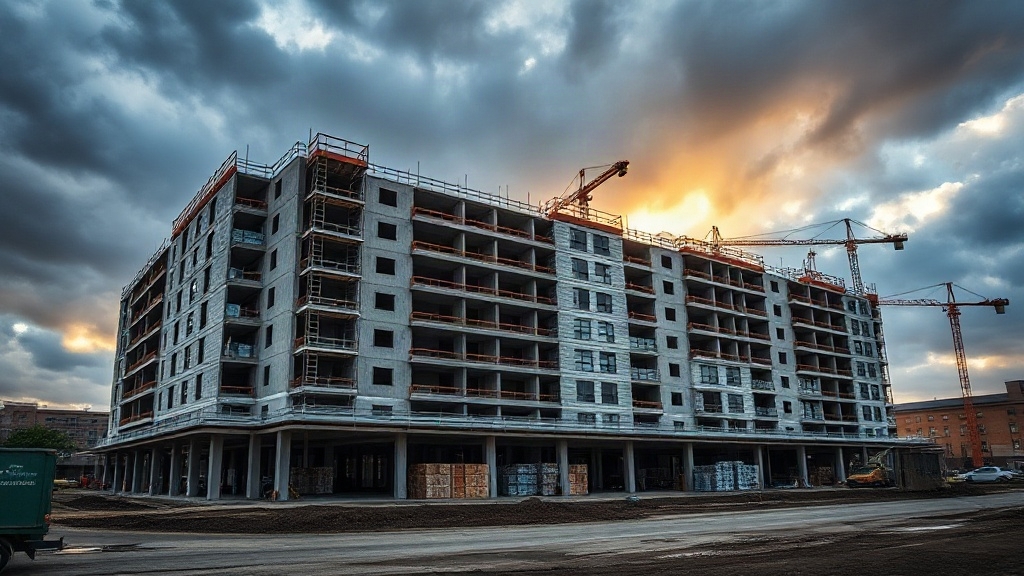
Spanning downtown, Brush Park, Corktown, and the east side, Detroit’s active construction pipeline now includes large residential towers, office-to-housing conversions, sports venues, hospitality builds, and major infrastructure nearing delivery.
Current work includes the 184-unit Brush Watson Midblock Building, the 148-unit 150 Bagley conversion, and 25 apartments at 1133 Griswold.
At the University of Michigan Center for Innovation, a Ford-backed 313-unit tower and Founders House extend activity into 2028.
In contrast to Detroit’s active pipeline, Denver’s vacant Stay Inn highlights how income-restricted housing covenants and renovation costs can stall reuse even after a $9 million public investment.


Major Builds Testing Capacity
Entertainment and infrastructure projects include Cosm Detroit, Monroblock’s streetscape work, Detroit City FC’s 15,000-seat Corktown stadium, and the 98 percent complete Gordie Howe International Bridge.
Hotel construction includes a 25-story, 600-room JW Marriott near Huntington Place.
These timelines show broad community impact, even as labor shortages continue to pressure schedules and delivery.
Which Detroit Projects Are Still on Paper?
Even with cranes active across Detroit, several high-profile redevelopment sites remain confined to plans, renderings, and revised timelines.
District Detroit accounts for most of the paper-only proposals. These include graduate housing at 2205 Cass, a 290-room hotel at 2455 Woodward, and the Fox Theatre office conversion, where historic preservation continues to shape the concept.
| Project | Status |
|---|---|
| 2205 Cass tower | Awaiting groundbreaking |
| 2455 Woodward hotel | No construction activity |
| 2211 Woodward conversion | Renderings only |
| 2210 Park Ave. revamp | Not started |
Other unbuilt District Detroit sites include apartment, office, and mixed-use towers along Woodward and Cass.
Beyond downtown, One Ford Place and 675 Amsterdam also remain unbuilt. Later start dates are now reflected in planning documents.
Some proposals also face site-planning complexity and zoning impacts.
Why Are Detroit Redevelopment Projects Delayed?
Many of Detroit’s stalled redevelopment projects remain delayed for a familiar mix of reasons: tight financing, rising construction costs, regulatory barriers, and weak market conditions.
Pressure Points
- financing bottlenecks limit office and housing deals
- low property values weaken access to private capital
- labor shortages and supply chain issues raise costs
- regulatory snagging slows rezoning and environmental approvals
- ownership disputes and speculator inaction freeze sites
Lenders remain cautious as office demand softens.
Development costs also continue to outpace achievable rents.
Affordable housing timelines stretch further because federal funding rules restrict how money can be spent.
Construction budgets have climbed sharply, including for office-to-housing conversions.
Imported components and contractor disputes add even more time.
Public approvals further slow progress.
Projects often need renewed rezoning and environmental clearance before work can begin.
They may also need to meet tax incentive deadlines and resolve compliance issues before moving forward.
What Could Detroit Redevelopment Deliver by 2028?
By 2028, Detroit’s redevelopment pipeline could materially reshape the downtown core and several adjacent districts. A concentrated wave of housing, office, retail, hotel, and infrastructure completions may redefine how key neighborhoods function.
Key deliveries include 2205 Cass, 2250 Woodward, and 2200 Woodward. These projects would add apartments, offices, retail, and structured parking near major employment and entertainment anchors.
Housing, Access, and Identity
Additional units are expected at Brush Watson Midblock, 150 Bagley, The Belle, and the University of Michigan Center for Innovation residential tower. Together, they could expand housing options in and around downtown.
Sheridan Place II’s rehabilitation would preserve hundreds of public housing units. The project also includes modernized systems and energy-efficient upgrades.
Tourism and Connectivity Pressures
The Gordie Howe International Bridge, Cosm Detroit, the JW Marriott Water Square, Hudson Tower, and Monroe Streetscape upgrades could strengthen tourism, urban mobility, and cultural preservation. Their impact may be felt across downtown and nearby districts.
Assessment
Detroit’s redevelopment wave remains uneven, with visible construction advancing beside long-stalled proposals and vacant structures.
Financing gaps, higher borrowing costs, permitting complexity, and infrastructure needs continue to slow timelines across the city.
By 2028, the strongest gains are likely to come from projects already under construction or backed by firm capital stacks.
For many paper-stage plans, the central risk is not revision but prolonged delay, leaving key buildings suspended between promise and decay.