
Key Takeaways
- Insurance costs are skyrocketing in flood-prone areas, directly impacting cap rates and resale values.
- Resilient development, including elevated homes and floodproof materials, may offer new ROI paths.
- Floodplain zoning and emergency alert reform could redefine property values in Texas and beyond.
Texas Floods Cause Heartbreaking Losses, Broken Infrastructure
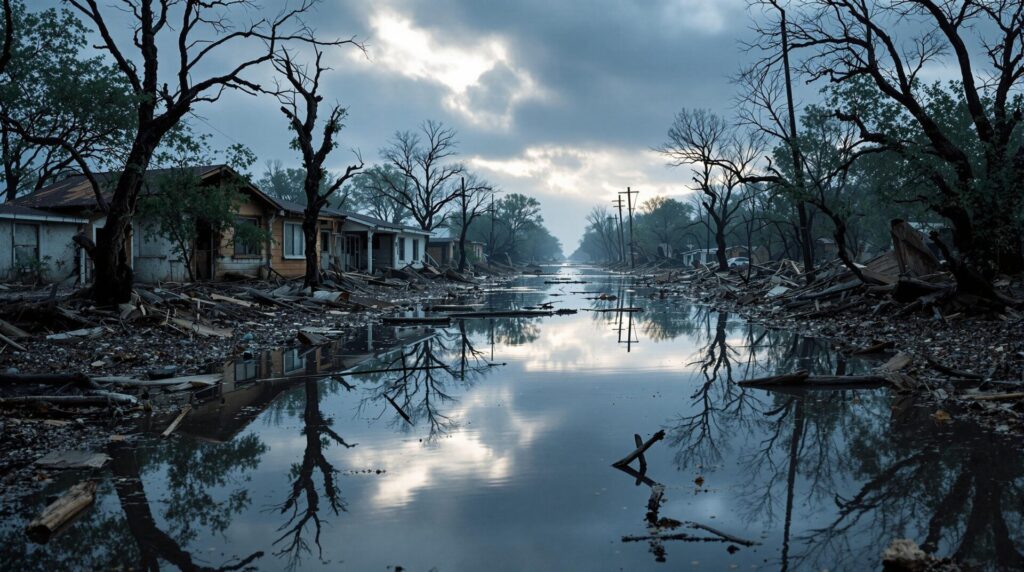
Central and South Texas, especially the Hill Country, were hit by catastrophic flash floods over the July 4 weekend.
The Guadalupe River rose to record-breaking levels, overwhelmed by torrential rainfall up to 20 inches in some areas in just hours.
The flash flood emergency claimed at least 134 lives and left more than 100 missing. Entire RV communities and trailer parks were wiped out, many with no flood insurance.
Systemic Failure in Flood Preparedness
Kerr County did not adopt a comprehensive flood alert system, citing cost concerns.
That failure delayed warnings.
Firefighters reportedly requested alerts nearly 90 minutes before any were sent. Texas faces a multibillion-dollar backlog in flood-mitigation projects.
Delays in funding and implementation have left entire communities exposed and without warning systems that could have saved lives.
Communities Rally, But Housing Recovery Remains Fragile
Local schools, nonprofits, volunteers, and organizations mobilized quickly, setting up supply hubs, distributing meals, and raising relief funds.
Yet FEMA approvals lag.
Many residents, especially those in RV parks and trailers, remain unprotected.
More than 38,600 residential properties fall within the affected flood zone, with tens of thousands already damaged or destroyed.
Recovery will take years, and much of it will depend on the state and local government’s ability to coordinate funding and rebuild infrastructure quickly.
Climate Crisis Upends Risk Perception
Extreme rainfall events are intensifying, making Texas’s Flash Flood Alley one of the most dangerous regions in the country. Texas has already faced over $300 billion in weather-related economic losses since 1980.
This flood alone may add another 18 to 22 billion. Real estate markets in flood-prone zones are seeing rising insurance premiums and stricter underwriting.
This increases the cost of ownership and lowers property values.
What This Means for Texas Real Estate Investors
Insurance and Valuation Pressure
Homebuyers and renters now expect flood risk to be disclosed. At the same time, insurance premiums are rising, and underwriting is becoming restricted.
Properties in affected zones may require steep price cuts to move.
Investors must now factor in climate resilience and insurance readiness when valuing assets.
Opportunity for Resilient Development
Areas without modern warning systems or elevated building standards will face scrutiny.
Investors who prioritize resilient design, floodproof construction, and smart infrastructure have the chance to lead market transformation.
Retrofitting homes with water-resistant materials or elevating foundations may become the new standard.
Portfolio Risk: Diversification Is Vital
Investors holding multiple properties in high-flood zones now carry outsized risk.
Diversifying property types and geographic exposure helps hedge against localized disasters. Climate risk is now a financial risk.
Policy Advocacy and Community Resilience
Public policy around zoning, insurance, infrastructure funding, and early warning systems will shape market outcomes.
Real estate professionals must engage with policy leaders to advocate for effective reform and proactive planning. Aligning with resilience-focused initiatives can both reduce risk and create long-term investment upside.
Stories from the Flood
Maria, a retiree living in an RV park near the Guadalupe River, saw her trailer vanish in the early hours of July 4.
She had no flood insurance and lost everything.
Today, she helps other survivors clean debris and rebuild.
At Camp Mystic, counselors rushed to evacuate children during the flood. Some cabins were submerged before anyone could escape.
More than a dozen young campers died.
The tragedy has forced a reassessment of safety protocols for camps and seasonal rentals along the river.
Lucas Brake and his wife survived the flood but lost both his parents, whose riverside cabin was washed away.
Their son spent days searching the wreckage for their bodies. Their story now serves as a rallying cry for early alerts and better planning.
Insurance Wars: Homeowners and Investors Feel Burned in Disaster Zones
In disaster-prone areas like Texas, Florida, and California, the once-stable triangle of homeowner, investor, and insurer is crumbling fast.
As natural catastrophes grow more frequent and more severe, the tension between property owners and insurance companies is boiling over.
Many people across the United States now view the insurance industry as one of the biggest scams in the country.
Premiums are jumping. Deductibles are climbing. And worst of all, when the flood or fire hits and everything is gone, the payout often doesn’t come close to what was lost.
After the July 4 floods in Kerrville, families and landlords reported denied claims, delayed checks, or hidden exclusions they didn’t know existed until after the damage.
Some investors who faithfully paid into their policies were shocked to learn their homes were now labeled “uninsurable” because they were too close to rivers or located on outdated flood maps.
Others were dropped from coverage altogether. Insurance companies, protected by deep legal teams and complex risk models, are using fine print and policy traps to avoid paying out when it matters most.
This has turned into a full-blown trust crisis. Homeowners feel betrayed. Investors feel robbed. And many are wondering if insurance is even worth it anymore.
Some are starting to bypass the system completely. Instead of relying on traditional carriers, they’re building private reserve funds, exploring risk-pooling networks, or structuring portfolios to absorb potential losses without the middleman.
Because here’s the new truth no one wants to admit: if you can’t get affordable and reliable coverage, your profit is already gone.
The math doesn’t work.
The system is failing.
Unless something changes fast, the insurance industry may become the next major disruptor of long-term investment strategy in disaster zones.
Assessment
Real estate investors must reevaluate flood-exposed assets and adjust valuations to reflect increased risk. Properties in vulnerable zones face depreciation, lower rental demand, and limited insurability.
Flood resilience now presents both a challenge and an opportunity. Investors who act early can lead the way in modernizing housing stock and reshaping regional growth.
Policy engagement is no longer optional. The private sector must help drive the development of smarter infrastructure, faster response systems, and sustainable zoning reforms.
The Texas floods are a clear warning. Investors who ignore the mounting evidence of climate-related risk do so at their own peril.


















6 Responses
Isnt it ironic how weve reached Mars, yet cant predict or handle earths own weather? Maybe focus on our planet first, guys? Just a thought.
Isnt it time we address the elephant in the room? What if the real estate industry is actually profiting from these disasters?
Do we ever consider that maybe people shouldnt be living in flood-prone areas? Maybe its time nature took back some real estate. #JustSaying.
Guys, arent we missing the point here? Maybe its Mother Earth evicting us for not paying proper rent i.e., respect? Just a thought…
Or maybe Mother Earth is just tired of our constant blame games. Ever thought about that?
Isnt it time we consider building floating houses in Texas? Drastic times call for drastic measures, folks.