
Key Takeaways
- Building a real estate career is more about mindset and purpose than just tactics and tools.
- Sphere marketing creates stronger, more sustainable businesses than lead generation.
- Success requires intentionality, internal clarity, and a commitment to growth through discomfort.
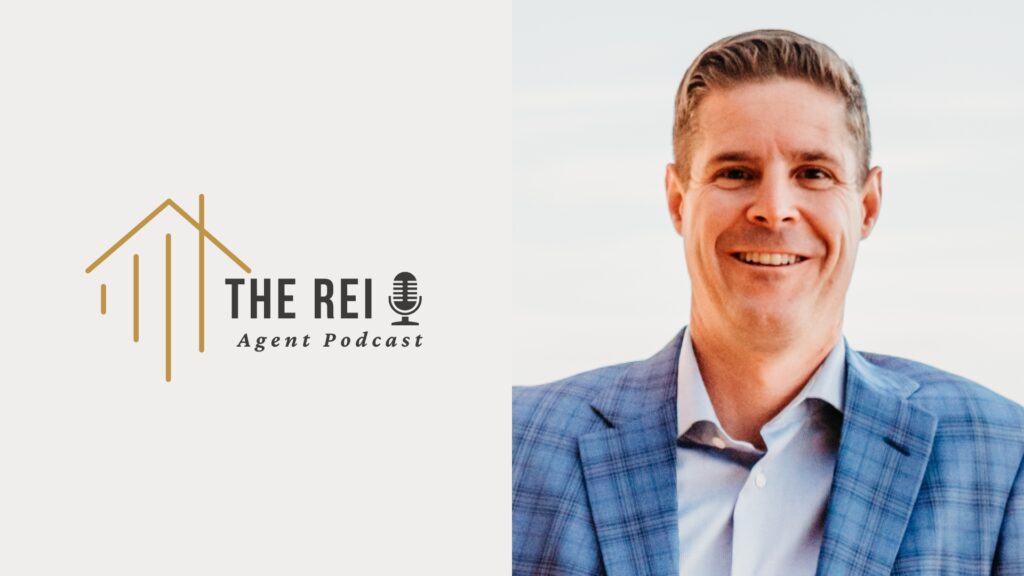
The REI Agent with Dan Gomer
Follow and subscribe to The REI Agent on social


Rising from the Rubble: Two Warriors, One Interview
Mattias Clymer, still recovering from a recent bout with COVID, returns to host The REI Agent with powerful resolve, and he’s not alone in the pain.
Joined by Dan Gomer, a former middle school teacher turned real estate powerhouse, both men are “battered and bruised” yet determined to show up.
Dan, just one day after slicing his wrist open in a freak accident, keeps his promise to appear.
Their shared commitment sets the tone: “Nobody is coming to your rescue. You have to pick up the hammer and build your house.”
This episode is not just about real estate. It’s about grit, growth, and the inner rebuild that defines success.
From Science Teacher to Real Estate Mentor
Dan’s journey began in a middle school science classroom.
Teaching was his childhood dream—but as Dan quickly learned, loving to teach isn’t the same as loving the job.
His quest for a new path was launched by a moment of clarity, what he calls a “waking dream” that pointed him to real estate.
Four years of fix and flips later, he pivoted again, building a sales team of nearly 50 agents in Denver.
“I wanted to create freedom for me and my family… Real estate became the vehicle.”
It wasn’t about escaping—it was about evolving. Real estate didn’t just pay the bills; it broke him open and built a better man.
Building a Team the Right Way
Most real estate teams are driven by sales targets and spreadsheets.
Not Dan’s.
His approach?
No leads provided.
No hand-holding.
Just raw, honest growth. His team is built on principles—ownership, grit, and accountability.
“This is your house. I’m here to support you, but you’ve got to build it.”
They talk mindset, read books together like The Greatest Salesman in the World, and lean on shared values.
Success is measured in more than contracts—it’s seen in lives changed.
Sphere Over Spam: Dan’s Marketing Truth Bomb
Forget lead generation, cold calls, and exhausting ROI charts.
Dan’s business grew when he went all-in on sphere marketing, building authentic, human relationships.
“Talk to more people. It’s simple. Maybe not easy. But simple.”
For new agents without a sphere?
He offers a blueprint: find “third places,” gyms, churches, coffee shops, community events, and just show up.
The goal isn’t sales. It’s connection.
“You’re not there to push your card. You’re there to become a part of something real.”
Balance Is Not Static—It’s Movement
Dan redefines the elusive “work-life balance.”
For him, balance isn’t about doing less—it’s about flowing between intentional grind and intentional rest.
“Balance is a verb. It’s the act of shifting weight, adjusting, moving with life—not resisting it.”
He no longer fights the busy seasons. Instead, he prepares for them.
Then he lets the quiet seasons restore him.
His family, his peace, and his joy are non-negotiable.
The Why Hole: Go Deeper, Then Go Again
When asked for one golden nugget, Dan delivers a mic-drop moment.
Most people chase goals without ever understanding why they want them.
“Ask yourself why… then ask again. Keep digging until you hit the bottom of the ‘why hole.’ That’s where your truth lives.”
Whether it’s chasing money, clients, or inner peace, clarity is the key.
Without a strong why, burnout is inevitable.
Books That Rewire the Mind
Dan’s most powerful book recommendation?
The Art of Letting Go by Richard Rohr—a quiet but profound meditation on detachment and peace.
“It’s not about owning less. It’s about needing less.”
This mindset echoes throughout Dan’s story.
He’s not just building wealth.
He’s building a life untethered from ego, noise, and unnecessary chaos.
Creating a Life That’s Worth the Hustle
As the episode closes, Mattias and Dan reflect on their parallel journeys, both men determined to live intentionally, to lead with purpose, and to never let success cost them the things that matter most.
“Take all the money in the world… it can’t replace your kids growing up, your health, your marriage.”
This wasn’t just a podcast episode. It was a masterclass in living.
Show Up, Even When It Hurts
Dan didn’t show up to pitch a program or boast about numbers.
He showed up to be real, and in doing so, he left behind something greater than advice.
He left a legacy of resilience, purpose, and peace.
“Go make your money… but do it in peace. Enjoy the ride.”
Stay tuned for more inspiring stories on The REI Agent podcast, your go-to source for insights, inspiration, and strategies from top agents and investors who are living their best lives through real estate.
For more content and episodes, visit reiagent.com.
Related Articles
- Therapy You Didn’t Know You Needed (Holistic Wisdom for Real Estate Professionals)
- From For Sale Signs to Life Design (How The REI Agent Transforms Real Estate Into Holistic Wealth)
- Achieving Holistic Wealth and Success Through Real Estate (Insights from The REI Agent)
- Partnering with Investors (How Real Estate Agents Can Exponentially Maximize Profits)


Contact Dan Gomer
Mentioned References
- How to Win Friends and Influence People by Dale Carnegie
- Wishes Fulfilled by Wayne Dyer
- The Greatest Salesman in the World by Og Mandino
- The Sphere Marketing Handbook by Dan Gomer
- The Art of Letting Go by Richard Rohr
- StrengthsFinder (CliftonStrengths) by Gallup
- The Almanack of Naval Ravikant by Eric Jorgenson
- Ninja Selling by Larry Kendall
- Buffini & Company (Brian Buffini)
- Tom Ferry Coaching
Transcript
[Mattias]
Welcome back to the REI Agent. It’s Mattias here. I mentioned in a couple past episodes, I was recording, feeling a little bit off, didn’t really want to be on the podcast.
Well, the next day I tested positive for COVID. So here I am now, a couple of days after that, still, you know, no fever today. So I feel a little bit better, but still a little bit drained.
But we have a really great guest today. We have Dan Gomer. Dan is out of the Denver area.
He actually, we’ll talk about this too, but he just had an injury himself. And so he almost canceled. But we both decided to show up and, you know, I think we’re better off for it.
He has a lot of the same values as I do. We have a lot of shared paths in our sales career and all that kind of stuff. So it was really fun to talk to him.
I’m sure this relationship will continue after this. But yeah, Dan has a great, he’s building, he’s got a sales team and he’s got some great fundamentals there with how he leads it and has written a book or two books, actually, I believe. But yeah, he’s a great person.
It’s a really good conversation. He had a lot of great wisdom to glean off of. So without further ado, let’s just get right into it.
Let’s go right into Dan Gomer. Welcome back to the REI Agent. I am here with Dan Gomer.
Dan, thanks so much for joining us.
[Dan Gomer]
Yeah, thank you. Appreciate the invite.
[Mattias]
We are a bit battered and bruised over it. Both of us have our perils. Today, I have COVID.
I think I talked about, I did some recordings on Friday and I talked about how sometimes you just have to show up even if you don’t really feel like it. At that time, I didn’t know I had COVID. Next day, I tested positive.
But, you know, it still gave me energy even though I didn’t feel like recording that day. I’m hoping that happens again today. Dan, what happened with you?
[Dan Gomer]
I was helping my son fix his e-bike and I had a box cutter. I was cutting a line and it slipped and I stabbed myself in the wrist and got three stitches yesterday about seven o’clock.
[Mattias]
Oh my gosh.
[Dan Gomer]
So yeah, we’re quite the pair this morning. But I had rescheduled this once and nothing drives me more crazy than flakiness. It just drives me absolutely crazy.
And, you know, I had to reschedule this once. And, you know, I’m like, I woke up this morning in a ton of pain. I’m like, man, I don’t know if I’m going to be able to do this interview.
And I’m like, I just got to show up. You know, we’ll see how it goes. And like, I feel much better now.
So I’m ready to rock and roll.
[Mattias]
And we’ve like both talked about how many parallels we have already. So it’s going to be a good conversation. I know it.
Dan, it’s also like 7 30 in the morning there. I just realized for you, right? It is, yeah.
Well, thanks for pushing through and joining us today. Tell me a little bit about how you got into real estate.
[Dan Gomer]
So I was originally a teacher, a middle school science teacher. So I was a teacher for seven years, coached high school basketball. And that was what I always wanted to do ever since I was a young kid, really.
Like, I would say probably 11, 12. I wanted to be a teacher. And so that’s what I did.
And I found out really quickly that I loved the art of teaching. I just hated the job. And so I got into real estate really to make money, right?
I wanted to create an opportunity. I wanted to create freedom for me and my family. And, you know, and the reason that I picked real estate, you know, it’s actually kind of a funny story.
So when I was teaching, I had, you know, I knew that I didn’t want to teach for about two or three years. And I still kept teaching because I needed to. But I started asking everybody, what do you what do you do for a living?
What do you like about it? What do you not like about it? What’s the pain points?
You know, those kinds of things. And I would like internalize it and be like, well, I don’t want to do that. Don’t want to do that.
Don’t want to do that. It took forever. I never ran into a real estate agent.
Go figure. And I hired a coach to help me figure out what I wanted to do when I grow up. And the night before I went in to see her, I prepaid for three sessions, by the way.
The night before I went in to see her, I had a waking dream. And it just popped in my mind. I was like, oh, real estate.
You know, houses. I built decks and fences all through college. Like, you know, let’s do that.
And so I ended up getting into fix and flips on the front end for about four years. And then transitioned just into a full time real estate agent. And now I’ve got a team of just under 50 agents here in Denver.
[Mattias]
Dan, do you want to hear another parallel? I was a behavior specialist in the school system before I transitioned to real estate.
[Dan Gomer]
Of course you were. Perfect sense.
[Mattias]
I had my license at the same time and was using the school hours, getting out early with the high school, like 3.30 or whatever, to take advantage of doing both, basically, in our grind phase. But yeah. Dan and I talked about how his wife is a therapist as well.
And so we have a lot of parallels. It’s fun. So did you follow through with the career coach?
Did she say you’re on the right path?
[Dan Gomer]
It was funny. I showed up to her office and I was like, listen, this is what happened. I think I have it figured out.
And she’s like, okay, great. And she asked me a couple follow-up questions. And she’s like, all right.
I mean, you can come back for the next two sessions if you want. I’m like, no, I’m good. It was like a 30-minute conversation.
And that was it.
[Mattias]
So, okay. So you did fix and flips to start. Do you still do any investing at this point?
[Dan Gomer]
Yeah. Yeah. It’s mostly long-term at this point.
Rental properties and things like that. The short-term flips. The reality is, I don’t know that I was really cut out for that.
I did it all different ways, right? Where I was doing all the work and hiring one person to help me. I did it where I acted as a GC.
I hired a GC. I’ve done it all those different ways. And I had some successful deals for sure.
I’ve done about a dozen of them. But I think for me, I like that with sales, I have less exposure. And I think for me, that’s important at this point.
But not that I wouldn’t do them again. But my focus really right now is on the team.
[Mattias]
Yeah, that makes sense. And I talk about the different levels of investing often. And how I think it’s great to do that as an agent.
The tax benefits. We don’t really have a retirement plan, etc. So having passive income that you can tap into now is great.
The BRRRR method. Did you ever do the BRRRR method? Are you familiar with that?
Yeah. That’s often one of my favorites for sure to build up the portfolio. But also syndications.
If you just wanted to invest in real estate, take advantage of the tax benefits, etc. Without having to really oversee much. That is often a great thing.
But tell me a little bit about how you got into building your sales team.
[Dan Gomer]
So when I first got out of public school teaching, I remember I quickly realized I had no real leadership training. You know, when I was teaching, I started reading books like How to Win Friends and Influence People. That’s one of my favorites.
Then I eventually got into Wishes Fulfilled, Wayne Dyer, and started going more down that path. But I realized that I had no freaking idea how to run a business, and how to talk to people, and how to negotiate, and how to lead. I had like zero skills.
And obviously that really hurt me early on. But it was in that that I quickly made kind of like an internal commitment. I’m like, man, eventually I want to go back to the education system and actually teach the teachers.
Because all this stuff that I was learning, I was like, holy cow, this would have made me such a better coach, such a better teacher, you know, all those kinds of things. And so very early on in my real estate career, I always knew I wanted to get back into teaching and coaching because that’s what I’m really passionate about, is I want to impact people. And I didn’t know how that was going to happen, but I just knew that someday it would.
And, you know, the opportunity arose, I want to say, 19. There was a new agent in our office at my old brokerage. And he came to me and was like, hey, I heard you might be able to help me, you know, grow my business.
And I was like, all right, cool. And that was, he’s still with us today. His name’s Cody, he’s awesome.
But, you know, that kind of started me as a coach within the real estate industry. And man, I just, I love it. I, it’s by far my favorite thing I’ve ever done in real estate is running a team.
It’s awesome.
[Mattias]
Okay, cool. That’s awesome. So did you, when you built the team, was it basically people that wanted, you know, help in building a career?
Or did you kind of seek out specific positions? Like, you know, inside sales agents, you hear all that kind of terminology, inside sales agents, buyers agents, listing specialists. I mean, how do you structure things?
[Dan Gomer]
Yeah, that’s a great question. So for me, I’ll try not to answer too long of a story here, but real estate has broken me, right? And it has completely built, not that real estate broke me, but it provided the opportunity for me to get broken.
And it provided the opportunity for me to be able to rebuild. And it’s in those moments that my life has massively, massively improved. And so it’s through all of that, that, you know, because I see the value that real estate brings to the table, I see the opportunity that it brings to the table for us to improve ourselves.
I want to create that for other people.
[Mattias]
Okay.
[Dan Gomer]
And so on my team, it’s actually not a traditional sales team. You know, it’s structured a little bit differently. So I don’t charge any additional splits to my team or anything like that.
I get paid on, well, I do get splits for them. But anyway, I won’t go down to all of those details. Point being, the way that I run the team is, I’m not here to build your business.
This is your business, right? This is your house. Go build your house.
Now I’m here to help support you. I’m here to give you feedback. I’m here to, you know, give you tools.
But at the end of the day, this is your house, not my house. And so I don’t provide any leads to my team. You know, this is their opportunity to float or sink or do whatever it is that they want to do.
And so we’re really clear on our team that this is your business. But we’ve got a whole support team here. Not just me, by the way.
The entire organization is here to support you and your growth. But if you don’t pick up the hammer and start swinging it, your house will not be built. Nobody is coming to your rescue.
Nobody is going to save you. Because I want people to struggle and succeed. It will massively improve their lives.
And so we’ve got a very clear mission, vision, standards, values that I’ve written out for the team. And it just very clearly kind of states like, hey, these are the kind of people we want to work with. People who show up.
You know, I mean, you look at us today, right? Neither one of us could have canceled so easily and the other person would have understood. Yeah.
And blah, blah, blah, blah, blah. But we both said, no, I’ve got a commitment here. I want to do my best and show up.
Quick side story. We have a big event every year for our company down in Cabo. And it’s a week-long event.
It’s awesome. Ed Mylett came and spoke this year. I love Ed Mylett.
I just love his messaging and what he’s doing. And he spoke. He had just had back surgery.
He had walking pneumonia. Oh my gosh. And he broke his jaw like two weeks prior.
Wow. And he killed it for two hours. Wow.
And I was just like, man, that’s what showing up looks like. You know, he showed up for everybody else because he wanted to have an impact. That’s showing up.
We have values like that on the team. That’s the core of the team. And so for me, I really try to focus on those values, standards, mission, and really kind of harp on that a lot.
Because ultimately, it’s about real estate being the vehicle to make you better as a human being. And so if you’re not leaning into that, real estate’s never going to work for you. A lot of things are going to be going by the wayside in your life.
And so it’s really more about the core aspects of the human. That we focus on as a way to drive more business in real estate.
[Mattias]
Yeah, I love it. And I think what you’re making very clear is there are definitely teams that structure things in. Basically hiring employees where people will even get paid hourly for doing real estate agent activities instead of getting paid.
Commission split. Maybe they’ve got a bonus, that kind of thing. But obviously, that’s not your model here.
I’m curious if you are also more sphere marketing heavy versus buying leads heavy.
[Dan Gomer]
Yeah, so I’ve tried it different ways. Early on in my career, I tried door knocking and farming. I mean, I’ve probably knocked on over 30,000 doors.
And I got some leads out of it. It was a good experience. Things like that.
But ultimately, my problem with that and really any kind of lead gen is that I don’t know who I’m talking to on the other end. I don’t know if they’re cool. I don’t know if they’re messing with me.
I don’t know if they’re going to waste my time. I just don’t know anything about them. And so it’s just kind of like crossing your fingers and hoping that it works out the way that you want it to.
And I just don’t like that approach. So that’s why I’ve never been a lead gen guy. I’m a sphere marketing guy through and through.
I mean, you look at all of these people who are teaching all these classes about this stuff. You’ve got Buffini. You’ve got, what can I think of the other guy’s name?
Tom Ferry. There’s a guy here in Colorado who does this thing called Ninja. And I remember I took these three trainings all in the course of one year because my company at the time had offered them.
And I realized there was an area, like if you think of a Venn diagram, there was an area that overlapped between all three of them. And I’m like, okay, so all three of these people are saying these things. Everything else is fluff.
I’m just gonna focus on these things, right? And my business skyrocketed. It took off.
And what I realized was it’s not complicated. It’s simple. You wanna grow your business?
Talk to more people. Well, how do I talk to more people? I don’t care.
On the phone, face-to-face, do a CMA forum. I don’t care, host a party. It doesn’t matter.
Talk to more people and you’ll sell more houses. And so for me, sphere marketing, I finally realized it’s actually really simple. It’s not easy.
It takes consistency. It takes hard work. But reaching out to your sphere and staying in touch with those people has a couple massive benefits.
Number one, you know who you’re working with, usually. And so you get to shape what your business looks like around those people. If you don’t like them, you don’t have to work with them.
Great, you can remove them. And so you shape that. Number two, when you shape the people that you’re working with initially, the referrals that you get from those people are usually very similar to the people that you’re working with.
So your sphere begins to grow with more people that are aligned with the way that you operate. And it just makes business so much more fun. And number three, it makes it way more profitable because you’re aligned with the people that you’re working with.
You’re not being somebody that you’re not. You’re not trying to show up and be this whatever. You can just be yourself and people love you and respect you and will work with you because you’re who you are.
And so it just takes way less energy. You make way more money. It’s way more fun.
So I even wrote a book called The Sphere Marketing Handbook, which essentially just breaks down what I did to grow my business in real estate using sphere marketing because I got tired of explaining it to my team. I’m like, here, here’s the manual. Just follow this.
[Mattias]
I couldn’t agree more. I mean, I think it’s definitely, I think I’m not gonna knock on buying leads and all that stuff because I think it can be successful for certain people. And there’s definitely ways for people to do it.
But I think it just sounds exhausting to me. And I think one of the biggest, I think once you get to a certain point in your career, you also wanna enjoy it, right? I mean, like you wanna live a good life, like a holistic approach to life through real estate, right?
We’re trying to have a balanced life that cut out the things that drain us, focus on the things that we enjoy. And I mean, that to me is definitely the best route. So if you are doing lead buying and that kind of stuff, I think it’s definitely important to make sure that you’re also nurturing those people, even if you’ve already sold it to them, keep them in the database, keep in touch with them so that you’re not dependent upon buying those leads because those systems can change.
They can change the way they can be more expensive. It can make it not worth it anymore if you’re tracking your ROI on what you’re paying. And yeah, so I mean, if you build up a database that way, it’s important to maintain them as well.
But yeah, I couldn’t agree more. I think it’s definitely my favorite way of going is just to kind of build out. Do you have recommendations for people that may move to a market that they don’t have a sphere yet and if they’re trying to build this up organically?
[Dan Gomer]
Yeah, I mean, that’s a great question. And going back to the lead gen side of things, I totally agree with you, it’s not bad. And it’s just a different way of doing things and it’s a way that I don’t do it, that’s all.
However, there is tremendous value in it. And sometimes it’s things like that, right? So what I tell people, so sometimes I’ll meet with agents who are not part of our organization and we’re just talking about their business and they’ll say things like, well, yeah, but I’m getting all these leads right now.
And essentially, I don’t know how to get away from that, right? This is my whole business now. And so they’re almost stuck in a position where they don’t know how to transition.
And so we ended up having a conversation about how to do that. And ultimately it’s like, okay, great. So how many deals have you closed with these lead gen tools?
All right, cool. When’s the last time you talked to anybody who you work with? And usually the answer is never.
They’re closed and then they don’t talk to them again. And so then we can put a plan in place to follow up with those people, a way to ask in a nice way for referrals, right? And so there’s a couple of ways to do it.
You’re in a new market, you can go get lead gen or go get leads. But the only way to get out of that is on the front end. It is insanely important to build a follow-up system after a close.
You need to be building that relationship throughout the entire process. And then after close, that’s where your work really begins because now you’re trying to leverage that relationship to create five more relationships. And if you can do that, give it a year, 18 months, you’ll be off the leads and you’ll have a nice sphere marketing going.
One other advantage, by the way, the sphere marketing that I didn’t talk about is with lead gen, they can turn the faucet off on you like you had just mentioned. You can change the rules, change the game and you’re just along for the ride and you got to deal with it. With sphere marketing, if you’ve got a good database that’s firing on all cylinders, you have to try to turn it off.
You have to tell everybody, stop calling me. They’re just gonna keep coming. It’s great.
So if you’re in a new market, that’s one thing you could do leads. If you really don’t wanna do leads and you have the luxury of maybe a little bit more runway, talk to more people. How do I talk to more people?
It doesn’t matter. Get on Meetup, join some local boards, join local things that you’re into. Here in Denver, we’ve got a whole network of people who throw bags, cornhole, right?
And they travel all over the place and just play together, right? Great, we’ll sign up for that. It doesn’t really matter.
Just go meet people. I met somebody the other day who said that he would go to, he just moved to California a couple years ago. He would go to a local coffee shop and he would just sit there all day.
And he noticed that in a neighborhood that he wanted to market to and he noticed the same people would come in and come out and it was almost like a little networking club. And he just started building relationships with people at a local coffee shop over time. I mean, the possibilities are endless.
It’s not about how. It’s just get out there and meet as many people as you possibly can. If you hit it hard and you’re consistent about it and you’re really dedicated to it and you develop those relationships, give it 12 months and you’ll have a really nice sustainable business and it’s only gonna get bigger from there.
[Mattias]
Yeah, essentially what you’re talking about is building up third places. That’s what my wife likes to talk about. It’s important for people to have third places.
You have your home, you have your work and then you have your third place. One of the best places I’ve found is a gym. If you go to not only a gym that you just go and do your own thing, but like a class.
If you’re taking a class, I mean, we’re big CrossFitters, so that’s gonna be, our cult is always gonna come out in a conversation for sure. But you could do Orange Theory. I mean, you can do Zumba, whatever, but you get so close to those people.
I think church would be another example of a third place for sure that you can really build up a network. But I think, yeah, finding those places where you can, yeah, say it’s a third place, you build up a network from there and you just naturally talk about what you’re doing. You’re not necessarily like going there with the like, hey, do you know anybody that wants to buy real estate and like just have commission breadth from the beginning.
It’s more of a natural progression where you’re friends with the people and you wanna know what they do and they wanna know what you do and that kind of stuff.
[Dan Gomer]
I’ve got a buddy who has built his entire business on mountain biking. His whole business. He’s always got bandages and stuff like this on, right?
Because he’s always jacking himself up. But that’s how he built his whole business. He just mountain bikes all the time.
He’s hardcore about it. He has this really tight group. And when they are buying or selling, he’s their guy.
And when they know somebody, he’s their guy. Like it’s a tight knit group, you know?
[Mattias]
That’s, yeah. And the Rockies, that makes sense, right? Denver area.
I think it’s really, you can systematically do this too. You can look at what is the culture in the area you’re in. Like what is big there?
Like find something that people are really into. If you’re near a lake, maybe people are really into boating. And that could be something that you get really into or fishing or whatever.
And you just tap into that community. You could be a little bit strategic about it if you really want to. But I think it’s important that you’re also in it for the right reasons and you’re not just there to like push your business card around.
So, cause we have actually a really large biking community here. And there’s like this really strong organization that would make a ton of sense for somebody starting out moving to this area to join. And even if they’re just honest, like, hey, I’m just wanting to get connected to people and I want to learn this.
And this seems like a really cool organization. I’m sure people would just embrace them and that would be a natural, yeah, starting point.
[Dan Gomer]
Yeah, absolutely.
[Mattias]
But yeah, that’s awesome. We have a very similar mindset, I love it. With your coaching of your people in your team, you talk about more than just kind of sales.
What other, so are you providing books and things for people to read that kind of align with the morals or the mission of the team? Or how do you get beyond the sales as well in the team coaching?
[Dan Gomer]
Yeah, so once again, our motto, I don’t know if I shared this on here or not, but our team motto is improving lives through real estate. So my belief is that we can, I’ve already explained this, we can improve our lives through the vehicle of real estate by getting our butts kicked and by creating success and all that kind of stuff. And so for me, I’m very much mindset oriented and I believe that’s the foundation for everything that we do.
And I’m very upfront about that, and so on our team, we have mindset conversations. In fact, so every Wednesday we have a team meeting, we go from nine to 1030 every Wednesday. The first half hour, we call it crushing the cap.
And it’s all about just tools and strategies and stuff that we can use to sell more houses. Well, somebody had kept recommending the book, The Greatest Salesman in the World by Ogmandino. And I had never read it.
And finally I broke down and I read it and it’s like a super easy read, really short chapters. And I’m like, oh, this isn’t about sales. This is about mindset.
And if you have the right mindset, you’ll sell more of whatever. And so I took it back to the team. And so we’ve been doing a, there’s 10 scrolls.
So we did a 10 week thing that we just wrapped up last week where every week on that crushing the cap call, we read one chapter and we talk about it. And it’s all mindset. We just kind of saw where the conversation went.
And so for me, we do talk about strategies. Strategies and tools are important. But if we don’t have the mindset, if we never pick up the hammer, then no nails ever get hit in.
So tool is completely irrelevant if we don’t have the mindset that says, go pick the hammer up and hit the nail. So we do talk a lot about mindset.
[Mattias]
Yeah, I love it. I think it’s a super important part. One thing that we’re building into our team is a strength-based focused as well.
So we’ve all done the Clifton StrengthsFinder assessment. And we wanna look at kind of where the natural fit is, if we can kind of aid each other in different ways. So if there’s a natural tendency for somebody to be a transaction coordinator, that they can kind of lead in that role a little bit, et cetera.
So it’s been something that we’ve been playing around with as well. And I look forward to doing things like you’re talking about as well in the team. So we’re just really mindset as well focused.
Yeah, so, and I guess, how have you learned to kind of keep, I can’t really say balanced life, because it’s really hard to have a balanced life. In real estate, especially, there’s gonna be busy seasons and you just kind of have to work harder sometimes. But what are some strategies for you to keep your mind right, to keep your family as a priority as well that you’ve adapted through the years?
[Dan Gomer]
Yeah, so first of all, I love this concept of balance. And the reason that I like it is because everybody’s got an opinion on it. You know, and my opinion on it is, balance is achievable.
So if you think about a guy on a tight rope, and they’ve got the big stick, right? They are not stagnant. It’s not just like, they don’t just stand there and not move.
The whole thing is an exercise of going back and forth and moving, if you think about it, kind of on a spectrum. It’s kind of like, I’m going this way, now I’m going this way, now I’m going this way. And it’s the equilibrium between that motion that creates the balance.
Same thing is true, I believe, in our business. You know, you just said, sometimes you have a busy season. It’s grind time.
Sometimes it’s grind time. Yeah. Sacrifices that are made, and not as much time with the family.
And then sometimes, there’s the calm. And when there’s calm, that’s time to get calm. That’s time to be with the family.
That’s time to recharge. And so if we bring intention, my belief is, if we bring attention and intention to where we’re at in our life and in our business and what our focal points are, we can bounce back and forth. And so for me, one of my big, big, big, like overarching objectives of growing this team and building my business and all these kinds of things is, yeah, I like money.
I have big plans. But I know so many people who have trashed their life in the pursuit of money. Divorces, things collapse, mental breakdowns, poor health.
And for me, I’m like, F all that. I’m not trading money for all that. So my goal is, how can I actually build a really successful business and enjoy the ride while I do it?
So the only thing that I can really come up with is number one, setting these parameters and these boundaries. Like I’m kind of coming out of grind time right now. And so I’ve got a little bit more time.
And so I’m taking that time to like, I’m being intentional about taking that time in. And so what I’ve discovered through a lot of work, by the way, I always have a coach or coaches. I’ve got mentors.
I’ve got, I surround myself by people who are better than I am at things so that I can get better. But through a lot of work and things like that, I feel like I’m starting to kind of get that rhythm a little bit. I’m finding that balance where it’s like, okay, cool.
I can grind and then I can chill. Here’s the other thing too that I’ve really discovered is it’s our relationship with whatever it is that we’re doing. So I used to say a lot to myself, this is really hard.
This is really tough. This is too much. This is just, oh my gosh.
This is, you know, these, those were the stories I was telling myself. And guess what? Well, it’s true.
Because I created that belief in my own head that yeah, this is hard. This is too much. And when I started changing my relationship to the grind and my relationship to my time off and my relationship to my health and my relationship with my people and, you know, when I started changing my mindset and the way that I was looking at those things, it made it so much easier.
So now I can grind and enjoy it at the same time. It’s crazy. I’ve never been able to do that before because I know I’m in grind time.
Let’s go. It’s time. Go make your money, man.
Go, go get it. And then there’ll be a time to relax. And so I’ve really, really, really worked on my relationship to what is and what’s happening and also understanding that balance is a verb.
It is an action, you know. Oh, yeah.
[Mattias]
Pendulum is another way I’ve looked at it before too, that it, you know, we’re swinging over this direction right now. And obviously another analogy is like farming, you know, like you gotta make hay when the sun shines, that kind of thing. And there definitely is that in this business.
It’s not gonna ever be just, you know, a consistent every day, exactly the same kind of amount of work, nine to five. I mean, that’s what we kind of signed up for, right? We wanted to get out of that world and it’s a bit of a double-edged sword.
But I love the way you say that. I think, you know, changing the way you look at it definitely helps. I’ve definitely gotten burnt out in the past from just too much.
And so that’s always a goal of mine as well, is just to kind of figure out how and to systemize, to keep things interesting, to provide the best service I can and to not lose sight of what’s really important. Take all the money in the world, doesn’t make you, you know, miss. I mean, yeah, your kids are growing up, your spouse, your health, all that stuff is way more important.
That’s kind of the main purpose behind it all. And one of the ways I’ve been recently focusing on that is focusing on the being intentional about spending time with the kids, trying to have like a quarterly outing with them without mom so that I can kind of build that time, things like that. And it definitely helps because I think that will stick in their mind that it was like definitely an intentional effort to be with them even though my job was often very demanding.
And that’s the word, intentional, intentional.
[Dan Gomer]
See, the problem is, especially in real estate, is a lot of real estate agents don’t work intentionally. It’s like there’s a reactivity to whatever is happening, maybe in the market or with your sphere or with clients coming to you or not coming to you. There’s just, it’s really hard to survive in this business without intention because you’re either broke and upset that you’re broke, then you get really good at what you do and then you’re burned out.
You kind of skip the part in the middle, right? We can live in the middle. We can live in there.
We can balance between those two. But only if we are intentional, very clear about what we wanna create and why that’s important to us and then get intentional about our daily actions to make sure we’re creating the outcome that we actually want to create long-term.
[Mattias]
I love it. I mean, this is what my book’s about. It’s starting with a vivid vision of where you wanna be and what you want in your life and then designing it or else life just happens to you.
So yeah, absolutely love it. I’ve gotta ask now if you have any golden nuggets that you’d like to share to listeners that could be something fundamental for newbies or just something that you think everybody could hear.
[Dan Gomer]
Yeah, so whether you’re looking at investing, you’re trying to build a real estate business, you’re trying to collect more leads, maybe you’re just trying to get ahold of your health. Or you’re trying to find more time, right? Whatever it is, it doesn’t, here’s the cool thing.
Our mindset influences all of that. So it doesn’t really matter what area of life you want to improve upon. And there’s one, we all have at least one.
If we want to get better in that, it’s all about our mindset. And so it’s about going inward. And so my advice, my golden nugget for anybody who’s struggling in any area of their life, get really, really, really clear on why you want what you want.
Or why you want what you say you want. And the best way to do that is, by the way, why is my favorite word in the English language. It creates, it opens up curiosity.
So if you’re trying to figure this out, get really curious and ask yourself, why do I want a million dollars? Whatever it is, okay? And you’re gonna get some kind of topical answer.
Well, because then I can buy a new car. Okay, great, well, why do you want a new, or a new house? Why do you want a new house?
Because I want this. Okay, great. And why do you want that?
And why do you want that? And why, why, why, why, why, why, why, why, why, why, why? Until you get to what I call the bottom of the why hole.
And when you get to the bottom of the why hole, there’s going to be something more concrete. There’s going to be like a value or something that’s really, really, really important to you. And so the million dollars is not what you really want.
It is a representation of something that will give you this thing that’s at the bottom of the why hole. Joy, peace, security, whatever it is. And so understanding what the why is behind the thing that you say you want, that’s where the power is going to come in.
Because if you can understand that, then whenever you start to flounder, and you feel like you’re failing, you go back to, no, I want more joy in my life. I want more peace in my life. By the way, that’s what’s driving me right now to find balance.
I’m like, I’m not going to build this giant business and hate my life. I’ve been there. I’ve burned out hardcore and it sucks.
I’m not going to do it anymore. I want peace. So how can I build something cool and have peace at the same time?
And so whenever I start to flounder, I go, I want peace. I want peace. So can I have peace in this chaotic moment that I have right now?
And then I find peace in that moment. That’s how we create substantial change in our lives. So no matter what you’re struggling with, to summarize, no matter what you want to grow, just take some time every single day and just connect with your why so that you can find that passion to go make a million dollars or whatever it is.
[Mattias]
Yeah, I love it. That will help you. If you don’t have purpose, you’re not going to have the fortitude to stick with it.
I love it. It’s really good. Um, okay.
So what about a fundamental book you think everybody should read or maybe just a favorite book you have right now?
[Dan Gomer]
Yeah. Well, outside of the, you know, the Sphere Marketing Handbook, no, outside of that, one of the most influential books that I have ever read and nobody has ever heard of it, I don’t know where I heard about it, but it’s called The Art of Letting Go. And there’s like 30 different authors for it.
So you got to get the one by Richard Rohr. R-O-H-R. He is a Franciscan monk.
And so basically their whole thing, like you think of like friars, like in the brown garbs with like the rope for a belt, the rope represents, I don’t have anything, right? There’s nothing in my pockets. Like I don’t have anything.
That’s kind of what they’re all about, but he’s really good at bringing to the forefront. Like you don’t have to be poor and you don’t have to give up all of your worldly possessions to find peace. It’s about letting go of your attachment to all of these things out there.
Internally, letting go of them, releasing that energy so that you can create a better life for yourself. So I absolutely love that in my life.
[Mattias]
That sounds really interesting. I’ve read him before. So I know the author, he’s a really good author.
Right on. And have you heard of Naval Ravikant?
[Dan Gomer]
I have not.
[Mattias]
He’s been on a couple of podcasts, but recently he’s like an angel investor, super wealthy guy, but he like spends maybe five hours a day meditating now. And he was talking about how essentially this whole dilemma of like, letting go of everything, not being worldly, not having possessions, not that kind of goal and how much easier it is after you’ve already succeeded and how like Buddha was like a prince. And so it’s easier to do this.
So it’s kind of an interesting parallel that I hadn’t really heard somebody articulate well, but super fascinating stuff. So that’s an awesome recommendation. Thank you for that.
[Dan Gomer]
By the way, I have to touch on that. That’s so brilliant. And I wholeheartedly agree that life is easier when you have money.
And so for me, it’s like, I don’t want to be a monk sitting on the side of a mountain meditating for 10 hours a day. Why? Well, because I want to like go do things and I have goals and all these things, right?
So not that they don’t have goals, but what I’m saying is that I want money. I want money. I want to be able to do the things that I want to do.
I want to be able to buy the things that I want to buy when I need them. But I also want to have a detachment from the money and all the things that I’m buying, but it does create the opportunity to chill and it creates the opportunity to be able to do things to make the world better. And so for me, I wholeheartedly agree.
Go make your money. Just do it in peace. Enjoy the ride and then enjoy it afterwards.
[Mattias]
And I think one of the things too that is an element in there is that it’s easier to denounce something that you’ve already achieved. So I think for me, if I were just always poor, there would be this element of I need to go out and achieve this thing. I need to go out and climb this mountain or whatever.
Just the level of success and being able to do it, competitive, whatever you want to call it. But then having already achieved some level of success, it’s easier then to denounce it, if you will. And he by no ways is not out there pursuing money.
It’s not a forefront of him for his world right now as it used to be since he’s already kind of made it. But anyway, where’s a good place for people to follow you? Or if you have a website or anything like that, if they want to know more information about you.
[Dan Gomer]
Yeah, I mean, I’m really easy to find. There was another Dan Gomer who is an artist on the East Coast somewhere, but I think I’ve pushed him down off of the first page of Google now. You can literally just Google my name and all sorts of stuff will pop up.
But I’m on Instagram, Facebook, Realto Partners, R-E-A-L-T-O, Realto Partners. That’s our team page. So if you want to know more about our team and what we’re doing, feel free to go check that out.
But I make it easy to find me.
[Mattias]
You’re cursed of being an agent, right? Right, right. Awesome.
Dan, thanks so much for being on. Thanks for persevering with me. It was a great conversation.
[Dan Gomer]
Yeah, thank you. Thank you for showing up with COVID as well and persevering as well.
No related posts.





















5 Responses
Interesting read, but does Gomers success really reflect the struggle of average Joe or just glorify the rich get richer narrative? 🤔 #FoodForThought
Interesting read, but is Dan Gomers success really about resilience or just pure luck? Also, why move from teaching science to real estate? Seems odd.
I appreciate Gomers journey, but why glorify real estates break-build cycle? Isnt it a toxic hustle culture? Science teaching seemed healthier. Thoughts?
Honestly, Gomers journey from science teacher to real estate mentor sounds fishy. Did he truly rise from the rubble, or just get lucky? Discuss!
Luck or skill, Gomers transition is inspirational. Success isnt always linear.