
Market Trends and Price Fluctuations
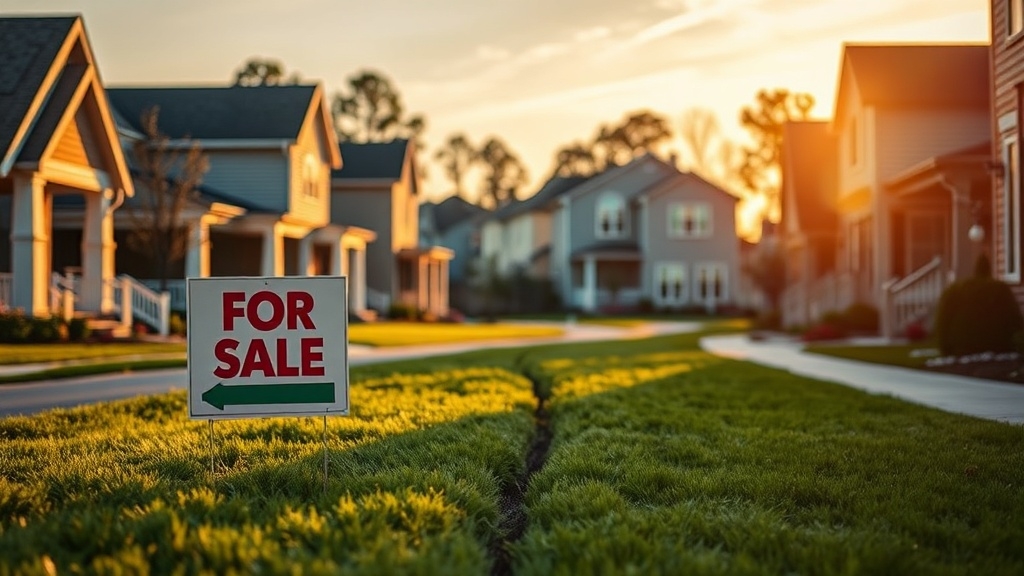
The real estate market in Franklin presents a complex tableau of divergences and emergent trends. The average home prices report conflicting figures. Franklin’s local data reveals an escalation to $1,270,250 with a 5% increase. Yet Zillow’s data shows a subtler rise to $898,745, and Redfin indicates a downward adjustment to $775,000. Such discrepancies highlight the dynamic nature of this market. Rising interest rates and increased housing supply soften the market, which could further influence these price shifts. These shifts echo broader national trends where U.S. home values have seen a sharp decline.
Conversely, inventory dynamics across Middle Tennessee, including Franklin, illustrate a tangled scenario. Williamson County suffers a 20% drop in new listings. This presents a constricted inventory environment. Simultaneously, new developments and custom homes promote inventory growth. This alleviates supply pressures, yet the competitive market remains defined by limited availability. This occurs against a backdrop of steady statewide appreciation at 5.3%.
Buyer Demographics and Relocation Patterns
Buyer demographics and relocation patterns are redefining the environment with unprecedented changes.
Most buyers remain local. 78% of them target properties within Franklin. This trend reflects stability and favorable buyer preferences.
Regional trends reveal a robust net inflow. The inflow is driven by relocators primarily from New York and nearby metro areas like Hartford and Springfield. Franklin’s strong regional appeal is similar to Nashville’s cultural magnet, attracting culturally rich and diverse communities.
Franklin’s strong regional appeal positions it as a destination for newcomers. It also serves as a starting point for those exploring elsewhere.
New York leads in inbound buyer numbers. Popular outbound destinations include Portland, Lebanon, and Miami. The median sale price of single-family homes in Franklin, MA reached $727,000 in 2024, reflecting the ongoing demand and value proposition of the area.
The migration balance shows the largest net inflow reached 5,108. Meanwhile, the net outflow stood at 4,931.
Middle-aged families, young professionals, and retirees shape the housing demand. They are looking for Franklin’s diverse housing options.
Housing Affordability and Legislative Efforts
Amid escalating home prices and market volatility, Franklin faces significant challenges in housing affordability. Legislative efforts play a vital role in addressing these issues. The median single-family home price surged to $727,000 in 2024, an alarming 44% increase over four years. This upward trajectory calls for affordability policies and strategic market interventions. | Year | Median Home Price | |——|——————-| | 2020 | $504,000 | | 2024 | $727,000 | | 2025 | $690,000 – $701,000 | In Massachusetts, current affordability policies struggle to balance growing demand with limited supply. Despite slower sales, prices remain high, indicating that legislative measures are necessary to enhance buyer affordability. As affordability becomes increasingly out of reach for moderate-income households, extensive policy adjustments are essential. These efforts aim to stabilize the housing market. With banks facing market volatility, they often prioritize cash offers for faster resolution and reduced holding costs.
Assessment
The latest property transfers in Franklin highlight an intensely competitive market. Fluctuating prices and dynamic buyer demographics define the current landscape.
Relocation patterns reveal a shift in demand, with emerging trends pointing towards preferences for accessible urban centers. Legislative efforts are in place to address housing affordability.
These developments mark a critical junction for stakeholders to tackle economic disparities. As the market continues to evolve, investors and professionals must navigate these complexities.
Agility and foresight are crucial for maintaining a strategic advantage in this volatile environment.





















4 Responses
Affordability is key, folks! Whats the point of a hot market if locals cant even afford a home? Wheres the legislative intervention?
Is anyone else suspicious about this hot market? Could artificially inflated prices be fueling a potential housing bubble? Just food for thought.
Sure, the markets hot now, but arent we ignoring the bubble risk? Also, what about the impact of gentrification on longtime residents?
Is anyone else suspicious of these Franklin market trends? Feels like artificially inflated prices. Affordability is a joke nowadays!