What to Know About New Gunston Hall
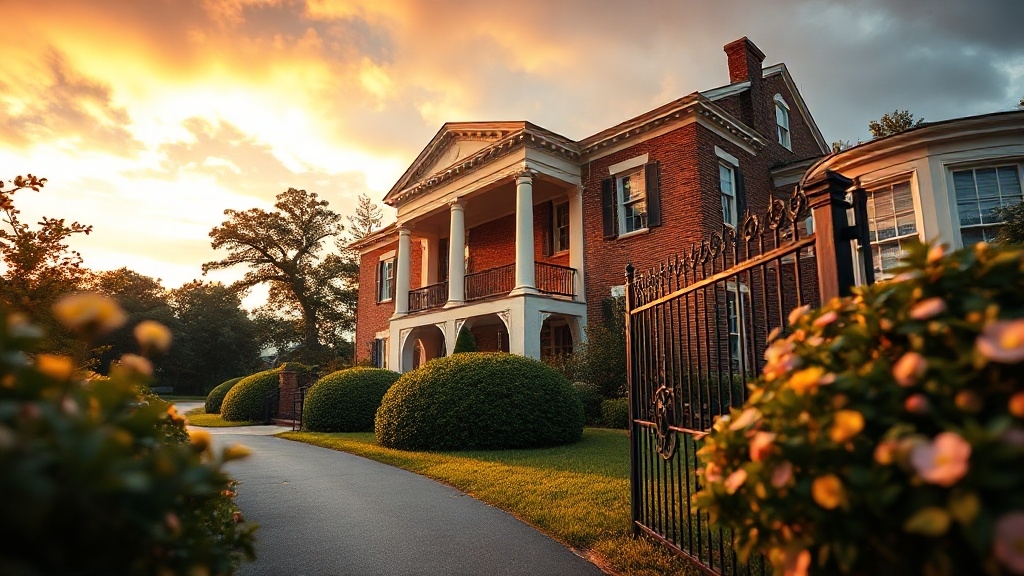
Set along the Potomac River in Mason Neck, Virginia, Gunston Hall stands as an 18th-century Georgian mansion with outsized historical weight.
Located about 15 miles south of Alexandria, the estate now spans 550 acres, down from an original 5,500-acre plantation. Its riverfront grounds include trails, a certified nature sanctuary, and a recognized Bluebird Trail.
The mansion is best known as the home of George Mason, principal author of the Virginia Declaration of Rights.
Architecture Under Preservation Pressure
Built between 1755 and 1758 on George Mason’s own design, the house presents a restrained exterior with elaborate projecting porches. William Buckland shaped the interior woodcarving and built the land-side and river-side porches.
Historic Preservation defines the site’s modern role. A restored garden, reconstructed outbuildings, archaeology, museum spaces, and regular guided tours frame Gunston Hall as both public landmark and carefully managed estate today.
The History Behind New Gunston Hall
In colonial Virginia, Gunston Hall emerged between 1755 and 1759 as the principal residence of George Mason IV. He conceived the mansion as both a plantation headquarters and a statement of elite status along the Potomac River.
Built from Mason’s own design, it relied on William Buckland, William Bernard Sears, and enslaved labor. Its Georgian architecture emphasized symmetry, ornate interiors, and architectural authenticity. Like other historic homes shaped by symmetrical facades, Gunston Hall reflects the period’s emphasis on balance, status, and enduring design.
| Element | Historical Role | Enduring Meaning |
|---|---|---|
| Mason | Owner and planner | Founding-era legacy |
| Buckland | Interior craftsman | Refined detail |
| Plantation | Economic base | Complex history |
Set on a 5,500-acre plantation, the house reflected Mason’s political and social world. Because few alterations followed, it survives as a rare record of a single colonial architectural moment.
After private ownership and restoration, Virginia assumed stewardship in 1949.
What the Biltmore Forest Estate Includes
Beyond the mansion itself, the Biltmore Estate encompasses a vast planned landscape of about 12,000 acres. Some published visitor materials cite roughly 8,000 acres, depending on what is included.
This Biltmore acreage stretches about six miles along both banks of the French Broad River in the Blue Ridge Mountains.
It includes native forest, managed woodland, formal gardens, and broad scenery areas tied to the estate’s original design.
House and Estate Infrastructure
At the center stands the 250-room Biltmore House. It has 35 bedrooms, 43 bathrooms, 65 fireplaces, and about 175,000 square feet.
The estate infrastructure also includes nearly 140 miles of roads and trails. That includes 17 miles of macadam road.
This circulation network connects the house, gardens, Antler Hill Village, winery, and wider visitor areas efficiently.
Why Biltmore Forest Adds So Much Value
Scarcity helps explain why Biltmore Forest adds disproportionate value to luxury properties.
Its small footprint and low-density zoning sharply limit estate-caliber supply. That sustains land premiums and makes direct comparables difficult to find.
Value often rests less on interior square footage than on setting, lot quality, and separation from neighboring homes.
Core Drivers of Premium Value
- Limited inventory supports stronger pricing power.
- Large parcels with privacy buffers command premiums.
- Mature terrain preserves visual and acoustic seclusion.
- Usable topography improves outdoor-living practicality.
- Architectural pedigree reinforces enduring desirability.
Biltmore Forest also benefits from an established luxury identity tied to historic character, craftsmanship, and proximity to the Biltmore Estate and country club.
As seen in Houston’s luxury market, architectural uniqueness and constrained top-tier supply can intensify competition and push estate valuations higher.
Flat or gently sloped sites generally outperform steeper lots. Drainage, orientation, and functional outdoor space materially affect buyer appeal.
How the $9.75 Million Price Fits the NC Market
Measured against North Carolina’s luxury market, the $9.75 million asking price places the Biltmore Forest estate firmly in the state’s upper tier rather than at its outer edge.
In market context, that figure sits just above a recent $9.6 million Biltmore Forest sale, giving the listing a credible local benchmark in Asheville’s luxury segment.
Statewide Comparison Signals Rarity
Its price positioning also remains below North Carolina’s top current listings, including a $10.75 million chateau and the $19.9 million Blue Fish Farm.
Recent record sales offer further perspective.
Figure Eight Island closed at $13.9 million, and Banner Elk’s “castle in the clouds” sold for $15.85 million.
Against Charlotte, Chapel Hill, and Henderson County luxury pricing, the estate stands apart as a rare trophy property, supported by 11 acres, historic provenance, and scarcity.
Assessment
New Gunston Hall enters the market as a rare founding-era estate in one of North Carolina’s most protected luxury enclaves.
Its documented history, expansive grounds, and placement within Biltmore Forest sharply distinguish it from standard high-end listings.
At $9.75 million, the property reflects both architectural scarcity and land-driven value in a tightly constrained market.
The listing underscores how exceptional heritage homes continue to command outsized attention when location, provenance, and preservation align.