



Real Estate Investing Gets Loud, Weird, Risky, And Uncomfortable
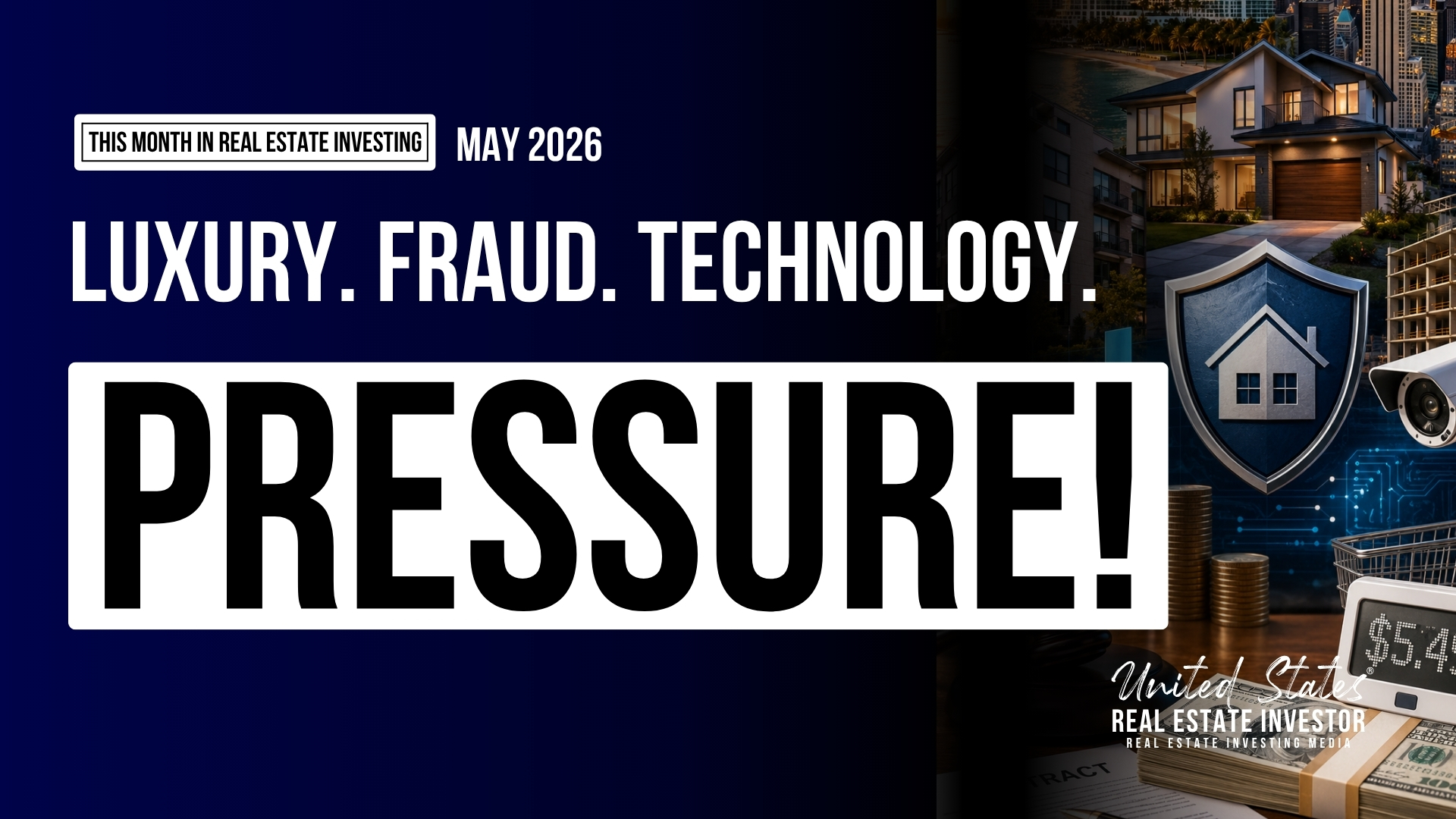
May 2026 brings This Month In Real Estate Investing into one of the most explosive news cycles of the year.
Host James A. Brown leads the conversation with guests Paul Anderson, Caleb David, and Natalie Levkovitz as the show moves through a packed month of headlines touching nearly every corner of the investing world.
The stories are not gentle.
Miami keeps rising. Dave Ramsey challenges the lazy dream of passive income. A Virginia mother gets caught in an apparent rental scam. Real estate investment operators head to prison. A New York real estate titan steps into a political firestorm. AI listing photos raise trust issues. A former judge faces serious investor fraud allegations. A former broker receives prison time. MV Realty faces a major California settlement. Even grocery pricing technology becomes part of the broader conversation about data, trust, and consumer protection.
This month’s episode is not just about property.
It is about power.
It is about trust.
It is about what happens when money, technology, greed, government, and everyday people collide inside the American housing machine.
Miami Keeps Flexing While Affordability Keeps Screaming
Sales Rise For The Seventh Straight Month
The May conversation opens with Miami-Dade County showing another sign of strength. According to the show notes, home sales rise 6.6% year-over-year in March 2026, giving the market its seventh straight month of rising transactions.
Single-family sales climb 10.6%. Condo sales rise 2.9%. Luxury homes above $5 million jump 27%.
That kind of momentum sends a loud message to investors. Miami is not acting like a tired market. It is acting like a market that still has serious demand behind it.
Luxury Buyers And Cash Keep Changing The Game
South Florida’s strength is not just coming from ordinary buyers. The show notes point to major activity in ultra-luxury sales, cash purchases, multi-family construction, and home equity growth.
That matters because cash buyers and luxury investors can move differently than average buyers. They can absorb higher interest rates. They can compete harder. They can move faster. They can also push prices further away from local wage realities.
That creates a major question for investors and residents alike.
Can Miami keep booming without pricing too many people out of the market?
International Demand Keeps Miami In A Different League
International buyers remain a major force in South Florida. The show notes state that they account for nearly half of new South Florida construction and condo conversion purchases during a recent 18-month span.
That gives Miami a global demand engine. It also makes the market less tied to local income alone.
For investors, that can look exciting.
For local residents, it can feel like the ground keeps moving beneath their feet.
Dave Ramsey Kicks The Passive Income Fantasy In The Teeth
Rental Property Is Wealth Building, Not Easy Money
The show then turns to Dave Ramsey and his blunt warning about rental property income.
Ramsey reportedly sits on an estimated $850 million in property holdings, yet argues that real estate should not be treated as passive income.
That is a major reality check for beginners who have been sold the dream that rental property means collecting checks while doing almost nothing.
In this discussion, rental ownership is positioned as a serious business. It includes repairs, vacancies, insurance, tenant issues, management decisions, and constant financial pressure.
Social Media Makes Landlording Look Too Easy
The real danger here is expectation.
A beginner sees flashy content online and starts believing one rental house can instantly create freedom. Then the roof leaks. The tenant leaves. Insurance jumps. Repairs crush cash flow. The deal that looked passive becomes very active.
This is where the TMIREI discussion becomes valuable.
It reminds the audience that real estate can build wealth, but it does not remove work, risk, or responsibility.
Hands-Off Options Still Carry Tradeoffs
The show notes also mention REITs, crowdfunding, joint ventures, and short-term rentals as alternative ways to gain exposure.
Those options can be more hands-off than direct landlording, but they are not magic. They carry different risks, different controls, and different limitations.
The big investor lesson is simple.
Owning property is not the same thing as owning freedom.
The model matters. The numbers matter. The management matters.
A Virginia Family Falls Into The Nightmare Side Of Online Housing
A Facebook Marketplace Rental Search Turns Dangerous
One of the most painful stories in the May 2026 lineup comes from Newport News, Virginia.
A mother searching for housing reportedly loses money in an apparent rental scam tied to a Facebook Marketplace listing. She believes she is securing a rent-to-own home, sends payments through unofficial methods, and is allegedly instructed to access the property through a lockbox.
That is terrifying because it shows how desperate housing situations can be exploited.
Scammers Know When People Are Vulnerable
Housing pressure creates emotional urgency. When a family needs a place to live, the normal warning signs may get ignored. A fake landlord can use that pressure to push fast payments, unofficial apps, and suspicious instructions.
The show notes say Atlantic Coast Realty later states that payments were sent to unauthorized third parties through Bitcoin and Cash App, and that the company does not request funds through those channels.
That detail becomes a warning for renters and investors.
Real property transactions need verification. Listings need verification. Payment channels need verification. Access instructions need verification.
Online Platforms Face Bigger Trust Questions
This story also raises bigger questions about social media marketplaces.
If families are finding homes through large online platforms, what responsibility do those platforms have to stop fraudulent listings before someone gets hurt?
The answer is not simple. But the risk is growing.
As housing gets tighter, scams become more dangerous.
The $17 Million Ponzi Case Sends A Brutal Message To Private Investors
Real Estate Gurus Go To Prison
The May episode then moves into one of the most serious fraud stories of the month.
Two Oregon real estate investment operators are sentenced to federal prison after admitting to involvement in a $17 million fraud scheme. The show notes state that Robert Christensen and Anthony Matic promised high returns through Midwest real estate investments while pressuring victims to use HELOCs and retirement funds.
That detail matters.
This was not just money sitting around in spare accounts. Victims reportedly put homes, retirement plans, and financial futures at risk.
High Returns Can Hide Ugly Math
The alleged structure described in the show notes is familiar in fraud cases. New investor money is used to repay earlier investors. Financial problems are concealed. Personal expenses are covered with investor funds.
That is why private real estate investments must be examined with extreme care.
A strong personality is not proof.
A beautiful pitch deck is not proof.
A confident return promise is not proof.
Trust Must Be Verified Before Money Moves
This story hits especially hard for beginner investors because they are often looking for shortcuts into higher returns.
But high returns without transparency can become a trap.
The TMIREI conversation gives the panel room to explore due diligence, promissory note risks, HELOC dangers, retirement fund exposure, and the damage fraud does to the broader investing industry.
New York’s Luxury Tax Fight Turns Into A Political Firestorm
A Real Estate Titan Enters Dangerous Territory
The New York story brings politics, wealth, taxes, and luxury property into the same room.
Steve Roth, CEO of Vornado Realty Trust, reportedly compares the phrase “tax the rich” to hateful racial slurs during a company earnings call while criticizing New York City Mayor Zohran Mamdani over a proposed tax on second homes valued above $5 million.
That comment becomes the flashpoint.
The larger issue is the proposed pied-à-terre tax and what it could mean for wealthy property owners, luxury investors, and city tax policy.
Second Homes Become A Symbol Of Bigger Tension
A second-home tax is not just a real estate issue. It is a political statement.
Supporters may see it as a way to make ultra-wealthy property owners contribute more to a city struggling with affordability.
Opponents may see it as a threat to investment, business confidence, and high-net-worth migration.
For investors, the takeaway is clear.
Policy risk is real.
Taxes, public pressure, and political messaging can influence luxury real estate markets just as much as rates and demand.
Wealth, Housing, And Public Anger Keep Colliding
This story reflects a larger national tension.
Many working residents feel squeezed by housing costs. Wealthy property owners feel targeted by tax proposals. Developers worry about business conditions. Politicians turn luxury property into a symbol of inequality.
That tension is not going away.
AI Listing Photos Put Real Estate Trust On Trial
The Picture May Not Be The Property
AI-generated home listing photos become one of the most important technology stories in the episode.
The concern is not basic virtual staging. The concern is AI tools that may change walls, windows, layouts, or structural features in ways that make a property look meaningfully different from reality.
That is a trust problem.
Buyers already rely heavily on online photos. If those images become too artificial, every listing starts to invite doubt.
Real Estate Marketing Enters A New Disclosure Era
The show notes state that California has passed a law requiring disclosure of AI-altered listing photos and original images, while New York officials have warned against deceptive AI advertising practices. Florida currently has no AI-specific real estate law, though misleading advertising is already prohibited.
That puts agents, platforms, and regulators in a fast-changing position.
What counts as enhancement?
What counts as deception?
Where does virtual staging end and manipulation begin?
Small Agents Could Be Pressured By An AI Arms Race
If AI-enhanced images become the norm, smaller agents may feel forced to compete with unrealistic visuals.
That could create a dangerous race where every home online looks cleaner, larger, brighter, newer, and more luxurious than it really is.
The buyer eventually pays the emotional price when reality does not match the screen.
A Former Judge Facing Investor Fraud Allegations Shakes Confidence In Professional Titles
Authority Does Not Replace Due Diligence
The AP News item involving former New York City judge Edward Harold King and developer Yechiel “Sam” Sprei adds another disturbing layer to the month.
Federal prosecutors charge both men with wire fraud conspiracy after alleging they used King’s judicial position to convince investors to place $6.5 million into an escrow account tied to a fake commercial property opportunity in New Jersey.
The show notes state that several million dollars were quickly transferred into Sprei’s bank account, and only $1.5 million was later returned.
Professional Status Can Create Dangerous Comfort
This story is especially powerful because it involves a former judge.
Titles create trust. Judges, lawyers, brokers, developers, and fund managers can all appear credible because of their professional status.
But status is not the same as safety.
Investors still need independent verification, proper documentation, escrow oversight, and professional review before moving large sums of money.
Escrow Trust Becomes A Major Investor Protection Issue
The case also raises questions about attorney escrow accounts and investor safeguards.
If investors believe money is protected but the funds are quickly moved elsewhere, the damage can be severe.
This is where process matters.
Who controls the funds? What conditions release the funds? Who verifies the property opportunity? What documents prove the deal is real?
Those questions are not optional.
A Former Seattle Broker’s Prison Sentence Adds Another Fraud Warning
Investor Money Goes Where It Should Never Go
The May episode continues its fraud theme with the case of former Seattle-area broker Tamara King, also known as Tamara Waln.
She is sentenced to 55 months in prison after being convicted of 14 federal felonies tied to a $2.4 million investment fraud and tax crimes.
The show notes say investor funds from the Halcyon real estate investment fund were supposed to support apartment renovation projects in West Seattle. Instead, prosecutors say money went to personal accounts, luxury purchases, jewelry, a customized Tesla, personal expenses, and unpaid tax debts.
Small Private Funds Need Big Transparency
This case gives investors another hard lesson.
Private funds can sound professional. Renovation projects can sound practical. Apartment deals can sound stable. But without transparency, reporting, third-party controls, and real oversight, investors can be left exposed.
Twenty-two investors reportedly lost their investments after the fund collapsed in 2019.
That is not just a financial loss.
It is emotional damage. It is trust damage. It is future damage.
Emotional Sales Tactics Can Become Financial Traps
The TMIREI panel has plenty to unpack here.
Investors must be careful when confidence, charm, urgency, or personal trust replaces evidence. A strong story is not a safeguard. A personal relationship is not an audit. A promised return is not a guarantee.
The May 2026 message is loud.
Fraud often wears a suit.
California’s MV Realty Settlement Puts Predatory Contracts In The Spotlight
Long-Term Listing Agreements Create Long-Term Damage
The California Department of Justice story brings homeowner protection into the center of the episode.
Attorney General Rob Bonta announces a major settlement with MV Realty over allegations involving deceptive long-term listing agreements tied to liens on homes.
The show notes state that the agreements gave MV Realty exclusive rights to act as listing agent for up to 40 years and imposed costly termination fees that could interfere with refinancing, home equity loans, or property transfers.
That is a massive issue.
A homeowner may think they are getting short-term financial help, but the agreement can follow the property for decades.
Nearly 1,500 Homeowners Receive Relief
Under the settlement, homeowner contracts are voided, liens must be individually terminated, and affected homeowners receive more than $1.3 million in restitution. MV Realty and its executives are also barred from conducting licensed real estate business in California for five years and must pay nearly $1.2 million in civil penalties.
For homeowners, this is relief.
For the broader industry, it is a warning.
Contracts that target financially vulnerable people will attract legal attention.
The Industry Must Watch For Similar Models
The larger question is whether similar models still exist in other states.
This story gives investors, homeowners, agents, and regulators a reason to look more closely at long-term listing contracts, lien practices, and alternative home service agreements.
A bad contract can quietly become a financial cage.
Surveillance Pricing Takes The Conversation Beyond Real Estate
Digital Price Tags Become A Consumer Trust Story
The extra news item brings a surprising twist.
A Gizmodo report says a survey commissioned by the United Food and Commercial Workers International Union finds that most Americans are concerned about surveillance pricing and electronic shelf labels in grocery stores.
According to the show notes, 68% worry the technology could increase costs, 67% support banning electronic shelf labels, and 58% say digital price tags would make them less likely to shop at a store.
At first glance, this may not seem connected to real estate investing.
But it is.
Data-Driven Pricing Is Spreading Everywhere
The bigger issue is how AI, data, and pricing power can affect everyday life.
If consumers believe stores can adjust prices based on behavior, demand, or personal data, trust begins to weaken. That same fear can show up in housing, lending, insurance, rentals, and property technology.
Investors should pay attention because consumer trust is becoming a major economic force.
People are not just asking what something costs.
They are asking how the price was created.
Local Businesses May Face A New Competitive Pressure
Large retailers may have the technology to use digital shelf labels and AI-powered pricing systems at scale. Smaller local businesses may not.
That could create another divide between corporate power and local operators.
For a show like TMIREI, this extra item fits because it reveals the same theme running through the entire month.
Technology can help.
Technology can distort.
Technology can also make people feel watched, priced, and pressured.
The Big Theme Of May 2026 Is Trust Under Attack
Markets Are Moving, But Confidence Is Fragile
This month’s stories may seem scattered at first.
Miami luxury sales. Rental scams. Ponzi schemes. AI listing photos. Tax fights. Predatory contracts. Surveillance pricing.
But one theme connects them all.
Trust is under attack.
Buyers need to trust photos. Renters need to trust listings. Investors need to trust operators. Homeowners need to trust contracts. Consumers need to trust prices. Cities need to trust development policy. Markets need to trust the rules.
When trust breaks, everything gets harder.
Investors Must Become More Skeptical Without Becoming Frozen
The answer is not fear.
The answer is sharper thinking.
Investors need better due diligence. Renters need safer verification habits. Agents need ethical marketing standards. Fund managers need transparency. Homeowners need contract education. Policymakers need to understand how quickly bad actors can exploit weak systems.
This month’s episode gives the TMIREI audience a clear message.
Opportunity is still everywhere, but lazy trust is dangerous.
James A. Brown Leads A Roundtable Built For A Wild Month
Paul Anderson, Caleb David, And Natalie Levkovitz Join The Conversation
With James A. Brown hosting, the May 2026 episode brings together Paul Anderson, Caleb David, and Natalie Levkovitz for a timely and wide-ranging discussion.
The guests are positioned to help break down the month’s biggest investing issues from multiple angles. The episode gives them room to look at markets, risk, scams, regulations, technology, and homeowner protections through the lens of real-world investing.
The format works because the stories are not isolated.
Each news item adds another layer to the same question.
How does an investor stay smart when the market keeps getting more complex?
Sponsors Help Power The Episode
The May episode also recognizes its show sponsors, including United States Real Estate Investor Advertising, Real Expert Talks, and Universe Media Publishing.
The show notes also include sponsor mentions for Accelerated Capital at acceleratemycapital.com and Universe Media Publishing at universemediapublishing.com during the outro.
These sponsors support a show that continues to bring timely investor conversations to audiences across podcast platforms, livestream destinations, and United States Real Estate Investor® channels.
The Door Closes On Easy Assumptions
May 2026 Leaves Investors With A Sharper Warning
The May 2026 episode of This Month In Real Estate Investing is not a soft market recap.
It is a warning shot.
Miami shows that demand can still roar. Dave Ramsey reminds investors that rental income is not effortless. Virginia’s rental scam shows how fast housing desperation can be exploited. Multiple fraud cases prove that bad actors still know how to weaponize trust. AI listing photos reveal a new front in real estate marketing ethics. MV Realty’s California settlement shows that predatory contracts can bring serious consequences. Surveillance pricing shows that consumers are growing more suspicious of data-driven systems.
This month, the show does what TMIREI is built to do.
It turns the news into investor awareness.
It takes scattered headlines and pulls out the deeper meaning.
And it reminds viewers that the path to financial freedom still exists, but it demands sharper eyes, better questions, and stronger protection than ever before.