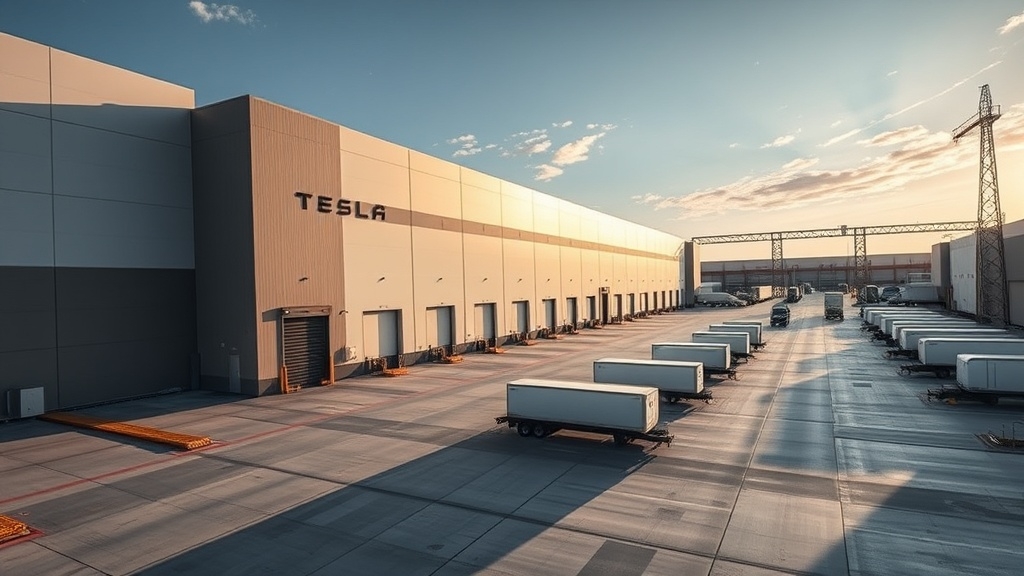


Tesla’s New Austin Lease: Size and Timing
In a rapid expansion move, Tesla executed a new Austin-area industrial lease totaling roughly 293,000 square feet. Reported figures range from 293,000 square feet in the official lease document to 300,000 square feet in local reporting and 296,960 square feet in a Q2 2025 market summary.
This lease ambiguity still places the deal among Austin’s largest 2025 industrial transactions. It also pushes Tesla’s regional industrial footprint beyond 11 million square feet. The facility sits about 6 miles from Giga Texas, reinforcing its proximity to Tesla’s main campus.
The deal adds to 962,000 square feet already tied to Kyle/35 Logistics Park.
The lease was signed May 14. Occupancy logistics moved quickly, with occupancy and lease commencement both set for June 1. In contrast to office markets facing 36.8% vacancy, Tesla’s fast lease-to-occupancy timeline highlights continued momentum in industrial real estate.
Tenant move-in was also planned for June 1. That indicates no reported delay between signing and operational control.
The timing fits Tesla’s broader Q2 2025 expansion pattern.
Where Tesla’s New Austin Lease Is Located
Just north of Giga Texas, Tesla’s new lease sits at Austin Hills Commerce Center, 11801 Decker Lane. The site places the company inside a fast-growing industrial corridor along Highway 130 in eastern Travis County.
The site lies roughly five miles from Giga Texas and about 10 miles from Tesla’s existing Austin plant, according to proximity mapping of nearby operations.
Building 1 Adds Strategic Access
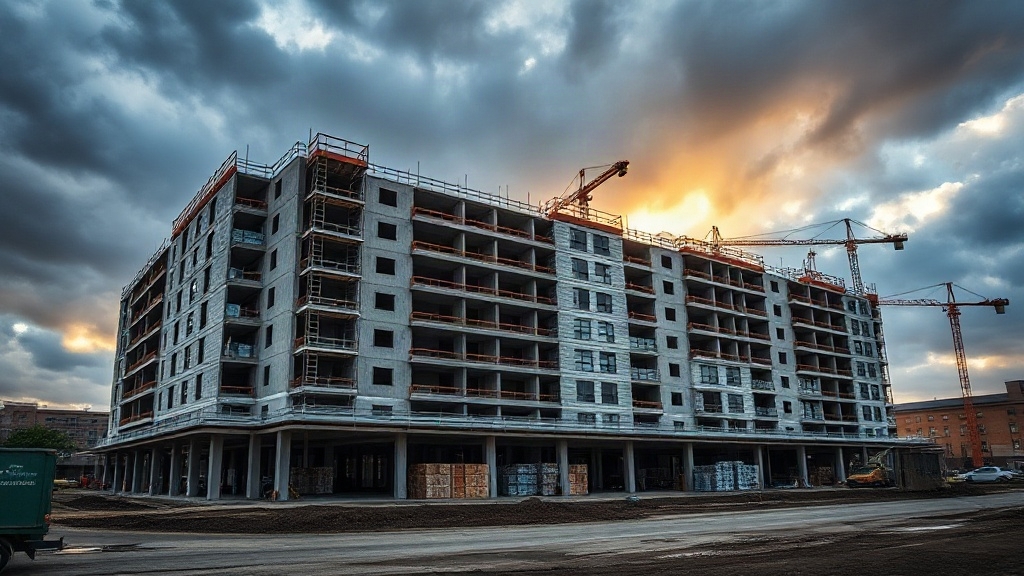
Tesla’s space is embedded in Building 1 of a 135-acre industrial park being developed by Sansone Group. The building offers nearly 300,000 square feet, heavy-duty floors, rail-served capability, and ample parking.
Adjacent transportation routes connect Austin with surrounding suburbs. Highway 183 also provides about a 10-minute drive to Austin-Bergstrom International Airport.
The location also carries broader community impact through infrastructure upgrades and continued industrial expansion across Travis County. Nearby, ALTO Real Estate Funds recently acquired a 24-acre site in Pflugerville as part of the region’s expanding industrial corridor near SH-130 and Tesla-related growth.


How Tesla’s Austin Footprint Passed 11 Million SF
Tesla’s latest Decker Lane lease pushed its Austin-area industrial footprint past 11 million square feet. It extends a regional network already anchored by Giga Texas and reinforced by added space in Kyle, Taylor, and Hutto.
Giga Texas supplies most of that volume. Its main plant spans about 2,500 acres, with factory floor area exceeding 10 million square feet.
The building’s scale, measured at roughly 1.2 kilometers by 365 meters, underpins the regional total.
Expansion Drivers
Additional leased space in Kyle contributed about 1.4 million square feet for warehousing, battery work, and light assembly.
Building 1 alone added 127,000 square feet, while Austin Hills Commerce Center added about 300,000 square feet.
This pattern reflects facility consolidation and a permit strategy supporting future growth. A 2024 filing sought another 500,000 square feet for general assembly.
How Tesla’s Lease Affects Austin Industrial Demand
Against a softer supply backdrop, Tesla’s 843,000-square-foot Q3 2024 lease at Taylor Logistics Park was the main driver behind Austin industrial net absorption reaching 615,901 square feet.
The deal concentrated demand in new Class A warehouse space, which accounted for 44.1% of quarterly leasing activity.
All five of the quarter’s largest leases were new deals, showing that occupiers still pursued modern facilities despite rising vacancy in some areas.
Market Pressure
Tesla’s expansion added momentum to an already active tenant market, especially in big-box buildings where supply has tightened since supplier demand accelerated after the gigafactory announcement.
That creates clear supply chain implications for nearby manufacturers and logistics users competing for quality space.
It also points to labor market shifts, as large industrial occupiers can influence hiring patterns across transportation, warehousing, and advanced manufacturing functions in the Austin region.
What Tesla’s Austin Expansion Suggests Next
As Austin’s industrial and mobility footprint expands, the next phase points to deeper integration between Tesla’s manufacturing base, regional logistics patterns, and autonomous transportation infrastructure.
Tesla’s widening Austin geofence now covers roughly 245 square miles, connecting Gigafactory Texas to highways, suburbs, and the airport. That signals robotaxi scaling is becoming operational rather than experimental.
That reach, combined with plans to double the fleet in late 2026 and deploy improved urban-navigation software, suggests Austin is serving as a live proving ground for broader Full Self-Driving deployment.
At the same time, the factory’s multibillion-dollar investment, rapidly growing payroll, and favorable Texas development terms indicate continued workforce migration toward eastern Travis County.
For industrial real estate, that combination points to rising demand around manufacturing, distribution, and mobility-linked support facilities.
Assessment
Tesla’s 682,000-square-foot Austin lease marks a major escalation in the region’s industrial real estate market.
The deal reinforces Tesla’s dominant footprint and pushes its total occupied space beyond 11 million square feet.
It also tightens already competitive large-block availability.
For Austin, the lease signals sustained pressure on industrial supply.
It highlights the rising strategic importance of major logistics corridors and the continued concentration of demand among a small group of outsized occupiers shaping the market’s next phase.