
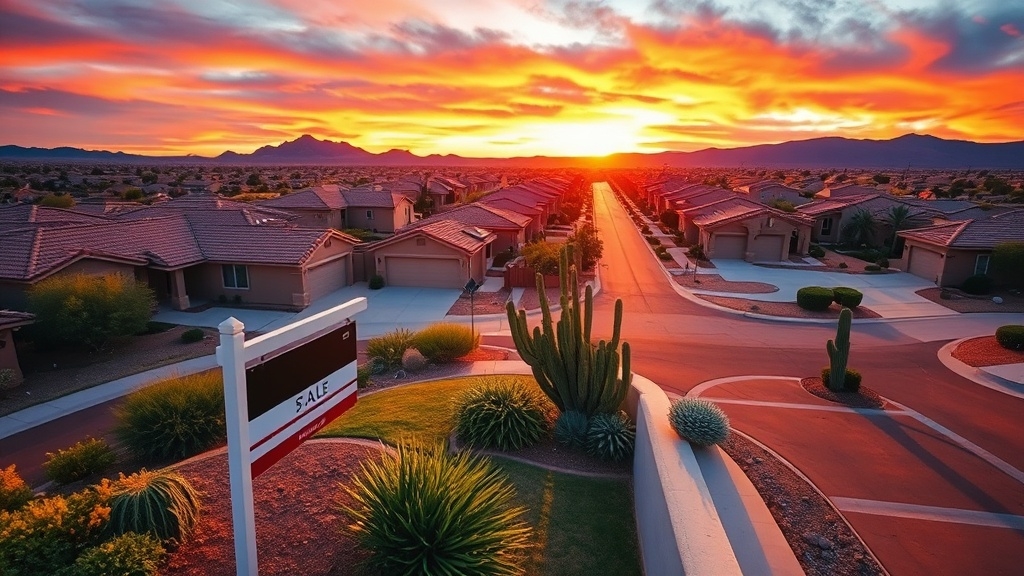
Cooling Home Prices in Phoenix
Phoenix’s real estate market is undergoing a recalibration. The decline in home prices signals a significant shift. Since mid-2022, there’s been an approximately 7% decrease in prices. This price correction indicates a move toward market balance. Average home values have dipped 4.4% over the past year. They are now around $411,916. The median sale prices in Arizona show a slight year-over-year decline. However, certain ZIP codes, like Peoria, Glendale, and Scottsdale, remain overvalued by about 20%. Sellers are responding to market pressures. They’ve reduced prices at unprecedented rates over the past decade. The housing deficit in Phoenix is estimated at 56,047 units, further contributing to ongoing market adjustments. These adjustments suggest buyers gain more negotiating power. Ongoing high mortgage rates could further dampen prospective buyer activity, deepening the home price decline. Sellers must align pricing more closely with current market conditions to achieve sales success.
Elevated Inventory Levels and Supply Dynamics
With a notable swell in active home listings, the Phoenix real estate market enters a phase of elevated inventory levels. This development significantly impacts supply dynamics.
Active home listings have surged, showing a 54.3% increase year-over-year in Q1 2025. Listings exceed 23,500 homes, the highest number since 2017.
This uptick in listings points to a significant shift in the supply chain, nudging market conditions toward saturation.
Despite these inventory expansions, monthly sales and pending listings saw decreases of 6.6% and 8.4%, respectively. This reflects a nuanced balance between supply and demand dynamics.
With homes staying longer on the market, close to 47% remain listed for over 60 days. This shift suggests potentially greater bargaining power for buyers.
Additionally, the months of supply climbed to 4.2, indicating a still-developing real estate environment.
Notably, housing inventory in major markets has hit record lows, influencing market conditions even in areas where inventory is growing.
Buyer Power and Affordability Issues
Buyer power in Phoenix’s housing market is on the rise, moving away from a seller-dominated environment. The market is becoming more buyer-friendly as inventory surpasses demand.
Days on the market have increased by 20.5%, reflecting this shift. Buyers now enjoy increased market flexibility.
Builders are offering aggressive incentives to compete. Elevated home prices and interest rates pose challenges, though.
The average home price is around $495,000, with mortgage rates between 6.5% and 7%. This makes affordability a significant issue.
Reduced contract volumes indicate cautious buyer behavior. Even with inflation cooling to 3%, affordability challenges persist.
First-time buyers are particularly affected by these constraints. Sellers are adjusting prices and expectations.
The housing affordability index has plummeted to a decade low, influencing buyer decisions as many still struggle with high costs. This creates more negotiation room with dropping median sales prices. Despite this, entering the market remains tough for many.
Resilience of the Luxury Market
Resilience in Phoenix’s luxury housing market starkly contrasts the challenges faced in other segments. While overall home prices soften, the luxury market maintains its allure. This is driven by continued interest from high-net-worth individuals attracted by the region’s luxury appeal. Price stability prevails as strategic buyer behavior reshapes transactions. In this niche, selectivity is emphasized over urgency. The rising inventory arms buyers with leverage, yet sellers counter with refined approaches. Key factors impact the luxury market in distinct ways. Continual buyer interest sustains market engagement. An inventory increase balances buyer-seller dynamics. Geographic concentration supports demand consistency. Strategic buyer behavior promotes value-focused deals. Luxury homes featuring updated amenities in prime areas remain desirable. These homes showcase how discerning strategies and exclusivity buoy the market segment amid broader downtrends. Despite a broader economic uncertainty, the surge in multi-family housing demand indicates a shift toward apartment complexes, further emphasizing the adaptability and diversity within the real estate market.
Migration Trends and Housing Demand
Surging in numbers, migration to Phoenix is reshaping its housing terrain amidst a volatile market. Interstate migration has led to a significant increase in population, intensifying demand for housing.
The influx largely stems from Californian residents. They face higher living costs and are drawn to Phoenix’s more affordable housing.
Other states contributing to this demographic shift include Texas and Colorado, with favorable driving distances. Cities like Los Angeles and Las Vegas are leading the charge.
Employment opportunities are also attracting residents from other Arizona cities. Phoenix’s favorable climate and affordability offer additional lifestyle incentives.
This increased population influx fuels an already dynamic housing market. Greater demand is influencing inventory pressures.
Concerns similar to those in Las Vegas City Council highlight potential oversupply issues, echoing risks associated with high inventory and fluctuating interest rates.
As a result, the market response is seen in fluctuating home prices throughout the Phoenix metropolitan area.
Assessment
As Phoenix faces a surge in housing inventory, the city’s real estate terrain braces for a significant shift. Cooling home prices may offer temporary relief to buyers grappling with affordability challenges.
However, the luxury market seems poised to endure, showcasing its unique resilience. Meanwhile, migration patterns continue to shape housing demand dynamics.
Investors and professionals must steer through these changes with caution amidst an evolving market backdrop. Strategic positioning may be key to success.























5 Responses
Surging inventory doesnt always mean dropping prices, folks. High-end luxury market might just absorb this and keep soaring. Ever thought about that?
High-end luxury doesnt define the whole market. Ever considered that, genius?
I wonder if this cooling of Phoenix home prices is just a prelude to a huge market crash? Maybe its time to rent instead of buy?
Just my two cents, but isnt the Phoenix luxury market resilient enough to absorb this price drop? Could be a buyers market soon, folks!
Interesting take but isnt it possible that this surge in inventory might actually stabilize the market instead of causing a drop?