
Key Takeaways
- Lorem ipsum dolor sit amet, consectetur adipiscing elit. Donec nisi arcu, porttitor vel ullamcorper ut, vestibulum at justo. Etiam sagittis, elit nec tempor rutrum,
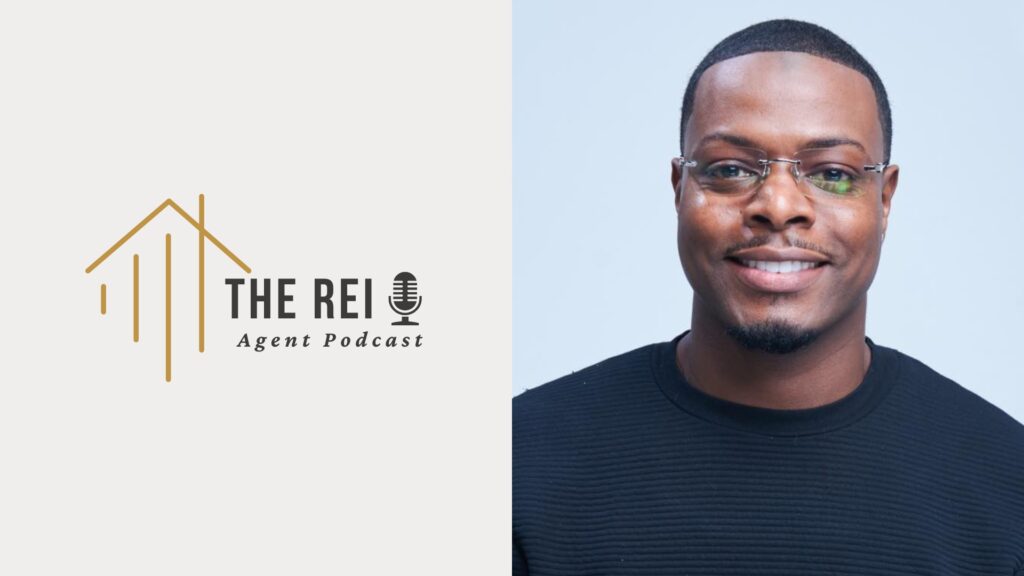
The REI Agent with Tyrin Tyson
Value-rich, The REI Agent podcast takes a holistic approach to life through real estate.
Hosted by Mattias Clymer, an agent and investor, alongside his wife Erica Clymer, a licensed therapist, the show features guests who strive to live bold and fulfilled lives through business and real estate investing.
You are personally invited to witness inspiring conversations with agents and investors who share their journeys, strategies, and wisdom.
Ready to level up and build the life you truly want?
Follow and subscribe to The REI Agent on social


From Chaos to Clarity
The REI Agent Podcast welcomed Tyrin Tyson, a Baltimore native whose journey from frontline nursing during the pandemic to becoming a fiduciary financial advisor and real estate investor proves that resilience can forge new futures.
Tyrin’s story reflects the power of transformation, where challenges became the building blocks for wealth, freedom, and a legacy of impact.
“I became a financial advisor because I got to know the numbers. I had to understand the tax implications. I had to understand how does this look long term.”
The Power of Resilience in Real Estate
Learning Through Fire
Tyrin shared his leap into real estate during his nursing years, managing properties while working grueling 60-hour shifts.
The burden was heavy, the mistakes were costly, but the lessons became priceless.
“Anytime you do anything for the first time, you’re going to suck at it.”
Through failed syndications, overleveraged properties, and problem tenants, he built resilience.
What once seemed like world-ending problems became training for the future.
The BRRRR Method and Beyond
Like many investors, Tyrin started with the BRRRR method after immersing himself in BiggerPockets. But he discovered that the real-world challenges went far beyond any book or podcast.
These scars and sleepless nights, he admitted, transformed him into someone who could face uncertainty with calm strength.
“Now I look back and I’m like, it’s things that come up, problems that come up, and they don’t even affect me.”
Breaking Free from the System
Walking Away from Nursing
After serving during the darkest days of the pandemic, Tyrin walked away from nursing with clear eyes.
He saw beyond the credentials, beyond the glass ceiling, and toward a life where his financial knowledge could serve generations instead of just patients.
“As a nurse, I could help one person put a Band-Aid on it and send them off. As a financial advisor, I can truly help generations.”
Building Systems and Freedom
He reminded listeners that every realtor and entrepreneur is, in reality, their own CEO.
Success requires systems, financial knowledge, and the courage to take ownership of one’s future.
Tyrin stressed that retirement is not about age but about numbers, and the earlier agents plan, the sooner they can achieve true freedom.
“Retirement is real and it’s not an age but a number. And if you don’t have that number, you got to keep working.”
A Holistic Wealth Perspective
Marrying Real Estate and Financial Planning
One of the most powerful insights Tyrin shared was the need to marry the worlds of real estate and stock market investing.
He emphasized diversification, not competition, reminding listeners that both avenues can serve to protect wealth.
“It’s not about the now. We got to think about it in decades and understanding what we’re doing with our money, how we’re putting it to work.”
Golden Nuggets for Investors
For Tyrin, liquidity and preparation are essential.
Overleveraging nearly broke him, but it also taught him that true wealth comes from stability and foresight.
“Cash is king because I was able to see and witness the kind of outcome of what overleveraging looks like.”
The Relentless Mindset
Tyrin found inspiration in the teachings of Tim Grover, trainer to legends like Michael Jordan and Kobe Bryant.
Books like Relentless and Winning taught him that consistency, preparation, and an unshakable mindset are what separate those who dream from those who achieve.
“If you’re the most prepared person on the field or in the room, then you’re the most confident.”
Rising Beyond Limits
Tyrin Tyson’s journey is not just about financial success. It is about conquering fear, embracing resilience, and building a legacy that stretches across generations.
His story reminds every listener that adversity is not the end but the beginning of transformation.
“Men lie, women lie, numbers don’t.”
Through his experiences, Tyrin proves that with vision, discipline, and an unstoppable mindset, anyone can rise stronger, build wealth, and live with purpose.
Stay tuned for more inspiring stories on The REI Agent podcast, your go-to source for insights, inspiration, and strategies from top agents and investors who are living their best lives through real estate.
For more content and episodes, visit reiagent.com.
Articles Related to The REI Agent
- 10 Shocking Truths From the 2025 Global Housing Storm (And How Agents and Investors Can Thrive Through It)
- Shocking Balance Before Wealth (How Erica Clymer’s Holistic Practices Help Agents and Investors Thrive in Global Housing)
- Global Housing Storm (Holistic Solutions to Million-Dollar Dreams, Desperate Sellers, Rising Rents, and Shifting Wealth)
- Top 20 Terrifying Reasons Agents Will Never Be Investors (And How to Fix It)
- 10 Ways to Kill Real Estate Agent Burnout in 2025 (The Holistic Fix)
- Mattias Clymer is Silently Leading a $70M Movement That’s Changing Agent Lives
- Therapy You Didn’t Know You Needed (Holistic Wisdom for Real Estate Professionals)
- From For Sale Signs to Life Design (How The REI Agent Transforms Real Estate Into Holistic Wealth)
- Achieving Holistic Wealth and Success Through Real Estate (Insights from The REI Agent)
- Partnering with Investors (How Real Estate Agents Can Exponentially Maximize Profits)


Contact Tyrin Tyson
Mentioned References
Transcript
[Erica]
Welcome back to the REI Agent. This is Erica with my co-host Mattias.
[Mattias]
That’s a beautiful sound. I missed your voice.
[Erica]
I know. I have missed my voice also. No, it’s good to be back.
The summer was absolutely bonkers and man, I thought I’d have more time to do these, but it turns out that was not the case. So kids are back in school and my schedule is way more open than it was.
[Mattias]
Yeah, we talked about this. I talked about this from time to time in intros about how you felt like it was a priority to give the kids a bit of a summer so that they weren’t just in there like, you know, in a daycare or a camp from, you know, 8 o’clock till 5 p.m. every day, like you want to take them to the pool and all that kind of stuff as well. So that was a big part.
Obviously we took some trips as well.
[Erica]
Yeah. Yeah, that’s true. I, during the summer, I go down to two days a week with my own practice.
And so I first thought that opening it up to three days a week without clients would allow more time, but yes, I did get tied up with doing things with the kids, which was what I wanted to do. So I’m happy I did that. Happy to be back.
Excited to get back into a rhythm this fall.
[Mattias]
Yeah. Well, I mean, that’s what we’re all about here, right? Like it’s looking at the big picture and that’s what you did is you wanted a summer that they would have fun with and go to the pool.
So yeah, that’s great. And yesterday at the time of recording, we had the first day of school. Our middle child went to kindergarten.
So got on the bus for the first time. I think you said that I was probably not the actual bus time, but leading up to it, I was probably the one that was having the hardest time with this transition.
[Erica]
Yes. Out of all the family members, I think you were struggling the most.
[Mattias]
I kept looking at her like, you’re not allowed. You’re not allowed to go. You’re still my little girl.
[Erica]
Meanwhile, she was just excited.
[Mattias]
So excited.
[Erica]
She was so excited to go.
[Mattias]
There was one time where I was carrying her into her daycare and she was kind of leaning her head up against my shoulder, but she’s obviously bigger and doesn’t quite fit as she did. And I just told her, I was like, can you be my little girl forever or something like that? And she goes, dad, I’m going to keep growing.
I’m going to keep getting bigger and bigger, but I’ll always be your little girl. It’s like she knows how to wrap the kid that wraps her dad around their little finger. That one can do it.
[Erica]
Gotcha.
[Mattias]
But yeah, it went well. It was a big day for me. I actually sent the book to editors.
Something I should have done a long time ago. Just kind of one of those, you just want to keep working at it. And then also you’re so busy that you can’t work on it all the time.
So it was really nice to get that monkey off my back. And the band that I mentioned a couple of times, we had our first show get announced at the end of October. So it was an exciting day in that regard as well.
Had a band practice, which was terrible timing for our first day of school.
[Erica]
Yeah. Well, just first to validate that was a really big day for you. You have been working on that book for so long and putting in so many hours, that was such a big sendoff to get that off your plate.
[Mattias]
Feels good.
[Erica]
And now you just wait for edits to come back. So that’s huge. And the band too, that piece too, you guys have been working really hard to get those pieces together.
But yes, yesterday, I don’t necessarily recommend solo parenting on the first evening after the first day of school. It was a bit explosive and pretty spicy. And I actually have an emoji that, you know how you can do those gen emojis now where it creates one for you depending on what you’re looking for.
So I have a parenting one and it’s a smiley face. Half of the face looks like it’s having a great time and it’s smiling like super wide-eyed and the other half has black eye. And that is exactly how I felt last evening.
And Isla actually, she got so upset at one point, she just went to bed around 6.30, slept all night, got up excited to go back to school this morning.
[Mattias]
That’s it. They’re just so exhausted. Emotionally.
[Erica]
Yeah.
[Mattias]
And just, yeah, being tired physically as well.
[Erica]
Yeah, it’ll be a pretty, probably a very emotionally draining week for the kids.
[Mattias]
Hopefully that will start turning soon. When do we go camping? Is that next weekend?
[Erica]
Not this weekend, but next weekend. Yeah, I get to try out our camper for the first time.
[Mattias]
Yeah, we should have an Instagram live or something where it shows me trying to back that thing up because I am dreading that. I have no experience with trailers or I have enough experience with trailers that I know that I’d suck at it. So that should be fun.
[Erica]
Do you want me to do it?
[Mattias]
Kind of. It might end up being that. But yeah, no, that’s going to be fun.
We’re excited about what that phase will unlock for us and what trips we can take and all that and how we can get Starlinked so we can do podcasts and the camper in the future. Well, let’s get to introducing our guests here. We have Tyron Tyson.
Tyron was a travel nurse and became a financial advisor and invested in real estate along the way. He gets into that story, but he, yeah, he’s got the fiduciary duties that come along with, many agents know that they have that as well, but that comes along with the financial advisor role and he definitely takes that to heart. He really wants to do what’s best for folks and really help them have a well-planned for future, a generational changing well-planned for future.
[Erica]
Yeah, yeah. Baltimore born and raised and he does have a really interesting story. I in particular was pretty interested to hear too, that he was a travel nurse in New York City around the height of the pandemic, but has really been able to experience a whole lot more freedom and a different level of stress going into real estate investing and the financial market.
[Mattias]
Yeah, but we’ll let him tell the rest of the story. So without further ado, here is Tyron Tyson. Welcome back to the REI Agent.
We’re here with Tyron Tyson. Tyron, thanks so much for joining us.
[Tyrin Tyson]
I appreciate you guys for inviting me, man.
[Mattias]
Tyron, before we get into what your story, getting into the space, can you give us a bird’s eye view of what you do at the moment?
[Tyrin Tyson]
So right now I am a fiduciary financial advisor and I say fiduciary because that means by law, I have to put my client’s best interests first. I know we get a lot of financial professionals who sell products or are salespeople in a sense, so it’s not always in the best interest of the client versus themselves. So I focus on working with business owners, real estate professionals, a lot of people who are in that entrepreneurial mindset who have the hustle, but really don’t have the financial foundation and understanding of how money works and help them actually build their wealth.
[Mattias]
Sure. Yeah, that’s great. And a lot of the listeners here are realtors who also have a fiduciary duty to serve their clients.
So they definitely will get that and appreciate that. Tyron, what got you into this space? Tell us a little bit about your story.
[Tyrin Tyson]
So what got me into the space of the financial advising or the space of real estate?
[Mattias]
Well, let’s start with financial advising. So that’s your main thing and then we can get into how you invest as well.
[Tyrin Tyson]
Yeah, it’s all intertwined. So I became a financial advisor because I initially started my career as a registered nurse and I just never fit into the traditional employee, I guess, mindset. I was always an entrepreneur and COVID happened.
It allowed me the opportunity to make more money and the opportunity to work a lot. So I was able to build up some capital and I was able to invest in real estate as a nurse. But once I got into real estate, I had to work with a lot of other professionals.
So contractors, realtors as well. And I started to see like the business side of what actually investing means. And I’m like super by the book.
That’s why I kind of got into financial advising because I got to know the numbers. I got to understand the tax implications. I got to understand how does this look long term?
And I saw that everybody else around me didn’t think like that. It was just like right now, you know, wasn’t about building a relationship to then build something bigger. It was just like focusing on the money.
So when I saw that there was a way larger kind of scheme going on when it comes to just investing in real estate, I said, I got to understand the tax side and not just the tax preparation side or the filing side. But what what are the actual codes that I can use to help lower my taxable income? And the only way I figured I could do that was to become a financial advisor, to understand, you know, how to invest, understand how money works, understand how the IRS tax people.
And I went into that rabbit hole in the midst of transitioning from nursing while being a real estate investor. And it’s kind of been no looking back since. I love it.
[Erica]
Wow. I can imagine that transition period for you might have been pretty busy. You were still working at that time also?
[Tyrin Tyson]
Yes. Yeah. So I was as a when I was a travel nurse, I was working about 60 hours a week during COVID.
But that allowed me to save up close to about 100K to get my first two properties. But then I thought I was working then once I actually bought the properties and then it became kind of dealing with the renovations, dealing with the contractors coming in and out. That was a new chapter that I was just kind of fresh to.
I knew nothing about. And anytime you do anything for the first time, you’re going to suck at it. So I was carrying the load of two properties at once and trying to pretty much be a general contractor and not because I didn’t have that much space capital wise to just go out and get one guy who was going to charge me the lump sum.
So I had to piece things together. And that just kind of it was like a new storm. Then once the tenant got in there getting things stabilized, it was a newer storm.
And also trying to manage the finances that I was getting because I used a hard money lender. And that was a year and a half process. So I went over my original loan terms, had to pay a penalty for that.
So I’m carrying three mortgages, including my primary. So handling that money and really that first time burden and pressure of like, if I F this up, the whole house goes down. That was the real mental and emotional kind of burden that I carried.
[Mattias]
So it sounds like you’re doing the Burr method for these properties. Is that right?
[Tyrin Tyson]
Yeah. So when I got into real estate, you’ll see kind of there are these cycles. And when money was good, the economy was good.
The interest rates were low. Everybody was a real estate investor. Everybody was a guru and everybody who let’s just say had a little bit of experience was trying to teach somebody.
So I got I came across the BiggerPockets podcast and was like gung ho into BiggerPockets, figured out my strategy, but had no real skin in the game, had no real network resources. I took what I read from the book and then I immediately applied it to real world. And there were a lot of things that weren’t in the books that I had to face in the real world that almost ended me.
[Mattias]
Well, kudos to you for taking action, because a lot of people just get stuck with that, like, you know, I’m going to get as much information as I possibly can. Then, you know, like all of a sudden, like, oh, no, Airbnbs are the way, not Burr. Then, oh, no, the midterm or the, you know, the co-living is the way and then they never actually ever take action.
So, I mean, that’s, yeah, kudos for you. It sounds like it was hard, but hopefully that lesson was well worth it.
[Tyrin Tyson]
Oh, yeah. Yeah. Looking back now, I’m a completely different kind of person.
You know, when you go out, like when military guys, soldiers go out to war and they come back, it’s like you see things that the average person just doesn’t see or you deal with things. You have to, a lot of sleepless nights, a lot of nights, sleeping on the couch just because I just didn’t feel like going to bed. I just didn’t feel worthy of it because of the position I felt that I put myself in.
But when you get out of it, you realize the scars, the scabs that you get, the resilience. There were times I’ve had, I have a multifamily property and a single family property. My single family was like my first one that I got and it was the problem child with the problem tenant.
And my multifamily property, I finally got that rented out. But it was just like I felt like every decision that I made from choosing a tenant because it was rushed, because I was trying to get out of the hard money. It was a domino effect that all started from the first decision to kind of just jump in, you know, without really testing the waters and trying to take the little bit of experience that I did and just hit the ground running.
But now I look back and I’m like, it’s things that come up, problems that come up and they don’t even affect me. I kind of laugh at it because it’s like I remember when I thought the world was ending.
[Mattias]
Yeah. If you’re ever in a hard position where you’re stressed out, you are just at a low because there’s so many problems happening. It is helpful.
My friend told me this one time when I was going through that myself. Once you get past this, things won’t phase you as much. And like your skin gets thicker, your problems probably keep growing if you’re building a bigger portfolio, bigger whatever.
But the things that made you crazy and stressed you at the beginning, they won’t as much anymore. And you just have maybe bigger problems that will be another mountain that you got to climb. But then, you know, keep that in mind.
[Tyrin Tyson]
I mean, you see it once, you see it again. It kind of becomes just the same thing, the same pattern. Sure.
[Erica]
Man, Ty, you’ve been through some pretty intense years.
[Tyrin Tyson]
Yeah. Last five years, I’m 31, but I really kind of consider myself 41 with the COVID process. Like I was out there on the front lines in New York.
[Erica]
You were in New York City, right?
[Tyrin Tyson]
Yeah. When the epidemic first happened and New York was silent, I was out there and it was working nonstop for at least like two years. And then it was the next three years have been kind of all the food that I put on my plate from COVID.
When the money was good, it was like, you know, when money is good and things are flowing, problems really aren’t a big deal. But once the well dried up, things kind of corrected and came back to reality, the real estate market flipped. So the prices that I got my property on and the projections that I was making completely flipped on me when it was time to come around and refinance.
And then the numbers didn’t work out. So then trying to actually finally get to the finish line, it’s just like you see a lot and you realize that that’s kind of that real in-game experience that separates the real investors versus the just kind of people that want to do it.
[Erica]
Can you think back to your last shift as a nurse and what it was like to end that and walk away from it for good?
[Tyrin Tyson]
So I knew that what I had at being a financial advisor, I kind of started to look at nursing as a, what did I call it? I called it a glorified kind of just a glorified skill job. Like at the end of the day, once I started to study the, once I started studying, understand money, the institution of a hospital looked completely different to me.
My degree, the letters behind my name, certifications I had didn’t mean much because if I’m bringing in this company, a million dollars a year, they’re only paying me 70,000. But you look at it at large scale, the CEOs are making this much money. It’s like, I don’t want to be a part of this cycle and just kind of be a cog in the wheel and there being a glass ceiling there.
So when I walked away and I left, I knew that the future that I was walking towards was much more opportunity. Like it’s you eat what you kill over here. It’s a lot more about relationships and the lessons that come with that versus policies, procedures, and kind of just filling orders.
So I didn’t feel any type of way. I felt like I’m always a guy. Once I see the, I can see the forest past the trees.
So once I saw like the rates were dropping when I was a nurse and I’m like, things are going back to normal and they expecting us to do the same thing. Like I just didn’t have any love for anymore. And once the love is gone is I had the love for the patient care, but I wasn’t just coming in and being a private duty nurse.
I was coming in and being a ICU nurse, an ER nurse, and you got to deal with so many things with that. And I just, I didn’t want to deal with that anymore.
[Erica]
Yeah. Well, it sounds too like you were able to take that patient care piece anyway with you to the clients that you work with currently.
[Tyrin Tyson]
Yeah. And I figured that as a nurse, I could help one person put a bandaid on it and send them off. But as a financial advisor, I can truly help like generations, a family generation by establishing the right financial foundation to truly build on.
And then that the, whatever they’re learning from me, they can hand those down to their children and generations onward.
[Erica]
Yeah, totally. That perspective shift to, to be able to zoom out and see what the system looks like and how it’s functioning and what, what piece that you’re playing in the middle of all of that is, is pretty powerful because then you took it one step further and recognizing what was happening, feeling like you were a cog in the machine, but then also not feeling just stuck, which I think a lot of people do. You also were able to think through getting out of that and stepping into something that had a whole lot more freedom and autonomy, even though it felt maybe a little bit riskier in the sense that, you know, you eat what you kill, but then you’re, you also have complete control over where you go from here.
[Tyrin Tyson]
Yeah. Well, I’ll tell you, it’s kind of a gift and a curse cause I didn’t realize how the structure in the system is a little bit easier out here is truly the jungle as realtors and finding those clients, getting those leads, tracking them down and finding the serious people out here. It’s been, it was like leaving one storm and then going to another one.
But this one I chose and it is building the same systems, policies and procedures that I worked in this institution. Now building them out through myself, myself. So waking up every day and figuring out a system and routine that actually brings on results and isn’t just busy work.
Understanding that as now business owner and a lot of, I look at realtors as well, like you are your own business. Even if you work for a car broker, like you’re your own business, you got to market yourself. You got to keep organized with your finance.
You got to keep organized with your taxes. You got to see how you can save. You got to put away for retirement.
Your retirement is based on your production. And you realize that there are people that are in business roles. It might feel like a job, but you are actually the driving force.
You are actually the CEO in a sense. And people don’t have that business knowledge. It’s just like, I call it the paycheck to paycheck mindset.
And as a realtor, when you’re getting these, you’re closing these large deals, you’re getting these large sums of money. And it’s, we got to take a step back and look at how the enterprise value of ourselves and not, okay, this is how much I made in 2025. It’s how much do I need to make in 2025 to where I can live off of this comfortably?
But then what growth am I going to make off the money in 2025 that will continue to grow in 2030 and 2040? Because you got what they call old money. You got people that’s got money in 2025 that still eating off dividends from 19, from a long time ago.
So it’s not about the now. We got to think about it in decades and understanding what we’re doing with our money, how we’re putting it to work and realistic expectations of actual growth. Because you got, I’m sure you got these producers out here who are the seven figure, eight figure, and you see them making all this money.
When you get in the weeds of things, they’re just as broke as everybody, other people next to them. And it’s like, understanding there has to be a mindset shift. And what is it that these people need to know that I can teach them the same way in nursing?
Because it was like, people didn’t just come in for high blood pressure. They came in because eat food with a lot of salt in it. So that’s the underlying issue that’s now causing the high blood pressure.
So then it was, let’s kind of switch that from what’s the financial or the relationship to money that’s causing them to be, have this mindset that’s kind of limiting them growth wise.
[Mattias]
Yeah. I like to look at it. I don’t know if you’re familiar with the Robert Kiyosaki’s cashflow quadrant.
But I think a lot of times agents kind of, or maybe just people that are self-employed kind of think that they’ve made it by getting to that point. So in the quadrant, you have the employed, then you have underneath that self-employed and on the other side, you have investor and business owner. And I think oftentimes, a self-employed person feels like, oh, I’m so glad I’m out of this rat race kind of thing.
But they’re not actively trying to get into those other quadrants on the right, where they’re actively investing, they’re actively owning businesses, which I think, like you mentioned, I mean, it is a business to be a realtor. It is a business to have your own, to be self-employed, you got to treat it as such. But if you are the only thing running it, if you leave and it falls apart, you are working, you’re an employee, right?
I mean, so it’s not like a business that you own. And so the point of the other side of the quadrant is to start removing yourself, like have your money work for you, have your systems work for you and have that income coming in that will allow you to free up your time and do things that you want. There’s probably an 80-year-old, 90-year-old agent in every firm that’s large enough that isn’t there because they want to.
I think there’s a difference if you just love the business and you just can’t stop because you just want to be with people and you enjoy it so much that you would go crazy if you didn’t do it versus like, I need to keep going because I didn’t have enough save for retirement. And now I have to keep getting this commission so that I can, yeah, stay alive.
[Tyrin Tyson]
And that’s not realized until it’s kind of too late. So it’s like, I try to be the person that’s yelling from the soapbox, like, you know, the world is ending in when I bring up the retirement word because retirement is real and it’s not an age but a number. And if you don’t have that number, you got to keep working.
[Mattias]
Yeah. One thought that I have and one thing that I’ve often, I have a friend that’s a financial planner. We were just talking this past weekend and he was talking, he was mentioning a problem that, or a person wanted to sell some property and they were trying to avoid as much capital gains as they possibly could and was thinking through different solutions.
And so I was telling him all these solutions with real estate that he could do. And he’s like, you know, it’s funny because you ask a real estate person, they will solve the problem with real estate tools. If you ask somebody else, they’re going to solve the problem with stock tools or whatever.
But I think that kind of underlines this like fundamental issue. I don’t know if it’s an issue, but there’s just, it’s two different worlds. And I think there is, it doesn’t have to be that way.
I think there should be the marriage between real estate and like your stocks and that kind of stuff. Like that’s, it should be, and I partially get it, but I feel like that, you know, a real estate agent is going to get paid to recommend stocks and vice versa. And so I think that there’s that like kind of, but it’d be really cool to see some sort of, you know, collaboration between like if you’d almost have a brokerage and a financial planning institute kind of in one company that would, you know, offer up like diverse solutions for, and have like a more holistic approach for finances.
Because I think both can be important.
[Tyrin Tyson]
I feel like the problem that I see there a lot with a lot of the real estate investors, it’s like real estate is 100% of their portfolio, majority of their assets. And really it’s bringing in so many operating expenses that there’s not, with also living expenses that you have to take into account, there’s not much kind of meat left on the bone to look at investing in the stock market and the risk that’s associated there. I think there’s a big mentality with a lot of the real estate professionals and real estate investors, because they actually have the physical property there that I’m seeing what I’m getting with my money.
I’m seeing the actual growth. And then of course, there’s the idea that at the end, I had this law, you know, I’m eating off, I’m eating off of my cash flow throughout my lifetime. And then there’s this large liquidity event at the end that I can then sell my portfolio and go on and ride into the sunset when understanding that it’s not really the comparison, the horse race of real estate and stocks.
It’s what is my total portfolio? So I have real estate, but then the money that’s just sitting is now the cash that’s in my portfolio. But now I have no space for stocks because it’s not about, it’s about growth and it’s about like making money from your money, but it’s actually about getting a return on your money, keeping up with inflation so that your dollar maintains its buying power and your money could be losing money if you have a bad, you know, bad year in the market real estate wise.
But we know that we see in the stock market over the past 30 years, the constant growth in the returns that you’re going to get on the money that you put in. If you invest, if you invest your money appropriately in the right way. I think that there just has to be that merger of mindsets like, yeah, I may sell my portfolio at the end, but let me take a portion or percentage of the money that I’m making from my portfolio and put it into the market so that I’m also kind of hedging the real estate and still like making money on the money that I’m making now.
So that money, that additional money you got from some cash flow, like let’s just put that away into some type of reserve account, whereas we’re getting something on that or let’s start to use that to build up a, you know, a reserve retirement portfolio just in case like a large emergency fund or something that will protect those real estate assets. Because we all know that anything could kind of go wrong and it just takes one bad market to kind of end things when it comes to your portfolio, depending on how you leverage.
[Mattias]
Yeah, I would say diversity is definitely good. And I think it’s something that people should definitely consider. I would push back that I think that the real estate market, if you look back over 30 years, has probably been more stable than the stock market as far as growth and appreciation.
But I mean, there’s, you know, like I said, I think it is a matter of like a balance. And like we have done some of the like SEP IRAs and that kind of stuff. And we’ve taken some advantages of some of those things and, you know, kind of want to keep a trajectory on those, as well as continue to build our, you know, our real estate portfolio.
And it’s nice that, you know, we have this chunk of money in there that is just growing. And we don’t have to really think about it at all. And, you know, obviously anything that we invest in with real estate, other than maybe syndications, like it’s just more work, there’s more to it.
And I think syndications are maybe the closest thing to like, you can call it like a realtor, like 401k, because, you know, you get some awesome tax write-offs as being a real estate professional with it. And it is pretty hands-off, but you don’t have to trust your, you have to have a good operator and you have to have a good deal. And there’s risk involved.
It’s more risky than putting your money into like the index 500 over a long period of time.
[Tyrin Tyson]
Because- When you’re not, you try to get away from actually doing the work yourself and being hands-on, now you’re at a lot more risk and trusting with your money, you know, to that person and making sure that deal gets off. So those kind of, not scare me, but you got to know what you’re talking about to be able to see and cut through the BS of somebody that’s throwing numbers and making it sound good there. So yeah.
[Mattias]
And it’s been, there’s been some blood in the water recently in that space. And so it is really important to, I mean, and I think sometimes like the people that aren’t out promoting themselves as much are maybe better. They’re more focused on the deals themselves.
I know of some big names that have had some issues and so it definitely comes with risk for sure. And I think, but done right, it is, I mean, it’s pretty fantastic. Like I think for, especially for a real estate professional, like we invested $50,000.
We got $66,000 off of our taxes the first year, 13 the next. And then on top of that, we were getting, like, I think we’re getting like around 10% return. So like, it can be amazing.
It’s just, yeah, you have to trust the operators. It’s a personal friend for me, the one that we invested in. I’ve been a business partner with them before.
So like we felt good about it. And then it’s also, it was a good, it’s a good, and it’s a mobile home park. So we also know that, you know, it’s something that’s pretty recession proof.
Like, you know, if, if things, people can’t afford housing, they’re just gonna keep going down to the cheaper and cheaper, cheaper option. And that’s the cheapest option. So yeah.
So, but, but you’re right. I mean, you have to be careful and there’s definitely been people that have, you know, not gotten any returns for years of investing in a syndication. So it’s, it’s not without risk.
[Tyrin Tyson]
I, I try to like, when, anytime a prospect or somebody’s coming to me thinking about getting into real estate, I, I tell people like, you’re not investing, you’re not just investing into real estate. Either you’re going to become a real estate investor. Like you be that, or think about where to put your money elsewhere.
Because like you said, because of your network, you know, somebody who you’ve been working close, there are a lot of people who don’t have, you know, that access and opportunity where I talk about where I kind of look at not the outliers, but the masses and people with their money. I myself, you know, was somebody who come and tried to get into a syndication and lost a lot of money. And that was because early on, you know, things sounded good and I’m, you know, based on the information that I have, but I didn’t really have the people who I could go to kind of and say, Hey, is this kind of true?
Will this work? Which was also another, you know, motivator to be that for someone when it came down to be able to understand and run the numbers, understand how things work, understanding what role you play as a limited partner and what they are as general partners and really getting in kind of like combing through all the fluff. Cause a lot of people making things sound so good with social media and with just the day and age that we’re in, but men lie, women lie, numbers don’t.
And if people know how to run the numbers, know how the thing actually works, then I think there’ll be a little bit more conservative with, with their money in certain situations, not speaking generally.
[Mattias]
No, I agree. It is, it is something that I think you do need to have a base knowledge and it is more complicated. Like, I mean, really understanding cap rates and all that kind of stuff is, is more complicated than other, other things.
Like, like I would argue you don’t understand like an index 500, you don’t understand the business operations of all those 500 different companies, but you don’t need to. And I think with the, you know, with the syndication you do need to understand a little bit more. It’s only one, but you do need to, unless it’s a fund, I guess, but you need to understand how to vet and how to analyze those deals.
I was going to ask you as well, like when you were traveling, a nurse, you said you had a primary residency. So you were traveling elsewhere, you had a house somewhere else and then did you invest in your hometown?
[Tyrin Tyson]
So I’m born and raised in Baltimore. I bought my first, my primary residence in Baltimore, started traveling, rented my home out. And then while traveling, purchased two more properties in Baltimore.
[Mattias]
In Baltimore, okay. Yeah, yeah, yeah. You had like familiarity with the area and stuff like that.
[Tyrin Tyson]
I know the city like the back of my hand and kind of see where certain areas and pockets are going, see where people are buying. I got guys that have invested before, so I’m seeing, you know, what they’re getting things at. So that’s, I just felt more comfortable with my money, just being able to, even if it’s within an hour, you know, go to my property and see what’s going on.
Yeah. Makes sense.
[Erica]
While you were traveling, Ty, where’d you, like, how did they put you up? Were you in midterm rentals or hotels?
[Tyrin Tyson]
I did a lot of like hotel suites. So I needed somewhere that had a refrigerator, kind of mini, mini kitchen, kitchenette so that I could cook. But they actually leave the lodging up to you to figure out.
They just give you reimbursement on it.
[Mattias]
Okay. Yeah, we have a midterm rental, so we’re always trying to glean information.
[Erica]
You know, we were at a conference, an investor conference in June, and we went to a Furnished Finder workshop and the CEO was giving the talk and he was saying that, you know, a lot of traveling nurses or contractors for many different things, all they need is like a microwave for their hot pockets and a bed. And I was like, is that really true? That seems like a really hard way to live.
[Tyrin Tyson]
You have like, you have tiers. You got your ones that want to go out and they want to stay in a nice, you know, Airbnb. But then you got people that share spaces.
I lived in a closet with two gentlemen in New York. Like I didn’t care at that time. But also with understanding, like you get meals, you get lodging and meals and the money that they’re paying you for your meals.
I went grocery shopping with it, so I wasn’t going to be out, you know, just eating out every night. And it wasn’t hot pockets because I also still wanted to, you know, be healthy. So I was going full on grocery shopping and cooking, full on meal prep inside of my room.
So that is the old way of kind of like how travel nursing used to be. But as we know, the generation switch, the hard is no longer attractive. And even if you’re saving more money, everybody likes the luxury or the comfort now.
[Mattias]
I think it probably depends on the, like a construction worker or like a shift worker or somebody might be a little bit different than a traveler nurse, like as far as what they’re wanting and what they can afford and all that kind of stuff. So yeah, we went kind of all out with the place we went. We like, you know, brand new kitchen, brand new bath, like tile, you know, shower, under cabinet lighting, like granite.
Like we kind of tried to make a really, really nice place. And after doing that conference, like, did we go too far?
[Tyrin Tyson]
But when I rented out my, I rented out my basement and it’s just a standard basement. It’s not much. And I kind of dressed, put some lipstick on the pig and you put it out there and people, whoever, like, you know, people come from all different backgrounds and what they find comfortable.
It’s all up to kind of taste.
[Mattias]
Makes sense. Ty, what we should ask you now, if you have any golden nuggets for our listeners?
[Tyrin Tyson]
So golden nuggets that I would say is, you know, they say credit is, I forgot what the term is, credit is king. But I like to tell people that cash is king because I was able to see and witness the kind of outcome of what over leveraging looks like. And even if you can get into real estate with no money down, you hear all of these things or all these different strategies, being able to, you never want your investments to touch your home life and to touch the kind of the primary.
So being able to have that liquidity and have that capital as a safety net, but also going in because there are things that you don’t know what’s going to happen into being able to have that without getting stuck between a rock and a hard place and kind of hitting rock bottom. I always say, make sure that you have enough, whatever enough is to you, if you’re questioning, like, I don’t feel, then it’s not enough. So make sure you have enough before you get in.
Cause I always say that that time and building that capital and that liquidity can be used with learning and gaining some type of experience that might just save you a couple of dollars on the back end. Love it.
[Mattias]
I would imagine as you transitioned from wanting to not be a cog in the wheel, you probably read a good amount, listened to a lot of podcasts, as you mentioned already with bigger pockets, were there any books that you found, especially inspiring? Do you have any fundamental books you want to share or maybe even something you’re just currently enjoying?
[Tyrin Tyson]
So two books that I, Michael Grover, he was the trainer for Kobe Bryant, Michael Jordan, he’s got a book called Relentless as well as Winning. And it just, it talks, in the Relentless, it talks about, you have the closer at the top, you have the cleaner, and then there was one more C, I forgot, but you know, you have people who are just around, you got people who are willing to take the opportunity if it is the best for them. And you got people that are willing to make the shot and take the shot regardless of the outcome.
And in order to be that cleaner and always willing to step up to the plate, regardless of the risk reward, it’s about being relentless and constantly showing up every day, preparing yourself. I feel like if you’re the most prepared person on the field or in the room, then you’re the most confident. And there’s not really much that when it comes to like, you know, a lot of imposter syndrome or that self-doubt that is kind of removed every day by showing up and proving yourself that you can do the work.
[Mattias]
100%. I love that. I didn’t, I didn’t know they had the same trainer.
Yeah.
[Tyrin Tyson]
A lot of guys used him. Russell Wilson, a lot of champions.
[Mattias]
Okay. Yeah. I mean, shoot.
I know Michael Jordan’s story the best and like, yeah, he just outworked everybody. He was crazy. Um, and the ultimate competitor, right?
[Tyrin Tyson]
Oh, yeah. Now it’s just in golf. Yeah.
He’s playing a lot of money every, every round.
[Mattias]
I heard it. Wasn’t there like recently he, uh, like somebody was talking trash that was on either bulls or something like, like recently. And then he’s like, I don’t know, but he like took him on and like, like he was, you know, he’s old, much older now.
[Tyrin Tyson]
And so like, I heard a story where some guy, you know, they know he’s known for gambling and the guy’s like, come on, let’s, let’s, let’s, let’s gamble. Do something. He’s like, all right, a coin flip for a hundred thousand.
And he’s like, you want to gamble? I’m like, that’s 50, 50 yards, just a coin flip different level of competition and competitive there.
[Mattias]
He’s got that shoe money coming.
[Tyrin Tyson]
He’s got money. He doesn’t even have to worry about it’s nothing for him.
[Mattias]
Uh, that’s crazy. Okay. Well, uh, Hey Ty, where could people find you if they want to follow you on social media or your website or anything?
[Tyrin Tyson]
So social, you guys can find me, um, at fiduciaryfinancialadvisor.com. That is my firm’s website. I’m also on LinkedIn at Tyron Tyson.
Um, and then YouTube as well at Tyron Tyson YouTube. We trying to, you know, how hard the process is to get content out. So trying to, trying to get things going there, but, um, I’m always available even at, uh, tyranttyronatffa.com.
[Mattias]
Okay. Well, Ty, thanks so much for being on the show.
[Tyrin Tyson]
I’m sorry. Sorry. Can I correct that?
[Mattias]
Yeah.
[Tyrin Tyson]
Tyron@FFadvisor.com. Got it. Perfect.
[Erica]
Thank you, Ty. Thanks for listening to the REI Agent.
[Mattias]
If you enjoyed this episode, hit subscribe to catch new shows every week.
[Erica]
Visit REIAgent.com for more content.
[Mattias]
Until next time, keep building the life you want.
[Erica]
All content in the show is not investment advice or mental health therapy. It is intended for entertainment purposes only.
No related posts.





















4 Responses
Interesting read, but isnt it possible that Tysons success is more due to luck than resilience? Just food for thought.
Interesting read, but isnt resilience a common trait, not exclusive to real estate? Tysons experiences are unique, not a general guide. Thoughts?
Interesting read, but does adversity always shape wealth and purpose? Tysons path isnt universal, what about luck and privilege? #FoodForThought
Interesting read, but isnt it odd how Tyson glorifies adversity? Not all successful people have faced significant hardships. Its not a one-size-fits-all narrative.