Key Takeaways
- Devin Robinson turned early-life trauma into a powerful drive to create wealth through wholesaling and fund management.
- Strategic partnerships with agents and legal structures like novations and installment sales can unlock massive growth opportunities.
- True generational wealth is more than money; it’s about passing on grit, authenticity, and hard-earned wisdom.
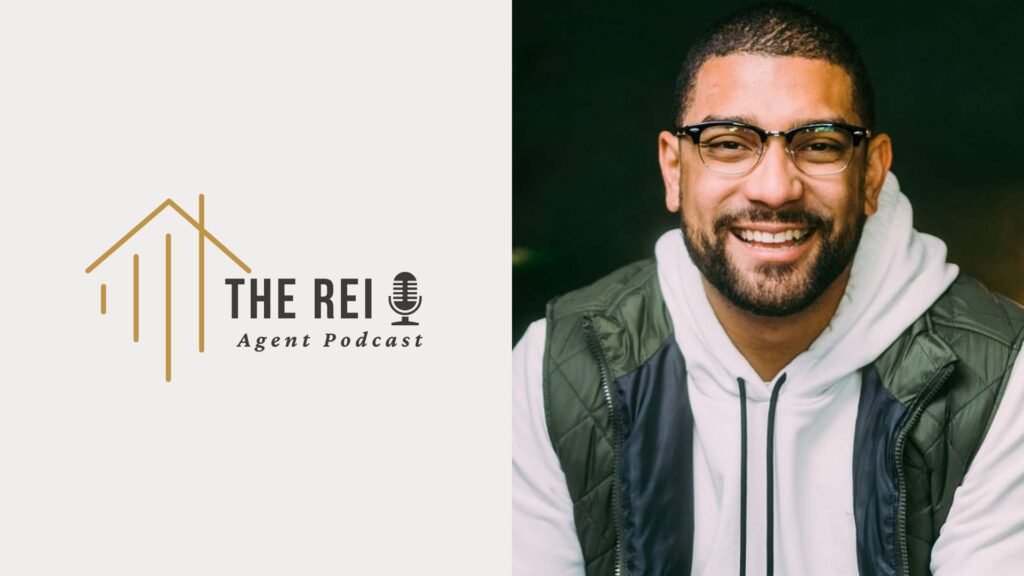
The REI Agent with Devin Robinson
Follow and subscribe to The REI Agent on social


The Wholesaling Spark That Lit the Fire
“I learned about wholesaling from TikTok.”
That single sentence, spoken by Devin Robinson, sums up the beautifully chaotic entry point into a journey that would transform not only his own life but inspire countless others.
When Mattias and Erica Clymer welcomed Devin onto The REI Agent Podcast, listeners were handed a deeply raw and remarkably powerful story that transcends real estate. It’s about grit, identity, growth, and the power of legacy.
From his humble beginnings in Los Angeles with a single mother he calls the “true triple-double mom” to becoming a father of four (three adopted, one biological), Devin’s tale is about finding direction in the middle of chaos.
His mother, though she never handed down wealth, imparted something greater:
“She taught me the intangibles… grit, hard work, and a deeper why.”
From TikTok to 70 Deals and a Crash
After discovering wholesaling via TikTok, Devin tried to pitch the idea to his wife.
She wasn’t convinced, but he pressed forward.
By leveraging a connection with his mother who worked acquisitions for a hedge fund, he did 70 deals in six months.
Then the market changed. The hedge fund stopped buying. And everything crashed.
“We absolutely crashed and burned because the hedge fund stopped buying.”
What could have ended the story instead became the true beginning.
Devin rebuilt from the ground up, learning wholesaling the hard way and discovering creative solutions that realtors often overlook, including installment sales and novations.
Bridging the Gap Between Wholesalers and Realtors
Many real estate agents don’t trust wholesalers.
Devin doesn’t shy away from this. He addressed it head-on:
“You’re just stealing money from people… that’s exactly what people think.”
Instead of dodging the stigma, he opened up about how his company partners with realtors to create win-win-win situations. Sellers get the price they need.
Realtors earn their fees. And his company moves inventory without chaos.
Owning Nothing, Controlling Everything
Devin took listeners deep into the legal and strategic brilliance behind installment sales, novations, and creative finance in markets where traditional wholesaling is restricted.
He broke down why funds are the ultimate business vehicle and why compliance with SEC regulations isn’t optional.
“If somebody is giving you money passively and they expect a return, that is by nature a security.”
He then walked through how to build investment funds the right way and how to avoid legal traps that even well-meaning investors can fall into.
Building Generational Wealth from a Couch Bed
Perhaps the most gripping part of the episode was when Devin opened up about his childhood.
Raised in a one-bedroom apartment, sleeping on a pullout couch, surrounded by friends lost to violence or incarceration, Devin painted a painful yet powerful picture.
“We lived in a one-bedroom condo. My two best friends went to prison. One for life. The other’s in and out.”
And now?
His kids are FaceTiming him as he buys pool homes.
They think it’s normal. But he knows the difference.
“I was born and raised in L.A., and real estate provides the opportunity to change the trajectory of my lineage.”
The Three Unshakable Values for His Children
Devin doesn’t just build capital. He builds character. He laid out three non-negotiables he teaches his children:
- Be kind
- Be fearlessly authentic
- Hone your craft in obscurity
“I want them to be kind. I want them to be fearlessly authentic. And I want them to work really hard when no one’s watching.”
These principles have grounded his family even as their lifestyle changed dramatically.
From fostering children to raising capital, Devin’s drive remains deeply rooted in legacy and service.
When Faith Walks a Tightrope
In a particularly vulnerable moment, Devin and Erica discussed how entrepreneurship and family life often feel like walking a tightrope.
His wife, despite being nervous about risk, has stood by him.
“Our life is like walking on a tightrope… one minute, it’s ‘how are we going to pay for anything?’ and the next, people think we’re rich.”
Through managing expectations, open communication, and raw honesty, their marriage survives the volatility of business.
Reframing the Conversation Around Capital
Devin closed the episode with one of the most practical and inspiring golden nuggets for anyone raising capital:
“Reframe what you do. I help people passively make double-digit returns by investing in deeply discounted real estate.”
This mindset shift, combined with curiosity-based conversations, has helped Devin build trust, attract capital, and scale beyond the typical investor’s dream.
From Trauma to Triumph
Devin Robinson’s story is proof that resilience, clarity, and execution can shatter limitations and rewrite destiny.
The episode wasn’t just about real estate. It was about becoming more, doing more, and leaving more.
“I can create anything I set my mind to.”
And after listening to this episode, you just might believe you can too.
Listen, Learn, and Level Up
Whether you’re an agent, an investor, or someone chasing your first dream, Devin’s message hits home.
His path wasn’t straight, easy, or predictable.
But it was honest.
And it worked.
Catch the full episode on The REI Agent Podcast to hear every moment that didn’t make it into this article.
Let Devin Robinson’s courage, intelligence, and heart show you what’s possible when you refuse to settle.
Your next level is waiting.
Stay tuned for more inspiring stories on The REI Agent podcast, your go-to source for insights, inspiration, and strategies from top agents and investors who are living their best lives through real estate.
For more content and episodes, visit reiagent.com.
Related Articles
- Therapy You Didn’t Know You Needed (Holistic Wisdom for Real Estate Professionals)
- From For Sale Signs to Life Design (How The REI Agent Transforms Real Estate Into Holistic Wealth)
- Achieving Holistic Wealth and Success Through Real Estate (Insights from The REI Agent)
- Partnering with Investors (How Real Estate Agents Can Exponentially Maximize Profits)


Contact Devin Robinson
Mentioned References
Transcript
[Mattias]
Welcome to the REI Agent, a holistic approach to life through real estate. I’m Mattias, an agent and investor.
[Erica]
And I’m Erica, a licensed therapist.
[Mattias]
Join us as we interview guests that also strive to live bold and fulfilled lives through business and real estate investing.
[Erica]
Tune in every week for interviews with real estate agents and investors.
[Mattias]
Ready to level up?
[Erica]
Let’s do it.
[Mattias]
Welcome back to the REI Agent. Erica is with us today. Hi, Erica.
[Erica]
Hi.
[Mattias]
We had a really good conversation with Devin Robinson. Devin is an investor. He’s got a really interesting story.
I mean, this was a really good conversation through and through. So it’s going to be a good one for sure.
[Erica]
Yeah, that was a really fun one. I enjoyed talking to him. He’s one that, you know, like if we ever were at a conference at the same time, he’d be one that would be fun to meet in person.
[Mattias]
Yeah. Yeah. Do you think we’d be surprised when we saw him in person?
We just met somebody that was similar to this, where we had only talked to him like through like the podcast and just, you know, through like social media and stuff like that. And he was like, you know, five inches taller than I expected.
[Erica]
It always happens whenever you see him for the first time. Something’s a little different.
[Mattias]
We’re going to have to ask our guests what their heights are so we can properly picture them in our minds.
[Erica]
Yeah.
[Mattias]
During the interview.
[Erica]
I’m sure they see us as very different too.
[Mattias]
I mean, it was a bit of a longer conversation. So we don’t have a ton of updates at the moment. We can just kind of get right into it because it is really good content.
But yeah, without further ado, here is Devin Robinson. Welcome back to the REI Agent. We are here with Devin Robinson.
Devin, thanks so much for joining us. Hey, thanks for having me. Excited to be here.
Devin, before we get into your niche now, what you’re doing now, or one of the things you’re doing now, tell us a little bit about how you got started in real estate.
[Devin Robinson]
Oh, good question. So it was, man, I guess everybody kind of rode the wave of 2021, right? When like real estate was good after kind of, well, specifically investing was good during that time.
And so I got into, I learned about wholesaling from a thing called, a thing called wholesaling from TikTok. So I went to my wife and I was like, hey babe, I think this would be something really cool to start. Cause I just, I’ve done a lot of other things in my life.
I’ve started, run companies, sold them, crashed and burned them, done all kinds of things. And so I was like, well, here’s another one. This seems really cool.
We should try this. And she was like, no, I don’t think so. And I was like, all right, I’ll just try it.
And so I started getting into it, started doing some deals, learning a lot about it. And then I went to my mom and I was like, hey mom, I’m trying to do this thing called wholesaling. And she was like, you know, that’s what I do, right?
And I was like, well, what do you mean? And she said, I work for, I work for a hedge fund and I do acquisitions for a hedge fund. So we have a lot of people, wholesalers that bring us deals that we purchase.
And I was like, oh, awesome. And so then she was like, this is how you should do it. Go to these people.
And we did it in a really unorthodox way, but she was like, go to these people and then we’ll just kind of buy the deals from them. And I was like, oh, cool. And so at that time we did 70 deals in our first six months, really grew really quickly.
And then absolutely crashed and burned because the hedge fund stopped buying. And I didn’t actually know how to help wholesale at the time. And so then I had to really learn and relearn the whole process and then built up our company to now where we are.
It’s fun and it’s great and I’m super thankful for it. And so that’s kind of how I got started in real estate. Never really had like a desire to really do it, but it just, I think for me it was, I’ve always known real estate is kind of the thing, right?
Like everybody knows, no matter what your background is, it’s real estate. You know that that’s like the pathway to generational wealth. And so I grew up in LA, California, single mom.
I say she’s the true triple-double mom, three jobs, two kids. And like, she worked really, really hard but never left us any assets, never left us anything. And she’s still here.
I love my mom. She’s fantastic. She’s my hero.
But didn’t teach us how to build generational wealth or anything like that. But everybody knows it’s real estate. So I run some of these companies, crashed and burned them.
But when I started doing wholesaling, I saw a lot of money quick. And then I was like, well, it’s real estate. I’m just going to stick to this because this is what wealthy people do.
So I just stuck with real estate, sold the other companies, did the other stuff. And then have been doing that ever since. And then essentially, one of the things that I’ve learned is there’s always levels, right?
So you’ve got wholesaling and then you got flipping and then you got lending, right? Like the thing about flipping and building is lending. You want to be the bank that lends them to that stuff.
And then now, and what I do now is running funds. And that’s kind of like the pinnacle of business in the US is like private equity, hedge fund, stuff like that. And so that’s kind of what I do now.
And I’m not the pinnacle of business in the US, but that’s kind of the trajectory.
[Mattias]
That makes a lot of sense. So in case anybody here isn’t familiar with wholesaling, basically you’re getting a house off market under contract and then you’re selling that contract. And whatever you sell above that contracted amount is kind of your fee for doing this deal.
And so I guess one of the problems you face is you had an amazing buyer that was a gravy train and then you didn’t have that network of other investor people, buyers. And it just got harder because the interest rates went high or I don’t know what timeline it was for you. But yeah, interest rates got higher.
It’s harder to make deals to pencil out. And so without having that steady or multiple options for people to buy, you might have the deals, but you don’t have anything to do with them, right? Is that accurate?
[Devin Robinson]
Yeah, that’s right. We were just locking them in too high. And then it’s great because then we start partnering with other realtor partners and things like that.
And we partner now with a ton of realtors that list our deals. And so we love being able to work with realtors and being able to provide really awesome services with a lot of the sellers that we work with through our realtor partnerships. And so at the time though, it was one of those things.
Rates started, the interest rate climate just started climbing and then people like funds no longer bought. It didn’t fit the buy box because they’re borrowing at a certain rate from their lenders from a lot of times like these funds like Amherst, Progress Residential, all these people borrow from like BlackRock and Blackstone and MainStreet and they buy from them. And so they’re buying at a certain rate.
And then if the rates that Amherst is buying at are too high, they can’t deliver on what’s been promised to BlackRock. And so ultimately they stopped buying from us because the cap rates didn’t fit. They wouldn’t be able to give those returns.
And so they just stopped buying very fast, like overnight, no more. And they canceled a ton of contracts because they no longer penciled out. And so yeah, that’s exactly right.
[Mattias]
Okay. Okay. Now let’s play a little game.
I am a 55-year-old agent. I’ve been doing this for 30 years. What in the heck is a wholesaler?
Why would I work with you to sell this house? Like you’re just stealing money from people. Yeah.
Tell me how.
[Devin Robinson]
That’s exactly what people think. Yeah, no, there’s no problem.
[Mattias]
Talk to me. Talk to me about, you know, sell me on working with you to sell some of these contracts or sell the house. Oh, cool.
[Devin Robinson]
Oh, good story. Good. I’ve got the deal.
I probably wouldn’t sell you on working with me, but I would say, hey man, we’d love to be able to use you. I know, so for instance, we have a really nice house in a really nice part of Charlotte, Providence Plantation. We want to list it on the market.
Now, granted, we bought it, but we could just sell it again off market. But I would rather put it on the market and have somebody that knows the area really well, that has a track record in that area, and then is able to list that on the market to one, make us more money and then get them the listing. So like, I love agents, but I wouldn’t like ask, I wouldn’t go to an agent and be like, man, I really need your help with this.
We do have other agent partners that we work with a ton on these, but I want to be able to provide the opportunity for everybody to have a win-win. I know that that agent is way more experienced in that area than I am. They’re going to work really hard on that.
That’s the one thing I do love, love, love about agents, is they’ve got that deal. They know other people that are going to come in, especially in areas, because we buy properties all over North Carolina and in South Carolina. And so when we go to sell that property again, we know that that agent in that area, specifically, we have a house in Chacoinity, North Carolina right now, and I don’t know where the heck that is.
But it was a good deal for us, so we bought it and now we’re using an agent. And then the agent knows the area really well. That guy’s been there for 30 years.
He knows exactly where that house is. He’s there. He knows the vendors in that area.
He knows the people that can come in and do the work. So that’s a really big benefit. I am so happy to pay a realtor fee for that because I don’t have to drive three hours to go to Chacoinity, North Carolina and then be able to put that stuff in there.
And so that is fantastic for me. But then even down the road for me in Providence Plantation of Charlotte, North Carolina, that person has a really good track record in that area. They’re going to go, they’re going to put the signs out.
Now we do this at volume. So like we do 10, 15, 15, 20 deals a month. And I’m like, I don’t got the time to do that.
I don’t really want my team to do that either. I would rather leverage the partnerships that we have and then everybody wins. And then I know my seller is going to get really, really good.
They’re going to get really good service and that’s going to come out of our pocket and the realtor fee. That’s fine with me. And so that’s kind of why we do it.
And I think it’s a great partnership, especially when you have really good realtors that you can work with.
[Mattias]
Yeah, so to clarify here, you are at some points, you’re buying the deal itself and then reselling it. And other points, it’s you’re just kind of holding the contract. Is that correct?
[Devin Robinson]
Yeah, that’s correct. So in certain instances, right? So the reason why we would use realtors in a lot of instances is if we do what these things called novations, right?
Like a novation agreement, or we use installment sales, which in South Carolina, it’s illegal to wholesale partially because they don’t want you to market a property without ownership of the property. It’s not necessarily like wholesaling is unethical or anything like that. It’s that you’re just marketing a property and you don’t actually own the property.
So in South Carolina, we do what’s called installment sales, where we actually give the seller non-refundable money down. And then we are on title as equitable owners with them. And so we have a lot of skin in the game.
And so then now we can go and market the property as an owner and we work with realtors to do that. And so we do that a ton. And now in North Carolina and other states, they have what’s called novations, where this is very legal as well.
It’s a very good thing where we go and we say, hey, Mr. and Mrs. Seller, we’re gonna go ahead and we’re gonna get you your price. And then we’re gonna take care of deal, like hanging, like making sure all the, if a buyer comes and they need concessions, we’ll take care of those concessions for you. If you, we’ll take care of the relationship with the realtor, we’ll take care of all that stuff.
Because we do use realtors on our novations. And then what happens is when we go to close, it’s called a novation because it actually terminates our contract with the seller and then connects the seller with the buyer. And then we just get a fee for it and then the realtor gets their commission for it and then everybody kind of wins because the seller gets the price that they wanted, the buyer gets the house, we get a fee for it and then the realtor gets their commissions for it.
And so we do novations, installments and then we do just buy. So in the sense of a novation or even kind of in the sense of an installment, we don’t fully own the property yet, but still are able to legally work with realtors to list the property on the market. Got it, got it.
We do a ton of different things. I do a lot of creative financing. I buy a lot of properties.
Even in certain instances, we just bought one the other day and I’m sorry to do this, but we bought one the other day where the lady had no equity in the property. And so she was, and I think we deal with this a lot, right? Like if you, I mean in the last three years, any house that was bought since 2021 has really not much equity in it at all.
People, for the most part, is gonna have to come to closing with cash unless they put down really large down payments. So we buy a lot of those properties with creative financing and then pay the realtor. So we do a lot of, subject to, we do a lot of seller finance stuff because it provides really good opportunities for the seller to kind of get out of a situation where they didn’t have equity, they were either upside down, but they got a really great interest rate.
And so we work with them on that and then we pay the realtor. So we do a ton of different things just to be able to provide really cool solutions for sellers and work with great realtors.
[Mattias]
Yeah, yeah, this is the, I think this is what people also need to understand or agents might need to understand about this world is that really it’s solving these kind of more complex or not run-of-the-mill problems. And most agents may not be able to solve those otherwise. So it’s, yeah, like you said, like if you’re simply not able to afford to sell because, I actually just talked to somebody who had a VA loan, they just got a 100% financing VA loan.
While it’s a 5.5% interest rate, which is better than I can get right now, the house still needs work and they borrowed 100%. So like they’re not really able to pay the fees and yeah.
[Devin Robinson]
And it’s tough. And so that’s when somebody like me, I’d go, whatever it is it in 5.5% in cash flows. All right, I’ll buy it.
And then like, I’m able to give the realtor some cash and then I’m able to put some cash in the seller’s pocket as well. And then I just take over the property. And so we do a lot of that, partially because there has been in the last four years, not really much appreciation in properties.
Not enough that people are really making money when they go to sell their property. And so I find a lot of instances where people are like, I’m gonna lose 10 to 15K just because I wanna sell my house and I have to move across the country. And then I’m like, well, I’ll give you 10 to 15K for it.
So you don’t have to lose it. And then they’re like, great, perfect. So I mean, we work with a ton of people like that.
[Mattias]
Yeah, I guess that leads me to the question. I mean, have you seen markets like Charlotte take up price hits? Like are the immediate sales price going down?
[Devin Robinson]
Great question. So I think we also like the initial dip, right? And in Charlotte, we took about an 8% dip in property prices, but it wasn’t like Utah or Arizona that dropped 30 to 40%.
And so we saw about eight, but with that, the delta between then and now hasn’t grown enough for people to gain enough equity in their property, right? So like we’ve seen three, four, maybe 4% appreciation year over year. Not even really since then.
And so because of that, people don’t have enough equity to sell, but it had to catch up from the eight that it dipped down. And people bought at that eight in 2021 and 2022. And so they bought right before that and it really messed them up.
So yeah, they bought at the height of the market. And so we have not seen massive appreciation, but we haven’t seen the prices go down yet. No, we’ll see if prices go down.
It’s definitely a buyer’s market, which creates a lot more opportunity for creative financing. I will tell you, a lot of the underwriting I did when we flipped a lot last year and houses just sat and sat and sat and sat and sat. And Charlotte’s one of those markets where a flip is almost the same price as a new build here.
And so people just don’t buy flips here. They buy new builds. And so it was a lot of stuff, but yeah, very much so.
[Erica]
Well, I wanted to go back a bit where you were talking about your mom and growing up in LA. And I know you- Love this.
[Devin Robinson]
I saw you say something when I said that.
[Erica]
I know, I tagged it. I knew I was gonna come back. You said, you mentioned your mom didn’t leave you skills to build generational wealth, but it sounds like she was an incredibly hard worker and I’m sure lots of other things.
I’m just curious what values you took away from watching your mom and growing up in the family that you did that maybe impact how you live and do business.
[Devin Robinson]
Oh, this is fantastic. I think at the core of everything I do right now stems from my upbringing. My mom worked super hard.
Now, it’s very interesting because she taught me everything that I needed to know to be really successful, but she didn’t teach like, oh, this is how you invest. This is how you are financially responsible. This is how you do these.
She didn’t teach that part. She taught me the intangibles. I think the grit, the hard work, the things that really make me not give up and continue to push and to focus on a deeper why.
I saw that lived out in my mom as we lived in when I was in high school, a one-bedroom condo and for the first two years of high school, I slept on a pullout couch in a living room. I saw and lived that type of thing. I grew up in LA around gangs and drugs.
My two best friends at the time went as life in prison for murder. The other one’s in and out of jail. That’s the reality that I was in at the time and I saw the way that my mom really sacrificed in work so that that didn’t become my future reality.
It’s crazy because I would have never thought to own property and then now I’ll be in front of houses FaceTiming my kids. My wife and I, we fostered and adopted our first three and then just had our first biological child. I’ll FaceTime and our kids will be like, oh, daddy, are you buying that house today?
It’s like nothing, right? Like the other day, we had a house. Yeah, we had a house in a very nice part of Charlotte and we bought it.
I mean, we’re literally, it goes on the market like today but it had a very nice pool. Me and all my kids were at the pool and they were like, oh, daddy, what are we doing? I was like, I own this house.
For them, that’s just like… Yeah, and it’s crazy to think of, I was born and raised in LA and real estate provides the opportunity and the ability to be able to change the trajectory of my lineage, right? Like our family and everything we do.
I think when I go back to the question of the things that my mom did teach me and it is those things. It’s really hard work. It’s that like, I want to always push for like what’s the bigger why?
And that anything is possible, anything. And I joined these masterminds and I’m in all kinds of masterminds and I’ll go in them and I’ll be like, oh, you own a house? When I first got in there, I was like, oh, you own 20 houses?
That’s crazy. Oh, you own like 100? Holy smokes.
And then I’ll get into other ones and I’m like, oh, you own 6,000? Oh, you own 10,000 units? Holy smokes.
And then what happens is like the ceiling to the dreams of what I believe is possible is raised, but also the floor of my limiting beliefs are raised because now I go, oh, well, of course, I’ll have 100 or 200 or whatever, you know, like, of course. And I think my mom always taught me in those times, like anything is possible. If we can make it out of there, we could do anything.
We could push to anything. And then like, I can create anything. Anything, I mean, like this is so cliche, but like literally I could create anything I set my mind to, which is wild because like I’m also a massive, massive fan in AI.
And like all of a sudden, a couple of days ago, I was like, you know what? I’m just going to build a CRM. And now I’ve built out and I’m vibe coding this like crazy CRM for capital raising and investor relations and CRM.
And like, I think early on in life, the ability to get through the things that we got through has created the mindset for me to know like, oh yeah, I could do anything. Like that, there’s no doubt. Like, yeah, yeah, run the play, just do it.
That’s what I just say. Like run the play, just do it. And I think my mom was a very instrumental in that growing up.
[Mattias]
Do you ever worry about, you know?
[Devin Robinson]
No, I don’t worry. I don’t worry about anything.
[Mattias]
This is coming from, you know, what I worry about is, you know, being coming from non-generational wealth and creating it, you know, how does that impact your children’s work ethic? And their, yeah, their life. Yeah, this is good.
[Erica]
Before you answer that, I was just gonna say it because I was thinking something similar, but I was also thinking, you know, your family has a very specific, I don’t even know what the word is for it, but it’s just something, an additional detail, I guess, because you adopted some foster kids who also came from, I’m assuming, very different backgrounds and then coming into, you know, this generational wealth that you’re creating for yourself and for your family.
And so I was curious to hear your answer to that question too through that lens.
[Devin Robinson]
Yeah, I can’t wait for the day. I love Shaq. And he said this thing once where he was like, my kids are like, oh, daddy, we’re rich.
And he’s like, I’m not, you’re not rich, I’m rich. You’re not rich, I’m rich. I can’t wait for that day.
But I think it’s like, so there’s three lessons. There’s three things that I want to leave my kids with. If they don’t remember anything, I want them to remember these three things.
One, I want them to be kind, right? So like, at the end of the day, you can be anything in the world. Your kids can be anything in the world.
I want my kids to just be kind. I want them to be people who are kind to other people, who are humble, who are always looking to serve and help other people. The second one, it’s one of those lessons that I’ve always learned, be fearlessly authentic.
Be fearlessly authentic to who you are, what you do, and what you want to pursue. Because at the end of the day, you do not want to climb the ladder of success on the wrong wall. And I think so many people tend to do that or go in that direction because they think other people want them to do something, or they think they want to keep up with the Joneses, or there’s something else going on.
But I think like, at the end of the day, be fearlessly authentic to who you are. Because I mean, all you have is your name. I think of like, you guys watch the, have you guys ever seen Parks and Rec?
Yes. I love Parks and Rec. Okay.
There’s this show, there’s this scene where Ron, there’s an episode where Ron Swanson, he’s making these rocking chairs. And this lady’s like, Ron, I love your rocking chairs. They’re incredible.
They’re made with such amazing detail. I want to put them in every target in the country and make you a millionaire. And he goes, okay, let me just think about this.
And so then he goes, and he comes back to the lady. He goes, you know what? I don’t think I want to do that.
Because if I do that, then there’s no means that somebody else is going to be making these. They’re probably going to be made in another country. They’re going to be made, they’re going to be cheap.
And then if they start breaking, my name is on these chairs. And at the end of the day, all I have is my name. And so I want my kids to think about, like, be fearlessly authentic to who you are, because all you have is your name.
And then the third thing is to hone your craft in obscurity. So this idea that like, pick what you love, do what you love, and work really hard while nobody’s watching. Because there’s going to become a day when either somebody’s going to come and it’s going to be a really big quote, or you’re going to speak in front of a lot of people.
And if you don’t practice, if you don’t hone your craft when nobody’s watching, when it’s super mundane and you don’t want to do it, if you don’t continue to do that, then you’re going to fall straight on your face. And so I want them to work really, really hard at what they do. Be true to themselves and be kind to others.
And I think like, if I can instill those three things, then I don’t think I really have to worry about how they end up growing up to be. And I think those are more of like, character lessons, who they become, not what I want them to do. And I think if I can help to mold who they become, then I think that’s more important than kind of the financial lessons I teach them on how to manage the wealth that we build.
You know, I think. Yeah, 100%.
[Erica]
Yeah, the amount of changes that you’re making in one generation is just kind of mind blowing. If you think about it.
[Devin Robinson]
It’s nuts. It’s nuts when you kids, kids are mind blowing when you think about it. Yeah.
[Erica]
Moving from L.A., maybe there’s some stops in between, but how’d you land over in North Carolina?
[Devin Robinson]
Nope, no stops in between. So I. This is long.
This isn’t too long. I didn’t really grow up with a dad and then when I became a certain age, found my dad in order to avoid child support, I would spend the summers with him. I was spending the summer with him.
And then because of the way that I was living in California, I got a call. Actually, I don’t remember. It was a call, sit down.
I don’t know. But it literally was like, hey, you’re not going home. You’re staying out here.
So I had a suitcase with me and it’s really interesting. Like when I think about the parallels between like foster care and stuff like that. But it was just like I had a suitcase with me and I never went back.
I never went back. And I never saw my stuff in my, I never saw my room again. Never got my stuff out of my room again.
Any of that stuff. So and then I lived out there with him and then my mom moved out there and then I just lived with her because there’s a lot of things in between there as well. So yeah.
That’s wild. By the grace of God is why I moved from North Charlotte or from L.A. to North Carolina.
[Mattias]
Now I will never. That way at the time. I’m guessing you didn’t feel like it at the time.
Like I would probably been pretty shocked. Yeah.
[Devin Robinson]
You know, I think and Erica, you would know this. Trauma has a really interesting way of stopping me from remembering all of that. So I really have no idea.
I don’t remember my emotions. I don’t remember. I don’t even really remember the conversation.
I just remember that it happened. I do remember a lot of things about that season in life. I mean, I was like 14, 15.
I spent half of my life out there. So I wasn’t young, but I don’t. But I don’t remember.
And I think that’s definitely a trauma thing. I might need like EMDR for that. And then I can pack that and then my life will be crazy all over again.
But we don’t have to pack that right now, Erica. We don’t. We don’t have to do that.
But like, yeah. So I don’t quite remember. But yeah, it probably was.
[Erica]
I mean, initially the gift of trauma, you know, if it’s so intense and so hard to deal with, you know, your body does kind of numb out as a way of just kind of taking care of you. So it might be an okay thing for a bit.
[Devin Robinson]
Yeah, yeah. For a bit. I think it’s probably necessary at some point.
[Erica]
Wow, man. What a story. Good grief.
And just with your suitcase too. I have a lot of questions for you, but you know, we only have a little bit of time. But real estate.
[Mattias]
Do you want to go get into the funds then? Oh, cool. Why don’t we chat a little bit about that?
So maybe explain high level what you’re referring to when you’re talking about funds. Yeah, great.
[Devin Robinson]
So a fund essentially is a pool of capital, a pool of money together for some sort of business venture or some sort of property. A lot of times, like when you think of a syndication, a syndication is essentially a single asset fund. But the docs are the same.
The structure is typically similar. Sometimes it just really depends where a fund, you’re going to have different kind of SEC filings that you do with funds. Syndication will also have the same filings.
They’re just structured different. Syndications sometimes are structured more in like LLC structures, whereas a fund will be structured in like what’s called a GPLP structure. But ultimately, high level, a fund is just whenever you come together and you pool capital for a specific asset or multiple assets, but it’s just the pooling of capital because what happens is if you don’t structure it correctly, you get in a lot of trouble from the SEC.
And I see a lot of people doing this wrong. Like they mean well, they don’t want to violate SEC laws, but it’s something that you think is just like, oh yeah, why wouldn’t I be able to do that? That’s an SEC violation.
You should not, you cannot do that. And it happens all the time. For instance, like I’ll be in some masterminds and somebody will be like, yeah, Devin, I know you’re talking, you do fun stuff.
And I’m like, I do do fun stuff. Yeah, I’m a fun guy. But they’re always getting like really confused.
Or they don’t get it confused. It sounds very, very similar. And so they’ll be like, you do the fun stuff.
I am, I got a couple of investors and they’re really great. And so like I got a promissory note with them or whatever, and then they’ll wire their money to me and then I’ll give them a return on it. And I’m like, they wire it to your, they wire it to your bank account.
And they’re like, they’re like, yeah, we’ve got like three people, they wire to my bank account. And I’m like security. And they’re like, oh, ha ha ha ha ha.
And I’m like, no, no, prison. Like you don’t want to do that. Like you need to get with a lawyer and structure that correctly.
Because if it’s over a certain amount, you might as well form some sort of fund or something like that so that you’re not getting in trouble. If you’ve got people sending you hundreds of thousands of dollars, you might as well form that. Otherwise, it becomes really slippery slope, especially two people will be like, oh, well, it’s OK if they like put it in escrow.
Security. No, like it technically, and this is very technically, if somebody is giving you money passively and they’re not involved in the deal at all, they’re passively giving you money and they expect a return. That is by nature, the definition of a security.
Now, for the most part, you’re not going to get in trouble from it if you’ve got like one or two, especially like people. I’m like, you know, if you’ve got a first position and a second position lender, you’re totally fine. You start getting into like three and anything above that.
That’s very slippery slope. So you just want to make sure that you guys are operating compliantly. Do not do that.
Now, also, by the way, this is not this is not legal advice. I am not an attorney. I’m not an SEC attorney.
I do not play one on a television show. I’m not your SEC attorney. Go and see one if you have any kind of questions.
So let’s just throw that out there right now. But but yeah, I run into it all the time and it’s crazy. Sorry.
You asked me what a fund was and I said all of that stuff.
[Mattias]
That’s good. It’s good. So so like somebody could and I think one of the key things you just said here is passive.
Like so somebody you could pull together money like six different people and jointly own something, you know, it’d be a joint venture that wouldn’t be necessarily, but they would all have an active role. They would all.
[Devin Robinson]
Yeah, there you go. Thank you. Yeah, they would all have to have some sort of active role and you definitely could join them together in an LLC structure.
Yes.
[Mattias]
As opposed to like we have invested in some mobile home parks syndications and we, you know, analyze the deal, analyze the operators, gave our money and just sit back and collect tax returns. A1. Yep.
Yep. And then yeah, the distributions as well. So yeah, I guess is fund to fund something you do as well?
[Devin Robinson]
Yeah. So and I guess like this is not a plug. Sure.
Why not? But like that’s one of the things we help people do. We help them to launch funds, launch and scale investment funds.
And so we do. We help people. We have a ton of people launch fund to funds and funds of funds are really great.
And what those are, are let’s say, and we work with a lot of people like this. They’re like, hey, I’m a doctor. I got a ton of doctor friends.
I like investing in real estate. They like what I do and I know some pretty good operators. So I’m going to start a fund so that I can get all my friends to join in with me.
And then we’re going to use our money to invest in really good operators. And so that’s what a fund to fund is. They create a fund to invest into other funds.
So yeah. Yeah. We definitely help people do that.
And I have a customizable fund. That’s one of the ones I’ve had. I’m very similar to a fund of funds though.
Okay.
[Mattias]
Yeah. So like, you know, there’s a couple of, I mean, all of this stuff is kind of like the power of scale. When you’re, when you’re looking at a, if you think about like a syndication, like a flip.
So you look, you look at a flip. That is, you know, you know, you’re creating value. You’re adding value.
Typically, this is how these syndications work. You find a distressed apartment building, for example, you’re adding value. You’re basically making it produce more money.
So you’re increasing rents. Potentially you’re potentially doing so by improving the property, potentially making the operating expenses less. All the net to make the net, the NOI better.
And that’s what raises the value. So with a single family house, it’s a little bit more straightforward. You’re just kind of, you know, fixing the property up.
So some people buy it for more money. But, but all it to say is like, when you get to the commercial side, when you get into the millions of dollars, instead of like the $200,000 range, the scale of which the amount of money increases by, it could be huge. And so then on the same regard, when you’re looking at a fund of funds, if you’re investing $100,000 with somebody, or even if you’d, let’s say you only have $10,000 and you want to invest it with somebody, most places you can’t.
Like most places you cannot invest in a syndication for that little of money. But with a fund of funds, you can kind of get, you can pool money together and make a bigger impact on a syndication. So if somebody is bringing a million dollars as opposed to 10,000, now that person is going to get more, potentially better returns, or they’re going to get preferred over somebody else bringing less money returns and that kind of stuff.
So it’s all that stuff is kind of like the economy of scale. Is that accurate?
[Devin Robinson]
That’s exactly right. And I think it’s very interesting. I think that funds are the most lucrative thing in business in the world you could do, because if you’re really good at what you do, you get the opportunity to leverage people’s, other people’s money with minimal debt, if you structure it correctly.
And so because of that, it allows you to really scale in proportion to one, how good you are at what you do, and then how much capital you can raise. So it’s really cool. Yeah, yeah.
[Mattias]
And then you’re also, so a fund operator would be also adding another layer of security. So again, like you probably trust that person that you’re investing with, A. But B, they’re also doing analysis on the operators themselves.
And that’s a huge piece, making sure that the operators have, they can run a good ship, good business plan. And then also the deal itself, to make sure that there’s not any potential pitfalls. I mean, there’s always risk, but yeah.
[Devin Robinson]
And that’s exactly right. And you’re going to find a lot of that stuff if you don’t know the operator before you start a fund in that fund to funds model. There’s typically three people that we always suggest.
If you want to start a fund, think about these three people. This means like two other people in your life, or you could probably be two out of the three, but you probably shouldn’t be all three. You want one is the fund manager.
So somebody who’s going to manage the compliance, even some of your investor relations, distributing K-1s, making sure everything’s in line, helping with the fund account, not necessarily helping with the fund accounting, but making sure everything’s in order to give to your fund accountant. The second is going to be your capital raiser, full-time job. It is a lot of work depending on how much you’re trying to raise.
And then the third is the operator or the deal finder. So if you’re just in a fund and it’s not a fund to funds, but you’ve got a fund and you know two of those other people, or sometimes the capital raiser and the fund manager may be the same person, or the capital raiser, the deal finder may be the same person, but you know those people. It’s typically not the operator and the fund manager are probably not the same type of people at all.
But if you know those, if you have a circle like that and you know you’ve got a good product, you’re really good at what you do. I talk to a lot of builders, a lot of builders who are like, man, if I had more money, I can be able to scale this. And I’m like, yeah, why wouldn’t you start either a BTR, which is like a build to rent fund, or a build to sell fund.
Why wouldn’t you start one of those if you’re really good at what you do, you just need to leverage capital now. And so for me, this is like a thing where it’s like, I’m really good at raising capital. I’m really good at launching funds.
And I’m super bullish and absolutely love crypto, but I’m not a good trader and I’m not great with the fundamentals. So I’m like, let me find somebody that is, somebody who’s got a very good track record with that, does that really well. And then I will leverage their skills and then leverage my skills and we can start a fund together and then scale it to the moon, right?
Like that’s always the goal. And so like, yeah, it gives you that ability if you know those people, but if you’re a fund to fund, and even if you’re like, man, I feel like I’m really good at raising capital. And I know Johnny and Johnny builds really good product or Johnny’s really good at this or he finds really good deals.
Maybe him and I can team up and start a fund. It’s not wise to start a fund by yourself. Think about good people in your life that you trust, that you know have a good track record.
And that’s who you want to think about with that.
[Mattias]
Yeah, that makes sense.
[Devin Robinson]
Yeah. And one of the things that I like talking about, because I don’t know, I know sometimes it’s like, well, where do we go from here talking about funds? The thing that I get most passionate about, and one of the reasons why like I have, I’ve transitioned to really focusing on like this side of things is because I think, right, there’s this, and we’re seeing it and it’s going to get, it’s just going to get worse is this widened wealth gap, right?
That we have here in America, there’s $82 trillion worth of assets under management in the United States. So capital invested money invested in the United States, whether through like private equity, hedge fund money, private credit, all that stuff in the US, only 1.4% of that is managed by minorities and women. So that means that 98.6% of all money in America is managed by white men. And so there’s this massive disparity between access to capital and information and minorities and women. And I think that the world equally distributes talent, but doesn’t equally distribute opportunity. And so for me, I want to be able to help bridge this massive gap between access to information and access to capital and minorities and women, because we see, and I think we’re going to move into a very interesting day and age where the rich just get richer, especially if we can’t come up with like a UBI or universal basic income, like the rich are just going to get richer and that divide is going to grow bigger. And so I want to do everything I can to be able to bridge that gap and to provide opportunity because there’s a couple other people that do what I do.
They’re very white guys. Like they’re just very white guys. They just really are.
They’re friends and I love them. They’re very white guys and they know that. And so like there’s a lot of people that just don’t resonate with them.
And in doing that, like I think it almost discourages them to thinking it’s even possible. And so then you look at a guy like me, which we’ve talked about a little bit in my past. And my goal is to help to bridge the gap to for people to believe what is possible in this amazing country that we live in and the opportunity that’s available to them.
And so that’s kind of like, as you would be like, what the heck would make you just go to funds? And that’s one of the big reasons for me. So I just wanted to share that just because I think it’s important.
[Erica]
Yeah, I love that. I mean, it goes all the way back to, you know, the values we were talking about. I had a question, one more before we transition here.
You had mentioned earlier on about like a conversation that you had had with your wife about wholesaling. And she was feeling like it was really risky, right at that point. She thinks everything’s risky.
And I’m asking this too, because we’ve talked a lot about our relationship on this podcast and how conversations have gone between us, you know, and going into investments. And he’s the riskier one, more comfortable with risk. I’ve become a little bit more comfortable with risk, but I like my familiarity a lot.
And anyway, I’m just kind of curious how the conversation with your wife over the years has evolved as you’ve grown your business and your business has changed.
[Devin Robinson]
It’s really interesting. So we’re in a season of life where my kids love the movie, The Greatest Showman. I love that movie.
Have you guys seen it? Yeah, I love it. So there’s this song that the lady has.
I can’t remember her name, his wife. But she just is like, it’s this song called Tightrope. And she’s just like, I’ll follow you to the great unknown.
And it just is like the song very much so encapsulates our life. And I’m very thankful. She gives me a ton of grace.
Our life is like walking on a tightrope because one minute and this is like one minute we feel like, how are we going to pay for anything? And then the next. But it’s like, it’s funny because people are like, oh, my gosh, you’re rich.
You own real estate. No, no, no, no. Cash, you don’t have cash.
You know what I’m saying?
[Erica]
Just cash. Identical. Cash.
I think.
[Devin Robinson]
Yeah. But it’s like, babe, just wait. Yeah.
[Mattias]
So it’s one of those things where. Back into something else.
[Devin Robinson]
That’s right. But it’s, we have, I think the good thing is like, the one thing I tell people is like, I just don’t, I don’t, there’s no such thing as balance. Gosh, there’s no such thing as balance in my life.
It does not exist. But I ask the questions, one, are expectations being managed and are we communicating? Because I think if we manage expectations, then we can have really open and honest conversations about like, hey, no phones right now, because we said that this was the time that we were doing this.
And I think as long as we have those things, I think my wife, she’ll let me do anything. And I’m thankful. It’s really funny, she told me the other day, or like a couple weeks ago, I can’t remember when it was, but she finally told her girls in her small group, she was like, oh, I’m really believing that Devin can actually do this again.
This is awesome. You know, because I do so many things. And a lot of them crash and burn.
A lot of them don’t work out well. I actually have a spreadsheet that I updated today. It’s got, since 2013, I’ve started 26 different business ideas or businesses.
Let me see, how many of them? Not nearly, I think I’m on one, two, three, four, five, six, seven, eight, nine. Nine are still in the validating phase.
Three, one, two, three, four, we’re successful. So.
[Erica]
I can relate to that so much. I feel like you and your wife and then us, maybe we should have our own support group.
[Devin Robinson]
Probably, yeah, sounds about right.
[Erica]
But I love that, that managing expectations and the communication, we talk about that all the time. And the expectations piece tends to change for us. I don’t know about you guys, but almost weekly, depending on what the flow of work is, because it changes all the time.
And where we are financially, because that changes too, depending on the investments and where things are and what we’re going for.
[Mattias]
Yeah, we just got back from a conference and, you know, Erica, you kept saying stuff like, you know, we gotta work on that cash flow stuff, like having more cash on hand. Why? I was like, all right, but hold on, let’s talk to these people.
Do they have the same kind of problems? Like, we’re just, yeah, we’re constantly redeploying it. We’re constantly reinvesting it.
And then, yeah, you have, like, if you own real estate, you’re gonna have things like Rooves and HVACs and all that stuff that you need to be taking care of.
[Devin Robinson]
Oh my gosh. Y’all, I hate real estate, I can’t tell you. I hate real estate.
So now we lend. I am, I hate real estate. So I actually am in the process of selling like everything, because like now we just lend.
And lending is so much better. You just don’t get the tax, like you just don’t get claim depreciation and stuff like that. But yeah, it’s much different.
[Mattias]
Yeah, well, yeah, and you know, like we’re talking about these syndications and stuff. For realtors, being real estate professionals, let’s see if Trump brings back or if the Pat Bill gets passed 100%. Yeah, yeah, seems like it.
That’s a game changer for anybody, like a high income, you know, agent that doesn’t have time, doesn’t wanna have the hassle, doesn’t wanna, you know, fix roofs, you know, or unclog toilets, that kind of stuff. Could take advantage of a syndication and get, you know, tons of money back. And I’ve said this a million times, but you know, we were invested $50,000 into a mobile home park.
And first year we got 66,000 back in a K-1 that we could write off of our, my, you know, earned income. So it’s, and that was only like 80%, I think at the time, maybe. So anyway, it’s a huge opportunity for sure for people.
And I should transition into, if you have any golden nuggets you wanna leave with our listeners?
[Devin Robinson]
Yeah, it’s funny, cause I gave like one of them. One was just to like hone your craft in obscurity. Another thing I tell people, so it just depends, right?
So like when I talk to people about like, people are like, oh, I wanna raise more capital so that I can invest with people. One of the biggest golden nuggets that I think like clicks for people is when I say reframe what you do, right? So when I talk to people and if I’m in like a capital raising mode, because you guys know the golden rule?
He who holds the gold makes the rules, right? So I’m always like, always be raising capital, always be building relationships that could eventually lead to like investors. Because for me, and what I do, I mean, that literally is just leverage.
That literally just grows anything that we do. And so I tell people to reframe what they do. So for instance, if you are a flipper, or you build, or if you’re a wholesaler, or if you’re a realtor, for me, what I would tell people is, instead of telling them I do those things, I say, oh, I help people to passively make double digit returns while investing in deeply discounted real estate.
And so then I’ll have people that go, oh, that’s cool. And then I’ll have people that go, oh, that’s interesting, tell me more. And those are my people.
Or they’ll go, oh, I was just thinking about or talking to somebody about investing into real estate. And so then that opens the door to having conversations about them investing with you. Because realtors have access to a ton of deals.
And they also have access, depending on like where you’re a realtor, your experience, to high net worth individuals. And so you have really cool opportunities to be able to start a ton of syndications. It’s really easy.
I promise, syndications are easy if you are a good operator, or you have a good operator, you have access to capital, and you’re pretty good with admin, right? So depending on how much you raise, like doing that stuff can be really easy. Now it’s just reframing the conversation to figuring out those type of people that will be a part of it.
And so I guess that would be a good golden nugget when raising capital, because that helped me a ton. And, and, and lead with curiosity. So I like to think of curiosity-based capital raising.
So I’ll talk to people, and I actually, I wanna be really curious with them. Those who are interested are interesting, right? And so because I’m interested in somebody else, and when I become interested in them, they then become interested in me and then what I’m doing.
And it doesn’t sound like I’m entering into that conversation just wanting to raise capital from them, right? Like I’m curious with them, and then I’m interested in what they’re doing, and then they become interested in me. And so then, right, you’ve got the whole like how to win friends and influence people type mentality to raising capital.
So that’s kind of how I think about it. Yeah.
[Mattias]
Yeah, that makes a lot of sense. Yeah, I mean, that also brings me to the next question, which would be what your favorite book is, or one that you think is fundamental for everybody to read. Is it How to Win Friends and Influence People?
[Devin Robinson]
That’s a fantastic book. If I could, so it just depends. I teach a lot of people that run organizations or things like that, and so my favorite would be Building an Elite Organization by Don Winter.
It is very good. It is going to be hyper practical on helping you to build a very good organization built on strong foundation, strong accountability, and then the ability to really be able to scale with intention and with purpose. So it is a fantastic book.
I read, there’s a couple books I read like multiple time a year. I probably read that book once a quarter. It is so good.
Yeah. That’s awesome.
[Mattias]
Yeah, and then finally, where can people find you?
[Devin Robinson]
Oh, you can find me on Instagram, @Devin.Robinson1. If you are looking for a, the best, CRM for managing investors or anything like that, especially people that are raising capital, it’s got all that stuff. It’s got distribution, calculate, all that stuff in there.
For you guys, I’ll do two months for free if they do https://fundflowos.com/agents. Then I’ll give them two months for free of that. I think that could be pretty cool if they’re interested in that.
[Mattias]
Yeah, awesome. Yeah, we’ll put that in the show notes. Thank you.
Yeah, of course. It’s been a really fun conversation. There’s a few rabbit holes that I steered clear of that we could talk about for even like three more hours probably.
Oh, a long time.
[Erica]
Same, same.
[Devin Robinson]
Yeah, I feel like Erica, you’re biting your tongue a lot. You’re like, I really want to dive into this.
[Erica]
I’ve been sitting on my hands over here.
[Devin Robinson]
Sure.
[Erica]
I really appreciate you sharing what you did too. That was great to talk to you, Devin.
[Devin Robinson]
Of course, of course. I appreciate y’all having me. Thank you.
[Erica]
Thanks for listening to the REI Agent.
[Mattias]
If you enjoyed this episode, hit subscribe to catch new shows every week.
[Erica]
Visit reiagent.com for more content.
[Mattias]
Until next time, keep building the life you want.
[Erica]
All content in the show is not investment advice or mental health therapy. It is intended for entertainment purposes only.
No related posts.























3 Responses
Interesting read, but isnt it a bit romanticized? Are we overlooking the dark side of rapid wealth accumulation? Just my 2 cents.
Interesting read, but is Devin Robinsons success just luck or hes exploiting trauma for profit? Not all can turn pain into a fund empire, right?
Interesting read, but isnt Devins success more about timing & luck rather than overcoming trauma? Just a thought. No disrespect intended.