


Key Takeaways
- Tiny home investments present promising opportunities amidst climbing housing costs and the rise of sustainable living.
- Understanding market trends, zoning laws, and sustainable technologies is crucial for successful investments.
- Embracing these opportunities leads to both financial gains and personal freedom.
Exploring the Potential of Tiny Home Investments
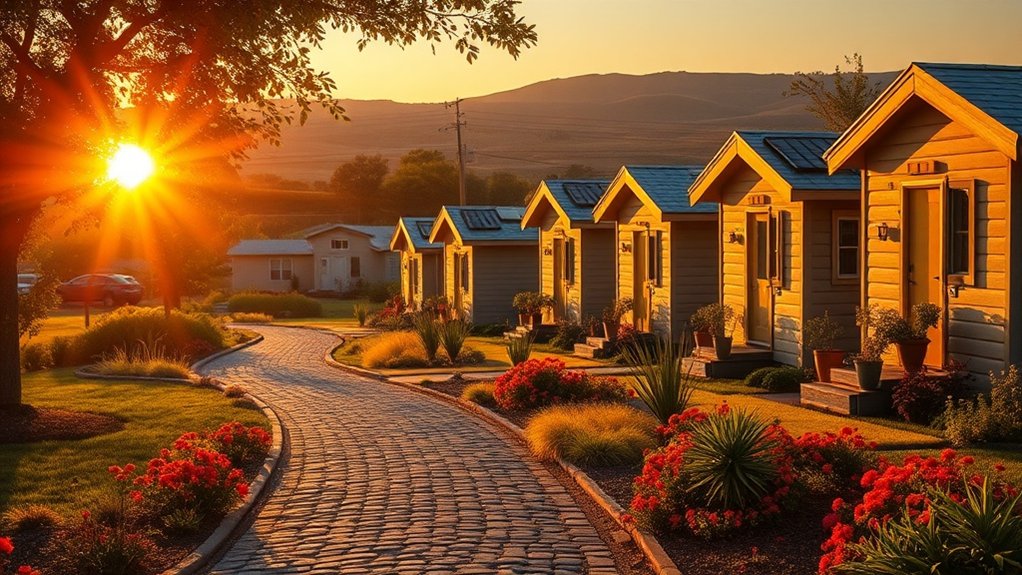
Picture a lone wolf striking out on its own, carving a path through the wilderness. Now imagine that wolf is you, traversing the rugged terrain of tiny home investments. As housing costs climb and sustainable living booms, there’s gold in these hills for the savvy investor.
By harnessing market trends, zoning insights, and sustainable technologies, you access a world of freedom and adventure.
Are you ready to seize these opportunities?
Market Trends Shaping Tiny Home Villages
You are trained on data up to October 2023.
When it comes to investing in tiny home villages, you’re not just buying property—you’re seizing a piece of the American Dream that aligns with freedom and sustainability.
The market dynamics in this thriving sector present exciting investment opportunities. With projections indicating growth from $12.36 billion in 2024 to $13.17 billion in 2025, and further to $16.73 billion by 2029, you can’t ignore the robust trajectory fueled by innovations and surging demand.
North America leads in market size, bolstered by rising housing costs and a growing acceptance of tiny homes. As disposable incomes increase, more people are looking to tiny homes to meet their housing needs, partially due to their minimal environmental impact and flexibility.
Innovative construction methods such as prefab, smart home integration, and eco-friendly materials not only support sustainability but also enhance property value.
Meanwhile, societal trends towards minimalism and remote work drive further interest. For you, these trends spell a rich terrain of opportunities, ripe for strategic real estate ventures that highlight freedom, flexibility, and responsible living.


Key Factors Driving Affordability in Tiny Home Investments
As you venture into tiny home investments, understanding the key factors driving affordability is your roadmap to success. The price of a tiny home can vary from $30,000 to $100,000. For investment strategies, focus on the base structure price. DIY methods at $10,000 or premium options at $100,000 set the range. Utilize modular factory-built components to cut costs and time. Choose standardized floor plans and simple, multifunctional designs to save on materials and architectural fees. Blitz build techniques can complete multiple homes swiftly, lowering overhead. Demand for eco-friendly building materials is rising, boosting the sustainability and appeal of tiny home investments. Consider land costs carefully. Urban areas demand higher investment, while rural or peri-urban settings offer savings. Beware of zoning and NIMBYism hurdles. Operational expenses add up, so factor in daily costs like security and upkeep. With smart strategies, tiny homes balance affordability factors and sustainability, paving a path to real estate freedom and eco-friendly living.
Financing Opportunities and Accessibility for Investors
How do you find your financial footing when investing in tiny home villages? Immerse yourself in financial partnerships and investor networking to boost accessibility.
First, consider creative options:
- Alternative Loans: Try personal loans or RV loans for movable homes, offering flexibility and sometimes faster approval than traditional mortgages.
- Non-Traditional Financing: Leverage crowdfunding or community financing models to gather collective support or develop cooperative funding structures.
- Builder and Lease-to-Own Financing: Engage builders who offer phased payment plans, or opt for lease-to-own agreements to ease initial finance burdens.
- Fast-Track Lenders: Seek lenders like Premier Mortgage Associates with streamlined processing, using apps and digital tools to track investment status. Premier Mortgage Associates can facilitate quick moves into tiny homes by closing loans in typically under 30 days, allowing investors to expedite their return on investment.
Bulk financing for multiple units might enhance leverage, while high credit scores improve loan terms.
Build solid relationships with specialized lenders who understand tiny homes. This approach guarantees you’re equipped to tackle the unique challenges in tiny home investments.
Demographic Insights: Target Markets and Consumer Preferences
Envision this: a versatile lifestyle where your investment choices not only promise financial gains but also align with a commitment to sustainability and adventure. Imagine targeting demographics that span various life stages, from retirees over 50 wanting to downsize to mid-career adults seeking affordability and flexibility. You’ll also capture young singles and couples enthusiastic for their first home experience.
These consumer preferences drive the popularity of tiny homes among Millennials and Gen Z, who are open to tiny home communities for social and resource-sharing benefits. Tiny homes offer an affordable and eco-friendly alternative to conventional housing, which appeals to those seeking financial independence and a sustainable lifestyle. You’ll find middle-income earners making around $42,000 annually attracted to cost-effective housing. Given tiny homes’ affordability, which ranges from $10,000 to $100,000, they allow residents to save on living expenses and pay off debt.
The eco-conscious value minimalism and sustainability, emphasizing reduced environmental footprints. These tiny homes invite a lifestyle centered around experiences rather than possessions, promoting freedom and community.
Sustainability as a Catalyst for Investor Success
Imagine this: you’ve got a chance to invest in something that doesn’t just fill your pockets but reflects a new wave of conscious living.
Tiny home villages, with their sustainable innovations and use of eco-friendly materials, are shaping a future where growth and environmental stewardship go hand-in-hand.
Here are four ways they lead the charge:
- Efficient Use of Resources: These homes require fewer materials per square meter, dramatically cutting resource usage and environmental impact.
- Energy Savings: With smaller sizes and efficient appliances, tiny homes under 500 sq. ft. boast significant energy savings, reducing both costs and carbon footprints.
- Land Efficiency: Tiny homes need less land, allowing you to optimize space, particularly in rural and suburban settings.
- Community Impact: Investing in village settings means encouraging shared resources and bolstering sustainable lifestyles. Additionally, many tiny home villages allow homeowners to install solar panels, reducing their reliance on traditional power grids.
Jump in, welcome this lifestyle freedom, and empower communities with sustainability, while carving out your niche in this booming market.
Product Variability: Mobile vs. Stationary Tiny Homes
You’re standing at the crossroads of market demand differences and the decision between catering to the adventurous, mobile-living crowd or those who prefer the stability of stationary tiny homes.
Mobile homes give you the freedom to capitalize on the growing trend of nomadic lifestyles, yet they bring unique challenges with zoning and profitability.
Meanwhile, stationary options offer easier connections to infrastructure and clear-cut regulatory frameworks, setting the stage for sustainable and profitable investments.
Market Demand Differences
As an eco-conscious investor or entrepreneur with a keen eye on real estate, you’re standing at the crossroads of opportunity and adventure. Understanding market preferences and consumer demographics is vital.
Mobile tiny homes fuel the wanderlust of digital nomads and adventurers. They crave the flexibility that mobility brings.
Meanwhile, stationary homes appeal to families and retirees seeking communal, affordable living. Here’s what to evaluate:
- Flexibility vs. permanence: Mobile homes offer lifestyle and locational freedom. Stationary homes offer stability and community.
- Buyer demographics: Millennials, driven by affordability and ecology, invest in both, while retirees favor stationary setups.
- Market trends: Growth in remote work favors mobile homes. Urbanization boosts stationary demand.
- Eco-demand: Sustainability through off-grid features supports both, appealing to your eco-awareness.
Cost and Profitability
Cost isn’t just a number—it’s your ticket to freedom, adventure, and empowerment through the world of tiny homes. With mobile tiny homes, you’re looking at an average cost breakdown between $50,000 and $76,665, trailers included. Stationary alternatives often mean $40,335 to $105,000, building a foundation into your investment. Yet, there’s more! Consider the profit margins that can flourish with strategic choices.
| Cost Type | Mobile Tiny Homes | Stationary Tiny Homes |
|---|---|---|
| Base Cost | $50,000-$76,665 | $40,335-$105,000 |
| Additional Features | Trailer: $4,825-$9,000 | Foundation: $4,250-$8,500 |
| Property Costs | Parking fees, permits | Land: $11,700+ |
Property taxes |
Profitability boils down to mobility and land use. Plunge deep into materials, customization, and invest smartly for future gains.
Zoning and Regulations
While venturing into the world of tiny homes offers a unique blend of freedom and investment opportunity, understanding zoning and regulations is essential for your journey.
Mobile and stationary tiny homes come with distinct zoning exemptions and regulatory changes to ponder:
- Legal Classification: Mobile tiny homes often dodge residential zoning with RV classifications, while stationary ones require local permits and meet home codes.
- Location Restrictions: Stationary homes face minimum lot sizes, but mobile homes have flexible placement in RV parks or private land.
- Utility Connections: Stationary homes easily connect to infrastructure, yet mobile ones often rely on portable utility solutions.
- Regulatory Trends: Regions easing zoning codes for stationary homes promote village growth, yet mobile homes stay adaptable to regulatory changes.
Understand your options to enjoy both adventure and investment success.
Strategic Approaches to Maximize Cash Flow
Envision this: you’re stepping into the world of tiny home villages, a frontier where real estate meets sustainability and promises an adventure of investment freedom.
With the right cash flow strategies and investment diversification, you can transform these sustainable retreats into lucrative ventures.
Target high-demand regions with job growth and population influx. Focus on areas near hospitals, universities, and transit hubs. They often offer higher occupancy and rental rates. Invest in properties with existing infrastructure or expansion potential.
Expand your portfolio by employing multi-unit and multiple income stream strategies. Convert basements or garages into rentable units and leverage short-term rental platforms like Airbnb. These guarantee premium returns without heavy initial costs.
Optimize property management by implementing self-management or using trusted local teams for maintenance. Equip yourself with advanced property management software to streamline operations.
Explore financial structuring options to secure positive monthly income. Monitor operating expenses as you soar on this trail of real estate success.
Navigating Zoning and Regulatory Challenges
To master the tiny home game, you must steer through the tricky terrain of local zoning laws and grasp the difference between mobile and stationary regulations.
In some counties, tiny homes flourish as accessory dwelling units while others turn them away, claiming they’re just pint-sized rebels.
Understanding these nuances gives you the edge, enabling freedom and adventure through well-planned investments.
Understanding Local Zoning Laws
Before launching a tiny home village project, it’s essential to grasp the local zoning laws that will dictate your venture’s path. You’ll be contending with zoning categories that outline where tiny homes can stand tall—be it residential, commercial, or agricultural zones.
Understanding these categories is your first hurdle.
Minimum size requirements come next, as some areas impose them with traditional homes needing around 1,000 sq ft, while tiny homes can skate by with just 200-400 sq ft.
Here’s your roadmap:
- Identify Zoning Categories: Check if your village aligns with local categories and housing standards.
- Assess Minimum Size Requirements: Verify if your project meets local dwelling size rules.
- Seek Guidance: Engage early with planning departments for variances.
- Stay Informed: Follow zoning reforms for better compliance.
Mobile vs. Stationary Regulations
When diving into the world of tiny home villages, comprehending the difference between mobile and stationary regulations is pivotal. Mobile home requirements include licensing, registration, and compliance with vehicle codes. Make sure your tiny home on wheels meets safety standards to avoid fines.
Stationary home standards involve adhering to building codes and ensuring hookups to public utilities. Remember, local jurisdictions may have varied structural codes.
Here’s a handy comparison for clarity:
| Aspect | Mobile Tiny Homes | Stationary Tiny Homes |
|---|---|---|
| Classification | Similar to RVs | Permanent dwellings |
| Licensing Requirement | Yes | No |
| Zoning Compliance | Stricter limitations | Varies by jurisdiction |
| Utility Connections | Often not required | Mandated |
| Occupancy Limitations | Yes (e.g., 180 days in California) | Governed by residential standards |
Understand these regulations to maneuver the tiny home investment environment wisely.
Enhancing Value With Community Amenities and Features
In the world of real estate investment, adopting the potential of tiny home villages can feel like blazing your own trail. Community engagement paired with wellness programming can greatly enhance value.
These features are essential for boosting property value, increasing resident satisfaction, and ensuring sustained tenancy.
Here’s how you can enhance your tiny home village:
- Shared Amenities: Dog parks or hiking trails aren’t just about fun—they’re tools for building community. They attract tenants, encouraging longer stays.
- Wellness Centers: Add yoga classes or horticultural therapy. They seem small, yet they’re huge for mental and physical well-being.
- Central Gathering Spaces: Design outdoor pavilions that become the heart of community events. They’ll increase cohesion and social ties.
- Strategic Location: Place villages near public transit or natural attractions. It adds accessibility and lifestyle desirability, ensuring your investment remains robust.
Assessment
You’re on the right path to freedom with tiny home investments. Did you know that the tiny home market is expected to grow by 3.3 billion dollars by 2026? That’s a big wave you can ride.
Focus on eco-friendly materials and community spirit to attract tenants who value sustainability. Stay sharp with the latest market trends, and don’t forget to steer through zoning with precision.
You’ve got the tools and the vision—now, seize the opportunity and make it happen.
























5 Responses
Isnt it ironic that were monetizing minimalism with tiny homes? Doesnt this just inflate property bubbles further? Just food for thought guys!
Interesting read, but arent we just monetizing minimalism with this tiny home trend? Is affordability really the driver or just capitalism in disguise?
Just read that Tiny Home Villages piece – isnt this just gentrification in a cute, eco-friendly package? Thoughts, anyone?
Honestly, arent we just glamorizing gentrification with these tiny home villages? What about affordable housing for long-term locals? Just food for thought.
Is anyone else worried that this tiny home trend will just lead to overcrowded villages and lower quality of life? Discuss.