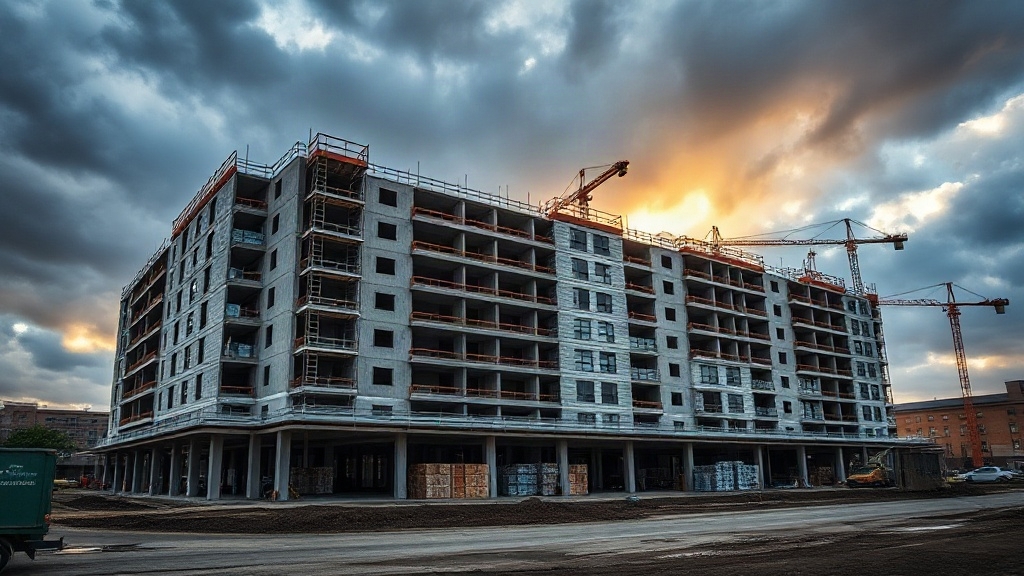


Dynamics of Housing Inventory and Demand
Despite noticeable increases in national active housing inventory, the U.S. housing market finds itself in the throes of ongoing supply constraints. National inventory levels rose approximately 25% from July 2024 to July 2025. Yet, inventory remains 11% below pre-pandemic levels, illustrating persistent supply issues. Sellers’ behavior contributes to this complexity. Many are withdrawing listings amid pricing uncertainties and slow demand. The plunge in housing inventory prior to these recent gains highlights the severity of the issue. New home listings in 2025 show higher numbers than in 2023 and 2024. However, active inventory accumulation highlights a reluctance to convert listings into sales. Similarly, regional variations add another layer of complexity. Some states surpass pre-pandemic inventory levels while others lag. A projected active inventory for July 2026 is 1,321,301 homes, showcasing a continued upward trend despite the challenges.
Impact of Interest Rates on Buyer Activity
The U.S. housing market in 2025 is experiencing increased inventory. However, high interest rates continue to suppress buyer activity. Mortgage rates are around 6.7%. This leads to higher monthly payments, deterring potential buyers and dampening buyer sentiment. Over 80% of current homeowners have mortgages with rates significantly lower than the prevailing rates. This creates a lock-in effect, stifling new buyer demand and home turnover. A severe correction in the market favors cash buyers and rental investors, further diminishing traditional buyer activity. A shortage of homes for sale continues to plague the market, despite an increasing number of speculative homes and new listings. For many, mortgage affordability is elusive. Buyers await rates closer to 5%, a scenario unlikely this year. Recent rate drops to 6.19% slightly improve buyer sentiment. Yet, affordability pressures persist. Anticipated Fed rate cuts might marginally enhance housing affordability. However, substantial relief for buyers is not imminent.


Regional Variations in Home Price Trends
Regional variations in home price trends have taken a dramatic turn across the United States.
These differences are becoming more pronounced than ever before.
In the Northeast and Midwest, areas like Connecticut and Rhode Island are seeing significant fluctuations. Home prices appreciated by 8.4% year-over-year in Q1 2025.
Meanwhile, in the Sun Belt and Western regions, metro appreciation disparities are evident. Cities like Tampa and San Francisco report annual price declines.
Inventory shortages in the Northeast and Midwest help maintain price resilience. In contrast, elevated inventory levels in the Sun Belt and Western states contribute to cooling markets.
At the metro level, Johnstown, PA enjoys a notable 23% increase. This stands in stark contrast to Rome, GA, which faces a 7% price decline.
These shifts highlight the intricate and varied landscape of regional real estate dynamics across the nation.
Assessment
The U.S. housing market is on the brink of a reset. Variations in regional home price trends highlight the shifting demand landscape.
Changing income dynamics add another layer to this evolving scenario. Interest rates remain a pivotal factor, influencing buyer activities and potentially affecting housing affordability.
These factors signal an imminent market recalibration. The situation reflects a complex interplay of economic forces and regional disparities.
Stakeholders and investors must pay close attention to these changes. The market’s evolution demands careful consideration and strategic planning.