

Key Takeaways
- Intra-State Migration is the New Driver: The primary growth engine for Austin in 2026 has shifted from coastal transplants to residents moving from other Texas cities like Houston and Dallas, who are specifically targeting the $350k–$500k price point.
- The “Affordable” Inventory Crisis: While luxury inventory sits stagnant, entry-level and mid-tier homes are being absorbed faster than builders can replace them, creating a specific, segmented supply crunch despite overall “buyer’s market” headlines.
- Rental Oversupply as a Buffer: A glut of multifamily units built between 2022-2024 is currently housing the migration wave, but this creates a looming “shadow demand” that will likely hit the single-family market hard in late 2026 and 2027 as leases expire.
The Silent Squeeze of the 2026 Austin Housing Market
Austin, Texas, has long been the darling of national headlines, usually accompanied by words like “boom,” “explosion,” or “crisis.” But as we settle into 2026, the narrative has shifted into something far more complex.
The fever pitch of the early 2020s has cooled, yet the underlying engine of growth, migration, has not stopped. It has merely changed gears.
We are witnessing a unique phenomenon this year where the specific type of migration flowing into Central Texas is devouring available housing inventory at a rate that is beginning to outpace the construction sector’s ability to react, specifically in the affordable and mid-tier segments.
Austin’s Migration Surge in Context
While national pundits might point to headline inventory numbers and declare a “buyer’s market,” the reality on the ground is far more nuanced. The massive influx of new residents, particularly from within Texas itself, is creating a silent squeeze.
We are seeing a rapid absorption of specific housing types that the construction industry, currently tapping the brakes after years of oversupply fears, is not positioned to replace quickly.
This is not just an Austin story; it is a Texas story with Austin at the epicenter.
Reports from the Texas Demographic Center indicate that while the state grows as a whole, the pressure is concentrating intensely in Central Texas due to its unique economic positioning. This article explores the mechanics of this 2026 market dynamic, dissecting the migration trends, the construction lag, and what it all means for the future of living in Austin.


Who Is Moving to Austin and Why
The story of Austin used to be the story of California. For years, the narrative was dominated by tech workers from San Francisco and Los Angeles trading small apartments for sprawling Texas estates.
While that pipeline remains active, 2026 has defined itself by a different dominant trend: the Texas shuffle.
Data from early 2026 indicates a structural shift. A significant portion of newcomers are now arriving from other major Texas metros like Houston, Dallas, and San Antonio.
This internal migration is driven by a desire for the unique lifestyle blend that Austin offers: a mix of hill country aesthetics, tech-forward employment, and a cultural vibrancy that other Texas cities are still chasing.
Analysis from Bank of America internal data highlights that nearly a quarter of Austin’s newcomers are now hailing from within the state. These movers are distinct.
They are familiar with Texas property taxes, they understand the climate, and most importantly, they have different budgetary expectations. They are hunting for value in the $350,000 to $500,000 range.
The “return to office” mandates of 2024 and 2025 have solidified Austin as a regional corporate hub, pulling workers from the periphery of the Texas Triangle into the metro area.
Housing Supply Constraints in Austin
If you look at raw MLS data, you might conclude that supply is plentiful. However, the disconnect in 2026 lies between what is available and what the new wave of migrants actually wants to buy.
The “response” from the housing market is lagging because the product that is needed, affordable single-family homes, is the hardest and least profitable to build quickly.
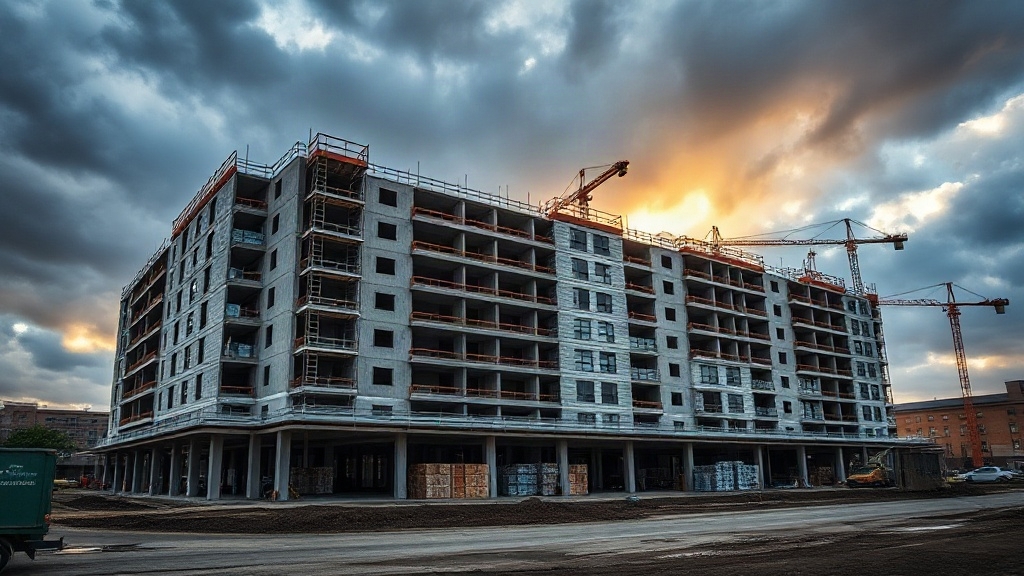
To understand why, we have to look at the permit data. In late 2024 and throughout 2025, builders pulled back. Spooked by high interest rates and falling prices, developers tapped the brakes on new single-family starts.
Data from the U.S. Census Bureau and local tracking agencies like HBW indicate that single-family permits saw year-over-year declines leading into 2026.
While Austin still ranks highly for total construction activity compared to the rest of the nation, the trajectory has been downward. This creates a supply gap. The homes that should be hitting the market today to meet the 2026 migration wave were never started in 2024.
Migration turns on a dime, while construction turns like an ocean liner.
The 2026 Inventory Mismatch: Austin Housing Market Mismatch: Supply vs. Absorption (Q1 2026)
| Price Tier | Market Segment | Inventory Status | Avg. Days on Market | Buyer Competition Level |
|---|---|---|---|---|
| $300k – $450k | Entry / Workforce | Scarcity (High Absorption) | 35 – 45 Days | High (Multiple offers common) |
| $450k – $850k | Mid-Market / Move-Up | Balanced | 60 – 75 Days | Moderate (Negotiation power exists) |
| $1M+ | Luxury / Executive | Oversupply | 90+ Days | Low (Price cuts & concessions frequent) |
This table illustrates the “silent squeeze” by comparing inventory levels and buyer velocity across different price tiers. Notice how the “Affordable” tier—targeted by the new wave of intra-state migrants—is seeing rapid absorption while the Luxury tier stagnates, creating a bifurcated market that headline data often misses.
What Migration Pressure Is Doing to Austin Rents
While the for-sale market tightens in specific sectors, the rental market tells a different story, though one that is equally relevant to the migration narrative.
Austin built apartments at a breakneck pace from 2022 to 2024. Consequently, 2026 is seeing a glut of multifamily units coming online.
This oversupply aids the migration absorption. Newcomers often rent before they buy. The availability of affordable, high-quality rentals allows migrants to land in Austin easily, get their bearings, and then enter the for-sale market.
The rental surplus acts as a funnel, smoothing the transition for new residents. However, this creates a “shadow demand.”
As these leases expire in late 2026 and 2027, these households will transition into the single-family market, potentially creating a crunch if entry-level construction does not accelerate.
What Migration Pressure Is Doing to Austin Prices
The interplay between this aggressive absorption and the sluggish supply response is creating a unique pricing environment. We are not seeing the skyrocketing appreciation of 2021, but we are seeing a “floor” being established much firmer and faster than analysts predicted.
In desirable neighborhoods with good school districts, the primary target of the new family-centric migration, prices have stopped falling and are showing modest strength.
The median home price, hovering in the mid-$400,000s depending on the specific county, represents a new equilibrium. It is affordable enough to attract buyers but high enough to keep sellers engaged.
The danger for 2026 is that as the “good” inventory is absorbed, buyers will be left with only the picked-over stock: homes that are overpriced, in poor condition, or in less desirable locations.
Austin Investor Risk Factors
For investors, the landscape is shifting. The primary risk in 2026 is no longer just high prices, but the cost of capital and the scarcity of quality deals.
Development loans remain expensive, meaning builders are prioritizing “build-to-order” models over speculative building to minimize risk. This caution means the market cannot pivot quickly.
Furthermore, labor and material constraints persist. Skilled trades are in high demand due to massive commercial projects in the region (like the Samsung plant expansion), keeping construction costs high.
Investors must also account for the uniquely Texan challenge of property taxes and insurance costs, which are rising alongside property values, potentially compressing cap rates for buy-and-hold strategies in the short term.
Austin Investor Takeaway
Austin in 2026 is a city in transition. It is no longer the chaotic boomtown of the pandemic, but it is certainly not a dormant market.
The data is clear: migration is continuing, fueled by a new demographic of Texans and pragmatists who see value in the region. This migration is absorbing the most critical segments of the housing supply, specifically affordable, family-ready homes, at a pace that the construction industry is struggling to match.
For the investor, the “buyer’s market” label applies broadly, but in the segments that matter most, the dynamic is tightening. The window of opportunity lies in identifying the specific pockets where absorption is highest and supply is most constrained.
The response takes time, and right now, time is the one thing the market is running short on.