

Key Takeaways
- House hacking is one of the fastest ways to eliminate expenses while building income at the same time.
- Creating a large gap between income and expenses is the real accelerator to financial freedom.
- Systems and automation turn real estate into a low-effort, scalable income stream.
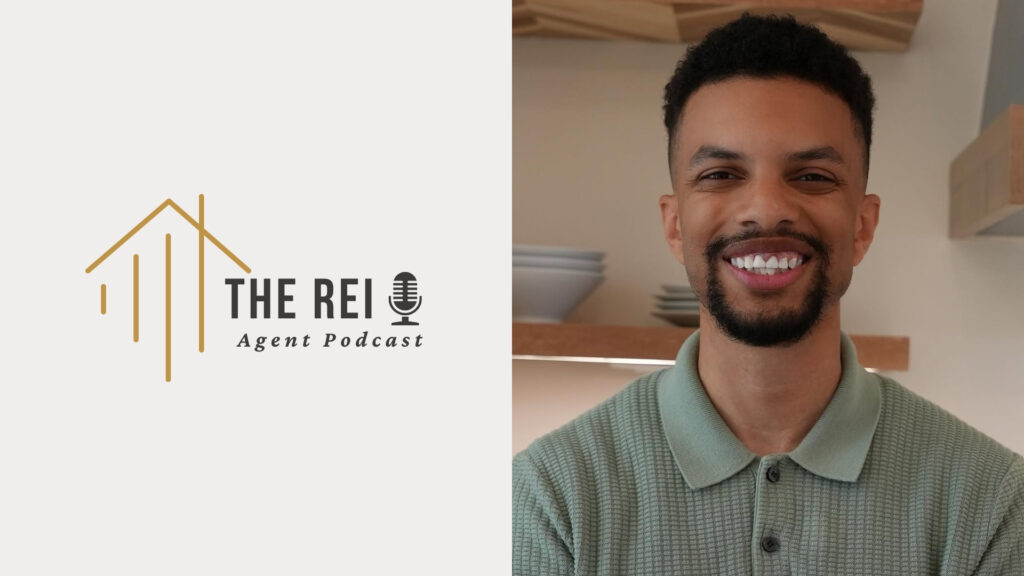
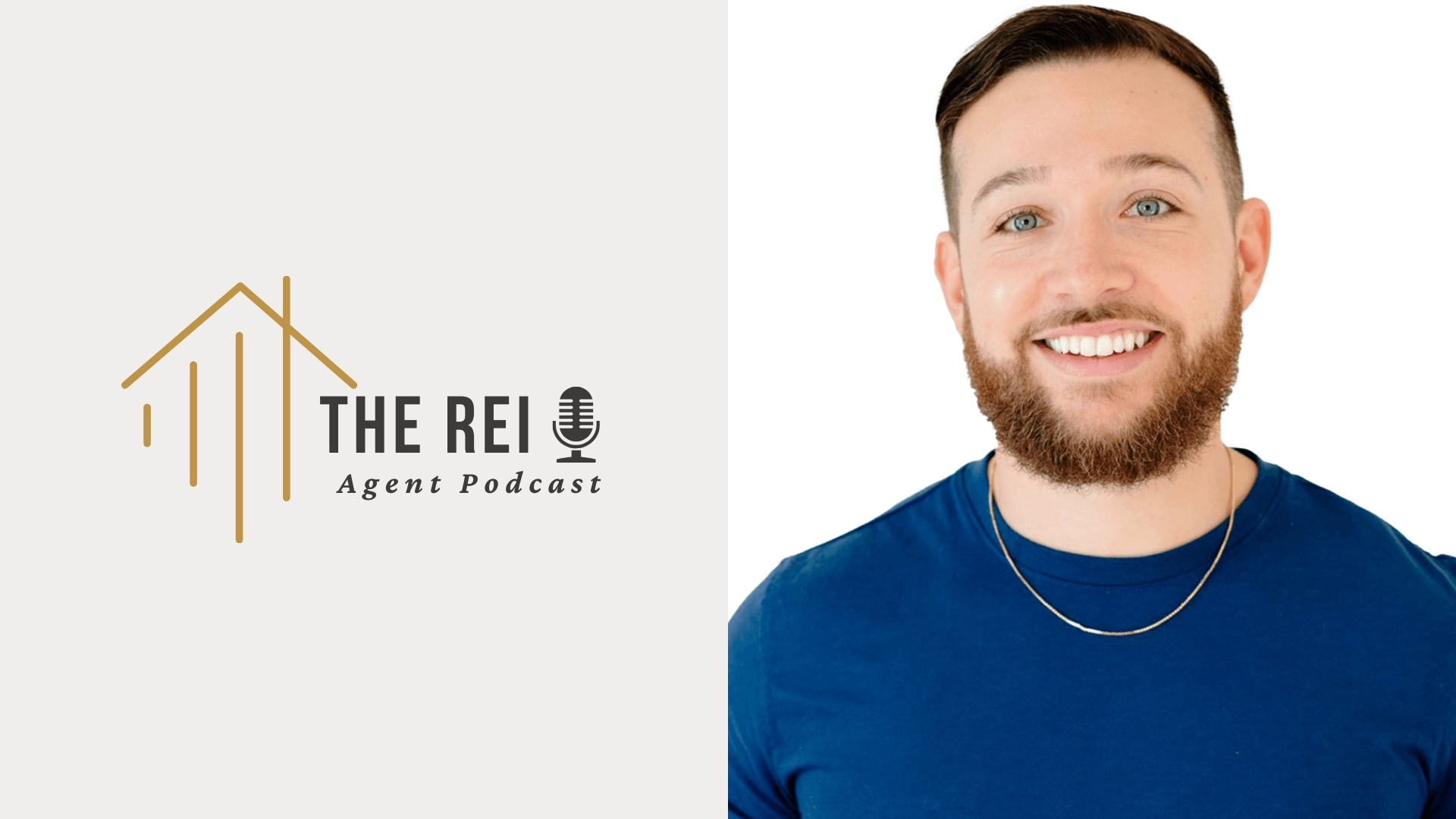
The REI Agent with Cody Berman
Value-rich, The REI Agent podcast takes a holistic approach to life through real estate.
Hosted by Mattias Clymer, an agent and investor, alongside his wife Erica Clymer, a licensed therapist, the show features guests who strive to live bold and fulfilled lives through business and real estate investing.
You are personally invited to witness inspiring conversations with agents and investors who share their journeys, strategies, and wisdom.
Ready to level up and build the life you truly want?
Follow and subscribe to The REI Agent on social


The Moment Everything Changed
Cody Berman’s story did not begin with success. It began with frustration, discomfort, and a deep desire for something more.
Like many, he followed the traditional path, landed a corporate job, and quickly realized it was not the life he wanted.
He lasted just seven months.
Instead of settling, Cody made a bold decision. He walked away from stability and leaned into uncertainty, chasing a vision of financial independence that most people only dream about.
“I got addicted to this idea of retiring early.”
That obsession would go on to completely transform his life.
Breaking Free from the Linear Income Trap
Before discovering a new way of thinking, Cody believed money worked one way. You trade time for dollars. Work more hours, earn more income. It felt logical, but it also felt limiting.
Everything changed when he discovered a different model.
“You can actually build things or buy things that pay you in perpetuity.”
This single realization unlocked a new path. Instead of working for money forever, Cody began focusing on building systems and assets that would eventually work for him.
It was no longer about earning more. It was about earning differently.
The First Deal That Flipped Everything
Cody’s entry into real estate was not flashy. It was strategic.
After realizing his home market did not make financial sense, he looked elsewhere. That decision alone set him apart. While others stayed comfortable, he chased numbers that worked.
His first deal was a simple house hack.
He and his girlfriend lived in a small unit while renting out the rest of the property. What used to be their biggest expense instantly became income.
“We went from paying rent every month to taking in about $500 per month.”
That moment changed everything. Housing was no longer a liability. It became a weapon.
The Relentless Push to 11 Units in One Year
Most people take years to build a portfolio.
Cody did it in one.
He stayed focused, moved quickly, and acted on opportunities others ignored. Within a single year, he acquired 11 units, each one carefully selected for cash flow.
The result was powerful.
“These 11 units were literally funding the cost of our life.”
At just 25 years old, Cody reached a point where his investments covered his expenses. That is the moment most people spend decades trying to achieve.
The Hidden Power of Living Below Your Means
One of the most overlooked parts of Cody’s success was not just what he earned, but what he refused to spend.
He lived simply. Extremely simply.
While his income grew, his lifestyle stayed controlled. That created a massive gap between what he made and what he needed.
“I had this massive gap between what I was earning and what I was spending.”
That gap became his fuel.
It funded down payments, opened new opportunities, and accelerated his timeline in ways most people never experience.
Why Most Investors Struggle and How to Avoid It
Cody noticed a pattern.
Many investors complain that real estate is too much work. Too stressful. Too demanding.
But the truth is often different.
“The people who say real estate is not passive just did not build the right systems.”
From day one, Cody focused on structure. Systems for rent collection. Systems for maintenance. Systems for tenant screening.
Because of that, what could have been overwhelming became manageable.
Sometimes just one or two hours per month.
The Freedom of Thinking Beyond Your Local Market
Another major shift in Cody’s strategy was letting go of the idea that you must invest where you live.
He realized something powerful.
The process is the same, no matter the location.
“It does not matter if the property is five miles away or 500 miles away.”
This opened doors.
Instead of being limited by expensive markets, he went where the numbers worked. That single mindset shift allowed him to scale faster and more efficiently.
The Unexpected Path to Wealth Through Digital Products
While real estate played a huge role, it was not Cody’s only focus.
He built digital products. Templates. Online resources. Systems that could be sold over and over again.
What started small turned into something massive.
“That little side hustle turned into a massive company.”
This added another layer of security and scalability to his journey. It proved that wealth does not come from one stream. It comes from building multiple engines that work together.
The Truth About Passive Income
Cody’s philosophy is simple but powerful.
Passive income is not automatic. It is engineered.
“Passive is the name of the game.”
But it only works when the foundation is strong.
That means building systems early, thinking long term, and staying disciplined when others take shortcuts.
Why House Hacking Is the Ultimate Starting Point
If there is one strategy Cody believes in above all else, it is house hacking.
Because it does something almost nothing else can do.
“It increases your income and decreases your expenses at the same time.”
For beginners, this is the ultimate advantage.
It removes financial pressure, creates immediate cash flow, and builds confidence all at once.
The Real Meaning of Financial Freedom
Cody’s journey is not just about money.
It is about control.
The ability to choose how to spend your time. The freedom to walk away from things that do not fulfill you. The power to build a life on your own terms.
“It is the journey, not the destination.”
And that journey starts with a decision.
The Wake-Up Call Most People Ignore
Too many people wait.
They wait for the perfect moment, the perfect deal, the perfect conditions.
Cody did the opposite.
He acted.
He took imperfect steps, learned along the way, and built momentum that changed everything.
The Life You Want Is Closer Than You Think
Cody Berman’s story is proof that financial freedom is not reserved for the lucky.
It is built.
Step by step. Decision by decision. Sacrifice by sacrifice.
For those willing to think differently, act boldly, and stay consistent, the results can come faster than expected.
The Final Push Toward Freedom
The path is not easy.
It requires discipline, patience, and the willingness to do what others will not.
But the reward is undeniable.
A life where your money works for you. A life where your time is your own. A life designed on your terms.
“You only have to live that way for a few years to change your entire life.”
And that might be the most powerful truth of all.
Stay tuned for more inspiring stories on The REI Agent podcast, your go-to source for insights, inspiration, and strategies from top agents and investors who are living their best lives through real estate.
For more content and episodes, visit reiagent.com.
Articles Related to The REI Agent
- 10 Shocking Truths From the 2025 Global Housing Storm (And How Agents and Investors Can Thrive Through It)
- Shocking Balance Before Wealth (How Erica Clymer’s Holistic Practices Help Agents and Investors Thrive in Global Housing)
- Global Housing Storm (Holistic Solutions to Million-Dollar Dreams, Desperate Sellers, Rising Rents, and Shifting Wealth)
- Top 20 Terrifying Reasons Agents Will Never Be Investors (And How to Fix It)
- 10 Ways to Kill Real Estate Agent Burnout in 2025 (The Holistic Fix)
- Mattias Clymer is Silently Leading a $70M Movement That’s Changing Agent Lives
- Therapy You Didn’t Know You Needed (Holistic Wisdom for Real Estate Professionals)
- From For Sale Signs to Life Design (How The REI Agent Transforms Real Estate Into Holistic Wealth)
- Achieving Holistic Wealth and Success Through Real Estate (Insights from The REI Agent)
- Partnering with Investors (How Real Estate Agents Can Exponentially Maximize Profits)




Mentioned References
Transcript
[Mattias]
Welcome back to the REI Agent. I’m here with Cody Berman. Cody, thanks so much for joining us today.
[Cody Berman]
Thanks for having me, Mattias. I’m excited.
[Mattias]
Cody, where are you coming out of?
[Cody Berman]
I am in Massachusetts. Well, I spend most of my time here, but we’re kind of digital nomads. We usually travel like four months out of the year, but currently in my home base.
[Mattias]
Awesome. Awesome. And give our listeners, if they haven’t heard of you, kind of a bird’s eye view of who you are and what you do in real estate.
[Cody Berman]
So Cody Berman, I kind of started out as a side hustle guy. So I might be different than some guests in that real estate isn’t like my only thing or my main thing. It’s just one of the vehicles I use to hit financial independence as fast as humanly possible.
So basically I got addicted to this idea of retiring early. I hated my job in corporate. I only lasted seven months, went full tilt into entrepreneurship, started doing things with digital products, eventually stumbled into real estate, bought 11 units in one year.
And the cashflow I was making from those 11 units was enough to fund my life and more. So real estate plays a huge part in my financial freedom journey and happy to dive into any and all of that today. Yeah.
[Mattias]
I mean, yeah, that’s pretty rare. Having the ability to just kind of drop the mic, I’m done. If you wanted to be, I’m sure you sound like you’re wired like me, where you kind of always have to have something you’re working on.
And I relate to the kind of wanting to be on my own, fiercely independent. And I worked customer service for a little bit and it was soul sucking for me and my personality type. But yeah, tell me, I guess let’s just start with that deal.
What did that look like?
[Cody Berman]
So funny enough, I started looking at my home base, Massachusetts, and the price to rents just weren’t making any sense at all. Massachusetts is a notoriously high cost living state. And so I was looking around me and I’m like, these don’t make any sense.
I was using the 1% rule as a proxy. I’m like, okay, now this house is $400,000. Can I get $4,000 per month in rent?
No way. So after probably touring 20 properties in mass, I jumped the border down to Connecticut and the numbers started to jive a lot more. So the first property we ended up buying was a three unit.
It was a split level duplex on top and then a one bed, one bath basement kind of behind it. So my then girlfriend, now wife and I, we did the house hacking method. So we lived in that one bed, one bath.
We rented out the split level duplex above us. And we actually went from paying rent every month to live to taking in about $500 per month. So it was such a huge shift, not just for real estate, but for our personal finances.
We eliminated our biggest expense, which is the biggest expense for most people, housing, and turned that into an income producing asset. So that was our first deal. We bought it for 235K.
Rent for the split level above us was 2,200. And expenses all in, this is like PITI, reserves for capital expenses and everything. Basically everything was like 1,700.
So we were making about 500 bucks while we were living there. So it was awesome. It’s awesome.
[Mattias]
Yeah, that’s perfect. Wow. Okay.
So I was thinking that you bought like an 11 unit place.
[Erica]
No, no, no. I bought 11 units. That was three.
And then I had nine, what’s the math? I can’t do math live. Eight more that year.
[Mattias]
I can talk about all the ones you want. Yeah. I mean, just give a quick rundown on those.
I’m fascinated how you could do that many that quickly just getting in.
[Cody Berman]
Yeah. So we bought that kind of house for 235K. Then two months later, we had a distressed seller who our agent kind of hooked us up with them.
And so it was off market. We ended up buying a duplex for 170K, which depending on where you’re at, those numbers were insane to me as a Massachusetts guy. If you’re in Alabama or Mississippi, that might sound expensive, but for people on the coast, like 170K for a duplex was, oh my gosh, this is insane.
So we bought that place for 170K. Rent was 2,250. Expenses all in were 1,350.
Again, this is the PITI plus all like capital expenditures and having a nice little cushion. So we’re making like 900 bucks from that one. Then we bought another three unit and it ended up house hack hopping.
So we moved out of that first house hack into this second house hack. That one was for 315K. And that was actually in Massachusetts, but it was kind of a funky situation with property lines.
And it was like a mixed use property, had like a commercial portion, but bought that place for 315. We moved into the one bed, one bath, and then we rented out the four bed, two bath apartment and the 600 square feet of commercial space. And then probably a couple of months after that, I think it was three or four months after that, we bought another triplex for 245K.
Rent was 2,900. Expenses were 1,900. So after all was said and done, like after we bought those 11 units, we were averaging for that first year between $3,000 and $3,500 a month in cashflow.
This is post all expenses. So we were living like dirt bags. How old was I at the time?
This was in 2020 we bought our first property. So this is kind of COVID year. Things were all funky and people were kind of scared to be in the market, but we were still living as cheaply as possible.
I graduated college in 2017. So it was only three years post college. I was like 25 years old.
So our expenses were far lower than the $3,000 or $3,500 per month. We were spending like $2,000 or $2,500 per month. And at that point, in addition to all the other stuff I had going on, I was like, hey, we could just live off of our real estate right now.
These 11 units are literally funding the cost of our life. So that was a really cool realization that in one year, we kind of just completely transformed our financial position by buying those 11 units.
[Mattias]
So were you still working that corporate job the whole time?
[Cody Berman]
No, at this point I’d already quit. I quit my corporate job on January 31st, 2019. This stuff happened like a year later.
[Mattias]
Okay. And was it hard to finance those properties? And I guess, did you have a decent amount of a nest egg saved up for that?
[Cody Berman]
That’s a great question. That’s a real estate investor question. Yes.
It was very difficult to get financing because the banks wouldn’t count my self-employment income until it had seasoned for two years. It kind of sucks. As a self-employed entrepreneur, the bank doesn’t count your stuff like they count regular W-2 stuff.
So I had to do a lot of shopping around and finding different lenders. We finally found a lender that would work with us, but it was a long painstaking process. I thought it was just going to be so easy.
My entrepreneurial stuff was going really well. My digital product stuff was going good. I had my podcast.
I had my personal brand. I’m like, I’m making a pretty good amount of money. These guys should have no problem lending to me.
They’re like, nope, we actually can’t count pretty much any of this. So I had to get creative.
[Mattias]
Wow. Okay. I mean, that’s awesome that you could.
And I know that there’s things now like DSCR loans that they might’ve been around then too. It’s a little bit newer to me, but that they don’t worry about that if you’re buying a property that has- That’s exactly what we were going to do.
[Cody Berman]
Yeah. They had to look at their income potential of property and then they would make their lending decision based on that versus a traditional lender for a regular home is looking at just your personal income.
[Mattias]
To break that down, guys, this is pretty genius because what Cody did here was everything he bought, including what he was living in, still cashflowed and still qualified for these DSCR loan products. I mean, it’s probably a lot harder now just with interest rates being so high and the way DSCRs work is you have to have a certain ratio as far as how much rent can come in or rent does come in. I wondered if you could get away with that a little bit by counting yourself as a renter and paying rent to- I don’t know.
[Erica]
I didn’t go down that route.
[Cody Berman]
That’s fair. The potential rent lost maybe by you living there, because I know I had mentioned I had done what I called house hack hopping. That first property that we were making $2,200 in rent on, when we moved out, it was then $3,000 because we rented out that one bed, one bath for 800.
There is that potential rent you’re giving up by being a renter. It’s like, hey, bank, once I move out, the cashflow is going to actually increase. It’s going to be better for you guys.
It’s going to be better protected.
[Mattias]
Yeah. I guess I’ve never gone through the path of trying to be an occupant with the DSCR, but ultimately the appraisals and everything are looking at the rent potential. It’s not like it necessarily has to have renters in it that exist and are paying this amount.
It’s more the rent potential, like a comp would be for a regular sale. That makes a lot of sense. I don’t know why I never really even thought about that before, but that’s awesome, man.
You must have been killing it. Were you building this digital brand and all this stuff, the digital products, before you quit your job? Did you have a pretty good feeling like, okay, this is going somewhere, like screw this job?
[Cody Berman]
I had some proof in the pudding. Basically, rewinding way back, I read The 4-Hour Work Week in 2016. That book completely changed my life and how I thought about money.
Before that, I had thought, okay, you make X dollars per hour. You make money on a linear basis. You work X number of hours and you get Y paycheck, depending on how much money you make per hour.
But Tim Ferriss flipped that on his head. He’s like, you could actually build these things or you can buy these things, build something like a personal brand or digital products, or buy these things like real estate, where you can actually put in a lot of the work upfront and then they’ll pay you in perpetuity. I had already started on this ThoughtHustle journey, started my first company in 2016, actually, with ThoughtHustle like crazy, all of 2017, 2018.
By the time I quit my job, it wasn’t like gangbusters. I mentioned it was January 2019. I was making like $1,200 to $1,500 a month on the side, but I was also extremely frugal.
I was spending like $1,200 to $1,500 a month. I was literally just slumming it. I was sharing a room and so my rent was only $450, driving the same paid off car, being really intentional about groceries and going out to eat, all that stuff.
I was literally living as cheaply as possible. It gave me some peace of mind like, okay, I’m really not spending that much. I can take the sleep.
I saved up about 50K between my corporate job and all the ThoughtHustle stuff I was doing because I was living so cheap. Then I took the leap. Again, I wasn’t making a ton of money from my side stuff, but I’m like, if I’m getting back 50 or 60 hours a week that I’m using at my day job to commute or to work, I can definitely make more than this $1,200 to $1,500 a month.
Just rewinding back, but then my stuff started to explode. I actually have the numbers here. I have my income numbers from those years way back.
I know people like to hear real stuff. 2018, I worked for half the year. This is the year I graduated college.
I started in June. Ended up making $44,000 that year. 2019 is when I quit that corporate job.
Ended up making $96,000 that year from my entrepreneurial stuff. 2020 made 198K. This is prime real estate acquisition phase.
Then 2021, I ended up making $403,000. The kicker is that during that whole period, I was spending less than $2,000 per month. Even when I made over 400K in 2021, my gap was like $375,000.
That, to answer your question, Mattias, is where all the money came for the down payment. I just had this massive gap between what I was earning and what I was spending.
[Mattias]
Guys, that is awesome. That is such a laser focus. We mentioned briefly, I’m coming out with a book and talking about this life phase that you’re in is such an ideal life phase to do things like this.
You’re going to have probably, I don’t know if you had parents or people like, what are you doing, quitting your job?
[Erica]
I did.
[Mattias]
But it’s just, there’s not a better time. The more that you have on your plate, getting married, having kids, whatever you might get into, it’s just going to make it so much harder to take risks. But also to be flexible, to live that cheaply, to be able to live in the one-bedroom apartment, the one that would make the least amount of rent in the property you buy, to be able to live in maybe less than ideal conditions if you are doing a fix and flip or live and flip.
But man, that just accelerates your growth so crazy high when you’re starting out. So yeah, awesome, awesome job. That’s amazing.
I love it.
[Cody Berman]
Thanks, man. One thing I want to highlight is I think a lot of people will hear a story like this and they’re like, well, that sucks. That guy is way too frugal for me.
But the cool thing is you only have to do that for a couple of years. If you can have a massive gap between what you earn and what you spend for three, five years, and you just invest all of that money into real estate, into the stock market, into whatever you want, into some stable asset, you might just have enough to never have to work again for the rest of your life because you sacrificed three to five years. It can really be that simple.
You don’t have to live this extremely frugal life. I spend way more than $24,000 a year at this point because I’ve reached financial freedom and my income has continued to grow, but my expenses have now grown with that because I’ve built that financial runway, that financial cushion. So I just want to throw out that caveat.
[Mattias]
No, it’s a really good point. And Erica and I, we spent our first three years of being married both working. I mean, we were probably making $60,000 to $70,000 collectively at the beginning.
And we paid off all our student debt, which was, and I think a little bit of her car loan, which was $120,000 altogether. So we were living really cheaply as well. We owned our own house.
And we actually looked back. We ate rice and beans so often. We did all the things that were so frugal.
We didn’t go out. I mean, she lost some friends, honestly, over it. It was a sticking point for a lot of people.
They didn’t understand. But at the end of the day, we looked back at that time really fondly. We were very in sync with each other.
We kind of were striving towards the same goal. We don’t look back on it like, oh my gosh, I’m glad those days are over. It was actually, I kind of missed that.
That was kind of cool. And Adam, do you feel the same way?
[Cody Berman]
I feel the exact same way. I was going to bring up a story actually from the four-hour work week, because a lot of people, I think, have this misguided notion of what money means to them and the life that they’ll live once they have a lot of money. And Tim Ferriss, in that book, was talking to some guy who sold his company for like $40 million.
And Tim’s like, dude, why are you working so hard? You’re working 80-hour weeks. You barely see your wife and kids.
And the guy’s like, so I can travel the world. And Tim’s like, you can travel the world for like 20K a year if you really want to, if you really want to slum it. And me and my then girlfriend, now wife, Lauren, we went to Australia for six months and spent like 12 grand total collectively.
So a lot of these things that people think that they need a ton of money for, there are ways to do it much, much cheaper. Now, if you’re like Cody, I want a yacht and I want a private jet, okay, you might need a lot more money for that. But if your goal is to travel the world or to have freedom to take off a Tuesday to do something fun with your family, you don’t need a lot of money for that.
You just need to really kind of set your intentions, see what that actually costs, see what you need to sacrifice and then go after that thing. So yeah, I totally agree with you, Mattias. I think it’s a misnomer that a lot of people fall into that trap.
[Mattias]
Yeah. And yeah, you have to, it sounds terrible, but there’s a couple of things I wanted to say on that line of thought. I think part of the person that has $40 million and is still working so hard, I think that we have this, everything in society is kind of selling us this idea that we need to have things easier.
Everything, all the products are trying to solve problems and we have air conditioning and we have all these things, these luxuries, but then there’s also this big movement of making yourself get into a cold plunge or making yourself go into a really extremely hot sauna. Exercise can be really hard and painful and difficult and you’re sore from it, but all these things actually help your brain and help you feel better, make you less depressed. And I think it’s because we have to impose artificial hardship that we have to get into these flow states.
If we’re just sitting around watching Netflix or whatever, it’s because we sold our company for $40 million, we’re probably going to be really depressed.
[Cody Berman]
Yeah. I think we’re wired to work hard.
[Mattias]
I agree.
[Cody Berman]
Yeah. I think humans are wired to work hard and it’s the journey, not the destination. That’s why people always say the goalpost always moves.
It’s like, yeah, because the amount of money in your bank account, that’s not the point of life. It’s like setting up your goal and going after it. And it’s the day in, day out.
It’s not just the shiny object at the end of the road.
[Mattias]
Totally. And really money doesn’t have to be that goal that you strive towards. And also on that note, one of the things I preach to in the book and everything that’s coming out is the idea of if you can get to the point where you have 100% of your expenses covered and you just grow your lifestyle that way, and before you buy the car or whatever, buy the asset that pays for the car, et cetera, is just an amazing way because you can always have that flexibility of, I don’t really want to work this year. I’m going to go to Australia for travel instead. There’s that ability that you wouldn’t have otherwise, if you just put your lifestyle first and depend on your earned income.
So yeah. Great examples. Living the dream, man.
[Cody Berman]
I’m trying. I’m trying. I’m still working hard, but only on things that light me up when I want to.
[Mattias]
Yeah. That’s the point. That’s 100% me too.
So now what are you doing now? After that year, buying 11 properties, all that kind of stuff, where did you go from there?
[Cody Berman]
Let’s see. I honestly started to go into more hands-off real estate. So I started investing in syndications and I would partner with one of my buddies who’s a GC and he would do…
I would finance the flips. He would do all the work for the flips. So we got our hands really dirty that first year.
And honestly, we realized, hey, we don’t really want to own too many properties. I don’t know what the right term would be, outright, or we’re the only people involved. Let’s just pool our money into real estate in other arenas, like through a syndicator or doing a flip with someone else who’s handling all the work, because I started to really focus on some of my other businesses.
So after that year though, we tried, and we still do, we have some Airbnbs. We did a bunch of flips. I have a lot of money in various syndications throughout the country.
We’ve just tried it all. I’m a dabbler. I feel like we’re the same way, Mattias, where I just like to try stuff.
I’ll hear of someone doing something on a podcast. I’m like, wow, that guy made 100K from a flip. Let me try doing a flip.
And then I try doing a flip. Or I’m like, oh, this person said they’re making 3X their long-term rent with Airbnb. I’ll try Airbnb.
If it works, it works. And I keep doing it. If it doesn’t work, or if it’s too much work and I don’t enjoy it, then I stop doing it.
But I’m like a chronic dabbler. I just can’t help myself from trying something new. Oh, I’ve done hard money lending.
I feel like I’ve dipped my toes in all of the different waters of real estate. Not all of them, but a lot of the main buckets. And at this point, the ones that I’ve stuck with, we didn’t do a flip last year.
We did a couple of the year before and made pretty decent profits, but we still have Airbnbs and long-term rentals. We’re kind of cool with where our portfolio is at right now. We actually ended up selling one of those original or two of those original properties we bought in that first year because the cash flow was great, but there were just tenant nightmares.
They were in places that we wouldn’t really want to live ourselves. And that lent itself to a lot of unforeseen problems from when we first purchased.
[Mattias]
No, that makes sense. I think, yeah, you just have a lot of options when you’ve had real estate for some time, especially with all the appreciation here recently. You can roll that into other stuff.
The syndication thing, I think, is such a underutilized, under understood. Misunderstood?
[Erica]
I don’t know.
[Mattias]
It’s not well known enough in real estate agent circles because I think it’s such a cheat code. Obviously, there’s risk. You can lose money.
It’s not like it’s a guarantee. And there’s been a lot of blood in the water here recently. But yeah, if you can get the accelerated depreciation as a real estate professional, you can really offset some of your commission income tax-wise and you’re investing in a way that you don’t have to have a tenant that you have to deal with.
Airbnb, yes, they can make more. There’s also a lot of risk with them. There could be regulations that change that no longer allow that use case.
And then there’s just more work. Unless you completely outsource it, you’re just more hands-on. You’re really providing a service, a hospitality service.
But syndications, yeah, if you get enough of an understanding of how they work, what they are, get a relationship with some really good people with a proven track record of investing successfully in these, you can invest confidently and sit back and just let the quarterly dividend checks come in and the K-1s come in so that you can write off your taxes. So it’s a brilliant thing that I don’t think enough people really understand.
[Cody Berman]
I think especially for your community, this is actually one of the few podcasts where probably a majority of the people listening can take advantage of this. But if you’re a real estate professional, if you have real estate professional status in the eyes of the IRS, when you invest in a syndication, you can offset your active income. Normal people can’t do this.
You can offset all the money you’re making from your 1099 as a real estate agent, or if you’re a broker. Most people can’t do that. They can only offset their passive losses or their passive gains, like their long-term rentals from their syndication depreciation.
But you guys listening, if you qualify or your spouse qualifies for reps status, it’s such a huge hack. And so me and my wife did that where we got her hour log and we were able to take depreciation against our active income and all my online business stuff from our syndication investing. So it’s such a super hack.
If you’re someone who has… Maybe you’re not so interested in investing a bunch of your… Or investing personally and you don’t want to own the properties, but you’re crushing it as an agent.
It’s a great way to get extra real estate exposure. And it’s a great way to reduce your active income taxes. So that’s a pretty niche hack for an audience like this.
[Mattias]
Yeah. Yeah. And you can diversify the location, property, asset type.
There’s all sorts of different ways you can do this. And I brought this up a hundred times, but we did one where we invested $50,000. The first year we were able to write off $66,000 off our taxes.
So it also was returning 9%, 10%. I think it was 11% at first, but then it slowed down because I think they sold a mobile home park or something. So the beginning was a little bit more heavy.
But yeah, it’s returning just as good as a stock market from a return on investment standpoint. But the tax benefits then are huge. And there’s the possibility of them selling and getting all my money back plus whatever the profits are.
And there’s the possibility of them refinancing where I get all my money back and I still have ownership in the property. So when it works well, it’s pretty amazing. And I guess if you want to play devil’s advocate here, there were a lot of people that were caught with the pants down a little bit with the interest rates changing so drastically.
People were buying, let’s say, apartments with bridge debt where they were not forecasting that the interest rates would spike that drastically. And then the deal really didn’t work anymore. So people were not getting paid out their dividends.
And sometimes they’re being called for more money to try to keep the deal afloat. So it’s definitely… You need to be smart.
And that’s why they have… You have to be an accredited investor. So you have to really make sure that you are able to wisely invest and not put all your life savings into something that doesn’t work out and then be ruined.
It’s the idea I get behind.
[Cody Berman]
This is definitely level two. I don’t want people listening to hear this and be like, oh, syndications sound awesome. I’m going to start doing that.
If you don’t have any properties yet, start with a house hack or a simple investment property. This is level two. You asked me, Mattias, what I’m doing now.
So I answered honestly. But that’s because I’m years past that first stage. If you’re just getting started, please don’t be like, all right, syndications, that’s it.
And only do that. Get your hands dirty, get your feet wet in the just regular investment property market, and then you can move on to syndications and bigger projects later on.
[Mattias]
Totally. I mean, you have to build up your net worth often. You have to usually be worth a million outside of your primary residency or have a high enough earned income, which I think is like 200 solo, 300 married, something like that.
Yeah, I think that’s right. All this stuff, check with your CPAs about it. So yeah, it’s definitely not a beginner strategy, but something good to have in mind for where you want to go, especially if you are building up a successful real estate sales business.
I mean, it really makes a lot of sense. But yeah, I mean, Cody, I feel like we have so many different directions we could go from here. Have you ever talked about leading some syndications as well?
What’s your digital products? What are you doing in that space? I mean, I know that’s kind of your niche here.
[Cody Berman]
Yeah. I mean, so like I said before, real estate is not a main focus. I have never once had the urge to be a GP, like a general partner on a syndication.
I’m even trying to be as hands-off as possible with the properties I own. The digital product stuff is, I kind of got my jump on Etsy and Shopify and just started selling printables and digital products. Think calendars, planners, templates, worksheets, all that type of stuff.
That was one of the main reasons I was able to actually kind of quit my job and really start to increase my entrepreneurial income when I got this whole thing started. That little side hustle has since turned into a massive company. We have a bunch of employees, and now we have this huge template library.
We have a whole community and course and all that fun stuff. So yeah, that turned into a whole beast of its own. Gold City Ventures is the logo.
I’m rocking my shirt in behind me. That’s kind of my main business. And real estate, like I mentioned before, I’m an opportunist.
I’m a dabbler. It was just like, okay, this is a really safe place for me to park my money. And the cash on cash return is great.
In one year, I could put down like $200,000. That’s how much I spent in down payments that year I bought the 11 units. And just that was the key to financial freedom.
So that’s why I invested in real estate. It’s not because I love real estate or something, and I have no desire to go buy a hundred units and raise a bunch of capital. I just saw it as one lane to achieve financial freedom.
And so I like to be, sounds like all my income sources, all my net worth kind of scattered. So if one thing crashes, then I have a little bit of a safeguard somewhere else.
[Mattias]
Sure. Yeah. I mean, if you’re looking at it from like a Robert Kiyosaki cashflow quadrant kind of perspective, you’ve definitely moved yourself around that whole quadrant.
Started off as an employed person, went into self-employed. Now you’re a business owner and obviously an investor as well. And I think that’s something that agents often miss as well, the importance of working that investment side as well.
I think agents also have a really good opportunity to invest in real estate because they understand it. They’ll be in it all the time. I mean, I feel like it’s a little silly not to, but again, not everybody wants that headache of a tenant, that kind of stuff.
So if you need to use it to build up your passive or your net worth a little bit, and then bump into things like syndications could be a good runway for it, or just focusing on your sales. And if you make enough money in sales and you can do just something like that as well.
[Cody Berman]
Absolutely. Just to give people a concrete example, I was trying to pull up the Etsy shop here, because I think these guys have done an amazing job. If you want to just see what I’m talking about, like digital products, like here’s one real estate agent specific, the site or their Etsy shop is called the agent site shop.
It’s this couple from Tennessee and they have like 67.5 thousand sales. And each one of those sales is like a $20 price point. And it’s things like, I’m scrolling through here, a home buyer’s guide, a home buyer’s presentation, a real estate spring market flyer, a St. Patrick’s day marketing bundle. It’s just like all these random things that they’re probably already using in their brokerage. They decided to kind of like templatize it and put it on a platform like Etsy. And these guys have made like an extra almost $1.5 million from these quote unquote, silly little digital products. So if you guys want to go check that out, like you guys are already agents, you probably could go and start an Etsy shop or a Shopify store with a lot of the digital assets you already are using in your day-to-day life. You just got to white label it and templatize it so other people can use it. So that’s just a little bit of homework if you guys want to see what the heck I’m talking about.
[Mattias]
That’s awesome. That’s really cool. I’ve seen things like what you’re talking about, like the calendars and all that, you know, using things like in good notes.
[Cody Berman]
Yeah. There’s a lot of opportunity out there.
[Mattias]
But yeah, that’s so cool. I mean, that’s such an awesome story you have. Curious if you have any golden nuggets for our listeners today.
[Cody Berman]
I do. I got a couple for you, Mattias. Okay.
So golden nugget number one is that passive is the name of the game. So I’m such a huge fan of passive income. I used to be a guy who I would just trade my time for money like it was nobody’s business.
Like actually during that six months stint in Australia, I did Uber Eats on a bike. That is literally the most active side hustle you can ever have. I got a couple of one-star reviews because I was sweating on people’s food.
It was that active. Now I’m very big into passive income. So what I was talking about before with like the kind of front loading your time or your money or your energy into something like real estate.
But what a lot of people get wrong is that you need to build a solid system from the start. I see a lot of people complain about real estate because they’re going and collecting their rent and cash, or they’re not screening their tenants properly, or they don’t have proper maintenance systems set up. So when a plumbing repair happens, they have no one to call.
So I am such a huge advocate of setting up your systems before you even get your first property. Know what property management software you want to use. Know how you’re going to collect rent.
Know who you’re going to have. Have an Excel spreadsheet. This is the plumber, or these are the top three plumbers.
These are the top three electricians, yada, yada, yada. Have all that stuff handled before you get that first property so you’re not just absolutely scrambling. Because most of the people I see who are like, managing real estate sucks.
It’s so much work. It’s such a lie if you say it’s passive. It’s like, I spend like one to two hours a month maybe managing our portfolio now because I built these systems.
The people who are spending 10 plus hours a week are the ones who are just scrambling because they don’t have a system set up. So if you can get your system set up from the start, then this can become a much more passive soft hustle or passive business.
[Mattias]
Can I ask a follow-up question on that real quick? Absolutely. Yeah.
Did you ever do any of the maintenance? I know you talked about a couple of these properties being distressed and you were really frugal. Were you ever hands-on on some of the things?
[Cody Berman]
I was, and it was the biggest mistake ever. So the first property we bought, there was something with the sink and it was leaking. So I went on YouTube University.
I’m trying to replace the P-trap underneath the sink. And I was literally going back and forth to Home Depot and working on the sink for like five hours, just watching a million YouTube videos. I couldn’t figure it out, called a plumber over and he fixed it in 15 minutes.
And literally after that, I’m like, I’m never DIYing again. This is such a waste of my time. I don’t have these skills.
This is a cash flowing property. The tenants are paying for these repairs to happen. I don’t need to be doing this myself.
So yeah, I did a little bit of DIY at the beginning. That P-trap incident was the last straw. And since then I’ve hired everything out.
[Mattias]
I’ve definitely taken on the more or less a hard rule of like, I don’t want to touch anything because I think that’s when I’m going to get frustrated with it. That’s how I would get myself out of owning these properties is. And then right now, really it’s more about that long-term wealth growth than it is about the monthly cashflow.
But anyway, keep going.
[Cody Berman]
Great follow-up. Okay. So two actually ties in perfectly to your follow-up and what we’re talking about here.
So two is don’t be afraid to invest outside of your local area. So unless you want to be a very active property manager, you’re the guy or girl going to fix the P-trap, going to fix the electrical, going to repaint that wall. Unless you want to do that, then just don’t listen to what I’m saying.
But if you want to be a passive investor, which I’m guessing a lot of you guys want to be that, it doesn’t matter if the property is five miles away or 500 miles away. It’s the same exact process to set it up. You’re going to be using the same screening software.
You’re going to be using the same rent collection tools. You’re going to build that list of handymen or handywomen, your plumbers, electricians, your repair people on an Excel spreadsheet, just the same. Whether you’re investing in Massachusetts or Kentucky or California, it doesn’t matter.
The system is the same. So don’t be scared and think you have to invest in your local area and maybe you’re in a really expensive, high cost living area. The playbook’s the same.
Again, unless you want to be the active person and you’re doing all the repairs yourself and you need to be close, that’s different. But I’m guessing most people listening don’t want to be that person. I definitely didn’t want to be that person.
And that’s why I ended up investing a couple hours away from my home base.
[Mattias]
And you didn’t even mention a property manager, right?
[Cody Berman]
Yeah. Yeah. You don’t even need a property manager, honestly, to start.
If you have these systems in place, then you’ve kind of created a property management business in and of itself. And you can manage your properties in a couple hours a month max. There you go, guys.
And the last one is that house hacking is by far the easiest slash best way to get into real estate, bar none. So in my own journey, I was able to eliminate my largest expense while also building a passive income stream and getting my feet wet and getting into the world of real estate. It was a double whammy.
I was increasing my income and decreasing my expenses at the same time. There are very, very few things that you can do to make that happen. You start a side hustle, that’s increasing your income, doesn’t decrease your expenses.
Or you downgrade your car, you spend less going out to eat on groceries, that’s decreasing your expenses, it doesn’t increase your income. House hacking is one that does both, and it’s one of the very few things that does both. So I hear so many investors today, even people who are pretty plugged in, they’re listening to podcasts, they’re reading books, they’re like, oh, I don’t have enough money for a down payment.
I’m like, oh, well, what are you saving up? They’re like, oh, I need 25%. It’s like, okay, if you’re going with a commercial loan and a property that’s super far away from you.
But if house hacking is the best option available and you only need 3.5% down with an FHA loan, if you’re living in that thing, go that route. Even if a property is not really hitting the 1% rule, just getting your feet wet in real estate and owning that first property, I think it’s worth it going the house hacking route, because you need somewhere to live. You’d rather pay the mortgage on that house hack than pay rent to someone and never build equity in that place.
So I’m just a huge fan of house hacking. I think it’s such an easy way to dip your toes in the real estate waters.
[Mattias]
I couldn’t agree more. I think that is definitely true. And going back to Robert Kiyosaki as well, again, since that’s often a lot of people’s starting point is one of his books, but he also talks about how your primary residency is a liability, not an asset, but you’re flipping that on its head.
I mean, you’re changing that up too because it’s earning income, even if you’re living in it, it’s now an asset. So yeah, those are great. I appreciate it.
Cody, I hope I didn’t cut off any other ones, but do you have a favorite book, one that you think is fundamental that everybody should read or one that you’re currently really enjoying?
[Cody Berman]
I’m going to give a shout out to the 4-Hour Workweek that I mentioned before. If you haven’t read that book, it’s such a good book just on rethinking and relearning what money is and really realizing that money is a tool and that you don’t have to trade your time for dollars on a linear basis. So that’s one that really affected me.
And I think anyone who’s interested in entrepreneurship should read it.
[Mattias]
You know, I need to come back to that book now, especially with the context of AI, but I have definitely heard that one be mentioned a lot as one of the biggest mind shifts people have gone through. Maybe not quite as many times as Rich Dad, Poor Dad, but that one is definitely one that has just, I think, rocked a lot of people’s worlds. So I need to go back to that one.
That’s a great recommendation.
[Cody Berman]
Yeah, check it out. And I think it depends on where you’re at, right? I remember first reading it and kind of thinking, oh, this guy’s kind of a douche, but I went past that and I’m like, there’s a lot of good takeaways here.
He just talked about things that were so uncommon and so different. He was on the forefront of outsourcing to foreign VAs. He had this whole supplements business that was getting run by this team in the Philippines for like $2 an hour.
There’s just like so many things that he just, he breaks the norm. He breaks the mold and just does things in weird ways that you don’t think are possible because the average person doesn’t do it.
[Mattias]
Yeah, he’s a smart guy. That’s for sure. Great podcast as well.
Then Cody, if anybody wants to follow you on social media or find anything more about you, where can they go?
[Cody Berman]
I am everywhere @CodyDBerman. So whatever social platform is your favorite, I’m probably there. I have a book coming out at the end of April.
It’s called “Retire by 30.” It’s not going to be out when this podcast airs, but if you want to kind of keep up with the updates there, I’m going to be doing some sneaky freebies and fun stuff behind the scenes. If you want to just follow me on social media, you’ll see all the fun drops there.
[Mattias]
Awesome, Cody. Thank you so much for being on the show. It’s been a lot of fun talking to you.
Appreciate it, Mattias. This was a lot of fun.
[Erica]
Thanks for listening to the REI Agent.
[Mattias]
If you enjoyed this episode, hit subscribe to catch new shows every week.
[Erica]
Visit REIAgent.com for more content.
[Mattias]
Until next time, keep building the life you want.
[Erica]
All content in this show is not investment advice or mental health therapy. It is intended for entertainment purposes only.
No related posts.