


Key Takeaways
- Building a people-first culture creates long-term loyalty and sustainable growth.
- True success comes from designing a business that supports your life, not consumes it.
- Consistent small actions done imperfectly will outperform perfection that never launches.
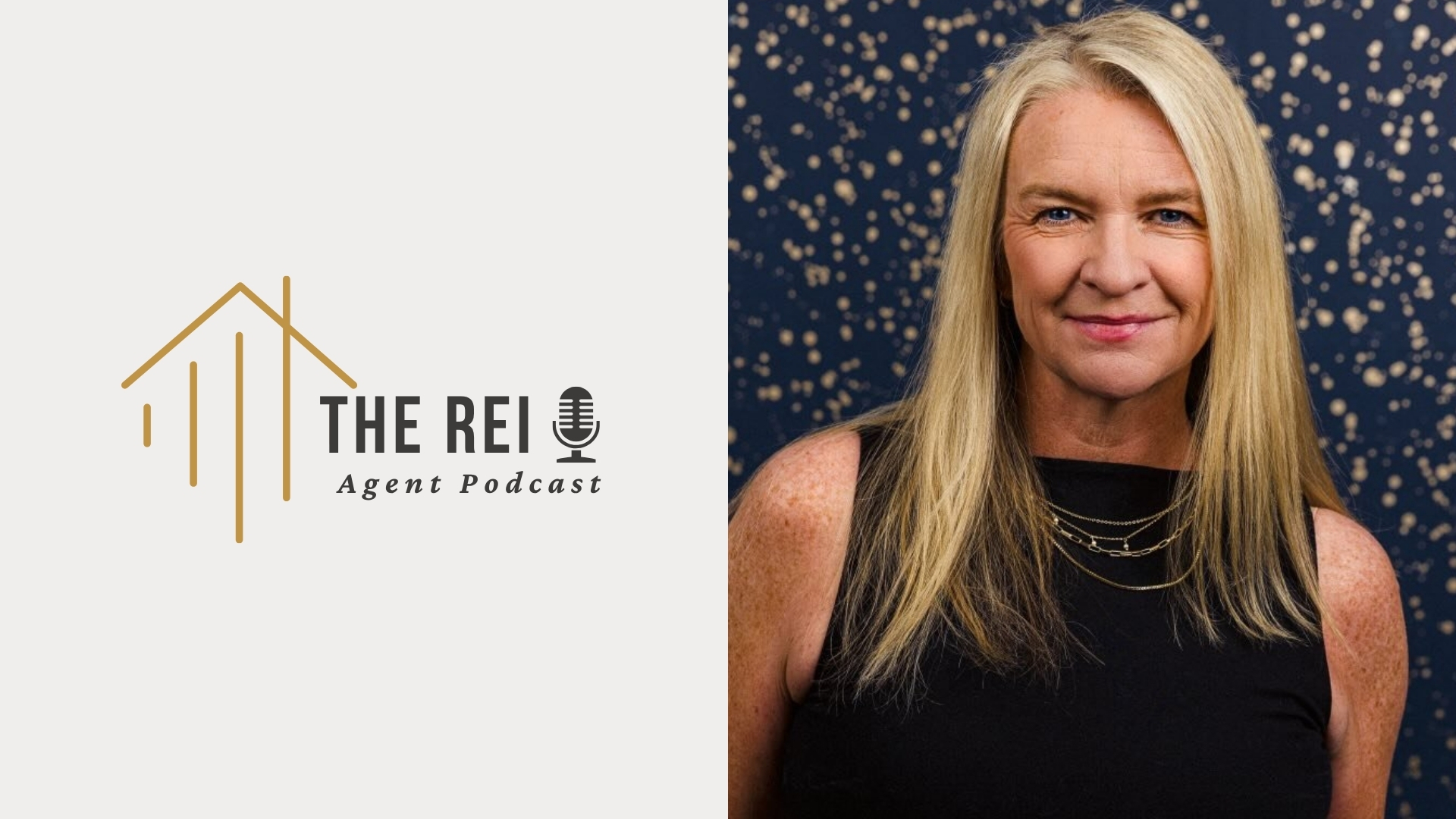
The REI Agent with Stacie Staub
Value-rich, The REI Agent podcast takes a holistic approach to life through real estate.
Hosted by Mattias Clymer, an agent and investor, alongside his wife Erica Clymer, a licensed therapist, the show features guests who strive to live bold and fulfilled lives through business and real estate investing.
You are personally invited to witness inspiring conversations with agents and investors who share their journeys, strategies, and wisdom.
Ready to level up and build the life you truly want?
Follow and subscribe to The REI Agent on social


A Journey That Redefines Success
When the Path Changes Everything
Stacie Staub’s story is not just about building a successful company. It is about building a life that actually feels good to live.
Her journey began in the world of technology, far from the fast-paced chaos of buying and selling homes.
But when the market shifted, and life demanded a pivot, she stepped into real estate with curiosity and courage.
What started as a practical move quickly became something deeper. She found herself drawn to the people, the energy, and the challenge.
Real estate was not just about transactions. It was about solving problems, building relationships, and creating opportunities.
“I loved the puzzle of it. I loved solving problems.”
That mindset became the foundation of everything that followed.


The Power of Building Something Bigger
From Solo Agent to Visionary Leader
As her business grew, Stacie realized she could not do everything alone. Instead of burning out, she made a bold decision. She began building a team. Not just any team, but one built on trust, support, and shared success.
Her first major step was bringing in her own family. What started as a simple solution turned into a powerful lesson in leadership.
Growth is not about doing more. It is about doing what matters most and empowering others to handle the rest.
“You start figuring out the pieces that you do not enjoy, and you hire people to take care of that.”
This shift allowed her to step into her true role. Not just as a producer, but as a leader.
Breaking the Mold in a Changing Industry
Choosing Independence Over Conformity
While many brokerages moved toward massive corporate structures, Stacie chose a different path. She built an independent, agent-first brokerage rooted in culture and connection.
This decision was not the easy route. It required conviction. It required clarity. And it required a willingness to stand apart from the crowd.
“We have always had the goal to stay independent so we can support agents the way we believe they should be supported.”
That commitment paid off. Her company grew to hundreds of agents while still maintaining a close-knit, supportive environment.
Culture Is the Real Competitive Advantage
Creating Loyalty Through Connection
In a world driven by numbers, Stacie focused on something most overlook. People. She built a culture where agents feel seen, supported, and celebrated.
Instead of competition, she encouraged collaboration. Instead of pressure, she created belonging. And instead of chasing rankings, she focused on relationships.
“The relationships are what keep them loyal.”
This approach turned her brokerage into more than a workplace. It became a community.
Growth Through Mentorship and Shared Success
Helping Others Rise While You Rise
One of the most powerful systems she built was her mentorship program. New agents are guided through their early deals by experienced professionals who genuinely care about their success.
But something unexpected happened. The mentors began growing too.
“Their business increased because they started doing the things they were teaching.”
It became a cycle of growth. Teach. Learn. Improve. Repeat.
Redefining What Winning Really Means
Life Comes Before Work
For Stacie, success is not measured by volume or awards. It is measured by freedom, balance, and fulfillment. She learned this lesson the hard way after years of nonstop hustle.
“I did not take a real vacation for 15 years.”
Now, she encourages her agents to step away, recharge, and build systems that allow them to live fully.
Her concept of a phone nanny is a perfect example. It is about creating space without sacrificing growth. It is about protecting your energy while still serving others.
The Courage to Keep Growing
Challenging Yourself Beyond Business
Even after building a thriving company, Stacie continues to push herself. Whether it is earning a Pilates certification or writing a book, she believes in constant evolution.
“Every year I challenge myself to do something new.”
This mindset keeps her engaged, inspired, and ahead of the curve.
The Lessons That Change Everything
Simple Truths That Drive Massive Results
Through all her experiences, two powerful principles stand out.
“Done is better than perfect.”
“The agents are our clients.”
These ideas may sound simple, but they are transformative. They remove hesitation. They create clarity. And they keep the focus where it belongs.
The Final Perspective
Build a Life You Do Not Need to Escape
Stacie Staub’s journey is a reminder that success is not about chasing more. It is about designing better. It is about building something that supports your life instead of consuming it.
She proved that you can grow a powerful business without losing yourself in the process. You can lead with heart and still win at the highest level.
“You do not have to do everything today, but you have to do something.”
That one step forward might just change everything.
Stay tuned for more inspiring stories on The REI Agent podcast, your go-to source for insights, inspiration, and strategies from top agents and investors who are living their best lives through real estate.
For more content and episodes, visit reiagent.com.
Articles Related to The REI Agent
- 10 Shocking Truths From the 2025 Global Housing Storm (And How Agents and Investors Can Thrive Through It)
- Shocking Balance Before Wealth (How Erica Clymer’s Holistic Practices Help Agents and Investors Thrive in Global Housing)
- Global Housing Storm (Holistic Solutions to Million-Dollar Dreams, Desperate Sellers, Rising Rents, and Shifting Wealth)
- Top 20 Terrifying Reasons Agents Will Never Be Investors (And How to Fix It)
- 10 Ways to Kill Real Estate Agent Burnout in 2025 (The Holistic Fix)
- Mattias Clymer is Silently Leading a $70M Movement That’s Changing Agent Lives
- Therapy You Didn’t Know You Needed (Holistic Wisdom for Real Estate Professionals)
- From For Sale Signs to Life Design (How The REI Agent Transforms Real Estate Into Holistic Wealth)
- Achieving Holistic Wealth and Success Through Real Estate (Insights from The REI Agent)
- Partnering with Investors (How Real Estate Agents Can Exponentially Maximize Profits)


Contact Stacie Staub
Mentioned References
Transcript
[Mattias]
Welcome back to the REI Agent. My guest today is Stacie Staub, founder and CEO of Weston, Maine Homes, an independent agent first brokerage she built to over 400 agents in the Denver market. And one of Inc’s 500 fastest growing companies.
Stacie built her company around culture and agent success at a time when the industry was consolidating around mega brands. And she is proof that putting people before production is a real estate business strategy. Stacie, welcome to the show.
[Stacie Staub]
Thank you so much for having me and whoever wrote that intro. Thank you.
[Mattias]
Yes, it’s great. Yeah, no, we’re so excited to have you. And man, Denver is a market I’d love to get into.
Maybe I’ll be your 401st agent, how about that?
[Stacie Staub]
Yeah, we’ve got room for you.
[Mattias]
No, it’s a beautiful area. And there’s been a few places that I’ve visited for conferences, for whatever. Most recently I went there to go skiing that I’ve just been like, man, I could be here.
I was over there for, at the time of the unfortunate Broncos loss.
[Stacie Staub]
Oh, shoot, yeah.
[Mattias]
But it was fun to be there.
[Stacie Staub]
Yeah, we’ll get it next year.
[Mattias]
Yeah, it’s looking good, it’s looking good. Stacie, let’s just start from the beginning. And what got you into this crazy world of real estate?
[Stacie Staub]
My background is in real estate technology. So I went to graduate school, got an MBA, earned a master’s in marketing, and then the internet bust happened. So that was fun.
So quick pivot from my goals of being like ultimately on the Today Show, and turned into a marketing director for a company. At the time it was called At Properties, and then it became Bouge. And they created real estate technology for big real estate firms, big independently owned real estate firms.
Had a great time doing that, helping to create software. At that time was company-wide websites with individual subdomains, CRM, back-end kind of situation. And just loved the industry.
I started going to real estate conferences and was like, yeah, I like this crowd. The real estate people know how to party and know how to get stuff done. And eventually their clients started asking for a realtor on staff.
And because as you can imagine, bros that code don’t think the same as bros who sell real estate or anyone who sells real estate. So I kind of helped to bridge that gap by getting my real estate license when I was on a maternity leave. And really never went back full-time to that job.
I started hustling houses. I loved it. I loved being home with my kids and just landed in sales.
[Mattias]
Okay, so you phased out of that other career. How long did that take you to phase out? Like what did you?
[Stacie Staub]
A couple of years, just kind of selling. I helped ourselves, our family do a buy and sell. That was one of the first things I did when I got my license.
And I was like, well, that saves some money. So that was great. And made some money on that as well.
And then started helping friends and figured out that I actually like love showing houses and figuring out the puzzle. And I’ve navigated since then in the last 20 plus years through a lot of different market turns. So really excelled in short sales.
I was really good at grossly high inventory and low buyer demand during the great recession. And then loved turning that around into a more balanced market in Denver. And then riding the wave into what became a real hot seller’s market for a long time.
So I just love the puzzle of it. I love solving problems. And I just really enjoyed the entire process.
I didn’t really love the detail oriented, contract writing piece of it. So I ended up hiring my mom. I made her get her real estate license.
It’s like the flip of generational real estate. And we still now work together. Now that I own the brokerage, I don’t sell anymore.
I refer most of my personal business still to her and her partner. And it just works out really well. And now my daughter works with us.
So she’s our director of operations.
[Mattias]
Oh, that’s awesome.
[Stacie Staub]
Yeah.
[Mattias]
So was that your first kind of step towards making it bigger than yourself was bringing your mom in? And what was your transition then into more of a leadership role?
[Stacie Staub]
Yeah, at that time I just got so busy. I had another kiddo during that time. I have four.
And I just really enjoyed that like kind of team lead, being the REInmaker, generating the leads and letting eventually my team handle most of the sales process. And so I just couldn’t get like do the parts that I like. And that’s what I’ve learned like throughout my career.
Like now in brokerage ownership, like in the beginning you have to do everything, right? And then you start figuring out the pieces that you don’t particularly enjoy. For me, that was the paperwork.
I love negotiating. I’m really good at most of the other pieces. I’m just like not the most organized.
So hiring people to take care of that part is key for me. And that’s what I’ve done in this leadership position as well as CEO of West of Maine.
[Mattias]
Yeah. I would imagine you’ve been pretty tech forward throughout this whole journey. So what are some examples of how you’ve kept technology at the forefront of your brokerage?
[Stacie Staub]
I mean, I think our tech stack is pretty comprehensive and slick. Because we have that agent centered approach, like our questions are always, will the agents use it? And is it worth introducing something new to the stack?
Agents hate change. We try very hard to keep the stack like fairly simple, but also giving them everything they need. So Slack is really at the heartbeat of our brokerage.
We use Slack for absolutely everything, including all agent communication, which when I tell other broker owners that, they’re like, how the heck do you get them all on there? Well, you force it. So it’s the only way I’ll communicate with them.
It’s part of their onboarding process. And everyone from 18 to 89, like they will use it if you force them to. But because of that, we have like a really tight culture as well, because everyone is on Slack, it’s on their phone, it’s on their laptops.
They’re constantly engaged with the company and with their colleagues and with what’s happening and what we’re introducing them to as far as like industry updates, any kind of contract stuff, any kind of local ordinances or national things they need to be aware of. Slack really helps that happen. And it’s also where they come to have fun.
Like we just wrapped up March Madness challenge bracket and they were into it this year. So we actually have one of our agents has two daughters that play for UCLA, Lauren and Sienna Betts. So Michelle is one of our agents.
So we’re like super huge college basketball fans too. So I mean, like Slack facilitates all of that and really just creates just ease of use, ease of communication from front to back all day long. We’re on Slack.
[Mattias]
Okay. Yeah, that’s awesome. I don’t think I’ve heard of Slack being in the real estate brokerage space.
So that’s cool. It’s a great tool.
[Stacie Staub]
It’s part of having a tech background, right? Like I was used to working with coders who were sitting across the room from each other, but slacking each other. And I just always thought like, ah, that’s the way to do it.
Like have everyone on there all the time. And that way, even though, cause I don’t have desks for the agents. I don’t even have a desk in any of our storefronts.
So they always know that they can reach me though or anyone on our team for the support that they need.
[Mattias]
Yeah. That makes sense. You built Weston Main Homes as an independent agent first brokerage while the industry consolidated around mega brands.
What made you confident that this model would work?
[Stacie Staub]
I mean, listen, we’ve been around for 10 years. And 10 years ago, there were a lot more independent, you know, non-franchise brokerages in the Denver Metro area. And that’s where I had always worked.
I hung my license at a cool like indie brand when they were getting acquired by a VC backed company. That’s when I left to start Weston Main with my partner, Maddie. And we just always have at our heart like this, for one, the goal and mission to stay independent because then we can make quick decisions and support the agents as we see needed.
I don’t have, I always like to say, a board of old white guys telling us what to do or how to run the brokerage or where to spend money. And that’s just how I prefer it. I can’t imagine doing it any other way.
In the last, especially five years with, especially now, right? Everyone’s Compass because of the Anywhere acquisition. So like now, if you squeeze up and like tie all those together, we’re like number four in the Denver Metro area now for volume and production.
If Compass was reporting all of those offices underneath their volume, which I think they will ultimately do. I don’t necessarily care about that ranking, but it does make me just really proud that we’ve managed to stay on, I call it Indy Island, and maintain this like locally owned, women owned, women run brokerage. There isn’t another one in town that’s comparable.
So I connect with a lot of Indy brokers across North America and I just find them like selling out at a greater rate like as time moves on, because it’s so hard not to. But it’s where we just, it’s our happy place.
[Mattias]
Sure, yeah, no, I mean, I am in a Indy brokerage family owned for a while and we, in our local market, we’re more of a tertiary market, but we have more dominated by those Indy kind of companies. So it’s cool to hear about that in a bigger market, because I’m sure it is not as common overall. With 400 plus agents under your leadership, how do you maintain the culture and freedom you built the company around?
What is the biggest tension you have faced while scaling?
[Stacie Staub]
I think we built the company from day one, knowing that we wanted to get pretty big. I get bored pretty easily just hanging out with the same 10 people. And I had come from a fairly big independent brokerage.
And so I knew that I could manage a couple hundred people with the right staff. And so also knowing that I was gonna wanna get to that place where I could delegate the tasks that I didn’t want pretty quickly, we needed that revenue coming in and that bigger roster. But at the same time, like I really love the boutique feel that we’ve managed to hold on to.
And the agents tell me that all the time, like between myself and my daughter, we hire every single agent. I know all of their names. I know what’s going on with them.
I’m following them on socials and I’m connecting with them on Slack in order to do that. And those relationships are what, along with the support and the branding and everything we provide, that’s what keeps them loyal and keeps them from switching to the big black and white, right? So that’s part of it.
We also, I think just do things a little bit differently. I know everyone says that, but we throw a ton of events and parties. We provide a lot of in-person education and opportunities for the agents to get together and know each other.
And I have seen the most beautiful friendships form. I mean, the strongest bonds between our agents, they really have each other’s backs and they’re rooting for each other. And I think that’s really unique in our industry.
We don’t have like a leaderboard where I’m docking their transactions and posting them on the wall. We certainly celebrate success, but we also celebrate those first closings and graduating from the mentorship program and the mentors that help them do that. And I think that facilitates this like love for the group.
And again, that’s why people stay.
[Mattias]
Sure. Yeah, I love it. I think that culture is probably, it’s not the first thing that people think of when they think about, you know, like what would it take to form your own brokerage and make it successful?
But I think that is probably a huge, huge element. Without the culture, that’s a huge reason why people are gonna stick around. You mentioned that you have mentorship program just now.
I’d be curious to hear more about what that looks like.
[Stacie Staub]
Yeah, so we really formalized the mentor program right when COVID had us locked down. And in the beginning, I just mentored all of the brand new agents that we hired. And I was able to do that in the office.
I would have them come in, we’d role play, we’d go through everything. And like, I really love that piece. But in lockdown, I was like, dang, I can’t be the one that takes them with a mask and gloves to show a client when that’s limited.
And I can’t help them with that like in-person piece that they need to know to survive in this business. And so we reached out to some of our outstanding agents who kind of had that teacher vibe or background and asked if they would mentor if we continue to hire new agents. We call them new kids.
And they were so excited about it. And so we have, I think, 50-ish mentors now. They have one or two, maybe three new kids that they’re supervising through their first four transactions.
They get a split off of those first four deals. And really, I think they do it, sure, it’s a little income stream for them, but they do it because they either had a really great mentor and they want to give that back or they had no mentorship and understood how lost that makes you feel and how much slower it takes to find success without that handholding and really wanted to provide that. So it just works so well.
We have a channel in Slack just for the mentors and they will post in there and be like, Emilio had his first closing. If you see him in the office, give him a high five. He did such a good job.
They’re like proud mama bears with their new kids. So, and what we found and what I wasn’t really anticipating is that those mentors’ business increased because they started doing the stuff that they had forgotten to do because they were telling someone to do it. They’re like, well, I guess I’ll do open houses.
Well, I guess if I’m telling you to do Popeyes, I guess I’ll do that. Or like, I never figured out how to send the e-newsletter but you should, so I guess I will too. And we really like tracked that and it was like, ooh, that’s a really nice side benefit to being a mentor.
[Mattias]
Yeah, I mean, to teach, you gotta know how, you gotta know the topic, right? And it makes sense, like, we all go get busy and forget to follow up with our database and that kind of stuff. And then all of a sudden you hit a lurch and like, oh yeah, I need to keep that rolling too.
[Stacie Staub]
Yeah, they’re like, oh, you should do the Ninja 9. Oh, I only do four of those. Like, I guess I’ll get back on track.
[Mattias]
Yeah, 100%. When you think about your own definition of success beyond revenue or agent count, what does winning actually look like for you personally?
[Stacie Staub]
For me, myself, and what I hope for the agents is honestly life-work balance and being in this for the long haul and staying excited about it. I think every role has to evolve. And for an agent that can take a lot of different paths, I love coaching them through that.
I mean, that next step might be mentorship, right? And helping someone up. It might be team lead and building that funnel underneath you.
It might mean, you know, being able to refer out a bigger portion of your business so that you can take more time off or focusing on the things that you really love doing and getting an assistant to handle the rest or a transaction coordinator or whatever. So I love helping people like solve that. And I really require them to take vacation.
That’s so hard for agents. I didn’t take a real vacation for like 15 years while my kids were little. I remember like sitting on the beach in Hawaii on my phone, you know, in a totally different time zone, you know, trying to save a transaction and looking back and being like, damn, I missed that day, you know?
So I, you know, a lot of our agents have phone nannies. They have, you know, agents who completely take over their business when they’re on vacation. And I ask them to tell me who that is because I just think it’s so important to have that accountability for a real break so that you can come back and hit it hard.
So for me, it took me a long time to learn that, but I’ve definitely achieved that through owning multiple businesses and operating this brokerage in a way that keeps me excited about it and, you know, keeps me excited to work with my staff and to, you know, keep tREIning the agents and like not be, you know, there’s so many broker owners that are like, ugh, the agents and you will never hear me say that. Like, I love them. I understand where they are.
I was there and I know how to help them every day. And I love doing it.
[Mattias]
I love it. I have to ask, what is a phone nanny? Are you like leaving your phone while you go to Hawaii?
Like what is, what’s happening? That sounds amazing.
[Stacie Staub]
Yeah, so my friend, Marguerite Martin, I have to give her credit for the phone nanny term. She went on a sabbatical several years ago. She was just in burnout.
And so she got a second phone. That was her work phone. She literally gave that phone to someone.
And this was kind of before like Google phone and like all the things that you can do now. She literally had two phones, her personal phone and her work phone and would hand that off. And only in an emergency would that person contact her.
But her business kept building and growing because she had someone like literally taking care of it because they had that phone in their hands and were responsible for answering it. And I say that all the time. Like you need a phone nanny.
When someone’s like at the brink of, you know, like just break down and burnout. Like, okay, here’s your next step. We’re getting you another phone number and that’s your work.
And you’re handing that off and you’re going away for a month. Like there is no questions. So yeah, that’s the phone nanny story.
[Mattias]
So you running that work number through like a CRM or something like that, that it’s, it works that way.
[Stacie Staub]
There’s so many solutions now. Like I think, you know, the kids have really figured it out. But beyond having a second iPhone and a whole, you know, separate account.
I know that, you know, even our business phone, we don’t have like phones in the office that ring. And we have 10 storefronts. They don’t ring, you know, they go to a number and someone answers that, you know.
[Mattias]
Sure, yeah, that’s awesome. Yeah, that’s a, it’s definitely a, I mean, it’s the curse. I mean, like every time you want to go on a vacation, you’re gonna blow up.
[Stacie Staub]
Yeah, I like to call it vacation magic, but still like let it happen.
[Mattias]
Yeah, totally. Oh, that’s awesome. Do you, does your brokerage have some sort of plan for that?
Like, is there like a, you know, if you take over my business for a week, like you get compensated in some way or is it just kind of like a, hey, I got your back. You know, you get mine when it’s my turn, that kind of vibe.
[Stacie Staub]
There’s all kinds of things that happen in the office. One that we organize is we have a channel in Slack called Working Hard for the Money. And that’s a place where agents can go if they haven’t like created that kind of partnership relationship with someone and they’re gonna trade vacations, that happens a lot.
But then there’s always that one-off like day-to-day, I just need help today. You know, can someone print out my flyers and go put them in the lockbox, in the flyer box? Can someone, you know, go make sure that the lights are on at my listing before this showing happens?
And they’ll post in there whatever they need. Can you cover an inspection? Can someone go to a closing?
Can, you know, someone show a house in Parker because I’m gonna be in Boulder. And they’ll just put in there 50 bucks, 75 bucks, they just Venmo each other. So I think giving them the place to do that is helpful and they’re like the really organized space and that’s all that channel is for.
And there’s a guy that works in, he’s one of our agents. He just did his first deal, he’s in like year five. He only has made so much money just covering stuff in the Working Hard for the Money channel.
Like it cracks us all up, he’s so fast. We’re like, he must have that open all the time. And he’s like me and like, he’s making like 100, $150 a day just doing that.
So, and he’s, you know, learned a lot about the business, just doing all that.
[Mattias]
So it’s a great opportunity for, yeah, for learning. And then, you know, I don’t know how, if you wanna hand off the reins completely to a newer agent, if they’re really new, but certainly somebody that doesn’t have as much experience might gain a lot of experience from, you know, working for somebody that does have a lot more business, a lot more happening in that kind of arrangement. So yeah, it’s really cool, I love it.
That’s a, work-life balance is such a hard thing for agents. And that’s cool that you’re facilitating that in your company. How do you do that for yourself?
What’s important for you to keep your mind right, to keep yourself, quote unquote, balanced? Because what is actually being balanced?
[Stacie Staub]
Yeah, every year I challenge myself to do something new. Last year, I got my Pilates instructor certification. We own a couple Pilates studios, and it’s something like I’m very passionate about.
And I was like, oh, like I could actually learn so much. And I really just wanted to like challenge my own nervous system. Like I’m on autopilot running the brokerage.
There are rarely days where I don’t know what to do with something and I’m like, help, you know, and that’s legal, right? So I was like, hey, how can I like open my bREIn and learn something new? And that turned out to be anatomy and the physics of Pilates and learning how to teach group fitness.
If you had asked me five years ago if I’d be teaching group fitness, I would have told you you were crazy. But I found that I did have like this bandwidth and this space and I was like, what am I gonna do with myself? So that was last year.
This year, my partner Maddie and I are writing a book. So we have a book deal with a wonderful publishing company and we’re writing a book about how to start a business or create a business that you don’t want to sell. And that’s kind of been our philosophy and like our differentiator for so long.
And people ask us all the time, like how and why we’re doing that and not really looking at M&A for any of our companies. And so that’s been a really interesting challenge. Like I consider myself a writer.
I’m really good with copy and things like that. But writing a book is a whole different thing. So that’s how this year I’m like finding that balance and keeping my bREIn active.
[Mattias]
Yeah, it’s a mountain. I actually just, I’ve gone through the fifth round of editing or the final round of editing for one. And I’ve gotten to this mountain and now I’ve just like stopped and not, I’ve gotten the spring market’s taken off and I haven’t like started the process for the design of the cover.
It’s just a form I have to fill out.
[Stacie Staub]
Yeah, no, it’s so daunting. And I found this like community of authors, prescriptive nonfiction is kind of our category. And so there’s like this community and they do like all day writing sprints and they’re all on Zoom all day.
And they’re just writing. And then the facilitator will come on and be like, okay, take a break, step away from your computers or keep going. But like you’ve been at it and like they take a word count at the end of the day.
And it’s like really, like that’s been really good for me keeping on track.
[Mattias]
Yeah, yeah, it’s been a journey. It’s taken me way too long. So you’re inspiring me to go ahead and fill out that form when I get off this.
[Stacie Staub]
Yeah, do it, do it.
[Mattias]
Yeah, but no, that’s awesome. And I think there’s a, I really need to remember this term. There’s a Japanese term.
It’s like Misogi or some, I forget what it is, but it’s some sort of like basically like a, every year when you’re planning your year, you’re planning something that’s gonna be a year defining thing that you do. And I love that. Like that’s such a cool, like, you know, 2026 is the year I wrote a book or whatever.
For me, it’s like two years.
[Stacie Staub]
Well, I mean, it won’t publish till September of 27. So I’m right there.
[Mattias]
Yeah, and you know, it’s, but I think that’s such a great, great challenge for everybody to like have something that they do. Cause like, you know, you’re probably not after a certain level that you’ve sold, you know, like you get to a point where you’ve, you’ve kind of like, you know, you’ve gotten to a good production level. You know, maybe you’re motivated to be the number one agent in the whole market.
Maybe not, maybe, you know, just a Hallmark year for you is an achievement that you wanna like remember. And, you know, certainly I remember some of my best years as Hallmark years, but that’s not as motivating anymore for me, like to be just, just have the top, you know, production year that I’ve ever had. That’s not like gonna be a year defining thing that’s gonna come back every year that I’m excited about.
[Stacie Staub]
No, I remember this moment when I was selling and I was like really hustling. I was a top producer and in my brokerage and in town. And I was standing in this living room with this couple and I knew they weren’t gonna buy this house.
Like I knew it wasn’t the one I knew as soon as we opened the door and I’d gotten to know them pretty well. And they started deciding where they would put the TV if they were to buy it. And I had to step outside and I was like, okay, it’s okay.
This is part of their process. But I just wanted to say, who cares? Who cares where you would put the TV?
This is not your house. And I was like, okay, Stacie, now this is part of what you need to delegate. Like you can’t be showing a hundred houses a week because you’re gonna lose it on someone.
So I think like once it becomes like so automatic and like you lose the joy a little bit, then you have to figure out how you’re going to move forward and like how you can get help or how you can, maybe that’s even backing off your business a little bit and not selling as much because it’s so easy to burn out like that and lose your mind.
[Mattias]
Yeah, I don’t know how many times I’ve been like, you know, every time I’ve, often when somebody is trying to convince themselves the house is right for them, it’s usually not.
[Stacie Staub]
No, no. Yeah, and then I got to this point too where I stopped going, I wouldn’t go downstairs or upstairs. I was like, unless they were really gonna buy the house, I’d be like, you go look, you go look.
I’m gonna stay here. Like I am the laziest realtor on earth now. I have got to do something else.
[Mattias]
Yeah, no, so good outside challenges I think is one way to stay engaged and that might make your production go down a little bit. I was, became president of the local association, things like that, that probably distracted me a little bit as well. So there’s, but, you know, I think it’s good to have those like kind of career moves as well as, you know, it’s a good thing to have, you know, that you say you’ve been, you know, a past president of the association or whatever.
So it’s, I think it’s not all about, you know, making the most money possible.
[Stacie Staub]
No, and I always say like, you can’t complain about it if you’re not sitting at the table, at least some of the time. And committee work is so brutal. I don’t necessarily enjoy it, but I do it because I feel like not having that voice there is like letting that decision go and you have to be okay with it.
And most of the time I’m not. So I do find myself in a lot of those rooms as well.
[Mattias]
Yeah, yeah, totally. Stacie, I have to ask, what golden nuggets do you have for our listeners today?
[Stacie Staub]
My first one is we have this mantra, we have several, but one that we say a lot is done is better than perfect. And for me, like I used to be like, I am very type A, I’m a perfectionist. Like I want things done like very perfectly and shipping something that isn’t completely like on point, like used to be a non-starter for me.
And then developing this brokerage actually, like we had to build the brand so fast because of some things that happened. And all of a sudden agents were calling us and they were like, when are you starting this brokerage? And we didn’t even have a name for it.
And like developing a brand so quickly and having it become something that’s lasted a decade. And we really haven’t had to, we’ve expanded on it, we’ve let it evolve, but really it’s stuck. And that taught me so much because it was like, shit, we need signs and yards tomorrow.
Like just put a logo on it and like, let’s go. And we still have that same logo. Like it really like, it taught me too though, like every blog post, every e-newsletter, every social media post, like done is better than perfect.
Like just launch it. And so we really, we say that a lot.
[Mattias]
Yeah, no, I like that. It’s true. You can get really stuck, paralyzed by, yeah, the thinking through all the details.
Sometimes people don’t even start because it’s just kind of overwhelming. I love it. What’s your other one?
[Stacie Staub]
So our other one, and this is more for like brokerage owners, but, or team leads certainly, but the agents are our clients. And when I do find someone on my staff, like getting a little frustrated, I mean, listen, real estate agents are not always the easiest folks to impress because, or to satisfy because their deal is always the most important thing going on in their life. And their marketing project is always the most, biggest thing that’s happening in their world.
And so whenever someone starts getting frustrated, I just remind them, like the agents are our clients. We’re not here without them. Like no one’s getting a paycheck.
No one is getting to do all of this fun stuff that we get to do. And like all of these like amazing things that we’ve been able to achieve and donating so much money to our nonprofit partner and all of the things that we get without the agents. So just take a deep breath.
The agents are our clients, smile and make it happen. I love it.
[Mattias]
I love it. And then what about a favorite book, one that you think is fundamental that everybody should read or just one that you’re currently really enjoying?
[Stacie Staub]
For years, I said the go-giver for real estate agents. And I still like, I ask every new agent to read that book and to actually have a copy and to go back to it. And then I moved on to the Miracle Morning and those really working in conjunction with each other are two, I think books that every agent must read.
But recently, if someone asked me this question, I’ve been talking about Unreasonable Hospitality. I love this book. I got to hear Will Godera talk at a conference last year and I’d already read the book a couple of times and my friend Allie had introduced me to it and it just made like such an impression on me.
And I found myself like referring back to it, talking about it all the time. And I just think it’s a really important read for especially real estate professionals to just, have you read it?
[Mattias]
Not that one, no. Yeah. I’ve heard it sometimes, yeah.
[Stacie Staub]
So it’s basically the subtitle is the remarkable power of giving people more than they expect. And to me, that doesn’t mean like under promising and then over delivering. It’s like going that extra mile or that extra step to like really make a difference in someone’s hour, in someone’s minute, in someone’s experience, in someone’s transaction.
Whatever it is that you’re doing, like how can you go that extra thoughtful, genuine mile to make sure that you’re their person for life and that they tell their friends about this experience. And it’s often like these unconventional, like it’s not always about spending more money or even necessarily like doing more. It’s just being more thoughtful about it as you’re moving through your business.
[Mattias]
Yeah. I love it. Yeah.
No, that’s come up. It’s not, it’s certainly not a rich dad, poor dad or anything like that. That comes up a ton, but it is, it is one that has come up a couple of times.
So I have to put that on the list. I haven’t, I have not read that one yet. My list for books to read from this podcast is huge.
[Stacie Staub]
I know. Well, especially when you’re, when you’re writing a book, this author’s community that I’m part of, the lady who reads it, who runs it, her name’s AJ Harper. And she was a ghostwriter for many years.
She was a ghostwriter for notably Mike Michalowicz who just released The Money Habit, also another awesome read for real estate agents. He also wrote Profit First, but they wrote it together. And she says like just little bites every day.
Like if you can, if you find time to write 50 words, if you have time to write 500, it doesn’t necessarily have to be like this eight hour block where you’re sitting down and like pounding it out. But she said, if you don’t have the headspace for even that, for 50 words, like read something. And so I have this stack of books.
I keep just buying business books. I’m like, I’m never gonna read all these, but I do have, I have big goals about it.
[Mattias]
No, I mean, one day, right. You’ll keep knocking it out. And yeah, I think I heard, like I think I heard Brandon Turner might’ve, would sit in coffee shops when he was bREInstorming on a book and just kind of like really pound out that outline and kind of like get everything down to like the note cards or something like that.
And then, you know, then he could, he could really just focus on that next note card to like, you know, I’m gonna write this section. That’s all I’m gonna worry about. And when you break it down into bite-sized pieces like that, it does make it easier.
And if you can be that person that can do, you know, a little bit at a time like that every day, that’s the ideal. I’m not that. I’m like a sprinter or nothing.
[Stacie Staub]
Yeah, I think, you know, I think real estate agents get stuck on that too, right? Like they send Christmas cards and that’s, they try to sit down one day and write 300 thoughtful cards. Like write two cards a day, you know, like little bite-sized pieces so that you can really put energy into that activity.
And like, I think toward that person that you’re writing a card to, you know, just signing your name as fast as you can and putting the stamp on it and done just so you can check it off. So I really, like, I talk to agents about that all the time. Like, you don’t have to do everything today but you gotta do something.
[Mattias]
And to your point, I think, you know, there have been times where I’ve done, yeah, like the note cards every morning. And if you just kind of have it stacked, there’s ways to like find how you work. Like for me, I’m a morning person more than an evening person so like, you know, maybe with the first cup of coffee or maybe the second cup of coffee or fifth.
It would be a good time to just, yeah, be able to sit down and write down those 50 words or those two personal notes of people. So that’s a good point. If you get into the habit and get the routine, it can definitely be more bite-sized for sure.
Stacie, if people are wanting to find out more about your brokerage, about you, where’s a good place for them to find you? Are you on socials, websites, that kind of stuff?
[Stacie Staub]
Yep, so I’m really easy to find. I’m just @StacieStaub pretty much everywhere. That’s my personal Instagram.
I manage it myself. I will answer DMs, so please hit me there. Also, you know, LinkedIn or sometimes I check Facebook.
So, but also @WestonMaineHomes. If you’ll give it a follow, that would be awesome because we’re almost at 5,000 followers on our at WestonMaineHomes account. So I would absolutely love that.
[Mattias]
Awesome. Well, Stacie, thank you so much for being on the show. It’s been a lot of fun talking to you.
[Stacie Staub]
Nice to meet you. Thank you so much.