When A Crisis Becomes The Doorway To A Bigger Life
The Moment That Changed Everything
Linda McKissack did not enter the world of sales and investing because life was easy, predictable, or perfectly planned. She entered it because life put her family in a position where staying the same was no longer an option.
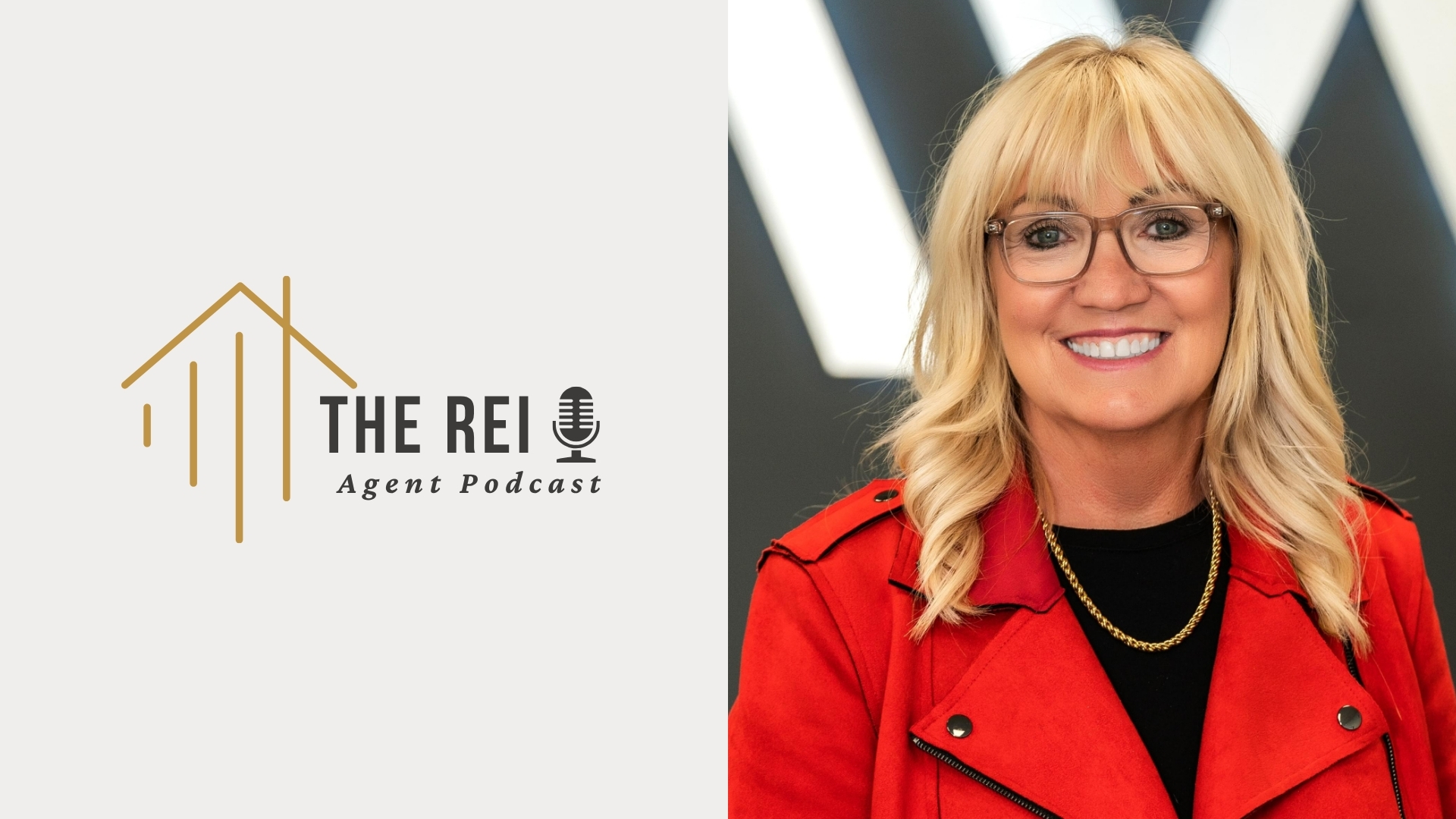
In this powerful episode of The REI Agent Podcast, Mattias Clymer sat down with Linda McKissack to talk about money, courage, investing, buy-and-hold wealth, and the kind of personal growth that only happens when a person is stretched beyond what feels comfortable.
Linda’s story begins with a massive financial setback. Her husband had to sell a business for far less than what was owed against it, leaving them with a staggering debt problem and very few clear answers.
At the time, Linda had never made more than minimum wage. She was hard-working, but she did not yet know how she was supposed to help solve a problem that large.
“Sometimes the worst thing that happens to you in life can wind up being the best thing that happens to you in life.”
That one idea became the emotional center of the conversation. Linda did not present crisis as something anyone should desire.
She made it clear she would not want to go through that painful season again. But she also recognized that the pressure forced her to become someone new.
That is where the episode becomes more than a discussion about investing. It becomes a conversation about identity, courage, responsibility, and the decision to build a life that can withstand the unexpected.
Life Gave Linda A 10X Goal Before She Knew What 10X Meant
The 10-Foot Hole That Required A Bigger Jump
Linda described her family’s financial crisis as being pushed into a 10-foot hole while only being able to jump two feet high.
The old level of effort was not enough. The old thinking was not enough. The old version of herself was not enough.
That is when real estate became the vehicle. Her husband remembered a mentor telling him that real estate was the way to make money.
Linda joked that the mentor probably did not mean to get a wife and have her sell houses forever, but that comment sent them in a new direction.
Sales created the cash flow they needed in the beginning. Investing later created the long-term freedom they wanted. That distinction became one of the most important lessons in the episode.
“When you’re stretched and you’re forced to think how to do something, you’ll actually figure it out.”
Linda’s first year in sales was not glamorous. She made only $3,000 gross, and her husband joked that they were going in the wrong direction because it cost more to get started than she had earned.
But Linda kept learning, kept searching, and kept exposing herself to people who had already built what she needed to build.
That hunger for a solution led her and her husband to the book Cashflow Quadrant, which helped them see the real problem. Their income was coming from the employee and self-employed side of the quadrant.
If they wanted stability and wealth, they needed to move money toward assets, businesses, and investments that could work even when they were not working.
The First Deal Was Not Perfect, But It Was The Beginning
Finding A Partner When There Was No Money And No Credit
Linda found a property she believed could create a $15,000 profit, but there was one major problem. They had no money, damaged credit, and no obvious path to funding the deal.
Instead of stopping, Linda went looking for a person who could help. She woke up with the name of a builder on her mind and decided to ask him to partner with them. She offered to contribute her commission if he would help fix the property, and they would split the profits.
That first deal worked. They made exactly $15,000. Then, almost immediately, another property became available for exactly $15,000. Rather than spend the money, they rolled it into the next deal.
That decision became life-changing. The property later became a fourplex, and Linda shared that they still own it today. It pays more than her husband’s Social Security after decades of work.
“Life is a situation that forced us to think differently and learn different things.”
That moment captures the heart of the buy-and-hold message. One deal did not make them wealthy overnight. One decision did not remove every problem. But one brave move created momentum, and momentum changed the direction of their financial life.
The Freedom Number Changes Everything
Working Because One Wants To, Not Because One Has To
Mattias and Linda spent a meaningful part of the conversation discussing the central premise of Hold. For Linda, the goal is not simply to earn more commissions, flip more houses, or keep pushing forever. The goal is to build enough income from paid-off assets so a person can keep working by choice instead of necessity.
That idea becomes especially important for agents and self-employed professionals. A strong sales career can feel like freedom, but if the income stops when the work stops, then the person may not be as free as they think.
“At some point in your career, you want to be working because you want to, not because you have to.”
Linda called this the freedom number. It is the number a person needs in passive income so life feels different. When that number exists, options appear. Without it, even successful people can feel trapped.
She described conversations with top agents who have been in the business for 30 or 40 years. Many are successful on the outside but burned out on the inside. They do not want to quit because they care about their clients and their people, but they also do not feel free enough to stop.
That is the painful middle ground Linda wants agents to avoid.
Flipping Can Create Cash, But Holding Creates Options
The Difference Between Income And Wealth
Linda did not speak against flipping. In fact, she explained that she and her husband are doing more flips now because of their current stage of life. But she made a very clear distinction between flipping and holding.
Flipping can produce income. Holding can build wealth.
For agents, this distinction matters. Selling a house, flipping a house, and earning a commission can all produce money. But if that money does not get transferred into assets that stay, grow, and eventually pay the owner, then the cycle can keep repeating forever.
“They think flipping is building wealth just like holding is, and it’s not.”
Linda explained that when investors sell properties they bought 10 or 20 years ago, they often cannot replace those same deals today. The market keeps moving. Values change. Rents change. Opportunities change.
That is why she believes agents should do more and do it faster when good opportunities are available. The wave will not stay the same forever.
The Money Excuse Is Usually A Priority Problem
Driving It, Living In It, Wearing It, Eating It, Or Giving It Away
When Mattias asked how agents could allocate commissions toward building a buy-and-hold portfolio, Linda went straight to the most common objection. Most people say they do not have the money.
Her answer was sharp, simple, and memorable.
“You’re either driving it, living in it, wearing it, eating it, or someone else has it.”
Linda was not shaming anyone for having expenses. She was challenging the idea that there is no choice. When the goal becomes big enough, and the commitment becomes serious enough, people often begin to see resources they previously overlooked.
That is what happened to her. They had no money and no credit, but they found a partner. Later, they built bank relationships. Eventually, they used lines of credit and equity to buy opportunities when others were afraid.
Her point was not that every path is easy. Her point was that impossible often means the person has not yet found the right solution, the right person, or the right level of commitment.
“It’s not impossible. It’s just, there’s a solution and you’ve got to be committed enough to find it.”
Do Not Ask How, Ask Who
Following People Who Have Already Walked The Path
Linda and Mattias also discussed syndications, risk tolerance, and the importance of control. Linda shared that syndications were not the primary path for her family because control and leverage mattered deeply to them.
They had seen people lose everything in Texas during difficult economic seasons, and overleveraging was a common theme. Because of that, Linda and her husband developed certain principles they were not willing to violate.
Still, Linda did not dismiss strategies that worked for others. Instead, she offered a powerful filter for learning.
“Don’t sit around and ask yourself how, sit around and ask yourself who.”
That advice applies far beyond investing. If a person wants to do something successfully, Linda believes they should look for someone who has already done it, whose values align, whose risk tolerance makes sense, and whose family priorities match the life they want to build.
The right person can shorten the learning curve. The wrong person can pull someone into a strategy that looks good on paper but feels wrong in real life.
Buying When Everyone Else Is Afraid
How Preparation Creates Courage
Linda explained that during the 2008 and 2009 crash, her family was able to buy a significant number of properties. They were prepared with bank relationships, equity, and access to lines of credit. In Texas, foreclosure buyers needed cashier’s checks, so having capital ready mattered.
That preparation gave them the ability to move when fear was high.
Mattias noted that this goes against the grain. When everyone else is afraid of real estate, that may be the moment when prepared investors can act.
“You’ve got to almost be okay to go against the grain of what the rest of the world is telling you it’s okay to do.”
That kind of courage does not appear out of nowhere. It usually comes from education, experience, relationships, and a clear set of principles. Linda did not describe reckless risk. She described prepared action.
That is one of the most important differences in the episode. Courage is not carelessness. Courage is preparation meeting opportunity while others are frozen by fear.
Most People Do Not Need More Information
They Need A Bigger Future
One of the most powerful moments came when Linda offered her golden nuggets for listeners. She said most people do not need more information. That idea lands hard in a world where professionals can spend years reading, listening, watching, and learning without making the bigger move.
Linda’s belief is that people often need a future that is larger than their current comfort zone.
“Most people don’t need more information.”
“We just need to set a bigger future of ourself than our comfort zone feels good with.”
That statement cuts directly to the heart of personal growth. More information can help, but information alone does not transform a life. A bigger future forces new questions, new courage, new relationships, and new decisions.
Linda connected this to her own life and to the concept of 10X thinking. Looking backward, she noticed that her biggest leaps came during seasons when she was either forced into a 10X goal or chose one for herself.
Those were the moments that changed who she became.
Cash Flow Is Not Always Freedom
When Income Stops, The Truth Shows Up
Linda also made a critical distinction between cash flow and freedom. Many successful agents have strong cash flow, but if their income disappears the moment they stop working, then that cash flow may not be true freedom.
“Cash flow is not really freedom if your income stops when you stop working.”
That lesson is especially relevant for high-income professionals. A large income can hide a fragile life. A successful career can hide a lack of options. A busy calendar can hide the fact that the person cannot pause without financial consequences.
Linda’s answer is not to stop earning. Her answer is to direct earnings toward assets that create options later.
That is what makes the conversation so important for agents. Commissions are not just income. They can become seed money for freedom, but only if they are treated that way.
The Biggest Threat To High Performers Is Not Failure
It Is Comfortable Success
Linda’s next golden nugget may be the most emotionally confronting one in the episode. She said the biggest threat to high performers is not failure. It is unconscious complacency after success.
“The biggest threat to most high performers is not failure.”
“It’s unconscious complacency after we’ve had a success.”
That idea explains why many accomplished people eventually feel stuck. They worked hard, took risks, learned new skills, and became a new version of themselves. Then, after reaching that new level, they stayed there too long.
Linda said that is often when people start using words like stuck and burned out. They are not always failing. Sometimes they are simply riding the success of a previous version of themselves.
Her challenge is to ask a new question.
“Who would I like to become now?”
That question reframes achievement. It is not about greed. It is not about proving worth. It is about growth, purpose, contribution, and becoming all one is capable of becoming.
Life Is About Becoming
The Freedom To Keep Growing
Linda shared a deeply personal lesson from Gary Keller, who told her that life is about becoming. The way people become all they can become is by going out into the world and discovering what else they can achieve.
That idea gave Linda freedom. She had wrestled with her own desire to achieve because sometimes people in a person’s life can make ambition feel wrong. But that conversation helped her see growth differently.
“Life is about becoming.”
Linda explained that the rewards, accomplishments, and money are not the deepest prize. The deeper prize is who a person becomes through trying, failing, learning, succeeding, and trying again.
That lesson became even more personal when her mother passed away and shared regrets near the end of her life. Linda did not want to reach the end of her own life wondering what could have happened if she had lived more truthfully.
She referenced The Five Regrets of the Dying and the regret of not living a life true to oneself, but instead living the life others expected. For Linda, that warning is powerful. A person can either design who they are becoming, or allow other people, fear, comfort, and expectations to design it for them.
Comfort Can Become A Trap
The Cost Of Wanting Everything To Be Easy
Mattias and Linda explored how modern life often sells comfort as the ultimate goal. Easier homes, easier cars, easier food, easier routines, and easier everything. Comfort is not inherently wrong, but when comfort becomes the main goal, growth can disappear.
Linda said some of the unhappiest people she speaks with are often in the most comfortable situations. They are no longer striving toward a bigger future. They are no longer becoming. They are comfortable, but not alive in the way they once were.
“You don’t really see a lot of unhappy people when they’re striving for something.”
That statement carries a deep truth. When people are working toward something meaningful, they may be tired, challenged, and stretched, but they are also engaged. They are building. They are becoming.
Linda also challenged the fear that 10X growth means simply doing more work. In her view, 2X is often where the grind lives. 10X requires different thinking, different leverage, and different people.
“If you really 10X, it’s not more work. It’s the 2X that’s all the work.”
That is an important message for burned-out agents and entrepreneurs. The next level is not always more hours. It may require better leverage, better systems, stronger relationships, and a bigger vision.
Sacrifice Still Matters
Living Differently To Build A Different Future
Mattias shared how he and Erica paid off debt with intense discipline. Their budget was strict, and not everyone around them understood the sacrifices. Yet they look back on that season as one of the happiest times in their marriage because they were united around a meaningful goal.
Linda connected that to a Dave Ramsey idea about living like no one else so someday a person can live like no one else.
The message was not that sacrifice is easy. The message was that sacrifice can be meaningful when it is connected to a bigger future.
“Sometimes that means sacrifices, and the world just doesn’t want to hear sacrifices right now.”
Linda described health, wealth, family, and spirituality as big rocks and glass balls. They cannot be ignored forever without consequences. If a person is not growing in the areas that matter, life eventually exposes the gap.
That is why freedom must be built intentionally. It rarely arrives by accident.
The Books That Shaped The Conversation
Leverage, Progress, And The Right Kind Of Growth
Near the end of the episode, Mattias asked Linda about books that have shaped her thinking. Linda laughed because she loves books and had more than one answer.
She mentioned 10X Is Easier Than 2X, Who Not How, Cashflow Quadrant, and The Gap and the Gain. Each one connects to a different part of her message.
10X Is Easier Than 2X challenges people to stop assuming that bigger goals require more grind. Who Not How reinforces the power of leverage through people. Cashflow Quadrant helped Linda and her husband understand the difference between earned income and asset-based wealth. The Gap and the Gain helped her see the importance of measuring progress by looking backward at what has already been accomplished.
“We don’t tend to look back at our progress enough to find a rhythm and a system that got us to where we are.”
That final point is powerful for entrepreneurs. Many driven people rush from one goal to the next so quickly that they never fully learn from what worked. They forget to harvest the lessons of the success they already created.
Build The Life Before The Sudden Moment Comes
The Lesson Linda Leaves Behind
Linda McKissack’s episode is not just about houses, commissions, lines of credit, or investment strategy. It is about preparing before life demands preparation. It is about turning income into options. It is about refusing to let comfort, fear, or past success quietly decide the future.
Her story proves that people do not need perfect timing, perfect circumstances, or perfect confidence to begin. Linda began with fear, debt, limited experience, and a question she did not know how to answer. But she moved anyway. She found people. She learned. She invested. She held. She became.
“The only way you’re going to grow is to go out there and try stuff that you don’t know how to do and fail.”
For agents, investors, and entrepreneurs, the episode offers a clear challenge. The goal is not just to earn more this year. The goal is to build a life where work becomes a choice, growth remains alive, and future freedom is not left to chance.
Linda’s message is both practical and deeply human. Buy the asset. Build the relationship. Know the freedom number. Avoid overleveraging. Ask who, not how. Set the bigger future. And never confuse comfort with becoming.
Because at some point, life will bring gradual changes and sudden moments. The question is whether a person will be prepared when they arrive.
Transcript
[Mattias]
Welcome back to the REI Agent. My guest today is Linda McKissack, a Keller Williams agent, leader, and co-author of Hold alongside Jay Papasan as part of the Million Dollar Millionaire Book Series that Gary Keller and Jay have written, which is widely considered the definitive guide for real estate agents who want to build and buy a buy and hold investment portfolio alongside their sales career. Linda was featured in 10X is Greater than 2X as well.
She has lived the strategy herself, growing her own portfolio while running a top-producing real estate business, and she has helped countless of agents understand what that commissions they earn are not just income, but seed money for long-term wealth. We built this entire show around this idea, so Linda, you’re a perfect guest. I’m super excited to talk to you more about this.
Welcome to the REI Agent Podcast.
[Linda McKissack]
Thank you, thanks for having me.
[Mattias]
So let’s start, I guess, with kind of how you got into real estate, what made you want to be a real estate sales agent, and did you start with selling, or did you start with investing?
[Linda McKissack]
Yeah, great question. Well, actually, I always like to say that sometimes the worst thing that happens to you in life can wind up being the best thing that happens to you in life. And how I got into real estate sales, and then very quickly into investing was, I always say in life, you’re either given a 10X goal by life, or you can use, learn to use 10X goals as a strategy for life, right?
And so in this particular case, I always like to say, it’s kind of like getting pushed into a 10-foot hole, and you’re only jumping two feet high to get out. It won’t work, right? We were given a 10X goal of, all of a sudden, my husband had to sell a business that he had just started the year before, which was a restaurant and nightclub, kind of like a mini Dave & Buster’s, if people have those in their area.
And we had to sell it because the economy and taxes crashed, worst crash they’ve ever had before or since. And we had to sell that business for $600,000 less than we owed against it. Literally, we went overnight to getting rid of anything we could get rid of, to downsize, to figure out how to pay that money back, to be honest, because neither one of us had any idea how we were gonna pay that off or what to do.
But I always say, again, when you’re stretched and you’re forced to think how to do something, you’ll actually figure it out, right? So in the conversations, Jimmy said, my husband said, Linda, I need your help. And I had never made more than minimum wage.
So to be honest with you, I had no idea. Now, I’m a hard worker. I would always have at least two jobs.
And the most money I’d ever make is if I bartended or waitressed at one of his nightclubs because you can always get tips. So to be honest with you, I always say there was a lot of anger in our home at that time because under anger is fear, you know? And I was afraid because I didn’t know how to go, you know, make that kind of money.
And he was afraid because he had never been in that kind of situation or had something like that happen to him. I now call those gradually and suddenlies. It’s where we’re not paying attention to something in life and all of a sudden, gradually, then suddenly, then suddenly is when we actually wake up to the situation.
And so when he said, I need your help, I need you to go to work and help me, I didn’t know what to do. I said, you know, I’m a hard worker, but what in the world am I gonna do to make that kind of money? I mean, at that point, I’m in my mid-20s.
I don’t even know what the word economy means, much less is it a good one or a bad one? I mean, literally. And he said, you know, a mentor of mine told me a long time ago, if you wanna make a lot of money, real estate’s the way to do it.
Now, this was a mentor. His dad was never around. So this mentor would come pick him up and take him to his football practices.
And somewhere in there, probably in my husband’s 10-year-old or 12-year-old brain, he registered real estate as a way to get rich. I tease him today and say, I don’t think he meant get a wife and get her to sell real estate, y’all. I think he meant buy some, build some, develop some, you know, more along those lines.
But the truth is real estate sales was a perfect vehicle to create cash flow. And that’s exactly what we needed at that moment. And so I always like to say, I didn’t start off fantastic, I only made $3,000 gross.
Jimmy said, this is super gross. He said, I think I spent 15 for you to make three. We’re going the wrong direction.
But to be honest with you, Mattias, back then there was no education or training or podcast or anything you could listen to that would help leverage you to know how to do anything, sales or investing or anything. But very quickly, an affiliate paid for me to go to a seminar. And at that seminar, I realized, okay, this is possible.
There are people out here who are making the kind of money we need to make. I just need to figure out what they do and then go do it. But once I started in real estate sales, we read a book called Cashflow Quadrant because when you’re in that kind of pain, you start looking for people or books or anything to help you relieve that pain.
And so one of the best books we found was Cashflow Quadrant because in it, it showed us exactly what our problem was. Our problem was we were like the rest of America, Americans, we had our income coming from the left side of the quadrant, meaning we were either an employee or self-employed. And because he was in the restaurant nightclub business and I’m in real estate sales, we’re both in the self-employed category.
And that if we ever wanted to be wealthy and not have as much pain when those kinds of things happen to you going forward, we needed to get as much of our money over from the right side and figure out how to do that, right? And at that moment, we had zero on the right side. We were actually negative on the left side.
So because again, I say you’re either, life’s gonna give you a 10X goal that you’re forced to figure out and it’s gonna take courage because you don’t know how you’re gonna do it or you could learn to use this as a strategy to just build the biggest life possible. And so I went out and found a property pretty quickly and came home and told Jimmy, I’m excited, found this house. I think we can, back then this was a lot of money, but I think today it wouldn’t be that much, but we could sell it for $15,000 if we fix it up and sell it.
And 15,000 was a lot to us at that moment, right? Anything would do. And he said, that’s fine, Linda, but there’s no way we can go to the bank and borrow any money because we owe all this money and we don’t have any money.
And so I went to sleep that night. I always tell my people in my challenge group, there’s some place, and for me, I’m a God-fearing person. So I feel like God kind of gives me my answers in certain places, sleep, running, out in nature, those kinds of places when I’m quiet and still, which is very seldom.
And so I went to sleep that night and when I woke up the next morning, one of my builder’s names was on my brain. And I said to my husband, I said, I’m going to go ask Lew Kraft if he will buy this house with me. He was in construction.
I told him all I have is my commission, but I’ll throw my commission in if you’ll fix it up and we’ll split the profits. And so the very day that we split the profits on that house and it was exactly 15,000, an RTC property, which was the Resolution Trust Corporation who foreclosed on commercial properties back then, had a property come up for $15,000 exactly over by the college. And so we drug Lew out there and said, look, let’s don’t spend this money.
Let’s put it in and buy this house. And so while he was out there looking at it, he said, I think I can turn this into a fourplex. And so, Mattias, we laugh today because we still own that particular house and it pays us more than Jimmy’s Social Security for working for 40 years or 50 years, whatever he’s worked.
But we did one more house with Lew and we flipped the first one. So obviously we only had two left to hold. And when we did that, we asked, when we got ready to split up our partnership and we had established credit again, we just said, which of the houses would you like?
Because we wouldn’t even be here if you hadn’t done what you’d done for us. So we let him pick the house he wanted. We kept the other one and still have that house today.
So that’s kind of how we got into both. You know, life is a situation that forced us to think differently and learn different things. And I always say, again, it was the greatest thing that ever happened to us, but I wouldn’t want to go through it again.
[Mattias]
Linda, we have a lot of parallels here. So I’m in the final processes of the book and maybe I just like somehow subconsciously read yours and just wrote it. I referenced the Cashflow Quadrant.
No, I think, you know, the Cashflow Quadrant is great because I think a lot of agents kind of get to a point where they feel like they’ve made it, right? Like getting from employed to self-employed is a big thing. But then I think a lot of times, especially agents are really stuck there because you can take your business and make it, I’m sorry, you can take your self-employed thing you do and make it more of into a business, right?
You can get it over to the other quadrant. For the most part though, you are just kind of a slave. You don’t have a boss.
You have whatever, 70 bosses, whatever, how many people you are working with that year. And it is definitely not leveraging other people. It’s definitely all on you.
You have to wear all the hats, et cetera. And then about the, you know, putting yourself into a hole or whatever. Like, so when my wife and I got married, we actually, on the honeymoon, on the flight back from the honeymoon, I was like, all right, let’s add up all our debt.
[Linda McKissack]
Oh boy. I’m glad it was after the honeymoon.
[Mattias]
Yeah, right? She wouldn’t let me see her student loans until after we tied the knot. But we were 120 in the hole, which is not near as bad as 600,000.
But we were, you know, making like $70,000 collectively probably at the time. We just bought a house and we were determined to try to just get that monkey off our back as fast as possible. And that’s actually why I got my real estate license.
I was looking for a side hustle and also kind of had that itch to be an entrepreneur, to be out, being my own boss, that kind of thing. So, and then that house turned into our first rental. But, you know, there is the ideal, you know, situation for, I think any agent is if you can build your business up or you can build up your, you know, the other side of that column to a point where it covers all your expenses.
And then you can be so much less worried, like, you know, market swings, you know, just your general business being up and down, like from, you know, for whatever reason, you can just be a lot more comfortable in that situation. Because I think to your point, like, you know, there can be a lot of conflict. There can be a lot of, once you are the, if you’re the main income of a house and it’s a hard time, it’s a rough season, a rough patch, that causes stress.
And that, like you said, can come from fear. And if you have all your expenses covered from having that other side of the quadrant, you know, it’s a great place to be.
[Linda McKissack]
Yeah, so true, absolutely.
[Mattias]
Yeah, so the premise of Pold is that real estate agents have a unique advantages as investors. Can you walk us through that thesis and share how your own portfolio grew alongside your sales career? So you told us about the beginning.
And then what do you wish you had known earlier in that journey?
[Linda McKissack]
Yeah, honestly, I just wish I had known earlier that there’s momentum for everything. And we think we have enough time for everything. In other words, we sometimes don’t feel like we should hurry.
When I feel like when someone says to me, what’s the one thing or two things you would do differently if you had everything to do over again? I would always say more of and quicker. And so I think we tend to not understand how quick time goes, right?
And so our premise of Hold is at some point in your career, you want to be working because you want to, not because you have to. And the only way to do that is to have cashflow coming in. And the only way to have cashflow coming in and properties paid off and all of those things is to buy and hold, right?
And to me, that is what we call your freedom number. That is the number you need to get to because you are working because you want to because everything feels differently. I mean, I just did a call with a group of very, very successful top agents.
And this is one of many calls I do because someone will either hear how I had someone run my business for 20 years in the real estate business and then sold it to them. And they get to a place after 30 or 40 years in the business and they’re stuck. They’re burnout, but they’re committed to the people.
They’re committed to the business. They don’t want to keep going and they don’t want to quit. It’s just a really catch 22.
And so I always say, if you prepared for what does that number need to be so that I’m always working because I want to, not because I have to, then I have options. But when there’s no options, nothing feels worse when you feel like there’s just no options. And so the premise of Hold is get enough income coming in from paid off property someday that you’re working because you want to.
And you’re prepared for what I like to call last graduallys and suddenlys. And if you, there’s not a person exempt from these. You know, I teach it.
And we had one last year that we weren’t expecting. So now the good news is no one feels sorry for me because we were way better off. You know what I mean?
We’re going to be fine. But the truth is at some graduallys and suddenlys you’re not fine. Like yours that happened in my, the one that happened to us we were not prepared.
And we had not done any of these things yet. So I just think that they really, everybody needs to understand is work on your Hold portfolio. It’s okay to flip along the way.
And I think one of your questions that you ask is what’s a mistake I see agents make and in their investing, if they’re investing, one is they’re not investing, but if they are investing they think flipping is building wealth just like holding is and it’s not. It’s no different than if you go sell a house. And so I will see them build up their portfolio.
And for some reason they start selling them. And I ask, you know, I usually ask this question can you replace the deal you bought 10 years ago or 20 years ago today? The same, can you?
No, they’re never the same. Things keep going forward. And so I think that’s why I always say do more and do faster because there’s certain things in life that you know, you got to ride the wave and the wave is always changing.
And so if you’ve got a good one, you know, do it, you know, buy the houses at that moment and hang on to them. Don’t keep flipping them because that’s no different than you selling another house.
[Mattias]
Yeah, like I often say, you know, the best time to plant a tree was 10 years ago. The next best time is today. And that’s true for houses.
[Linda McKissack]
Yes, it’s true for everything pretty much.
[Mattias]
Yeah, no, it’s, and then, you know, if you need the beauty of real estate too is, you know, like if you need the capital, if you need, if you do want it for something else, I mean, you can do a cash out refinance that’s tax free.
[Linda McKissack]
Yeah, and you know, it depends on what stage you’re in. Also the stage Jim and I are in right now, we don’t want to buy things that we got to hold for 20 or 30 years to be paid off. We’re looking for flips.
We’re buying, we’re doing more flips now than we have ever because now is the stage of life where, okay, that’s going to give us more cashflow. We want that. I don’t want to wait another 20 years to pay things off and do all that.
So depending on where you are in life, and especially, you know, the younger you start, the better advantage you have, you can stretch out the loans longer, you know, where we had to do, because we started when Jimmy was 39, about to be 40, when we bought our first house. And we wanted a certain number coming in passively to us by the time he was 60. So that meant we had to put them on a shorter payout, which meant we had to find better deals.
They had to cashflow at least 150 to $200 a month because we were already in our peak earning years. We didn’t need to live off that money. We just needed to, you know, have it there for taxes and different things like that.
So that’s a different strategy than if you can start young enough and we teach our kids, put them on 30 years. And if you want to pay them off early, either biweekly payments or paying an extra principal, you know, whatever. There’s many, like you said, many strategies to do that.
[Mattias]
Well, yeah, and if you’re thinking about it long-term, I mean, like it’s, I think it gets sold. Like a lot of times the passive income, the investing in real estate and rentals, all that stuff kind of gets sold as this, like, you know, you’re going to be getting rich quick or you’re going to, you know, like be financially free, like really fast. And, I mean, you have to think about it long-term because like it is, it can be challenging to have a super awesome cashflow and property from day one.
And then you’re going to have to have things replaced. You know, you get, have an HVAC go out and that’s eats up a lot of cashflow for a few years. So it’s really that long-term mindset that’s important, but it is so important.
I mean, we are self-employed people. We don’t really have, you know, retirement funds, like retirement accounts. You don’t want to be working at 70 or whatever just because you have to, you know, like if you love this business so much, that’s great.
I’m so happy for you that you still want to do it, but like you don’t want to be in a position where you have to.
[Linda McKissack]
Well, and a lot of times, Mattias, they’re doing it because they have to for whatever reason, either their ego or they feel stuck and can’t do it or they need the money. But it’s always at that stage in life, what I’m seeing is it’s a sacrifice of something else they’d rather be doing. Like their spouse would rather than be in Florida with them or their grandkids, they’d rather see their grandkids more.
I mean, so I am definitely seeing sacrifices. I’m seeing the cost of it, you know, and that’s what’s hard to watch.
[Mattias]
Absolutely, what is the hold formula? Can you walk us through how like, you know, if an agent is closing around 30 homes a year, how could they allocate some of their commissions towards building a buy and hold portfolio without sacrificing the business they already have?
[Linda McKissack]
Yeah, well, I always say usually money is the number one reason people give that they can’t do it. You know, they don’t have the money to do it. And I always say you’re either driving it, living in it, wearing it, eating it, or someone else has it.
And so pick one of those or whatever, because I think when the goal is big enough and you’re committed enough, the answer is there. It is, it’s there somewhere. Just like I woke up, I wanted us to start doing what the book told us we needed to do.
And I wanted it bad enough to think about it constantly and to come up with a solution that I didn’t have before. It seemed impossible. But to me, it’s having that impossible goal and dream that forces you to go to work.
And our brains are pretty amazing things. And then, you know, I just feel like we can figure it out, but if we don’t ever even challenge ourself with it and be committed enough to it, then sure, it’ll seem impossible and we just won’t ever do it. But I would say mainly figure out how to get started, you know, and I also say that it should be a priority as much as your sales, because it’s kind of like your health.
One of these days, the gradually and suddenly is gonna catch up with you and you’re gonna wish it was right on your goal sheet, right at the top of more houses sold, you know? So number one, I think the time is there. You just gotta allocate it to it and you’ve gotta make a, you know, a freedom number.
What’s your freedom number? And then start saying how many houses would I have to have free and clear to get me that number passively? And then, because I think something magical kind of happens to Mattias once we decide, you know, and we’re committed to big goals like that, we start to see opportunities we couldn’t see before.
And I truly believe that. And so I think the answers are there. They just have to be committed enough to work through it and figure out where could I get that money and where could I get the time?
And they have both of them because the one common denominator is God only gave us 24 hours. He didn’t give you 48 and me 24. So if anybody’s doing it, you can do it too.
And, you know, that’s why I always tell the story about finding a partner, because our deal seemed impossible. No credit, no money. You know, most people say, well, that’s impossible.
But it’s not impossible. It’s just, you know, there’s a solution and you gotta be committed enough to find it.
[Mattias]
Yeah, and you mentioned, you know, like basically lifestyle too. I mean, that’s such a huge factor because like if you, yeah, I think the stereotype of agents too can be like that they feel like they have to go out and lease like a Porsche or something so that they look successful. And, you know, if you’re like needing to have this lifestyle, whether or not it’s to show other people just because you like things like Rolexes or whatever, you’re making your lifestyle more expensive.
Your money is going towards these things instead of building up that passive income. And I think if you can possibly build up that passive income to allow yourself to, you know, increase your lifestyle, that’s the way that you really build wealth and sustainably, right? If you’re young enough or flexible enough or just committed enough, really, I mean, house hacking is the perfect way to just get started.
I mean, you don’t have to have money. You have to have a place to live. Turn it into a rental.
Even if you just, even if you don’t even rent it out, like just buy a house that’s a good rental, live in it until you’re ready to buy the next one. And then move and keep it.
[Linda McKissack]
Yep, that definitely works.
[Mattias]
So, yeah, I mean, so have you looked into syndications at all? Do you think that the syndications could be another option for agents that maybe don’t wanna actually manage? Maybe that, you know, like they don’t wanna have the headaches of owning rental property?
[Linda McKissack]
I know that’s a great strategy that a lot of people use. It’s not one for us. There’s a couple of things that were super important for us.
One was not being over leveraged because in the 80s and 90s in Texas, when everybody lost everything, the common theme was they were over leveraged in everything. So there’s a couple of factors that we knew going forward, no matter what we do would be crucial and we just wouldn’t violate those and being over leveraged is one of them. And then the other one is not being in control, you know, because, you know, I think it’s Warren Buffett says, invest what you know and understand and can somewhat control.
And so that’s always been key to us is to be in control a little bit more. So that’s why we haven’t really done anything like that. So I’m sure there are people are, and if it’s something someone’s interested in, I always say, don’t sit around and ask yourself how, sit around and ask yourself who, who’s done this successfully that I admire, that I could be them.
In other words, they have the same risk tolerance I do, you know, they keep their family first. I mean, there’s certain things that if I’m gonna look for someone to follow or learn from that are key pieces, I wanna make sure are there. But if they’re there, there’s always somebody who’s done what it is you wanna do.
And I say, find that person, you know, and follow their plan, do what they tell you to do because they’ve been on that journey that you’re trying to go on.
[Mattias]
Well, I think it can be a tool for sure, but it shouldn’t be like, I mean, it’s not, they’re typically, you know, five-year plans or so, depending. So often you’re getting your money back, provided that everything goes as planned, which obviously that doesn’t always happen, but so they’re not, it’s not quite the same as owning, you know, a rental for 30 years or whatever. It is gonna be different than that, but, and often you can’t really get into them until you have a net worth of a million dollars outside of your primary residence, or you’re earning enough money.
And it’s, which can be a good goal or a good reason if you wanna do that to build up that rental portfolio first, and then use that as your, yeah, your base to try some of those things out when, you know, hopefully they work out and to your point, yeah, you don’t have control. It’s the beauty and the curse of it.
[Linda McKissack]
Yeah, that’s true, that’s true. But I’m sure if it’s working for somebody, it could work for you, just investigate and explore and then make a decision.
[Mattias]
Well, and to your point about like the Warren Buffett idea is, you know, if you’re putting your money into the stock market, like you probably don’t know the businesses. Like Warren Buffett reads all day, right? I mean, he’s reading in detail about these businesses.
You’re not doing that. But as an agent, you probably understand real estate, right? So you can understand some of the fundamentals to a deal that might be a little bit more complex or, you know, and there’s many ways like joint venture, like what you’re talking about too is another thing that’s, you know, a great way to start.
If you don’t have all the capital you need or if you want somebody to help take on a project, like if you’re not familiar with flipping, for example. Did you ever do to accelerate your growth, did you ever use like equity lines on the properties you owned?
[Linda McKissack]
Yeah, we have done that. You know, one thing you just said to remind me, part of what Kiyosaki teaches you is there’s only so many ways to build wealth, which I’m a simple person. So if it’s too complicated, I probably will freeze and won’t do it.
But, you know, at the time we really understood is it’s either stocks, real estate, or owning businesses. And for us, we’d already been burnt from a business. So we needed to give ourself a little bit of a break before we went back into businesses.
But real estate was something we felt confident, a little more confident in, and we felt like we understood better. So that’s why we picked those. But the equity line, yes, we have done that.
So we started out with a builder as a partner because we didn’t have any money. And then we went and got lines of credit at the bank because, well, we just borrowed the money from the bank. We got really lucky in that a community bank president, as he was moving up the ranks, was our neighbor.
And so we got to know him. He knew our reputation in real estate sales. He was building his career.
He saw us building ours. I think we even did an interview with him one time on one of our podcasts. But, you know, local community banks are great because they like real estate and they like local real estate.
So we started with him, built a relationship. And then when the 2008, 2009 crash happened, there were tons of foreclosures. And in Texas, you got to take cashier’s checks to the foreclosure steps.
You can’t, you know, get the money later. So what we did is we took some of the properties that we’d had paid down by then and put up the equity as collateral and just kept a half a million dollars worth of line of credit at all times so that we could just go to the foreclosure sale. We bought a bunch of properties during that time.
We probably built the most of our portfolio during that time.
[Mattias]
That makes sense. What a great time to do that. I mean, it does go against the grain because I’m sure everybody was just incredibly fearful about real estate at the time.
So, like, you have to kind of understand that as well. That’s the time to be greedy is when everybody else is afraid.
[Linda McKissack]
Yeah, honestly, I can’t even remember who said it, if it was Warren Buffett or somebody. It’s, you know, most really smart people, money-wise, buy when other people feel like they should be selling and they sell when other people feel like they should be buying. And so I think you got to almost be okay to go against the grain of what the rest of the world is telling you it’s okay to do.
[Mattias]
Yeah, well, what you just outlined, I mean, is exactly, I mean, what we did as well. I mean, we had our first house that we were, we put it on a 15 at the time. I don’t know if I would have done that again, if I would start over, but we were brainwashing ourselves with Dave Ramsey at the time to get that debt down.
And we were very hyper-focused on that. And that was helpful. I’m not gonna diss Dave Ramsey, but I think now, a 30-year would make more sense because we were 24 or whatever.
But anyway, so, but we were able to, when we moved into our new house, we were able to get a couple of lines of credit for both properties. And if you’re able to move again, like buy, keep, move, rinse and repeat, you’re gonna start building up equity. That’s gonna be able to, like you can get like one line of credit that’s over multiple properties if you want, or you can get a line of credit before you move out of each property because you get better terms if it’s a primary residency and then you don’t have to close it when you move.
But all that will start amounting to you getting dangerous when you can go buy a property in cash, right? At a foreclosure or whatever, just wholesaler, whatever it is. I mean, that’s often needed to get deals done.
And so that’s an awesome way to do a flip if you don’t wanna hold the property depending on where it’s at, et cetera. But definitely for the BRRRR method, like to be able to rehab it, refinance it, get the money back out, keep it as a rental. And then you have this like freshly renovated rental that performs probably better because it’s freshly renovated and you don’t have any actual capital in it that you put in.
It’s a beautiful thing. Linda, do you have some golden nuggets for our listeners?
[Linda McKissack]
I do, I do. I loved this question, by the way. I think it’s a great question.
One of the things that I always think of is most people don’t need more information, which we all are information seekers. We just need to set a bigger future of ourself than our comfort zone feels good with. In other words, when I went back, because I was featured in the 10X is easier than 2X, I had to actually go back in my life and progress is only seen looking backwards.
It’s hard to see progress otherwise and we don’t look backwards very much. And so what I realized is the big leaps and jumps I had in my life were places, times that I was either forced to have big 10X ideas and goals or I chose them for myself, right? And so I think it’s not really more information that we need.
It’s a future that’s bigger than our comfort zone is. If we can imagine our future self as something we’re not right now that’s bigger than we can even imagine and it’s gonna take courage and things we don’t know yet to get there. To me, that’s the answer to everything.
And we just don’t do that enough. And then the second one is cashflow is not freedom.
[Mattias]
I just wanted to say this. That was really well put.
[Linda McKissack]
Okay, thanks.
[Mattias]
I really liked that. Thank you. Sorry, go ahead.
[Linda McKissack]
And then cashflow is not really freedom if your income stops when you stop working. And I think people get confused about cashflow and wealth being two different things. And then my last one is the biggest threat to most high performers is not failure.
It’s unconscious complacency after we’ve had a success. In other words, everybody’s had success. That’s how you got where you are, right?
But a lot of times we will spend a lot of time after we do something like that. Cause usually it takes courage to do that. It takes getting out of our comfort zone, learning things we don’t know.
And then we get a whole new level of confidence and we get a whole new future self, right? We’re someone different. But the problem is we sit there too long.
And that’s where I think people start saying things like I feel stuck, I feel burnt out. And what we’re riding is that success that we’ve already had what we really should be doing is going out and setting a bigger goal or seeing ourselves as a bigger person than we are now, right? And now what do we have to do to get to be that person?
Right? And I think we sit in complacency and in our comfort of our past success way too long. It’s okay to sit there a little bit but what we really should do is immediately go back out and say, who would I like to become now?
One of my mentors, Gary Keller, who when you got to the KW early enough and you were a top producer, which I was the number one agent in the company, he was coaching me personally. And I remember asking him one day, I really am struggling because I have a natural tendency to want to achieve. But sometimes people in your life want you to feel bad about that.
And then, and you’re not sure why you’re that way, you’re just that way. But I truly think Mattias, everybody’s wired that way. I just don’t know whether some people to squash it down and don’t know what to do with it.
But then on the other flip side, my job was recruiting people to a bigger opportunity and I was struggling because they didn’t seem to want more. So I’m like in this conflicted place of, I want more and I want to achieve, but I have to feel bad about it because people in my life think I should be not like that, right? Right.
So, and he gave me something that was so freeing to me and it’s so true. And this is where they always say the joy, real joy is in the journey. And I think this ties into that.
He said, you know what, Linda, life is about becoming. And the way that you become, all that you can become is you go out in the world and you see what else it is you can achieve. Sports teams don’t win one Superbowl and go back to the gym and field house and do nothing.
They go back and train and prepare and see who else they can become. And that was such a freeing moment for me because I don’t want to get to the end of my life and maybe could have become someone else or more or different or you know what I mean? And so when I really thought about that, I thought really you could take every accomplishment I’ve had, all the money, all the rewards, but who I’ve become from going out there and trying and failing and succeeding that’s priceless.
And so, and along about this time, my mother passed away and she had these major regrets in her life. And she called all of us kids together to tell us, you know, that what her major regret was. And I just remember thinking, I don’t want to get to the end and have regrets, especially in the major key areas of my life.
And if you read Bonnie Ware’s book, The Five Regrets of the Dying, the number one regret that she said people had on their deathbed was not living a life that was true to themselves, but living a life that was expected of them by others. And to me, that’s someone else that’s letting the world or somebody else design who they’re supposed to become. And so I think when we change our, the way we look at achieving is not a bad thing and not as a greedy thing or not as a thing that we shouldn’t want.
I think we’re wired that way. I think we’re wired for growth. And the only way you’re gonna grow is to go out there and try stuff that you don’t know how to do and fail.
You know, that’s, unfortunately, that’s it.
[Mattias]
You know, Linda, I think we’re like sold this idea that comfort is what we want in everything. I mean, like, this is like every, all the products that, you know, we’re being sold to is gonna make our lives easier. We’re coming from air conditioned homes to our, you know, our heated garages or whatever, and then go into our air conditioned cars.
And that’s all great and stuff, but I feel like if we don’t impose, we have to artificially impose hardship on ourselves. And that is where we actually get true happiness from. Like that’s where we feel achieved.
We need the struggle. We grew, like, I mean, you know, however you believe we came about, like there was times where, you know, it wasn’t easy just to get a meal. It wasn’t, you couldn’t go to a drive-through and get a hamburger super easily.
Like we had to struggle for things and we had to face, you know, extreme temperatures. We had to exert ourselves physically. And I think our brains are wired, our function better, we’re happier.
We don’t need medicine to make ourselves happy if we are out there achieving things. And I think that is business. I think that’s pushing yourself out of your comfort zone.
I think that’s exercise. It can be all those things. I 100% agree with you.
And I love the angle of it too, of like, you know, what was it again? Like what were we becoming?
[Linda McKissack]
Yeah, you know, life is about becoming. All that you can become. And the only way you’re gonna know what that is and achieve that is to go out in the world and see what all it is you can achieve, right?
And, you know, as I think about that, as I reflect on what you were just saying, I see more people and I take more calls from realtors who are unhappiest in the most comfortable situations. You don’t really see a lot of unhappy people when they’re striving for something, when they want a bigger future or they wanna become someone that they’re not and they’re trying to figure that out. They don’t really have time to focus on being unhappy.
They’re busy, right? Trying to figure this stuff out. And, you know, the courage it takes, keeps the adrenaline and all the cool stuff actually flowing while we’re trying to figure that stuff out.
And I think, you know, you’re right. I like comfort too. Trust me, I like that.
My gym is over here and my stretch lab is here. You know, I like all those things, but the truth is that’s not how my life got to a place where I have the freedoms that I have. You know, I get to have the experiences I wanna have.
I can help people who can’t help themselves because I’ve thought ahead or I’ve planned a little bit better than they were able to, or maybe I was given some gifts or blessings that someone else wasn’t. I couldn’t do that if I hadn’t gone out there and seen what else I could achieve or if I’d had some kind of limit that I let someone else self-impose on me because of whatever, wherever these beliefs come from. And we all have them.
And part of, I have a group in my challenge, in my community right now, my 10X community right now. And, you know, part of what we work on is understanding there’s naysayers in your life and there’s noise and the noise comes from within on, you know, why do you want more? And here’s the thing, I think we always compute more to more work and that’s what we have to change immediately.
If you really 10X, it’s not more work. It’s the 2X that’s all the work. And so because we’ve 2X so many times and I think, God, I don’t wanna do that again.
That’s horrible, right? We think 10Xing is more of the 2Xing and it’s absolutely not. And so that’s what I love about trying to just change the way you think about stuff and say, what if I set really big impossible goals that forced me out of my comfort zone and just see what happens, right?
And I know I’m gonna have voices in my head that tell me I’m crazy for thinking it. I know I’m gonna have people in my life who think I’m crazy for trying it. You know, all those things.
But at the end of the day, I bet anybody who’s listening to this could go back a time in their life and they could find a time when they made such a big commitment that it scared them. And when it scared them, they immediately got to work to figure out how to get the credentials to solve it. And they became a whole new person afterwards.
But the question is how long and what is complacency and comfort actually costing us?
[Mattias]
Yeah, you know, we could probably talk about this for a long time, but when we, Erica and I were paying off our debt, we had a lot of people that were, I mean, Erica lost like her whole friend group, honestly, that just didn’t understand what we’re doing and thought it was like, they wouldn’t meet her halfway, that kind of stuff. Like we were just not spending money. We were, you know, we had a, what was it, $150 a month in groceries and like $30 a month in eating out.
I mean, we were really strict and really disciplined. And to everybody in the outside, it was like, weren’t they crazy? Like, wow, you gotta enjoy your life.
Like, this is crazy. We paid it off in, I think like three years, but the point I’m making is that we look back at that time as one of the happiest we’ve been as a couple.
[Linda McKissack]
Yeah, no kidding, no kidding. And it’s like Dave Ramsey saying this, you have to live like no one else. So someday you can live like no one else, right?
And the world is, if you’re not growing in the areas that are important, health and wealth and family and spiritually, all those things, the rest of the world is passing you by. There will be a moment when you’re gonna be totally behind the rest of the world, right? Either financially, in your relationships, health-wide, all of those things, they’re big rocks.
They’re big glass balls in our life and we have to treat them as such. And sometimes that means sacrifices and the world just doesn’t wanna hear sacrifices right now. I want it all and I want it now.
I don’t wanna have to wait for anything. And that’s just a, that’s a big trap, I think.
[Mattias]
100%. Linda, do you have a favorite book, one that you think is fundamental that everybody should read or simply a favorite one now?
[Linda McKissack]
Gosh, I have so many books. I’m such a book nerd. I love books.
I definitely am gonna say 10X is easier than 2X because I think one of the things, especially knowing the real estate world like I do, one of the things that holds agents back from anything, going for anything bigger like focusing on wealth building or turning their business, real estate job more into a business where it’s actually, they’ve got leverage and freedom in their life. All is held back because they think it’s more of what they had to do of the grind to get them where they are and it’s just not true. So I would say definitely 10X easier than 2X, who not how, because it, you know, God only gave us 24 hours.
So you gotta figure out different forms of leverage. And I think the most powerful is who’s in your life. Of course, cashflow quadrant.
And then I love the gap and the gain. I love Dan Sullivan’s, all of his writings and Dr. Benjamin Hardy’s, but the gap and the gain is big because we don’t tend to look back at our progress enough to find a rhythm and a system that got us to where we are. We just tend to focus on what we’re not getting accomplished and there’s so much nuggets and values by finding what we actually have accomplished.
And that’s hard to do. I always say when I did this exercise in strategic coach years ago, Jim and I both did it and we both forgot in less than, you had to write, what accomplishments had you made in the last 90 days? Neither one of us remembered to put, we’d just written a bestselling book, neither one of us.
That’s how it was like, oh, that was so yesterday, right? Well, there’s so much cost to that. One, there was a momentum that we could have ridden with that success, but because we’re so onto the next thing or thinking about what we haven’t accomplished, we’re not even, you know, utilizing the accomplishments we’ve already had.
So I think entrepreneurs do that a lot. And so I love that book also.
[Mattias]
So there’s actually more than one, but it’s hard to- I actually haven’t read that one. So I need to put that one on my list. Linda, where can people find you if they want to, you know, follow you on social media?
Where are you active?
[Linda McKissack]
Yeah, everywhere, @,McKissackLinda on Instagram and there in my bio is where the next 10X challenge we’ll be doing in a couple of weeks is gonna be there. And just follow along with anything we have going. And then LindaMcKissack.com is my website and just, yeah, pretty much anywhere on the socials. I hang out there. Not a lot because I know what a time suck it is, but I am there some.
[Mattias]
Sure. Well, Linda, thank you so much for your time today. And this was a great conversation.
[Linda McKissack]
My pleasure.
[Mattias]
Thank you for having me.
[Erica]
Thanks for listening to the REI Agent.
[Mattias]
If you enjoyed this episode, hit subscribe to catch new shows every week.
[Erica]
Visit REIAgent.com for more content.
[Mattias]
Until next time, keep building the life you want.
[Erica]
All content in the show is not investment advice or mental health therapy. It is intended for entertainment purposes only.