Freedom Is Built Through Intentional Action
Mike Azzam did not begin his career with plans to build a multimillion-dollar property portfolio, complete hundreds of renovations, or lead one of Ohio’s most productive real estate operations.
He began as a registered nurse before accepting an entry-level position as a leasing agent for a startup property management company in Cleveland.
That early role placed him inside inner-city rental properties, investor conversations, property management challenges, and the day-to-day realities of housing.
Instead of being intimidated by the complexity, Mike became fascinated by the possibilities.
He saw real estate as more than a job. He saw a path toward controlling his schedule, directing his future, and creating lasting financial freedom.
“We do this for the freedom.”
That desire for freedom became the foundation of a business that now serves homeowners, buyers, sellers, local investors, and out-of-state clients seeking turnkey rental opportunities in the Cleveland market.
From Healthcare Systems to Investment Systems
The Skills Transferred Better Than Expected
Mike’s transition from healthcare into real estate may appear dramatic, but the two industries share an important requirement. Both demand organization, attention to detail, critical thinking, and reliable systems.
Healthcare taught him to evaluate problems carefully and follow repeatable processes. Real estate gave him an opportunity to apply those abilities on a much larger entrepreneurial canvas.
His first exposure was not centered on helping traditional buyers choose paint colors or compare floor plans. He was immediately surrounded by investors purchasing rental properties throughout Cleveland.
That environment shaped his direction.
Traditional homeowners might purchase one property and remain there for several years. Investors could purchase again within weeks or months. As their portfolios expanded, the business serving them could grow alongside them.
“The investor side is what catapulted everything.”
Mike recognized that investment clients needed more than someone who could unlock doors. They needed market knowledge, renovation guidance, financial projections, property management, tenant placement, and a dependable team on the ground.
By solving those interconnected problems, he transformed a transaction-based service into a long-term investment ecosystem.
Why Cleveland Became an Investor Opportunity
Cash Flow Was Only Part of the Story
Cleveland has long attracted investors because of its relatively affordable housing and income-producing potential. However, Mike believes the market is frequently misunderstood.
Some investors assume Midwestern cities offer cash flow but little appreciation. Others believe meaningful growth is limited to coastal markets. Mike’s experience has shown that Cleveland investors can capture a combination of affordability, cash flow, stability, and appreciation.
His team commonly uses conservative appreciation assumptions when evaluating opportunities. In several Cleveland-area communities, actual growth has significantly exceeded those projections.
This combination has created an appealing balance. Investors can purchase income-producing properties without relying entirely on speculative appreciation, while still benefiting from long-term market growth.
“You get a little bit of everything.”
That balanced approach is central to Mike’s philosophy. He does not believe every property must deliver spectacular returns immediately. A stable property producing income, receiving principal reduction, offering tax advantages, and gaining value over time can still become an extraordinary wealth-building asset.
The Wild Economics of Cleveland’s Distressed Housing
When a $20,000 House Required Far More Capital
During the years following the housing crash, Cleveland offered properties at prices that sound almost unbelievable today. Investors could sometimes acquire homes for $20,000 or $30,000.
The purchase price, however, told only a small part of the story.
Many homes required complete renovations. Cities were also determined to stabilize distressed housing stock and enforce extensive property violations. Buyers could be required to place substantial money into escrow as collateral, ensuring that the necessary repairs would be completed.
A $20,000 house might require between $60,000 and $80,000 in renovation work, along with another $50,000 or $60,000 held as collateral. Although the acquisition appeared inexpensive, the project could demand more than $100,000 in available capital.
Those conditions created opportunities for investors who understood the process and had sufficient resources. They also helped attract international buyers seeking affordable American rental properties.
As Cleveland improved, Mike’s business evolved with it. The properties became more expensive, but the systems became stronger, financing became more accessible, and the investment model matured.
Creating a True Turnkey Investment Operation
A Property Is Only Turnkey When the Entire Process Works
Mike and his team developed two primary paths for investors.
In the first model, the company finds an off-market property, acquires it, completes the renovation, places a tenant, stabilizes the asset, and holds it until a turnkey buyer is ready. The buyer receives a renovated, occupied, and professionally managed rental property.
In the second model, more experienced investors purchase distressed properties themselves. Mike’s operation helps identify the property, estimate repairs, create the scope of work, manage the renovation, place the tenant, and oversee the property after completion.
This allows an investor living across the country to participate in a Cleveland project without personally coordinating contractors, inspections, leasing, and management.
“They are sitting at their computer screen, clicking a button, and then they refinance the back end and do it again.”
The value is not simply the property. The value is the infrastructure surrounding it.
Investors gain access to a coordinated network that can support the asset from acquisition through renovation, leasing, management, refinancing, and eventual resale.
Helping Investors Graduate Beyond Turnkey Properties
Turnkey Can Be the Beginning Instead of the Destination
Mike does not believe investors should remain dependent on turnkey purchases forever. Turnkey properties can provide a relatively accessible starting point, especially for buyers who lack renovation experience or local market knowledge.
As investors learn, build confidence, and develop capital, they can begin participating more directly in value-add opportunities.
That progression allows them to create equity instead of purchasing all of it from another operator. It also provides opportunities to refinance, recycle capital, and continue expanding.
“You need to scale your portfolio, and you need to scale your capital.”
Mike’s team benefits from helping clients make that transition. The company can participate in the purchase, renovation, management, and eventual sale of the property. More importantly, the investor develops skills and assets that can continue generating opportunities for years.
Mike views those relationships as seeds planted throughout the market. Every property may lead to future management revenue, additional purchases, refinancing opportunities, referrals, and eventual listings.
Knowing When a Flip Should Become a Hold
Some Properties Are Too Valuable to Sell
After completing hundreds of renovation projects, Mike has faced a recurring question. Should the property be sold for an immediate profit, or should it be retained for long-term wealth?
Over time, the answer began shifting.
Mike and his business partners have retained more than 70 properties with a combined portfolio value exceeding $10 million. Some were intentionally acquired as long-term holds. Others began as flips before the team recognized their future value.
In one example, a renovated property had a buyer at approximately $265,000. One of Mike’s agents walked through the home and argued that selling it would be a mistake. The team changed course, refinanced the property, and kept it.
“It has hit a point where capital is not an issue for us. It is more long-term growth and wealth building.”
That decision reflects a major evolution in an investor’s journey. Early projects may be sold because the capital is needed for the next opportunity. As the business becomes stronger, investors gain the ability to retain their best assets and allow time, rent growth, loan reduction, and appreciation to do their work.
The BRRRR Strategy Still Works When Expectations Change
A Successful Deal Does Not Require Every Dollar Back
Higher acquisition prices and interest rates have made it harder to reproduce the extraordinary BRRRR results investors achieved in earlier markets. Mike’s response has not been to abandon the strategy. He has adjusted the expectations.
Instead of promising investors that every dollar will be recovered during refinancing, his team may conservatively estimate that $10,000 to $15,000 will remain invested in the property.
A recently refinanced home left approximately $11,000 in the deal. The house had been fully renovated and continued producing positive cash flow.
Mike considered that an outstanding result.
“For a house that is fully rehabbed and still cash flowing, with $10,000 left in the deal, that is a home run.”
Markets change. Purchase prices rise. Lending terms shift. Investors who survive and grow are not the ones waiting for yesterday’s numbers to return. They are the ones who adapt while maintaining sound standards.
A deal does not become unsuccessful simply because some capital remains invested. The investor still owns a renovated asset, receives rental income, benefits from loan reduction, and participates in future appreciation.
Why Agents Cannot Afford to Ignore Investing
Industry Access Is an Extraordinary Advantage
Mike has spent years encouraging real estate professionals to become investors. Agents possess information, relationships, and market access that professionals in many other industries would consider extraordinary.
They see listings before the general public. They understand neighborhood trends. They communicate with contractors, lenders, title companies, property managers, inspectors, buyers, and sellers every day.
They often know where opportunity is developing before outside investors arrive.
“In any other industry, the knowledge and insight agents have would be insider trading, but here it is legal.”
Despite that advantage, many agents allow attractive properties to pass to out-of-state investors. Some are focused entirely on commission income. Others believe investing requires enormous capital or immediate expertise.
Mike argues that agents can begin methodically. They can purchase a home that may later become a rental, attend local investor meetings, partner with experienced operators, participate in a renovation, or acquire one manageable investment property.
The goal is not to become a massive investor overnight. The goal is to begin converting active income into assets.
Stop Waiting for the Perfect Home Run
Singles and Doubles Can Build Extraordinary Wealth
Modern investment culture often celebrates dramatic success. Investors hear stories about enormous profits, complete cash recovery, explosive appreciation, and portfolios containing hundreds of units.
Those stories can create unrealistic expectations.
Mike believes many investors reject good opportunities because the projected return does not appear impressive enough. They may dismiss a stable property because it does not immediately produce a double-digit return or massive monthly cash flow.
That mindset can keep them permanently on the sidelines.
“Not everything needs to be a home run.”
“You can hit singles and doubles, get in the game, and start to scale from there.”
A property may provide moderate cash flow today while offering substantial tax benefits, principal reduction, rent growth, and appreciation over the next decade.
Wealth is frequently built through patient accumulation rather than one spectacular transaction. One sensible purchase can lead to equity. That equity can support another acquisition. The new asset can create additional income and borrowing power.
Eventually, the collection of ordinary decisions can produce an extraordinary financial life.
Door Count Is Not the Most Important Score
Income and Quality Matter More Than Bragging Rights
Real estate investors often use door count as a symbol of success. Someone may proudly announce ownership of 50, 100, or even 1,000 units.
Mike believes the number can be misleading.
One investor may own a large collection of low-value properties requiring constant attention. Another may own fewer, higher-quality assets producing stronger income with fewer management problems.
Mike no longer treats door count as his primary measurement. His preferred benchmark is approximately $35,000 per month in net passive rental income.
“I could not care if it was one door or 1,000 doors that got me to that number.”
This shifts the conversation away from appearance and toward performance.
A portfolio should support the investor’s goals. It should produce income, preserve capital, create long-term value, and fit the investor’s capacity to manage risk and responsibility.
The number of properties matters far less than what those properties actually accomplish.
Vertical Integration Changed the Entire Business
Every Client Problem Can Reveal a New Opportunity
Mike’s operation expanded because his team repeatedly encountered problems that traditional agents could not solve.
Investors needed renovations, so the company built a construction arm. Properties needed cleaning, so the business developed cleaning services. Renovation projects created debris, so the company added trailers for hauling and disposal.
Those capabilities eventually became valuable beyond investment properties.
Traditional homeowners frequently need repairs before listing a property. Many do not have the time, patience, or contractor relationships required to coordinate the work.
Mike’s team can walk into a listing appointment and offer more than pricing advice. It can help organize the repairs, complete the work, prepare the home, and market the property.
“We are going to capture the listing, and we are going to create revenue from those repairs.”
The seller receives convenience and confidence. The agent gains a stronger value proposition. The contractors remain productive. The business earns income from multiple parts of the transaction.
Vertical integration does not always require creating a separate company. Agents can begin by developing reliable relationships with contractors, cleaners, movers, lenders, insurance professionals, and title representatives.
The first objective is to solve more of the client’s problems.
Construction Knowledge Makes Agents More Powerful
Clients Need Guidance That Goes Beyond Comparable Sales
Mike believes agents who lack basic construction knowledge are limiting their ability to serve clients.
An agent does not need to become a licensed contractor. However, that agent should understand common repair costs, renovation priorities, flooring expenses, painting estimates, and which improvements are likely to produce meaningful returns.
Without that knowledge, the agent cannot confidently guide a seller preparing a home for market. The agent may also struggle to help buyers evaluate inspection findings or negotiate repair requests.
“It is a disservice to clients when an agent has no concept of what things cost.”
Construction experience also helps agents communicate possibility.
A neglected property may feel overwhelming to a buyer. An agent who has participated in renovations can explain which problems are cosmetic, which are serious, what the improvements may cost, and how dramatically the property could change.
That knowledge creates trust because the agent is no longer simply selling a vision. The agent can explain how that vision becomes reality.
Prospecting Is Still the Highest-Leverage Habit
Consistency Beats Occasional Bursts of Activity
When asked how an agent earning between $50,000 and $150,000 in gross commission income could double production without burning out, Mike gave an immediate answer.
“Prospecting. It is prospecting, without a doubt.”
The secret is not an occasional day of frantic calling. It is consistent contact with clients, prospects, and referral partners.
Some agents avoid prospecting for several days and then attempt to compensate with a massive power-dialing session. Mike compares that behavior to someone trying to lose weight by refusing to eat for two days. Extreme effort cannot replace sustainable habits.
Effective prospecting may include calls, texts, emails, personal conversations, action plans, and thoughtful follow-up campaigns.
The database should not be treated as a forgotten collection of names. It should be managed like an investment.
“Manage the pipeline like it is an investment, and nurture that investment.”
A few meaningful conversations each day can compound into listings, purchases, referrals, partnerships, and long-term relationships.
Measure Activity Before Measuring Outcomes
Successful Results Begin with Controllable Actions
Mike once created performance metrics for his agents that focused heavily on outcomes. Those measurements emphasized closed transactions and final results.
After several months, he changed the system.
Agents cannot completely control whether a client signs a contract, whether a lender approves a loan, or whether a transaction closes. They can control the number of conversations they initiate, appointments they schedule, follow-ups they complete, and opportunities they create.
“As long as the activity is there, the outcome will follow.”
This mindset reduces frustration and creates clarity. Instead of obsessing over results that have not arrived, agents can focus on completing the daily actions most likely to produce those results.
Consistent activity builds momentum. Momentum creates opportunities. Opportunities eventually create outcomes.
Simple Systems Create Sustainable Growth
Complexity Can Become a Distraction
Mike runs a robust operation, but each individual part of the business is built on relatively simple processes.
Simple follow-ups. Simple responsibilities. Simple systems. Simple expectations.
As companies grow, owners can become attracted to complicated technology and advanced automation. Those tools may promise effortless scaling, but they can also overwhelm teams and distract them from the activities that originally created success.
“Do not overcomplicate it.”
A useful system should make productive behavior easier. It should not require the team to spend more time managing the system than serving clients.
Mike’s approach is practical. Build repeatable processes, measure activity, maintain consistency, and remove tools that fail to create genuine value.
Why Mike Walked Away from Automated AI Outreach
Technology Cannot Replace Authentic Connection
Mike experimented with AI-generated calls and text messages to fill gaps in his team’s follow-up. The technology appeared promising, but the conversations felt forced and disingenuous.
Instead of strengthening relationships, the automated messages risked weakening trust.
Mike eventually discontinued the system.
“I would rather have a delayed response than a response that provides no value.”
He does not reject artificial intelligence entirely. He recognizes that the technology can support businesses and will continue improving. His concern is using it without a clear purpose or allowing it to impersonate genuine human interaction.
Consumers have become increasingly sensitive to robotic calls, artificial voices, and generic messages. The moment a conversation feels fake, trust can disappear.
AI can help organize information, summarize conversations, create drafts, and improve efficiency. It should not eliminate the authenticity at the center of a relationship-driven business.
Building from Zero to One
Clarity Matters More Than Chasing Every Trend
Mike recommended the book Zero to One by Peter Thiel for entrepreneurs building or scaling a company.
The book’s emphasis on understanding what truly matters aligns with Mike’s broader business philosophy. Entrepreneurs are surrounded by trends, tools, opinions, and technological noise. Sustainable growth requires separating useful opportunities from distractions.
Mike’s career demonstrates that principle.
He did not build every part of the organization at once. One problem led to one solution. Property management created investor relationships. Investor relationships created renovation demand. Renovation demand created construction systems. Those systems created additional services and stronger listing opportunities.
The company expanded by replicating what worked.
Wealth Begins with the First Sensible Decision
The Journey Does Not Begin at 50 Doors
Many new investors talk about reaching 50 or 100 properties before acquiring their first one. Ambition is valuable, but distant goals can become intimidating when they are not connected to immediate action.
Mike encourages investors to begin with one sound opportunity.
“Let us get to one first.”
The first property teaches lessons no seminar can fully provide. It introduces financing, inspections, renovation decisions, leasing, management, taxes, insurance, and market behavior.
One property can produce equity. That equity can help fund the second property. The income from both can strengthen the investor’s financial position and create access to new opportunities.
The destination may be financial independence, but the journey begins with a single thoughtful decision.
Success Becomes Unstoppable When Income Turns into Assets
Mike Azzam’s Story Is an Invitation to Begin
Mike Azzam’s journey from registered nursing to building an integrated real estate operation proves that success rarely arrives through one dramatic leap.
It is built through consistent prospecting, practical systems, reliable relationships, strategic renovations, patient investing, and the courage to adapt when markets change.
His message is especially powerful for agents. Commission income can create a good living, but ownership can create lasting freedom. Every transaction can become an opportunity to gain knowledge, build relationships, identify investments, and convert active income into long-term assets.
“Get in the game, start to scale, and good things will happen.”
The perfect opportunity may never arrive. The market may never feel completely comfortable. Interest rates, prices, technology, and competition will continue changing.
Progress belongs to the person willing to make one intelligent move, learn from it, and then make another.
That is how a career becomes a business. That is how a business becomes a portfolio. That is how a portfolio becomes freedom.
Transcript
[Mattias]
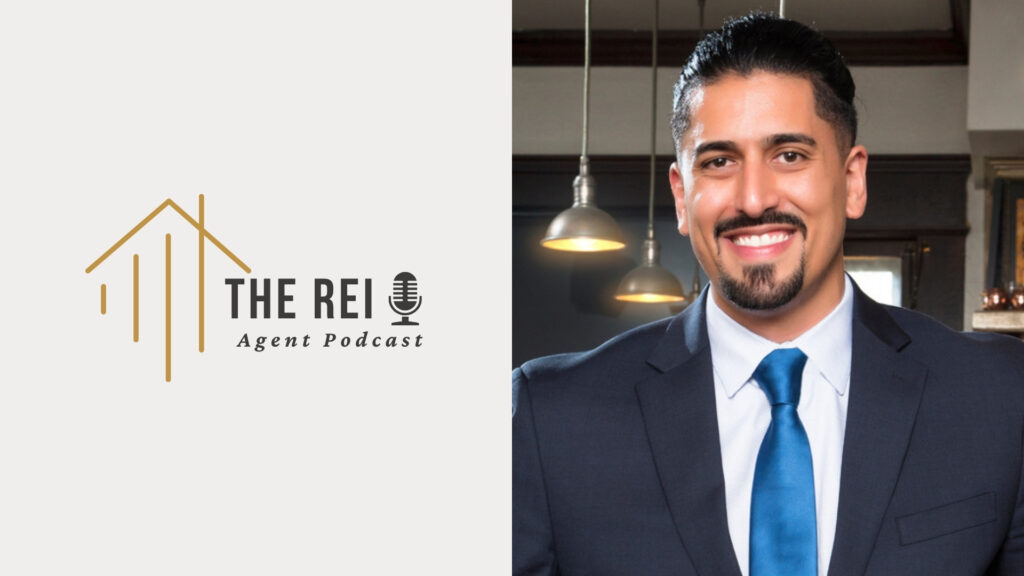
Welcome back to the REI Agent. My guest today is Mike Azzam. He’s a team lead of the Azzam Group at Remax Haven Realty and founder of the Azzam Turnkey in Cleveland, Ohio.
Before real estate, Mike was a registered nurse and he brought the same systems thinking and attention to detail from healthcare into building one of the most productive real estate operations in the state. He was named Ohio Realtors number one individual sales producer in 2019, has completed over 500 flips through Azzam Turnkey and now runs a team that services both retail buyers and sellers and out-of-state investors looking for turnkey cashflow. Mike, welcome to the REI Agent Podcast.
[Mike Azzam]
Hey Mattias, thanks for having me on. I really appreciate it, look forward to it.
[Mattias]
Yeah, man, you’re a perfect guest for us. I’m excited to talk to you about some of the stuff that we just went over. I mean, flipping, you know, it sounds like, well, I don’t want to get into it too much yet because I want to hear first how you got into real estate, what took you from healthcare into real estate.
[Mike Azzam]
It feels like ages ago on the healthcare side. I always, when I hear the introduction now, it’s like, oh my God, I was, I can’t believe it. You know, I, just maybe not the most unique story, but I got a job, entry level.
It’s like, it was like, it’s like a first year, first year associate at a firm working in the mailroom. Like I was, I got a job as a leasing agent for a startup management company and was showing some rentals and like the inner city of Cleveland. And, you know, just started really gravitating towards real estate then.
And at a certain point, about a year or two into it, I’m like, I gotta, I gotta make the jump here. So just, I wanted the freedom and I think that was the most important thing and decided this was the path that fate had for me. So here we are.
[Mattias]
Yeah, man, I can relate with that a lot. We kind of always was seeking that freedom, the being my own boss, doing my own thing, kind of always had my own ideas, little side hustles, whatever you will, throughout my whole life. And then when we bought our first house, the agent made it seem like so much fun.
I was like, this is it. Yeah. And I had that aha moment where I really, it’s like, this is what I wanna do.
[Mike Azzam]
So many of my colleagues, that’s how they started. It was, you know, they bought a house and they just gravitated towards the process, their, the way they’re, just how the realtor handled things. And, you know, it’s like, oh, I can do this too.
It’s commendable, you know, I think we all want freedom in life, right? Not just with income, but as I, the money’s great, but I really, we do this for the freedom. That’s what I do it for.
I just, I want to control my time, my schedule, my destiny, as cliche as it may sound. And that’s, what’s so important every day. I’d be able to just, you know, come and go as I please, even though we end up working more when we are self-employed, right?
[Mattias]
That’s what I was just going to say. It’s not like we’re sitting around, we’ve made it, man. We were just, you know, drinking cocktails on the beach all day.
Get to choose what 16 hours a day you want to work. So, were you always interested in the investment side of things as well? Like, did that, I mean, coming from, like seeing the rental side of things, I see some people maybe being a little bit scared off from some of the horror stories of the investment side of real estate, but did you always have that interest as well as getting into the sales end?
Or what came first?
[Mike Azzam]
No, it was the investor side. That’s what catapulted everything. And because I was at a startup management company, you know, Cleveland’s always been a very investor-driven market.
So that’s what I was exposed to. And then, at that time, this is back in like 2010, 2011, 2012, it was mostly international clients. So, you know, buying rentals in Cleveland.
So, you know, it just started to grow from there. And that’s what was always so interesting, more so even than the, I honestly never really had a lot of desire to go and show Forever Homes and talk about floor plans and color schemes, you know, for Sally and Joe looking to upsize or downsize. I liked the aspect of scaling, and that’s what the investor side allowed us to do, allowed them to do.
So, you know, investor, the growth with them was mutual growth with us. And we just, you know, we really took off with it. Look, when you’re talking about investment properties, it’s just a different approach.
You know, it’s more numbers-driven, right? You know, it’s more analytical. You can, it’s more process-oriented, and that’s what allowed us to vertically integrate with a lot of our, and we can get into this later, but a lot of our other businesses as well.
And the scaling part, though, was so crucial. You know, Sally and Joe buy a house, Mattias. You know, you might not hear from them for another five, six years, right?
I mean, average first-time home buyers in a house for, I think it’s like, statistically speaking, around three years. Fine, three years, best case scenario, you’ll hear from them again. That investor is gonna buy next week, maybe a couple weeks later.
And we built that pipeline out of investors just scaling to 10, 15, 20 properties. And, you know, that was always so much more attractive in terms of a business model. So, yeah, just the investor side seems so much more lucrative from the onset.
[Mattias]
Yeah, especially, I would say, like, I mean, I think Cleveland would have the, like, the, what it takes, really. You can really get a consistent buyer pool. I would imagine the cashflow numbers look a lot better.
And, you know, actually, really, I heard here recently when, I think it was somebody I was interviewing, was talking about different markets. And, you know, the stereotype is that the Midwest will cashflow better and the coasts will appreciate better. But this person was saying that, like, the Cleveland market that they were investing in actually appreciated really well and was kind of the best of both worlds.
Would that be true? I mean, are we still getting pretty good return now? I know that it’s a lot harder with both having seen appreciation and having, obviously, the higher interest rates.
[Mike Azzam]
No, it’s been one of the biggest misconceptions of our market. Look, we’re not a coastal city. Those are the growth markets, I’m aware.
But what we preach to our investor pool, I feel like I’m in a consultation call with a new investor here. It’s what we preach, and it’s not lip service, as you’ve found and seen. You get a little bit of everything.
You get a little bit of cashflow. You get, obviously, this stable, upper midsize market. And then you do get to capture some appreciation.
We’ve had healthy growth over the last decade. We’ll run in pro forma as 2% to 3% appreciation. We have outpaced that 2x, 3x in some of the markets around the Cleveland area that we’ve invested in.
So yeah, that’s been really promising. And it’s a nice little bonus for our own portfolio, for our investors, something that maybe wasn’t necessarily anticipated, but I think one of the best things about our market is that we’ve been able to capture both. Sure.
[Mattias]
One of the approaches that I’ve heard of as well, and I’m wondering if this is kind of what you all do, is looking at a property, you have an investor that wants to buy something, just finding a property. I don’t know if it’s off-market or on-market, but essentially saying, look, we’re gonna buy this for X amount. This was, I think, an agent I was talking to out of Pennsylvania somewhere, and their numbers were just nuts.
It’s like, you buy the property for like $20,000, you put like $60,000 into it, and then you get rented for, and this was a few years ago, but is that the type of flipping turnkey kind of rental operation you all are doing? You have the investor, and you’re kind of getting the whole thing together for them, or are you out there prospecting, finding things off-market, renovating them, et cetera?
[Mike Azzam]
A little bit of both. To touch on that, that’s what the market was back in the 20-teens. It’s wild, and to think that we were putting in four times the value of the house in construction, or four times the purchase of the house in construction.
Little side note, some of these cities were so hell-bent on trying to stabilize the housing stock. They have the city inspections, and they would be required escrow. Escrow would be, think of it like collateral, so if you were to buy the house, you had to take care of X violations, it’d be pages, because this is post-crash, so the houses were distressed.
In Cleveland, most Midwest got hammered after the recession and the crash. So these cities would then impose these high escrow requirements. So you’d have a house that was, I kid you not, $20,000, and you’d have to put $60,000 to $80,000 in rehab, and here’s the kicker, you’d also have to have another $50,000 to $60,000 in collateral held to ensure that you did the violations, and you couldn’t touch it until it was released.
So think about how capital-intensive that was. And the house was 20K, 30K, like when it was all said and done, just crazy numbers. So it’s where a lot of the international clients came in, is because of that so heavy capital.
[Mattias]
I mean, it is, but it’s also not insane. So if you’re, I mean, it’s maybe not a typical, you hear $20,000 house, you don’t think you’re gonna have to have that 130,000 or whatever in it, but 20% down of a lot of investment properties, it’s not that much further away now. And I imagine they’re doing basically the Burr method then, where they’re gonna refinance and get the capital back, so they could kind of rinse and repeat if they kept doing this with other properties.
That’s the goal.
[Mike Azzam]
And then it was a lot tougher to get lending on lower-priced properties when loan value was low. So you’re talking about, again, a lot of cash. It was just tough to scale when you’re talking about needing 150K in capital.
But the objective, as we’ve matured, as our markets improved and developed and grown, the aspect of what our business model is has also grown. We go out and we prospect, and we find these off-market deals, and we stabilize them. And stabilize, I mean, that’s an understatement.
We completely renovate them. And then we’ll get tenants in place, and we’ll hold onto them until a turnkey buyer comes along, and we’ll present them numbers, and we’ll provide them a one-stop shop. We have management in place.
Everything they could think of, all the resources ready to go at their fingertips, and we just streamline the process. But then we also get the investors that have a little more experience under their belt, or have gravitated from buying the turnkey model, so to speak, and wanna get into forcing some appreciation, adding the value themselves. And we have an entire arm designed for that, and we’ll help them find the property.
So we’ll actually go with them, so to speak, and target specific properties on and off-market. And then we’ll provide them quotes, scopes of work, and we streamline that process for them after closing. So they’ll actually get in there, and it’s crazy, they’ll be across the country, and the house is getting rehabbed for them, and then a tenant’s placed for them.
Then it’s managed for them. All the while, they’re just sitting from their computer screen, clicking a button, and then they refine the backend, and they do it again.
[Mattias]
So the difference between those two models you just described is that you’re front-loading the capital to get that job done, whereas somebody else would be bringing the capital in from square one, basically, right? Exactly.
[Mike Azzam]
We allow clients that have worked with us for X period of time to take that path once they have a little bit of experience under their belt. We want, like you can’t buy turnkey forever. You need to scale your portfolio.
You need to be strategic when you’re scaling your portfolio. You need to scale your capital. You need to find ways to recycle it, right?
So we’re not shy to that, and we have the entire system down, so we’ve helped countless investors over the years take that same approach. Like, hey, we have all the services and resources here. Oh, you wanna buy this distressed asset?
Sure, we’ll help you sell it. We’ll help manage it. We’ll help rehab it, and then here’s the kicker, Mattias.
We’re gonna sell them in the future when they’re ready to exit. So it’s just like we’re planting seeds, and we have tens of thousands of seeds that we’ve planted in this decade-plus of doing it, so it’s like a good long-term investment for our sales team as well.
[Mattias]
Yeah, that makes a ton of sense. Now, how much, are you keeping any of these properties as well as a company, personally, et cetera?
[Mike Azzam]
It’s hard not to. You just get to a point where it’s like you, you don’t wanna sell these. So many of these that I almost like, I looked at and I just should’ve held onto it.
We have over 70 properties that we’ve held onto. Our portfolio’s over 10 mil now, which is crazy to think in a market like Cleveland. Just so many opportunities that we’ve looked at, stepped into, and said, you know what?
We’re gonna hold onto this, or we’re gonna let the season a bit. We had one, we were on the markets, had a buyer at 265. One of my agents walked in and said, Mike, you’re crazy, this place is beautiful.
We pivoted and said, all right, you know what? We released it, and we just refinanced it and kept it. It’s hit a point where capital’s not an issue for us.
It’s more long-term growth. It’s wealth building. So if we can grow the portfolio, why not?
[Mattias]
Yeah, I think it’s such a, if you get into the game of rehabs, et cetera, and our market is completely different than yours. This is not really a system that we could replicate at scale like you in our market. But I do, to a lot less of a volume, get opportunities to renovate properties.
And essentially, yeah, when there’s a one that comes up that is one that I like, it’s in a location I like, that I wanna keep long-term, yeah, I look at the BRRRR method and it’s been harder. The last one we did, we had to turn it into a midterm rental to make it a cash flow. But that’s actually done really well.
And so I can’t complain on it. But are you seeing that it’s tougher now to make the numbers work, pencil out with the interest rates where they’re at?
[Mike Azzam]
A little bit. You’re not cash flowing as high. I mean, you just have to pivot with the market.
We’re advising investors anticipate leaving 10 to 15K in the deal. And sometimes we’re outperforming that. Recently we had an investor, I think he ended up pulling out the majority of his capital.
But we’d rather play conservative upfront. Our last refinance, which was I think a month ago, we have about 11K left in the deal. But Ty, for a house that is fully rehabbed and still cash flowing, and I have 10K left in the deal, in today’s market, that’s a no-brainer home run.
It’s just like anything. I can’t buy houses for 30, 40K anymore. I’m buying them for 140 now.
And that’s how the market shifts. You just have to shift with it.
[Mattias]
In 10 years, you’re gonna be like, I’m not buying houses for 140,000 anymore.
[Mike Azzam]
Yeah, exactly, exactly. Or now I’m leaving 24K left in the deal instead of 10K left, 14K left in the deal. And you’re looking at it going, well, that’s how the market’s shifted.
So you just roll the punches.
[Mattias]
It’s still awesome. I mean, those numbers are still awesome to only have that much in a deal that’s definitely not what anybody around here would expect for buying an investment property. They would be expecting 20 and 25% down, closing costs, et cetera.
And that would be a lot more. And when you look at it from a different perspective, if you look at, if you have a nine-to-five job and you’re investing in a portfolio to offset taxes, to whatever, you’re probably investing a good amount of money similar to that, maybe a higher percentage of your income, depending, than what that would be. But you get tax benefits as a real estate professional and you can depreciate this asset.
If you want to, you can just accelerate the depreciation, take the bonus depreciation. And you can take advantage of that stuff now. You can sell that asset later.
You can sell that asset when you want to. You don’t have to wait until you’re 65. You get cash flow.
You can start using that to offset your expenses. You can get to the point where you are actually living on your passive income or you can sustain your lifestyle with your passive income. And I think that’s the holy grail of where I want REI agents to be, is to get to a point where they are increasing their lifestyle with their passive income, not with just their sales income.
Their sales income is like kind of bonus and able to accelerate their investing. But that’s just like the iceberg, right? It’s underneath the water part, right?
You just build this big, massive thing and then you become really unstoppable. And when there are shifts in the market, when there is seasonality, when there, all that kind of stuff, when the perfect storms happen, you’re set, you’re gold.
[Mike Azzam]
There are so many examples of that. And the issue is, and you’re right, that should be the primary focus. I sat on a panel a few years ago, and this is a local panel.
And one of my main points to a bunch of my colleagues and agents in the area was, in any other industry, the knowledge and insight you guys have and the information in terms of just knowing what’s coming up, it’d be insider trading. Yeah, it’s legal. Like it’s, take advantage of it.
You guys are letting all of these opportunities go to out-of-state investors, like take advantage of it. It’s weird, like fortunate to have grown up and worked in a market that has the opportunity that our market has. Now, if I was in a Miami or New York, would I have a 70, would I have that sort of portfolio?
Would I have a 10 million plus flipping portfolio? I mean, it’s just like, it doesn’t equate to those markets and it’s tough to scale there. What I feel like is a big issue is, is there’s so much information around, everything becomes like the hot and trendy new thing with investing.
And these opportunities are looked at as just average and everyone’s looking for the home run. And this doesn’t cashflow enough. So many of my opportunities, so many of the properties in my portfolio, those are long-term plays.
The tax benefits, why are we not looking at tax savings as a reason for investing? Why are we not taking advantage of some of those tax savings? You talked about bonus depreciation, cost segregations, like so much at your fingertips to pay less in taxes.
And you can still sell the asset later and you still have the cashflow. It’s not an IRA. Exactly.
And you’re getting the benefit of the tenant, potentially if it’s a tenant place, they’re paying it down as well. And maybe some growth and upside in terms of appreciation. There’s so much opportunity and we’re just so short-sighted because maybe it doesn’t hit a 10 or 12 or 15% ROI and it doesn’t cashflow what we want it to and it’s just not worth it.
I don’t understand that thought process. I don’t understand that ideology. Not everything needs to be a home run.
You can hit singles and doubles, get in the game and start to scale from there. And you’ll find that there’s so many advantages to investing in real estate.
[Mattias]
Yeah, that’s it, that’s it. I think one of the things I talk about is if you’re not, if you don’t have tons of cash and you just outlined an ability to invest with not tons of cash. I mean, depending on the strategy, you might have to have the cash upfront to get the deal done before it’s refinanced out.
But if you just start with your own house and buy a house that you wanna live in that you can turn into a rental later, over time that’s gonna get equity, get equity line of credit. You’ve just tapped into, that can be 50, 60, 70, $100,000 pretty quickly. Rinse and repeat that a couple of times.
Now you’re getting dangerous. You can get into the $200,000 price point all cash, you can flip a property. There’s a lot of opportunity if you do it.
But the point is, it’s not, yeah, immediate home runs. If you take a base hit every year, that adds up, that adds up to the compound. And one of the things I talk about too is syndications.
Like if you don’t want to be an active investor where your passive income’s kind of bullshit, it takes work. Rentals take work, there’s things. Even if you have a manager, there’s still some decisions you have to make.
It’s not all passive. And syndications, you need to be really careful and you need to make sure that you’re investing with the right people. But this turnkey option you’re talking about, this is a great opportunity for somebody to do something that would be a lot easier than flipping a property themselves.
And it’s just about, yeah, slowly building up. If you’re doing these base hits, getting these properties over years, you can then have that million dollar net worth outside of your personal residence and invest in syndications if you choose to. But just more doors open the more that you’re doing this.
[Mike Azzam]
It’s why we offer those services, because you need to have opportunity and different routes. An investor wants to come through and buy a turnkey property, sure, but then what? I’ve had investors that have invested in syndications.
And I’m not implying that that isn’t the right path, but if you’re looking for a way to still maintain some control, still have some involvement, well, find an operator to work with like us, where we can help navigate you through it, like your lifeguard. Syndication, you’re literally a passive, silent investor. They’ll update you, get you quarterly updates, but you’re at the mercy of the operator.
You find a good operator locally in a market that you’re comfortable with. There’s ways and opportunity for you to scale your portfolio in other ways where you can still retain that involvement, because you’re right, you’re always gonna have, that passive is not easy. You’re always gonna have involvement, even if you have a manager.
One of my favorite lines is, you need to manage the manager. You’re still going to have that. But you’re talking about front-loading some of that stability, getting in there, stabilizing the assets.
Now it’s something a little bit easier for that manager, something a little bit easier for you in terms of maintaining that passive income. You gotta get your feet wet, and getting in the game is the first step. As long as you take that approach methodically, good things will happen.
I hate to get on a soapbox here, but for years, one of the biggest misconceptions I hear from investors is just, I want to get to 50 doors. I want to get to 10K a month. Really, the 50, get to 50 doors.
50 or 100 doors. It’s like, let’s get to one first. Okay, and it’s okay that you don’t have any yet.
It’s okay. This is not anything that’s intended to be disparaging because you’re now just starting to invest. Not by any means, but let’s start.
We’ll worry about 50 to 100 later, and that’s the issue. They’re so focused on, okay, fast, and I need to get home run so I can get to 50 to 100 doors, and they’re letting good opportunities pass them by. They’re letting the situation overwhelm them because they only have that one objective on the back end.
Go for gold, that’s fine, but let’s get some singles and doubles, and all of a sudden, you’ll score some runs, and things will be working.
[Mattias]
It’s funny. If any agents listening to this right now that aren’t familiar with, or haven’t really been in the investor circle as much, the doors badge, it’s almost like this, they have to walk around with this badge of how many doors they have, and it really is almost an arbitrary thing because people can have a bunch of $30,000 door properties or whatever, and if somebody else has 10, that’s worth way more. Each one of those is worth $400,000.
The math is really different, and there’s all sorts of different metrics, but it is funny how that’s this badge that people seem to care about, and it’s good to set goals, but like you said, it’s better. It’s more important to make progress and to continue, and to agents listening, you can still focus on your sales, still focus on your sales, but these are some options of ways you can build up that income as you go, and not have to be obsessed with the investment part. You’re not in there doing drywall in a flip or whatever.
You can do this stuff passively, and the more access to capital you have, the better off you are, or the more hands-off you can be, and it becomes, you do a BRRR one time, and it’s kind of addicting because you’re like, this is like a magic trick. If you get a full BRRR, you’re like, I just got this property for free, and it’s cash flowing really well. What’s happening?
[Mike Azzam]
Tax-free, I mean, literally a tax-free, that cash out refi is tax-free on top of it. That’s just, I mean, it is, it’s a cheat code, and you’re in the industry. I chat with investors that are engineers, and firefighters, and physicians, that they have no concept of resources.
You’re in the industry. You have resources. You have the experience and exposure, so it’s almost a shame.
It’s almost criminal that you’re not taking advantage of that, right, finding the opportunity there. I mean, just find a local networking group and just meet up once a week just to get your feet wet at the very least because it’s right there for you, and you have that opportunity, so yeah, I just, it’s something that I’ve been preaching for years. Every agent on my team, that’s one of the biggest objectives for them is they wanna come on, learn that side of things, and start investing.
Every agent on my team invests. They have a couple flips going, buy and hold. One of my agents just did his first Airbnb.
It’s not door count. I stopped saying the door count, to your point, years ago. When people ask, I’ll say, if you wanna know, I’ll give you a kind of a volume valuation.
My badge of honor is 35K a month in net passive rental income. That’s my badge of honor, and that’s what’s important. I couldn’t care if it was one door or 1,000 doors that got me to that number.
You can take that portfolio, drop it down to a door. As long as that number’s not impacted, couldn’t care less. Yeah, I mean, it’d be better, right?
Yeah, I know, less headaches, right? Less to manage.
[Mattias]
Well, I mean, you’ve obviously built this pretty awesome operation. The sales team, this whole thing is this really interesting business that you’ve created that, again, like I said, might be hard to replicate depending on the market you’re in. What do you think is the key to that success?
Have you figured out the operational kind of discipline that makes the growth that you’ve seen durable?
[Mike Azzam]
So, long-winded answer here, and you’re right, maybe it is difficult to replicate this specifically in other markets. You’re in Tampa, Florida, huge growth market, but there are ways that you can find opportunities to scale aspects of what we do. The construction arm, which we built out because we are doing so many investor rehabs, we have scaled that and moved that into our retail sector here.
We have an immense amount of local homeowners, Sally and Joe, that need to sell their home, but need to get some things buttoned up. What that’s done is it’s allowed us to capture additional revenue, and that’s been a huge part of our growth. Keeps our crews busy, keeps our contractors busy.
So, there’s ways you can replicate functions of what we’ve done, and from there, you’ll start to vertically integrate other aspects as well. We have a cleaning arm, we have a cleaning business as well. We just bought our second trailer for haul-offs, for trash haul-offs.
We’ve really scaled to almost every service aspect of this. So, you have a listing. You know how valuable it is?
What a value proposition that would be for you to come with your folder, and comparables, and CMA, and cute presentation, but also be able to leverage your resources and processes on the repair side, and that’s where it is extremely helpful. I have a listing appointment with one of my agents next week. Half-million-dollar listing in Cleveland.
That’s a great listing, by the way. Half-million-dollar listing, guy’s relocating to, sorry, North or South Carolina. What’s important is he has a couple of repairs that are needed at his home, and he does not have the patience, time, or energy to go around on Thumbtack and Angie’s List and start calling handymen.
He loves that we can handle that for him. Not only can we, so we’re gonna handle it for him, which is basically going to capture the listing, and we’re gonna get revenue off of those repairs. What a win-win.
That’s awesome. What a win-win. I mean, it’s huge.
Revenue on the repairs and the listing itself. So that’s, I think, one of the biggest value propositions any agent can provide, is vertically integrating those resources and aspects of what we do in their day-to-day.
[Mattias]
If I may, even to dial that back even further, just having some experience and having some insight to what things will cost, to think, no, if you have a contractor that does a lot of work for you, that will be willing to jump and come in and do a job for you, punch list. If you’re showing a house to buyers and they wanna, they can’t imagine what something might cost, or everybody throws out around here, like, that’s gonna be $100,000 to fix.
[Mike Azzam]
That’s a great point.
[Mattias]
That’s not true at all.
[Mike Azzam]
That’s a great point. It’s a disservice to your clients if you don’t have any concept of what things cost. You need to.
You don’t even, you could have no intention of getting into the investment real estate space. That’s fine. But to work with clients, buying and selling homes, you’re in the business of buying and selling homes and you have no concept in what things cost, it’s unfathomable, to be honest with you.
You’re doing a disservice. How do you negotiate? How do you leverage any situation for your clients?
How do you strategize? How do you negotiate with another agent when the ROC terms come back? You need to be able to help them understand what things will cost.
What if they are in the planning stage of getting it listed and they don’t know what’s going to bring them the most ROI for, in terms of specific upgrades, and you don’t know what that stuff’s gonna cost. And it’s lunacy. You need to familiarize yourself with that.
Talk to contractors. Research online. There’s so much available for you.
Find opportunities to better educate yourself on construction costs. I’m not asking you guys to, you don’t need to know what exterior waterproofing and excavation costs, but how much it costs to install vinyl plank flooring per square foot, I don’t think that’s unreasonable.
[Mattias]
And I think that was the benefit I didn’t foresee or didn’t really think about, that when I got into investing, when I started doing some flips, when I started doing some burrs, I didn’t understand how much value, how much more value I was gonna be able to give to my clients from that knowledge, from the connections. It really was huge. And just seeing the difference, really seeing the difference, which you can do as just a listing agent, having something painted, right?
If a place is really drab and you get a fresh coat of paint on it, the difference, the life that comes into that listing or that house is a huge difference. Going through a property that is like, you almost don’t wanna walk in it, it’s so gross, to like having it fully renovated, there, you kind of live through each of those stages and you experience more, you have more ammunition to kind of convince and to educate and help your clients. And it really does, it really can help your residential sales to have this kind of experience, for sure.
[Mike Azzam]
It’s there to provide you value, any of that. I mean, the title side, the lending side, insurance, we either find ways to vertically integrate it or we find ways to monetize it. And I think that’s the name of the game as a real estate agent.
And so, providing the value to your client will help you monetize additional revenue. I’m telling you, at the very least, we’ll give you a leg up to get that listing or work with that client because one thing about our team is, they are experienced or at least have exposure in almost every facet of the industry. And it can tell you how title insurance works and the lending side and construction.
They’re not experts, but they know just enough. And that’s what you should be able to have and possess as an agent. And then you’ll be able to monetize it all the way across somehow, some way.
I don’t know, I just like, I could get on it. Again, I can get on a soapbox with this. You’re preaching to the choir.
It was a great point. You need to have that, a little bit of construction exposure.
[Mattias]
You know, I think it’s like, yeah, if you’re a used car salesman and have some mechanical experience, like working on different cars, you might be able to give better advice. Like, stay away from this brand at this year or whatever it is. And I think that’s what people really want in good representation.
I just want to quickly say, if you’re catching this, if you’re listening to this and you’re on the road and you’re wanting to take notes but you can’t, check out REIagent.com. You can get a sign up for the newsletter and you don’t feel like you have to have everything right now. This will become a blog or this will be a blog as well.
So you can capture the highlights there. And definitely there’ll be show notes, et cetera, with everybody’s, with Mike’s contact information or his social website, that kind of stuff as well. So definitely don’t feel like you need to get in a wreck to write some of these awesome tips here down.
Mike, quickly, can you talk a little bit about what the Cleveland market is looking like now? We talked about how things have changed a little bit, interest rates, appreciation, et cetera. And where are you finding some pockets of opportunities still for the people you serve?
[Mike Azzam]
So, I mean, we’re, I love those like B and C class, working class neighborhoods where you get a mix of owner occupants, but still, you know, investor friendly. I wanna have flexibility. And if you are looking in a market like ours, you wanna maintain that flexibility.
So when it comes to exiting, you have a bigger pool of buyers, investors, owner occupants. So a lot of those suburbs around the Cleveland area are typically where we’ve been hot and heavy. Even as the market’s improved, those areas have continued to still remain affordable.
They still cashflow. I don’t think rising prices and rising interest rates means we need to get into the mega risky inner city areas that really take experience and thorough boots on the ground. You can still find good opportunities in some of these more stable, matured season pockets.
Okay, cool.
[Mattias]
And for an agent doing about 50,000 to 150,000 GCI and who generally wants to double their production over the next 24 months without burning out, can you think of a single highest leverage habit or system change that you’d point to them to succeed?
[Mike Azzam]
Prospecting, it’s prospecting, without a doubt. And prospecting is so heavily reliant on consistency. Every day, it’s a broken record in my office, to my team, to my agents, prospecting.
How many people did you touch today? How many people are you touching tomorrow? I have a couple of agents on my team, it’s not consistent.
You know what they do? It’s in a vacuum. Twice a week, they’ll try to power dial.
It doesn’t work. It’s, you know, I need to lose 10 pounds every minute. Not eat for two days, like it just doesn’t work.
You need to find ways to maintain consistency with prospecting, email, text, call. You need to set up action plans. You need to make sure drip campaigns.
You need to make sure you’re constantly touching and staying in front of your client base, your pipeline. Manage your pipeline like it’s an investment, not a bunch of people in there with names and emails. It’s an investment and you need to nurture and manage that investment.
[Mattias]
It’s a really good segue and a plug for the CRM that we have launched. I go through every morning, I go through my touch list. I’m only doing about five a day.
It’s not insane. It’s a consistency that adds up over time, like you just said. But I’m going to, you know, my A’s and B’s.
I’m going and looking at their, you know, touching base with them in a meaningful way. We’re talking about their family. We’re talking about their occupation.
This whole CRM is set up to be that Ford type relationship based marketing prospecting thing. So then the next time that I reach out to this person, again, I have all this data of their family, their occupation, their recreation, their dreams in there. And every time we update it, it gets stronger and smarter.
And we have prompts that will come from that data. But I think it’s most important to be authentic. I think people can sense the fake AI messages, the things that are automated a little bit.
There’s a place for things like, you know, your emails, et cetera. But I think when you’re looking at the relationship based marketing, talking to your sphere, they’re going to want to work with somebody that they know, like, and trust. And if they feel like they smell the fake AI, they’re probably not going to be as excited about it.
But if you’re having a genuine conversation with the person, you’re asking them questions about things they care about, their work, their family, et cetera. And then you remember things like their birthdays, all built into the CRM, is where it becomes really powerful. And again, only five a day is all I’m really doing.
And it has been awesome. So you can also check that out at thereiagent.com. Mike, I wanted to ask you next about your golden nuggets for our listeners here.
We’ve covered a ton already, but do you have any other specific golden nuggets for us?
[Mike Azzam]
Building systems, you know, building systems so that you can, you know, vertically integrate, so you can help, you know, build and sustain that volume, you know, the processes, the systems all the way across the board. Activity, not outcomes. We, a couple of years ago, were getting metrics in place for our agents.
And we were, you know, embarrassingly, I set more outcome oriented metrics and I scrapped it after a few months. And I realized like, as long as the activity is there, the outcome will follow. Like that, good things will come.
So, you know, maintaining that sort of consistency level from an activity standpoint, specifically even with the prospectings I mentioned earlier, you know, that’s what’s most important. Yeah. I’d say the last thing is just don’t overcomplicate it.
We tried out, you know, obviously we run a robust, we have a robust operation, but it’s more of just everything we’ve been able to kind of consume. But each business that we run, you know, at its simplistic form is just that, you know, basic processes, simple processes, simple follow-ups, you know, simple approaches. You know, there’s so much driven towards AI and there’s so much driven, you know, that there’s just like advanced technological CRMs and systems.
And sometimes it can get a little bit overwhelming and take away from what you’re good at. And what you guys are trying to accomplish. So, you know, just maintaining simplicity, I think is very important.
And it’s a good way to also maintain good habits as well.
[Mattias]
Yeah, I think to your point, there’s a lot of shiny objects out there and, you know, the dream of something taking care of stuff for you is always out there. But I think again, like in a relationship business, I think it’s really important to, you know, make sure that that relationship is maintained. And yeah.
[Mike Azzam]
Wait. Talked about AI, we were using it a bit. And I mean, there’s another thing.
I’m just, I’m not shy about scrapping something that’s not working. It just seems so disingenuous, so forced. I just didn’t see a lot of value being provided.
So I scrapped the AI calls and texts and we went back to just, you know, fully, my hope was that it could kind of, you know, help kind of fill in the gaps for where the agents are missing. I’d rather have a delayed response, to be honest with you at this point. It just felt like it was, there wasn’t any value it was providing, but shiny objects.
[Mattias]
That’s interesting. Like, I’ve thought about like having like a, you know, a receptionist type thing where it’s an AI, but I would want it to be, you know, honest, where it’s like, you know, hey, this is like an AI system. I’m going to help answer any questions I can.
And I’m going to help set up an appointment with talking to a real person. Like that kind of thing. But not pretending, you know what I mean?
Not pretending to be like, this is Mattias Clymer. You know, like I’ve got 11 labs set up, but.
[Mike Azzam]
I think I was most annoyed because it couldn’t say my last name correctly. Remember how many ways I prompted it. The Zoom group.
That’s what it just kept saying. So we were already behind the eight ball at that point. Like, there was just no way to fix it.
You can’t fix the dialect with these things. So yeah, I don’t know.
[Mattias]
And these systems are going to get better, but you have to understand like the amount of noise in social media and all this stuff from AI now is so much that like, I think there’s just this bullshit sensor that like, as soon as you like sense that it’s not real, you’re like not interested anymore. And I think that’s what you have to be really careful about when you’re experimenting with this kind of stuff is that like, it has to feel genuine. Like that’s what we want.
We want genuine connection with people. And I think that’s the thing that it’s not going to have.
[Mike Azzam]
Would you ever have thought that the typical consumer would be relieved or it’d be refreshing to hear a call center in India, as opposed to AI? That’s where we’re at right now. Literally, to your point, you’re absolutely correct.
Even in calls that aren’t AI, they’re just so on edge wondering, hold on, is this a computer that I’m chatting with? I’ve heard it in some of our CRM calls with a couple of the agents and it’s like, oh my God, there, it’s like PTSD. No, we’ll go to a call center in India and we’ll probably have better results like there.
It’s just, it’s so scrutinized now. There’s so much out there, it’s hard to decipher what’s legitimate, what’s not. Who’s actually, everybody’s an expert in it.
It’s there to, use it, use it. It’s gonna grow your business, but if you don’t know where and how, it’s just going to overwhelm you.
[Mattias]
Yeah, it can be really complicated, some of these systems. Mike, what about a favorite book or a fundamental book that you think everybody should read?
[Mike Azzam]
Like, I’ve read a lot of the typical entrepreneurship books. I started, I’ve been listening to podcasts on novations and so I got bored, so I started reading Zero to One. I think it’s like by Peter Thiel.
I’m probably a quarter of the way through. I really like it. Building a business, kind of getting through some of the noise.
Honestly, some of it’s like getting through some of the technological noise as well. I highly recommend it, especially if you’re looking to start a business, have started it, you’re kind of at the infancy stage. I think there’s a lot of value in terms of just, helping understand what’s important and what’s really gonna help you kind of scale.
Replicating what works is a kind of a big theme in the book. So I’ve enjoyed it. Next time we chat, I’ll let you know how it turns out.
[Mattias]
That sounds perfect. And then if anybody is interested in learning more about turnkey opportunities, whatever opportunities you provide, social media, where can people find you?
[Mike Azzam]
I mean, you can email me, info@theazzamgroup.com. It goes right to my inbox. But my social media, @AzzamMike.
You can see some of our content videos and you can just drop me a DM, happy to chat. Awesome.
[Mattias]
Well, Mike, hey, it’s been a pleasure talking to you today. This has been a great conversation. If you like this, definitely hit subscribe to this podcast wherever you get it.
Give us a review if you have the time as well. We’re on YouTube, Spotify, Apple, every platform pretty much that you can find it. Give Mike a follow over on his Instagram as well.
Again, Mike, thanks so much. It’s been a pleasure. And I’m sure people got a lot of value out of this episode.
[Mike Azzam]
I really appreciate it. Good meeting with you guys. Take care.