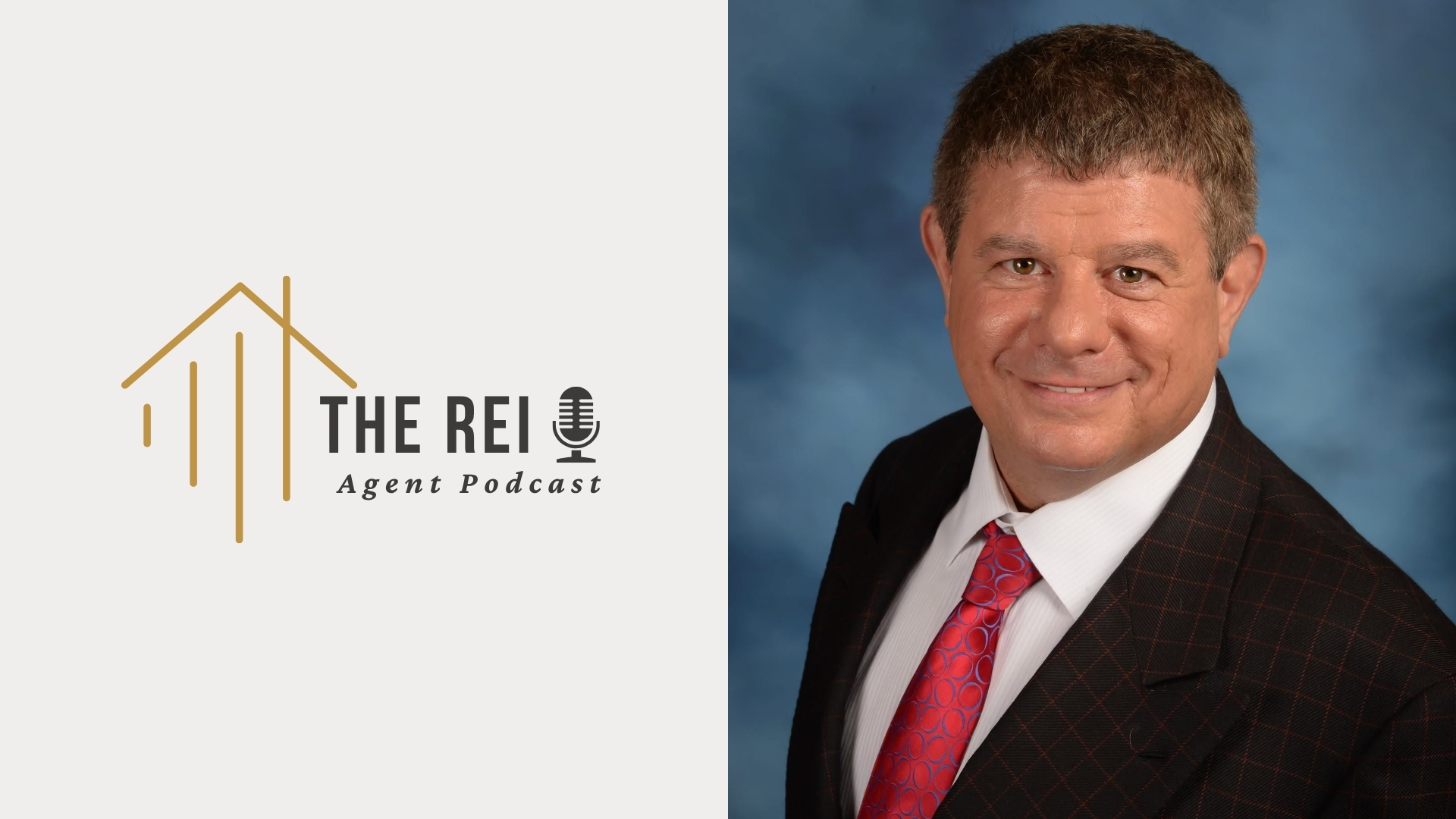
A Career Change That Became a Life Transformation
Stuart Gethner did not begin his professional life with dreams of operating multifamily properties.
He began behind a pharmacy counter, following a family tradition that included his father, grandfather, and uncle.
Becoming a pharmacist required years of education, discipline, and responsibility. Stuart eventually opened independent pharmacies in Arizona and built a successful career. Still, another idea had been quietly following him since childhood.
He remembered watching television infomercials that promised investors could buy properties, spend their days relaxing, and effortlessly collect money at night. The reality turned out to be far less passive, but the promise of freedom stayed with him.
“You can buy real estate and surf in Hawaii all day and count your money at night.”
Stuart quickly discovered that investing required work, patience, education, and calculated decisions. What began with one inexpensive house eventually grew into a portfolio, a full-time career, and an opportunity to teach others how to create long-term wealth.
Starting Small Was Not a Weakness
One Property Created the Foundation for Everything Else
Stuart did not begin with a massive apartment complex or millions of dollars in investor capital. He began with single-family houses and townhomes.
As his confidence and knowledge increased, he purchased a fourplex and then an eightplex. Each property taught him how financing, maintenance, tenant management, expenses, and cash flow worked in the real world.
Those early purchases also introduced him to the power of economies of scale. Buying one water heater could be expensive. Buying several at once could reduce the cost of each unit. Managing several residences under one roof could also be more efficient than managing houses spread across an entire city.
The lesson was simple but powerful. Growth did not require abandoning the basic principles Stuart learned on his first property. It required applying those principles to larger numbers.
“Concepts always stay the same.”
A larger property may contain more units, more tenants, and more revenue, but the fundamentals still matter. Investors must understand income, expenses, financing, maintenance, and the price they are paying.
The Financing Shift That Changes the Game
Commercial Lending Focuses More on the Property
Many beginning investors assume that financing becomes more difficult as properties become larger. Stuart explained that the opposite can sometimes be true.
Traditional residential lenders often focus heavily on the borrower. They examine tax returns, employment income, savings, credit history, and personal financial records before deciding whether a loan fits their guidelines.
Once an investor moves beyond four units, the conversation begins to change. Commercial lenders pay closer attention to the property itself. They study the rent roll, leases, operating expenses, income, and the property’s ability to support the proposed debt.
The borrower still matters, but the asset becomes a major part of the approval process.
This shift can open opportunities for investors who have learned how to identify strong operations and reliable income. It can also reward agents who understand investment properties as businesses instead of viewing them only as buildings.
Cash Flow Must Support the Debt
Mattias and Stuart also discussed debt service coverage ratio loans. These loans generally evaluate whether a property’s rental income can cover its required debt payments.
A ratio below one means the property is not producing enough income to cover the debt by itself. That creates a situation where the owner may need to contribute additional money from personal reserves.
Stuart warned that available financing does not automatically make a purchase wise. Lenders may approve aggressive terms, but the investor still carries the responsibility for selecting a financially sound opportunity.
The goal is not merely to qualify for a loan. The goal is to acquire a property that can survive changing markets, unexpected expenses, vacancies, and economic pressure.
Value Is Created Before the Property Is Sold
The Opportunity Hidden Inside Tired Properties
Stuart specializes in value-add opportunities. These are properties that may be financially or physically underperforming but contain the potential for improvement.
Some properties have outdated interiors. Others have rents that have remained unchanged for years. Some owners have simply become tired after decades of managing tenants, maintenance, repairs, and operations.
Stuart described purchasing units from an owner in his late 80s who had held the properties for approximately 30 years. The buildings were not necessarily destroyed or uninhabitable. They were simply antiquated, under-improved, and under-rented.
That created an opportunity to update cabinets, countertops, bathrooms, fixtures, and other features while bringing rents closer to the current market.
The goal was not to apply a quick coat of paint and hope for an inflated valuation. The goal was to make thoughtful improvements that residents could appreciate and that the market would recognize.
The Investor Must See What the Property Can Become
A value-add investor must evaluate both the current condition and the realistic future potential. That requires more than optimism.
The investor must calculate renovation expenses, expected rents, operating costs, financing terms, vacancy assumptions, and the time required to complete the business plan.
A neglected property may look like a problem to one buyer and an opportunity to another. The difference often comes down to knowledge, planning, and the discipline to purchase at the right price.
Every Great Investment Begins With the Ending
The Exit Strategy Should Exist Before the Purchase
Stuart referenced Stephen Covey’s principle of beginning with the end in mind. That lesson applies directly to property investing.
An investor should understand the intended outcome before completing the purchase. The property might be held for long-term cash flow, refinanced after improvements, sold after several years, or repositioned to return investor capital.
Stuart considers himself a long-term holder. He has experience with wholesaling and property renovations, but he believes buy and hold investing offers one of the strongest paths toward lasting wealth.
“Buy and hold is really where you create the long-term wealth.”
Not every investor will share the same timeline. Capital partners may prefer an exit after five, seven, or ten years. Some may want their original investment returned through refinancing. Others may prefer a sale and a final distribution.
A clear strategy does not guarantee that every plan will unfold perfectly. Markets change, interest rates move, expenses rise, and timelines can shift. Still, a defined destination gives the investment direction.
Cap Rates Do Not Tell the Entire Story
A Simple Way to Compare Opportunities
Stuart explained that cap rate is short for capitalization rate. It allows an investor to compare the expected return of one property with another investment opportunity without including debt service.
The calculation assumes the property is purchased with cash. This makes it easier to compare the underlying performance of the asset without different loan structures distorting the picture.
Real estate becomes especially powerful when responsible leverage is introduced. An investor purchasing stocks, cryptocurrency, or other assets may need to contribute the full purchase amount. Property investors can often control a larger asset with a smaller initial investment.
Leverage can increase returns, but it can also increase risk. The property still needs enough income to support its expenses and financing.
Cash-on-Cash Return Reveals What the Investor Receives
On smaller opportunities, Stuart often focuses heavily on cash-on-cash return. This calculation compares the actual cash invested with the cash the property produces.
A property may have a modest cap rate while generating a more attractive cash-on-cash return because of financing, improved operations, tax deductions, and other factors.
Investors should consider the full picture. Cash flow matters, but depreciation, interest deductions, equity growth, and future refinancing opportunities may also contribute to the total return.
Stuart views each property as a business. That mindset encourages investors to examine every source of income, every expense, every operational weakness, and every opportunity for improvement.
The Money Is Made When the Property Is Bought
A Discount Creates Room for Wealth
One of the episode’s strongest lessons was the importance of purchasing correctly. Investors cannot control every future interest rate, economic cycle, or market movement. They can control what they buy, how they buy it, and how much they pay.
Stuart illustrated this principle with a humorous story about shopping with his wife. She spotted a large package of cotton swabs on sale, even though they already had some at home. The discount made the purchase irresistible.
That became Stuart’s simple metaphor for property investing.
“We wanna buy real estate when it’s on sale.”
A discounted property provides room for repairs, mistakes, refinancing, equity creation, and changing market conditions. An overpriced property begins with pressure and depends heavily on future appreciation.
Stuart encouraged investors to avoid betting on possibilities they cannot control. Interest rates may not decline. The market may not rise quickly. Inflation may remain unpredictable.
A strong purchase should make financial sense based on current facts, realistic improvements, and conservative assumptions.
Agents Have a Unique Doorway Into Investing
Commission Income Can Become Ownership
Stuart believes agents have an advantage because they already operate close to properties, clients, market data, lenders, and investors.
Many agents remain trapped inside the traditional sales model. They help clients buy and sell properties, collect commissions, and then begin searching for the next transaction.
Investing creates an opportunity to convert active income into assets that may continue producing value after the original commission is gone.
Stuart has seen agents contribute a few thousand dollars from a commission into a larger partnership. Their ownership position may begin small, but participation allows them to observe how the property is operated, marketed, renovated, financed, and eventually sold or refinanced.
“The hardest part is really your first deal, getting in.”
An agent does not need to invest an entire commission. A smaller contribution can create experience, relationships, and exposure to a different side of the industry.
That first investment may become the beginning of a portfolio, a partnership, or a completely new career path.
Investors Make Decisions Through Numbers
Stuart also explained that investor clients tend to approach transactions differently from traditional homebuyers.
A family may care deeply about bedroom sizes, kitchen finishes, school districts, landscaping, and whether the yard contains a particular tree. An investor usually begins with income, expenses, financing, and potential return.
The conversation is less emotional and more analytical. If the numbers work, the investor may proceed. If the numbers fail, the investor can move on without becoming emotionally attached.
Agents who learn how investors evaluate properties can potentially build relationships with clients who purchase several properties each year instead of only a few homes throughout an entire lifetime.
Mentorship Can Shorten the Road
Experience Helps Investors See the Bus Coming
Stuart credited a mentor with helping him understand investing, business, and scaling. He believes experienced guidance can shorten the learning curve and help investors avoid preventable mistakes.
Entrepreneurs can eventually discover many lessons on their own, but personal mistakes are often expensive. A mentor has already encountered difficult lenders, bad partnerships, weak deals, operational problems, and unexpected market shifts.
“You never get hit by the bus you see coming.”
A mentor cannot eliminate every challenge. The investor will still experience surprises, setbacks, and uncomfortable decisions. However, someone with experience may recognize dangers before they become disasters.
New Investors Must Create Value Too
Mattias added an important point about approaching successful people. A new investor should not expect unlimited access to someone’s time, knowledge, and relationships without offering something meaningful in return.
A beginner might help with administrative work, marketing, research, property visits, or another task that reduces the mentor’s workload.
The best mentorship relationships are not built through entitlement. They are built through respect, service, consistency, and mutual value.
There Is Enough Opportunity for Everyone
Abundance Replaces Fear With Possibility
Early in Stuart’s investing journey, he contacted an owner who was selling a property without an agent. He hoped to learn from her and invited her to lunch.
She declined because she feared teaching him would create another competitor.
That interaction taught Stuart a lasting lesson. No single investor can purchase every worthwhile property, serve every seller, raise every dollar, or operate in every market.
“There’s enough for everybody.”
Stuart believes one person’s success does not require another person’s failure. Investors can create partnerships, share knowledge, refer opportunities, and build strategic alliances where several people benefit.
“In order for me to have more does not mean someone else has to have less.”
This abundance mindset changes the way people approach networking. Other investors no longer appear only as competitors. They can become lenders, partners, mentors, buyers, sellers, educators, and collaborators.
Wealth Is Usually Built Slowly
The Uncomfortable Truth Behind Sustainable Success
Property investing is often marketed as a quick escape from employment. Stuart rejects that fantasy.
Sustainable wealth requires time, due diligence, education, discipline, and repeated execution. Investors must learn how to identify opportunities, structure financing, operate responsibly, manage risk, and remain patient.
“This isn’t get rich quick. It’s just not. But it is get rich slow.”
The phrase get rich slow may not sound dramatic, but it reflects the way many strong portfolios are actually built. One property produces experience. Experience creates confidence. Confidence supports larger decisions. Larger decisions create additional cash flow and equity.
Over time, the portfolio may begin producing enough income to replace employment, create schedule flexibility, support a family, and provide resources that can be shared with others.
The process may feel slow in the beginning. Years later, the accumulated results can appear extraordinary.
Freedom Means More Than Leaving a Job
Health and Flexibility Are Part of the Return
Stuart spent long days standing behind pharmacy counters, managing inventory, handling insurance issues, helping patients, and meeting regulatory obligations.
His schedule often made it difficult to prioritize physical and mental health. Property investing eventually gave him greater flexibility over how and where he worked.
Today, he remains active through gym workouts and pickleball. He believes physical health and mental health are closely connected.
The freedom created by a successful portfolio is not only financial. It can allow an investor to exercise, spend time with family, travel, work remotely, and create a schedule that supports a healthier life.
Stuart explained that a laptop allows him to work from his office or another destination. That freedom did not arrive instantly. It emerged after years of acquiring properties, building systems, and developing income streams.
The deeper purpose of wealth is not simply accumulating numbers on a financial statement. It is creating choices.
Mindset Determines What an Investor Can See
Opportunity Often Appears After the Mind Is Prepared
Stuart considers mindset and attitude essential. Investors will face rejection, bad deals, unexpected repairs, financing problems, and periods of uncertainty.
Their interpretation of those challenges can determine whether they continue learning or abandon the journey.
Mattias encouraged listeners to surround themselves with books, podcasts, meetings, and conversations that keep their goals active in their minds. When people consistently study a subject, they begin recognizing opportunities that once passed unnoticed.
Education does not guarantee success, but it changes what a person is capable of seeing.
Stuart recommended books focused on mindset and personal growth, including The Adventures of a Reluctant Messiah, The Four Agreements, and Mel Robbins’ Let Them.
Those resources reflect a larger theme from the episode. Financial growth and personal growth are not separate journeys. The investor’s habits, beliefs, health, relationships, and attitude influence every business decision.
The Best Time to Begin Is Still Today
A Powerful Conclusion About Patience, Courage, and Action
Stuart’s journey from pharmacist to multifamily operator proves that a career does not have to define the rest of a person’s life.
He did not begin as an expert. He began with curiosity, one property, and a willingness to learn. He scaled by applying the same basic principles to larger opportunities. He found mentors, built partnerships, studied the numbers, and continued moving forward.
His story offers encouragement to agents, professionals, and aspiring investors who feel that they are beginning too late or without enough money.
“The first great time to invest was 20 years ago. The second time is today.”
A person may not have enough cash to purchase an entire building alone. A great opportunity can still attract partners, lenders, strategic alliances, and joint venture participants.
The hardest step is often the first one. Once the investor enters the game, every conversation, property analysis, meeting, and partnership becomes part of an expanding education.
Stuart Gethner’s message is not built around overnight riches. It is built around something more dependable.
He believes wealth can be created through disciplined purchases, thoughtful improvements, patient ownership, strong relationships, physical well-being, and an abundance mindset.
That path may be slower than an infomercial promises, but it can lead somewhere far more meaningful. It can lead to financial strength, personal freedom, better health, deeper purpose, and the ability to build the life a person truly wants.
Transcript
[Mattias] (1:00:03 – 1:00:46)
Welcome back to the REI Agent. My guest today is Stuart Gethner, a mid-level multifamily operator, educator, and investor based in Phoenix, Arizona, who has made one of the more unconventional pivots you will hear about on this show. From a practicing pharmacist to a full-time real estate investor specializing in small to mid multifamily facilities, Stuart focuses on 100 or more unit tier that a lot of the big REITs ignore, but where independent operators can build serious cash flow and competitive advantages.
He speaks regularly on multifamily acquisition, operations, and underwriting, and brings a refreshingly practical operator-first perspective to a niche that most investors overlook. Stuart, thanks for being on the REI Agent. Welcome to the show.
[Stuart Gethner] (1:00:46 – 1:00:49)
I’m glad to be here. I was really looking forward to it today.
[Mattias] (1:00:49 – 1:01:04)
Yeah, so what, becoming a pharmacist is no small feat. I’m sure that took a lot of work, and it’s also not a poorly paying position, so tell us about how that pivot happened and why.
[Stuart Gethner] (1:01:05 – 1:02:08)
So I grew up in Chicago, and I was a big baseball fan, and so we had the Cubs and we had the White Sox, and so I tried. I tried to make it in Major League Baseball. I wasn’t good enough.
So as it ends up, my dad was an optometrist and a pharmacist. My grandpa was a pharmacist. My Uncle Max was a pharmacist.
So by default, I went to pharmacy school at Wash U in St. Louis, and just moved out to Phoenix because I really just got tired of the cold winters, got tired of the snow and such, and it’s been a great run here. I opened up my own pharmacies here in Arizona, Independence, right? And over time, I just started buying one off a single-family residence, buying a property here, buying a property there.
And the whole reason I did that, Mattias, is because when I was a kid growing up, they used to have these infomercials on television. Guys like Dave Del Dotto, Carlton Sheets, back in the day, and they would say, oh, you can buy real estate and you can surf in Hawaii all day and count your money at night. And I was like, that’s for me.
And I can tell you, it’s not like that.
[Mattias] (1:02:08 – 1:02:16)
No, no, it’s not. Passive investing is kind of overhyped. It’s not really true.
[Stuart Gethner] (1:02:17 – 1:02:18)
Yeah, it’s not really passive.
[Mattias] (1:02:18 – 1:02:28)
Yeah, yeah. No, that’s great. So you started building up the portfolio.
I assume you kind of got more sophisticated as you went?
[Stuart Gethner] (1:02:28 – 1:03:09)
Yeah, as time went on, right? I would buy a single-family house, a townhome, things of that nature. And then I started to scale.
I bought a fourplex, bought an eightplex, and just started kind of scaling there. I learned the concept, kind of like the hard way, if you will, a concept called the economies of scale. So if I was gonna buy one water heater, if I had to buy three or four water heaters, the price went dramatically down.
So with that, I learned that if I could buy an eightplex or something larger, that if I use a water heater as an example, if that were to go out, I’m probably gonna need others that are gonna go out at the same time. So you actually save money by owning more and handing them all under one roof.
[Mattias] (1:03:10 – 1:03:30)
Yeah, that makes a lot of sense. There’s also, once you get to a certain size too, then you start having the ability to hire like an onsite manager, for example. Now, I know that you’re not going for huge complexes, but I would imagine with some of these that are 100 plus, you definitely could be, you would be having onsite managers, right?
[Stuart Gethner] (1:03:31 – 1:04:42)
Yeah, exactly. So you wanna have, we call it our team, as far as how often we’re gonna have regular office hours, whether it’s our office here or onsite, you start to scale. But I think the biggest challenge is people understanding that when you’re just starting out and you’re using traditional loans, right?
They really tend to look at you and you fill out the application. They wanna see your tax returns. They wanna see your W-2s, your savings account.
It’s all about you. I joke, they wanna see a urine sample, a stool sample, a blood sample. It’s all about you.
And then once you fit in that box, then they’ll go out and do an appraisal. But when you start getting into more than four units, five units or more, it’s no longer about you. It’s gonna be about the property.
And so it’s a lot easier to finance. People hear the word commercial. They think it’s gonna be much more difficult.
Actually, it’s easier to finance because they look at the property first and they look at the rent rolls and the leases and such. And then after that works for them, then they’ll look at you. But there’s more, and then they’ll look at the, they’ll do an appraisal.
But the emphasis and commercial is really on the property. And it’s so much easier than dealing with a traditional residential loan.
[Mattias] (1:04:43 – 1:05:11)
Yeah, yeah, it’s a whole different world, really. I mean, if you can get into the non-recourse debt as well, that can be a pretty crazy avenue. Now, DSCR loans, they’ve kind of trickled into the residential game a little bit.
And those can be a little bit similar to what you’re talking about, where they’re really analyzing what kind of debt service coverage ratio you have. So like, is the rent able to cover the debt is the simple.
[Stuart Gethner] (1:05:12 – 1:05:43)
Right, it’s that simple. What I find interesting is that they don’t always take into consideration things like taxes, insurance, and HOA dues. But yeah, DSCR loans are very popular.
They seem to work well. And at the end of the day, I’ve seen lenders, believe it or not, that’ll do a DSCR loan ratio lower than one. I scratch my head and think, weren’t you around about 10, 15 years ago, right?
But the lenders are lenders and sometimes they’ll do silly things and we don’t participate in those DSCR loans, but they’re out there.
[Mattias] (1:05:43 – 1:05:51)
Yeah, so if that doesn’t make sense to you, basically the rent doesn’t cover the debt if it’s less than one.
[Stuart Gethner] (1:05:51 – 1:06:11)
Well, then you gotta come out of pocket, right? So they wanna make sure you have strong reserves. But for those that are just either just starting out or looking to scale, we always talk about your opportunities and what they look like.
And from what everyone tells me here in the Phoenix area and elsewhere, sometimes deals are hard to find. And so we always wanna make sure that we’re buying great deals.
[Mattias] (1:06:12 – 1:06:30)
Yeah, no, absolutely. That’s the most important part, right? The money is made usually in the purchase.
So with the multifamily game, are you doing the value add type strategy? And if so, can you explain that to people if they don’t understand what that is?
[Stuart Gethner] (1:06:30 – 1:07:43)
First of all, that’s a great question. And the answer to the question is yes, we look for a value add. So value add means you’re buying a property that may not be in the best shape and is gonna need some TLC, if you will, spend a few bucks to turn that over.
And so that’s really our sweet spot of who we go for. And there’s an expression they call tired landlords, people that have owned 50, 70 properties or so over time, they’ve gotten older. And as they’ve gotten older, they haven’t really done the maintenance or the updates or the upgrades that they should.
And they haven’t raised the rents like they should. We’re buying 17 units right now here in the Phoenix area from a gentleman who’s in his late 80s. And he bought these properties on us, he bought them 30 years ago.
He bought them for 8,000, 10,000, $12,000. And on some of them, he probably hasn’t remodeled them in 30 years. So the rents are low, the properties are, they’re not that they’re in bad shape, they’re just antiquated.
And so from a value add perspective, we’ll go in and we just won’t do the traditional carpet and paint. We’ll put in the elongated toilets instead of the old round ones and maybe update the cabinets and the countertops. So we’ll add value so we can start getting market rents and bring that to the marketplace.
[Mattias] (1:07:44 – 1:07:58)
Sure. And when you are doing this, is your strategy to hold these properties long term? Are you then selling it after five years?
Do you have like capital events like as a refinance or what’s your typical strategy?
[Stuart Gethner] (1:07:58 – 1:08:54)
Does it depend on the- That is a great, another great question. And that famous book, Seven Effective Habits of Highly Effective People by Stephen Covey, his second habit is the one I know for sure. And that is the one that says you start with the end in mind.
And so what’s your exit strategy? So I’m a long-term hold kind of guy. Back in the day when I started, I’ve done a little wholesaling.
I’m happy to talk and teach about that. Talked about fix and flips, I’ve done those. But buy and hold is really where you create the long-term wealth.
On some of my projects where I’m raising capital with investors, they may not want to hold for five, seven, 10, 12 years. So for them, we’ll either do a cash out refi over time or we’ll sell the property and move on. But at the end of the day, you hit the point head on.
You start with the end in mind. What’s my exit strategy? Sometimes it doesn’t always work out the way you want it to but you may have to delay the strategy and such or tweak it a little bit.
But that’s a great way to put together a plan.
[Mattias] (1:08:54 – 1:10:13)
Yeah, and so when we’re doing these value-add type deals, you could kind of look at it like a flip where in a single-family flip, you’re looking at a property that is run down and you could see that after it’s finished, after the repairs are made, et cetera, that there are comps that show that it could be worth this. And so there’s like this, it’s $100,000, put $50,000 into it, it’s worth $200,000. There’s this $50,000 equity that you can get from doing it.
When you compare it to the long-term buy or like the holding it long-term strategy, do a refinance, get that $150,000 back out, keep the $50,000 in it as equity and now you have this asset. That’s what people call the birth strategy typically. But what my question is or what I want you to help explain is how the value is created and how that’s a little bit different.
Like how the equity or how the, with cap rates, et cetera, it can be a little bit confusing for people. So you seem to do a really good job at explaining things simply so they’re understood. So can you help explain how the cap rates and what you do to make the value go up in these properties so that you can refinance investors’ capital out or yeah, some people would sell?
[Stuart Gethner] (1:10:14 – 1:12:54)
Sure, 100%. So a great question. So when we say the word cap rate, it actually is short for the word capitalization rate, right?
So that’s really what it stands for. And what it does is it allows the real estate investor to compare its return with potential other returns. So right now people could be investing in crypto.
They could be investing in gemstones. They could be investing in stocks and bonds and such. And so the cap rate takes into consideration no debt services.
If you were to buy the property paying 100% cash, what would your rate of return be? And because if you bought stocks or if you bought crypto, you’d have to pay 100% cash for those asset classes as well. The nice thing about real estate is even though we talk about a cap rate using 100% of our money, we usually don’t use 100% of our money.
We usually finance, we use leverage, which makes the investment even more attractive. So if you’re gonna buy $100,000 worth of stock, let’s say, you would need $100,000. If you wanna invest 100,000 in oil and gas, you would need $100,000.
But if you wanna invest in 100,000 in real estate, you may only need 10 or $20,000. And if it was your personal residence, obviously an FHA 3.5% would be the down payment there. So that’s how we look at cap rate and that’s how we use it to compare.
And obviously when I work with our investors and probably most investors, everybody would like a double digit return. And I once had a client ask me, she said, Stuart, a double digit return, is that 10% or 90%? Because they’re both double digits.
And the answer is usually more than 10%. Investors would like to make more than 10%. We have to take into consideration things like we’re gonna pay taxes on that income.
And then there’s inflation. So as far as an IRR or rate of return, if we could do double digits. But most cap rates really, in reality, they don’t hover around 10%.
If you can find a 10% cap rate, you start to wonder what’s wrong with the property or can I buy two of them? So they usually hover probably between, depending on where you are in the country, five to seven to 8%. And you’re gonna find in bigger companies, larger investors, they’re happy with a lower cap rate because it’s usually more secure.
But for someone like myself and others who are looking to create wealth, we’re not looking to park money, we’re looking to create wealth. We wanna buy something and you already mentioned it. And then you should make your money when you buy.
So we can buy something at a discount and then put some value into it. It’s gonna create more equity for our investors. And just like you said, Mattias, they’re gonna do a cash out refi where they’ll take the cash out and pay the investors back and or.
So can I finish with just one funny story?
[Mattias] (1:12:55 – 1:12:55)
Yeah, please.
[Stuart Gethner] (1:12:56 – 1:13:39)
So my lovely bride, her name is Stephanie. So we’re at Sam’s Club and we’re shopping and we’re going down the aisle and she notices that the Q-tips are on sale. There’s a three pack of 300 each Q-tips.
And she says, the Q-tips are on sale. And I said, yeah, we bought them the last time they were on sale and we still have some, I think we have like a box left. And she looks at me, she goes, yeah, but they’re on sale.
I’m like, I know, but we have some at home. And she’s like, I know, but they’re on sale. And so she reaches up, grabs the Q-tips and puts them in the cart.
And we went home with more Q-tips that day. So my point being is they were on sale at Sam’s Club and that’s how we wanna buy real estate. We wanna buy real estate when it’s on sale.
[Mattias] (1:13:39 – 1:14:08)
Yeah, absolutely. So now tell us about the interplay with the valuation of the property and the cap rate. So if you are going into a property that is under rented, it’s for whatever reason, the landlord hasn’t raised the rents for a long time, that the property is dated, et cetera.
And you come in and you’re able to increase the rent rate and their NOI then is increasing and how that interplays with the cap rates.
[Stuart Gethner] (1:14:08 – 1:15:46)
Sure, so the more return we can give the investor, the more money we can put in our pockets, the better the return. And so a lot of times when we’re working on smaller deals, we won’t so much look at cap rate as we’ll look on a cash on cash return. So how much cash do we put in versus how much cash can we pull out that first year?
And if you look at your numbers that way and happy to work with anybody that wants me to explain it to them one-on-one, you’re gonna find that you’d be surprised that you could be in the 20%, 30% or even higher on a cash on cash return as opposed to dealing with the cap rate. Again, we use the cap rate just to be able to compare properties and such, but what we really care about most of all is how much can we put in our pocket, not just the cash, but we also take into consideration the depreciation and the interest deductions as well. So we look at our business as a business, not so much as a hobby, and we take a look at the bigger picture of what one property can get us.
And I’ll tell you, I was amazed the first, when I started buying this single family residence when I first started, and houses back in the day were 80,000, 90,000, 75,000, and you would put 10% down seven or 14, 15,000, whatever that is, you would be able to get more than that back, over 50% of that back in the interest deduction, in the depreciation and the cash flow. And so scaling it, that’s what really taught me is, gosh, if it works on something that’s 75,000, it’ll probably work on something that’s 750,000. And it’s just, all you’re doing is adding a zero and you can keep on adding zeros and the concepts stay the same.
Concepts always stay the same.
[Mattias] (1:15:47 – 1:16:03)
Yeah, absolutely. Yeah, I think the tax advantages alone are a huge reason why I think agents really should be considering opportunities like this. Are you operating in the syndication kind of space typically when you bring investors on?
[Stuart Gethner] (1:16:04 – 1:17:46)
And so we’ve typically brought in investors more on a partnership where they’re members of the LLC. And so we can do A shares and B shares, or I’m the A shares. Most people who invest with us or with you and some of the listeners as well, they don’t wanna be called on a Sunday that the toilet was backed up.
So they wanna be, for them, it’s truly passive. Just pay me my dividends or pay me my money or whatever that is, but don’t bother me with the day-to-day nuances. And so we structure our deals.
In fact, this last one that we did, we raised about 3 million in capital. What we did was, just like I said, A shares and B shares. If you contributed, you were a B share member.
We paid a 12% return upon ascertaining your funds. And then when we sell, we’re gonna bump that IRR to 20.2%. So it’s a good opportunity for investors and it’s a great opportunity, especially for agents. One of the challenges agents have is that they get stuck in the box of what they’re taught on how to sell real estate and such.
And I think the last time I spoke to an agent and asked the average person who buys a home maybe buys five homes in their lifetime, seven homes in their lifetime, while most investors might buy five or seven properties a year. And so if you’re able to start learning that the nuances of what investors look for, and one of the nice things, I think, about working with investors as opposed to homebuyers is we really have no emotion, right? I don’t have to have a cherry tree in my front yard.
I don’t have to do this. I don’t mind that. For me, it’s about the numbers.
And when you’re dealing with families who want bigger bedrooms or some of these nuances and such, we don’t have those. We look at the numbers, not emotional. If the numbers work, we buy it.
[Mattias] (1:17:47 – 1:17:52)
Yeah, absolutely. It’s definitely a different type of clientele.
[Stuart Gethner] (1:17:53 – 1:17:55)
I think we’re easier to work with.
[Mattias] (1:17:55 – 1:18:42)
Yeah. Right? Yeah, yeah.
It’s not emotional. It’s logical. And if you’re also wanting to build up a portfolio as you build your real estate sales business, there’s a lot of different avenues to go.
Getting into the multifamily space can be great. Getting into syndications can be great, too. Definitely making sure that you are knowing enough about how the structure works, like listening to podcasts, reading books, et cetera, is good.
You wanna have a good understanding of how these deals all work. And so I think it’s good to educate yourself to a certain extent. If you’re getting into the syndication space, you are very, very passive.
And that can be a good or bad thing. When it’s good, it’s really good. Because you have no control.
[Stuart Gethner] (1:18:42 – 1:19:25)
And I’ve seen agents who have started very, I don’t wanna say small, but they’ve just contributed a few dollars from their commission. So their commission was 15,000, let’s just say, after they split with their broker, whatever that looks like. And they put in three or 5,000 into a deal.
Now they’re in the deal. They may not have tremendous an equity position, but they’re in. And they’re seeing what’s going on with how things are run, how things are being marketed, how they’re being updated, how they’re being upgraded.
And I think it’s easier once you’re in the game. The hardest part is really your first deal, getting in. So agents certainly have a pathway in when they’re ready because she can put some of her dollars in.
And again, it doesn’t have to be the full amount of the commission. It could be just a few dollars and it still counts.
[Mattias] (1:19:26 – 1:20:32)
Yeah, totally. And depending on the deal, how much they require. But when you’re in a nine to five job, when you were salaried, you get opportunities to invest in the retirement plans and there’s always tax benefits for those, et cetera.
But then of course, you’re not really able to touch those until you retire. There are things like self-directed IRAs that you could look into that would allow you to invest in real estate with your IRAs. But the point I’m trying to make is that if you’re building up your rental portfolio, if you’re building up your real estate assets, it’s a field that you understand.
You don’t understand what the S&P 500, all those businesses, how they work and how they make their money. You really don’t understand that. And I’m not saying you need to, but you do understand real estate.
So there’s an advantage there. But the tax benefits can be pretty awesome for you. And you can take advantage of the cash flow now.
You can sell if you own the property, et cetera. Like there’s things you can do now. You’re not limited by that retirement age.
[Stuart Gethner] (1:20:32 – 1:21:40)
I agree. And everybody’s gotta start somewhere, right? So like I said, I started when I was a pharmacist and I would just buy a house as inexpensive as I could and then learn to go to the different meetings.
Just as you said, educate yourself. I was fortunate enough to have one of my patients wrote the book, A Bank on Yourself. And she had a mentor that lived here in Phoenix and she introduced me to him.
And I’ll tell you, he’s taught me so much over the years and I still consider him one of the reasons that I’ve learned so much. In just on investing and life and such alone, when you have someone that helps mentor you, it kind of cuts down the timeline. It’s not that I can’t get there by myself because most entrepreneurs kind of wing it and figure it out for themselves.
But here’s the expression once, you never get hit by the bus you see coming. And so someone that’s done it before, they’ve seen the buses, right? So you’re gonna get hit by the buses and stuff on your own.
Why don’t you learn from someone else to keep you out of harm’s way? So I was very fortunate to be able to have a gentleman named Summers. He was able to help me really kind of elevate and teach me how to scale.
[Mattias] (1:21:41 – 1:22:29)
Yeah, that’s awesome. And it’s totally true. It’s true in building a real estate sales business as well.
It’s definitely, I think one of the life hacks to becoming good at something or like becoming successful, that kind of has a cliche term, just getting good at the business is learning from others like you just talked about. But I think you have to really sacrifice maybe or get past your own ego if you have problems with that. And what I mean by that is you have to be happy and excited for people, other people’s successes and not threatened.
And like some people can’t handle that and they will lose the friendship because nobody wants to be around the person that’s just like kind of constantly being negative to them because they’re insecure.
[Stuart Gethner] (1:22:30 – 1:24:29)
So you make a great point. When I first sold my pharmacies many years ago, I’d been in the pharmacy business a few times and I wanted to get into real estate. This was before COVID and such.
And the newspaper used to have here what they call FISBOs in the newspaper. FISBO stands for for sale by owners. And I thought I would, I sold the pharmacies.
They wanted me to stay on for a little bit to help them. They never really needed me, but they asked me to. So I showed up on that Monday morning and I’d gone to the Sunday newspaper and I’d circled all the for sale by owners.
And I actually made a list of about 10, 12 questions that I thought were very clever questions to ask people about their home, about this, about that. And so the first thing I learned when I was calling on Monday morning for those FISBOs is that most people aren’t home. They kind of go to work.
So I really didn’t get a lot of people answering the phone. But I got this one lady who answered the phone and I went through my 10 questions which I thought would lead to some kind of interaction. I think 10 questions we were done in about 10 seconds.
And then there was that uncomfortable silence. And I finally said to her, you know, I’m a real estate investor looking for investment property. Do you think this might be a good property?
And she says to me, I’m a real estate investor too. This is one of my investment properties. Yeah, I think it’d be a great property for you.
And so I tried some of the things, the tactics that I did back in the day when I was working in owning pharmacies. Hey, can I take you to lunch? If I take you to lunch, get to know each other, maybe I can learn a little bit about the business and such.
And she said to me, why would I want to go to lunch with you and teach you what I know? I’ll just have another competitor in the business. And I thought to myself, you can really corner the market on real estate investing?
And you can’t. So there’s enough for everybody. And I’m happy to share, as are you Mattias, the information, the knowledge that we have to help other people create success.
What goes around comes around. And I don’t know where she is today, but that was a lesson that I’ve learned and happy to share it with you guys. There’s enough for everybody.
[Mattias] (1:24:29 – 1:25:09)
Yeah, and I think also when you are trying to get like a mentor, you probably need to try to offer them something. You know what I mean? Like, so like, you could obviously be willing to pay that for their lunch, but people often will get bombarded.
And if you’re not providing something, I mean, that’s the angle. It’s good to try to figure out. It’s like, how can you, you know, if you’re a new agent and you’re in a firm and there’s a really successful agent, like, hey, can I run your flyers?
What can I do to help you? Like, I’m not asking for anything. Just create value for them.
Don’t just be a burden to them. And then likely they’ll be a lot more willing to help you out.
[Stuart Gethner] (1:25:10 – 1:25:12)
Again, there’s enough for everybody.
[Mattias] (1:25:12 – 1:25:12)
Yeah.
[Stuart Gethner] (1:25:12 – 1:25:49)
And another lesson that I learned, I learned this just a few years ago, and I’m happy to share, in order for me to have more does not mean someone else has to have less. So I’m happy trying to create more for my family, knowing that when I have, we have enough, we can give to others and such, because I think that’s important as well. But real estate’s been a great way for us to create wealth.
And I’ll add, when I teach the classes and work with my clients, this isn’t get rich quick. It’s just not. But it is get rich slow.
So if we’re willing to put in the time and do the due diligence and follow the plan, it’s not hard.
[Mattias] (1:25:50 – 1:25:51)
Owning real estate over time.
[Stuart Gethner] (1:25:52 – 1:26:10)
Right. Going through pharmacy school, that was hard. Dealing with the State Board of Pharmacy, the DEA, the FDA, dealing with your insurance company because your prescription’s not covered, dealing with patients who are aggravated, dealing with big pharma.
That was a pain. What we’re doing now is a pleasure. So much easier.
[Mattias] (1:26:11 – 1:26:43)
Stuart, you’re clearly a motivated person. Becoming a pharmacist that takes motivation, that takes diligence. Getting into investing, a lot of people just wanna go home and veg out and not think about more work.
You took on properties, figured out the investing space and went into it full time. How have you been able to keep yourself healthy, your mind right, your family? Have you been able to maintain that as an importance as you went?
[Stuart Gethner] (1:26:44 – 1:29:17)
God, what a great question. And I can honestly tell you that when I owned and worked in pharmacies, standing on my feet 12 hours a day, when I worked for Walgreens, when I first got out of pharmacy school, if you wanted a weekend off, if you wanted a weekend off, that means you had to work from noon on Friday till closing, which was either nine or 10 at night. You had to work and stand on your feet all day Saturday, a 12 hour shift, an eight or 10 hour shift on Sunday, and you worked till noon on Monday.
And the reason you did that was because your partner had the weekend off. And so it was very difficult really for me to stay in shape mentally, physically when I was working in that world. As I’ve gotten older and realized how important, and this is just my opinion, that mental health and physical health are related.
When I go to the gym and I get a good workout, mentally, I feel good. I feel so they’re related. So for me, what I’m doing now at this stage, if you had told me when I was a kid that I’d be playing this game called pickleball, I would have laughed and thought you were crazy.
But I gotta tell you, playing three times a week, still going to the gym, that’s one of the great things that I think being a real estate investor allows you when you’ve accumulated the portfolio, which I know a lot of folks wanna do. They wanna create the portfolio to spin off enough income to replace their job. You can have flexibility.
So as long as I have my laptop, I can be here at my office, or I can be in the Bahamas. I can be anywhere because I’m able to work and I have what I need. It wasn’t like that when I had a job because I had to be at the pharmacy, I had to watch the inventory, take care of the billing and such.
This is so much easier. So yes, being mentally and physically healthy is so important because without it, it’s very stressful and aggravating. If anybody’s ever been sick, had a cold, had the flu, whatever it is that you had, it’s miserable.
And so, yeah, it’s so important. And one of the big things that we did in our pharmacies, we did all natural. So we did a lot of custom compounding for hormone replacement.
We did a lot of veterinary compounding, a lot of homeopathic herbal remedies. And what’s interesting is that, you may find this hard to believe, but that stuff works. If you’ve ever had flus for colds, for allergies, those homeopathic remedies are with no side effects.
Can’t say that about today’s big pharma medications with no side effects. So we were very big into naturopath. Yes.
Wonderful. Yes.
[Mattias] (1:29:17 – 1:29:23)
How many pharmacies would also be doing that? That seems like it’s a pretty unique thing.
[Stuart Gethner] (1:29:24 – 1:29:54)
You know, it has been unique. And there’s this a company out of France called Boiron Labs, B-O-I-R-O-N. Feel free to look them up.
We weren’t the exclusive distributor during the time, but we stocked all their products. If you go into Walgreens, Walmart, CVS these days, they have some of their products. And again, all natural, that’s a chest doll for the cough, actually a co-genome for the flu, Sabadol for allergies.
And people think when they go to the doctor, they want to get a prescription, right?
[Mattias] (1:29:54 – 1:29:54)
Yeah.
[Stuart Gethner] (1:29:55 – 1:29:57)
I’ll tell you, some of this natural stuff is even better.
[Mattias] (1:29:59 – 1:31:27)
Yeah. Yeah, for sure. And I think when you get into some mental health things too, like, I mean, there’s definitely a need for medicine to get people to be more stable, et cetera.
I’m not discouraging any of that by any means, but I think that going outside and walking, exercising in general can have huge benefits to your mood. And I think we, I’ve said this probably too much, but I really believe that we need to impose some hardship on ourselves. Everything is marketed to us to make things easier, make your life easier.
We wanna have comfort. We wanna be going from our air conditioning house, air conditioned house into our garage, into our air conditioned car, and to then go to our air conditioned office. And I think that what we then lack is what we’ve evolved to be, which went through the process of having to have hardship.
And I think through exertion, you feel better. So that there’s physical exertion, that’s mental exertion. I think going through the state of flow in a game of chess or being a musician where you just lose track of all time, those are the things that everything is marketing to be taken away from us.
And that’s what we need. And that’s what really will make you feel fulfilled and happy. And I’m preaching to myself too, don’t get me wrong.
I have to remind myself not to just scroll on TikTok.
[Stuart Gethner] (1:31:28 – 1:31:35)
There are rabbit holes that I find myself going down as well on Instagram. Talking dogs seems to be my rabbit hole.
[Mattias] (1:31:36 – 1:31:42)
Yeah, I love it. Stuart, what are some golden nuggets you have for our listeners today?
[Stuart Gethner] (1:31:43 – 1:33:25)
Boy, that’s a tough one. So just in my opinion, I think mindset and attitude are so important. Henry Ford once said, if you think you can’t, you’re right.
If you think you can, you’re right. And I think we choose to be happy. We choose to be frustrated.
There’s no such thing as a perfect life. You’re never there. And I think another gold nugget, I think that you hit on yourself, to be honest with you.
As you said, you make your money when you buy. When we buy real estate, you don’t wanna bet in the come. Oh, the market’s gonna go up.
Oh, interest rates are gonna go down. We cannot control inflation. We cannot control interest rates.
So what can we control? We can control how we buy, what we buy, when we buy, so I think you make your money when you buy. And I heard someone once say, there were two great times to invest in real estate.
The first time was 20 years ago. And the second time is today. So I think if you can find yourself a great deal, not a good deal, there’s a lot of good deals out there.
I want you to find a great deal. And whether an excuse that I heard, and I had a professor back at college who made this point, I ain’t got no money. I don’t have the money.
That’s just an excuse. There’s enough money out there that if you’ve got a great deal, we can put some type of partnership or some type of a strategic alliance, joint venture together, where everybody can win. So I think the hardest thing is to get started.
But I find once you get started and get moving, this is a very, very rewarding, financially rewarding, personally, entrepreneur rewarding venture to be in. Yeah, absolutely.
[Mattias] (1:33:25 – 1:33:39)
I love it. Yeah, I compare real estate to trees sometimes, right? So what about a favorite book, one that you think is fundamental that everybody should read or one you’re currently enjoying?
[Stuart Gethner] (1:33:40 – 1:34:27)
Okay, one that I really enjoyed reading and I go back to it every so often, and I really do. It’s called The Adventures of a Reluctant Messiah. It is not a religious book at all.
It is a great book on mindset, just like The Four Agreements, a great book on mindset. The book I’m reading now, my daughter gave me this book. It’s called Let Them.
Let Them by Mel Robbins. I’m enjoying reading that as well. Love to read, love to listen to podcasts and hear what other people have to say.
There’s so much information out there. You really have to kind of filter and stay focused on what you’re looking at. But I do enjoy reading some of the books that are, I don’t wanna call them self-help, but The Adventures of a Reluctant Messiah are just, it’s just a great book to give you perspective on yourself and things.
[Mattias] (1:34:27 – 1:35:12)
Yeah, absolutely. I think if you have, if you think I wanna be a real estate investor, I don’t know how I’m gonna do it, or I wanna be an agent, I wanna be successful in these endeavors, subscribing to this podcast. Brainwash yourself, right?
Put yourself into situations, set yourself up to be thinking about it. You’re priming your brain, right? You’re thinking about real estate, where when you think about, I’m thinking about buying a Tesla, and then all of a sudden you just see Teslas everywhere, right?
Like it’s the same thing. If you’re putting that stuff in your brain and you’re systematically just ingesting podcasts, books, et cetera, these opportunities will come. You’ll see them where others won’t.
[Stuart Gethner] (1:35:13 – 1:35:41)
They would absolutely manifest. And also, I love your podcast, what you and your wife do as well. And the guests that come on the podcast are educated.
And most of them, pardon my just making this assumption, I bet if you called them on the phone, they’d probably answer the phone and talk to you. So they make themselves available. Why?
Because they wanna share their knowledge, they wanna help others. They’re heart-centered. And so absolutely, you’re spot on when you say that, Mattias, spot on.
[Mattias] (1:35:41 – 1:36:05)
Yeah, and I think the abundance that people have shared you, the mindset of this abundance, like it is, you’re right, there is plenty to go around. And I think when you really open yourself up to it, it comes back as well. So I love that.
Stuart, if people are interested in learning more about what you do, are you on social media? Are you website? Where can they find more about you?
[Stuart Gethner] (1:36:06 – 1:36:35)
Well, my name is StuartGethner.com and Stuart@StuartGethner.com is my email address. I bet if you Google me, you’ll probably be able to find me. I’ve been very fortunate.
I have 12 online classes for the National Real Estate Investor Association. I teach real estate investing here, as well as I’ve been very fortunate to be on the Forbes Real Estate Council. So I’m confident if you wanna Google my name, if you wanna reach out, and I bet if you called, I bet I would probably answer the phone.
So, don’t be surprised if that happens.
[Mattias] (1:36:36 – 1:37:18)
That’s awesome. Well, Stuart, thank you so much for being on the show. Thank you for being so ready to share your knowledge and be an educator to people.
It’s huge. If you all have got a lot of good nuggets out of this episode, definitely go to REIAgent.com. Sign up for our newsletter.
We will send out a weekly newsletter that summarizes our guests for that week. Each episode has its own blog, so you’re able to ingest that information that way as well if you’d like. And definitely subscribe on whatever platform you use.
We are on all of them. While you’re at it, we’d love a review. But Stuart, again, thank you so much for being on the show.
It’s been an honor talking to you.
[Stuart Gethner] (1:37:18 – 1:37:21)
Honestly, it’s been an honor. It goes both ways. Thanks for having me.
[Erica] (1:37:22 – 1:37:23)
Thanks for listening to the REIAgent.
[Mattias] (1:37:23 – 1:37:27)
If you enjoyed this episode, hit subscribe to catch new shows every week.
[Erica] (1:37:27 – 1:37:30)
Visit REIAgent.com for more content.
[Mattias] (1:37:30 – 1:37:33)
Until next time, keep building the life you want.
[Erica] (1:37:33 – 1:37:39)
All content in the show is not investment advice or mental health therapy. It is intended for entertainment purposes only.