

How the Miami Library Lot Changed Hands
In a rapid and closely watched sequence, Miami Dade College trustees voted unanimously on September 23 to transfer 2.63 acres of downtown land to the state of Florida.
The parcel, a former parking lot near Freedom Tower, Biscayne Boulevard, and the waterfront, had been assessed at more than $67 million. The board approved the transfer at a special meeting that was not live-streamed. Nearby, Flow advanced its Miami River megaproject, a mixed-use development valued at about $525 million.
Ownership moved to a state fund overseen by Governor Ron DeSantis and the Florida Cabinet.
Court Challenge and Reversal
An activist sued, alleging Sunshine Law violations tied to inadequate public notice and board ethics concerns surrounding the donation vote.
Judge Mavel Ruiz temporarily blocked the transfer, finding the college likely failed to give sufficient notice for a decision involving public land.
Two later rulings lifted the injunction and dismissed the transparency case.
That cleared the state to deed the property to the Donald J. Trump Presidential Library Foundation.
Why the Trump Miami Lot Sold for $42M
Reflecting a constrained deal structure rather than a full market-rate transfer, the $42 million price stemmed from a partial sale agreement tied to deed restrictions. Those limits reduced the buyer’s immediate ownership rights.
Analysts viewed the transaction as restricted equity, not a standard conveyance. That legal strategy reduced present control while preserving future valuation potential.
The final number therefore reflected compromise, not unrestricted pricing. Similar high-end transactions, including San Francisco’s Billionaires Row record sale, have intensified debate over how headline prices influence perceptions of value in constrained or elite markets.


Scarcity and Location Risks
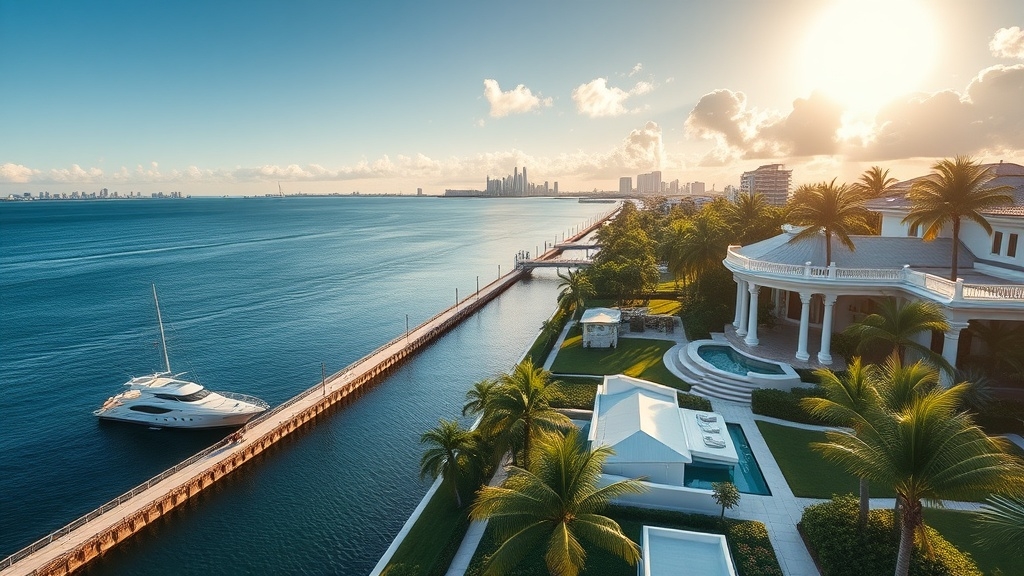
The site still carried strong fundamentals. It sits on prime downtown land near transportation hubs, the Miami Heat Arena, Freedom Tower, and Biscayne Boulevard.
Experts also regarded it as one of the few remaining undeveloped waterfront parcels in the area. Those advantages supported demand and shaped public perception.
Comparable downtown sales helped justify the restricted-interest valuation. As a result, $42 million represented a defensible price for a limited stake in a scarce, strategic property.
Why Miami-Dade Valued the Site at $67M
Scarcity drove Miami-Dade’s $67 million valuation more than the site’s current use as a former college parking lot.
The appraiser first looked to comparable sales near Biscayne Boulevard. Waterfront adjacency, downtown density, and arena-facing frontage all supported premium pricing.
The three-acre footprint in a high-density commercial zone further increased its value. That zoning sharpened redevelopment potential and boosted speculative development appeal.
Key Drivers Behind the Assessment
The Cost Approach mattered less for raw land. Still, replacement cost and depreciation remain part of the county’s broader valuation framework.
Florida law then separates market value from taxable value. Caps, exemptions, and assessment rules can all affect the final tax treatment.
| Factor | Effect |
|---|---|
| Comparable sales | Established baseline |
| Prime location | Raised demand |
| High-density zoning | Expanded potential |
| Legal assessment rules | Adjusted taxation |
What the Trump Library Foundation Owns Now
As of February 6, 2025, the Donald J. Trump Presidential Library Foundation holds legal title to the 2.6-acre parcel at 531 NE 2nd Avenue in downtown Miami.
Property records identify the foundation as the single owner of the site next to the Freedom Tower.
Core Assets
The parcel overlooks Biscayne Bay and offers notable waterfront views.
It sits across from Kaseya Center and near museums, Bayside Marketplace, and PortMiami.
The location remains one of the final undeveloped sites on this Biscayne Boulevard stretch.
Control and Obligations
The transfer was finalized through the state trust fund board deed after the foundation paid a nominal $10 fee.
Trustee roles center on Eric Trump, Michael Boulos, and attorney James Kiley, who oversee the foundation’s real estate assets.
The deed requires construction to begin by February 2030.
Why the Miami Land Deal Faces Scrutiny
Several legal and political challenges have turned the Miami land deal into a high-stakes public dispute.
Critics argue the September 23, 2025, board meeting lacked procedural fairness. They say the public notice mentioned only a possible real estate transaction, not a vote to give the land to the state.
Dr. Marvin Dunn sued under Florida’s Sunshine Law, and Judge Mavel Ruiz temporarily blocked the transfer.
| Issue | Allegation | Effect |
|---|---|---|
| Notice | Vague agenda | public trust weakened |
| Comment | Limited input | fairness concerns |
| Value | $10 transfer | benefit questioned |
A federal lawsuit also claims the transfer violates the Domestic Emoluments Clause. It argues the deal confers an unlawful benefit through land valued above $67 million.
Appeals are continuing. For now, the parcel remains under college control pending final resolution.
Assessment
The $42 million sale of the Miami presidential library lot closed at a steep discount to Miami-Dade’s $67 million valuation. The gap is intensifying scrutiny of the transaction.
Control of the site has shifted, but questions remain over pricing, public interest, and the foundation’s remaining assets.
The deal underscores persistent risks in high-profile public land transfers. Political visibility, valuation gaps, and opaque terms can deepen concern over whether taxpayers received fair market value.