

Why Is U.S. Retail Real Estate So Tight?
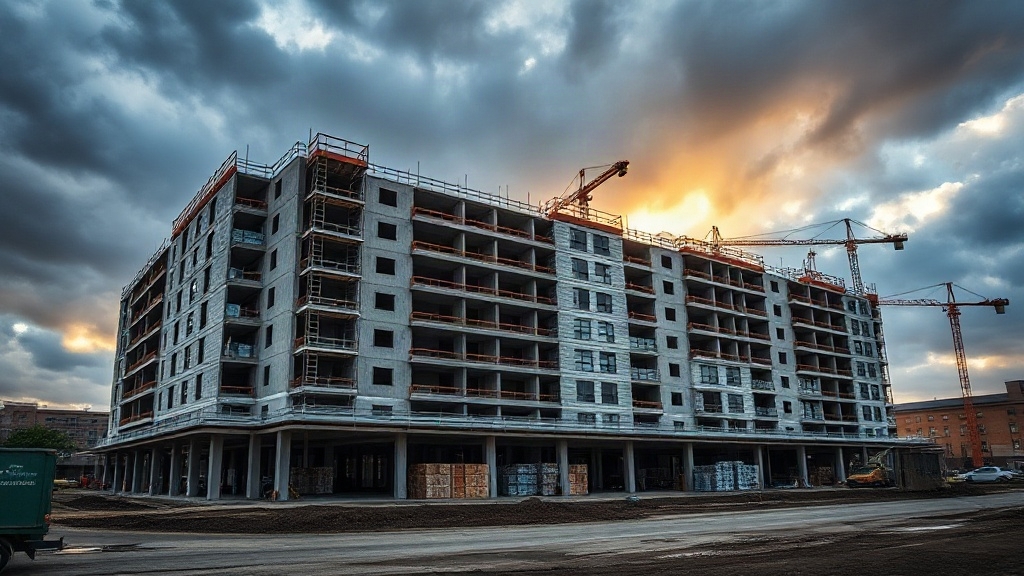
Scarcity defines the U.S. retail property market in 2026, as new construction remains far below what would be needed to loosen conditions.
The active pipeline sat below 0.3% of inventory by midyear, with only 2.1 million square feet delivered in Q1 and 2.3 million in Q2. Only 32 million square feet is expected to be added in 2026, reinforcing the limited pipeline.
Vacancy Compression
Vacancy stayed near historic lows, with national readings around 4.9% to 6.0%.
That remains well below long-run averages.
Available space is especially scarce in well-located, grocery-anchored, necessity-oriented centers.
In markets like Northern New Jersey, historically low vacancy has supported strong investor interest in necessity-anchored retail properties.
Consumer preferences continue to shape demand in those formats.


Cost Barriers Deepen Shortage
Development remains blocked by elevated construction costs, limited financing, and zoning constraints.
Developers often need rents above $30 to $35 per square foot, while market rents remain in the mid-$20s.
Older stock also is not being replaced fast enough.
That is tightening usable supply even further.
Why Is U.S. Retail Leasing Demand Rising?
Across much of the country, U.S. retail leasing demand is rising because consumer spending has remained resilient enough to support tenant expansion, even as sales growth cools from earlier peaks.
This consumer resilience is sustaining foot traffic, supporting value-driven and necessity-based formats, and keeping net absorption positive nationwide.
Signals of Persistent Tenant Urgency
More than 20,000 leases were signed in first-half 2026.
Those commitments totaled about 75 million square feet.
Q2 2026 net absorption reached 10.2 million square feet.
Median lease-up time fell below seven months.
Leasing velocity remains solid as grocery, discount, restaurant, health, and service-oriented tenants expand.
With construction limited, more tenants are competing for existing space, especially in strong trade areas.
In markets such as Denver, anchor tenants continue to strengthen retail center appeal by driving foot traffic and supporting property valuations.
That reinforces durable demand without signaling any broad collapse.
How Low Supply Is Pushing Retail Rents Up
Tight inventory is keeping retail landlords in a position of pricing strength as new supply remains historically limited.
National asking rents continued rising in 2026, with reported year-over-year gains ranging from 1.9% to 2.4%. Forecasts still called for growth despite economic uncertainty.
That resilience reflected landlord leverage created by scarce available space and four straight quarters of positive net absorption.
Construction Drought Limits Relief
New construction remained exceptionally thin. The pipeline equaled roughly 0.3% of existing inventory.
Total 2026 additions were expected to reach only 32 million square feet, or 0.4% inventory growth. Deliveries were also offset by demolitions, keeping net new supply muted.
With development costs above prevailing rents, many projects remained difficult to justify. That reduced the chances for meaningful tenant concessions and helped asking rents hold firm nationwide.
Which U.S. Retail Formats Have the Lowest Vacancy?
That same supply drought is most visible in the retail formats with the least space available. General retail and freestanding smaller-format units continue to lead the market in tightness.
JLL put overall U.S. retail vacancy at 4.4% in Q1 2026. Well-located space under 10,000 square feet posted an even lower 2.7% vacancy.
Freestanding general retail also recorded 0.4 million square feet of positive absorption. That reflects persistent demand for freestanding space.
Tightest Formats by Availability
- General retail posted the lowest vacancy in the research set.
- Freestanding smaller-format space stayed especially constrained.
- Strip, power, and neighborhood centers remained at or below 5%.
- Open-air shopping centers held a still-tight 5.5% vacancy.
Muted construction has kept supply lean for years. That pressure is strongest in necessity-oriented, well-located formats.
Occupancy in those formats remains exceptionally tight nationally.
Why Investors Are Bullish on U.S. Retail
Investors are leaning back into U.S. retail as steady consumer spending, resilient leasing demand, and chronically low new supply reinforce the sector’s income outlook.
Retail sales stayed positive through mid-2026, showing households continued spending despite inflation, fuel costs, and tariff uncertainty. That stability supports tenant revenue, rent collections, and broader consumer confidence.
More than 20,000 leases totaling about 75 million square feet were signed in the first half of 2026. Grocery, discount, and service-focused tenants led demand, reflecting the importance of physical locations even with digital integration.
Supply conditions remain unusually tight. Inventory growth is projected at just 0.4% in 2026, while vacancy near 5% helps landlords preserve pricing power.
Capital has responded. Retail investment exceeded $33 billion in the first half, with institutional participation and large transactions both rising sharply.
Assessment
U.S. retail real estate is strengthening as limited new construction collides with durable leasing demand.
Vacancy remains near historic lows across necessity-based centers, neighborhood strips, and prime open-air formats. This is giving landlords unusual pricing power.
Rising rents and constrained supply are reinforcing investor confidence, particularly for assets tied to grocery, discount, and service-oriented tenants.
The sector’s momentum reflects a market defined by scarcity, disciplined development, and sustained occupier demand rather than speculative expansion.