

Key takeaways: The November 3, 2026 midterms arrive with housing affordability as a top voter issue and mortgage rates at three-year highs, with Freddie Mac’s average 30-year rate at 7.4%. Control of Congress will decide whether the new federal housing law gets funded and implemented, while state and local ballot measures on rent control, property taxes, and zoning could change a property’s economics faster than anything in Washington. Investors should underwrite today’s rates and read their local ballots as closely as the national headlines.

Housing is the ballot issue this year
Election Day is November 3, and this cycle housing is not a side issue. A national survey this spring found 79% of registered voters calling housing costs an extremely or very important issue.
Affordability is the reason. Analysts describe a market that is slogging along, with high prices, thin inventory, and buyers who have choices but not much relief.
Rates are making it worse at the worst political moment. CNN reported this week that Freddie Mac’s average 30-year fixed rate reached 7.4%, up from 6.27% a year ago, and the Mortgage Bankers Association put its average at 7.49% earlier this month, the highest since November 2023.
The result is a K-shaped market. Cash-rich and high-income buyers are driving most transactions, while first-time and lower-income buyers sit out, a split playing out against a national backdrop where sellers now outnumber buyers by 63%.
Rates answer to the bond market, not the ballot box
Mortgage rates follow long-term Treasury yields, and those are elevated for reasons an election cannot fix overnight. The 10-year Treasury yield recently pushed above 5.3%, and the 30-year reached its highest level since 2004.
Federal borrowing is part of the pressure. With the national debt past $40 trillion, the National Association of Realtors’ chief economist Lawrence Yun has warned that deficits absorb private savings that would otherwise fund mortgages.
The Federal Reserve, meanwhile, raised its benchmark rate a quarter point to a range of 3.75% to 4.00% and did it unanimously. Chair Kevin Warsh backed the move on inflation that is still running above target, despite White House pressure for lower rates.
For investors, the takeaway is discipline. Higher rates shrink DSCR loan proceeds, raise required equity, and cut cash-on-cash returns, so deals should be underwritten to the financing that exists today, not the rate cut a campaign promises.


Washington’s real lever: funding the housing law
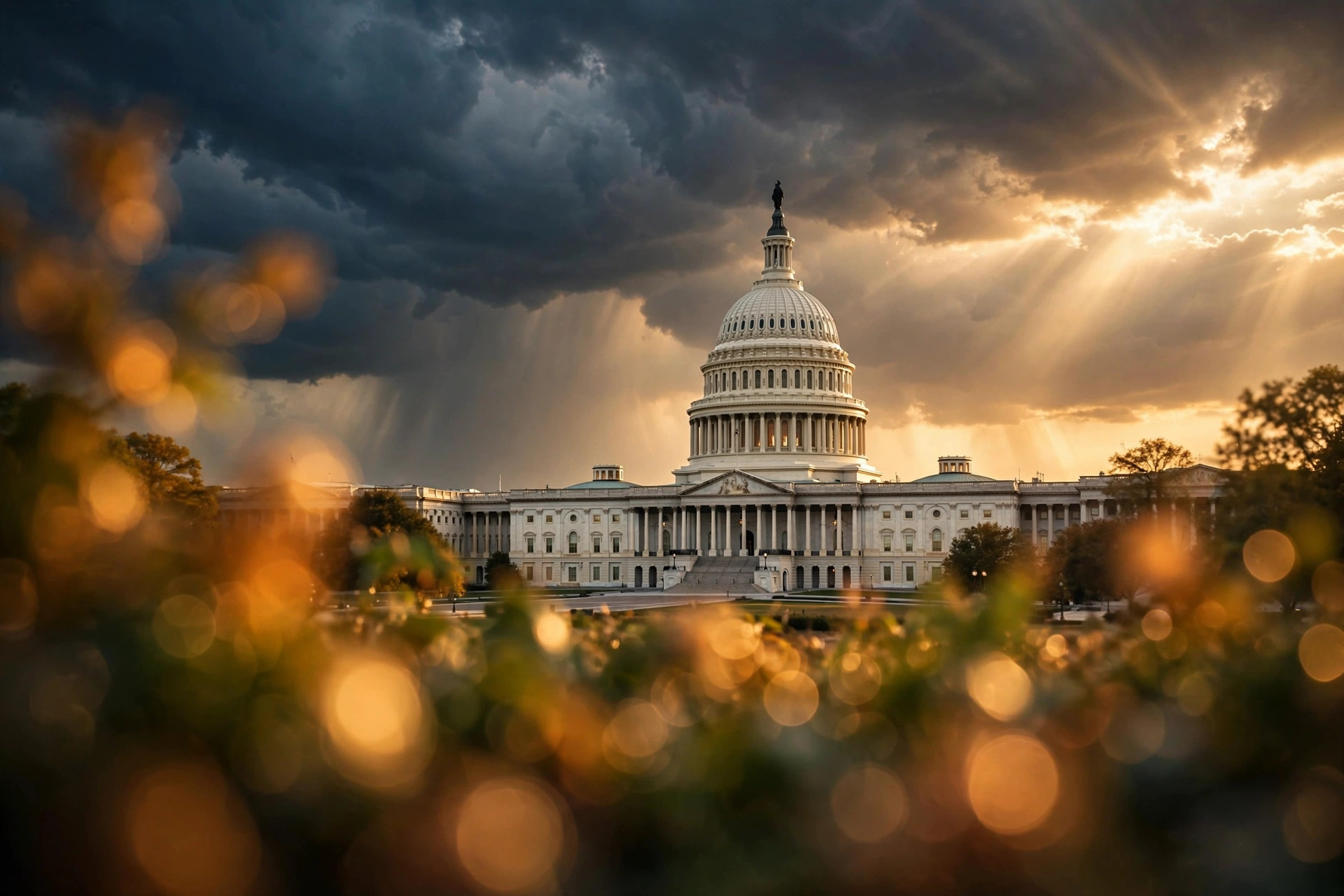
Congress passed the 21st Century ROAD to Housing Act in July with broad bipartisan support. The law targets regulatory reform, housing production, and incentives for state and local governments to allow more building.
Passage was the starting line, not the finish. Several of the law’s biggest supply provisions still need HUD rulemaking, new programs, and future appropriations, which means the Congress elected in November decides how much of it becomes real.
The federal tax framework investors underwrite to is comparatively settled after the 2025 tax law. That stability is why builders keep making production bets like the 528-unit tower proposed on San Francisco’s Mission Street.
One campaign trend deserves a line in every single-family rental model. More than two dozen congressional candidates have pledged to restrict private equity and hedge fund purchases of homes, more than double prior cycles, and those pledges target exactly the institutional strategies that scaled after 2020.
The ballots that can reprice a property overnight
Commercial real estate advisors make a useful distinction this year. Federal results change the broad economic and tax environment, but state and local decisions change the economics of an individual property.
Massachusetts has a proposed statewide rent-control initiative and a ballot question, Question 7, that would allow single-family homes on qualifying lots of at least 5,000 square feet with public sewer and water. California’s Proposition 45 would set new timelines for environmental review and litigation on housing and infrastructure projects.
Property tax measures are on ballots in several other states. New York City’s rent freeze, now in effect and being fought in court, shows how quickly a local decision can rewrite a rent roll.
Regional divergence cuts both ways. Emerging hot spots like the Denver metro’s latest buyer magnet reward investors who read local policy early, and deals like the $32 million Evanston apartment sale show capital is still moving where the rules are predictable.
An investor’s checklist for the next 19 days
Watch Freddie Mac’s weekly rate survey every Thursday between now and the vote. Watch the Federal Reserve’s October meeting for any shift in the inflation fight.
Read your own state’s ballot with a property lens: rent control, property taxes, zoning, and environmental review timelines. Map which of your properties sit inside those blast zones.
Stress-test every pending deal at today’s rates with flat rent growth where regulation is pending. If a deal only works with a post-election rate drop, it does not work yet.
Coverage referenced: CNN; Reuters reporting; Housing Affordability Institute; Summer Street Advisors.