


Key Takeaways
- By one careful measure cited by Boston Fed President Susan M. Collins, the construction sector produced about 40 percent less output from a given set of inputs in 2020 than it did in 1970, and construction productivity has fallen further since the pandemic.
- Collins opened the Boston Fed’s 70th Economic Conference on housing on November 13, 2026 by warning that tighter policy in the near term can limit the expansion of the housing stock, even though stable prices help housing over the longer run.
- Estimates of the national housing shortage range from several million units to none at all, and Collins said the shortage looks quite different across places, incomes, and ages.
- On November 14, Collins told reporters she favored gradual rate increases, saying a steady, gradual path seems appropriate at the moment, with the Federal Reserve widely expected to raise its benchmark rate at the December 8-9 meeting.
The most useful housing number of the week did not come from a sales report. It came from a conference podium in Boston.
Opening the Federal Reserve Bank of Boston’s 70th Economic Conference on November 13, 2026, President and Chief Executive Officer Susan M. Collins pointed to a measure showing that building homes has become far less efficient over half a century, even as productivity picked up across much of the rest of the economy. Her prepared remarks, titled “Observations on Housing Market Challenges,” are the primary source for the speech figures in this article.
Building Got Less Efficient While the Rest of the Economy Got More
Collins put the contrast plainly. While productivity has picked up across much of the economy in recent years, that is not true in construction.
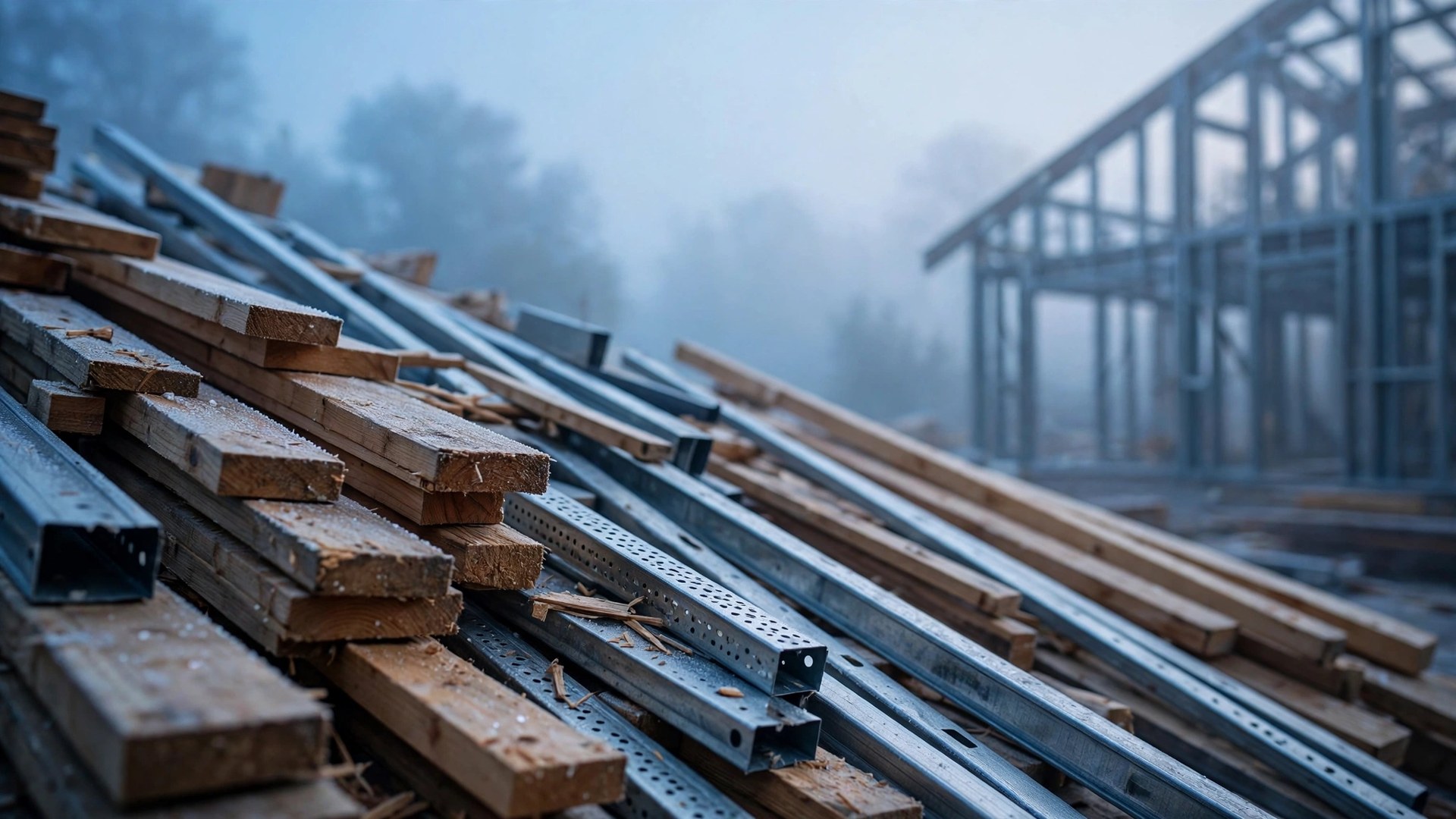
By one careful measure, she said, the construction sector produced about 40 percent less output from a given set of inputs in 2020 than it did in 1970. Construction productivity has fallen further since the pandemic.
That measure comes from a paper by Chad Syverson of the University of Chicago Booth School of Business, prepared for this conference. Syverson’s session examined why productivity in construction has lagged, keeping the cost of building homes high, and whether new technologies might help.
Productivity is only part of the supply picture, Collins noted. Zoning, permitting, and other local constraints also shape what gets built and where, a theme the conference took up with researchers Albert Saiz and Ed Glaeser.
The stakes are larger than one industry. Collins noted that housing drove about 17 percent of GDP growth during the mid-2000s housing boom, defined in her remarks as the fourth quarter of 2001 through the third quarter of 2005, and about 41 percent of the output contraction during the subsequent bust, defined as the fourth quarter of 2007 through the second quarter of 2009.
| Figure Collins cited on November 13, 2026 | Reading |
|---|---|
| Construction output from a given set of inputs, 2020 versus 1970 | About 40 percent less |
| Housing share of GDP growth, mid-2000s boom | About 17 percent |
| Housing share of the output contraction, subsequent bust | About 41 percent |
| Median net wealth of Massachusetts homeowners, Mass ECHOS survey | $790,500 |
| Median net wealth of Massachusetts renters, Mass ECHOS survey | $1,500 |
| Range of national housing shortage estimates | Several million units to none at all |
The wealth figures come from the Massachusetts Economic Conditions and Household Opportunity Survey, released this year by the Boston Fed with partners including The Boston Foundation. They are Massachusetts figures, not national ones, and they show why Collins tied housing to wealth building throughout her remarks.
The Rate Path That Helps Housing Later Can Hurt It Now
Collins was direct about the tension inside Federal Reserve policy. Higher rates can slow construction and make homes more expensive to buy, and she said that trade-off is live right now.
She said: “Tighter policy in the near term can limit the expansion of the housing stock needed to ease housing market pressures. It can also affect consumers’ willingness and ability to obtain a mortgage and, hence, housing demand.”
Her case for accepting that pain is the long run. She said: “Over the longer run, stable prices create predictable economic conditions that are good for housing.”
That tension is not abstract this month. Daily mortgage rates jumped to 7.50% in three days last week, erasing five weeks of gains, while the weekly average fell to 7.11%, and builder credit tightened for a 19th straight quarter, with a spec home loan costing 11.83% all-in.
Collins added her own rate view a day later. Speaking to reporters at the conference on Saturday, November 14, she said she supported a steady pace of modest interest rate increases, according to Reuters.
She told reporters: “a steady, gradual path seems appropriate to me at the moment. But I’m open-minded.” She also said: “I do see the risks as two-sided on the real side of the economy.”
Reuters reported that the Federal Reserve is widely expected to raise its benchmark interest rate, currently in the 3.75%-4.00% range, at its December 8-9 policy meeting. Collins was not a voting member of the Federal Open Market Committee in 2026 and cycles into that role in 2028, according to Scotsman Guide, so her comments signal direction rather than cast a December vote.
Her closing line in the prepared remarks summed up the whole conference: “There is no ‘silver bullet’ that will solve the many challenges facing housing today. It will take constructive collaboration among many parties.”


What a Beginner Investor Does With a 40 Percent Productivity Gap
The fresh insight is that the housing shortage is not only a zoning story or a rates story. If builders produce about 40 percent less from the same inputs than they did in 1970, new supply arrives slower and costs more even when permits and financing line up.
- Underwrite at today’s rates, not at a hoped-for rescue. A senior Fed president favors gradual increases and says there is no silver bullet. A deal that only works if rates fall fast is a deal built on a speech nobody gave.
- Treat existing homes as the scarce asset they are. Slow, expensive new construction competes less with a well-kept existing rental. That is the same backdrop behind multifamily occupancy holding at 69 while developer confidence fell to 41.
- Measure your own market’s shortage, not the national headline. Collins said: “The shortage is not just about one number. It looks quite different across places, both here in New England and around the country.” National estimates range from several million units to none, so local vacancy, permits, and days on market decide your deal.
- Watch the age of the local stock. Collins noted the median housing unit was built in 1964 in Rhode Island, 1965 in Massachusetts, and 1968 in Connecticut, compared with 1982 for the nation. Older stock can provide less real housing than a simple unit count suggests, and it carries older systems a buyer must price.
- Look for small supply wins while the big fix lags. Collins cited Vermont’s White River Valley, where local teams helped homeowners use a new state law that makes accessory dwelling units easier to build. Small, legal added units are one of the few supply moves a beginner can actually make.
One measurement note from the speech is worth keeping. Shelter is about one-third of the Consumer Price Index, mostly rent of primary residence and owners’ equivalent rent, so housing costs feed the inflation data that drives the rate decisions that then feed back into housing.
The bottom line is a two-part discipline. Expect building to stay slow and costly because the productivity problem is decades old, and expect rate relief to come gradually if it comes at all, because the officials describing the problem are in no hurry to declare it solved.
Data source: Federal Reserve Bank of Boston, “Observations on Housing Market Challenges,” opening remarks at the 70th Economic Conference, November 13, 2026; Reuters reporting from the conference, November 13-14, 2026.