

What Does the San Francisco BUILD Act Do?
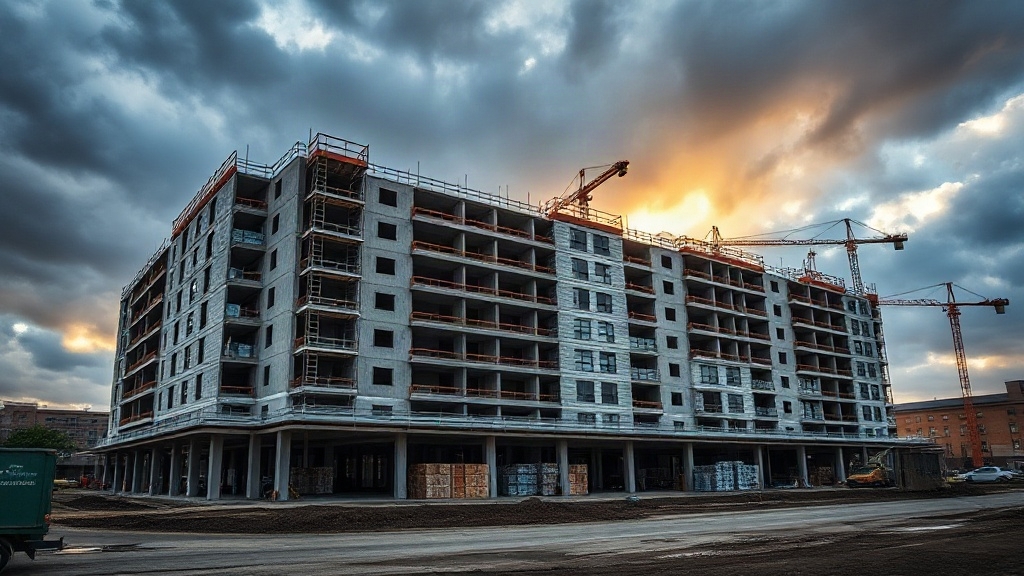
At its core, the San Francisco BUILD Act is a legislative package designed to restart stalled housing and commercial development.
It does this by cutting transfer taxes on certain large real estate transactions while keeping existing rates in place for single residences and deals under $10 million.
City leaders present it as an economic and jobs stimulus aimed at housing production, union employment, and downtown recovery.
The measure is intended to restore a more development-friendly tax structure after earlier changes raised costs for major projects.
Supporters argue the policy could improve housing financing by lowering per-unit costs and helping entitled projects become financially viable.
Officials have cited savings of roughly $32,850 per unit, which allied housing groups describe as about 5 percent of project costs.
The package is also framed as helping projects move forward despite difficult capital markets and long permit timelines. Recent turmoil in Seattle, where developers froze tower projects amid soaring interest rates, underscores how borrowing costs can derail housing production.
Supporters also say the plan could help advance as many as 50,000 entitled homes that have been approved but remain stalled.
Which Transfer Tax Rates Would the BUILD Act Cut?
Although the BUILD Act is framed as a broader development stimulus, its transfer-tax cuts are narrowly limited to San Francisco’s two highest tax brackets on large real estate transactions.
For transfers of at least $10 million but under $25 million, the proposal would reduce the transfer tax from 5.5% to 2.75%.
For transfers of $25 million and above, it would lower the rate from 6% to 3%.
Recent luxury-market signals, including a record mansion sale in Atlantic Beach, highlight how high-end transactions can influence pricing expectations and investor behavior.
Narrow Reach and Rate History
In both brackets, the reduction equals 50% and is presented as a return to pre-2020 rate history.
The lower rates would apply only to qualifying transfers occurring on or after July 1, 2026, if enacted.
Single-family residences and transfers below $10 million would remain unchanged.
Other existing brackets, including rates from $100 to $10 million, are not affected.


What Is the BUILD Act’s Status Now?
Standing as a proposal rather than a completed law, the BUILD Act’s transfer-tax cuts were introduced in February 2026 and still required a 30-day hold, a budget hearing, and two Board of Supervisors votes in the reported record.
This policy timeline left the measure in ordinance form, not as an enacted change.
Public reporting also indicated a stated July 1, 2026 operative date if approved.
Linked Fiscal Path
The transfer-tax proposal moved alongside a companion November 2026 ballot measure focused on foreclosure-related tax changes.
Officials presented that separate measure as part of a revenue-neutral strategy.
Stakeholder reactions reflected the unresolved status.
Supporters tied the proposal to stalled housing and commercial projects, while fiscal critics pointed to budget-deficit pressures and possible revenue loss.
Later 2026 coverage said the broader BUILD Act effort was paused, reinforcing that the transfer-tax cuts remained unsettled.
Why Does the San Francisco BUILD Act Target Large Sales?
The proposal centered on large sales because San Francisco’s highest transfer-tax rates applied to the biggest real estate transactions after Proposition I’s 2020 increase. That raised costs most sharply for multifamily, commercial, and other non-single-residence deals.
Supporters treated those taxes as direct upfront project costs. They argued that steep rates made major transfers harder to complete and slowed development activity tied to housing production.
City estimates said lower taxes could reduce costs by about $32,850 per unit, improving whether projects could pencil. Advocates said transfer incentives were especially relevant for entitled projects stalled by feasibility gaps.
The focus on large sales also reflected competitiveness concerns. Supporters said San Francisco’s rates had become unusually high compared with other cities.
They argued equity concerns were addressed by concentrating relief on development-linked property types rather than single residences.
How Would the BUILD Act Stay Revenue Neutral?
In budget terms, revenue neutrality would depend on the baseline used to score the measure and on whether reduced transfer-tax burdens were fully offset by tax increases elsewhere.
That means the tax baseline matters as much as the policy itself.
Under current-law scoring, preserving or extending a tax preference can count as a revenue loss, even if taxpayers see no new cut.
Offset Sources and Forecast Risk
For the BUILD Act, revenue neutrality would require offset sources inside the tax code, not general spending reductions, if the rule is true revenue-neutrality.
Those offsets could come from higher transfer-tax collections on large multifamily and commercial sales, broader tax bases, or fewer special preferences.
The structure works only if receipts from large transactions reliably cover the reduced burden on smaller or more common transfers.
Forecasting errors could break neutrality in practice.
Assessment
The BUILD Act reflects San Francisco’s effort to recalibrate transfer taxes as high-value property sales remain under pressure.
By lowering rates on large transactions while preserving overall revenue through a broader tax structure, the measure is designed to address stalled deal activity without abandoning fiscal constraints.
Its ultimate impact depends on voter approval and market response.
That leaves owners, investors, and city budget planners facing continued uncertainty in an already fragile commercial real estate environment.