

Why Is Cleveland, Texas Leading Foreclosures?
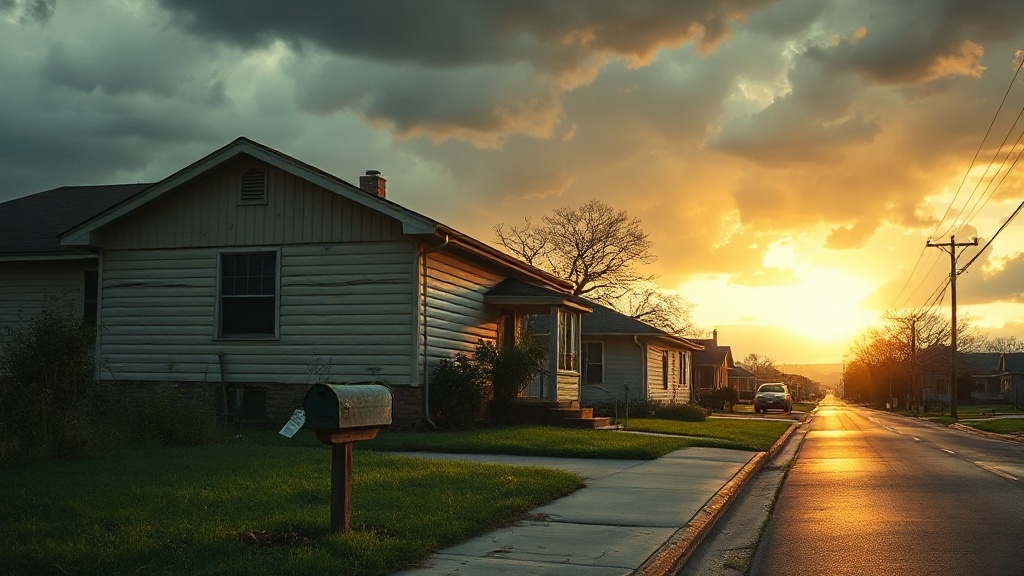
Much of Cleveland’s foreclosure activity is concentrated in ZIP code 77327.
From 2020 through 2025, 8,189 foreclosures were recorded there, or about 1,365 filings a year.
That concentration points to a localized housing crisis rather than a broad citywide pattern.
Reporting identifies 77327 as the area driving Cleveland’s national visibility in foreclosure data.
ABC News data team identified 77327 as the foreclosure leader in the reported data.
Payment Pressure and Loan Risk
A major explanation is rising property tax pressure.
Higher taxes often raise monthly escrow payments even when mortgage principal and interest stay the same.
In fast-growing areas, higher assessments can quickly strain already tight household budgets.
Rising mortgage rates have also increased monthly housing costs across Texas, adding to affordability stress for already vulnerable borrowers.
Local reporting also points to risky lending as a key factor.
Research has consistently linked weak loan quality and subprime borrowing to much higher foreclosure rates.
That risk grows when financial stress leaves borrowers unable to absorb sudden payment increases.
How High Are Texas Foreclosures in 2026?
Across early 2026, Texas foreclosure activity stayed elevated near the 4,000-filings mark each month. That points to persistent distress rather than a one-time spike.
Statewide filings measured 3,973 in March and jumped to 4,723 in April. They then dropped to 3,774 in May before rising again to 4,091 in June.
That range shows volatility, but not relief. Totals remained clustered between roughly 3,700 and 4,700 statewide. Nationally, foreclosure starts rose 20% year over year in October 2025, reinforcing that Texas was part of a broader increase in housing distress.


Housing Pressure Dominates
Residential properties made up most filings throughout the period. They accounted for 4,142 of April’s 4,723 filings.
In May, residential filings totaled 3,318 out of 3,774. In June, they made up 3,677 of the state’s 4,091 filings.
Commercial filings stayed lower, though still elevated. These levels suggest foreclosure pressure is being driven primarily by housing stress, mortgage delinquencies, and broader regional unemployment trends rather than isolated commercial weakness alone.
Which Texas Counties Have the Most Foreclosures?
Texas foreclosure pressure concentrates most heavily in a handful of major counties, with Harris County standing far ahead of the rest of the state.
Harris County ranked first in April 2026 with 845 filings, after also leading March with 614.
That repeated lead keeps the Houston area at the center of statewide foreclosure tracking.
Other Major Hotspots
Bexar County ranked second in April with 443 filings and second again in March with 317.
Its steady volume keeps San Antonio among Texas’ clearest foreclosure hotspots.
Dallas County followed in third place in April with 347 filings, after posting 295 in March.
Tarrant County remained in the upper tier as well, including 237 filings in March.
Beyond the biggest metros, Hidalgo, Travis, Collin, Montgomery, and Fort Bend also showed elevated foreclosure activity statewide.
Are Texas Foreclosures Mostly Residential or Commercial?
County-level hotspots show where foreclosure pressure is heaviest, but the property mix shows what is actually driving that volume.
Recent Texas data show foreclosures are mostly residential. In May 2026, filings totaled 3,318 residential versus 456 commercial.
In June, the gap widened to 3,677 residential versus 414 commercial. March data also showed commercial cases as a minority, with 547 out of 3,973 total filings.
Commercial Activity Remains Secondary
Across these monthly snapshots, residential properties account for roughly 86% to 90% of foreclosure activity. Commercial properties generally represent only about 10% to 14%.
That means Texas auction volume is being driven mainly by home distress, especially single-family properties. Commercial foreclosure activity is still meaningful, and Texas ranks high nationally for it, but statewide totals remain overwhelmingly residential overall.
Will Texas Foreclosures Keep Rising?
Likely, foreclosure activity in Texas will keep trending higher on an annual basis, even if monthly totals continue to swing up and down.
ATTOM data showed Texas among the highest-rate states and the national leader in total filings.
Monthly counts moved from about 3,973 in March to 4,723 in April, down to 3,774 in May, then up to 4,091 in June.
Why the Trend Still Points Up
That pattern suggests volatility around a higher baseline, not a durable retreat.
National filings stayed well above year-ago levels, while foreclosure starts and completed repossessions also increased.
Higher borrowing costs, affordability strain, and distressed inventory continue to pressure vulnerable homeowners.
Mortgage modifications may slow some cases, but they are unlikely to erase broader stress.
Interest rate forecasts also matter, because elevated rates can keep payment pressure and refinancing limits in place statewide.
Assessment
Texas foreclosure pressure remains severe, with Cleveland drawing outsized attention as distress concentrates in vulnerable neighborhoods.
Statewide filings in 2026 reflect persistent strain from high borrowing costs, insurance burdens, and uneven household finances.
Residential properties continue to dominate activity, though commercial stress remains a secondary threat in select markets.
Available data indicates foreclosure risk is unlikely to fade quickly, especially in counties where delinquency, tax pressure, and affordability erosion continue to intensify.