Key Takeaways
- Nikki Beauchamp shows that long-term success comes from trust, relevance, and relationship-building, not constant self-promotion.
- Strong boundaries help agents serve clients better without sacrificing peace, focus, or personal well-being.
- AI can make professionals more efficient, but genuine human connection is still the advantage that separates great agents from forgettable ones.
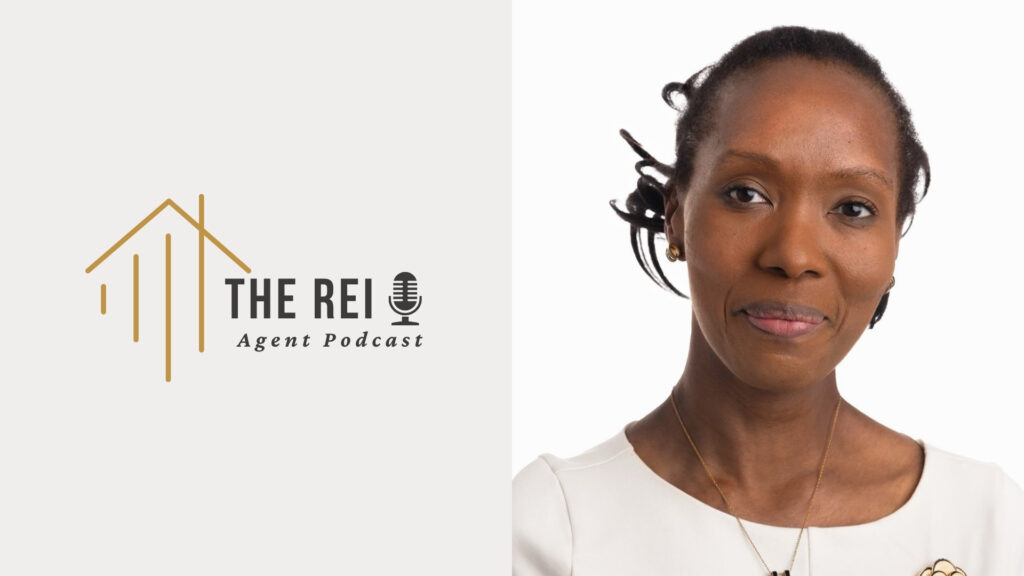
The REI Agent with Nikki Beauchamp
Value-rich, The REI Agent podcast takes a holistic approach to life through real estate.
Hosted by Mattias Clymer, an agent and investor, alongside his wife Erica Clymer, a licensed therapist, the show features guests who strive to live bold and fulfilled lives through business and real estate investing.
You are personally invited to witness inspiring conversations with agents and investors who share their journeys, strategies, and wisdom.
Ready to level up and build the life you truly want?
Follow and subscribe to The REI Agent on social


The Quiet Power of Building a Career People Can Believe In
In this episode of The REI Agent Podcast, Mattias Clymer sits down with Nikki Beauchamp, a luxury real estate agent with Sotheby’s International Realty in New York City, for a conversation that goes far beyond listings, sales, and market cycles.
This is not just a story about luxury real estate. It is a story about trust, language, boundaries, service, and the kind of relationship-driven business that can survive change, pressure, technology, and time.
Nikki brings a calm, thoughtful, and deeply human perspective to the real estate industry. Her journey moves through music, languages, philosophy, economics, computer science, statistics, tech, finance, and eventually into a real estate career built on one powerful principle: people matter most.
“The relationship is still at center of everything for me.”
That one sentence captures the heart of the episode. Nikki does not present success as something loud, flashy, or forced. Instead, she shows how consistency, trust, relevance, and genuine care can turn a career into something much deeper than a transaction machine.
The Multilingual Advantage That Became a Human Advantage
When Language Becomes More Than Words
Nikki grew up around multiple languages, cultures, and ways of seeing the world. English, French, Spanish, Portuguese, and later Russian all became part of her personal and professional landscape.
But what makes her story powerful is not just that she can speak to different people. It is that she understands how language creates connection.
For Nikki, learning languages is not simply about sounding impressive. It is about respecting people, understanding clients, and making others feel seen in moments that may already feel stressful or unfamiliar.
“I think it’s fun to learn new languages, and it’s a great way to connect with people.”
That mindset matters in a city like New York, where buyers, sellers, investors, families, artists, students, and professionals arrive from all over the world. A real estate agent in that environment is not only selling homes. They are translating needs, fears, dreams, timing, family pressure, lifestyle goals, and future plans.
Nikki’s background gave her a natural bridge into international relationships. She grew up in New York City, surrounded by friends from different cultures, backgrounds, and countries. Her parents joked that her friend group looked like the United Nations.
That upbringing quietly became part of her business foundation.
The Market Lesson Every Agent Needs to Hear
Know the Data So Well It Becomes Second Nature
When Mattias asks Nikki what helped her stay resilient through multiple market cycles, her answer is direct and practical.
She believes agents must know their product and know their market data. Not in a surface-level way. Not just enough to repeat a headline. They must know the market well enough to have a real conversation at any moment.
“The most important thing that any agent can do in any market is know your product really well and know the market data really well.”
Nikki shares how this can happen naturally, even while walking her dog or running into someone on the corner. If someone asks how the market is, she can respond with something timely, local, and useful.
That is where her approach becomes different. She does not lead with bragging. She does not rush to tell people what she just sold. She makes the information relevant to the person in front of her.
That is the lesson. Market knowledge only becomes powerful when it is connected to the listener’s world.
If someone is standing near a specific block, building, development, or neighborhood, Nikki can connect the market to that exact place. She understands that people do not care about generic information as much as they care about what matters to them.
This is where expertise becomes trust. When an agent can speak clearly, naturally, and specifically, people feel the difference.
The Career That Started with Referrals Before It Had a Name
When Helping People Became a Business
Nikki did not begin her career planning to become a long-term real estate agent. Her path moved through tech and finance. Her graduate studies were in statistics. She had a mind built for numbers, systems, and analysis.
But she was also a native New Yorker. People around her naturally asked where they should live, what they should do, and how they should think about their next move.
She kept sending people to a friend who was a real estate agent. Eventually, that friend told her she needed to get licensed because she was already creating real business opportunities.
Nikki resisted at first. She thought it would be too much work. But her friend saw something that Nikki had not fully claimed yet. She saw that Nikki was already trusted.
“Any introduction that I make has to be the right match.”
That line says a lot about Nikki’s character. She was not interested in throwing names around for personal benefit. She wanted introductions to be right. She wanted people to be matched well. She wanted the relationship to matter more than the referral fee.
That value system became the root of her business.
She eventually got licensed, sold her consulting practice, and gave real estate a try. What started as an experiment became a career she truly enjoyed. Not because the business was easy, but because she enjoyed her clients, her colleagues, and the relationships she built along the way.
The Stunning Difference Between Past Clients and Real Clients
Why Real Relationships Do Not Expire
One of Nikki’s most powerful perspectives is that she does not really think in terms of past clients. She thinks in terms of clients.
“I don’t really have past clients. I have clients.”
That idea may sound simple, but it changes everything.
A past client sounds like someone whose transaction is over. A client sounds like someone whose life, goals, family, property decisions, and future still matter.
This is where Nikki’s approach becomes deeply inspirational for agents who want more than a sales career. She is not just chasing the next deal. She is building a long-term place in people’s lives.
That does not mean every person is the right fit. Nikki is clear that if the relationship does not feel healthy or aligned, the client may be better served by someone else. That honesty protects trust on both sides.
It also gives her business a calmer, cleaner foundation. Instead of dreading calls from difficult clients, she wants to feel excited to hear from people. She wants calls to feel like natural conversations, not emotional alarms.
For newer agents, this is a major mindset shift. Instead of seeing cold calls as cold calls, Nikki suggests seeing them as an opportunity to build a relationship.
“I would view it as you are taking or creating an opportunity to build a relationship.”
That is not just a sales tactic. It is a different way of entering the business. It reminds agents that behind every number is a person, and behind every person is a story.
International Referrals Are Built on Trust, Not Tricks
The Name People Pass Along When the Experience Feels Right
Nikki’s international buyer network did not grow from gimmicks. It grew from relationships.
One of her early international clients started as someone renting an apartment. Over time, that person and their family decided to buy. Then they bought again. But Nikki makes it clear that the most important part was not simply the repeat transactions.
The real power was what happened after.
Whenever New York came up, that family told people to talk to Nikki. Her name became a trusted resource because the relationship felt safe, useful, and aligned.
That is the hidden engine behind referral-based business. People recommend professionals who make them feel protected. They recommend professionals who do not pressure them. They recommend professionals who understand the bigger picture.
Nikki also explains that even when someone does not transact, the relationship can still become valuable. Sometimes it is not the right time. Sometimes it is not the right property. Sometimes the best advice is to wait.
That honesty may delay a commission, but it strengthens trust.
And trust travels.
Luxury Service Is Personal, Focused, and Hard to Fake
Partner-Level Service in a World of Hand-Offs
Nikki has moved through different brokerage environments, but her decision-making filter remains consistent. She asks how each move will help her continue doing great work for her clients.
That is the difference between chasing a brand and choosing a platform that supports service.
“What matters most is how is this going to enable me to continue to do great work for my clients?”
She also explains why she has remained an independent practitioner rather than building a large team. Her belief is to partner when it makes sense for the client, not simply to create a larger structure for the sake of scale.
That can mean collaborating with a trusted colleague who has deeper expertise in a neighborhood or situation. It can mean bringing in another professional because the client will receive a higher level of service.
But Nikki is clear about the experience she wants her clients to have. They are not hiring her just to be passed around.
“When you hire me, you get partner level service.”
That philosophy extends to the attorneys, providers, and professionals she recommends. If her clients choose her because they want high-touch service, she wants the people around them to operate with the same care.
In a business where many people try to grow by removing themselves from the process, Nikki shows another path. Growth can also come from being more present, more selective, and more trusted.
The Boundary Lesson Every Ambitious Agent Needs
Accessibility Is Not the Same as Availability
One of the most valuable parts of the conversation is Nikki’s perspective on boundaries.
Real estate can easily become an always-on business. Calls, texts, emails, negotiations, time zones, and client emotions can pull an agent in every direction. Nikki understands the pressure, but she also understands the danger of having no limits.
Years ago, she removed her cell phone number from certain public-facing places and created a layer between public access and personal access. Her office number still allowed people to reach her, and she returned calls quickly. But now, when her cell phone rings, she knows it is a client or colleague who has been given that number directly.
That system helped her create one of the most important distinctions in the episode.
“That enables me to create a distinction between accessibility and availability.”
This is powerful because Nikki is not saying agents should be unreachable. She is saying they should be intentional.
If a client needs a 9 p.m. call because they are on the West Coast or because negotiations are time-sensitive, she can schedule it. If a client is in another country and the only workable time is 4 a.m., she can make that happen when needed.
But flexibility does not mean default availability.
“I can be flexible, but I don’t automatically have to be available by default.”
That sentence should hit home for every driven professional who has confused over-access with great service.
Nikki is willing to serve deeply. She is willing to adjust. She is willing to show up. But she is not willing to pretend that healthy service means unlimited access at all times.
She also shares that if someone needs constant unlimited access, she may not be the right person for them. That is not arrogance. That is clarity.
“If you need constant, unlimited access in that way, I might not be the right person for you.”
For agents, investors, entrepreneurs, and service professionals, this is a crucial lesson. The right boundaries can protect the quality of the work, the health of the professional, and the long-term strength of the relationship.
Sometimes the Right Client Relationship Needs New Rules
When the Break Becomes the Reset
Nikki shares a story about a client relationship that reached a hard stop. Both sides effectively fired each other. The relationship ended so clearly that there were no holiday greetings or soft follow-ups.
But later, the client came back. They asked whether Nikki would be interested in pitching again and acknowledged that she had always done great work for them.
The difference was that this time, they created new terms of engagement. The relationship returned with clearer expectations and boundaries that worked for both sides.
Nikki compares it to Ross and Rachel needing a break, and the moment brings some humor into a serious business lesson.
Sometimes a relationship does not need to be destroyed forever. Sometimes it needs a reset. Sometimes both sides need to grow into a better structure.
That is a mature way to look at business. Not every conflict has to become permanent bitterness. But not every relationship deserves to continue without change either.
Health, Movement, and the Power of Disconnecting
Why Phone-Free Time Helps Keep the Mind Clear
The conversation also touches the holistic side of success. Mattias asks Nikki how she stays centered in such a demanding business.
Her answer is refreshingly grounded. She walks. She loves Central Park. She walks with her dog. She works out. She enjoys spin, Pilates, and more recently, boxing.
What stands out is not just the exercise. It is the disconnection.
Nikki realized she liked certain workouts because she could not be on her phone. When the phone is locked away or out of reach, she can actually focus. She can disconnect from the endless pull of email, messages, and work.
In a business where responsiveness matters, this may feel difficult. But Nikki’s example shows that mental clarity is part of performance.
Boxing, in particular, became a powerful outlet for stress and intensity. She describes it as primal and helpful on difficult days.
That kind of physical release matters. Ambition without release can become burnout. Service without recovery can become resentment. A high-performance career needs outlets that restore the person behind the professional role.
The AI Lesson Nobody Should Ignore
Technology Should Make Agents More Human, Not Less
Near the end of the episode, Nikki delivers one of the strongest messages of the conversation. In a world obsessed with automation, AI, and efficiency, she believes relationships matter even more.
“If you lean in and you’re even more personal and intentional, I think that’s really going to set you apart.”
This is not an anti-technology message. Nikki uses AI in her workflows. She likes that it makes her more efficient. But she does not see AI as a reason to become less human.
Instead, efficiency should create more room for meaningful conversations, better follow-up, deeper listening, and stronger service.
She shares a story about returning a call for a listing that was no longer available. Instead of rushing through the conversation, she spent 90 minutes learning about the person, their family situation, and the larger need behind the call.
That conversation revealed a future need to sell a property and move a parent closer to family.
That is where real opportunity lives. Not in scripts alone. Not in automation alone. Not in blasting messages into the void.
Opportunity lives in attention.
The Hidden Deals Are Already Inside the Relationships
Why Staying Present Creates Future Business
Nikki makes a powerful point about residential real estate. Agents are often part of something intimate and personal.
Homes are tied to births, deaths, marriages, school changes, aging parents, family stress, career moves, identity shifts, and lifestyle transitions. The transaction is rarely just about property.
That is why disappearing after a deal is so costly. Nikki does not want to be the kind of agent who vanishes after closing. She wants to remain naturally integrated into her clients’ lives.
She gives an example from the pandemic, when a client needed help figuring out virtual story time for her child. Nikki tested platforms like Discord, Google Meet, Zoom, and Teams to help the family create some normalcy.
Was that directly about real estate? Not at first.
But it was about care. It was about usefulness. It was about being the person a client could call when life had a problem and Nikki had a skill that could help.
Over time, that same family had housing needs. They sold, bought bigger, and later needed help with another family property after a parent passed away.
Nikki’s lesson is clear. The next transaction is often not hiding in some mysterious lead source. It is often inside the relationships an agent already has.
“The opportunities for transactions are literally in the people we’ve already worked with.”
That is the kind of lesson that can change how an agent works. It shifts the focus from constant hunting to deeper nurturing.
The Book That Pulls the Whole Episode Together
Why The Speed of Trust Matters
When Mattias asks Nikki for a favorite book recommendation, she names The Speed of Trust by Stephen M. R. Covey.
The recommendation fits the episode perfectly because trust is the thread running through everything Nikki shares.
Trust is in the way she studies the market. Trust is in the way she makes referrals. Trust is in the way she protects boundaries. Trust is in the way she uses language. Trust is in the way she stays connected to clients long after the first transaction.
For Nikki, success is not only about technical expertise. It is also about how people feel when they work with her.
Do they feel heard? Do they feel protected? Do they feel pressured? Do they feel like the relationship matters even if a deal does not happen right away?
Those questions define the kind of business that lasts.
The Real Luxury Is Being Trusted
A Final Word on Building a Business That Still Feels Human
Nikki Beauchamp’s episode is a reminder that success does not always need to be louder. Sometimes it needs to be deeper.
Her story shows that a lasting real estate career can be built on knowledge, patience, boundaries, cultural awareness, and intentional relationships. It shows that luxury is not only about price point. Luxury is also about care, clarity, discretion, and trust.
For agents listening to this conversation, the message is both challenging and hopeful. The industry may keep changing. AI may keep advancing. Clients may keep expecting speed. Markets may keep shifting.
But the professional who knows the data, protects the relationship, communicates with care, and stays useful in the client’s real life will always have an advantage.
Nikki’s approach is not about becoming everything to everyone. It is about becoming deeply trusted by the right people.
“The focus on the relationships, the focus on building trust, the focus on expertise.”
That is the blueprint.
Not louder. Not colder. Not more automated.
More trusted. More intentional. More human.
Stay tuned for more inspiring stories on The REI Agent podcast, your go-to source for insights, inspiration, and strategies from top agents and investors who are living their best lives through real estate.
For more content and episodes, visit reiagent.com.
Articles Related to The REI Agent
- 10 Shocking Truths From the 2025 Global Housing Storm (And How Agents and Investors Can Thrive Through It)
- Shocking Balance Before Wealth (How Erica Clymer’s Holistic Practices Help Agents and Investors Thrive in Global Housing)
- Global Housing Storm (Holistic Solutions to Million-Dollar Dreams, Desperate Sellers, Rising Rents, and Shifting Wealth)
- Top 20 Terrifying Reasons Agents Will Never Be Investors (And How to Fix It)
- 10 Ways to Kill Real Estate Agent Burnout in 2025 (The Holistic Fix)
- Mattias Clymer is Silently Leading a $70M Movement That’s Changing Agent Lives
- Therapy You Didn’t Know You Needed (Holistic Wisdom for Real Estate Professionals)
- From For Sale Signs to Life Design (How The REI Agent Transforms Real Estate Into Holistic Wealth)
- Achieving Holistic Wealth and Success Through Real Estate (Insights from The REI Agent)
- Partnering with Investors (How Real Estate Agents Can Exponentially Maximize Profits)


Contact Nikki Beauchamp
Mentioned References
Transcript
[Mattias]
Welcome back to the REI Agent. My guest today is Nicole Beauchamp, a luxury real estate agent at Sotheby’s International Realty in New York City, with nearly two decades of experience specializing in the Upper East Side and international buyers, fluent in English and Spanish, and conversational in Portuguese, Italian, and French. Nicole has built a multilingual client network that spans borders and has maintained top production through multiple market cycles and brokerage transitions.
Nicole, welcome to the show.
[Nikki Beauchamp]
Thank you for having me. What a great way to start off the day.
[Mattias]
Yeah, I should have done that in a couple of different languages. Although the other language I speak, you don’t. And to be honest, my German skills have not really been very helpful in my real estate career around the world.
[Nikki Beauchamp]
You know what’s really interesting? German is one of the languages that I was thinking I wanted to start trying to learn, and I also need to sort of brush up the Russian. I think it’s fun to learn new languages, and it’s a great way to connect with people when you travel or when you have new clients from other countries.
[Mattias]
Yeah, if you are working with a client from Germany, for example, I mean, there’s a good chance that they speak some English, but they probably also speak some French or something else as well, because, you know, a lot of Europeans are multilingual. But yeah, my parents, my mom was from Switzerland. My, I was born in Mexico.
I don’t actually speak Spanish, but dad is a Spanish professor. I’m a black sheep, I guess, if you will. But he’s huge into languages.
And, you know, my mom spoke seven languages, you know, again, being from Europe throughout her life. I don’t know if she would be fluent in all those ever, but yeah, so it’s awesome. It’s kind of more rare to have that here in the United States like it’s becoming a lot more popular to be bilingual with Spanish, of course, but to learn some of the other languages is a lot more rare, so it’s awesome.
[Nikki Beauchamp]
Well, I think also when I was growing up, it was expected that we would learn to speak a couple of different languages. My family background, you know, in the Caribbean, but from Europe and then the Caribbean. So I guess the desire and interest of always knowing how to speak at least English, Spanish, and Portuguese is so closely related.
We also had family, you know, in Brazil and Portugal, so.
[Mattias]
Yeah, so when did you start learning these languages? Were you, you know, introduced to that early on or when did you start?
[Nikki Beauchamp]
So English, French, and Spanish were at home along with a little bit of Portuguese. And I think I started Russian kind of briefly in middle school. And then when I was in college, my best friend from college was of Ukrainian descent and we met literally the first day of freshman orientation.
And I did not need to take another language. I had sort of tested out of the foreign language requirement and she wanted to learn to speak Russian better so she could communicate with her grandparents. And I was like, oh, that sounds like fun.
So I took three years of Russian when I was in college. Why not? But also it’s worth noting that I have a background as a musician.
So I started piano when I was four and I picked up the clarinet when I was 10 and I went to a famous performing arts high school, the famed school that was a TV show, movie, et cetera. So I think that also helps in terms of picking up languages.
[Mattias]
Sure. Yeah, I can see that for sure. Yeah, and what a fun way.
I never learned German the formal way. I was, I grew up speaking Swiss German then I lived in Germany for a year after high school. And I kind of try to work my way through a Harry Potter book but I never really like had formal training on how to read or write or anything like that.
And when I came back, I also tested out of like 12 credits of German which I was blown away that I could. Not really being able to read very well. But that was certainly helpful and it gave me a little extra boost in my college.
But anyway, you’ve been through multiple market cycles in the Manhattan luxury scene. What is the biggest lesson you’ve learned about staying resilient and adapting your approach when the market shifts?
[Nikki Beauchamp]
I mean, I think the most important thing that any agent can do in any market is know your product really well and know the market data really well. And that enables you to engage in conversation about the market literally at the drop of a hat. I have had conversations while I’m walking my dog, I run into people on the corner and if someone says to me, well, how’s the market?
I can give them a timely answer. I can also probably tell them a property that I either maybe just walked through, just visited. I have a tendency, I tend to be a little bit understated.
So I’m not the agent who’s gonna talk about what I just sold or what I just listed necessarily as a starting point. I will use, oh, I was just at this new development or I just saw this property and then sort of get around to things. But that’s part of my personality.
[Mattias]
Well, and I think we should always be reminded about what people actually care about. Like with our social media, with how we interact with our clients, they probably don’t really care about what you just sold.
[Nikki Beauchamp]
Well, I think they only care if it’s directly relevant to them. So if we run into each other and we’re standing on the corner of 74th and Madison, it might be relevant that I just visited the new development on 74th and 3rd. It might be relevant that I had a buyer who missed out on a multiple bidding scenario on the kiddie corner of 74th.
So that, you’ve gotta make it relevant to where you are and who the people you’re talking to. And the best way of doing that is being so immersed in the data that it becomes second nature. And it’s so much easier to do today than it was 20, 25 years ago when I started.
[Mattias]
Yeah, speaking of, what got you into this wild world of real estate? You were into music and languages.
[Nikki Beauchamp]
I was into music, I was into languages. I kind of wanted to be a philosophy major. And my parents encouraged me to do what I wanted to do that would make me happy, but they also wanted an underlying element of practicality.
And again, sort of into languages, good at math. So I mixed philosophy with economics and computer science. And so my first career was actually in tech and finance and my graduate studies are in statistics.
So I took the math thing a little bit far. And I had a friend who was a real estate agent and I was consistently sending people to her. Because if I was in an office and I was probably the native New Yorker of the bunch, Nikki, where should I live?
What should I do? So I would naturally answer the questions. And I would say, well, my friend so-and-so is an agent and I was doing that enough that she suggested I get my license so I could be paid a referral fee.
I resisted that for quite a bit of time. I’m like, no, I don’t wanna do that. That’s too much work.
Like it’s okay, it’s not worth it. Then she very forcefully went here and said, look, you are actually generating significant opportunities for me. And right now the best I could do is like take you for a cup of coffee.
Whereas this is another potential revenue stream. And I’m like, well, okay. So I took the time.
Yeah, I took, well, I think she also understood that I think it’s also gratitude, right? If someone is generating enough and then if there is a little bit of something in it for me, even though she knew me very well, she’s sadly no longer with us. She knew me very well and she knew that my core was always about the relationship.
I wanted to make sure that any introduction that I made, and this is how I live my life, any introduction that I make has to be the right match. So I’m not going to make an introduction just because it benefits me. So I got my license and then I sold my consulting practice and thought, maybe I’ll try starting this as a business and see how it goes.
I did not intend necessarily on still doing this or doing this long-term, but it turned out to be something that I have really enjoyed. I have enjoyed working with my clients. I really enjoy the relationships that I’ve built with my colleagues.
And the relationship is still at center of everything for me. That’s how I’ve been able to maintain my business.
[Mattias]
I think it’s the, when you get to establish, it might be hard to start a relationship-based business, but I think that is a desired place to be is where you are speaking to warm referrals or past clients, that kind of thing. It’s just, to me, it feels a lot better than a cold call. I’m not saying that those systems don’t work, that that type of business doesn’t work.
It’s just, I would rather be talking to friends and maintaining relationships.
[Nikki Beauchamp]
And I think that also makes it, this is a tough business. It’s a business where we can often be working at unusual hours or long hours, although I am very good at boundaries. So when you enjoy the people that you’re working with, and I make that joke that I don’t really have past clients, I have clients, right?
And if there is a sense early on that we are not going to be a good match, you should probably be matched with someone who’s a better match. It’ll mean better trust, smoother, I won’t be seeing the phone ring and go, oh my God, it’s John again, I don’t wanna talk to John again. Normally it’s like, oh wow, it’s John, it’s great.
We can catch up, we can talk about the business at hand. And I agree with you. I think it’s hard if you’re starting out, but I think if you think about that as your goal, that you are in essence building relationships.
So I wouldn’t view cold calling as cold calling per se. I would view it as you are taking or creating an opportunity to build a relationship. And if you reframe it that way, if you reframe everything you do from that perspective, I think it actually makes things easier.
[Mattias]
That makes sense. And it probably comes through on the other end as well. Like if their sense is, you’re not just trying to make a quick sale or whatever, that you’re actually interested in them as people, you can probably convert them more easily as well.
So being multilingual is a genuine competitive advantage in NYC luxury. How did you build your international buyer network and how does serving that clientele differ from traditional domestic luxury sales?
[Nikki Beauchamp]
So for me, it was a natural kind of offshoot. My network, I was born and raised here and New York City is absolutely, truly a melting pot. So growing up, I had friends who were literally from all over.
My parents used to joke that literally I had the United Nations as friends. So when that’s your background, your sphere of influence is naturally your local contacts and then your international contacts. And one of my first international clients actually was not a friend.
It was an individual who rented an apartment and after about a year or so, it was clear that they wanted to stay in New York long-term and their parents were like, well, if you’re going to stay, then maybe we want to buy something. And so they did, they bought something and then they bought something else. But the key thing here is not the multiple transactions just with this one family.
It’s that they then, every time something came up about New York, it was, oh, you need to talk to our broker, Nikki. You need to talk to our broker, Nikki. So that has been, that’s been the core for me.
It’s all been relationship-based.
[Mattias]
Yeah. Yeah, that’s awesome. I mean, how often do you get like a warm referral like that from somebody out of, I guess, are they likely to be living in another country?
Are they likely to have friends that are also thinking about buying something in New York?
[Nikki Beauchamp]
They are likely, they are either living in another country or they lived here at one point and they moved back or they lived in New York and they have now moved to another part of the world. When I failed to mention that one in my previous career, I spent a lot of time going between New York and London. So myself, I was also very, I sort of had a, what I call it, dual, I couldn’t decide where I wanted to live because I loved living in New York so much.
So I wouldn’t fully move. So my social circle became a key component of that. But to answer your question, I think part of what happens is that people naturally, when you have a good relationship and a good experience, even if you don’t transact, because there are often relationships where it did not result in a transaction because frankly, it wasn’t the right idea for them, it wasn’t the right time for them, but you want to try and share these good relationships and good contacts with other people.
And so that’s always the way that I approach things is I want to make sure that your experience and that you feel that I am truly acting in your best interest as your fiduciary, that even if you don’t transact, you want to hand my name to someone else. And that’s massive. And also because if you keep yourself really attuned to not only what’s going on in your market, but what’s going on in other markets that are of interest to your clients, the question is not just, you have to talk to Nikki about New York City, you have to talk to Nikki about real estate.
[Mattias]
What do you find that there’s other markets that people are shopping in as well? Like LA, is that another one?
[Nikki Beauchamp]
So LA, San Francisco, Miami, Chicago, a lot of my contacts are very focused, not only in finance, but also the arts and education. And often where their children are going to study is a big driver, and also where their personal interests are. If you are super interested in the arts and you also want to be able to go to Hawaii, you might go, okay, London, New York.
I also really love San Francisco because that puts me X number of hours to Hawaii, but I can also hop on a plane very easily to Santa Fe so I can go to the opera every year for a week. So all of these things, and the more that you are attuned to what your clients are interested in, the easier it becomes. And today, literally, it’s in the palm of our hands.
Who would have thought? People used to make fun of me years ago for having a Blackberry and a cell phone.
[Mattias]
Oh man, that’s awesome. You’ve moved between prestigious brokerages and stayed at the top each time. How do you evaluate where to position yourself and what matters most to you in that decision beyond compensation?
[Nikki Beauchamp]
What matters most is how is this going to enable me to continue to do great work for my clients? And in my most recent move, to me, it was kind of clear that this was the most logical place for me to be. And in breaking the news to clients that I was making a move, not a single person was upset or shocked.
They were like, well, of course you would go there. This is amazing. This is gonna be great.
And that was really reassuring to me that I made the right decision.
[Mattias]
That’s great. So walk me through your career a little bit. You’ve said, I think, a couple decades in real estate.
So you’ve gone through some ups and downs, for sure. Did you ever form a team? Did you ever, do you make hires?
Do you have a transaction coordinator?
[Nikki Beauchamp]
So I had two business partners a couple of years in. Then we went our separate ways. And I have continued to be an independent practitioner.
And my belief is partnering as needed when it makes sense for the client. So like right now, I have been working rather closely with a colleague of mine, because A, it made sense in the initial transaction. And actually when I came to this company, and then he moved over to this section of the company, we had always been trying to find ways to collaborate.
And this has turned into a series of transactions where it makes sense for us to collaborate. And I’m also, I’m always looking for things like that, where maybe I have a transaction in an area or a neighborhood where another trusted colleague is an expert. And perhaps the two of us together can provide an elevated sense of service for our clients.
I am a big believer. I joke that when you hire me, you get partner level service. You’re not hiring me and then being handed off to 16 different people and you never know who you’re dealing with.
Like the buck literally stops here.
[Mattias]
Yeah, no, I’m sure that helps with the relationships going forward and the referrals that come in from it.
[Nikki Beauchamp]
It really does. And then it also causes me to look at the providers that I recommend to my clients in the same way. I am not likely, if they do not already have a New York City real estate specific lawyer, I am not likely to refer them to a lawyer or a firm where I might make an introduction, let’s say to the partner, and then they get passed around to 16 different people.
Because my clients work with me because they do want that really high touch personalized service. So I look for that in the providers that I refer and partner with as well.
[Mattias]
Yeah, that makes sense. You mentioned boundaries earlier that you maintain strong boundaries. I’m curious what that looks like for you being a solo practitioner.
How are you able to have those boundaries and how does that look like for some sort of work, personal life balance?
[Nikki Beauchamp]
So my family might argue that I don’t really have balance, but I want to say it was in 2012, where, 2001, 2012, I decided to do an experiment. At the time, I was getting random text messages and people were not identifying themselves. So I thought, I’m going to remove my cell phone number and my office number is there.
At that point in time, my office number, when you left me a voicemail, I would get the MP3. I would see the caller ID, I would get the MP3. It was actually easier for me to listen to the voicemails that way than if you had left me a voicemail.
And I returned calls almost instantaneously, no matter the format. But what that did is that it enabled me to have a layer. So now, as an example, when my cell phone rings, I know that it is a client or a colleague because I have actively given them the information.
And so that enables me to create a distinction between accessibility and availability. If you need to have a call at 9 p.m. because you’re on the West Coast or whatever the reason may be, let’s schedule it. I can make myself available if it’s absolutely necessary.
And it also depends on why do we need to talk at 9 p.m. Is this a routine discussion or is this time sensitive because we’re in the middle of negotiations? There are different levels of need for access depending on what’s going on. And I think we’ve talked about that at the beginning when we do sort of like a consult and we try to figure out what’s going to be our communication style and our pattern.
And I take notes and so I make notes of that in sort of the entry for each person. Like, okay, this person prefers text messages or they can only speak to me during these times a day because they’re a doctor, they’re a nurse. And I can be flexible, but I don’t automatically have to be available by default.
And that’s a really key thing because if you think about it when you’re working across time zones, I have been on calls at 4 a.m. because that’s the time that worked for the client, whether where they live, where they were traveling and for me. So I get it, so I get up and I adjust a little bit and then maybe I take a nap later on in the day. But addressing that early on is really key and it’s very funny because every so often I’ll get somebody like, ah, you know, I can’t find your cell phone number.
I’m like, well, you’re talking to me now. You called me, maybe you left a message, maybe you didn’t, I called you back and said, hi, you know, it’s Nikki Bush from Sotheby’s International Realty. You know, I just missed your call, you know, how can I help you?
Or if I’m in the middle of something, I like to focus on who I’m with and what I’m doing. But if I need to quickly shoot off an email or shoot off a text and say, hey, you know what, I can’t talk right now, but can we talk in an hour? It seems to work okay for me.
And you know what? If you need constant, unlimited access in that way, I might not be the right person for you. Yeah.
And that’s okay.
[Mattias]
No, 100%. I think knowing when to fire somebody is a really hard lesson to learn.
[Nikki Beauchamp]
It’s a really hard lesson. I had a scenario last summer where we kind of mutually fired one another. Like we decided we were not going, like that was the end of the relationship.
And then it was so much of an end that I wasn’t like, oh, hi, you know, happy Thanksgiving and happy holidays. Like it was hard stop, that’s it. I’m done.
We’re done. And they popped back in and said, hey, you know, would you be interested in pitching for this? Would you be interested in pitching for that?
You’ve always done great work for us. You know, let’s talk about what this would look like. Let’s set up, you know, predetermined calls and we came up with new terms of engagement that were satisfying to them, also satisfying for me.
And we figured it out. So sometimes like Ross and Rachel, you need a break.
[Mattias]
Sure. My wife would love that reference.
[Nikki Beauchamp]
It’s not often that I have a relevant pop culture reference that I can actually remember because knowing me, I would have remembered this like long after we recorded. So I’m very proud of myself for that.
[Mattias]
Nice, nice. What other ways are you able to make sure your mind is bright? Like what do you need to do personally to kind of keep yourself centered, balanced, whatever you want to call it?
I don’t know if balance is a good word.
[Nikki Beauchamp]
I love, I think balance, integration. This is also, this is a very challenging business. And I so often work with people that I know well or get to know well that the boundaries are almost non-existent.
So I love walking. I love walking. I can get lost in thought just walking for hours.
And thankfully I live in New York City. So it’s something I can do very easily. I love Central Park.
It is one of my favorite places to be. I love walking in Central Park with my dog. My dog is probably my favorite living being.
Working out, spin, Pilates, just anything really where I’m able to disconnect. Like I recognized maybe about six or seven years ago, I got super obsessed with spinning. Like I was spinning every day at the gym, probably going to two or three SoulCycle classes a week.
Then I got a Peloton. And when I recognized why I like spinning and why I like Pilates and things like that, I can’t be on my phone. Because previously working out, I wanted to listen to a podcast or I wanted to listen to some music.
And once we stopped carrying around, Walkman and Discman’s and iPods and everything was on the phone, if it’s on the phone, chances are, oh, I’m just gonna check into my email and you totally lose focus. I never thought about it. So things where I literally cannot be on the phone.
The phone is in a different part of, it’s locked in a locker. And so now when I go to the gym, my gym has done this thing where we, there’s an app where some of the classes, I can do like running classes and walking classes and spin classes using the app on the phone. And I kind of hate that because the last thing I want is to actually be on the phone.
So if I’m going to the gym and I just wanna be on the elliptical, I will still leave my phone in the locker. And that’s actually been a good thing. One of the, maybe the second thing I like most about having the Apple Watch.
[Mattias]
Yeah. Yeah, no, I’ve been a big fan of classes for exercise. I did like an orange theory kind of thing for a while before COVID and then decided I wanted to try something a little with heavier weights and tried CrossFit after and got completely addicted to it.
And I always thought there’s like a huge benefits to having a coach, A, and B, having a tribe, having the people that you kind of show up with all the time, accountability. I know that I’m gonna work a lot harder when I go into that kind of environment, but I actually never thought about how like, I’m also like totally disengaged from my phone and that kind of environment. And that’s definitely plays a factor as well.
[Nikki Beauchamp]
Absolutely, and then this last summer, I decided to try boxing.
[Mattias]
Oh, fun.
[Nikki Beauchamp]
And oh my God, do I love, love, love. There’s something really, I think there’s something really primal about it as well. You know, like if I’m having a bad day, that’s a really, really good way of, you know, getting the aggression and releasing stress.
[Mattias]
And it’s, I hear it’s like one of the hardest like workouts. Like you don’t, you wouldn’t think about it being like so demanding, but I hear it’s just absolutely like.
[Nikki Beauchamp]
Yeah, and I think the challenge for me is that I’ve always had some knee and hip problems. So I have to do lots of modifications, but I have love, love, loved it. In fact, I keep, I had been keeping a spare pair of gloves in my office.
I would, I’d been keeping a spare pair of gloves and like a spare kit and sneakers because I think twice a week, there is a class at one of the locations at my gym that is walking distance from the office. So I’m like, okay, well, if I keep a kit at the office, I can run and do that and shower and come back. So yeah.
[Mattias]
That’s awesome. Nikki, what, I mean, you’ve already given us some good golden nuggets, but what golden nuggets do you have for us today?
[Nikki Beauchamp]
I think keeping the relationship at the center is I think becomes really transformative in the way that you communicate with people in the way that you market. And I think in a world where there’s so much technology and there’s so much talk about AI and everybody’s trying to automate a million different things. If you lean in and you’re even more personal and intentional, I think that’s really going to set you apart.
[Mattias]
Yeah, no, I agree. I think there’s a need for genuine connection, content in general. So yeah, I would agree with that.
[Nikki Beauchamp]
And don’t get me wrong, like I love, I have been integrating AI into a lot of my workflows. So it is making me more efficient, which means I can spend more time walking with my dog. It also means that when I get a call and I’m on a call about my, let’s say a listing, and this actually just happened a couple of weeks ago.
Someone called about one of my listings that was gone. I called them back, because I was on a call when they called. And we spent 90 minutes chatting throughout the 90 minutes, connecting about why they called in the first place, learning more about their background, learning more about the parent who is moving to be closer to the children.
And guess what? They have a need to sell a property in order to move this parent in. And they don’t already have an agent.
So guess who now has built a trusted connection with them? And I will try to match make them with an agent that makes sense.
[Mattias]
Yeah, that’s great. It’s fantastic. And I, yeah, I agree completely.
I’m actually, haven’t really announced this yet, but we’re developing a CRM that is, it is AI heavy, but not in the automation and taking you out of the relationship building framework. It’s more about trying to be smart in regards to like, hey, you know, this person’s kid, you entered their age or whatever, is coming into preschool. Maybe reach out and see how that transition is going for them, that kind of intelligence.
[Nikki Beauchamp]
I think that kind of intelligence is really important. And we sometimes forget that we are a part of, especially on the residential side, we are a part of something that is so innately intimate and personal. We have all of the information that we can integrate into building better relationships with our clients.
But too many people don’t do it. Look at what are the NIR stats that, you know, most people would have worked with their agent, but their agent kind of disappeared. So they go on to the next transaction and they’re working with someone new.
So my goal is to not be that type of an agent. I kind of want to make sure that you’re, we’re almost talking and engaging so frequently and so naturally that you naturally call me and say, hey, you know what, I’m thinking of painting. We want to renovate the apartment.
What should we do? Or, you know, I’ve had conversations about school during the pandemic actually, right before lockdown here. One of my clients said, hey, I need to figure out what to do for story time.
I think her younger son was maybe like three at the time. Plus or minus. So she used to take him to an in-person story time and she wanted to figure out how could they continue story time while they were locked down.
So we tested, I think we tested Discord. Don’t ask me why she came up with Discord. Discord, Google Meet, Zoom, and Teams.
And so in going through that process, was it relevant to me? Not really. But I was able to use something that I know because I’m always on all these different platforms to help her come up with a solution for something related to her family that enabled her to create some sense of normalcy and continuity for her kids.
And then, you know, as time goes by and she’s working from home and the husband is working from home and they’ve got these two kids and they’re like, oh, you know what? We’ve been talking about maybe getting something bigger. We weren’t sure if we wanted to leave the city.
We tried doing the combinations of, oh, maybe we try to buy an apartment next door, et cetera, et cetera. Maybe let’s go out and see what we can do and what we could buy. And then we sell this.
Well, a year and a half later, sold their apartment, helped them buy a larger apartment. About a year or so after that, sadly, the parent of one of the clients died. And when they were thinking about what should we do with the house that I grew up in, this is not the right place for mom to stay and we’ve known that for a while.
Okay, can you help us? Because now we need to sell this and we need to buy something else. The more that you are integrated into the conversation and your clients’ lives, the transactions, the opportunities for transactions are literally in the people we’ve already worked with and we already have.
[Mattias]
100%, yeah, I agree completely. What about a favorite book? Do you have a book that you think is fundamental that everybody should read or maybe one you’re just currently enjoying?
[Nikki Beauchamp]
One of my favorite books is called The Speed of Trust. It’s by Stephen Covey, the son, not the father. It is a phenomenal book.
I think I was introduced to it maybe about 13 or 14 years ago at an event where he spoke and it is by far one of my favorite books. And I think, again, it goes back to reframing how do you speak and use language so that you are engendering someone to trust you? And I think that it goes back, again, to the focus on the relationships, the focus on building trust, the focus on expertise and how you can then use that in your business.
At least that’s my approach. I know different people have different approaches and the beauty of this business is that there are lots of different ways to, I don’t want to say to skin the cat.
[Mattias]
No, it’s true. If people are interested in following you on social media or want to reach out and speak French to you or something, what website, what social media platforms are you on?
[Nikki Beauchamp]
I am super easy. I am @NikkiBeauchamp on Instagram, Twitter. I still call it Twitter.
TikTok, my website, NikkiSellsNYC.com, Nikki Beauchamp. I’m super easy to find.
[Mattias]
Well, Nikki, thank you so much for being on the show. It’s been a lot of fun talking to you.
[Nikki Beauchamp]
It’s been a lot of fun. It’s been a pleasure. Thank you for having me.
[Erica]
Thanks for listening to the REI Agent.
[Mattias]
If you enjoyed this episode, hit subscribe to catch new shows every week.
[Erica]
Visit REIAgent.com for more content.
[Mattias]
Until next time, keep building the life you want.
[Erica]
All content in this show is not investment advice or mental health therapy. It is intended for entertainment purposes only.
Related Content:
- Real Freedom: Get Comfortable Being Uncomfortable with Danny Brown
- Build the Life, Business, and Legacy You Were Born For with Marki Lemons Ryhal
- Build Lasting Wealth with Discipline and Undying Courage with Rob Beardsley
- Know Your Worth, Own Your Expertise, and Sell with Purpose with Kate D’Addabbo