
How Solar Affects Farmland Values
In the near term, large-scale solar development has been linked to sharp gains in nearby farmland values. This is especially true where parcels appear viable for future leasing.
Research reports a 19.4% rise for agricultural or vacant land within 2 miles of projects in a multi-state analysis. In New York, values climbed 15% to 18% after 2015 policy incentives supported community solar. This pattern aligns with multi-state evidence showing agricultural or vacant land near large-scale solar sites gained value. Broader market trends also point to rising demand for eco-friendly living, which can reinforce interest in land positioned for future solar use.
Price Effects Peak Fast
Separate findings show solar within 1 mile raised marginal cropland values 87% and higher-quality cropland about 60%. These premiums are strongest where utility access and development feasibility are highest.
They usually disappear beyond 2 miles. The premium often culminates around year three and fades within six.
This suggests temporary speculation rather than lasting change. Results remain mixed, and appraisers must also weigh local market conditions, parcel quality, and property taxes carefully.
Why Solar Can Keep Farmland Off the Market
Lease-driven income can make farmland far less likely to reenter the open market.
Solar payments often exceed annual crop revenue and can continue for 30 years or more, sometimes with built-in increases.
That stable income can help farm families avoid selling land during weak commodity cycles, debt strain, or succession stress.
In places where farmland prices are surging under development pressure, that income can reduce the need to sell to industrial buyers.


Ownership Holds Under Strain
Because many projects are leases rather than sales, title can remain with the landowner, supporting community ownership and long-term stewardship.
Partial-site leasing can also keep the rest of a farm in production while creating a dependable revenue base.
Speculation Slows
Decommissioning and restoration rules in some states preserve a path back to farming after project terms end.
Combined with siting reviews and incentives steering projects elsewhere, solar can reduce pressure for permanent conversion.
When Solar Lowers Nearby Home Values
Closer to utility-scale solar sites, residential property values can slip. The strongest recent evidence points to a modest but measurable decline near projects, with weaker effects farther away.
Researchers describe this mostly as a perception effect tied to visual stigma and view obstruction, rather than direct physical harm.
What studies found
Within one-half mile, some analyses found residential prices about 7.2% lower. Within 3 miles, a leading estimate showed an average 4.8% decline.
Beyond 3 miles, several studies found no statistically significant effect. Some earlier work showed smaller 1.7% declines or no meaningful change.
Effects also vary by state, project design, and method.
Some multi-state findings showed homes within one-half mile selling for roughly 1.5% less. Larger state-level declines appeared in Minnesota, North Carolina, and New Jersey.
Why USDA Is Limiting Solar on Prime Farmland
Amid rising conflict over land use, the USDA said in August 2025 that taxpayer-backed support would no longer fund solar projects on productive farmland. The agency framed the shift as a move to keep prime American acreage in production.
The USDA argued that subsidized solar on prime farmland can intensify competition for high-value acreage. It also said this can make it harder for producers to afford land.
Its restrictions focus on prime farmland and certified cropland. The policy reflects tradeoffs between energy expansion and food production.
Subsidies Narrowed
USDA Rural Development made wind and solar ineligible under its Business and Industry Guaranteed Loan Program. REAP support was also narrowed to systems right-sized for a facility.
Large ground-mount projects over 50 kW lost eligibility or priority without historical usage documentation. The approach centers on taxpayer controls, not a total ban.
It also sidesteps broader debates over conservation incentives.
How Agrivoltaics Can Protect Farmland and Power
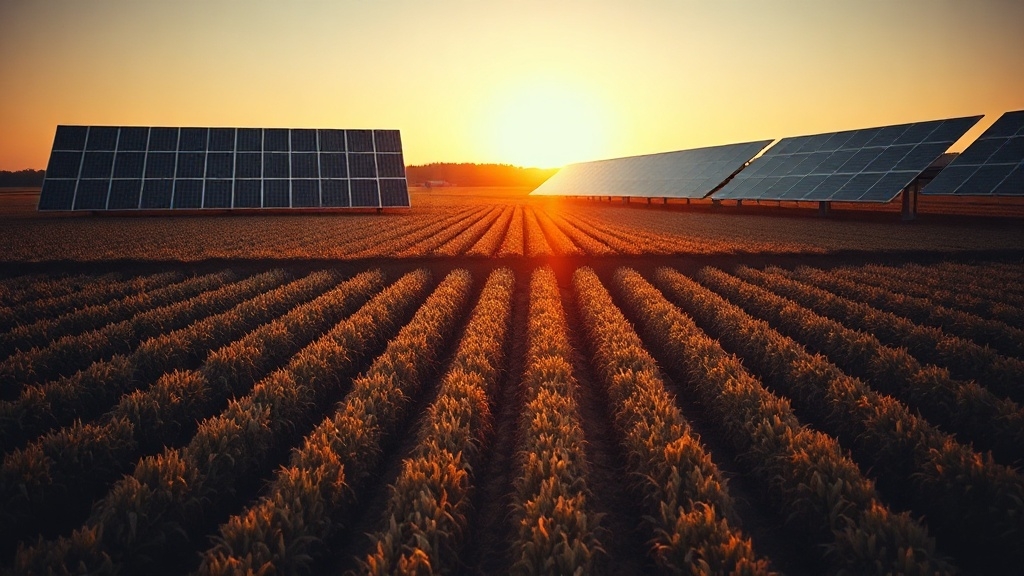
Balancing farm preservation with energy expansion, agrivoltaics uses the same acreage for solar generation and agricultural production at once. It replaces the food-versus-energy conflict with dual use, keeping farmland active while adding electricity output.
Research indicates combined farm and solar use can raise total land productivity to about 160%, strengthening agricultural resilience.
Dual-Use Benefits
Crops, grazing, and pollinator habitat can continue beneath and between panels. Partial shade can reduce heat stress, conserve soil moisture, and lower water evaporation.
Panels may shield fields from hail, high winds, severe cold, and extreme heat. Vegetation under panels can cool photovoltaic cells, improving energy generation.
Agrivoltaics also supports local food production, rural land functions, and ecosystem services. It offers a practical way to protect threatened farmland from full conversion to conventional solar development.
Assessment
Solar development is reshaping farmland economics across the United States.
Long-term lease income can help keep agricultural land in family ownership and reduce pressure to sell for conventional development.
At the same time, conflicts over prime soils, local land use, and nearby property values are intensifying.
Federal limits on solar siting and the growth of agrivoltaics reflect a broader effort to balance energy expansion with food production, land preservation, and rural market stability under mounting economic strain.