
Key Takeaways
- Consistent action beats talent when building a business from zero.
- A consultative approach builds trust and converts more opportunities.
- Long-term commitment to content and systems creates scalable growth.
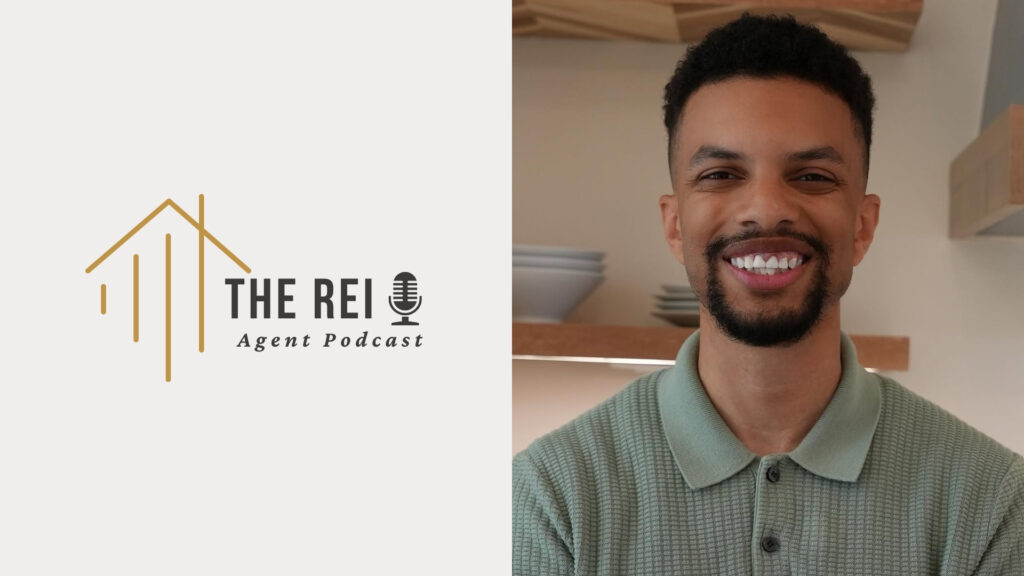
The REI Agent with Kobe Xin
Value-rich, The REI Agent podcast takes a holistic approach to life through real estate.
Hosted by Mattias Clymer, an agent and investor, alongside his wife Erica Clymer, a licensed therapist, the show features guests who strive to live bold and fulfilled lives through business and real estate investing.
You are personally invited to witness inspiring conversations with agents and investors who share their journeys, strategies, and wisdom.
Ready to level up and build the life you truly want?
Follow and subscribe to The REI Agent on social


The Moment Everything Changed
Kobe Xin’s journey did not begin with success. It began with curiosity, uncertainty, and one powerful realization.
Like many aspiring entrepreneurs, he knew he wanted more out of life but had no clear roadmap.
That changed the moment he discovered the concept of passive income.
“It was the first time I ever heard of passive income.”
That single idea reshaped his future. It pushed him into real estate, not as a job, but as a vehicle to build freedom.
What followed was not instant success, but a relentless commitment to learning, adapting, and taking action.
Starting From the Bottom With Cold Calls
Kobe did not start with deals, clients, or even experience. He started with a phone.
Day after day, he made 80 to 100 calls, often facing silence more than rejection. Most people did not even pick up. But that did not stop him.
“Expect a lot more people who just do not pick up.”
Instead of being discouraged, he leaned into the numbers. He understood early that success was not about perfection. It was about persistence.
One or two appointments from a hundred calls was not failure. It was progress.
Turning Conversations Into Opportunities
What separated Kobe from others was not just effort. It was his approach.
He did not treat sellers like transactions. He treated them like people with problems that needed solving.
“How can we come in and help you?”
This shift changed everything. Instead of pushing offers, he asked questions. Instead of forcing outcomes, he built trust.
He learned that real estate was not about convincing people. It was about understanding them.
Building a Real Estate Solutions Machine
When COVID disrupted the market, Kobe did not panic. He pivoted.
He began building a team.
What started with six agents quickly grew into something much bigger. Through systems, structure, and consistency, that team expanded to nearly 80 agents.
“We just kept growing.”
He proved that you do not need years of transactions to lead. You need vision, execution, and the ability to create opportunities for others.
The Power of Simplicity in Sales
One of Kobe’s biggest lessons was learning what not to do.
Most agents overwhelm sellers with too much information. Kobe did the opposite. He simplified everything.
“You have to ease people into the process.”
He focused on one goal. Get to the next conversation.
By breaking the process into steps, he removed pressure, built clarity, and increased trust. This simple shift created better results and stronger relationships.
Unlocking Growth Through SEO and Content
Kobe’s success did not stop with calls and conversations. He built a digital engine.
He and his partner created a website and began answering the exact questions their audience was searching for.
At first, nothing happened.
No leads. No traffic. No results.
But they stayed consistent.
“We worked on it for a year with literally no results.”
Then one day, everything changed. A lead came in.
That was all the proof they needed.
They kept going, and that one lead turned into a system that fueled massive growth.
Turning One Idea Into Endless Content
Kobe believes in working smarter, not harder.
One piece of content can become many.
A video becomes a blog. A blog becomes social posts. A long video becomes short clips.
“Turn one effort into multiple pieces of content.”
This strategy allows agents to stay consistent without burning out. It multiplies reach while minimizing effort.
Why Most People Fail Too Early
The biggest mistake Kobe sees is not lack of talent. It is lack of patience.
People try something once, do not see results, and quit.
But success does not reward short-term effort. It rewards consistency.
“If you work it long enough, it will work.”
Whether it is cold calling, content creation, or building a team, the formula is the same. Stay in the game long enough to win.
The Real Secret Is Mindset
At the core of everything Kobe teaches is mindset.
Without the right mindset, no strategy will work.
“You cannot get somewhere if you do not know where it is.”
He emphasizes clarity. What do you want your life to look like? Not just your business, but your life.
From there, everything becomes simpler.
You define your goals, calculate what it takes to reach them, and align your daily actions accordingly.
Building a Life That Matches the Vision
Kobe’s journey is not just about real estate. It is about designing a life with intention.
He challenges agents and investors to think bigger. To move beyond transactions and focus on transformation.
“What do you want your life to look like?”
That question changes everything.
It shifts the focus from survival to purpose. From chasing deals to building a future.
The Final Push Toward Greatness
Kobe Xin’s story is proof that success is not reserved for the most experienced. It belongs to those who take action, stay consistent, and refuse to quit.
He started with no deals, no experience, and no guarantees.
What he had was belief.
“Be confident that you have the ability to go out there and get it.”
That belief, backed by relentless effort, turned into a thriving business, a growing team, and a powerful message for anyone willing to listen.
The path is not easy. But it is simple.
Start. Stay consistent. Keep going.
And build the life you actually want.
Stay tuned for more inspiring stories on The REI Agent podcast, your go-to source for insights, inspiration, and strategies from top agents and investors who are living their best lives through real estate.
For more content and episodes, visit reiagent.com.
Articles Related to The REI Agent
- 10 Shocking Truths From the 2025 Global Housing Storm (And How Agents and Investors Can Thrive Through It)
- Shocking Balance Before Wealth (How Erica Clymer’s Holistic Practices Help Agents and Investors Thrive in Global Housing)
- Global Housing Storm (Holistic Solutions to Million-Dollar Dreams, Desperate Sellers, Rising Rents, and Shifting Wealth)
- Top 20 Terrifying Reasons Agents Will Never Be Investors (And How to Fix It)
- 10 Ways to Kill Real Estate Agent Burnout in 2025 (The Holistic Fix)
- Mattias Clymer is Silently Leading a $70M Movement That’s Changing Agent Lives
- Therapy You Didn’t Know You Needed (Holistic Wisdom for Real Estate Professionals)
- From For Sale Signs to Life Design (How The REI Agent Transforms Real Estate Into Holistic Wealth)
- Achieving Holistic Wealth and Success Through Real Estate (Insights from The REI Agent)
- Partnering with Investors (How Real Estate Agents Can Exponentially Maximize Profits)




Mentioned References
Transcript
[Mattias]
Welcome back to the REI Agent. We are here with Kobe Xin. Kobe, thanks so much for joining us.
[Kobe Xin]
Absolutely, thanks for having me, man. I’m always happy to share as much value as I can for any agents that are out there. And yeah, just excited to be on the show today and see what we can talk about.
[Mattias]
Yeah, Kobe, so you are actively recruiting agents and you, I mean, tell me a little bit more about who you are and what you do in real estate.
[Kobe Xin]
Yeah, absolutely, and thanks for that. So I started in real estate, it was back in 2020. I got my real estate license about two months before the January 1st of 2020.
And that started basically wanting to work with real estate investors. I wanted to be an investor myself, actually. That’s really the whole reason why I got into real estate in the first place was because I had picked up the book, Rich Dad, Poor Dad, and it was the first time ever I’d ever heard of the term passive income.
I always knew I wanted to do something on my own, but I didn’t really understand the concept. I mean, when I read it, it just became increasingly obvious and simple to understand, but passive income, that was the first time I ever kind of heard about it. So got my real estate license, wanted to get linked up with a team and the group of investors, and that’s exactly what I did.
And for the first two or three months of January in 2020, I was working directly, very actively with an investor actually here. So I’m based in Houston, Texas. He was local to me as well.
And I did a lot of essentially cold calling on his behalf. So he was a licensed real estate agent, but he was also a cash buyer investor. So basically we’re talking to homeowners, direct marketing to homeowners, and just seeing how we can help them out, right?
Whether if it’s gonna be a cash buyer solution, the traditional investor way, or is it gonna be, do they prefer listing it on the MLS, listing it as a traditional retail sales project, right? So we’re talking about that, did that for about two, three months, and then unfortunately or fortunately, I guess some people might think of it depending on what happened, COVID hit, right? So COVID hit at that time, and we’re just shut down for, who knew how long, right?
We didn’t know what was gonna happen at the time. We didn’t know how long that was gonna last, what the regulations were. And then that’s when I started to look into some other avenues in real estate and started to grow a team, build a team of real estate agents.
We have a good real estate model that allows us to be able to do this with less liability, less overhead. But pretty much that’s when I was able to get started in that and I just started talking to, at the time, a lot of agents were similar to myself who was getting their real estate license, who was looking for an investor-focused team, an investor-focused group. I felt like we could provide that as a value to a lot of these agents getting started.
And my first year, I was able to build a team of about six agents, even though I’ve never done any real estate sales myself, don’t really have any transactions under my real estate license. And then from there, it just kept growing. We started building a website, my partner and I, and we did a lot of search engine optimization, SEO, which basically means that we built a website that was searchable, able to be found on Google.
And within our second year, we were able to turn six agents into about 30 agents by the end of the second year. And currently right now, we’re getting close to about 80 agents in our team and have been focused a lot on doing that, growing a team of agents. I know it was a little bit of a unique kind of background compared to maybe some of the more traditional real estate agents and team leaders that are out there, but that’s kind of where we started, where we’re going and kind of where we’re at now.
[Mattias]
Kobe, I wanted to rewind real quick to that. I think you off air, you had mentioned it kind of, or described it kind of like a inside sales agent for that off market, the activity with that agent. What did you see as your like success rate?
Like whether that was an active investment versus a listing, like did you have to call about a hundred people for one or what did that look like?
[Kobe Xin]
Yeah, you know, you actually, that’s pretty accurate what you just said, about a hundred. I think for us, it was around 80 to a hundred, depending on the day and depending on kind of how many people are actually picking up, but about 80 to a hundred calls a day and that would get maybe one or two appointments. So that was the success rate that we had.
And we came from a little bit of a different approach. So I know there’s a lot of agents who just do agents, right? Who don’t invest or maybe don’t even work with investors.
And there’s a lot of investors who just do investing. They don’t have a real estate agent’s license. They don’t do that side of things, but because we were able to do both, that actually helped us a lot with our conversation when we approached sellers directly, because now we can come from more of a consultative approach rather than, hey, this is what we do.
Do you want to do it? It was more, we see you have this issue. How can we come in?
What can we do to help you? These are some of the things that we can do. How do you think we can best serve you as a potential real estate solution?
But yeah, around 80 to a hundred calls, we’ll get about one or two appointments. And for me, just starting out cold calling, I will say if there’s any agents out there who are starting to cold call or starting to make phone calls or you’re an investor or a wholesaler doing the same things, expect a lot more people who just don’t pick up and expect a lot more messages that you have to leave rather than just getting straight up rejected on an answer phone call. That’s one little tip I would have to leave with anybody starting out and doing this.
[Mattias]
As in like, people might be expecting that they’re gonna get cursed and chewed out on and hung up on, but in reality, it’s mostly people not answering the phone. And okay, cool. I mean, that’s encouraging.
I mean, I think it really, cold calling, I think really takes a certain personality type. I think it’s certainly, I mean, it’s a proven method and I’m sure everybody can do it in theory, right? But I think like to really see success long-term in that, you have to probably A, have a thick skin, be okay with a lot of rejection, right?
I mean, there’s gonna be people that do answer and there are gonna be people that are not happy about it, I’m sure. But yeah, to like just kind of see it as a numbers game and to pursue and keep going. The list that you were calling from, now this was all like, this was like targeted distressed or targeted for more investing stuff, right?
It wasn’t like a general farming and neighborhood kind of thing, right?
[Kobe Xin]
No, yes, it was distressed, distressed seller. So when we first started, it was actually provided by a vendor or a mortgage company, which was basically people who are looking for refinance, right? We’re targeting people who are looking for refinance in the beginning.
And then later on, within a few weeks, we started adding on actually for sale by owners and expired listings. So as an investor, I know a lot of times those might not, those might not be some things that you’re looking for, but because we could do both, we come in with a different approach, right? A lot of times agents, right?
Well, they’ll call it expired listing. They’ll just go, I’m another agent. When we come in, it’s different because we’ll say, you know, we’re a real estate solutions company.
These are some of the things that we can do. I see that you have, you know, had your house that was listed for sale. It looks like you’re no longer interested in selling your home now, right?
And that starts the conversation with that seller, with that expired listing seller. So those are the lists that we’re calling mostly distressed, but also some creative ways to kind of get into the conversation, mostly just because we do things. It was done a little bit differently for us.
[Mattias]
Well, no, I love it. And I think it is a really, there are definitely different avenues that you can go if you do kind of wear both hats, do kind of walk on like both the investor and the real estate agent side. And you’re a hundred percent right.
I mean, there’s just, you have kind of like all the tools in theory available for people that you can really help them solve their solution based on what their current needs are. So yeah, tell me a little bit more about, you mentioned like, you know, you described yourself as a real estate solutions company. I mean, what other kind of approaches or how did you kind of start those conversations with the people who actually did answer and talk to you?
[Kobe Xin]
Right. Yeah. So it really just depended on who we’re calling, right?
For expired listings, that was exactly what we would say. You know, we see that, you know, your house was for sale, you know, however long ago, and it looks like now you guys are no longer interested in selling your home, right? And a lot of times they’ll just say, you know, if they’re actually not interested, they’ll just say, yeah, we’re not trying to sell anymore.
And then that was that, right? That was kind of the conversation. And then, yeah, and then we put them into a follow-up, into a drip for later on.
But most of the people who answered who are expired, they would say, you know, no, no, no, we’re still looking to sell. It’s just, you know, this is what happened. This is what happened to a previous agent.
And here’s, you know, here’s where we’re at. And then that’s when we come in and say, okay, well, you know, if you’re looking to sell, you know, we help, you know, people just like yourself, we’re a real estate company. So we can come in and with a cash offer, if that’s what you want, but also we are licensed as well.
And this is, you know, this is what we do. And just basically we wanted to know a little bit more about, you know, what went wrong last time? What was the issue last time that you weren’t able to get your house sold successfully, right?
And they would tell us. So it then becomes more of a consultation on the phone rather than trying to say like, all right, this is what you need to do now. This is, you know, when can we come into your house?
Like when can we come for an appointment, right? It was less of that, right? And then we’ll get more information as they started opening up more to us.
So that was mostly what we’re trying to do. We’re trying to see how we can come in, how we can help. You know, there’s a good book out there called Never Split the Difference by Chris Voss.
I’m sure some agents have heard of this already, but we use a lot of the speech patterns and tactics that were talked about in that book, right? So for context, you know, this book was written by a former FBI negotiator, and he shares a lot of concepts about how we can communicate better in negotiations and sales, right? We’re thinking less of the other party as somebody we need to try to talk down or we need to try to convince or persuade, but trying to figure out what the situation is and how we can come together to solve this problem, right?
So there’s a lot of how questions, a lot of what questions, a lot of, you know, we talked about it looks like, it seems like, so us trying to see what their situation is and then pointing it out to them just to confirm it or have them not confirm it, right, for us. And then that’s where we start these conversations, right? And then the same thing it comes to when we’re leaving messages as well.
We’ll talk about what we do, we’ll point out a situation or an issue that we noticed, right, with their current real estate situation, whether if they’re a distressed seller or if they’re, you know, for sale by owner or expired. And then a lot of times we will get callbacks. A lot of times we’ll get textbacks as well.
So that’s really how we would approach people, less so from a, this is what we need to do, and more so from a, here’s what we see the problem is, let’s confirm this as the issue, and then, you know, how can we move forward from here?
[Mattias]
Yeah, I love it. You know, I think sometimes agents that don’t understand the investing side of the, yeah, this real estate world, they sometimes see it as predatory because, I mean, there are some, you know, I mean, there are bad actors and there are things that like happen that are probably, you know, are a little predatory. And I think it’s, you know, it’s kind of bad actors on both sides, right?
It could be possible either way. But I think if you, you know, if your experience from being able to offer all the services basically to a distressed owner could really kind of illuminate to people that it’s not necessarily, like there’s just different solutions for different problems. And, I mean, walk us through like a distressed call real quick, if you don’t mind, before we move on.
So if you got a lead for a distressed person, how much information do you know going in? Like what their motivation is, that kind of thing. And then when you’re talking to them, how do you present like options?
So I think sometimes too many options will cause confusion and confusion will like make no happen. You know what I mean? If there’s not like clarity, yeah, it can often, so you probably had to guide them in some, you know, once you kind of saw a path that made most sense for them, maybe guided them to that solution.
But yeah, walk me through a little bit what that would look like. So people can get a better idea of like, you know, what a situation would be with a seller and kind of how you approached it.
[Kobe Xin]
Absolutely, so basically when we get onto a call with a potential seller, we would know what their motivations are, right? Depending on which list that they came from. So if they came from a expired listing, we knew they were expired listings.
And if they came from a refinance lead, then we knew that was what they were looking for. But when we called, we never just went straight forward and say, hey, we see that you’re an expired listing, right? Like we talked about earlier how we would open, it was always, hey, this is what we noticed, right?
From our side, you know, is that the case, right? What’s going on? And a lot of times we would get new information.
So there were sellers from the expired side that would say, you know, yeah, we know we had our house listed, but this is the reason why, right? So now there’s additional motivation to them selling. It’s not just, you know, we have this on the market because we needed to move.
It’s, you know, now that I’m, you know, living in a different state, I’m an absentee owner, right? And I need to get this sold quickly because I need to get into my next home, right? Or this is an inherited property I just don’t want on my hands anymore.
So a lot of times during that first couple minutes of the conversation, if we do a good job of, you know, actually, you know, trying to understand the other party, then they would actually give us more information and then we would jot that down, right? The CRM, note section, right? Make sure we have that information.
So it’s less about us trying to present on that first call, rather more so me trying to understand more about the seller situation. And then we get into, you know, what does your timeline look like, right? So we wanna understand how their timeline looks.
Do they want to sell right away? Is this something that they need to get rid of yesterday? Or is this something that they’re just kind of, you know, they’re okay, right?
They’re seeing something that’s there. It’s a real estate property that they own, but they don’t necessarily need to sell it tomorrow, right? They could wait six months.
They’d rather have a better price, right? Earn, you know, get more money out of it rather than, you know, sell it immediately. So for them, maybe value matters more than speed.
So we wanna know what matters more to them, right? Speed, value, right? Combination of both, right?
Where do we go? What does the timeline look like? And then we get into some of the more, just kind of, you know, simple questions, right?
What does your property look like? Is there issues on your property, right? Is there anything that we would need to know, right?
Regarding your property condition, right? Those are just some things that, you know, just need to know as an investor before going in or as an agent, right? If you’re going in on a listing appointment as well.
And then from there, that’s pretty much where my job personally went in. That was the first call. And that’s something that I’ve learned, you know, working with this investor, working with this company, with this group, is that a lot of times we, as the professionals, as the experts, quote unquote, either if you’re an agent or an investor or a wholesaler, we know the process, right?
We’ve been through it hundreds of times or thousands of times. We’ve been doing it long enough, but for a seller, that could be the first time they’ve gone through it. So instead of us dumping all this information, all of this, all of these options onto them immediately, you kind of have to ease people into it, right?
You have to kind of have to ease people into the conversation. You have a first call, which usually shouldn’t last, I would say, more than maybe 30 minutes or so. If that, then you’re either wasting your time, right?
Entertaining conversations that’s going nowhere, or you’re wasting the other person’s time or giving them too much information. So first call was like 15, 30 minutes just to get them to the next appointment. So the goal always was, how do we set the next appointment?
So at the end of every call, my goal was, let’s get you onto another conversation with our, you know, I’ll call it our acquisitions manager or a colleague or team leader. And from there, we need to set that next appointment so that way they’re expecting the next call and we can have another conversation when more information is shared or some of the information is repeated, right? Because a lot of times for people who are hearing stuff for the first time, they’re gonna hear it over and over again before it registers.
And usually we present options, like actual, actual options when we go into the property, right? That’s usually when, you know, if you go into a property, that’s where options are actually presented, not so much so over the phone. Might, you know, talk a little bit about it, but in terms of like actual solid options and showing numbers side by side, you wanna do this in front of the person in their home or over a Zoom call, right?
If they’re an absentee owner and go from there. So a lot of times what my job is just getting that first piece of information, setting that next appointment. And from there, they’re able to take that next call and the next visit or the next appointment.
And that way we’re easing people into the conversation. We’re easing them into the process, not just dumping, right, this sequence that we’re so familiar with. But for somebody doing this for the first time, it’s like, well, what’s going on, right?
You need to take this slow.
[Mattias]
That’s really good. I mean, that translates well to, you know, just regular, you know, real estate sales as well. Cause there’s, you know, whether, yeah, people are not doing this every day.
So, you know, if they’re wanting to sell a house and it’s, they’ve been there for 30 years. So, you know, that’s something to really take into consideration as well as to be a little bit more slow on it and gather the information first, ask more questions than you’re talking. I think that’s a great rule in general.
So I love it. And I just want to add too, like, I think there’s a really, this, I mean, this kind of world, having some sort of inbound lead system or having, you know, some lists that you can process through and whether that’s you or VA or somebody else that is like an inside sales agent is a really good opportunity for agents. And I think, you know, if you’re wanting to get into investing or if you’ve done some flips, if you’ve done some things like that, that’s just, you can offer the whole package like you were talking about.
It’s just really, it’s a great thing. I mean, I think there’s, the more tools you have, if you have some like cash or whatever to be able to, you know, if you have equity lines, for example, you can buy properties in cash often and you can just do a lot of different strategies with it. You can do whole tails, you can do, you know, fix and flips, burrs, all sorts of different things with these properties.
And just depending on what the situation is, it’s just like having, you know, a tool belt with, you know, a hammer, that’s good for some things, but if you’re wanting to measure something, it’s not gonna do well. So it just makes a lot of sense. And I think it could be a whole division in the team, for example, I mean, you could have this be a whole division where you have just kind of like a flipping team or whatever and that there’s, yeah, this is more of a, you know, a market lead, this one needs to go to the market, let’s roll with that to send it to the right person.
So really cool, I mean, that’s a really good tip, really good strategy for people that could really, you know, expand their business greatly. Let’s get into the SEO a little bit. Let’s get into like the targeting.
So obviously you have been targeting agents, but ultimately you are trying to have what Google, SEO is mainly Google. Now, are you also optimizing for LLM searches? And this is like, you’re basically trying to have keywords related to what somebody thinking about becoming an agent or is an agent would be looking for, is that right?
[Kobe Xin]
Yes, absolutely. And with SEO, right, we started this back in 2021. So we started this before, you know, LLMs or, you know, SEO, right, GEO was a thing.
So when we first started, it was actually, you know, just making sure that A, you had a website, right? You have to have your own website. We get a lot of questions when I talk about SEO and blogging on, you know, where do you put your blogs, right?
A lot of agents ask me, where do you publish your blogs? And I’m like, you know, I publish it on my own website, that’s the only place actually we put it. And they’re like, well, how do you do that?
You have to actually go and create a website and then, you know, people kind of just stop there. But they don’t understand the value of having your own website when it comes to building your own brand. And now it’s so easy to do it.
When we first started, we have to go into WordPress and build everything ourselves. Now you go into WordPress, there’s AI tools. Now you can build a website from scratch without WordPress, right, with just pure AI tools.
You know, Lovable is a tool that I use a lot personally, but, you know, there’s all kinds of different, you know, AI, they call it my coding tools out there. So definitely go look that up, right, and it’ll make your life so much easier. But you have to have a website first.
And then once you have that, it’s a matter of putting out content that you believe that your dream customers, your avatar, your potential clients, anybody who you’re trying to target as a lead or a prospect, what are their biggest questions? What are they asking Google? Or now you want to think about what are they asking ChatGPT?
What are they asking Perplexity or Gemini, right, on a daily basis? What questions are they asking, right, on their daily time, right, they’re typing into their phone, and then how do you answer those questions? So that would be the first thing I would do is put together a list of all of the questions that you think your potential customers are typing into either their Google search or their AI search.
And then now you have a list of content to create. And every piece of content is you answering that question with what we call an article, right, or blog article, or you could call it a listicle, right, if it’s, you know, what are the top 10 or top five ways those seem to do really well, right, with SEO, especially traditional Google SEO. And then just put together that piece of content, right?
And then there’s so many tools out there on the internet today, where even if you’re building a website through WordPress, they have their own tools, their own plugins that’ll literally tell you, hey, here’s the things you need to do, just all you need to do is just put in the keyword or the phrase that you’re trying to target for, and it’ll tell you, hey, here’s the 10 things you need to do in this article to make sure that it has the best potential to get recommended the next time somebody searches that so that your article shows up, your website shows up instead of somebody else’s, right, or yours shows up above the other pieces of content that are out there. So that’s the thing that you would need to do is just go out there, find these tools, they’re called SEO optimization plugins, or SEO optimization tools, or AEO or GEO optimization plugins and tools that are out there today.
So that’s how you would approach this. And this is exactly what we did. So we started, both my partner and I, we had no experience with website building or SEO.
In fact, SEO was always a term that I never really understood what it meant. But when we started doing this, it was like, oh, okay, so this is step one, this is step two, and then these are the things we need to do. And I did it, and when we first put it out there, I was like, yeah, this is gonna work, right, like just WordPress is gonna tell me to do this, and like, yeah, that’s gonna work.
And then we looked it up, right, and we looked up that same keyword that we targeted for on our own Googles, and it actually showed up on the first page. I was like, wow, you know, it did work, right? It actually, it’s real, it was like magic, right?
It actually showed up on the first page of Google. And then we got, you know, when we saw the results, we saw that it worked, we kept doing more and more of it. And then that’s kind of where we’re at today.
But for agents out there, right, if you’re, you know, obviously for us, we targeted other agents, but if you are a real estate agent or an investor and you’re targeting clients, just think of the questions that your clients will be asking, right? You know, what are they typing in at 12 a.m. and midnight into their search bar because they have a problem that’s, you know, irking them that they need to solve, and how do you answer that question for them? And that’s how, pretty much in a nutshell, how SEO or AEO and GEO nowadays would work.
[Mattias]
Yeah, what’s, I’m not as familiar with the AEO and GEO. What does that stand for?
[Kobe Xin]
Oh, that’s just LLM targeting, right? So AEO is AI engine optimization. GEO, which is another term for it, just to call it a generative engine optimization.
So you’re just targeting, you’re trying to get your post out there or your website out there when somebody types in that same search, but inside of ChatGPT instead of Google, because now people, you know, they’re using ChatGPT as their search engine or for Flat City or Gemini.
[Mattias]
No, totally, they are. And it’s, yeah, that makes a ton of sense. It is really important to have that presence out there.
I’ve had some, I’ve heard a few other things like having people’s perspectives, being part of articles can be helpful. I don’t know, for I think SEO purposes, like if you’re doing a community page, for example, having like a past client or somebody that lives in that community, have that like kind of a first person experience, be part of that community page I’ve heard is better. I don’t know if that’s true or not, but I mean, like, it’s kind of like what you said, like, you know, like you can follow these guys, you can do these things, but you know, until you start searching and seeing it actually come through, it doesn’t, it’s just kind of theoretical until you actually see the proof in the pudding.
Have you done, did you mention that you had done YouTube as well or has it been primary websites? So yeah, tell me about strategy for putting out good YouTube content that’s gonna actually do well and not just die in the dungeons of YouTube hell.
[Kobe Xin]
Right, exactly. And there’s, I’m sure there’s a lot of people who’ve done that, right? Who haven’t gotten a lot of traction with YouTube.
Now for us, we primarily focus a lot on websites, right? SEO through our articles. But then later on, it was about, I’ll say two, three years ago, we just realized, you know, we could probably talk about this stuff too.
And because YouTube is owned by Google, right? Having a YouTube video linked to your article helps its ranking, right? So having the same keywords or key phrases targeted by video as well as an article, and then having it linked back to each other.
So link your video to your article and link your article to your video as well so that, you know, it’s crossing. It does help with your overall ranking. So somebody might find your article by actually trying to find video and then vice versa as well.
And then of course, different people consume content differently. You know, I know people who will never sit down and read an article. So they will never be able to consume any of our content and we’ll never capture them.
But I also know people who will never watch a video. They’ll just, you know, always wanna read, right, about content as well. So you wanna have a dynamic, you know, I will focus on one, either video or written content first, and then get into the other one as you start building as, you know, one of the other, when you started with Matures, right?
So that’s what my suggestion would be. But for YouTube specifically, right? How that will work.
Basically, you need to follow SEO guidelines on YouTube as well. You can have the best video out there, but if nobody is able to find your videos, right? Based on how are you titling your videos?
What are you doing? What are you writing in your descriptions? We see a lot of great videos out there with no description, right?
And that’s not conducive to ranking. That’s not conducive to people finding your videos. You need to have the right description.
Of course, there’s tagging. So YouTube, there’s, you know, every time you upload a video, there’s a section we can add about 500 characters worth of tags. That’s gonna be an important part for what people are searching for and whether or not your video should show up, right?
For those search terms as well. So tagging is an important piece of that as well. And then of course the actual content.
So the actual content, what you wanna do is you wanna make it so that A, it’s natural for you. So if you are just not, you know, a natural speaker and you’re trying to read everything off a script, it’s probably not gonna turn out great, right? So basically the way we’ve done it is myself and my partner, we would actually have more of kind of a conversational back and forth, right?
And that worked really well for us, right? It was more natural for us to have that conversation. Sometimes we actually would have slides that we would do a screen share for because we actually work really well with doing kind of slide presentations.
So find what works for you, right? If you’re just really good at just sitting in front of camera and talking for 20 minutes, do that. That’s what you are good at.
If you’re better with conversations, think about starting a podcast, right? Interview styles, right? Those would work better for you.
If you are more on, you know, kind of, we talked about doing a presentation, then put together a presentation and record yourself doing it. You can do it on Zoom, right? You can do it on, you know, Loom, which is another one where you can do screen share, right?
And record yourself as well as the presentation at the same time, right? So just find your style of video and in your video, you want to kind of speak your title as well. So whatever keywords you’re targeting for, you want to speak it right at the beginning of your video.
And one of the important things when it comes to not just YouTube, but also Google SEO and just really any kind of marketing in general that you’re doing as a real estate agent or any business is you want to make sure that people can actually reach out to you. It’s one thing for people to watch your videos and see and find your videos and just say, wow, this is great content, but how do people get in contact with you? You know, we forget a lot of times with all this training and information about, you know, content creation and marketing that the end goal is to get business, is to get leads.
So how are you doing that? How are we making it as easy as possible for somebody to actually talk to you, right? So we have our call to actions obnoxiously all over our posts and, you know, for another agent looking at it, it might be like, you know, what are these people doing?
But for us, it’s worked because we’ve captured leads that literally told us that they saw content on another agent’s website, right? Who were targeting for the same keywords and phrases that we were. Their content might’ve even been better or they might’ve been ranked higher than us, but because they had no obvious way to contact them, that person went to the next article, which was ours, and we had our button right there at the top, big letters over neon color buttons, so that way it’s obvious.
They were able to click on it and book a call with us. So that’s how we’re able to kind of, you know, capture leads, right? And that’s what you need to think about as well.
It’s like, it’s not just about getting your content out there, getting people to see it. It’s also about how do we turn these views into business, right? So let’s not forget the important piece of that, right?
Which I do feel like a lot of agents forget.
[Mattias]
Yeah, that’s really good. I, you know, I have, I’m doing kind of two different approaches to kind of what you’re talking about. So the REI agent platform, we’re turning all the past episodes into blogs.
And so everybody, this is a good time to plug it. Go to REIAgent.com. I don’t know if there’s any big bold contact me buttons at the top or anything like that, but we did just refresh that website and we do have all the blogs or most of the blogs now are going to be up there.
So that’s going to be great to, you know, have a different content, have a ton of SEO stuff out there, which is awesome. But then on the real estate side, the sales team side, so we were doing the actual blogs and the plan is to then come back and do videos for some of them. And I think you didn’t say it, but I think if I read between the lines and I think strategically, it makes sense to target the ones that, you know, perform the best to start, right?
Like let’s say you blog for a year, don’t even worry about video. And then you see one that’s obviously like outperforming everything else, try to make a video for it and, you know, do the strategic stuff that you just talked about in the video as well. And you’re going to get way more bang for your buck on that video than probably than you would have if you just try to do a video for everything.
You’re just going to get overwhelmed trying to do everything, right? If you try to video and blog at the same time.
[Kobe Xin]
Yeah. Yeah, absolutely. And that’s a great, great addition.
Great point as well. Pick always the ones that are performing the best, right? Because those are going to be the ones that are, you know, probably perform the best for your videos as well.
And you’re adding juice, right? To the ones that are performing already. Because you could have a post out there that maybe you really liked, but Google just never pick it up because it wasn’t optimized correctly.
So don’t do a video for that because if you do, it wouldn’t do anything, right? Because it’s not getting picked up anyway. So just do the ones that are performing the best that are ranking the highest.
There’s a way for you to track and it just gets a little bit more technical. There’s a way for you to track where your leads are coming from. So like, if you can track which posts your leads are actually clicking that next call to action button, track that.
Because that’s actually going to be probably a better metric than, you know, which posts are ranking higher, right? Because that’s a comparative stat. I’m not going to get too deep into that and how that will work.
But, you know, if you can track that, right? Find a way to track that. That will be, in my opinion, the best metric to track is where your leads are actually coming from.
[Mattias]
Yeah, I think it’s, I think to start, if you don’t have a website, build a website. You know, honestly, I wouldn’t, if you’re not techie, WordPress is supposed to be more user-friendly, but I probably wouldn’t start there even. I’d probably go to like Squarespace or like a Weebly or something like that where you can kind of have templates and build off of that.
If you’re wanting to build it yourself, of course, there’s a lot of people that would be happy to take thousands of dollars and build it for you, which is legitimate, you know? I mean, there’s a lot of value there, but there are some kind of in-between do-it-yourself versions. There’s the AI versions, you know, vibe coding is insane.
It’s just crazy what you can do. It’s kind of like, you know, maybe an adult nerdy version of like having Legos as a kid, like this unlimited box of Legos where you could build all sorts of different things really easily is kind of what vibe coding is now. But anyway, yeah, start there and just start.
If video feels better for you, you could host it on your website as well, but start with something and then, you know, the more you do it, the more you get better at it. You know, you can add on later to do the other side of the coin, the video or the blog, but just kind of making progress is important. And you know, if you’re doing video, for example, there’s some strategic stuff you should think about like you’re talking about with like, you know, keywords and everything.
But I think there’s also something to be said about setting yourself up for success by making it easier. And one of the ideas I’ve had is simply doing a like a Friday happy hour live stream that you can then turn into a video, right? So if you had, I mean, you tell me the strategy here, but like, let’s say you research and you found topics that would perform well, keywords, you would wanna say those early on in the beginning and then make sure the title is related to that or how do you make sure that that is gonna perform well or give it the best chances to perform well?
[Kobe Xin]
Yeah, so you wanna definitely make sure that you are saying at least once in your video, right? Preferably at the beginning just so that, you know, it’s in there and it’s in the transcription, right? That’s where it comes in and it actually helps, right?
So that way the keyword or the key phrase that you’re trying to target for is in the transcription video, right? So it’s in the backend for YouTube. And then yes, you wanna have it in your title, right?
So if it’s not in your title, it’s probably not as searchable. And then also your thumbnail as well. And that’s where you can get more creative with it.
So your thumbnail, I would actually suggest it having maybe a different variation, not the exact title, rather you’re trying to target for, because now you can almost kind of capture attention in a different way. Because somebody might be searching for something else and they see your title, maybe the title doesn’t capture their attention, but the thumbnail, which says it a little bit differently, does capture their attention, right? So it could be another way to utilize the real estate, right, the digital real estate that you have to capture more attention.
And then you wanna have it in your description. So you wanna have your keywords that you’re trying to target in your description at least once. And then from there, you should be set.
And then of course, in the tags, you can just add it in the tags or as one of the tags that you have in your video, just straight up. And that would work as well. And then you did mention a great point, making it a little bit easier.
If you’re doing a happy hour, if you’re doing a live event, right, if you’re doing an in-person event, any type of training, livestream it, record it, right? So that way you don’t have to do it again for a video. Now you’re just putting something that you’re already doing to a larger audience, right?
I’ve seen a lot of people have great success with this. So make sure you’re doing that. Always think of ways that you can turn one effort into multiple pieces of content.
[Mattias]
That’s it right there. Because, you know, from a YouTube video, I mean, let’s just go down this rabbit hole real quick. So you could take a topic, let’s say, first time home buyer strategies in Houston, Texas.
You know, let’s do that as the keyword. I’m sure that could be something that, you know, people would be searching or maybe worded slightly differently, but that kind of topic. You do a livestream seminar, it’s just you in front of your computer.
Maybe you have like a slideshow thing prepared beforehand to get through some of that. Make sure you have like the key points there, like, you know, the different type of grants that are available, the different type of down payment programs there are. And have all those kind of key things kind of prepared, ready to go, which honestly, you could do that with AI too.
You can make the slideshow really quickly with AI. But anyway, so you’re going through this conversation, you’re talking to home buyers and you’re giving your great information, the stuff that you probably know off the top of your head pretty easily with this, you know, a little bit of research, a little bit of prep, and then you finish this thing. And now it’s, well, first of all, if you use something like StreamYard, which like I’m on now, I can connect to Facebook and connect to YouTube.
I can connect to all these different places. I can see comments if there are any comments that come in from the different platforms, right? And so you can have like a little bit of interaction.
And if you do it at the same time, maybe people will start tuning in, that there could be that possibility. But once you’re done, that then lives on your Facebook, that then lives on your YouTube. That’s now a video that is just out there, right?
So then you can, you talked about the transcript. There are different ways of taking that transcript and then creating a blog from it. I actually was very nerdy and had my computer.
I have a Mac and it’s through terminal and it was downloaded all the different YouTube videos and it was transcribing them through something called Whisper on my terminal. And it made my computer sound like it was about to take off and fly to the moon. But it was working.
I have like 171 episodes at the time of the recording that are released. So it was working really hard to try to get these episodes. But then from there you have transcripts that you can use.
And alone I had the transcripts at the end of the blog. So like you can click down and then the whole transcript will be there, which I don’t know how many people are gonna read a transcript, but tons of words for SEO stuff, right?
[Kobe Xin]
Yeah, absolutely. Obviously you’re not trying to get people to read the actual transcript for your content. Although, I mean, I guess I have to think about it.
Some people do it, right? They do actually read the transcript sometimes.
[Mattias]
Well, and AI is so crazy that they’re, I don’t know why you would do this, but I have Speechify, for example. And so I can take that blog post, I can listen to the blog post on Speechify, which would probably be a summary that’s a lot faster than listening to the whole episode. You could also then take the transcript and turn it into a different podcast that they talked back and forth to each other.
But then, okay, but then to go past this then, now you have this video, you have this blog potentially, right? And then you can make social media stuff from it as well. You can then share the video, the thumbnail.
You can have more content to go. So yeah, you’re producing one piece of content and then it’s creating a lot more from there. And that’s kind of the beauty of what you’re talking about.
And yeah, it’s the AI tools just to make it a lot easier now.
[Kobe Xin]
Absolutely. And one AI tool out there that I think, I’m sure a lot of agents have already heard of this if they’ve been doing content is Opus Clip or Opus Pro, whatever its actual term is. But that’s where you take one long piece of content and it automatically turns it into multiple short pieces of content.
So you don’t have to go in and hire somebody to chop your video up. You don’t have to do it yourself. And then they’re actually going to render it so that way it fits, right?
In the style that it would be, you know, what you’re posting on. What that means is if you’re doing a video that’s like horizontal, right? Which is gonna be a YouTube video, then they’re going to automatically turn that into a vertical video for YouTube Shorts, Instagram Reels, and TikTok as well.
That saves a ton of time and it’s a great way to turn if you’re doing content already, long content into short content so that way you can share that on social media, right? And then, you know, point people back to watching the full video if they find it interesting.
[Mattias]
Because like YouTube will, I think, link the Shorts to the long video then as well so they can discover you from the Shorts or whatever and then go into the whole video for if they’re interested. Yeah, no, it’s awesome stuff. There’s a lot, people just have to kind of come up with a game plan, I think, and have a good strategy and stick with it because you’re not gonna see, like don’t get discouraged when you try this out, this great idea out and then like the first video doesn’t do a ton or like the Shorts from it don’t like get a ton of attention or whatever.
I think you just need to keep trying, right? I mean, just like, it’s like, you’re probably not gonna hit a home run your first iPad, right?
[Kobe Xin]
Yeah, absolutely. And this is for anything, right? You know, if your first video blows up then, you know, congrats, right?
But that’s really never gonna happen. So if for anything that you’re doing, whether it was YouTube, SEO, Instagram, right? If you don’t wanna do all this SEO stuff, you’re just focused on Instagram or TikTok, whatever you’re doing, just make sure you stick with it long enough to see the results that you’re putting in or see the work that you’re putting in generate into results.
For us, we actually started our blog, started our website, you know, it was a year until we saw anything come in from our website, right? And we worked on it consistently for a year with literally no results until the first person reached out to us and that was like, all right, so this is something that’s worth continuing to do, right? So make sure you’re sticking with something long enough, whatever strategy you choose, if you work it long enough, it will work, right?
And that goes for literally anything, not just socials or online strategies, but also door knocking, cold calling, hosting seminars, right, whatever you choose, just make sure you stick with it long enough to see the work that you’re putting in actually pay off.
[Mattias]
100%, I love it. I mean, there’s been a lot of gold nuggets in here, Kobe, but what gold nuggets do you have to share with our listeners?
[Kobe Xin]
Absolutely, man, so I’m glad you asked that. So the number one thing I will say that we didn’t maybe didn’t talk too much about today in the podcast already is your mindset, right? I know we literally just kind of alluded to it, but your mindset is so important when you’re starting out, and this is in a variety of different ways, right?
So how do you talk to yourself as a real estate agent? How do you talk to yourself as an investor, as a business owner, right? Are you talking down to yourself?
Are you hard on yourself, right? You know, you wanna be always improving, but you don’t wanna be talking down on yourself or seeing yourself as lesser than, right? So your mindset is so important when it comes to building out your business.
If you don’t train yourself, if you’re not putting positive information, information about how you can be successful, how you envision your business looking like six months, 12 months, 24 months in the future, then you will never get there because you can’t get somewhere where you don’t know where it is, right? If, you know, a lot of people talk about, you know, what do I need to do? And the first thing that I would try to redirect them on if they’re starting on real estate is what are your goals?
What do you want to do? Why did you get into real estate in the first place? Not necessarily just what they want their business to look like, but what do they want their life to look like, right?
What does your lifestyle look like? Does it involve a lot of family time? Does it involve a lot of vacations, traveling?
Are you living in a specific house? Are you driving a specific car, right? What do you want your life to look like?
And then from there, once you’re clear on this, that’s how we can work backwards and get to, okay, what do you need to do in your business, right? How much money do you need to earn to get these things, right? What does that look like for you now?
Do you need to go out there and grow a team or can you do this with just your sales, right? With just yourself. And then from there, that’s when we figure out daily actions.
So it goes from your lifestyle, right? Your lifestyle goals. Then from there, we figure out what that costs, which is going to be your business goals.
And then once you have that, we can now start figuring out what your daily actions are to get to those business goals and readjust. So your mindset, very important. And it all starts with knowing what you want, being confident that you have the ability to go out there and get that because you do, and then being confident in what it is that you are doing, the vehicle that you chose to get you to that point as well.
So that would be my golden nugget. I know it was a little bigger than the nugget you’re looking for.
[Mattias]
No, that’s great. Thank you. That was perfect.
What about, you mentioned a couple of books. Do you have a book that you think is foundational, fundamental that you think everybody should read or maybe just one that you currently really like?
[Kobe Xin]
Absolutely. So foundational, thinking grow rich, right? I know it might be very repetitive for me to say this, but if you haven’t read it, read thinking grow rich, right?
That is the number one book I would recommend. If you have read thinking grow rich, I will recommend you to go back and reread it again, right? Because you’re gonna pick up more information from it the second time.
And if you’ve read it already more than once, then I suggest or I challenge you to read it once every quarter, every year. So once every three months, so that way you’re really getting that information into your head and then you’re really able to really become part of that information as well. So that’s the foundational book that I recommend.
And another book that I will probably bring up as well is one called psycho cybernetics. So psycho cybernetics, I’m not gonna spell it out here, but you can figure out how to get out there and spell it. It’s by a man by the name of Dr. Maxwell Maltz. And basically to kind of give everybody an idea what this book is, it’s everything that you’re gonna learn in thinking grow rich, but it’s much more scientific. It’s something that actually explains the reasoning and the functioning behind why mindset works. So if you don’t really mess around with all the kind of the woo woo personal development stuff, you’re more kind of direct and database than read psycho cybernetics, that’s gonna really help you understand why all this mindset stuff works.
[Mattias]
That one rings a bell and I don’t remember if I’ve read it or if I looked into it at one point. Is that an older book as well? I know thinking grow rich is pretty old, but like, is that also kind of an older book?
[Kobe Xin]
Yeah, I would say so. It’s definitely an older book. Now there’s some, it’s been updated a few times.
So when you read it, it’s gonna get some like newer stories as well. But yeah, I think when it first came out, it was definitely an older book. It’s usually it’s a white cover with red letters on it.
[Mattias]
Okay, I was just trying to jog my memory on it, but cool. Thank you, those are great recommendations. Kobe, then finally, is there a place that people can find you if they wanna follow you on the social media?
You mentioned a website, you mentioned YouTube. What’s the best place to find Kobe?
[Kobe Xin]
Absolutely, man, thanks for that. So I am very quite active on Instagram. So you can look me up just my name, @kobexin_, that’s my Instagram handle.
Or you guys can actually find me on LinkedIn as well. I’ve been doing a lot more on LinkedIn. So just you can look up my name, kobezen on LinkedIn.
Those are probably the best two social media places to find me. Facebook too, I’m on there, but you know, Facebook is Facebook, right? There’s, you might get lost in the shuffle.
But our website is agentwealthhustle.com. So if you wanna look us up, you wanna study how we’ve done SEO, go to agentwealthhustle.com. And then that’s where you’ll be able to find us.
And then our YouTube channel is gonna be called Agent Wealth Hustle as well. And that’s where you’re gonna be able to find us, how we’ve done some of our videos. You might wanna copy some of the styling that we’ve did.
All of that is out there public. So those are gonna be the best places to find me.
[Mattias]
Awesome. Well, Kobe, thank you so much for being on the show.
[Kobe Xin]
Absolutely, man. Appreciate the opportunity.
[Erica]
Thanks for listening to the REI Agent.
[Mattias]
If you enjoyed this episode, hit subscribe to catch new shows every week.
[Erica]
Visit reiagent.com for more content.
[Mattias]
Until next time, keep building the life you want.
[Erica]
All content in the show is not investment advice or mental health therapy. It is intended for entertainment purposes only.
No related posts.