The Woman Who Turned Discipline Into Freedom
A Conversation About Business, Legacy, AI, and the Power of Saying No
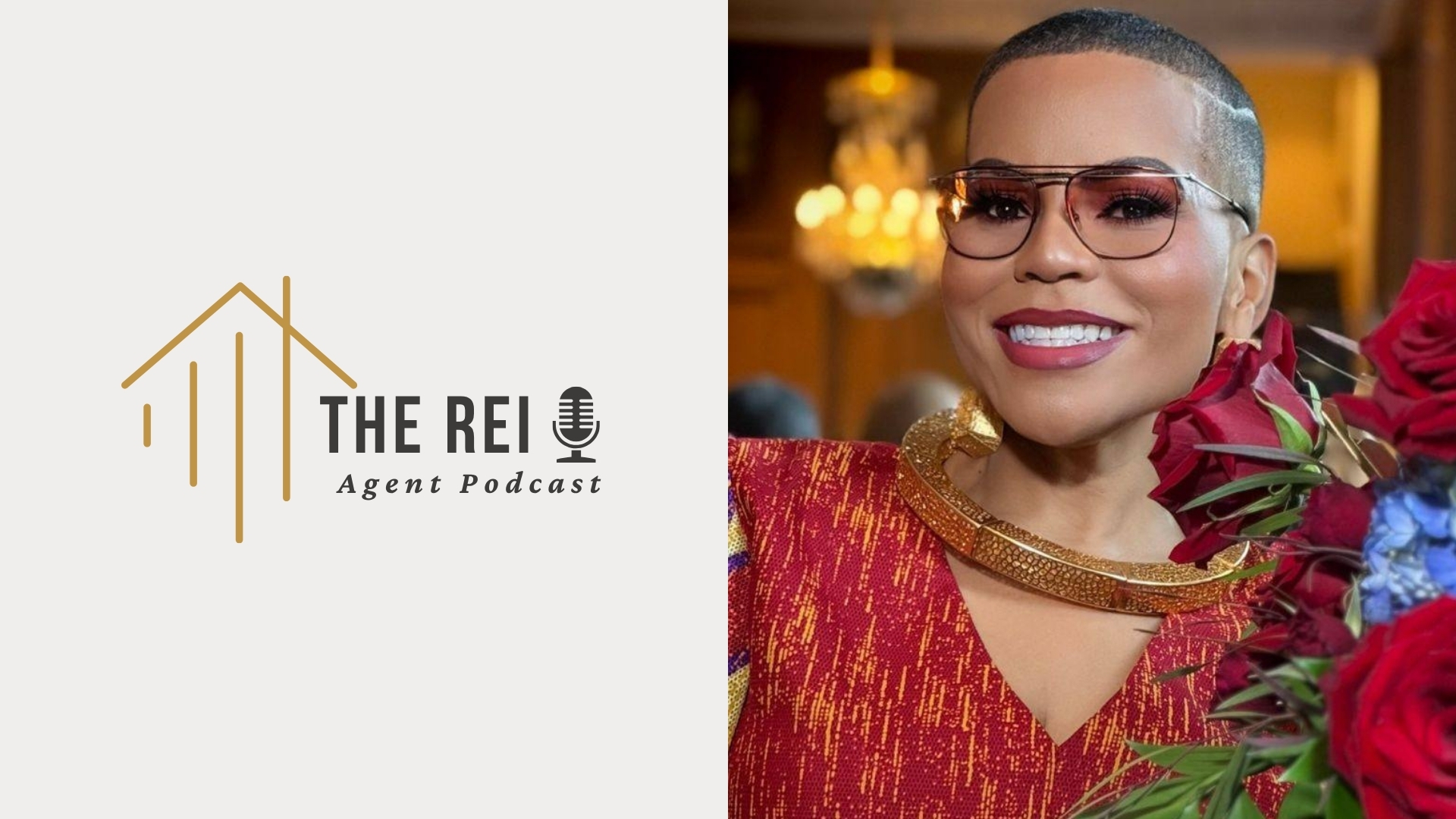
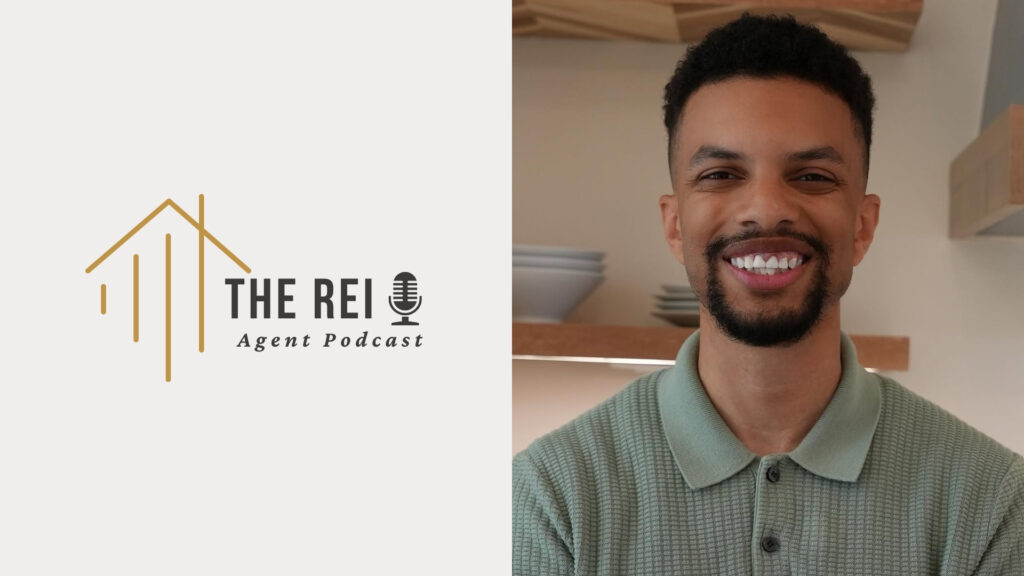
In this powerful episode of The REI Agent Podcast, Mattias Clymer sits down with Marki Lemons Ryhal, a nationally respected real estate educator, broker, speaker, AI strategist, and legacy builder whose story reaches far beyond sales numbers and industry awards.
Marki is not just someone who teaches agents what to do. She lives it. She sells. She leads. She runs a brokerage. She advocates for private homeownership rights. She trains professionals across the country. She uses technology before most people even understand why it matters.
But what makes this conversation so moving is not simply her resume. It is the way she connects success to discipline, family, service, education, health, faith, and legacy.
This episode is a reminder that a real career is not built by accident. A real business is not built from vibes. A real legacy is not built by chasing every shiny object. It is built by choosing what matters, doing it with excellence, and having the courage to say no to everything else.
“It has to be on your calendar, everybody.”
Marki’s First Lesson Is Brutally Simple
Success Needs a Calendar Before It Needs Motivation
Early in the episode, Mattias asks Marki how she does it all. Her answer is not complicated. It is not fancy. It is not wrapped in some over-polished productivity speech.
She lives by her calendar.
That may sound basic, but in Marki’s world, it is the foundation. Her calendar is not just a place where appointments go. It is a filter. It is a boundary. It is a decision-making system.
She has learned how to say no. She has learned how to protect her time. She has learned how to make her family, clients, and commitments respect the structure she lives by.
That one idea carries weight because so many professionals want freedom without structure. They want bigger income, more control, stronger health, and better relationships, but they still run their day from memory, emotion, and reaction.
Marki’s message is different. The dream does not get built because someone feels inspired. It gets built because the right things are scheduled, protected, and executed.
From Barbecue Royalty to Real Estate Survival
Her Career Began with Pressure, Pain, and a Need to Provide
Marki’s story begins long before real estate. Her family is legendary in the Chicago barbecue business, with a history that stretches across generations. But her entrance into real estate came during a deeply personal and difficult season.
She was going through a lawsuit with family. She was a single parent. She needed income. She needed flexibility. She needed a way to earn well while still feeling present as a mother.
Real estate became more than a career choice. It became a vehicle.
It gave her a way to provide. It gave her a way to build. It gave her a way to create a life where her son could graduate from Howard University without student loan debt. It later became part of the family legacy when that same son entered the business and became recognized as a NAR 30 Under 30 honoree.
“Selling real estate is hard.”
That sentence matters because Marki does not glamorize the business. She respects it too much to pretend it is easy. She knows the pressure, the sacrifice, the late nights, the appointments, the uncertainty, and the emotional weight of commission-based work.
But she also knows what it can produce when it is treated like a real business.
The Licensing Lie That Hurts New Agents
Passing the Test Does Not Mean Knowing the Business
One of the strongest parts of the conversation comes when Marki explains the gap between what agents think they know after licensing and what they actually need to know to build a profitable career.
Her point is sharp. The pre-licensing course may help someone pass the exam, but it does not teach them how to sell real estate. It does not teach them how to build a database. It does not teach them cold calling, direct mail, taxes, profitability, personality selling, business planning, social media, or technology.
“It is not what you see on Instagram.”
That quote hits hard because many agents enter the business with a fantasy. They see nice cars, pretty closings, happy posts, and big commission checks. What they often do not see is the business infrastructure behind the scenes.
Marki learned that lesson early when she tried to schedule a showing and was asked for her MLS ID number. She did not have one. She did not even know what it was.
When she discovered the cost of association dues, MLS setup, and annual access, she realized something painful. She was trying to provide for her household while not fully understanding the business she had entered.
That moment changed her.
“That day, I made a commitment to myself that I would never feel that stupid ever again in life.”
From there, education became a personal mission. She earned the ABR within her first year and went on to accumulate 66 real estate-related licenses, designations, and certifications.
For Marki, education is not decoration. It is protection. It is confidence. It is power.
Marketing Was Never Random for Marki
She Treated Real Estate Like a Business Before It Was Trendy
Marki entered the industry with a marketing mind. Before digital tools became the standard, she was already using classified ads, direct mail, billboards, bus benches, candy bars with clever postcards, and relationship-based outreach.
She knew her numbers. She knew her break-even point. She knew what she needed to earn to take care of her household. In her first year as a licensed loan originator, she generated roughly $98,000 in fees.
That happened because she was not winging it.
She had a plan. She had a database. She had a marketing strategy. She treated her work like a business from the beginning.
As the world changed, she changed with it. In 2006, she saw that consumers were moving into the palm of the hand through digital platforms. So she moved too. She used Twitter, LinkedIn, Facebook, MySpace, Craigslist, SlideShare, and early website tools long before many agents understood their power.
Today, her strategy has evolved again. She focuses on search engine optimization, answer engine optimization, generative engine optimization, press releases, newsletters, podcast content, repurposed publications, and customer relationship management.
That is one of the biggest lessons from this episode. Marki does not fall in love with the tool. She falls in love with the strategy.
AI Did Not Replace Her Work
It Gave Her Time, Health, and More Capacity
When the conversation turns to artificial intelligence, Marki lights up with the energy of someone who was not late to the party. She was among the early adopters of ChatGPT and immediately saw it as a business tool.
But her use of AI is not theoretical. It is practical. It helps her create landing pages, email sequences, articles, follow-up communications, and content workflows. It helps her schedule business-building tasks and automate repetitive pieces of her day.
Most importantly, AI helps her buy back time.
In the episode, Marki explains that she began taking Pilates because she knew she needed to care for her body. AI gave her the ability to step away, drive to class, complete a workout, return home, and still not miss a beat in her business.
That is where this conversation becomes bigger than tools. AI is not just about doing more work. For Marki, it is about creating more life.
“Instantly, I identified it as a business tool.”
That mindset matters. Many people play with AI. Marki operationalizes it. Many people ask AI random questions. Marki builds systems with it.
She uses AI to increase productivity, lead generation, income, and personal freedom. That is the difference between being entertained by technology and being empowered by it.
The Free AI Strategy Agents Should Not Ignore
RPR, Esri Data, and NotebookLM Can Change the Game
One of the most practical parts of the episode comes when Marki breaks down a strategy many agents can use right now.
She talks about RPR, which many licensed real estate professionals can access, and the commercial trade data connected to Esri. She pulls neighborhood and zip-code-specific data, then brings it into NotebookLM with a focused prompt.
From there, the tool helps identify what she and her agents should focus on in that specific area. It helps them understand how to dominate a neighborhood, serve a client profile, and create content that demonstrates value.
This is not random posting. This is data-backed positioning.
Marki’s point is clear. Agents need to stop trying to be everything to everyone. They need to get specific. They need to understand their ideal client. They need to show value strong enough to earn trust, representation agreements, and business.
In a changing industry, proof matters more than noise.
Advocacy Is Not a Side Mission
It Is How the Industry Protects Its Future
Marki’s involvement in real estate advocacy is deep. She is a major investor, president circle RPAC Hall of Fame inductee, federal political coordinator, board member, committee leader, and long-time volunteer at local, state, and national levels.
But she does not present volunteer leadership as something casual or symbolic. She presents it as serious work that requires time, money, commitment, and a real understanding of business.
She explains that advocacy helps protect private homeownership rights and the ability of real estate professionals to earn a living. She talks about the importance of associations fighting against unnecessary costs being placed on homeowners.
Her comparison to union dues is one of the strongest moments in the episode. When discussing her own RPAC contributions with her husband, she helped him understand that his union dues protect his livelihood, and her RPAC contributions help protect hers.
“I make RPAC contributions to protect mine.”
That sentence reframes giving. It is not just charity. It is stewardship. It is protection. It is participation in the future of the industry.
Legacy Is Not Something Marki Talks About Lightly
She Inherited a Standard and Decided to Expand It
When Mattias asks how Marki defines success at this stage of her career, the conversation becomes deeply personal.
Marki describes herself as the receiver of a legacy. She is a fifth-generation entrepreneur from Chicago who has now birthed a sixth-generation entrepreneur. Her grandfather came from Mississippi with little, built something powerful, and taught her that competition is healthy and that giving knowledge away can still lead to reward.
Her family’s barbecue legacy includes more than business success. It includes education, generational support, community respect, an honorary street name, Hall of Fame recognition, and a James Beard Award.
Marki carries that same spirit into real estate and education.
“I can give it all away and I can still have great success.”
That line may be the heart of the entire episode.
In a world where many people hoard knowledge, Marki shares. In a business culture where many people chase titles, she focuses on the next generation. In a market where many people fear competition, she sees the value of making others better.
That is not weakness. That is abundance.
Excellence Is Her Standard
If She Cannot Do It Well, She Will Not Do It
Marki makes it very clear that she does not commit casually. She has no problem saying no. But when she says yes, she brings excellence.
“If I can’t do it and do it in excellence, I’m not doing it.”
That standard explains a lot about her career. It explains the awards. It explains the certifications. It explains the fundraising. It explains the leadership roles. It explains the technology adoption. It explains the ability to stay relevant across decades.
Excellence is not something she adds at the end. It is the filter at the beginning.
That is a lesson every agent can take seriously. Not every opportunity is worthy of a yes. Not every platform deserves attention. Not every committee, event, niche, or tool belongs on the calendar.
The people who last are not the people who say yes to everything. They are the people who know what deserves their best.
The Village Still Speaks Through Her
Scholarship, Service, and the Joy of Giving Back
Marki’s story becomes even more moving when she talks about scholarships and the next generation. Through her service and giving, she has helped students continue their education. She shares how two sorority sisters thanked her because their daughters had received scholarship support connected to her work.
That moment brought joy because it connected her present impact to the sacrifices made by those who came before her.
“I am the product of the village.”
That quote is more than beautiful. It is a responsibility statement.
Marki understands that she did not arrive alone. Her great-grandparents, grandparents, parents, aunts, uncles, community, and family systems all contributed to who she became. Because of that, she believes she must take what was poured into her and pour it into others.
That is legacy in motion.
Her Definition of Success Is Surprisingly Peaceful
After All the Awards, Fulfillment Is the Prize
After hearing about Hall of Fame inductions, national training, major leadership roles, entrepreneurship, AI systems, and family legacy, someone might expect Marki’s definition of success to be loud.
But it is not.
It is peaceful.
She sleeps well. She smiles every day. She feels fulfilled. She is in a good place mentally and physically. She knows that not everyone gets to say that.
“I feel fulfilled.”
That is the kind of success that does not need to shout.
It is not just the money. It is not just the titles. It is not just the influence. It is the feeling that her life, work, health, service, and legacy are aligned.
That is exactly why this episode fits The REI Agent Podcast so well. It is not just about selling more. It is about building a life that can hold the success.
The One Thing That Changed Everything
Focus Is Still the Shortcut Most People Avoid
Near the end of the conversation, Marki names her favorite book, The One Thing. She shares that in 2012, her money was funny, her energy was drained, and she did not have enough time to date her husband.
That forced her to ask serious questions about when she made the most money and when she experienced the highest level of happiness.
The answer came back to focus.
When she was doing one thing, she made more money and felt better. That realization shaped her advice for agents today.
“Pick something and own it.”
That is the command many professionals need to hear.
Pick a zip code. Pick a neighborhood. Pick a niche. Pick a specialty. Pick a client profile. Pick a lane and become known for it.
Marki does not believe agents should try to be all things to all people. In her view, that is a false narrative. The top producers people remember usually have a clear name, a clear specialty, and a clear place where they dominate.
Focus creates power. Focus creates authority. Focus creates repeatable action. Focus creates clarity for the market.
The agent who owns one lane can often go farther than the agent who is exhausted from chasing every lane.
The Bigger Message for Every Agent Listening
Build a Business That Gives You a Life, Not Just a Schedule Full of Stress
Marki Lemons Ryhal’s episode is a masterclass in more than real estate. It is a masterclass in personal leadership.
She shows that agents need education beyond licensing. They need marketing plans. They need databases. They need technology. They need advocacy. They need health routines. They need boundaries. They need faith, focus, and community.
Most of all, they need a reason bigger than the next commission.
For Mattias and Erica’s audience, this conversation lands perfectly because it reveals the deeper truth behind a lasting career. Real estate can create money, but money alone is not the full measure. The real goal is a business that supports health, family, purpose, freedom, and contribution.
Marki’s life proves that success can be strategic and soulful at the same time.
The Legacy Is Still Being Built
A Final Word on Discipline, Service, and Becoming the Example
Marki Lemons Ryhal does not come across as someone chasing validation. She has already earned more recognition than most professionals could imagine. But what makes her inspiring is that she still sees the work ahead.
She is still learning. Still teaching. Still volunteering. Still adapting. Still protecting the industry. Still using technology. Still showing up for her health. Still pouring into the next generation.
That is what makes her story so powerful.
She is not just building a career. She is building proof.
Proof that structure can create freedom. Proof that education can create confidence. Proof that technology can create time. Proof that service can create legacy. Proof that a person can give generously and still win greatly.
In this episode of The REI Agent Podcast, Marki gives agents a challenge that is simple, serious, and life-changing.
Stop drifting. Stop pretending the license is enough. Stop chasing every opportunity. Stop building a business that steals the life it was supposed to support.
Pick the lane. Build the plan. Protect the calendar. Learn the tools. Serve the people. Give with excellence.
Then keep going until the work becomes bigger than success.
“It is 100% for the next generation.”
That is the kind of legacy worth building.
Transcript
[Mattias]
Welcome back to the REI Agent. My guest today is Marki Lemons Ryhal, managing broker at Exit Strategy Realty in Chicago, and one of the most decorated voices in real estate education in the country. Since 1993, Marki has trained over 1 million professionals in digital marketing and AI strategies.
She has been inducted into the Hall of Fame, including the 2025 Chicago Association of Realtors Hall of Fame, as the first African-American woman to receive that honor, the Real Estate Business Institute Hall of Leaders, the RPAC Hall of Fame, and in 2026, RISE Media Real Estate Newsmaker Hall of Fame. What makes her story so compelling is that she’s not just a trainer standing on the sidelines. She is actively selling and running her own brokerage while keeping agents across the country staying competitive in a rapidly changing industry.
Marki, welcome to the REI Agent Podcast. It’s an honor to have you.
[Marki Lemons Ryhal]
Well, thank you very much. It’s an honor to be here. Eric just came off the road from Springfield, Illinois for our capital conference, going to advocate for private home ownership rights.
[Mattias]
How do you do it all?
[Marki Lemons Ryhal]
Oh, well, you know what? I tell everybody I’m very niched. I have the ability to say no.
I live by my calendar and I make my family follow my calendar, which means it’s definitely easy to make your clients follow your calendar.
[Mattias]
Okay, that’s good rules to live by. You’re supposed to say the gold nuggets for the end now.
[Marki Lemons Ryhal]
Oh, I’m sorry, I’m sorry, I’m sorry. It has to be on your calendar, everybody. It has to be on your calendar.
[Mattias]
Now, I saw a reel about you explaining that your family has been in the barbecue business for a long time, right? So what got you into real estate?
[Marki Lemons Ryhal]
So my family, they are icons in the barbecue business. We’ve been in business, it’ll be 72 years this year. Have sold more pork rib tips than anybody else in the city of Chicago.
And I came into real estate on July the 31st, 1999. I was actually going through a lawsuit with my family. I owned the trademark right for our establishment.
My father’s sister sued me. I had a counter sue my family and actually they had to settle their lawsuit with me and buy me out. But at the time I was a single parent.
I wanted the ability to earn an above average income and feel like a stay at home mom. And in 2019, when my son graduated from Howard University in Washington, D.C. and me and my husband didn’t have any student loan debt, I got married in the process, didn’t have any student loan debt. I knew that real estate had served its purpose in our lives.
And just so happens that same son is a NAR 20, 25, 30 under 30.
[Mattias]
Oh, awesome.
[Marki Lemons Ryhal]
Yeah.
[Mattias]
Did he have a period of there he was resisting it? I know often I hear people that were like, I swore I’d never be a realtor if their parents were in it.
[Marki Lemons Ryhal]
So the opposite is the story at our house. My son told me at seven, he was gonna be a broker. He told me at nine, he was gonna be a NAR 30 under 30.
So the deal that I made with him was if he brought me a degree that I would support him in his real estate endeavors. My goal was that I wanted him to do something easier than selling real estate. Selling real estate is hard.
And I did not want this life for him. So no, I did not encourage it at all. I actually was discouraging and wanted him to have a substantially simpler life than what I knew this would bring, but he loves it.
[Mattias]
I’m glad to hear that. That’s definitely different than normal. Cause I feel like it’s almost always like the parents, the kids just swear they never wanted to do it cause they saw their parents like working all the time.
And, but like, I think you’re a case in point. Like you’ve said that you’ve kind of controlled your business. So it may not have seemed that way to him.
And it is, it can be an amazing career for sure.
[Marki Lemons Ryhal]
Yeah. And he’s, he has essentially been in real estate as long as I’ve been in real estate because he always had a role whether that was scheduling showing appointments opening lock boxes and doors. So he was in the field with me and I actually felt a lot of guilt about having this little boy with me all the time.
And the guilt did not stop until he started winning awards and having great success because people will have you to believe teaching your children and having them out in the streets working all hours of the night is a dirty thing but he was eating good and traveling well. And so only in the last two years has it become okay with me.
[Mattias]
Okay. Yeah. I can see that.
Now you’ve trained over a million professionals. What do you see as the biggest gap you consistently see between what agents think they should be doing to grow their business and what actually moves the needle?
[Marki Lemons Ryhal]
Oh, the biggest gap starts with the fact they think that the pre-licensed course taught them how to sell real estate. Let’s just start with that. So they coming into this industry on a lot.
And the second one is as an independent contractor you are gainfully self-employed and they have no idea what that really means. That, I mean, forget everything else that comes after that, right? We are starting our business on a line and we have no idea the concept of entrepreneurship and what it means if you want to build a profitable business and leave a legacy.
And it is not what you see on Instagram.
[Mattias]
HGTV is also a little bit deceptive, right?
[Marki Lemons Ryhal]
Very deceptive.
[Mattias]
What do you think helps bridge that gap? Like, do you recommend the GRI course or like what do you think is a good way to kind of learn how to do everything? I mean, we basically have to wear all the hats unless you have a brokerage that covers a lot of that.
[Marki Lemons Ryhal]
So let me, I’m gonna tell you my story. I think all of, I believe education, period. But let me go back.
I am one of the few people who, because I had an undergrad and a master’s degree I did not take the pre-licensed course. I was able to sit for the exam and I came into the industry as a broker. Pretty similar to what attorneys do.
Well, I was scheduling a showing appointment and the person on the other end of the phone asked me for my MLS ID number. I didn’t have one. And I said, what is the MLS ID number and where do I get one from?
And they said, well, you have to get one from the association. And when I showed up at the association and they told me what I needed to pay for my member dues, for, well, first of all, the Chicago Association of Realtors, the Illinois Association of Realtors, the National Association of Realtors, the one time MLS set up in the MLS dues. I’m like, first of all, you’re not even in my business plan.
And as I’m sliding the check across the desk, I’m being smart Alec, cause I don’t know anything about the people I’m giving this check to. Never heard of the Chicago Association of Realtors a day before in my life. And it was not in the pre-licensed book.
So as I’m sliding the check across the desk, I said, well, I’m glad this is the last check I have to write you. And the receptionist straight laughed in my face and she stops the check. And she says, no, sweetheart, if you want that good MLS access, you’re gonna write a check like this every single year.
And in that moment, I felt like an idiot. I’m doing something that is supposed to provide for my house, for my child. And I don’t have no idea what I’m doing, right?
That day, I made a commitment to myself that I would never feel that stupid ever again in life. And instantly I went and I earned the ABR. So I earned the ABR within my first year of selling real estate.
And since then, I’ve accumulated 66 real estate related licenses, designations, and certifications because I know the book that I studied from to take the exam did not teach me how to sell real estate, education.
[Mattias]
Yeah, a hundred percent, it’s so true. And then I don’t know about how it is in Chicago or in Illinois, but I also felt like so surprised when I took the exam. I felt like I was very well prepared and I would do well.
And then I just felt like I got kind of punched in the face for the exam because it was just a lot. I did pass, but it just felt like it was different questions almost. It was kind of surprising than what I had really trained for.
[Marki Lemons Ryhal]
And here’s what’s interesting. We both took the same federal exam, right? And then you have your state specific questions.
And so everybody is taking the same national federal exam no matter where their license, right? Just basic rules and regulations that we’re supposed to adhere to. But no, none of it teaches you about sales, personality selling.
It doesn’t teach you about profitability. It doesn’t teach you how to cold call. What does direct mail mean?
Social media and technology. None of it, paying your taxes, setting up your business like a business. Like none of that is taught in a pre-licensed class.
And what I’ve seen online, a lot of people was, well, why don’t you all mandate this? We have petitioned the state ever since I have been in real estate to add this. And what they’re saying is this is about consumer protection.
So it is about the rules and regulations that protect consumers. And I don’t foresee that changing no matter how we lobby, how we ask politely, not politely, that these changes need to occur.
[Mattias]
Yeah, I guess it kind of falls on, I don’t know if it falls on the brokers, but if somebody is going to interview or just talk about getting their license, talk about the planning for it with the broker or somebody or another agent that maybe gets them excited about becoming an agent, and they really need to prepare that person for the shock that once you actually get started, it’s just like, you can pretty much forget. You shouldn’t forget the exam. But yeah, it is totally different.
And yeah, how did you get started? Did you, were you, you were local, so you probably had a pretty good network. Did you do some of the cold outreach stuff to begin?
Or did you really work your sphere? Were you relationship-based? What was the kind of strategies you took when you started?
[Marki Lemons Ryhal]
So let’s go back. I came in as a loan originator. So on July the 31st, 1999, I was a loan originator.
At that time, I was going to real estate offices. I had, I think it was a ferry, but I had the candy bars with the cute little sayings on postcards. I was running a classified ad in the back of the Chicago Sun-Times every day.
I had billboards, bus benches, and I was doing direct mail. So I have had the opportunity to do everything. But when I came in, I already had a master’s degree in marketing and had already taught on a collegiate level.
So I’ve always treated real estate like business, and I’ve always had a marketing plan and a database. So we can take that back to 1999. And I was implementing all of these strategies.
And my very first year as a licensed loan originator, I generated roughly $98,000 in fees. So I had made the minimum that I needed to make in order to take care of my household, because I’m coming out of the hospitality industry where I was the vice president. And when I sat down and looked at my budget, I knew what my break even was just to make it, right?
Because it’s a whole shift in being paid a salary versus becoming 100% commissioned. And so I did it all. And right now my database has over 43,000 contacts in it.
I am a lead generating machine. I leverage email marketing, and now all of the digital tools. What I don’t do today that I used to do, I do not have a classified ad.
I don’t have bus benches. I don’t have billboards. In 2006, when the then 2006 profile of buyers and sellers came out from the National Association of Realtors, I realized I was not in the palm of the hand of the consumer.
I knew then that I was not in the palm of the hand of the consumer and that I had a problem. So I started leveraging Twitter, LinkedIn, Facebook back in 2006 when I was at home on maternity leave, because I’m looking at the numbers and what the numbers say. I will tell you right now today why I don’t do the things that I used to do.
It is because I’m coming up for search engine optimization. I’m coming up for answer engine optimization. I’m coming up for generative engine optimization.
My strategy is a little different now. We put out a monthly press release. We have a weekly newsletter.
We have a six-year-old, seven-year-old podcast that we took and repurposed into 30 publications. Six of those are global bestselling books. And so I believe now in repurposing my content to meet consumers where they are online for the purpose of getting them into my customer relationship management system.
I still do, I was social before social media. So I still do a lot of face-to-face outreach. I put myself where my client base is all the time.
If you’re my client, I know what you do and I’m gonna be where you are. You don’t have to go out of your way to see me. I’m gonna go out of my way to make sure you see me.
I’m gonna make the move. And so our marketing is a little different but we stay in consistent communication and contact with the people that are in our sphere and they are in our database.
[Mattias]
Wow, that’s a lot. And that’s pretty early moving for like Facebook. I mean, I think that’s, around then that might’ve been, they were university specific.
It might’ve like just like changed into being like open to anybody, right?
[Marki Lemons Ryhal]
It had just shifted. And let me tell you, at the time I believe I also had house values. I had a MySpace account and I was doing Craigslist.
I was using a tool called SlideShare that was purchased by LinkedIn. And I can go and find my PowerPoint slides that I was doing for Craigslist. I was at a partner in a Keller Williams franchise and we were using the new eEdge website where we could pull the site and I could pull, let’s say all notice of defaults in the 60653.
And I went and conducted a Craigslist ad with a link to that page to get people into my customer relationship management system.
[Erica]
Wow.
[Marki Lemons Ryhal]
I did that. Wow.
[Mattias]
What song did you have on your MySpace profile?
[Marki Lemons Ryhal]
Now that I, it was house music. I can tell you that right now. Cause I’m a bonafide house head and I’ve been listening to house music.
Oh, since in Chicago was a place called Mendel. It was a all boys Catholic high school. And I went to my first Mendel party in June of 1984.
[Mattias]
Wow. Yeah. Wow, you’ve been really tech forward which leads me to my next question.
AI is everywhere right now and most agents do not know how to actually use it. How do you separate the tools that genuinely help agents close more deals from the noise? And what are you personally using in your business today?
[Marki Lemons Ryhal]
So I am an early adapter of ChatGPT. I am among the first 0.8% users and in the top 1% of people on that platform. So the first week of December, 2022, I stayed up all night playing with ChatGPT and it was love at first use.
Instantly, I identified it as a business tool. So for me, it’s always been a business tool. But let me tell you when it comes to identifying.
So I’ve never been a person who worked out consistently. Never. I knew because I’m in menopause that I needed to do something physically.
So back in November, 2025, I go and sign up for unlimited Pilates. After I take the first Pilates trial class, I’m in love, right? When I get up at 7 a.m. every morning, I have automation set up, leveraging artificial intelligence that is done in my voice, my style, and my tone. So that when I wake up, I can drive 30 minutes to take a 50-minute Pilates class and drive back home and not miss a beat. That means that every time we come up with a landing page, we’re leveraging AI, email sequences, we’re leveraging AI, articles, we’re leveraging AI, follow-up communications, we’re leveraging AI. And so all the things that I have to do every single day for search engine optimization, answer engine optimization, generative engine optimization, I have scheduled it either through chat, well, there’s a lot of tools you can use, but you can use chat GPT task, you can use Gemini schedule, you can use cloud schedule, you can use third-party tools, Zapier, make.com, N8N, I have a subscription to every last tool I just mentioned. And we schedule that automation.
So what AI has done for me, it increased my productivity, my lead generation, my income, and allow me to buy time back so that I can pay for unlimited Pilates and actually show up to the Reformer whenever I’m in the city of Chicago, which the goal is three times per week. And every week I’ve met that goal.
[Mattias]
That’s awesome. I mean, that’s kind of what we’re all about here is a holistic approach to life through real estate. And if you’re not giving yourself time to do what you need, it’s not sustainable, it’s not healthy.
Other than the Pilates, what other kind of things do you need to kind of keep your mind right, to keep you going, to keep you quote unquote balanced? I don’t know if that’s really a thing, but.
[Marki Lemons Ryhal]
Well, one, I am a PK, so I’m a pastor’s kid, so I lead with prayer. I am a graduate of the landmark form. So I believe in the principles of landmark and the law of attraction.
I listen to Brain FM at least 30 minutes per day. It is neuroscience studied music that has been studied to increase your productivity and focus 10X. I go to Pilates and I am an active lifelong learner.
So I learned something new every single day and I’m an avid volunteer.
[Mattias]
Okay, yeah. The learning thing, man, they’re like with AI, especially there’s just some rabbit holes you can go down and it’s fun. I mean, it is like, you can just ask any question really.
I mean, and hopefully you get some sources to make sure it’s not hallucinating what it tells you.
[Marki Lemons Ryhal]
But let me come back. Cause you asked me, I think a more specific question. 98% of all licensed real estate professionals have access to a tool called RPR.
It’s real to property resource. They have third party tool from a tool called Esri. I’m gonna look over here Environmental Systems Research Institute Inc.
That data is the data that 50% of Fortune 500 companies use. I go over to RPR and pull neighborhood and zip code specific commercial trade data. I take that commercial trade data over to Notebook LM with a zip code specific prompt.
And it tells me exactly based on the numbers what I and my agents should focus on in that zip code. And it tells us exactly what we need to do to be able to dominate that neighborhood or that zip code. That is what to me an agent should do right now because you’re leveraging two free AI resources.
RPR has the AI script writer in it. Notebook LM is a Google AI tool. The output I can do on my brand color and my voice, my style and my tone.
And essentially it is the framework that I use to consult agents all over the country on how they can create enough content to fuel a seven figure GCI business. So you could do it leveraging free tools but they need to get very specific on the avatar of their ideal client. And now they need to be able to service that client profile hopefully by getting a signed by a representation agreement with an offer of compensation.
And the only way you’re going to do that is you have to demonstrate value.
[Mattias]
Yeah. Yep. That’s been more and more important here recently.
That conversation has changed a little bit but the fundamentals have really always been there. And I don’t know what it was like in Illinois but we had the buyer representation requirements since 2012. So I came into the business in 2014 with that.
I certainly was highlighted here recently more but what, speaking of, you know I kind of want to hear more about your involvement in the state, the local associations the national associations, how have you been involved other than donating with RPAC and how do you feel like that has enhanced your business?
[Marki Lemons Ryhal]
So we’ll talk about RPAC. I am a major investor, president circle RPAC hall of fame inductee and the federal political coordinator for Congressman Jonathan Jackson. So I am coming to Washington DC every year for real to legislative meetings, coordinating meetings directly with the Congressman in DC and in Chicago to discuss a different bills and how we need to protect private home ownership rights.
So to me that is in its own lane. I serve on the board of directors of the Chicago Association of Realtors and the National Association of Realtors as an Illinois representative. I’ve been on the board of directors of the Chicago Association of Realtors on and off since 2006.
So relatively early in my real estate career I have served on professional development, pro standards I’ve listened to hearings, education, you name it. I have an extensive volunteer resume. Currently through the state of Illinois and I have an extensive Illinois resume but currently I serve on the commercial and property management committee.
And I asked for that committee because I’ve had the opportunity to do the commercial leadership form. Historically I focused on residential real estate but I also know that AI is needed in commercial real estate and I have some proprietary frameworks for commercial practitioners but more importantly, data centers. And Illinois ranks number two.
I think it’s number two for data centers. We’re pretty up there with new data centers just based on the amount of land we have of course access to water would be one and then alternative energy, right? So think windmills, right, and all that.
So doing that at the state level and being an FPC definitely is more of a national thing under the National Association of Realtors but I also serve NAR on committees. But let’s go back to the 66 real estate designations and certifications. Not only have I served on NAR and SCAR’s boards I have been on the board of directors of the Real Estate Business Institute.
I’ve been inducted into their hall of leaders. I am an accredited buyer representative, a hall of fame inductee. And so I’ve been able to volunteer in all of these other councils and societies.
I’m a retired CRS certified instructor. So real heavy on the real estate involvement from a local state and national level but because I travel so much which is about a hundred nights per year I’m having the opportunity to see that how we do it is not the only way that it’s being done.
[Mattias]
Wow, that’s a lot of involvement.
[Marki Lemons Ryhal]
Yeah, it is.
[Mattias]
How do you sell that to somebody who maybe is newer into the business doesn’t really understand what the tri agreement, et cetera. Like, how do you sell somebody on spending time in something that may not necessarily involve a direct sale? Like, you’re not out prospecting, you’re not trying to get more money that way but how do you sell somebody on the importance of volunteering and yeah.
[Marki Lemons Ryhal]
Well, let me say this. I think it’s hard to sell somebody on the importance of volunteering if they don’t first understand their business. So if we go back they still need to understand entrepreneurship, right?
First, before they even get to this level. One, because volunteering requires money. I don’t care how you look at it, it requires money.
And to do it at the level in which I do it it requires a lot of money. It’s a huge financial commitment. That means that you have to have a business plan and you have to understand why you do it.
I just made a post being inducted into the ARPAC Hall of Fame. $70 of our total dues is for advocacy, period. And so we are technically the largest advocacy organization that protects private home ownership rights that allow 3 million plus licensed professionals to earn a living through the sales process.
And no one says that, right? We are an advocacy organization the National Association of Realtors. I’m talking about when we were just down in Springfield they wanted to mandate, was it a new sprinkler system or a new electric that would come at the cost of each homeowner?
Well, we’re advocating that no, one, it’s not necessary. And two, who do you think is gonna pay for it? So that means that every time somebody gets ready to sell they’re gonna incur even more expenses to be able to sell.
Well, you won’t have as much real estate to sell if everybody had their way. If the plumbers union and the electric union and everybody else had their way there would be additional fees imposed to those who own real estate. So the National Association of Realtors the state associations and the local associations we’re fighting nationally at the state level at the county level, at the city level.
And for me in Chicago, we have aldermen. So at the community neighborhood level to ensure that nothing else is imposed that does not make sense on the back of the homeowner. So once people understand the protection that they have for their business but let me tell it to you like this.
When I was being inducted into the ARPAC Hall of Fame having a $25,000 post-tax discussion with your spouse is not a easy discussion. So let me come back and say that again. This is not coming out of my company dollars.
This is coming out of my taxed personal earnings. So let’s start because that’s a mandate. So let me start with that part.
So sitting down, having a discussion with my husband about how I spent $25,000, not out of my company dollars but out of my tax came to my house dollars, right? So my husband is a locomotive engineer for Union Pacific Railroad. He is in the union.
So I asked him, I said, hey Steve, you’ve been in the union 20 years. How much do they deduct for your union dues on every check? And he told me, and I did a mathematical calculation.
I said, you know how you’ve spent $25,000 in union dues to protect your job? He was like, yeah. I said, well, I’ve spent the same $25,000 to protect the real estate industry to have a livelihood.
And he looked at me, he said, okay. There was no more discussion after that because he understood the same way that he has union dues to protect his livelihood. I make RPAC contributions to protect mine.
[Mattias]
Yeah, no, it’s really important. And I mean, I think we all benefited from it and it was easier. So I was president right around COVID time of my local association.
And it was a lot easier to explain the significance of it because we were able to operate still through the shutdowns and everything. And that was directly because of RPAC, RPAC’s work. So it- Deemed essential.
Yes, for everybody. Like, I mean, that is like, you know, there was I don’t know what we would have done. Yeah, deemed essential.
[Marki Lemons Ryhal]
And let’s also talk about the additional money, right? As being self-employed that we were able to go and get if we were legitimate businesses to be a bridge during that time.
[Mattias]
Yeah.
[Marki Lemons Ryhal]
Was that PPP funds? Well, it seems so far in the distance. Yeah.
[Mattias]
Yeah, no, it’s kind of crazy how much that is a blur now.
[Marki Lemons Ryhal]
It was all a blur. Yeah.
[Mattias]
So, I mean, you’ve been talking about this but you’ve been inducted to five different Hall of Fames and trained over 1 million people. How do you define success at this point in your career and how has pouring so much into other agents changed the way you think about your own legacy?
[Marki Lemons Ryhal]
So I am the receiver of a legacy. I am a proud Chicago fifth generation entrepreneur who birthed the sixth generation entrepreneur. My grandfather came from Mississippi with nothing.
He had one pair of shoes, he said, and they had holes in them. He thought that he was a rich man when he had two pair of shoes and no holes in either. My grandfather taught me very early that competition is healthy for business, that it is my responsibility to give it all away and to make people around me better.
And from that, I would reap rewards. And if I look at my grandfather, an uneducated man, our family has sold over $150 million in barbecue products. My grandfather had the opportunity to send his kids to college, those that wanted to go and help send his grandchildren.
He sent me to college and his great-grandchildren. But my grandfather also has a street named after him. So 75th Street on the South side of the city of Chicago is the honorary James B.
Lemons Way. He’s been inducted into the Barbecue Hall of Fame and my family received the James Beard Award in the classic category in 2025. So what I’m clear about is I can give it all away and I can still have great success.
When I think about what I want the future to look like, some of my Hall of Fame inductions have come with great contributions back to education. So I am the number one fundraiser in the history of the Chicago Association of Realtors Foundation and have raised over $300,000 just for inaugurals, right? So I am the number two and number three out of all the hundred and half of many years.
Tommy Choi is number one and then I hold the number two and number three position because I’ve co-chaired two inaugurals. I’m not doing anything unless I’m doing it in excellence. I’m gonna tell you now, if I can’t do it and do it in excellence, I’m not doing it.
And I wanna be very clear, I have no problem selling people no. But when I commit, I am 100% committed. And because I’m an early adapter of technology, we’re gonna infuse technology.
So it’s gonna come at this point, it’s gonna come easier to me because of my 20 years of pivoting and adapting to new technology. Especially now with artificial intelligence, I’m able to shave a lot of time off of my daily schedule, but yet I still only commit to certain things, okay? Cause I have no problems with the no.
It is about the next generation now. So the only reason I’m on the board of directors for the Chicago Association of Realtors now, cause I don’t need another award. I don’t need another title.
I don’t need another certificate. I don’t need another license. I don’t need another designation.
It is 100% for the next generation of people because that was what was handed down to me. And I’ve been an avid volunteer my entire life. And so it’s about the next generation.
And when I came back on the board, I told them, if I’m not doing it for the next generation, I just don’t need to do it at this point. And honestly, that’s a good feeling to have.
[Mattias]
Yeah, I mean, does it give you a, I would imagine there’s a lot of fulfillment that comes from seeing somebody succeed or seeing the impact you have. And it probably, sometimes if you’re at the higher level, it might be harder to see, but then like, you know, working directly with an agent in your firm or whatever, but I would imagine that’s a rewarding feeling.
[Marki Lemons Ryhal]
It is. I’m a member of the world’s, it might be the world’s largest sorority. And it’s the world’s largest black sorority, but I don’t know if that’s the world’s largest sorority, Delta Sigma Theta sorority.
So we have a event Founders Day. And as I’m in Founders Day, networking with my sorority sisters this past January, two sorority sisters came to me and they said, Marki, we wanna thank you. Their daughters were recipients of the Marki Lemons Rowe Education Advancement Scholarship.
And I would say joy is one of the things that comes from it, but the ability to be able to help the next generation attend school is really big because I never even wanted to go to college. So let me say this, after the undergrad master’s degree in 66, licenses and designations and certifications, I did not wanna go to college. It was a huge argument in my house, but to be able to fulfill or be a part of fulfilling that dream for the next generation means that I am carrying the legacy of my great grandparents and what they thought was beneficial and why they put money aside to help send me to school and my grandparents and my parents and my aunts and uncles.
Cause I am, when you look at me, even though I’m 55, I am the product of the village. So an entire village of people took care of me and it’s my responsibility to take some of what they gave to me to give it back to others.
[Mattias]
And then the ripple continues, right? I mean, as you give back and you would hope that portion of those people that received that would also then be inspired to give back themselves and continue that goodness. So it’s a really inspiring thing.
[Marki Lemons Ryhal]
Yeah, I feel fulfilled. And let me say this, that’s the only thing that’s important. I’d sleep eight hours every single night.
I sleep well, I feel fulfilled. I smile every single day. Yeah, I don’t think, this is excellent.
I’m in a really, really good spot mentally and physically. And everybody doesn’t get the opportunity to say that.
[Mattias]
That’s awesome. That’s something to aspire to for sure. Now you’ve given us a million golden nuggets.
The RPR and notebook LLM is definitely high up there. I’m gonna have to go check that out. And if I’m not mistaken, notebook LLM is kind of, you have to give it the data and it only works with what you give it, right?
It’s not gonna hallucinate like other models might. Is that accurate?
[Marki Lemons Ryhal]
100%. And let me say this because you are a past president. I have taken the bylaws, the strat plan, the code of ethics, and I load it into one notebook.
So you might have seen this in your leadership journey. How you’ll have a leader go rogue on you and they forget all about the strategic plan that people took a day or two out of their schedule. Well, I like to hold people accountable.
I understand the value of my time and I hate when people waste my time. It’s a big pet peeve of mine. And so when people come with their own agenda, I wanna check the strat plan.
I wanna check the code of ethics. I wanna check the bylaws. And what I love about notebook LLM, it’s not searching outside of the documents that we’re supposed to leverage to govern the organization.
So I’m able to call people real quick to the carpet. Hey, according to XYZ, this is what it says because it’s a lot easier to run the organization when you do it in accordance to the rules and regulations. So that’s one of the ways that I use it.
I don’t want it to hallucinate. I don’t want it to pull in additional information, but now I’m able to take that data and have it transcribed into 85 different languages. We can pull videos, two-person podcasts, other reports, slide share, infographics based on the questions and the prompts that I give it.
[Mattias]
That’s really cool. And I’m thinking about all these different use cases for it now too. Like you could throw in, if you could export all their zoning data, for example, you could throw that in.
You could do fair housing law, all that kind of stuff. And you could, your contract, everything can be put into that then. And you can have the security that, yeah, it won’t, it’s not gonna hallucinate and tell you.
I think that’s a fear I think I have. And I think some people might use like ChatGPT to ask questions and maybe come up with legal language that they’re gonna put in as like something into a contract. And because they don’t fully understand what they’re doing.
And this is a simple ask, but that’s some dangerous waters right there.
[Marki Lemons Ryhal]
Yeah, without the permission of their broker of record. I mean, don’t come up with your own language period. Here’s one of the things, I like it for so many different reasons.
And actually I use it as an access tool because of all the different output. We now have content, right? There’s 85 different languages, but I also have content for the one in five adult learners who are neurodivergent learners.
I have content for anyone that is experiencing brain fog, eye fatigue, like myself going through menopause. I have content for anyone that is hard of hearing with low vision. And so when I think of education, being an educator at the core of who I am, then it’s giving me 850 pieces of content from one source so that I’m providing more access.
When I think about, because you mentioned fair housing, you have federal, state, county, city, fair housing rules and regulations. You could put all of those rules in, right? And show how they overlap and map them out, which is great to be able to use contingent upon where you’re selling real estate.
But for me, because we’ve seen so many changes with DEI rules, I said, hey, I don’t have to, I do not have to focus on race, but I am gonna focus on access because that then means I am actually providing a solution for more people regardless of their race. And that’s why I use Notebook LL.
[Mattias]
That’s awesome. All right, what other gold nuggets do you have? I’d need to get a paper and pen out.
[Marki Lemons Ryhal]
Well, I think we had talked about what my favorite book is, and I’m gonna tell you my favorite book of all times, very simple read is The One Thing. And the reason The One Thing is my favorite book, back in 2012, my money was funny, my energy was zapped, and I did not have enough time to date my husband. So as I’m reading the book, my favorite quote is be like a postage stamp, stick to one thing until you get there.
Love that quote. And I said, okay, Marki, when did you make the most amount of money? Right, so I’m looking at when did I make the most amount on?
I said, well, let’s define that. When did you make the most amount of money? And you had the highest level of happiness.
And every time that I was happy and made a lot of money, it is because I was doing one thing. I tell people all the time, you can build a phenomenal real estate business. Let me say this, not in rural America, but in any metropolitan area, if you focus on a zip code or a neighborhood or define a niche, right?
It could be condos, it could be multifamily, but this thought process of trying to be all things to all people and make a lot of money is, it’s a false narrative. When I look at the top producers in the city of Chicago, let me just identify the top 10. Everyone knows their name, what they do and where they do it.
They have a business plan and they’re niched and they own that niche. So I preach it all the time. I don’t care if you put a pin in it and do one square mile, I don’t care if you pick a zip code, I don’t care if you pick a neighborhood, I don’t care if you pick a specialty.
Pick something and own it because that is where you will do the one thing and you can put yourself in a position to earn the most money with the highest level of happiness. Now the happiness, you gotta work on that separate, but I tell you right now at 55 years of age, going through menopause, experiencing brain fog, eye fatigue, I make substantially more money now because of artificial intelligence. I tell everybody, AI will do for you what hormone replacement therapy does not, but I am on that good HRT as well in order to balance me right on out.
But you have to have the ability to look at numbers and pivot and everything I do is based on numbers and the ability to be able to pivot.
[Mattias]
Yeah, you really have to in this business.
[Marki Lemons Ryhal]
Yes.
[Mattias]
It’s been, this has been awesome, Marki. Where can people find you on socials, websites, et cetera, if they wanna follow you for more?
[Marki Lemons Ryhal]
So if they wanna follow me, get to know what I’m doing, check out Social Selling Made Simple, the Menopause OS Weekly. I am going to, and let me tell you why I said that. We are a female dominated, a mid-aged female dominated industry.
I’m gonna throw that out there. With that being said, if they spell my name correctly, M-A-R-K-I-L-E-M-O-N-S, you will find me on every website, I would say every social website or platform. And so I am Marki Lemons on all those entities.
[Mattias]
Are you still on MySpace?
[Marki Lemons Ryhal]
I let MySpace go. I just dated myself. How old is MySpace?
[Mattias]
I had MySpace too. I had MySpace too. Marki, thank you so much.
It’s been an honor to talking to you.
[Marki Lemons Ryhal]
Thank you, likewise.
[Erica]
Thanks for listening to the REI Agent.
[Mattias]
If you enjoyed this episode, hit subscribe to catch new shows every week.
[Erica]
Visit REIAgent.com for more content.
[Mattias]
Until next time, keep building the life you want.
[Erica]
All content in this show is not investment advice or mental health therapy. It is intended for entertainment purposes only.