The Question That Can Change Everything
Every powerful life has a moment when a person stands in front of fear and has to decide whether to shrink or rise.
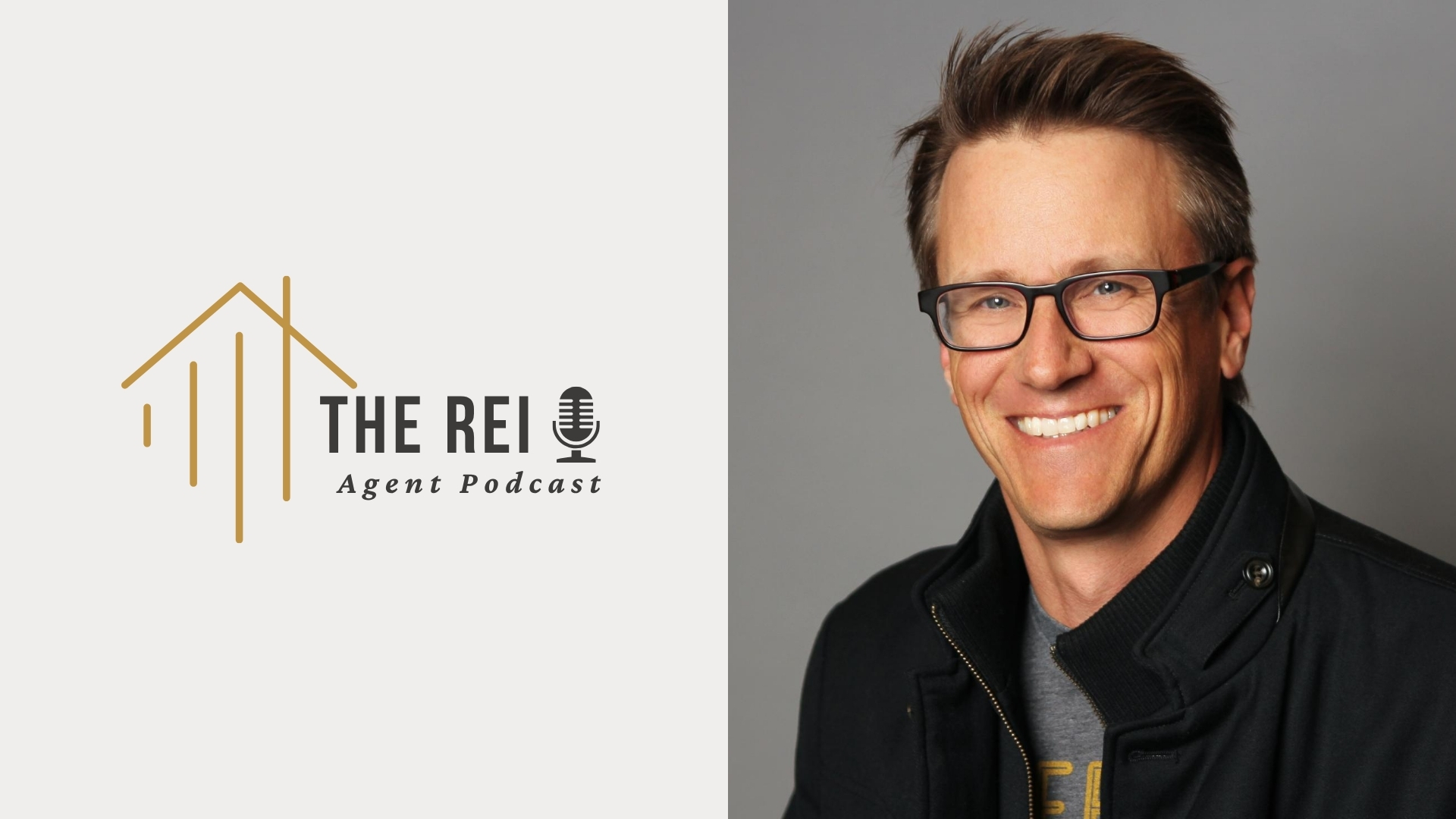
In this episode of The REI Agent Podcast, Mattias Clymer sits down with David Osborn for a conversation that moves far beyond business, money, and property.
It becomes a deeply human look at doubt, ambition, discipline, relationships, leadership, and the kind of wealth that gives a person the freedom to live with purpose.
David Osborn’s journey did not begin with a perfect plan. It began with uncertainty, family pressure, a job he thought would be temporary, and a decision to step into an industry he did not originally expect to love. What followed was a career built through grit, risk, self-awareness, mentorship, and the willingness to ask one simple question again and again.
“Why not me?”
That question became more than a mindset for David. It became a filter for his entire life. When doubt showed up, he did not pretend it was gone. He answered it. When insecurity whispered that someone else was more qualified, more connected, or more deserving, he challenged the assumption. Somebody was going to build something extraordinary. Somebody was going to create wealth. Somebody was going to live a bigger life. So why not him?
From a Temporary Job to a Life-Changing Career
How Real Estate Became the Game He Fell in Love With
David’s entrance into real estate was not glamorous. His father, a Green Beret Colonel and special forces veteran, encouraged him to enlist during the Gulf War. David turned to his mother, who was working in residential real estate, and asked her for a job because, in his words, his dad was trying to get him killed.
At the time, David thought he would end up in tech sales. Real estate was supposed to be temporary. But once he got his license and started helping people buy homes, he discovered something surprising. He liked the conversations. He liked the process. He liked serving people. And he realized that a career could be both enjoyable and financially meaningful.
One early experience shifted his view completely. He drove a college friend around Austin looking at houses, spent time having real conversations, enjoyed the process, and eventually earned a commission when his friend bought a home. That moment opened his eyes to a career path that felt both relational and rewarding.
“Man, this isn’t that bad of a career.”
From there, David and his mother grew their production significantly. What started as a temporary job became the foundation for a much bigger life. In just a few years, they grew into one of the top teams in Keller Williams at the time, proving that opportunity often enters through the door people least expect.
The War Inside Every Ambitious Person
Doubt Does Not Disqualify Anyone From Success
One of the most powerful parts of the conversation comes when David talks openly about insecurity. He does not present success as a life without fear. Instead, he describes the reality that most high-achieving people still deal with doubt, anxiety, and an inner critic that questions whether they belong.
When David was building in Dallas, he remembered driving into the city and seeing the skyline in front of him. He knew there were established companies, legacy brands, and major competitors already in the market. He asked himself who he was to think he could compete with them.
“Who am I to go build a real estate company in Dallas?”
That question could have stopped him. It could have kept him small. It could have become the story he told himself every time the work got hard. Instead, he found a better question.
“Somebody is going to come build the number one real estate company in Dallas.”
“Somebody is going to have an incredible life of financial success and abundance.”
“Why not me?”
That shift is the heart of David’s message. He did not eliminate doubt. He redirected it. He learned to make his mind an ally instead of an enemy. For listeners who are building a business, starting over, growing a portfolio, or trying to become someone new, that lesson hits hard. Confidence is not always the starting point. Sometimes courage is simply choosing a better question while the doubt is still talking.
Turning the Inner Critic Down
Success Comes From Listening to Possibility More Than Fear
David compares the inner critic to a voice that may never fully disappear. Many people wait to feel completely confident before they move. David suggests a different way. He explains that a person may never believe in themselves 100 percent of the time. The goal is not to silence every doubt. The goal is to stop obeying it.
He references the film A Beautiful Mind and describes how the main character still sees the figures created by his mind, but learns not to listen to them. David applies that same idea to self-doubt. The voice may still be present, but it does not have to be in charge.
“You’re always going to have doubts.”
“I learned to just turn down the volume on the critic inside of me.”
That is a liberating message because it removes the pressure to feel fearless. People do not need perfect confidence to act. They need enough vision to keep moving while fear is still trying to negotiate with them.
The Power of Being Around People Who Celebrate Your Wins
Why the Right Room Can Change a Person’s Life
The conversation then moves into one of David’s most important themes: environment. Through his work with GoBundance, David has seen how transformative it can be when people are surrounded by others who do not resent their ambition.
He describes a painful but revealing experience after buying his first small private plane. For David, the plane represented a long-term goal, years of work, and a major personal milestone. But when he shared the news with some golf buddies, their reaction was judgment and criticism. That moment helped him recognize that not everyone can celebrate another person’s expansion.
“You don’t have to be successful to be my friend. You just have to not judge me.”
That statement is simple, but it carries weight. David is not saying a person’s friends must all be wealthy, famous, or high-achieving. He is saying that the people closest to someone should not punish them for growing.
“We created in GoBundance a group of people that you don’t have to apologize to for being awesome.”
For business owners and investors, this may be one of the most important lessons in the episode. Growth can feel lonely when the wrong people surround it. But in the right room, success becomes normal. People celebrate wins, share opportunities, give encouragement, and model a bigger life.
Abundance Is More Than Money
Why Wealth Should Create Impact, Not Just Comfort
David makes it clear that abundance is not only about financial gain. He talks about people making money, taking risks, and winning big, but he also talks about generosity, contribution, and helping people in difficult situations.
In one powerful example, he shares that Matt King was riding a bike from Mexico to Canada to raise money for disadvantaged women and children. David describes how the effort helped a child who had suffered brain damage after falling in a pool. The family needed a hospital bed, and the money raised helped provide it.
That story gives the wealth conversation a deeper meaning. Money is not just status. It is stored energy. It is a tool. It can solve problems, reduce suffering, create options, protect families, and help others stand again.
“That’s just an example of what you can do with money.”
David’s version of wealth is not small. It includes business, investing, health, relationships, generosity, freedom, and contribution. It is not about shrinking so others feel comfortable. It is about becoming fully alive and using that life to lift others.
The Asset Lesson Every Investor Needs to Hear
Income Is Not the Same Thing as Wealth
When Mattias asks David about investing, David delivers one of the clearest wealth-building lessons of the episode. He explains that he realized early that the game was not simply about how much money a person makes. It was about what they own.
“It’s not about how much money you make. It’s how much money you make off of things you own.”
This is where David’s story becomes especially practical. He bought his first rental property in 1997. It was originally his residence, but he eventually turned it into a rental. Years later, he refinanced it, pulled out capital, and bought more rental properties.
Over time, those early decisions became the foundation of significant wealth and cash flow. The lesson is not complicated, but it is profound. Ownership changes the game. A paycheck can create comfort, but assets can create freedom.
“What it really has to do with is the amount of assets you own.”
For agents, investors, and entrepreneurs listening to the episode, this is one of the most actionable takeaways. David is not describing an impossible strategy reserved for billionaires. He is describing the steady power of buying property, holding assets, refinancing wisely, and letting time do its work.
When the Crash Becomes the Opportunity
Fear Can Hide the Best Deals From Everyone Else
David also reflects on the housing crash of 2006, 2007, and 2008. His income dropped. His business overhead was massive. The market changed fast. What once felt like unstoppable momentum suddenly became survival mode.
But after making it through the worst of the fear, David looked around and saw opportunity. By 2011 and 2012, he recognized that prices had taken a beating. Others were still scared. Developments were still abandoned. People were still uncertain. Yet because he had experience, preparation, and the courage to act, he began buying aggressively.
“The crash became the opportunity.”
“The fear became the opportunity.”
That is a powerful reminder for anyone looking at a difficult market. The best opportunities rarely feel safe in the moment. They often appear when the headlines are ugly, confidence is low, and most people are afraid to move.
David’s point is not that investors should be reckless. It is that preparation matters. When someone has studied the market, built knowledge, developed relationships, and learned how to recognize value, fear in the marketplace can become the opening they have been waiting for.
The Riddle of People
Why Hiring Well Can Change Everything
As David scaled his businesses, he discovered that hard work alone was not enough. In fact, he eventually learned that trying to personally fix everything was unsustainable. With multiple franchises struggling, he experienced intense stress and realized he could not outwork every problem.
That led him to what he calls the riddle of people. He learned that the right person in the right seat can transform a business faster than the owner’s personal effort ever could.
“If you can understand people and you put the right people in the right spots on the bus, the bus starts going where it’s supposed to go.”
David explains that many overachievers make the same mistake in hiring. They dominate the interview, sell the vision, talk most of the time, feel good about the conversation, and then assume the candidate is great because the candidate listened well.
But listening well in an interview does not automatically make someone a leader. David learned to slow down. He learned to ask more questions. He learned to look for patterns, references, behavior, talent, and evidence of past success.
“You have no idea who you just hired.”
That lesson shifted his life. By hiring better leaders, he worked less, made more, and built businesses that no longer depended on his constant personal involvement. For entrepreneurs who feel trapped inside their own companies, this may be the most freeing business lesson in the episode.
Where Opportunity Lives in Today’s Market
Follow the People, Follow the Growth
When Mattias asks David where he sees opportunity in the current market, David gives a practical answer rooted in demographics. He points to the importance of looking where people are moving, where jobs are being created, and where major growth sectors are attracting workers.
He mentions areas connected to SpaceX, data centers, Tesla, Samsung, and AI-related growth. His point is not to chase hype blindly. It is to understand where demand is likely to rise because people, jobs, and money are moving in that direction.
“Ultimately, residential real estate is a demographic issue.”
David also gives a market reminder that can help investors stay emotionally grounded.
“Every day you’re in a bad market, you’re one day closer to a good market.”
“Every day you’re in a good market, you’re one day closer to a bad market.”
That is the kind of perspective investors need. Markets move in cycles. Fear and excitement both come and go. The disciplined investor watches carefully, prepares patiently, and acts when the opportunity makes sense.
The Three Golden Nuggets
Rooms, Vision, and Energy
Near the end of the episode, David gives listeners three major pieces of advice. First, get around the right people. He believes a person’s closest relationships shape their wealth, health, mindset, and expectations. The right rooms can expand what someone believes is possible.
“You are who you hang out with.”
Second, David emphasizes vision. No one wants to follow a person who has no direction. A compelling vision attracts people, energy, opportunity, and commitment.
“If your vision is big enough, the whole world fits in it.”
Third, he stresses the importance of taking care of the body. For David, energy is central to life. Money is stored energy, but the body is the engine through which a person lives, leads, builds, serves, and enjoys success.
“Life is all about energy.”
This part of the conversation brings the episode back to the holistic mission of The REI Agent Podcast. Wealth is not just about financial achievement. It is also about the health, relationships, mindset, and energy required to actually enjoy the life someone is building.
Leadership, Self-Deception, and Taking Ownership
The Book That Helped David See Responsibility Differently
When asked about a book recommendation, David shares Leadership and Self-Deception. He explains that the book helped him understand how people can objectify others when they criticize them. Once someone falls into a pattern of criticism, they begin seeing evidence everywhere to support it.
That insight shaped how David thinks about responsibility. Instead of living in blame, he believes the better life comes from ownership, sovereignty, and action.
“The way to the best life is full self-responsibility, full sovereignty, and using that as a launchpad into building things better.”
This lesson ties directly into everything else David shares. The person who asks why not me is also the person who takes responsibility. The person who builds assets is also the person who stops blaming the market. The person who hires better leaders is also the person who admits they cannot do everything alone. The person who builds a meaningful life is the person who chooses ownership over helplessness.
A Bigger Life Starts With a Better Question
The Final Invitation to Rise
David Osborn’s conversation with Mattias Clymer is not just a story about building companies, buying rentals, or creating wealth. It is a story about becoming the kind of person who can carry a bigger life.
He reminds listeners that doubt is normal, but it does not have to be final. He shows that wealth is built through ownership, patience, and courage. He proves that the right people can accelerate everything. He makes it clear that abundance is not selfish when it becomes a way to serve, give, build, and lift others.
Most of all, David gives listeners a question they can carry into every difficult season, every uncertain decision, and every intimidating opportunity.
“Why not me?”
For the agent wondering if they can become an investor, why not them? For the investor wondering if they can build lasting freedom, why not them? For the entrepreneur surrounded by doubt, criticism, or fear, why not them?
Somebody is going to build something meaningful. Somebody is going to create wealth with purpose. Somebody is going to use success to help their family, their community, and the people around them. David Osborn’s message is clear.
That somebody might as well be the person willing to ask the question and take the next step.
Transcript
[Mattias]
Welcome back to the REI Agent. Today’s guest is David Osborn, a real estate entrepreneur, investor, and bestselling author who has spent more than 25 years building businesses and wealth through real estate. David is the founder of Waterloo Associates and co-founder of Go Management, which grew into one of the top residential real estate brokerages in the United States, executing more than 32,000 transactions and over 11 billion in annual sales volume.
He is an operating principal and investor in multiple Keller Williams regions and market centers, has personally owned more than 1,000 single family homes and acquired over 100 million in distressed real estate assets throughout his career. David is also a New York Times bestselling author of books, including Wealth Can’t Wait, Miracle Morning Millionaires, and A Tribe of Millionaires, and has been consistently recognized among the top 100 most influential people in real estate. What I’m excited about in this conversation is Dave’s perspective on building real wealth, creating freedom through investing and designing a meaningful life alongside business success.
David, welcome to the REI Agent Podcast.
[David Osborn]
It’s great to be with you, Mattias. Yeah.
[Mattias]
Yeah. I got to say, it’s really exciting to talk to you. I’ve heard you speak.
I heard you in Austin last year and have read two of your books, including The Miracle Morning Millionaires and The Tribe of Millionaires. But how did you get started? Walk us through that journey for people who haven’t heard your story.
What got you into real estate to begin with?
[David Osborn]
Yeah, that’s a great question. During the Gulf War, my dad was a Green Beret Colonel, and he was a special forces behind enemy lines in Vietnam. My mom was a real estate agent.
She was a housewife actually most of her life, but when he retired towards the end of his career, she got into residential real estate. During Gulf War I, my dad turned to me and he said, son, you should enlist right now. There is nothing like being on the battlefield.
I turned to my mom, I said, mom, you need to give me a job. Dad’s trying to get me killed. The truth is that I was in tech sales and I had done quite a bit in tech.
I was at Nobel Systems selling computer systems. I got sideways with my boss, so I quit. I was mad, I quit, and I needed a job.
My mom was looking for her assistant quit at the same time. This was in 1994. I told her, look, I’ll come work for you temporarily while I look for a real job.
My viewpoint was always tech and sales. I was pretty sure I was going to be a tech salesman. I even thought maybe solar power, which I’m glad I didn’t go down that road now because it’s taking so long to actually go anywhere.
Back then, I thought solar power made a lot of sense. I went to work for her temporarily, got my real estate license. I remember one day, a friend of mine from college said he was looking for a house.
I drove him around in Austin. We’d drive and look at homes for a few hours a day. Then we’d go have a beer and have a good time.
Eventually, he picked a house. I think it was a $75,000 house. I got paid, I got paid whatever the commission on that is.
I remember thinking, man, this isn’t that bad of a career. I’m just going to drive around my buddies, have good conversations, get a beer at the end of the day, and then get paid. I fell in love with the sport, with the game of real estate.
We did really well. I was with my mom. She was doing $11 million a year in sales, which is about $330,000 in commissions.
In just under three years together, because I started halfway through that first year, we grew it up to $750,000 in commissions and $25 million in sales. At that time, we were at Keller Williams. It was a pretty small company.
We were the number one team in the company, which was pretty cool. I fell in love with real estate. I was like, man, I get to drive people around.
I like people. I’m not a crazy extrovert, but I’m definitely slightly extroverted. Serve them, take care of them.
I realized pretty soon that real estate was actually pretty easy. The only hard part was finding the buyers and sellers. I think I made $100,000.
I made $55,000 my first year, $75,000 my second, and $100,000 my third. I was like, yeah, this is the kind of career I could do. This is a good way to go.
[Mattias]
Totally. Tell us about how you were 26 broke and starting over. What was a single belief or decision that shifted your trajectory?
How do you still instill that same belief in the brokers and investors you work with today?
[David Osborn]
If you’re like me, or if you’re like most humans, we’re full of doubts. We’re full of anxieties. We’re full of critical thoughts.
For me, after selling for three years, my mom had opened a brokerage up in Dallas, a couple of them, actually. They weren’t doing very well. She was actually under a lot of stress.
She had shingles from stress. I remember telling her I had actually spent two years from 24 to 26, or actually 23 to 25, hitchhiking around the world. I spent two years with a backpack.
No money, just chasing life, having a great time, experiencing the wonders of the world, literally and figuratively. I told her, I was like, Mom, you need to sell this thing. I love you.
You’re my mom. You got shingles from stress. You need to just get rid of those brokerages.
They’re too stressful. She had other ideas. After selling for three years, she invited me to go up and run the market centers for her.
Three years later, I had shingles from stress. By then, we had six franchises. We’d opened six.
None of them were going that well. I had one going well and four going badly and one doing okay. I was just trying to do so much.
I remember I would still commute some. I moved to Dallas in 1996. For a while, I was commuting.
I remember driving up I-35 and coming up over this hump in the road. Whenever you came over this hump of the road, you would see the city of Dallas-Fort Worth in front of you. I remember the post office tower.
Now, there’s the downtown American Airlines Center there before there wasn’t. Now, there’s the W Hotel before there wasn’t. There was the State Fair.
I remember I would see the city of Dallas. I would think to myself, who am I to go build a real estate company in Dallas? I had this insecurity, like imposter syndrome, like doubt.
I was like, who am I? How do I deserve to win at this? There are big companies here.
There’s Ebby Holiday. There’s Remax. There’s Coldwell Banker.
They’ve been around forever. Who am I, little old David, just to compete with these big guys? Somewhere along the way, an answer came to me.
I think it was from a Jim Rohn tape that I listened to. I used to love Jim Rohn and Tony Robbins and all those guys. One of the things I think Jim said was, why not me?
Why not me? I realized that I can either live in my insecurities or I could live in that simple question. Why not me?
Somebody is going to come build the number one real estate company in Dallas. Somebody is going to have an incredible life of financial success and abundance. Somebody is going to have great relationships and keep their fitness high their whole lives.
I just began saying to myself, why not me? That was my answer. Every time my inner critic would show up and say, who are you to do this?
My answer would be, why not me? Somebody has got to do it. They might be smarter than me.
They might not. They might be prettier than me. They might not.
They might be harder working than me. They might not, but why not me? That’s become a mantra for my entire life.
Every time I get doubt in my mind, why not me? Somebody has got to do it. Why not me?
The brain can’t answer that question except with, well, okay, why not you? Let’s go see what we can do. That’s one of my secret silver bullets for life is every time I have doubt, I just ask, well, why not me?
I’ve seen dumber people have more money than me, Mattias. I’ve seen uglier people that had pretty friends. I’ve seen people that work less hard than me have more money than me.
Obviously, it’s possible, so then why not me? That’s kind of a cool little ingredient for life.
[Mattias]
I love that because I think it’s easy to get stagnant. I think it’s also easy to get intimidated by that uncomfortable feeling of you’re pushing yourself, you’re growing. I think without that challenge, without that growth, I think it’s easy to get depressed, honestly.
I think it’s important to do that to yourself physically. If you’re exercising, I think to push through, to grow, it involves ripping the muscles. It involves that rebuilding process.
It can be a little bit painful, but that is a silver bullet for pushing yourself into those situations, but also to keep yourself going because it’s easy to let that doubt take over. I love that.
[David Osborn]
Yeah, I think our minds are our own opportunity, but they’re also our biggest cheerleader, but also our biggest critic. For sure, most people I know are harder on themselves than almost anybody else is. Not everybody.
There’s always that one guy that’s always happy all the time. You’re like, wow, what the hell is that? What did they take?
What’s going on with them? Most people, I think, are pretty hard on themselves. This little why not me line turns your critic into your ally.
It turns your brain into your ally. The other thing I’ll tell you real quick on this is if you ever saw that movie, The Beautiful Mind, do you ever see that? Beautiful Mind with Russell Crowe.
The guy’s got schizophrenia. At the beginning of the movie, you think it’s a real thing going on with a spy, but it turns out to be just the people he’s seeing in his head. They’re crazy.
At the end of the movie, he wins a Nobel Prize, but he doesn’t get rid of the schizophrenia. He doesn’t get rid of the people that he sees. What he does, he just stops listening to them.
You see him walking in to collect his prize, and you see these three fictitious people trying to get his attention, but he just ignores them and walks past them. That’s what I also found to do with my critics. You’re always going to have doubts.
You’re always going to criticize yourself, but I learned to just turn down the volume on the critic inside of me and then just walk right on past them through the doorway to success. It’s a similar thing, but if you think one day you’re going to just 100% believe in yourself 100% of the time, maybe that happens for some people, but it still never happened for me. I still have self-doubt, but I’ve just learned to not pay so much attention to the doubt and pay a lot more attention to what’s possible.
[Mattias]
I love that. I think that’s true too, especially if you’re maybe starting off in a new career or a new venture or whatever, you might be surrounded by friends that don’t get it. It’s very different to go into this world of self-employed business owner, investor, that kind of stuff.
There’s going to be friends that don’t get it and might feel insecure about it. They might also be critiquing you or just negative influence in your life. I think that kind of mindset also relates to real people.
Also, it’s a segue into the tribe of millionaires, surrounding yourself with people that have experience, that can keep you accountable, that can move. The tide moves all the ships up. We want to be moving each other in the right direction.
[David Osborn]
Well, that book is written about our company, GoBundance, which is all about being around people that you don’t have to apologize to for being awesome. The idea of that is, and I think you bring up a really good point here, is when you start rising, which you will if you say, why not me? You’ll start finding people criticize you, people tear you down.
There are people that actually are envious or jealous of your success. A lot of times, I think the jealousy comes from not really disliking you, but more they don’t want to do what you’re doing. They feel bad about themselves, so they attack you because they know they could do better.
Instead of trying to figure that out themselves, they just tear you down. I’ve definitely lost some friends along the way, Mattias. I’ve had people fall by the wayside.
I’ve had people that just couldn’t ride. By the way, you don’t have to be successful to be my friend. You just have to not judge me.
I remember specifically, I bought my first airplane, a little twin prop just to fly around in because I was working 60, 70, 75 hours a week. I had to go to places like Memphis. I was going to places where there weren’t really good air service.
If I went there and I didn’t finish by 4 o’clock, I had to spend the night. I had kids at the time, so I bought my plane. I was able to work until 8, 9, 10.
I could go as late as I like and still get on my plane, fly home, kiss my kids in the morning. I earned my way there. My whole life, I’d wanted to have a small private plane.
I had had a mentor that had one, so I’d been on one a few times. It’s not a more comfortable way to fly, but it is a time machine. It saves you time.
That’s the benefit of a private plane. I’m golfing with these guys that I golf with. I didn’t know them that well, but they were my golfing buddies.
It was the day I bought the plane, so I’m so excited. I’m like, dude, I just bought my first plane. In hindsight, it was pretty insensitive, to be clear.
I didn’t really think it through. I’m like, I don’t know. I’m like 40 years old, probably.
I think I was about 40, maybe 39, 40, right around that age. I was old enough to know better, but still young enough to not have. Now, I’m aware, by the way.
Now, I don’t talk about my life too much because it’s too abundant and people will just think I’m being an ass. I told them I bought this plane. They immediately started giving me shit.
Then I find out that some of the guys are talking about me in the club like I’m a douchebag because I talked about this plane I just bought. What’s funny is I don’t feel like I’m that kind of personality. I wasn’t like, I got a plane, you don’t.
I was more like, wow, I’ve had a plane on my vision board for 10 years. Today is the day that I accomplished that 10-year goal. By the way, again, I want to own my insensitivity.
I didn’t think through regular guys that are in a regular salary, probably don’t want to hear about me buying a million-dollar plane. At the same time, oh, these are not the right people for me. We created in GoBundance a group of people that you don’t have to apologize for being awesome.
You could call me tomorrow and say, hey, I made a million bucks today. I’d say way to go. In fact, the guy texted me before I got on this podcast about how he made 20 million bucks investing in Rocket Lab.
It’s a company. His thesis was because SpaceX is going to go public in a couple of years or 18 months, it’s going to drag up the number two rocket company, which happens to be called Rocket Lab. He’s lucky enough to have a bunch of cash, so he put a bunch of cash in it, like 10 million, and he’s up 20.
He’s got 30 in there. He’s up like 20 million, roughly. By the way, he told me that when he got into what it was for.
He told me when it was 40, and I made 700,000 following him. I put in, I don’t know, a couple of hundred. Now it’s worth 900, let’s say, or it’s worth 850 or something like that.
I’m up 650 grand because he gave me that tip, and I trusted it, and I followed him. When he tells me he made 20 million, you know what I say, Mattias? You should be so proud of yourself.
You took a risk. You saw the shot. You went all in, and you wrote it all the way up.
Thank you for telling me about it. I wish you told me when it was four, and then I would be up a lot more. As it is, because of you, I’ve made almost $700,000.
That’s the kind of people I want to be around. I want to be around the person where I can be my brightest light, and they don’t feel threatened by that and then feel like I’m being a douchebag for sharing my life. By the way, that environment is not just about how much money I made.
Right now, Matt King, who runs that company, is riding a bike from Mexico to Canada, something called The Ride. He’s trying to raise a million bucks for disadvantaged women and children. I’m giving him 100 grand tomorrow.
He doesn’t know yet, but I’m going to give it to him on Friday, the day after tomorrow. It’s all along The Ride. He’s finding people that have hard luck.
One kid that he just helped, the kid fell in a pool and got brain damage. The parents are having to look after him at home. They couldn’t afford a hospital bed.
He’s getting bed sores. We used the first gift to buy a hospital bed for him. I guess it rotates the kid somehow electronically.
I don’t fully know. The family was so grateful. That’s just an example of what you can do with money.
We talk about that stuff too. We brag about, you could call it bragging. We’re living this big life of helping other people, of manifesting success, of keeping our bodies in shape, of having great relationships.
When you’re around people like that, that validate that and encourage that, you don’t even have to flinch about being yourself. It makes it that much easier to succeed at another level. It’s a whole room full of people that have said, why not me?
[Mattias]
I think that’s probably one of the biggest, maybe mind shift things that people have to go through to see success is to be happy for others’ success. I don’t know if that’s fundamentally not something people are wired towards. I don’t know if I was a big negative Nancy about people succeeding.
I’m sure that came up in competition of some sort. I think if you can really shift that, if you can look at the person that is where you want to be as, wow, how’d you do that? That’s awesome.
The airplane thing. Let’s say somebody trained to run 100 miles, and then they do it, and they’ve had to train for years to do that. That’s not a money thing, but that’s a huge accomplishment.
That’s something that took tons of work and intentionality to achieve, and that’s in the same vein. I think having that mindset shift has got to be such an important part to getting anywhere. I guess it’s abundance versus scarcity.
[David Osborn]
It is. It’s abundance thinking versus scarcity. It sounds like I don’t know that I was ever that jealous either.
I might have been jealous of the guys in college that got all the girls. I could see a moment of jealousy here and there. I might have been jealous that I wasn’t a little faster on the sports field.
I was always an okay player, but I was never a great player, if that makes sense, when I played soccer. I think I can see some areas of jealousy. In terms of general life, here’s what people need to know.
If your five closest friends are Bill Gates, Elon Musk, Peter Thiel, and Warren Buffett, you’re almost certainly a billionaire. Whoever you admire, you look up to, you like. My first mentor had a jet.
He had a Global 100, and I got to fly on it not a lot, but enough. It was because of that experience that I would have never owned a plane if I hadn’t had a mentor that had a plane. I just saw the benefit of going straight to the airport, getting on the plane, and flying home.
I’m telling you, the experience on the plane is no different. It’s just as good to be on a big plane as it is on a little. It’s the, hey, I’m running late.
I’ll be there in three hours. It’s, hey, I want to land at one o’clock in the morning. It’s, hey, I’ve changed my mind.
I want to go home right now. That is the benefit of that. Seeing that from a productivity point of view as a business owner, it’s just a gift.
If your close friends do really, really well, they lift you up. Once you get that, it’s maybe a little bit easier to get out of envy and into abundance, but there certainly seems to be a trend or a trait with certain people to be very envious of others. I’m definitely not that.
I think Elon Musk deserves everything he got, by the way, the good and the bad. Our lives are just autobiographical, so we manifest. What I mean is sometimes he picks fights with people, and he gets in these big fights.
You’re like, well, you manifest that, but on the other side, Starlink, space, being the number one country in space, again, NASA wasn’t going to get us ahead of the Chinese. Elon did that. All the things he’s created, the first electric car that got trendy, so now the whole world’s on electric.
It takes sometimes, or if you think of Sir Richard Branson, I met him, and he’s just so inspired. He’s created 300 businesses, and 200 of them failed, and 100 of them are doing really well. It’s just like, wow, look at that person and the impact they can have.
I would never be jealous of that. I’d be grateful. More people like that helps more of us.
It’s no difference than a guy that cures some kind of medical disease or some guy that does an incredible charity that serves like the guy that did Habitat for Humanity. Now, how many homes have been built because of that one guy? We as a society and as a people should honor.
Now, we might say, hey, things are a little unfair. We need to adjust this or adjust that socially, and that’s a social contract, and I don’t disagree with that either, but ultimately, we should honor and revere those that have made an impact for all of us.
[Mattias]
Yeah, Elon’s a great example of an audacious, why not me, like PayPal to rockets.
[David Osborn]
I mean, he’s crazy. I love reading about him. I think he said recently, I believe we’re in the matrix, and how could I not believe that?
He said, I believe that the matrix wants you to do the most difficult and interesting things possible, and if you do that, the matrix will work. I’m like, well, I mean, I could see that. From his point of view, it’s like a virtual world.
It must be hard for him not to believe that, but yeah, I mean, even if you’re a person that just touches 50 people’s lives in your community, I honor and admire that. Everyone needs a little help. There’s so much need for help and for support and for pulling one another up.
It’s like that monkey game. Remember where you hook all the arms of the monkeys together? That’s really society.
If we can all reach down and pull someone up, and someone above us is pulling us up, what’s better than that? That’s a good life.
[Mattias]
I love that. Along your journey, so we got into the building of the real estate brokerages. When did you start investing?
What did that look like for you?
[David Osborn]
Yeah, so I’m building the real estate brokerages, and the one advantage I’ve had is I’ve always been in on business building. I almost never had a salary job, so I always was working for myself. That’s a great reason to be a real estate agent, because you are literally working for yourself.
You only get paid on your capacity and your skill. I’m playing this game of life like we all do. I realized pretty early on that it’s not about how much money you make, it’s how much money you make off of things you own.
There’s not a single billionaire that doesn’t have a billion dollars worth of assets. I read this in a book recently, and I sent it to a friend, because it said the same thing. It said the difference between rich people and poor people is a lot of poor people think it’s about the amount of money you make.
Actually, that has almost nothing to do with it. Yes, it helps, but what it really has to do with is the amount of assets you own, and then from my point of view, cash-flowing assets. I bought my first rental property in 1997.
It was actually my residence, so I moved into it. Then I eventually decided I didn’t want to cut the yard anymore, so I moved back into an apartment, and I turned it into a rental. I bought it in 1997 for $77,000.
Today, it’s worth $550,000. It’s in Austin, Texas. In 2001, I refied it and took out $60,000 and brought three more rentals, but these ones were in Lubbock for $70,000 a piece, roughly, so I put $20,000 down on each one.
Those today are worth probably $150,000. I should have just kept buying in Austin, but I wasn’t that smart, so I was looking for cash flow instead of growth or appreciation. Those four homes today are worth pretty close to a million bucks.
They’re probably over a million by now. I haven’t told this story in a while. They generate about $40,000 a year in free cash flow.
I let them all get paid off, so I turned $20,000 in 1997. Now, it’s 2026, so 30 years later into a million dollars and $40,000 a month in free cash flow because they’re all rented and I just paid off the mortgage. Now, that’s an example of what’s possible for anyone.
What’s possible for any realtor is just buy a house, turn it into a rental, refi it after a certain number of years, buy some more rental properties. That was the game I was playing on the side for quite a while. Today, I have like 150 rental properties, but I did step it up.
I didn’t do very much from 1997 until 2006 other than build my franchises and buy a few opportunistic rentals, but then after the housing crash of 06, 07, and 08, I probably had about eight rentals at that point. My income went, by the way, down by like 70%. My overhead was $700,000 a month.
I’m sitting there in the crash. I’m looking at the net. I think I had $3 million in cash in all my businesses and I was burning $700,000 a month.
I was like, I’ve got just under five months here. No, seven months, something like that. What did I have?
I had $3 million and I was burning $700,000 a month. Yes, five months. Five times seven is 35.
I was like, I will go broke if I don’t have revenue. If you remember, real estate just crashed, came to a screeching halt, but I made it through and I was still profitable. I’m very lucky.
No one should feel sorry for me, but for me, I was concerned for me, but no one else should. Then I got through it. I’m still making some money, way less than I had been making.
We’re making money and I still have my savings. I didn’t have to dip into my savings too much. And then I look at real estate in 2010.
I was like, wow, it’s really taking a beating, but I’m still in the blood of it. The blood’s running in the streets. I’m so panicky.
But 2011, I looked around, I was like, man, this is a good time to buy. I’ve been in real estate a long time. I could tell prices were off a little.
I put my toe in in 2011, started buying some stuff. Then in 2012, I was like, oh my gosh, this is crazy. I went all in.
I bought everything I could, single family residences, distressed debt on real estate. I just started buying everything I could and ended up going really all in from 12 and 13 and 14 and went really heavy on investing at that time. I would say that’s an example of preparation, meaning I’d been in residential real estate, I’d bought enough properties, I knew enough about real estate to be aware of what was going on, meeting opportunity.
By the way, in 2012, people were still scared. There were still abandoned developments all over the place. It sounds obvious in hindsight, but at that time, it wasn’t obvious.
People that had bought in like 2009 got foreclosed again in 2011 because it didn’t get better. Everyone was expecting it to get better. But then it did get better and it shot up like crazy.
By then, I had quite a few homes. I bought close to 1,000 single family homes from foreclosure. Now I think we bought close to $140 million worth of debt.
The debt market’s gone away, but the debt was just like debt on a commercial building or something like that. There was so much of it out there then that we might buy a note that was $2 million. We might buy it for $1.2 million. We figured the underwriting asset was worth $1.5 million. We called the owner and said, hey, we got three options. You can give me $200 grand.
You’ll still keep $100. We’ll keep you in the money. You can give me the keys and I’ll take over the property, or we can do a short sale.
We can sell it together. What would you prefer? We gave them those three options.
You’d be amazed at how many people were like, I am so glad you called. Thank you so much for calling me. I’ve been trying to get hold of this giant private equity firm that owned my debt.
No one’s returning my call. They don’t care about me. I can’t get any action.
We even had one guy say, you probably saved my life. He was like, I was about to commit suicide. He paid us off.
He’s like, I have money to buy off, but no one will take my calls. He was going through a lot of stuff. We bought it for $1,000.
We made a quick $350 grand, but we left him with $200,000 in equity for what we thought it was worth at that time, which was at depressed prices. He was able to save it, turn it around, and I’m assuming his life went on good from there. That was where we were at.
That’s when we started making a lot of money. The crash became the opportunity. The fear became the opportunity.
Then I became a big-time investor. Then I realized that the real estate brokerage wasn’t the most secure place to invest all my apples, because I’d seen the crash. I saw how quickly it turned from 2006, we were killing it, to 2005, we’re making money hand over fist.
In 2008, we’re concerned we’re going to go bankrupt. We’re just trying to keep the lights on. I realized that having a bunch of diversified assets really served.
I started buying a lot of different things at that point.
[Mattias]
You built this large Williams franchise, one of the biggest in the world, alongside all this personal investment portfolio. How do you balance now scaling a brokerage business with your wealth building goals? Where does your energy go today?
[David Osborn]
It’s such a good question. I think the first thing I had to learn, Mattias, was self-discipline. I had to learn how to manage me.
That was the mindset, which is why not me. That was the work ethic. I wasn’t really that motivated in high school.
I was a C student. I did like working. I had a lawn mowing company, so I was that kid that liked to work.
I had to develop the mindset, and then I had to develop the work ethic. I developed the work ethic, actually, by joining a mastermind of a bunch of top agents. One thing you can say about top agents is they usually work really, really hard.
I picked up a lot through osmosis of just that level of work ethic. Then what really changed my life was learning the riddle of people. When I had multiple franchises, I was forced to learn this early.
Many people never learn this. They just learn how to work really, really, really hard. Then they hire people that do an okay job to follow them up, so they’re always like, oh, man, I got another bad assistant, or I can never find anybody good.
You’ll hear people say, I can never find anybody good. That’s their mantra. It’s impossible to find a good employee.
They got an incredible work ethic, so they hire a bunch of people that pick up the pieces behind them. They make good money, but they’re not really blowing up. I had six franchises.
Like I said, one was doing well, one was doing okay, and four were doing badly. I got shingles and had almost an identity crisis where I was just dying because I couldn’t work hard enough to fix six franchises. There’s six franchises in Dallas-Fort Worth, from Flower Mound all the way to North Dallas, all the way to DeSoto.
I’m driving around trying to serve all these businesses. I took a class about people. It was all about how to identify and hire really talented people.
You might have heard of the DISC profile, the drivers, the influencers, the steady state, and the compliance. You might also have heard of Bain Haney. He taught this recruiting class.
I think he’s passed now. The idea was people that are successful, they leave clues. They repeat.
People that fail repeat certain behaviors. If you can find a person that has maybe one of your top agents, Rookie of the Year, but before that, they were a good athlete, and before that, they did something hard that they were good at, people like that, when you find them in their 30s and 40s, they tend to continue that pattern. I’ve got six franchises, four are failing, one’s doing okay, and one’s doing well.
I went out and hired one good manager. I took a long time. In the past, I would just say, oh, you seem like a nice person.
Let me hire you to be my manager. You want the job? Great.
I’ll give you the job. What this class taught me to do is spend 10 hours in the interview process, not tell them what you were going to pay them, not answer any of their questions, just ask them questions. They talk in these 10 hours of interviews like 75 percent of the time.
You’re just trying to uncover who they are as a person. You use behavioral assessments. You check references.
I started doing this process called the recruit select. I hired this one really good manager, and I put her in this failing office I had. My manager before that had been an alcoholic.
I only knew that because one of my agents came to me and said, hey, I noticed at a meeting the other day she took a flask out and took a suede off of it. By the way, she’s undermining you in the office. I have a manager who’s drinking out of her purse, and as I apply pressure for results, is undermining me with all the agents.
I’m walking in the office, and the agents think I’m a jerk, but I’m just trying to get results. I’m just trying to get the business profitable so we don’t have to keep losing our money and the investor’s money on the office. I put this lady in charge, Holly, and suddenly the business starts turning around.
It starts getting better. There had been an agent I’d recruited in there, and I’d been there all the time because I’m trying to fix it. Her name was Stacey.
I recruited her, brought her in. My alcoholic manager didn’t run her off. We’re trying to build this business.
Stacey’s the one that said, hey, I think you’re getting undermined here. Finally, I get a good one in, and all I do is coach her. I coached her for about six months, and she’s doing well.
I quit paying attention to that office, and I went and paid attention to one that was failing somewhere else. A year goes by. I go back to that office.
It’s now making money. It’s profitable. I’m working less, not harder on it.
I meet Stacey again. Stacey, who I’d recruited, she sits down for me with lunch. She says to me, David, after I’d worked with you for a while, I wasn’t sure about you as a leader, but now I believe in you.
Now I think you’re a great leader. I thought to myself, the only thing is, I’m the same guy, but I haven’t been in this office for a year. Not being around made her just think I was a better leader, but hiring that great leader was actually what made the difference.
Then I became obsessed with finding talent. That business went up. I hired another great guy, put him in another failing office.
That business went from losing $200,000 a year to making eventually a million dollars a year from this high-charging ex-football player that I hired. I kept following this philosophy. Then a few years ago, I can’t really remember, but I would say probably eight years ago, I merged with another up-and-comer, a very talented guy called Smokey Garrett.
We made our two office groups one. I had a bigger group and he had a smaller group, but we became 50-50 partners. He’s been running that show for the last eight years.
We’re struggling a little bit now. It’s been a little bit tougher, but we grew and we did really well, became one of the top five residential real estate companies in the United States of America. Basically, I work through Smokey.
Then I have another business, GoBundance, that I work through, Mack King. Then I have another private equity firm called Waterloo Associates that’s run by Mike Stewart. The way I built my world, having learned from the franchise level, is to hire, I call it the riddle of people.
If you can understand people and you put the right people in the right spots on the bus, the bus starts going where it’s supposed to go. You look better, you make more money, and you work less. That’s become my focus on life, is getting the right people in the right seats on the bus.
It’s not easy, but it’s called the riddle of people. If you go back to that original example I gave you of a top producer who’s like, I can’t find anybody good, what I noticed with most overachievers is they don’t slow down enough in the interview process to look at who they’re really hiring. They actually talk 90% of the interview.
Then they think the person is great because they listened well. That’s a follower. That’s not a leader.
By the way, you can find leaders who are good listeners. I’m not saying that. I’m saying if you came in and dominated the conversation and told them how great everything was and what you were up to and where you were headed and why you needed them on the team, and then you hire them, you have no idea who you just hired.
You just felt good being an overachiever and an overproducer and an overtalker. You felt good in that meeting. You thought they were good and you hired them.
I see this over and over again. It’s really learning the riddle of people. Who are you hiring?
I’ve done that. Even though I’m making a ton of money and I’ve got great businesses right now, I’m working less than I’ve ever had to work. In the past, all my energy went into new opportunities.
Now, I’m just working on my health, my family, my relationships, and my own personal state of mind. I don’t have to grind anymore. I’m working 30, 35 hours a week and making a ton of money.
It’s great.
[Mattias]
That’s awesome. I was laughing because I know that one of my default tendencies, and I’ve been going through cultural index training and that kind of stuff to learn the hiring process better. The thing that I tend to do is go on vision quests.
If somebody’s in a meeting with me, I’m going to probably tell you about 10 years in the future and we’re going to be going down this rabbit hole. I have no idea what they actually even think about it. I understand that.
[David Osborn]
It’s totally natural. You’re excited about what you’re creating and you want to share it. The problem with that is at the end of it, you got no idea who you got.
They always get caught into your excitement because you have a lot of passion. Almost everybody I’ve ever interviewed wanted to work for me because I have a lot of passion too. The danger was getting somebody and you get the wrong person because you were so excited that you just read them.
You view it almost like a popularity contest. Can I sell this person on coming to work for me? That’s not what you should be doing.
It should be like you’re interviewing a doctor to do life surgery on your body. Do I have the right doctor? Is this the right person to come work for me?
I hear you, man. By the way, don’t beat yourself up. Everybody does that.
[Mattias]
That’s the way it is. I think also maybe a way to describe it is the visionary type might be gas and often they need breaks to counterpart them. That’s not always going to be this hype train going to the moon together.
You’re going to have a little bit of a conflict there potentially.
[David Osborn]
That’s a great analogy. My right-hand man, Matt King, who’s worked for me for years now, his number one gift to me is saying no. I say yes to almost.
I’m not as bad as I used to be, but 10 years ago, I said yes to pretty much everything that came along. I’m like, that’s great. Let’s do that.
That sounds great. Let’s do that too. Oh, you got that idea?
Let’s go do that too. Yeah, I get that. You need the no’s, the integrator.
[Mattias]
Yeah, exactly. I know in Austin, you all have seen a pretty good hit on the prices in the real estate there. Interviewing people all across the country, I hear different pockets of some doom and gloom, that kind of stuff.
It’s different, again, everywhere I talk to it. It’s not a national thing by any means, but I’m just curious, you coming from that perspective, that lens, what do you think are some big opportunities that people may be missing in today’s market?
[David Osborn]
Yeah. I think it’s been really tough for quite a while. This seems like a pretty tough downturn.
They always seem tough, but this one’s lasted. I think it was just getting better. Then we got into that war with Iran, and it raised interest rates again.
I think we were on a recovery, then we got pushed back down. I think we got to be closer. Here’s one thing I’ll tell you that I’ve always used to keep me inspired.
Every day you’re in a bad market, you’re one day closer to a good market. Every day you’re in a good market, you’re one day closer to a bad market. You got to keep that in mind.
I think the opportunities have got to do with the hot sectors of the moment, which is data centers, AI companies. If I were buying investment properties today, I would go look around where SpaceX is. I would go look around where the data centers are being built, the new one that Tesla is doing.
I would go look around Samsung in Taylor, Texas. I think the opportunity is to go where you know people are going to go, and you’re going to be moving there. That’s going to drive up prices and rents.
Ultimately, residence real estate is a demographic issue. There’s a lot of it going on. Just go find out where they’re building the next five data centers.
We’ve been buying in McGregor, Texas. McGregor, Texas is near SpaceX. We built an 80-unit multifamily there.
It hasn’t crushed it, but it’s got some wind behind it because there are people still moving there. You want to look at the demographics in real estate and follow the demographics. Then make sure you’re always buying something at below market or below replacement costs.
You still got to find that edge. As a real estate professional, you should have that. You’re looking in the market all the time.
You get the 3% commission. You can figure out where the market is for a property that might have some opportunity. I think I would look where the people are going.
Austin, Texas, Texas is still a good place. We just need a little more recovery. By the way, it probably means it’s a good time to buy.
My sense is it usually doesn’t stay down long. It’s usually two years, but we’re past two years now. We’re probably in year three right now.
Downs don’t usually stay down for that long. We got to be close to a boom.
[Mattias]
Yeah, that’s a great point. The whole tulip craze, you got to know when everybody’s fearful. It’s a great time to invest.
Yeah.
[David Osborn]
Everyone was feeling so jubilant before. That always makes me nervous when everyone’s happy. Now, everyone’s pretty despondent.
It probably means we’re pretty close to a bottom. The boom I’m saying is I’m not saying buy AI stocks. I’m saying go buy rentals near the AI factories and stuff because you know there’s going to be a lot of workers there.
[Mattias]
No, totally. We’ve got to ask. We’ve had a ton of golden nuggets already in this podcast, but curious what golden nuggets you have for our listeners.
[David Osborn]
Okay. You’ve heard this one before, but get in the right groups. Be around the right people.
Number one is you are who you hang out with. You are probably the average of the five closest friends is probably your net worth, your health, your wealth, everything. Get in the right rooms.
You can buy your way in the right rooms or you can just earn your way in the right rooms or do both like I do. I’m in three masterminds right now. One of them cost me 100k a year.
One of them cost me 75k a year, but I do it to be around the right people. The other one’s actually only 6k a year, which is probably the best value, but it’s YPO. They’ve been around forever.
I’m just happy to be in an amazing forum. Number one, be around the right people. Number two, always have a vision for your life.
You talked about vision casting just now. No one wants to go work for a person that has no vision. It’s not inspiring to be me if I don’t have a vision, so I like having a vision for my life.
If your vision is big enough, the whole world fits in it. If Elon Musk called me tomorrow and said, David, I want you to come work for me for free, I’d probably consider doing it. Because his vision is so darn big, I would know that I would win just by being near him.
My point of that is always have a vision. No one wants to work for somebody that has no vision. If your employee has a bigger vision than you, then you should go work for them.
Lastly, I would say take care of your body. Life is all about energy. Money is actually just stored energy.
Money in itself doesn’t do anything, but it’s stored energy. I can use it to make things happen. Your body also serves you.
I would say eat right, exercise, do all the things you can, especially at my age because I’m getting older now. It really makes a difference. I’ve seen guys my age that have half my energy.
I definitely have way less energy than I had in my 30s and 40s now that I’m in my 50s, but I’m really paying attention to it. I’m managing myself well. I’m after myself.
I’m keeping myself emotionally, physically, and nutritionally charged up. I’d say really pay attention to your energy and your self-care.
[Mattias]
I love it. It’s so important, and it’s so easy to neglect, especially when you’re going through the grind phase of getting things rolling.
[David Osborn]
It’s so easy.
[Mattias]
You’ll be amazed. I think my biggest year in sales, I think I worked out four days a week at noon. I just didn’t do lunch appointments.
I just went to the gym. You can make it happen, for sure. What about a fundamental book you think that everybody should read or just one that you’re currently really enjoying?
[David Osborn]
I’ve got an odd one for you. It’s called Leadership and Self-Deception. The cool thing about Leadership and Self-Deception, I loved it when I read it.
It said, if you criticize someone, it said we tend to objectify people instead of keeping them as human beings, so we tend to turn them into objects. It said, if you criticize somebody, you fall into a glass box, and you see evidence for your criticism all over the box. Let’s say I want my wife to clean the kitchen, and I say, clean the kitchen.
You never clean the kitchen. I fall into this glass box, and I say, she never does this. She never does that.
She never does this. Evidence becomes everywhere for your criticism. The truth is, if you want something done, you should just do it.
If I want the kitchen clean, I should just clean the kitchen. The self-responsibility that that book taught me, it’s about leadership and self-deception. Everything in your life is autobiographical.
Now, I’m not suggesting you should do all your employees’ work. You don’t have to do their jobs. If they’re not doing their jobs, you can correct them, educate them, or change them.
What I am saying is, if you walk through life finding a lot of things wrong with everything around you, you’re just going to live in this world where there’s going to be more and more and more evidence of all these things that are wrong. When people get lost in criticizing the government or criticizing a particular politician or criticizing their football team or criticizing their spouse or their employees, it’s like a never-ending vortex of criticism. The way to the best life is full self-responsibility, full sovereignty, and using that as a launchpad into building things better.
It doesn’t mean you don’t find things wrong, but it means that you don’t go into like, wow, they never do their job. You go into like, hey, I noticed you didn’t do this piece of your job that I asked you to do. Do you need help doing it?
Do you need coaching? Or would you prefer I found someone else to do it? It’s like more of that.
It’s like taking on ownership and not living in criticism.
[Mattias]
Yeah, or like, maybe I didn’t explain it properly or something, or maybe we need to have a better system to make sure that it’s clear what needs to be done. Yeah, it’s so true. I mean, you can become a victim.
You can become learned helplessness. I mean, all this stuff is, if you only see that negative stuff, you’re just going to become like, what’s the point of even trying? Because I don’t really have control of it.
Everything else is against me. It can spiral out of control, like you said. Very quickly.
Amen. Yes, sir. Well, I mean, David, you’re everywhere, I’m sure.
Where can people find you if they want to follow you on social media?
[David Osborn]
I mean, I’m not really looking for anything from anyone, but if you go to @iamdavidosborn, I post there sometimes. You can pick up the book Wealth Can’t Wait or Tribe of Millionaires, but it’s a pleasure to be on with you, Mattias. It’s been great.
I appreciate your questions. And I love what you’re doing, man. Anyone that’s trying to make a difference in the world through a podcast, a book, any kind of work ethic, I’m a big fan.
So thank you.
[Mattias]
Well, thank you so much. It was a lot of fun talking to you. And I’m sure we could have gone on for a couple hours because we have a lot to talk about, I’m sure.
We do.
[Erica]
Thanks for listening to the REI Agent.
[Mattias]
If you enjoyed this episode, hit subscribe to catch new shows every week.
[Erica]
Visit REIAgent.com for more content.
[Mattias]
Until next time, keep building the life you want.
[Erica]
All content in the show is not investment advice or mental health therapy. It is intended for entertainment purposes only.