

Why Was This New Jersey Mansion Just $10?
At first glance, the $10 price suggested a giveaway, but the low figure was required by Montclair’s preservation terms, not the home’s market value.
The planning board approved subdivision of the original lot only if the 1906 Victorian was preserved through relocation.
Under historic preservation rules, the structure had to be sold for no more than $10 and moved within a quarter mile of 44 Pleasant Avenue. The surrounding neighborhood included multimillion-dollar homes, underscoring the property’s higher market value.
Costly Relocation Logistics
The buyer also had to take on relocation logistics that discouraged conventional purchasers. Similar preservation efforts often depend on historic tax credits and grants to make adaptive reuse financially viable.
Before any move, the owner would be responsible for lead paint and asbestos remediation, then for lifting and transporting the 4,000-square-foot house.
The seller offered $10,000 toward moving expenses, but estimates ranged from $15,000 to $200,000.
A binding contract also had to be completed by August 31, sharply narrowing buyer interest.
Why Was the $10 Mansion Worth $1.3 Million?
Its $10 sale price reflected preservation rules, but the mansion’s underlying value came from its size, pedigree, and location in one of Montclair’s high-priced residential corridors.
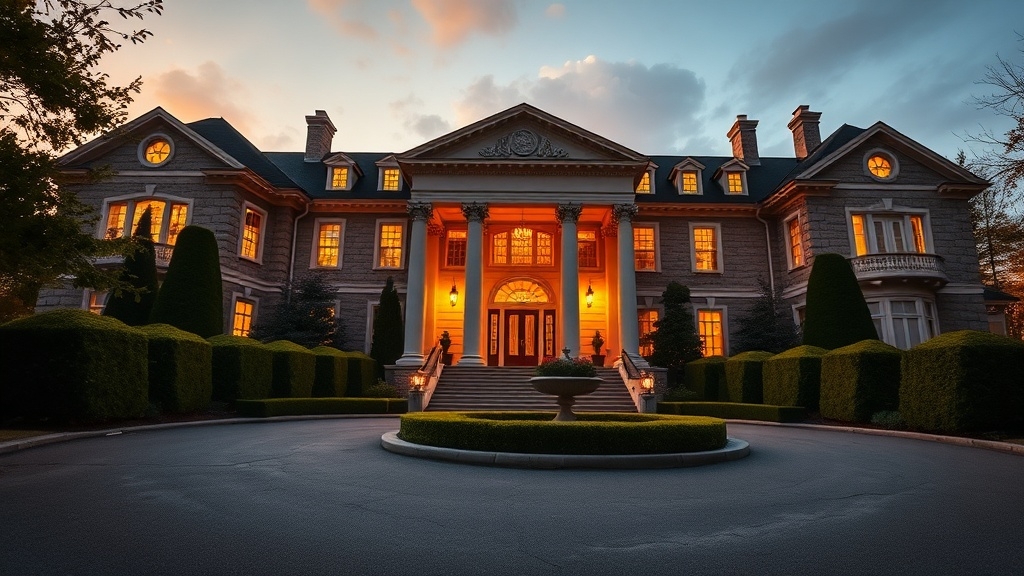
Built in 1906, the six-bedroom Victorian spans 4,000 square feet and retains ornate woodwork and period-specific exterior styling.
Those features support its architectural significance and distinguish it from ordinary older housing stock.
Market Baseline in Montclair
The house also sits among homes valued around $1.35 million, with nearby new residences starting near $800,000.
Agents said market comps in the corridor justified a value close to $1.35 million despite the unusual sale structure.
Recent luxury transactions elsewhere, including a record-breaking sale in Atlantic Beach, show how distinctive homes can command outsized valuations relative to their surrounding markets.
Its association with Aubrey Lewis and the Lewis family legacy added historic weight.
Critics have described it as a masterpiece and a rare preserved example of Montclair’s early 20th-century residential history.


What Did It Cost to Move the Mansion?
On paper, moving a house of this scale would not have been cheap, even before preservation-related handling and logistics were considered.
For a large New Jersey home, basic moving costs generally run from $1,850 to $4,500 locally. Four or more movers typically bill about $150 to $200 per hour.
Heavy items or difficult access can add another $50 to $70 per hour.
Distance, Packing, and Storage Pressures
If the relocation involved another state, pricing could climb sharply. Moves from New Jersey to Florida average $2,600 to $5,500.
Cross-country totals for a mansion commonly begin near $6,000 and can approach $9,000. Relocation logistics also include tolls, fuel surcharges, mileage, and shipment weight.
Packing, antique protection, and temporary storage could push the overall bill well beyond those base estimates.
Why Didn’t Anyone Buy the $10 Mansion?
Sticker price was never the real obstacle.
The mansion came with a binding relocation mandate, not a simple transfer of ownership. Any purchaser had to move the 4,000-square-foot Victorian off its lot so subdivision approvals could proceed.
The house also had to remain within a quarter-mile of 44 Pleasant Avenue, sharply limiting options and raising relocation ethics concerns.
Costs That Overwhelmed the Offer
Estimated moving expenses alone reached $150,000 to $200,000, while developers offered just $10,000 toward that burden.
Buyers also faced land acquisition, engineering, heavy-lift equipment, structural reinforcement, and hazardous-material remediation before transport.
Lead paint and asbestos removal were mandatory.
With a short listing window and total costs potentially exceeding the former $1.35 million valuation, the $10 price created headlines, not realistic demand.
What Happened to the New Jersey Mansion Next?
After a high-profile legal unwind, the Moorestown-Cinnaminson estate entered a new phase through a court-supervised auction tied to Guo’s bankruptcy proceedings.
Bidding ran through October 9 with a $10,000,000 reserve, and the seller retained final bid acceptance rights.
The final price and winning bidder were not publicly disclosed, though title was later recorded in county records.
| Item | Outcome |
|---|---|
| Auction | Closed after October bidding |
| Pricing | Near reserve, undisclosed |
| Ownership | Local New Jersey buyer |
| Use | Private residency |
Legal Aftermath and Estate Status
In the legal aftermath, proceeds were directed toward debt claims tied to roughly $1 billion in liabilities.
The mansion remains a private residency, with renovations completed, landscaping updated, zoning unchanged, and no resale or public access currently expected soon.
Assessment
The $10 sale reflected a collapsing window to save a historic property under severe time and cost pressure.
Its nominal price masked a far larger financial burden, including relocation, site preparation, and preservation risks that sharply narrowed the buyer pool.
After no viable private rescue emerged, the mansion’s future depended on whether removal could be completed before demolition deadlines.
The transaction exposed how quickly luxury value can evaporate when land use, timing, and preservation obligations collide.