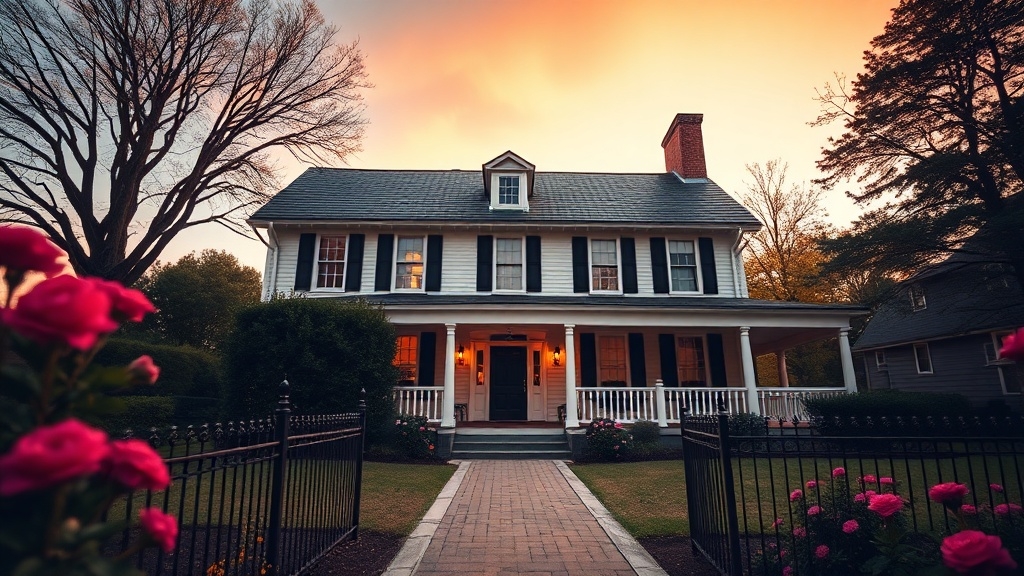


How the 1715 New Jersey Home Sold Fast
Undercutting comparable colonial sales by 15%, the 1715 New Jersey home entered the market at a price designed to trigger immediate competition.
This pricing psychology was supported by comparative market analysis, which set an entry point low enough to attract both cash buyers and mortgage applicants.
The result was immediate activity, with bidding beginning within 24 hours.
Three offers arrived before the second-day open house.
In New Jersey, the average time to sell a house is about 73 days, making this under a week sale especially notable.
This kind of rapid response reflects broader buyer behavior shaped by higher borrowing costs, which have made well-priced homes stand out more quickly.
Marketing Timeline Pressure
Presentation also accelerated the sale.
The house was decluttered, repainted in neutral tones, photographed in more than 40 high-resolution images, and turned into a 3D tour within 24 hours.
Its marketing timeline expanded quickly across 12 real estate websites, social platforms, and investor email lists.
That broad visibility created concentrated buyer attention.
Why Buyers Moved Quickly on This Colonial
Buyers converged on this colonial because the property matched several of New Jersey’s fastest-moving demand signals at once.
Colonial homes carry enduring appeal for their quality construction, architectural authenticity, and stronger pricing power. They often sell at premiums above comparable non-colonial properties.
That reputation framed buyer expectations around value and long-term desirability.
Location likely added urgency. Homes near top-rated schools and within established communities tend to move faster, especially where inventory is thin and neighborhood prestige influences purchasing decisions.
Mid-sized homes also align with one of the market’s quickest-selling segments.


Features and Pricing Pressured Decisions
Updated interior finishes further sharpened interest. Stainless steel appliances, granite countertops, and kitchens balancing original detail with modern utility often reduce market time.
They attract buyers who want character without sacrificing convenience.
Pricing conditions also intensified competition. In New Jersey, well-positioned colonials can draw multiple offers and sell far above ask.
Why the Cash Sale Closed So Fast
Speed defined the closing because an all-cash structure stripped out the longest steps in a standard New Jersey transaction.
Without mortgage approval, the deal avoided underwriting, credit reviews, income checks, and lender paperwork. No appraisal was needed, removing scheduling delays and valuation disputes that often slow contracts.
In Jersey City, cash sales accounted for 26% of home sales as of March 2025, showing how common fast-moving deals like this remain even after a slight decline.
Fewer Conditions, Faster Transfer
The buyer supplied a proof-of-funds letter and bank statements at first contact, confirming immediate liquidity. Wire readiness before closing meant payment could move without delay once documents were signed.
Inspection waivers and an as-is agreement removed repair negotiations and shortened the contract timeline. Title clarity also mattered, because a clean title and pre-submitted documents let the title company move quickly.
With fewer escrow conditions and no financing fallthrough risk, closing aligned easily with the seller’s move-out schedule.
How Fast It Sold Compared With New Jersey
Remarkably, the 1715 home appears to have sold far faster than a typical New Jersey property. Homes across the state generally spend about 34 to 45 days on the market, and traditional transactions can stretch to roughly 67 days from listing to closing.
That puts this sale well ahead of statewide norms. It also appears faster than many of New Jersey’s quickest county-level results.
Camden, Morris, and Passaic posted median selling times of 23 days in May. Bergen averaged 42 days, while Monmouth shore-adjacent homes moved in about 35 to 40 days.
Why the Gap Matters
The comparison points to an unusually compressed timeline. That was likely helped by pricing strategy and seasonal timing.
Even in a fast state that ranks third nationally for sales speed, this outcome stands out. It moved faster than ordinary market performance across most regions.
What the Sale Reveals About Historic-Home Demand
That outsized selling pace also aligns with a broader pattern in New Jersey’s historic-home market, where demand has been running stronger than for conventional listings.
Across the state, historic homes sell 31% faster than average, with a 43-day market time and a 100% sales-to-list-price ratio.
Those figures suggest buyers are not merely browsing distinctive properties but competing for them.
The sale also reflects how heritage preservation intersects with buyer psychology.
Historic properties offer architectural significance, documented provenance, and features that cannot be replicated in newer housing stock.
That scarcity supports premium pricing, including a $1.2 million median sale price and stronger appreciation than conventional homes.
In districts such as Lakewood, Ventnor City, and South Orange, steep five-year gains indicate that designation itself can reinforce demand, values, and market resilience statewide.
Assessment
The rapid sale of the 1715 New Jersey home underscored how scarce, well-preserved historic properties can trigger immediate buyer action.
Its swift contract timeline and cash closing reflected both strong demand and the efficiency that often comes with high-interest legacy listings.
Compared with broader New Jersey market timing, the transaction moved at a strikingly faster pace.
The outcome pointed to a durable niche in which age, authenticity, and condition can outweigh the longer timelines often associated with historic homes.