

Which Texas Ghost Town Is Being Redeveloped?
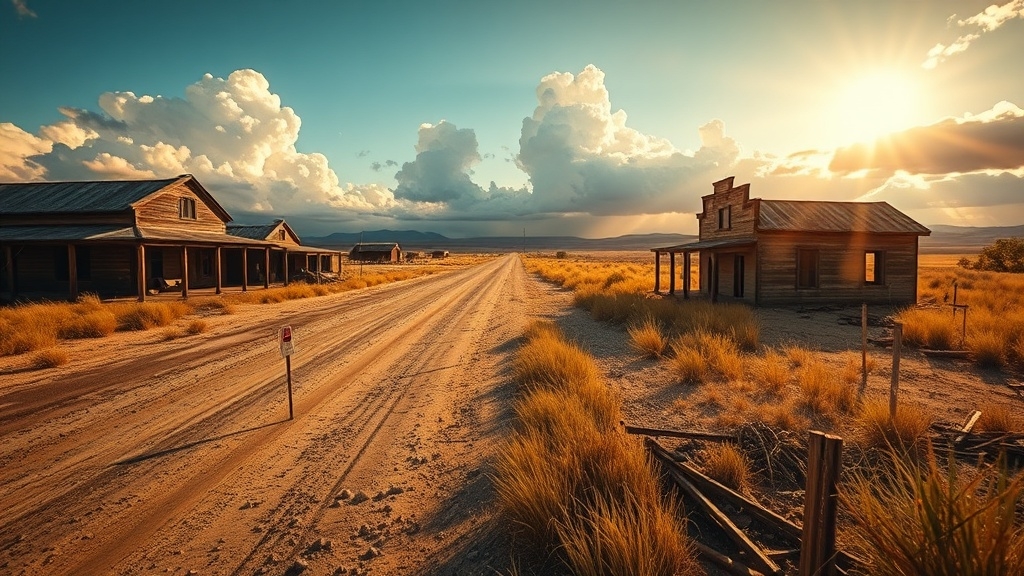
Lobo is the Texas ghost town now under redevelopment consideration. It sits in the remote high desert northwest of Marfa, and its owners are moving to sell the entire 10-acre property.
In West Texas, Lobo has become one of the clearest examples of a ghost town entering the market with redevelopment potential. The site is about an hour from Marfa, making that proximity part of its appeal despite the area’s isolated rural setting. Marfa’s artistic influence has helped fuel a regional expansion of revival into nearby communities.
Sale Status
The owners publicly listed the entire town for $100,000. They also set a firm June 24 bid deadline. Similar niche-property interest comes as some housing markets face limited inventory and intense buyer competition.
An open house was scheduled for Memorial Day weekend. That gave potential buyers a chance to inspect the property before submitting bids.
Why Lobo Matters
Current discussions focus on Lobo redevelopment as a rare opportunity for renovation or new construction. Its size, location, and sale structure help set it apart.
How the $3 Billion Plan Could Transform It
Against the backdrop of Lobo’s sale, the scale of the proposed $3 billion master-planned redevelopment shows how dramatically a dormant site could be recast.
Capital is expected to flow into housing, retail, offices, hospitality, and core infrastructure. The goal is to transform an isolated property into a structured, urban-style district.
Development Forces Taking Shape
A 20-acre park, green spaces, and pedestrian pathways would support climate resilience and everyday use.
Connections to the White Rock bike trail would improve access and strengthen regional integration.
A 100-room luxury hotel, office tower, grocery anchor, shops, and restaurants would expand commercial activity. They would also boost the site’s heritage tourism appeal.
The plan also echoes elements of mixed-use development strategies seen in major Dallas-area redevelopment efforts.
Projections indicate more than $30 billion in economic output.
The project is also expected to create 500 jobs at opening and 1,500 by 2030.
Infrastructure work is expected to begin first.
Vertical construction would follow in late 2026.


Why This Texas Ghost Town Matters Now
Few places capture Texas’s current collision of vacancy, migration, and redevelopment pressure as starkly as this ghost town site.
Texas commercial vacancy reached 18.5% by mid-2025, while more than 2.4 million office square feet sat unused.
Rural retail closures rose 32%, and tax losses in ghost town zones exceeded $450 million each year.
Disruption Signals
Population decline gives the site unusual weight.
Frontier zones lost 14% of residents, rural ghost town areas dropped 19% in 2025, and urban migration from these places rose 28%.
That makes the site more than a relic.
It has become a test of whether heritage preservation can align with mixed-use redevelopment, community artists, eco tourism, and local cuisine.
It also reflects pressure from shrinking tax bases, foreclosures, and a statewide search for durable economic reuse.
How Terlingua and Fort Phantom Hill Frame It
Comparing Terlingua and Fort Phantom Hill clarifies how Texas ghost towns emerge from very different shocks, yet face the same redevelopment test.
Terlingua grew from cinnabar discoveries in the mid-1880s. Mercury mining pushed the population near 2,000 before it collapsed to 78 by 2020.
Fort Phantom Hill reflects a frontier military logic. Established in 1852, it was placed to shield settlers, then abandoned by 1856 after regional operations ended.
Shared Pressure on Redevelopment Models
Terlingua carries mining-era hazards at capped sites like California Hill. Fort Phantom Hill centers on military remnants such as barracks and stables.
Both require historic preservation alongside visitor-oriented infrastructure. Each frames whether heritage can support a master-planned destination without erasing origin stories.
Together, they define Texas ghost towns through extraction, defense, decline, and adaptive reuse pressures today.
What’s Next for Texas Ghost Town Redevelopment?
In the next phase of Texas ghost town redevelopment, the key question is whether isolated heritage sites can support full master-plan investment rather than limited preservation alone.
Development Pressure
Lajitas offers the clearest precedent.
A $6 million buildout produced 100 hotel rooms, retail, dining, a dance hall, saloon, homes, and independent water and sewage systems.
Golf, tennis, and a swimming pool showed how amenities can help sustain heritage tourism.
Unclear Ownership Path
A separate test is now forming around the town bought in 2023 by Dennis and Bonnie Berry of Corpus Christi.
The sale closed in October 2023, but redevelopment plans remain undisclosed.
That silence leaves open whether the site will pursue incremental reuse, community gardens, or a broader destination strategy tied to changing rural-urban population patterns and long-term operating demands.
Assessment
The redevelopment effort marks a high-stakes test for whether a remote Texas ghost town can support large-scale modern investment without losing its historic identity.
Its outcome could influence how investors, planners, and preservation interests approach similar sites across the state.
With billions proposed and expectations rising, the project now stands as more than a local land play.
It reflects mounting pressure on rural Texas destinations to balance heritage, infrastructure demands, and long-term economic viability.