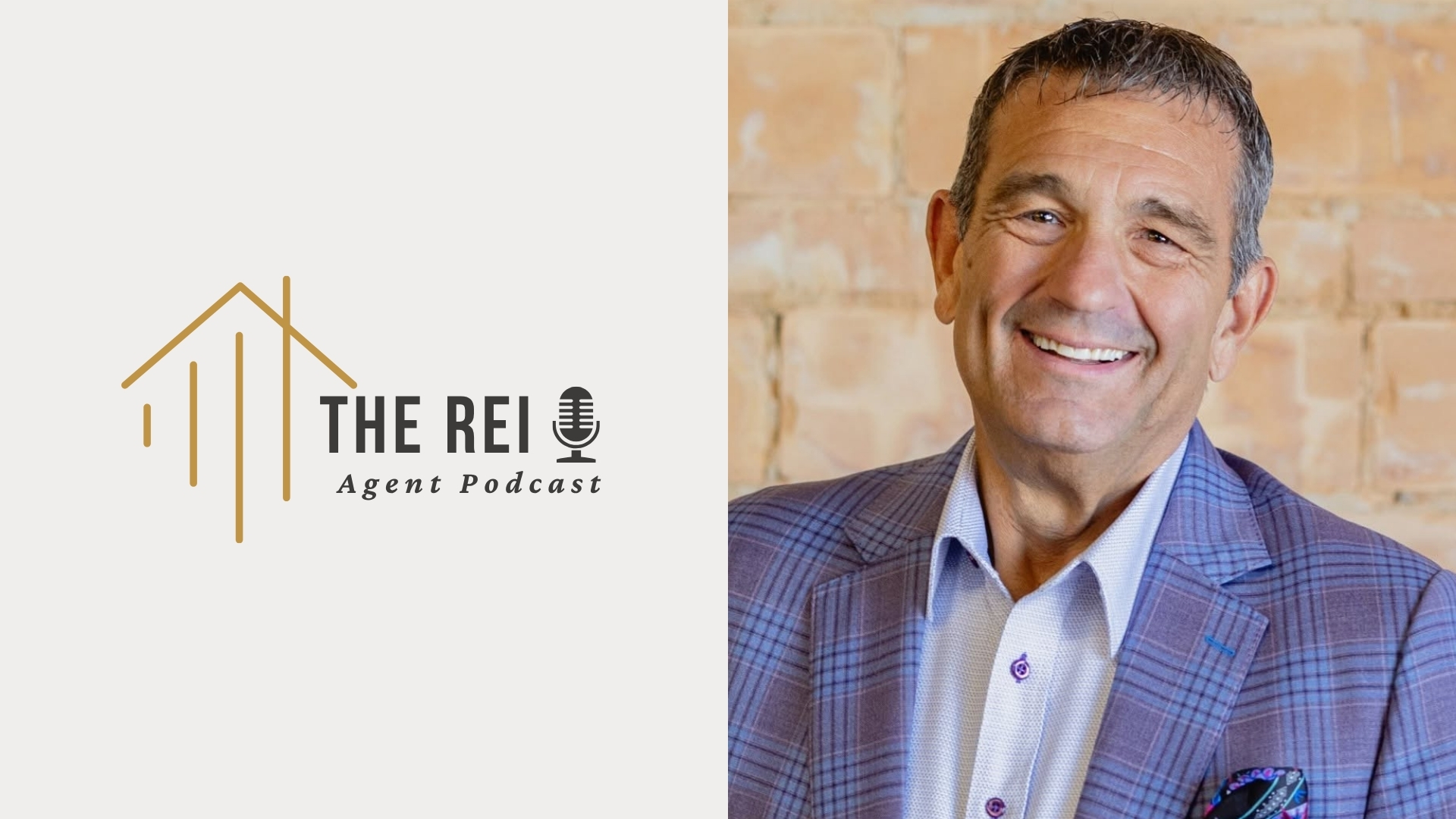
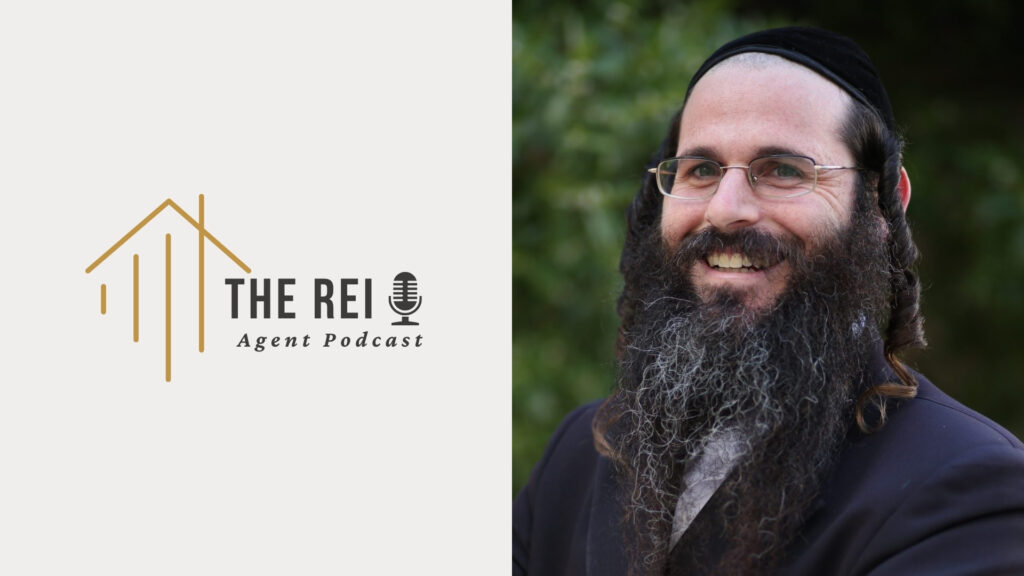
What If Real Estate Leadership Success Was About More Than Making More Money?
For Verl Workman, success has never been simply about selling more houses, building a bigger company, or chasing another impressive revenue number.
His journey reveals something far more powerful. A great business should create a great life, not consume it.
As the co-founder of Workman Success Systems, a longtime entrepreneur, speaker, coach, and real estate professional, Workman has spent decades helping high-performing teams grow. Yet some of the most important lessons he shares on The REI Agent Podcast have little to do with transactions.
They are lessons about health. Family. Failure. Time. Courage. Profitability. Preparation. And the willingness to think far bigger than the circumstances surrounding a person today.
His philosophy is rooted in a simple belief: extraordinary results are not accidents. They can become predictable when the right actions are repeated consistently.
“I believe in my core that greatness is predictable.”
That belief has been tested through business failure, financial struggle, personal reinvention, entrepreneurship, family life, and decades of helping other people transform their businesses.
The Transformation Started With a Different Definition of Health
He Did Not Want to Watch Life From the Sidelines
Workman openly shares that he once weighed around 400 pounds. About 20 years ago, he underwent weight-loss surgery and rapidly lost approximately 180 pounds. But the physical transformation did not immediately create the internal transformation he expected.
Over time, much of the weight returned.
More recently, he approached his health differently. Working with his regular doctor, using medication under medical supervision, training personally, and bringing his trademark competitiveness to what he jokingly calls full-contact pickleball, he lost around 100 pounds and kept it off for more than a year.
But his motivation was no longer appearance.
At 62, after 40 years of marriage, with six children and 11 grandchildren, Workman began thinking seriously about the kind of grandfather he wanted to become.
“I wanted to be a participant in the lives of my grandkids instead of a spectator.”
He did not want to sit on the sidelines while everyone else lived. He wanted to surf behind the boat, play with his grandchildren, participate in family adventures, and remain physically capable of enjoying the people he had worked so hard to provide for.
That distinction changes everything.
Health becomes more than weight. Wealth becomes more than money. Success becomes the ability to participate fully in the life a person has built.
Authenticity Requires Living the Lessons Being Taught
Workman also confronted an uncomfortable contradiction. He was standing on stages telling people to believe bigger, establish ambitious goals, and take control of their futures while avoiding one of his own most obvious personal goals.
That realization forced him to consider how authentically he was showing up.
It is a lesson that reaches far beyond health. Anyone can teach principles. The greater challenge is allowing those same principles to confront the teacher.
For Workman, transformation meant becoming increasingly aligned with the message he had spent years delivering to others.
Before the Success Came the Collapse
The Satellite Dish King Watched His Market Disappear
Long before Workman became known for coaching real estate teams, he was an entrepreneur selling satellite dishes and hot tubs.
He was good at it. He enjoyed selling. He built multiple stores and believed he had created a successful business.
Then the market changed.
Smaller satellite dishes entered the industry, and margins that had once been around $1,000 per sale collapsed to roughly $68. His stores carried substantial monthly overhead, and there simply was not enough volume available to overcome the change in economics.
The business failed.
Workman and his wife sold their larger home, moved into a smaller property, and did nearly everything they could to avoid bankruptcy.
It was a frightening season, but it also became the doorway into the next chapter of his life.
A $10,000 Act of Kindness Changed the Direction of His Life
During his going-out-of-business sale, Workman had sold several home theater systems to Mike Holmes, a homebuilder in Utah.
Later, Holmes unexpectedly invited him to his home and handed him a check for $10,000.
There was no complicated agreement. There was no demand attached. Holmes simply appreciated what Workman had done for his family and wanted to help him through a difficult period.
Workman remembers calling his wife with tears in his eyes.
A few weeks later, Holmes invited him to another meeting and told him something that would redirect his career. He believed Workman was too talented at selling to be struggling and wanted him to sell homes.
Workman agreed under two conditions. He needed enough monthly income to pay his bills, and Holmes needed to pay for real estate school.
Holmes agreed.
Workman completed school quickly, entered the business, became the builder’s number one salesperson within months, and sold more than 100 homes during his first year.
What looked like the destruction of one career became the beginning of another.
Failure Is Not the Opposite of Wisdom
Sometimes Failure Is Where Wisdom Comes From
Years later, Workman would experience another major restart. He says he was fired at 50 and had to begin again.
Rather than hiding those moments, he now sees them as part of the education that made him capable of making stronger decisions.
“I got fired at 50. I started over at 50.”
His point is not that failure automatically creates success. Failure creates experiences. Those experiences can create judgment. And good judgment can dramatically improve the decisions someone makes when the next opportunity appears.
“I think what most of us have that are self-made at any level is that we’ve failed enough to have wisdom.”
That perspective also shapes Workman’s view of artificial intelligence. He is enthusiastic about AI and says he is heavily invested in it, but he sees an important limitation.
Technology can process enormous amounts of information. It can provide answers. It can improve efficiency. What it does not possess is a lifetime of lived experience, failure, instinct, inspiration, and judgment.
Those human qualities still matter.
Stop Thinking Small About What Is Possible
Four Income Pillars Can Completely Change the Goal
One of Workman’s most memorable financial concepts is his four-pillar approach to income.
Instead of building several small income streams that collectively reach one financial goal, he encourages people to think much bigger. Each pillar should eventually have the potential to produce 100 percent of the desired income.
For a real estate professional, one pillar might come from a geographic farm. Another could come from referrals and past clients. Another might come from investments. Others could involve property management, commercial transactions, new construction, or another specialized area.
The exact pillars are not the point.
The size of the thinking is.
“That’s how people end up becoming wealthy as they think a lot bigger.”
Workman recalls speaking with a financial advisor about a hypothetical retirement goal of $50,000 per month. Instead of asking how to build investments that collectively generated $50,000, Workman wanted four separate pillars that could each eventually produce $50,000.
To him, it became a mathematical problem that could be reverse engineered.
The philosophy challenges the assumption that goals must be constrained by what initially feels realistic.
The Wrong People Can Shrink a Great Goal
Workman saw this principle become personal when one of his sons struggled academically.
A teacher encouraged his son to lower his expectations and establish more realistic goals. Workman strongly disagreed.
He did not believe the teacher’s job was to convince the child that the goal was too ambitious. He believed the job was to help the child discover how to reach it.
That experience reinforced a philosophy that runs throughout his approach to life and business.
“Why don’t we just decide right now that we’re gonna do something extraordinary, regardless of how we grew up or the environment that we’re in.”
People are constantly receiving messages about what they supposedly cannot become. Social media comparisons, childhood experiences, economic circumstances, educational struggles, and other people’s expectations can quietly become ceilings.
Workman’s message is to stop accepting those ceilings without question.
New Agents Do Not Need to Prove They Can Do Everything Alone
Learn Inside an Environment That Produces Results
When asked what he would tell a new real estate agent, Workman’s response is direct.
Find a high-producing team led by someone whose values match the life and business they teach. Then enter that environment and learn the business through repetition.
Instead of struggling through a handful of transactions each year while trying to discover every system independently, he argues that an agent can accelerate development by working inside a proven organization.
“You’ll make more money at 50% than you will at a hundred percent of a nothing.”
That statement challenges one of the industry’s most common obsessions: commission split.
A larger percentage of a weak opportunity may be worth considerably less than a smaller percentage inside an environment that creates skills, systems, transaction volume, mentorship, and future opportunity.
Workman also rejects the idea that truly great performers succeed alone.
Even an individual athlete such as Michael Phelps competes with coaches, nutrition experts, physical trainers, mindset professionals, and other specialists around him.
Greatness may look individual from the outside, but it is often supported by an entire ecosystem.
Greatness Becomes Predictable When the Activities Become Predictable
Winning the Day Cannot Depend on Closing a Deal
Workman’s coaching philosophy focuses heavily on measurable activity.
If an agent defines winning only as closing a transaction, that person may psychologically lose most days of the year. Instead, Workman teaches people to identify the daily activities that eventually create transactions.
For him, a successful day might mean getting face to face with two people who want to buy or sell a home.
That is controllable.
A closing often is not.
“If we do the right activities consistently, we will get a predictable result.”
This is the foundation of what he calls predictable greatness.
The concept is not motivational fluff. Workman believes activities create outcomes with enough consistency that he could review someone’s schedule in 30-minute increments and estimate that person’s income based on how the time is being used.
Fake Work Can Feel Productive While Producing Nothing
Workman also warns against something a former coaching client called fake work.
Fake work is activity that creates the feeling of being busy without meaningfully moving the business forward.
Email. Minor administrative tasks. Endless tweaking. Low-value tasks that could have been delegated. Social media activity without a clear business purpose.
Workman’s standard is demanding. If an entrepreneur wants to build a million-dollar business, spending prime working hours completing tasks that could be delegated for $20 per hour becomes incredibly expensive.
The issue is not whether the work needs to be done.
The issue is whether the business owner should be the person doing it.
Your Numbers Reveal Where the Business Is Leaking Money
More Leads Are Not Always the Answer
Workman tracks the relationship between calls, conversations, appointments, signed agreements, listings, leads, and transactions.
That data allows him to reverse engineer growth.
He teaches that every listing should create multiple additional opportunities. A listing should not simply be placed on the market and forgotten. It becomes permission to market.
Open houses can be promoted aggressively. Nearby homeowners can be contacted. Online and offline marketing can create attention around the property. Follow-up systems can nurture prospects who are not ready to transact immediately.
Before spending more money buying additional leads, Workman looks for the income already leaking from the existing business.
Often the opportunity is already there.
The system simply is not capturing it.
The Market Changed, So the Activities Must Change Too
Yesterday’s Formula May Not Produce Today’s Results
Workman and his company track what they call daily success habits. Their data shows how dramatically the effort required to produce a closing has changed.
He explains that activity levels that produced results several years ago may require significantly more effort today.
That means agents cannot simply repeat the same playbook indefinitely and blame the market when results decline.
Consumers change. Interest rates change. Political uncertainty changes behavior. Lead sources change. Conversion rates change.
The professional has to adapt too.
“You have to do three times the effort to get the same result.”
The lesson reaches beyond real estate. A strategy should never become sacred simply because it once worked.
In a Crowded Market, Specialists Win
Consumers Want to Know Exactly What Someone Does Best
Another major shift Workman sees is the growing importance of specialization.
Consumers regularly seek specialists throughout life. They may use different professionals for hair, medical procedures, legal needs, financial matters, or highly specific health conditions.
Yet many real estate professionals still describe themselves as someone who handles everything.
Residential homes. Commercial property. Investments. Multifamily. New construction. Land. Retail.
Workman believes that broad positioning can weaken the very thing agents are trying to communicate: expertise.
His own company is intentionally specific. Workman Success Systems specializes in high-performing real estate teams.
People should know what someone is exceptional at.
Being remembered for one valuable specialty can become more powerful than claiming competence in everything.
Return on Time May Matter More Than Return on Investment
Time Away From Family Needs to Be Worth Something
Near the end of the conversation, Workman offers three major principles for listeners.
The first is a metric he calls ROT, return on time.
Business owners routinely calculate return on investment. Workman wants them to consider another resource that cannot be recovered once spent.
Time.
“Am I getting the highest return on time away from family?”
If someone claims to be working long hours for the family, Workman believes that time should produce meaningful results.
Spending hours away from the people who matter most while performing low-value tasks creates a terrible return on time.
The idea is deeply connected to his broader philosophy. The point of building a business is not to lose the very life the business was supposed to support.
Find the Money and Put Yourself in the Middle of It
Stop Fighting a Market That Is Telling You Something
Workman’s second principle is unapologetically practical.
“Find the money and put yourself in the middle of it.”
If transactions are not happening in one niche, professionals need to understand where activity is occurring and adapt their focus accordingly.
He points to different clients operating in the same broader market but producing dramatically different results because they serve different consumers and depend on different lead sources.
Effort alone does not guarantee a strong outcome.
Effort has to be directed toward opportunity.
Sometimes persistence means staying committed to the goal while changing the strategy.
Revenue Is Impressive, but Net Profit Builds Wealth
The Number That Matters Is What Remains
Workman’s third principle cuts directly through the temptation to impress others with large production numbers.
“The only number that matters in your business is net profit.”
Gross commission income may sound impressive, but it does not reveal whether a business owner is actually building wealth.
“Stop running around telling everybody how much your GCI is because nobody cares.”
What matters is what remains after expenses are paid.
Profit creates options. Profit provides stability. Profit provides capital that can eventually be invested into assets that generate long-term wealth.
Workman encourages professionals to become their own best clients. Agents can spend careers helping other people acquire properties and build wealth while reaching retirement without having accumulated enough assets of their own.
That does not have to be the story.
A profitable business can become the engine that finances a larger wealth-building strategy.
Preparation Is What Makes Fast Action Possible
Opportunity Rewards the Person Who Was Ready Before It Appeared
When Mattias asks Workman about a favorite book, Workman points to Og Mandino’s classic The Greatest Salesman in the World, a book he first read in high school and still gives to clients.
He is especially drawn to the principle of acting now.
But Workman’s interpretation contains an important distinction. Acting quickly is not the same as acting recklessly.
A person can move decisively when preparation has already happened.
“Prepare now. So when the opportunities arise, you can act without hesitation and that’s how you become wealthy.”
Mattias connects the idea to one of his own property investments. He and Erica were approaching the birth of a child when an investment opportunity appeared. The timing was uncomfortable, but because they had prepared financially and understood what they were looking at, they were able to act.
The project became one of their strongest deals.
Preparation had created the ability to move through fear.
The Bigger Goal Is Building a Life Worth Living
Greatness Is Not Just About What Someone Earns
Workman’s story contains plenty of business accomplishments. He built companies. He became a top producer. He became a professional speaker. His coaching organization grew to include dozens of coaches. He has spent decades helping teams increase production and profitability.
Yet the thread connecting the entire conversation is not money.
It is intentionality.
Workman wants to remain active with his grandchildren. He wants his children to do work they love. He wants entrepreneurs to stop wasting irreplaceable time. He wants agents to build profit instead of merely announcing revenue. He wants people to learn from failure, prepare for opportunity, surround themselves with great teams, and stop allowing other people’s expectations to dictate the size of their future.
Most of all, he believes people can expect more from themselves without sacrificing everything that makes achievement worthwhile.
“I’m a big believer that you can have it all.”
The Life Someone Wants Is Built Through What They Do Today
Verl Workman’s journey is a reminder that success rarely follows a perfect path. Businesses collapse. Markets change. careers restart. Health requires attention. Fear appears at inconvenient moments. Strategies that once worked stop working. And sometimes the people who are supposed to encourage bigger dreams recommend smaller ones instead.
None of those circumstances have to become the final chapter.
Greatness becomes more predictable when people consistently perform the activities that move life forward. Wealth becomes more attainable when businesses create real profit. Opportunity becomes easier to seize when preparation happens before the opportunity arrives. And success becomes more meaningful when family, health, faith, relationships, fun, and personal fulfillment remain part of the equation.
Workman’s challenge is ultimately simple but demanding: think bigger, prepare now, focus on what actually moves the needle, and build a business that serves the life instead of consuming it.
Because the most meaningful measure of success may not be how much someone produces.
It may be whether that person still has the health, freedom, relationships, resources, and courage to fully enjoy the life all that work was meant to create.
Transcript
[Mattias]
Welcome back to the REI Agent. My guest today is Verl Workman, co-founder of Workman Success Systems and one of the most sought-after coaches and speakers in real estate. With over 20 years of experience, Verl has helped business owners, executives, and teams achieve balance while scaling to multimillion-dollar success.
Using his four-pillar system and a philosophy he calls predictable greatness, he co-founded Workman Success Systems with his daughter, Brianne, building a company where family and business can genuinely thrive together. His clients consistently describe him as somebody who delivers not just inspiration but immediate, actionable change. Verl, welcome to the REI Agent Podcast.
Hey, thanks for having me. Yeah, it’s an honor to talk to you. You said that you used to go, or you go by Big V?
Yeah. Is that a good place to start?
[Verl Workman]
I used to start there. I like to tell people it’s because of my big heart, but it’s because I’ve been big ever since high school. I used to be 400 pounds.
Wow. And 20 years ago, I had a weight loss surgery where I lost 180 pounds in six months, and I hated it. I literally got down to like 190, and I felt insignificant.
I didn’t change the way that I presented on stage, the way people responded to me. I went from being jolly to being slick, and I don’t know if it’s self-sabotage or what happened, but over the next 15 or so years, I came back at 100 of the pounds. So a year ago, I was 300 pounds, and then I found a trizepatite or ozempic, and personal training, and full-contact pickleball.
Between those three things, I’ve lost and kept off 100 pounds over a year now, so I’m feeling great. Wow. Wait, full-contact pickleball.
Oh, that’s right. Like my wife won’t play with me because I’m so competitive. She’s like, no, can’t we just hit the ball back to each other?
I’m like, that’s not full-contact.
[Mattias]
Well, that’s awesome. So I guess, did you, in that change back the second time, did that happen more gradually? Did you feel like you were more used to the persona that people now perceived you as?
[Verl Workman]
No, I just, I think I realized that that was just the crap I was telling myself instead of the reality of how I was showing up. I think that my excuse was I’m a food pusher, and food is my love language, and I have a big family, and I’m always cooking and feeding everybody, and I just, I kind of identified with food so much, and what this, it’s ozempic or trizepatite, or whatever it is, what it does is it takes away your craving, and so I just don’t care. I don’t care about the carbs and stuff that I used to need all day.
It’s like, just went numb, and so I just don’t, I don’t, like, I have to think to make sure I take something that I get in nutrition. It’s weird.
[Mattias]
It’s a huge thing. I think a lot of people are using it. I’ve heard anecdotally from various people, but is it something that also kind of dampens your dopamine?
Did you notice any shifts in your motivation in general? No, I mean, I’m pretty fired up all the time.
[Verl Workman]
I’m wired, like, I’m a high D on the disc. I’m like a serial entrepreneur, so motivation was never a thing for me, and the other thing is, even being a big guy, I have a beautiful wife, and she loved me, and that never mattered to her, and so I never had a self, I mean, I’m a professional speaker. I never had a self-esteem issue, and so for me, all of the things associated with weight were I really got to the point where I decided I wanted to be a participant in the lives of my grandkids instead of a spectator, and I watched people that were in their early 60s in jazzies and these little wheelchair things sitting on the sidelines, and I’m like, that is not the grandpa that I wanna be.
I wanna be out there playing. I wanna be behind the boat surfing and doing the things that we do as a family, not the one sitting on the sidelines going, you can do it. Yeah.
Put my oxygen back on.
[Mattias]
Yeah, wow. I mean, that’s incredible. I mean, I think the world of peptides in general is fascinating.
I think there’s a lot out there that is in the gray markets. I’ve gone down some rabbit holes. I haven’t actually ordered anything like that where you have to kind of mix it yourself, and it’s really not supposed to be for human consumption or it’s just for that kind of stuff, but there is some crazy, tons of different options.
People that, I’ve heard there are people that in college even taking peptides that will just make themselves tan more easily.
[Verl Workman]
I’ve heard all the, so for me, I’m 62, I just turned 62. I just celebrated 40 years of being married. I’ve been married.
I have six kids and 11 grandkids. And for me, it’s about like really longevity. It’s about health.
So I didn’t go to someone who does this as a side thing and makes a bunch of money. I went to my regular doctor. We looked at all of my blood work.
We continually go in and we check it to make sure that I’ve got all of the things correct that need to be balanced in my body. In my life. So it’s not a fad thing for me.
It’s really a lifestyle change.
[Mattias]
No, 100%. And I think that from some of that fad stuff, some of that fringe things, there could be some other really big breakthroughs. I do think that the ozempic, the triazepatide area is hugely impactful for so many people.
And there’s no secret that the United States is struggling with weight. It has been for a long time. And if that’s something that can get people healthier and there’s not really any terrible side effects, then that’s fantastic.
So it’s a huge breakthrough.
[Verl Workman]
So think about this, like I’m like a motivational speaker and I’m doing events and I’m telling everybody they can do whatever they want, believe in themselves. You can have these great goals and they’re like, but why don’t you set one to lose weight? I’m like, true, right?
Like, how about being living and being the hypocrite? It’s like you being a realist, teaching people to invest in real estate and then not owning any. Like that would be, how do you show up like that?
And so like how I was showing up had a level of, I’m not gonna say it was an integrity issue, but it was definitely not as authentic as it shows up today.
[Mattias]
Yeah, yeah. I can see where you’re coming from on that. And just like a, something that clearly you could work on or whatever.
And then, it’s definitely tough if you’re in the spotlight to try to have all the areas at a hundred percent, right? You can’t. We’re all striving towards that perfection or that balance, which is kind of impossible to have.
But Vero, let’s get into your real estate. How did you get started in real estate to begin with?
[Verl Workman]
I mean, it depends on how far you wanna go back, but really the way I got into real estate was, I used to own retail stores and I sold satellite dishes and hot tubs. So in my twenties, I was the satellite dish king. Like you want a satellite dish in Utah, those big 10 foot dishes, pro satellite, that’s where you got it.
And I used to get all these people coming in saying, oh, I don’t want that big ugly thing in my yard. Why can’t we get something the whole family wants? I’m like, well, what would you get?
They’re like, what? We’d get a hot tub. I heard that so much.
I finally said, okay, I found a guy that would sell me hot tubs. And so when that come up, I said, well, you don’t have to choose. I can do both.
We’ll just run a line at the hot tub. You can watch your satellite dish. And we became a pretty big satellite dish, hot tub retailer until, it’s just funny, right?
Like I’m the guy selling hot tubs at the fair. Like that was me. And I was good at it.
I loved it. It was game. I was young and we had young kids and I thought I was making a bunch of money.
And then, you know, about the time they came out with a book called Who Moved My Cheese, mine was being moved and I wasn’t paying attention. And they came out with this little 18 inch dish that your profit margins went from $1,000 a sell to $68 a sell. And they wanted to pay you your $68 over 12 months.
Like my nut to crack, I had multiple stores with like 70 grand a month at the time. And it was physically impossible for me to make up the nut with volume. I couldn’t do it.
So we went out of business. And during my going out of business sell, I sold a guy seven $10,000 home theaters on the back of my going out of business flyer. And his name was Mike Holmes and he owned a little company called Holmes Homes in Utah as a production builder.
And after closing my stores, I’d gone to work for somebody and I wasn’t finding any joy in it. I was selling a bunch, but they weren’t paying me fair. And Mike called me up on a Sunday and he said, would you come over to my house?
And I did. And he sat me down and he says, I don’t know what’s going on in your life, but I felt like I needed to call you. And he said, I’m gonna write you a check.
I’m like, for what? He goes, well, you did a good job for our family. You did a good thing.
And he wrote me a check for 10 grand. And he said, I don’t care if you ever pay me back, just pay it forward and just know that I appreciate you. And I’m like blown away, right?
And I literally, my wife and I had sold our big house, moved into a little house with a carport. I’d gone all but bankrupt. We’d done like everything to stay and not have to do that.
And we were struggling. And I remember like, I would literally had tears in my eyes when I called my wife and said, Mike, home just gave me $10,000. Like she goes, what does he want?
I’m like, he didn’t want anything. And he just showed up as like an angel in my life. And a couple of weeks later, I get a call from his son, Patrick.
Patrick says, hey, my dad would like to meet with you at the office. Would you mind coming over? I’m like, yeah.
I mean, it worked out really good last time. What do we got today? So we went over there and he sat down.
He said to me overall, he said, I’ve never seen anybody can sell like you. And there’s no reason for you to be struggling. And so I just, I want to know what it would take to get you to come sell houses for me.
And I said, well, I don’t want to be a realtor. I don’t have big hair and I don’t have a big car because that was my perception of what I had to have to be in real estate. It’s 30 years ago.
And he said, no, really? And I said, well, I need $5,000 a month just to pay my bills and you’d have to pay for my real estate school. And he looked up at me and he said, done.
So I got paid a salary of five grand a month while I was in real estate school. And I did my school in 10 days, showed up on my first day at day about number 14 after I had my license. And within six months, I was his number one guy and I’d sold, I think at 32 or I’m trying to think my number, I think I was 28 homes the first quarter I was in real estate, over a hundred my first year.
And from there, it just went nuts. And what I found was that I liked real estate but I didn’t love it. I wasn’t passionate about it.
I was good at selling people and getting people to move from thinking about it to take action. I mean, I was selling hot tubs at the fair and coming into real estate, it was like taking candy from babies. People come to a model home, I figured they wanted it.
So let’s sell them one. And it turned out great. My first listing I took when I left the builder was 14 single family homes starting at 299.
And then I started doing seminars to realtors on how to actually use technology to make more money. And it was back in 1999, 1998. And we built a little company called Automation Quest which I sold to homes.com.
It was the largest technology training firm in North America. And so I’d start seminars, imagine this. Hey, so how many of you are thinking about getting a computer?
Are you gonna get a laptop or a desktop? And then at the end of the back of the room, I did hundreds and hundreds of these 50 people half day free events. And that’s how I became a speaker.
That’s how I got into real estate. And I’m still licensed today. I still do real estate, just my own stuff, investment stuff or whatever.
But now we have a company, we’ve got 80 coaches that work for us. We specialize in high performing teams. Like I’m not just in real estate.
We specialize in teams who wanna go from 250 to 500 to a million dollar GCI. And then we get to, so once you hit a million grows, and we say, how do we get to a million net? And we reverse engineer that and we do it.
Well, I don’t say maintaining life balance, but I think that most people chase dollars at the expense of family and faith and friends and fun and fitness. And they don’t have any money when they’re done. They don’t have a family and they’ve lost all the joy in life.
And so I’m a big believer that you can have it all.
[Mattias]
Yeah, no, I agree completely. I think it’s just really important to be intentional and to think through this. Cause it does, I mean, if you just chase everything that you think is gonna result in money, it does just leave you kind of, when things take off, you’re just gonna be kind of sitting there wondering what happened to your family, what happened to your health, all that kind of stuff.
So I love that that’s a big important part for you all. Did you, when did you invest now as well? You said you keep your license to do that.
Did you start investing early on as well?
[Verl Workman]
No, I wish I would have had a mentor. I wish I would have had somebody that taught me that I should be my own best client. And I’m sure it was one of my clients that said to me one day, if you ever say to a customer that it’s a really good deal, they should buy it.
And they don’t buy it and you’re like, oh, you’re crazy. But then you didn’t buy it either. Should you have really given that advice?
Yeah. Like think about that. And I’m not a huge investor.
I invest in my business and I invest in technology. I own a tech company. I’ve got a few real estate properties, but going back, I mean, my son bought his first house when he was 21.
He bought a second house when he was 25. I teach my kids to invest early on in life. I would go back and buy a house a year and I would just, I would retire wealthy with that.
I wish I would have had somebody like that mentoring me on how to build my business so that I could, so I could invest differently. I really started getting into investing when I did a seminar. There was a company that started off several years ago called Nouveau Riche.
You ever heard of that one? I don’t think so. So they were a total network marketing, Australian two-up business model where you would go in and you’d come to an event.
They’d pay charge of 10 grand. They’d teach you how to do, Tom Hopkins was involved in it, a guy named Dolph DeRose and some of the real estate investing legends. And they’d teach you, they’d put you in a van and drive around Atlanta and you’d go buy REO properties or bank home properties or whatever.
And everyone was buying money and then you could buy into the next event and the next event. They made so much money selling events. I don’t know if anyone ever bought any real estate, but I wouldn’t speak to their group and tell them that it was a good program unless I had done real estate transaction with somebody.
So the CEO and I bought some property in Phoenix together and it turned out to be really great. And that was kind of my, wow, this is like, we work really hard to make a commission, but we’re not really wealth building. And so now it’s, you know, we talk about, I’m not a, I think people need advisors in real estate investing.
That’s all they do. They look at the market different. They understand how to value properties.
They understand how to put themselves in the middle of the money. And so that’s not me. And so I find people like you that are experts in investing in real estate and that’s who I drive my clients to.
[Mattias]
Sure, no, that makes sense. And, you know, like you said, like if you could pick up a property every year, that’d be fantastic. And I think, you know, living, so if you’re young and you’re mobile, like, you know, once you get more established and have a family and all that, it becomes harder to jump around from house to house.
But, you know, just starting off by buying one you want to live in, you know, if you can rent out rooms, do that. And then, you know, move on to the next one, do the same thing, rinse and repeat. And soon you’re kind of starting to cover your expenses.
And, you know, if you can grow that way, I mean, that’s what, you know, I would really preach to somebody young, hungry, and eager to like kind of like make it in the space. Like just stay humble, keep your expenses low, buy as much real estate as you can and try to build your lifestyle with your passive income. You know, it’s funny.
[Verl Workman]
What I teach is I teach people I’d have four pillars of income and that each one of your pillars should be able to hit 100% of your income goal. And real estate is a longer pillar to build, but by the time you’re done, it completely replaces any of the others. And if you work all four of them as if it’s the only thing you end up with four times the money you thought you’d make.
And that’s how people end up becoming wealthy as they think a lot bigger.
[Mattias]
Oh, I love that. Do you mind sharing what the four pillars are?
[Verl Workman]
So your four pillars could be anything, you know, okay, so if you’re a real estate agent, you might have a pillar that is your geographic farm. And so you work your farm, it generates, you know, 30 transactions a year out of it. And let’s say your goal is 30, and you might have another pillar that your sphere of influence or past clients and you work the referral base, you have enough and it generates enough revenue or profitability from 30 transactions.
I have another one that would be real estate investing, or it could be property management, or it could be new construction, or it could be commercial, or, you know, I’ve got 20. And so I don’t dictate what those are for people. I know that when I sat down 10 years ago with my financial advisor, and he goes, okay, so what does retirement look like for you?
I’m like, well, let’s just say, I’ll just say, let’s say it’s 50,000 a month. And he goes, okay, well, then what we do is we put like, you know, so much in a long term yield, we do something else in short term stuff. And when he’s done, he has this $50,000 product.
I’m like, no, no, no, no. I want four pillars that all generate 50,000 a month. I want real estate assets from commercial or residential real estate.
How many properties do you need? Let’s say you have 50 properties paid for in cash and all cash flow to 1000 bucks each. It’s 50 grand a month.
Like it’s not, it’s just math. And then what about the sell of your business or the sell of your real estate company? You know, could you generate it with that?
Like, so I come up with four different ways. And he looked at me like I was foreign. Like I was speaking a foreign language.
And I’m like, you’re the wrong guy. I got like, you’re the wrong guy. It’s like telling my fifth year old son.
I had a teacher in fifth grade when my son said, I’m gonna, you know, I’m gonna set my goals. And he had really struggling. We found out later he’s dyslexic and has severe attention deficit.
And she was telling him that you can’t have such high goals, Nate. You got to have more realistic goals. You want to go from being below average to being exceptional.
I just think we need to be more realistic. I’m like, man, you are the wrong teacher. You help me figure out how to get it.
Don’t tell him he can’t do it. I pulled my kid out of the class. Like I said, I don’t, I don’t like, maybe poverty makes me think that way growing up poor, but like, why not?
[Mattias]
Yeah, no, I agree completely. And, you know, I think often the, you know, attention thing is, if you are so focused like on the future, big goals, like, you know, all that, if you’re like a visionary, right? It’s hard to get down to the day-to-day grind when it doesn’t really matter.
And honestly, in a lot of school settings, there’s a busy work that happens. And I struggled with this. Like I was not a model student by any means.
And there was times where it just, I was like, you just want to make me busy. And this is, there’s no point in this assignment. I hate it.
[Verl Workman]
You know what? I struggled with school too. I did 18 months at the community college and left and started my first business and I’ve never gone back.
And it’s been really hard for me with my kids because I want them to have an education, but like my three oldest kids, my daughter has an associate’s degree. She’s the president of the company. She runs it.
She’s a freaking beast. And I hire her coaches and experts as mentors, CFOs that will help her strategically run. You know, we’re a big business and she’s brilliant.
My son runs sales and marketing. And like, he was worse in school than I was. And I don’t feel bad.
Like I want them to be educated. I want them to be good parents. I want them to love their children and love their God.
And I want them to believe in something bigger than themselves, whatever that looks like for them. But I just, I want them to be happy. And I tell them, I say, look, I want you to do what you love.
And then I’ll help you figure out how to make money at it.
[Mattias]
Yeah. What advice would you give an agent listening to this about trying to maintain that, you know, the happiness, trying to maintain all the elements of life, all the different factors while running a successful business?
[Verl Workman]
Okay. So like, you want to be real? Yeah.
Okay. So if you’re a new agent coming to me and you’re getting into real estate, you say, where should I start? I would say, the first thing you should do is you should go find the highest producing team and find a team leader that is aligned with you and your value system.
Someone who like lives what they teach. And then I would get in that business and I would learn it. Like trying to do it yourself is stupid.
It’s stupid because you’re going to spend, you know, what, five or six deals a year for five years and you’re still only going to be average at it. Go into an environment where you’re selling 25 or 40 deals a year and just get good at the business, get good at buyers and sellers and understand what part of the business you love and work on a 50% commission. It’s okay.
You’ll make more money at 50% than you will at a hundred percent of a nothing. So get into an environment where they run great systems. That’d be my first thing.
And if people say, well, I don’t want to be on a team or I don’t want to run a team. I just say, okay, well, okay. Name one business that you’re familiar with that’s wildly successful that runs as a company of one.
Like, go ahead, throw one out.
[Mattias]
The only thing I can come up with is that guy that tried to build that, he hacked that Ozempic or whatever. Like he was trying to sell Tri’s Appetize and made like maybe the first billion dollar person. But he was a little shady.
[Verl Workman]
And I guarantee he had a team behind him. Like there were the execution of what he was selling. You know, you just, like, I can’t think of it.
Even individual athletes, you look at somebody like Michael Phelps, you know, you think he’s a guy, right? He’s an individual guy. He’s got all these gold medals.
He’s got a mindset coach. He’s got a physical coach. He has somebody that works with him on his nutrition.
He’s got somebody else that is working on very specific strokes for different races. Like he’s got a team that works around him to put him in peak position to be able to win. And so in real estate, if you come into this with the attitude that I’m going to be a high performer and I’m going to learn from a high performer, get in the business and just learn it, do lots of deals, be great at real estate.
And then when you’re ready, if they don’t create an opportunity for you to stay, then you create your own team. There’s enough business out there for everybody. You don’t have to take anybody else’s.
All you do is just go out there and take what you’ve learned. So that would be my first thing. And the second thing I would tell them is stop thinking small.
Like we just think small. We are trained by the people in our lives to tell us that we don’t have value or that, you know, you’re not as good as somebody else. The social media, you know, you’re not as hot as someone.
You don’t have as many likes. You don’t have as many followers. You have all these influence coming in that makes you feel like you don’t have enough value.
And so you tolerate mediocrity. And, you know, you don’t know much about me, but I believe we’re all God’s children and He didn’t make any mistakes. And that not any individual has greater potential than anybody else.
So why don’t we just decide right now that we’re gonna do something extraordinary, regardless of how we grew up or the environment that we’re in and live up to the potential that we’ve been created to have. Like, think about that. Like, let’s just start thinking big.
[Mattias]
Why not me? Right, why not? I love that.
Yeah, that’s awesome. That’s true. I think a lot of people do.
I mean, just to get to the, you know, self-employed world is such a huge leap. Like I think that so many people really are fearful. They can’t think big enough to imagine going away from the predictable paycheck.
And I talk about this a lot because I think, you know, once you get into the space, like for you, like you’ve now, you know, been the serial entrepreneur, you’ve done your own businesses, like, you know, most of your life, very small stints working for somebody else, but like you have way more control about your income than you would if you were working for a company because they could just take it away, right? I mean, if your whole life was at IBM and they just took it away, like what are you gonna do now? And you could turn around and start a new company, selling something completely different and you could make it work.
Like you have that in you because you have done all these things, right? Yeah, our experiences create our beliefs in what’s possible.
[Verl Workman]
And so the experiences you had in your life up till now, like when you bought your first property, what was that like?
[Mattias]
Like first one was just our, you know, our first house that we turned into a rental. First flip was a big, like, you know, that was, that felt like a huge thing, a huge undertaking. My wife was about to give birth.
She was in nesting phase and we were, she was not thrilled. Tearing down the walls. Yeah, she didn’t help with the actual work, but like, it was just, you know, something that when you’re about to give birth, I think most women especially probably go through this like nesting phase where they want everything to be comfortable and like ready.
Like we wanna have, you know, meals in the freezer. We wanna have, you know, the room remodeled and ready for the baby. And I’m like, let’s, you know, we’ve been saving up this money, we’ve got this equity and let’s go buy this piece of crap house that we could turn a profit on right before you give birth.
And it’s just not a fun feeling, but it was nerve wracking. To answer your question, it was nerve wracking.
[Verl Workman]
Sometimes when people look at people that are successful, they think that they had something that, you know, I never had, like they have something special. They had a mother that gave them something. They inherit, like there’s all these conversations that go off in our heads.
And I think what most of us have that are self-made at any level is that we failed enough to have wisdom. And so now when we go into something because of our failures and all the way we screwed things up, we now have wisdom and we’re able to make decisions that are more likely to have success because of our failures. But no wonder we like to talk about the failures.
I screwed up so many, I got fired at 50. I started over at 50. Like my first business, I was belly up.
I was like, I debt financed satellite dishes and hot tubs. I’m literally in my basement with the lights low, looking at bankruptcy attorneys, figuring out how am I gonna take care of my three little kids? Like all of those life experiences have created who I am today.
So when I look at something, I go, you know what? Because of my experiences, I can have judgment. That’s the one thing that AI can’t do for us.
And this is a whole different discussion. I’m heavily invested in AI, we love it, is it doesn’t have judgment. It doesn’t have the life experience, the gut, the inspiration that comes with all the things that you’ve done up till now.
[Mattias]
100%, I couldn’t agree more. Super cool, but no judgment. Yeah, yeah, it can be nerve wracking too.
I think about people maybe relying on AI to help them in their careers with the real estate. Like instead of asking a question to a seasoned agent, that they would ask ChatGPT and like who knows what answer they’re gonna get.
[Verl Workman]
Look, they’re gonna get 80%, right? Like they’re gonna get 80% of the answers correct. And if they actually did the work, you know what nobody tells them?
ChatGPT doesn’t tell them, okay, you gotta get off your phone and stop chasing likes and start actually making calls. Because the social media crap you’re spending all your time and money on is not gonna make you a million bucks. You have to be face to face with people who wanna buy and sell real estate.
So what activities are you gonna do today that make that happen for you? And the way we measure a win is not did you sell something? I mean, come on, the average realtor does what?
Four or five deals a year? That means like 360 days they wake up losers and they wake up a winner five days. That’s depressing to me.
Like you gotta figure out new ways to win. I win the day by did I get face to face with two people that wanna buy or sell a house. If I did that, then it’s a win.
So we have to find new ways of creating value and then watch. In your introduction, you said that I talk about predictable greatness. That is not a slogan.
It’s not a, oh, really cool idea for a book. It is, I believe in my core that greatness is predictable. And that if we do the right activities consistently, we will get a predictable result.
And just like greatness is predictable, so is average. And if all your listeners, like you sent me a, showed me what you did every day in 30 minute increments for 30 days, you don’t have to tell me what your income is. I’ll bet you I can guess it within a couple grand because the activities produce the outcome.
And if you’re not focused on the right things, I don’t care how much of it you do, you’re not gonna make any money. The whole, I interviewed a client this morning and sorry, I’m talking a lot, but you can tell what we’ve done. I interviewed a client, a past client.
He was a working client several years ago that was coming back into coaching. And he and his wife had built a great brand, a great office. And they were just a joy to talk to.
It’s just so cool to see all the progress they’ve made. And I said, what is the one thing that you constantly go back to that you learned when you were coaching with us before? And he said, fake work.
He says, I talk about it all the time. Is the work you’re doing pretending of being busy? Is it fake work?
Or is it actually moving the needle? And he says, when I am doing fake work, I know it. If anything you can delegate for 20 bucks an hour, you shouldn’t touch it.
Because I can’t take you to where you make a million bucks if you spend any of your day doing $20 an hour activities. Okay, that makes sense?
[Mattias]
Yeah, yeah, I love that. I actually just, I heard, I saw a reel and I actually sent it to my team yesterday that kind of illustrated this. It was from the Diary of a CEO, I believe, podcast, where somebody was describing teaching somebody how to juggle.
And I thought it was this perfect, perfect metaphor for exactly what you’re talking about. Not the fake work part, but the actually doing the work, doing the right thing that actually moves the needle. Where he was saying, when people usually start to learn how to juggle, they’ll toss the ball and they’ll focus on catching it.
And that’s the big win. Catching the ball is the big win. So what will happen is they’ll throw it and then they’ll have to run over here to catch it.
And then by the time they throw the next one, then it’s all off kilter. They’re not gonna catch the next one because they just had to run over here to catch it. But if they just focus on throwing, they focus on the throwing part of it, the catching just comes.
And so if you get the throw down, then you will be able to catch it and that’s how you learn to juggle. And you start with one ball, you do that for a while, then you go to two. And it’s exactly the same for the real estate business.
If you focus not on the closing, but if you focus on what is putting you in front of people, what is getting you to move the needle forward where you’re coming across two new people a day that are wanting to buy or sell, that’s really, if you only focus on that, that’s gonna move the needle. If you focus on closing, it’s not gonna do anything.
[Verl Workman]
I track it, man. I know how many calls it takes to have a conversation, how many conversations it takes to get an appointment, how many appointments it takes to get a buyer or listing agreement signed. Once you understand your numbers, if you wanna do 10X, just do 10 times the number of activities it takes to get you there.
We track things like, I know that every time you get a listing, you should generate between six and eight leads a month. Every time you list a property, you should close 1.5 buy side transactions. So if you’ve got a business and you’re doing 20 deals a year, I say, how many buyers or how many sellers?
You say, well, I’m 10 buyers and 10 sellers. That means you lost income from five buyers. So one of the first things I’ll do is help you figure out how to stop losing that money.
It’s not about going and chasing and buying more leads. It’s plugging the hole of where income is lost because you don’t have the systems in place to be able to create the capture.
[Mattias]
I love that. Can you give us a couple examples of, yeah, maximizing that listing to get more business? Oh, yeah.
[Verl Workman]
I mean, first of all, I love listings. Listings are like, listings are permission to market. And now, I want you to think about this because you asked the question, right?
You said, give me an example of how you generate six to eight leads or 1.5 buy sides for every listing. Well, it’s a system you run. You gotta put your open house on steroids.
You put out 30 signs. You hold it open every week. You knock on doors around the open house.
You create a environment frenzy around that property that generates the leads. You don’t just list it and get six leads, right? You do a whole marketing strategy online and offline.
The other thing is the way your properties show up online. Agents are lazy. Right now, it’s a weird market.
Buyers and sellers are pausing. They have all this weird, it doesn’t matter where you are. There’s just inconsistencies the way the market works.
So I tell everybody it’s a price war and a beauty contest and you have to win both, both online and offline. Most decisions are made before the agent ever has a decision with the consumer. And so think about all of the people you’re eliminating by using your iPhone to take your pictures, by not having professional photography, by not having staging, by not having virtual walkthrough, by not having drone photography.
Like when people see you online, it’s your audition and they’re deciding whether or not you’re even gonna get a shot at the table. So we teach that. We teach people how to show up differently.
We blow people away with the way they market, the way they show up, the way they… The other thing is most agents, an individual agent, they list the properties and they take the A leads that come in and say, hey, we can show you the house. They’re like, are you qualified?
And then they’ll go out and meet you and they try and sell the property. As an individual agent, you’ll do some business that way. But the B and C leads are where all the money is.
And because you don’t have the bandwidth, you take the gravy off the top and you have good intentions to follow up with the B and C leads that are sometimes 12 months out. And that is where all the money in real estate teams are is we have systems in place to convert those, those B and C leads. It’s a religious way of following up.
It’s how you serve regardless of opportunity and the way you communicate with them that changes the outcome. So it’s running the right systems to make sure that you get one and a half buy sides and that you get six to eight leads a month. And then having the people and the technology to do it.
[Mattias]
I love it. I love it. It’s amazing.
Yeah, it’s definitely a weird market. I was curious what you are hearing throughout the nation. If you’re working with clients throughout the country, I know there are still areas that are pretty active, pretty hot, but it’s definitely not the case.
I feel like when I talk to people in Florida, when I talk to people, well, Austin, Arizona, places like that often seem to be the first doom and gloom sayers. And then I’ve talked to people in Canada that they’re like, it’s 16 offers in three days. So it really, it’s an interesting time across the country.
Well, and that’s a very specific niche in Canada.
[Verl Workman]
Yes. I coach some of Canada’s top performers and I’ve got one lady who has already done 200 million this year in downtown Toronto. And I’ve got another team that is back behind 200 million from where they were a year ago.
And they’re in the same market. So what is it? Yeah.
I don’t know. I know what it is. It’s the activities they focus on.
One of them focuses on really, really focused on providing a high level experience to her sphere and database and past clients and network. She’s an unbelievable networker. The other one is a high volume lead generation engine and the online leads have, they just don’t convert like they used to.
And so they’re two very different business models in the same market that are performing very different. And so we have to change to what works. So you have to be able to be adaptable.
Like here’s a, this kind of an interesting thing. So we track a thing called daily success habits. And so you get points for doing dollar productive activities.
You’re supposed to get 61 points a day. And in 2020, it was about 151 points to get a closing. Today it’s over 300.
And so if you’re doing the same thing today, you were doing three years ago and wondering why it’s not working. It’s because it doesn’t, because it doesn’t work. Like what we did three and four years ago doesn’t work today.
You have to do three times the effort to get the same result. And so, like you got to go into the day understanding that we’re in a different market. And I can’t, wondering why it’s not working.
I’ve been in this business 30 years. I’ve done the same thing every year for 30 years. It’s not working.
It’s because it doesn’t. The consumer’s different. The market’s different.
The political environment’s different. The uncertainty with interest rates and tariffs and political fighting and bashing of everybody back and forth, people don’t know what to do. And so because of that, how you show up matters.
And I’ll tell you the other thing is nobody wants to do business with a generalist anymore. That’s like, that’s really good advice. I think about it.
You’re married, right? You have a wife.
[Mattias]
Yeah.
[Verl Workman]
Okay. Now, does she go to specialists for anything?
[Mattias]
Like- Yeah. Yeah. She’s, you know, optometrists.
You know, that’s an example.
[Verl Workman]
I’m thinking about just my wife’s like beauty routine. You know, she’s got a lady that cuts her hair, a different lady that colors it. She goes to somebody else that does her eyebrows.
A different person injects Botox in her forehead so she keeps looking young. Somebody else does her nails and feet. Like there’s all these cosmetology licenses and everybody’s doing specialty stuff.
The consumer today is trained to go to a specialist. I backstabbed you a few years ago and I remember my general practice. I mean, my back was so bad.
Mattias, I was flying. You’ll laugh at this because if you fly at all, you know, I get upgraded to first class because I fly thousands of Delta miles and I couldn’t sit in my seat. So I’d have to turn around while I was flying and kneel.
Oh my goodness. Which is so awkward for the people behind me because I’m like, hey, so where are you guys from? You eat all those peanuts?
And so it was just like totally awkward. So I remember the doctor looking at my MRI and going, oh my gosh, Verl, look, your L5-S1 is blown out. You are bone on bone.
He says, but it’s okay. He says, I also do backs. Now, what do you think the chance in hell is that I let that guy do my back surgery?
No, like, no, I didn’t want to go to, I wanted to go to the neurosurgeon who did Tiger Woods back. I wanted somebody so specialist that they could continue to perform and function at a high level even after surgery. I wanted that neurosurgeon that didn’t mess with the nerves that caused me to be able to do what I love.
And so think about that. We seek out specialists in every area of our life. My father-in-law, when he got cancer and everybody has someone, we are all connected to someone that we love that has had some form of cancer.
You don’t go to the generalist and hope you get good care. We went to the people who do clinical trials on pancreatic cancer that specialize in trying to find cures. And we said, let’s go with them.
And so now we go into real estate and people say, what do you do? Oh, what do you need? I do single family homes.
I do new construction. I do investment real estate. I help with commercial.
I do multi-families. I do strip malls. Like how are you showing up?
Like when people think of you, what do they think of you as? I mean, I’m a specialist. We do real estate teams.
We do it better than anybody in the world. And because we do teams like this, like you ask anybody of my competitors what Workman does, they go, yeah, they do their own thing. Like we are a niche, high-performing teams.
That’s it.
[Mattias]
Yeah, no, it makes sense. It definitely makes sense. Any agents that are listening to this and driving down the road and they’re like wanting to take notes, but don’t want to wreck, definitely go to reiagent.com.
Subscribe to our newsletter because we do send out a weekly summary of these conversations. Then also Verl will have his own blog on the site so that you can go back and see and take notes, et cetera. So don’t feel like you need to get in a wreck to take all this wisdom in.
But Verl, this has been amazing. Do you have three gold nuggets for our listeners as well?
[Verl Workman]
Yeah, let me give you, I’ll give you a couple. First of all, write down R-O-T, return on time. That if you have family that is dependent upon you and you care about them and you say that I’m working hard for them, ask yourself, am I getting the highest return on time away from family?
Because if you’re gonna spend the time away from the people that you care about the most, let’s just decide right now that you need to make it worth it. And if you’re doing $20 an hour tasks, the answer’s no. And that’s a big hard thing.
So return on time. You can teach them about ROI. I’ll teach them about R-O-T.
Fair enough? That’s a good mix. Second thing is think bigger.
I like to say find the money and put yourself in the middle of it. If you’re in a niche market or you’re doing something and there’s no business happening in that niche market, well, I’m not saying you should get out. I’m just saying that if there’s no money in that, well, do something else until there is.
And you have to adapt and change what you’re focused on to be where the money is in real estate. So where are transactions happening? That would be an example of two clients in Toronto.
One’s focused on high-dollar real estate where they don’t need mortgages. The other one’s on first-time homebuyers and they’re not making any money because housing’s too expensive and rates are too high. And so first-time homebuyers are hard.
Well, so maybe focus on a different market where there is money. So find the money and put yourself in the middle of them. No one ever tells us that.
Like, where’s the money? Like, where’s the money? What do you do?
Where’s the money in that? I don’t know. Me either.
Well, let’s not do that then. I love that. Yeah, and the last thing is that the only number that matters in your business is net profit.
And stop running around telling everybody how much your GCI is because nobody cares. How much you have left over is the only number that matters. Your net profitability is what you have left after you’ve paid all your bills and your life is good, and now you can invest in real estate to build long-term wealth.
If you don’t have net profit, you’ll never be a real estate investor. And so use real estate as a means to an end. Most realtors spend their entire career making other people, creating the only wealth that people end up having when they retire and they do it at their own peril.
They don’t have any of their own. And so be your own best client, become profitable, and then put that money into the business that you know and start building real wealth. Those would be my three takeaways.
[Mattias]
Yeah, that’s a good segue too to plug the REI Agent CRM. The CRM does have a profit-first capabilities in it. So check that out at REIAgent.com because it is important to really focus on that. What metrics do you have? What makes you decide how much to invest in marketing? You should reinvest in marketing, but how much?
And so this profit-first kind of mentality does definitely help with that. Vero, what about a favorite book, one that you think that’s fundamental for everybody that they should always read or just one that you currently really enjoy?
[Verl Workman]
I’ve got several, but I’ll give you my one favorite book that I read in high school for the first time. It was Augmandino’s How to Become the Greatest Salesman in the World. And Augmandino tells a journey of a young man who wanted to become a great salesman.
And he goes out and he finds a mentor. And the mentor says, if you go out in the world and do these things, I’ll give you the 10 scrolls that will open up your eyes to how to become the greatest salesman. And they’re really not sales principles, they’re life principles.
The first one is I will form good habits and become their slave. The second one is, they’re on my wall right here. He says, I will greet this day with love in my heart.
Muscle can split a shield, even destroy a life, but only the unseen power of love can open the hearts of men. And until I master this art, I will remain no more than a peddler in the marketplace. I will make love my greatest weapon.
I love that. Like just do the right thing and genuinely care about the people you serve. I will persist until I succeed means that I’ll follow up with people till they buy or tell me to die.
And if I fail, I’ll get up again and I’ll do it again. And I’ll start every day and I will persist until I succeed. I won’t give them all to you, but my favorite one, I’ll give you another one is, I’ll be the master of my emotions.
I’ll laugh at the world. Man is most comical when he takes himself too seriously. And that’s so many people are such blowhards.
And they just spend so much time wanting the world to think how great they are. You know, I want people to think of me. I want them to think, hey, you know, I bet he’s a really cool grandpa.
If they think that, I win. Like I win. Because to me, everything else is just stuff.
It’s just trying to… And then the one that I love is he says, I am nature’s greatest miracle. He says, since the beginning of time, there’s never been another with my heart, my hands, my hair, my eyes, none that came before and none that can come after can walk and talk and think exactly like me.
All men are my brothers, but I am unique for I am nature’s greatest miracle. Basically what he says is, look, you’re a son or daughter of God. God didn’t make any mistakes.
And so you have the potential to become like your creator. So what are you gonna do with it? You’re nature’s greatest miracle.
What are you gonna do? And he just strips right out of his belief. So I’m a big Augmandino fan.
It’s $7.99 on Amazon. And it’s a book that I give to every one of my clients. And we have his principles woven into the way that we teach and train and develop people.
I love it. I think that’s the first mention of that book. So congratulations.
Hey, it’s an old one, right? It’s funny. Scroll number nine is I will act now.
This is the one that I wish I would have had when I was early in real estate. You know, you think about real estate investing to me is about being the best educated in a transaction. And so in the moment when the deal comes up, you’re able to recognize it and act on it.
It’s the preparation and the work and the position you have to be able to make decisions in a moment’s notice. And he says, I will act now. And you don’t have the ability to act unless you become prepared.
So prepare now. So when the opportunities arise, you can act without hesitation and that’s how you become wealthy.
[Mattias]
Yep, that’s what happened with this flip that I was describing. It just happened right before my wife was about to give birth.
[Verl Workman]
And you still had the baby and you flipped the house and look at you now.
[Mattias]
We flipped the house and we renovated our house because we bought a fixer upper and we used that money from the flip proceeds. It’s one of the best ones we did. And if we weren’t ready for it, that would have passed us by.
So we’re very thankful that it worked out the way we did. And we’re thankful that we took the leap and we acted now. We didn’t let our fear get in the way.
[Verl Workman]
He says that tomorrow is reserved for the labor of the lazy.
[Mattias]
That’s great.
[Verl Workman]
I’ll do it tomorrow. I love that.
[Mattias]
That’s good. Roe, what about, where can people find you on social, website, et cetera?
[Verl Workman]
Instagram, LinkedIn. I’m @VerlWorkman, V-E-R-L Workman. And so if you go at Verl Workman and then all my connectors are there.
So if you want Instagram, Facebook, wherever, then all my connectors to websites or whatever. The biggest thing is if you believe that you’re not performing at the potential that you’ve been given and you just don’t know what the roadmap is, schedule a coaching consult or fill out the form that says find my fit. And it just asks you a bunch of questions.
And somebody from my team will reach out to you and we’ll see where you are and see if there’s a way that we can help you because that’s what we do. We change people’s lives. And we do it in a way that is, it’s humbling when you look back and you see the transformation that happens with people.
And I’ve been doing this long enough now to see lots of that transformation. And it’s really cool.
[Mattias]
It’s gotta be rewarding, yeah. Yeah, well, hey, thank you so much for being on the podcast. It’s been a pleasure talking to you.
Thanks for having me.
[Erica]
Thanks for listening to the REI Agent.
[Mattias]
If you enjoyed this episode, hit subscribe to catch new shows every week.
[Erica]
Visit REIAgent.com for more content.
[Mattias]
Until next time, keep building the life you want.
[Erica]
All content in this show is not investment advice or mental health therapy. It is intended for entertainment purposes only.