


Key Takeaways
- Voter evidence, not speculation: AP, CBS, and KFF polling shows the midterm backlash was driven mainly by costs (inflation, health care costs, housing affordability) and by dissatisfaction with tariffs, the Iran war, and unchecked presidential power.
- The pressures behind those votes are documented in current data: a median income household needs 34 percent of its income for the payment on a median priced new home, construction faces 50 percent tariffs on key Canadian materials and a workforce that is 26.3 percent foreign born, and renters entered the election already strained.
- What changes in 2027 is not yet written: tariff rollback bills sit in the current Congress, the data center bill only opened debate on November 9, and Democratic majorities still face the veto and the Senate’s 60 vote rule, so gridlock, narrow cooperation, and regulatory uncertainty are scenarios to watch, not outcomes to assume.

Trump Loses Congress as America’s Real Estate Industry Faces a Political Reckoning
Voters went to the polls on Tuesday, November 3, 2026, and handed both chambers of Congress to the Democratic Party. For the real estate industry, the result landed less as an endorsement of one housing plan than as a verdict on economic stewardship.
The polling behind that verdict is unusually consistent. About two thirds of voters told the AP Voter Poll that President Trump’s policies had made the economy worse, and about 8 in 10 of those voters backed the Democratic candidate in their House race.
The cost of living sat at the center of the election. About 9 in 10 voters called it a crucial or major factor in their vote for Congress, and about 6 in 10 of that group supported Democratic House candidates.
CBS News exit polls told the same story from another angle. Voters who said their finances were worse than they were two years earlier tended to support Democratic House candidates.
Our companion analysis, Congress Flips Blue, and what it means for real estate investors, walks through the seat counts and the lawmaking limits the new majorities face. This article takes the next step and examines the ten realities underneath the backlash, one by one.
One caution runs through everything that follows. Voter surveys record what voters believe and how they voted. They are evidence of political judgment, not proof of economic causation, and this article keeps the two separate.

Reality 1: Inflation Anger Became a Landlord Problem
Inflation was supposed to be fading by now. Voters decided otherwise, and landlords live inside the same price data that angered them.
Voters Blamed the Administration for Rising Prices
In a finding separate from the broader economy question, about two thirds of voters told the AP Voter Poll that Trump’s policies had fueled inflation. By comparison, only about half of 2022 midterm voters said the same about President Biden’s policies.
The underlying data gave voters something concrete to point at. The Bureau of Labor Statistics reported consumer prices up 3.7 percent over the 12 months ending in September 2026, compared with an inflation rate of 3 percent when Trump began his second term.
Expenses Are Eating the Rental Margin
The September 2026 Consumer Price Index shows where the pressure sits for property owners. Shelter costs rose 3.2 percent over the year, rent of primary residence rose 2.8 percent, and owners’ equivalent rent rose 3.3 percent.
Energy drove much of the headline pain. Energy prices rose 20.4 percent over the year and gasoline rose 34.2 percent, the largest single contributor to the overall increase.
Insurance is harder to track for landlords than for almost any other cost. The CPI tenants’ and household insurance index, up 3.0 percent over the year, prices renters’ contents coverage, not the building policies landlords actually buy, and the Bureau of Labor Statistics does not publish a landlord specific premium index.
Insurify’s projections fill part of the gap, with a clear label attached. Insurify measured the average annual homeowners premium up 12 percent in 2025 to $2,948, and it projects a further rise of about 4 percent in 2026 to $3,057. That 2026 figure is a projection, not a measured result.
Our explainer on how natural disaster risks affect real estate insurance costs breaks down why premiums keep climbing even in years without a major storm nearby.
The arithmetic below shows why expense growth matters even when rent holds steady. It is a hypothetical example, not a market report.
| Item | Base Case | Expenses Up 10 Percent |
|---|---|---|
| Gross rent ($1,800 per month) | $21,600 | $21,600 |
| Vacancy loss (5 percent) | $1,080 | $1,080 |
| Effective gross income | $20,520 | $20,520 |
| Operating expenses | $7,200 | $7,920 |
| Net operating income | $13,320 | $12,600 |
| Value at a 6.5 percent cap rate | $204,923 | $193,846 |
The base case expenses are $3,600 in property taxes, $1,800 in insurance, $1,200 in maintenance, and $600 in management. A 10 percent expense increase, with no rent increase at all, cuts about $11,077 of value, a drop of roughly 5.4 percent.
The post election consequence is straightforward. A Congress elected on cost anger starts 2027 under pressure to act on prices, and every proposal it weighs, from energy to insurance, lands on the same expense lines landlords are already watching.



Reality 2: Economic Disappointment Weakens Rental Demand
A landlord’s real product is a tenant who can pay, every month, without strain. The 2026 electorate included millions of renters who told pollsters that strain had already arrived.
Voters Said Their Finances Had Gotten Worse
CBS News exit polls found that more voters said their finances were worse than they were two years earlier than said they were better, by better than two to one. Those worse off voters backed Democratic House candidates.
That finding matters for housing because renter finances were fragile before the campaign began. The Federal Reserve’s Survey of Household Economics and Decisionmaking, released in May 2026, found that 23 percent of renters had been behind on their rent at some point in 2025.
The trend is moving the wrong way. The same survey series recorded 21 percent of renters behind at some point in 2024, and among renters with family income under $25,000, the 2025 figure reached 33 percent.
The Rental Demand Picture Underneath the Vote
The Urban Institute’s Well Being and Basic Needs Survey, reported on October 7, 2026, found about 1 in 5 renters paid rent late or incompletely in 2025. That was the largest share the survey has ever recorded.
Investors should understand the limits of this data. No current monthly rent collection tracker exists, because the National Multifamily Housing Council ended its Rent Payment Tracker after December 2021. The figures above come from annual surveys with survey framing, not from monthly property management ledgers.
Supply is part of the demand story too. The Census Bureau put the national rental vacancy rate at 7.6 percent in the third quarter of 2026, up from 7.1 percent a year earlier, which gives strained tenants more options and landlords less pricing power.
The consequence for 2027 is a demand base that starts the year stretched. New housing legislation may shift programs and funding, but the tenant balance sheets documented in these surveys will take longer to repair than one election cycle.
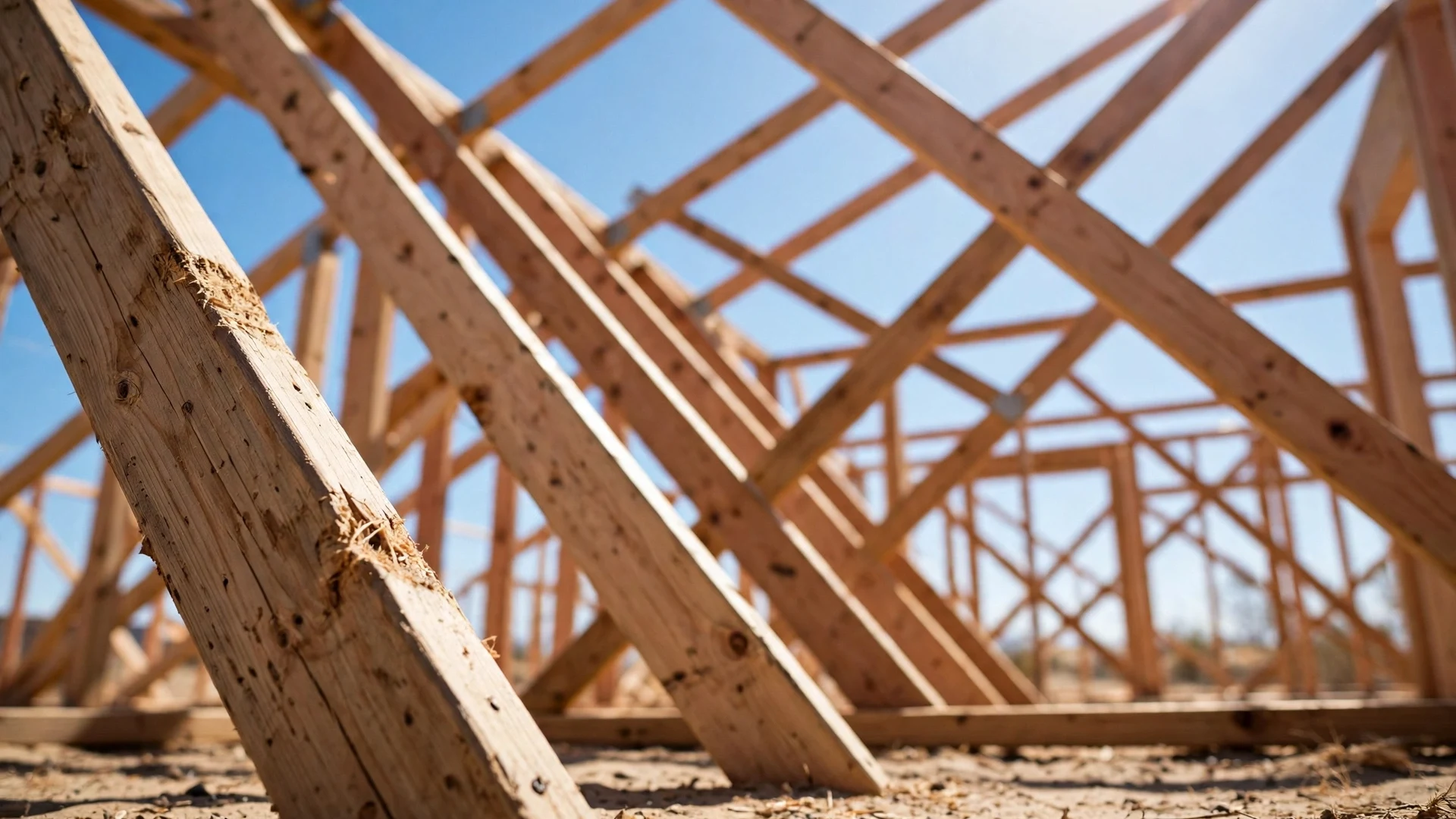
Reality 3: Housing Affordability Became Impossible to Ignore
Every election has a number that sums it up. For housing in 2026, that number was 34 percent.
Affordability Topped the Voter Agenda
The National Association of Home Builders’ Cost of Housing Index for the second quarter of 2026 put the burden in hard terms. A family earning the national median income of $106,800 needed 34 percent of that income to cover the mortgage payment on a median priced new home.
The details make the squeeze clearer. The median new home price was $410,700, the average 30 year fixed mortgage rate in the quarter was 6.51 percent, and the burden had risen from 32 percent in the first quarter of 2026.
For lower income households, the math is far worse. NAHB calculated that a family earning half the median income would need 67 percent of its income for the same payment, and even the median priced existing home carried a 36 percent burden.
The full NAHB index, published in its release Housing Affordability Worsens on Higher Mortgage Rates, also points to a nationwide shortage of roughly 1.2 million homes as the structural backdrop.
What a Buyer Actually Pays Each Month
The example below isolates the rate effect on the same home. It is a hypothetical calculation using verified inputs, not a quote.
| Item | At the Q2 Average Rate | At the Nov. 5 Week Rate |
|---|---|---|
| Home price | $410,700 | $410,700 |
| Down payment (20 percent) | $82,140 | $82,140 |
| Loan amount | $328,560 | $328,560 |
| Rate (30 year fixed) | 6.51 percent | 7.18 percent |
| Principal and interest | $2,078.88 per month | $2,225.78 per month |
The 7.18 percent figure is the Freddie Mac average for the week of November 5, 2026, reported through FRED. The difference on principal and interest alone is $146.90 a month, before property taxes and insurance, which sit on top of principal and interest in a real payment.
NAHB’s broader 34 percent burden measure works out to about $3,026 a month against the $106,800 median income, because it captures more of the full payment burden than principal and interest alone. Readers working through the basics can start with Basic Concepts of Affordable Housing Investing.
The post election consequence is that affordability now carries a governing mandate of its own. NAHB’s post midterm analysis expects the new Congress to focus on funding for affordable housing programs, and the bipartisan 21st Century ROAD to Housing Act, which became law on July 11, 2026 without the President’s signature, is the vehicle both parties have already agreed can move.

Reality 4: Tariffs Turned Construction Budgets Into a Guessing Game
Builders price jobs months before they build them. In 2026, the cost of the materials inside those jobs became a moving legal and political target.
Voters Said Tariffs Hurt the Economy
CBS News exit polls found that most voters, about two thirds, said the administration’s tariffs had hurt the economy. Tariffs were one of the few economic tools voters could name, and they judged it directly.
The legal ground shifted under the policy during 2026. On February 20, 2026, the Supreme Court held in Learning Resources v. Trump, decided 6 to 3, that the International Emergency Economic Powers Act does not authorize the President to impose tariffs, because the Constitution gives the taxing and tariff power to Congress.
Roughly $166 billion in duties collected under that emergency authority entered a refund process run through Customs and Border Protection’s CAPE system. The ruling ended one tariff program. It did not end tariffs.
Material Costs, Court Fights, and the Flip Math
The administration rebuilt parts of the tariff wall under other statutes. On August 24, 2026, NAHB reported 50 percent tariffs on about $20 billion of Canadian goods, imposed through Section 338 proclamations effective August 19, 2026.
The covered materials sit at the heart of residential construction: plywood, engineered wood products including laminated veneer lumber and fiberboard, and Portland cement. Canada supplies about 16 percent of United States cement imports, and softwood lumber faced a separate combined burden of roughly 34.75 to 35 percent.
NAHB estimates tariff actions added about $10,900 to the cost of a typical new home. A legal challenge to the Section 338 tariffs was filed on October 20, 2026, so even the replacement tariffs are contested. Our earlier piece, Trump’s tariffs and whether they would ignite a real estate collapse or a billionaire boom, tracked the first round of this fight.
The example below shows what a material shock does to a flip. It is hypothetical and uses round numbers on purpose.
| Item | Original Budget | Materials Up 12 Percent |
|---|---|---|
| Materials budget | $40,000 | $44,800 |
| Added cost | n/a | $4,800 |
| Expected profit | $30,000 | $25,200 |
| Cash invested | $60,000 | $60,000 |
| Return on invested cash | 50 percent | 42 percent |
The consequence for 2027 is that tariff policy now runs through three arenas at once: Congress, where rollback bills sit in the current session; the courts, where the replacement authorities are being challenged; and the White House, which must sign anything Congress passes. Budgeting for that uncertainty is now a core investor skill.

Reality 5: Health Care Costs Became a Rent Payment Issue
Rent is the largest line in most tenant budgets, but it is not the only large line. In 2026, health care costs moved from a policy debate into a household budget fight that landlords can measure.
Voters Felt Health Care Costs Directly
KFF’s analysis of midterm voters, published November 4, 2026, found that 54 percent of voters said the administration’s policies had made their own health care costs worse. Only 10 percent said their costs had improved.
The political split was stark. Voters who said their health care costs had worsened voted for Democratic House candidates by 82 percent to 16 percent, a margin of five to one.
That is voter perception, and it should be labeled as such. The separate question is whether household medical costs actually reach the rent payment. The research below is where that connection is documented, and it is indirect rather than a simple cause and effect.
When Medical Bills Compete With the Rent Check
A Johns Hopkins study published in JAMA Network Open on January 12, 2026, followed the sequence over time. Adults who reported medical debt in 2024 faced a risk of housing instability in 2025 that was 7 percentage points higher, a 44 percent higher risk, than adults without medical debt.
Housing instability in that study included difficulty paying rent or a mortgage, eviction, and foreclosure. The study is observational, so it shows a measured association over time rather than proof that a specific medical bill caused a specific late rent payment.
KFF’s broader household data shows the crowding mechanism. In its October 2026 update, 22 percent of adults reported problems paying medical bills in the past year, and 14 percent said they had cut back on basic household expenses to pay health care costs.
The consequence for landlords is not a policy lever. It is portfolio knowledge: a meaningful share of rent payment stress in 2027 will arrive from medical budgets, arriving with the rent check or instead of it, regardless of what Congress does about housing itself.

Reality 6: The Iran War Followed Voters to the Gas Pump
Foreign policy rarely moves a midterm by itself. In 2026 the war in Iran reached voters through a price they see every week, on a sign they pass every day.
The War Ranked Among the Top Voting Issues
The AP Voter Poll found the Iran war was a crucial or major factor for 74 percent of voters. Thirty four percent called it crucial, the third highest crucial or major share of any factor measured, behind only corruption and the cost of living.
Voters also judged the decision itself. Sixty three percent said taking military action against Iran was the wrong decision.
The war’s timeline explains the persistence. The conflict began on February 28, 2026, with joint United States and Israeli strikes known as Operation Epic Fury, followed by an April ceasefire and a June memorandum of understanding. Strikes resumed on July 7, fresh strikes on Qeshm Island were confirmed on November 6, and no ceasefire was in place on November 9.
Fuel Prices Reached the Rental Business
The Energy Information Administration’s weekly data shows the household channel. Regular gasoline averaged $2.94 a gallon in the week of February 23, 2026, before the war began.
By the week of May 11, 2026, the price peaked at $4.50 a gallon. The most recent EIA release, covering the week of November 2, put the price at $4.153 a gallon, down from the peak but still $1.13 higher than a year earlier.
For landlords, fuel costs travel three routes into the business. Materials deliveries and contractor call outs carry fuel surcharges, tenants who commute by car have less left after the pump for rent, and every service provider in the supply chain reprices with fuel in the background.
The consequence for 2027 is exposure rather than legislation. No housing bill controls the Strait of Hormuz, but energy prices feed the inflation data, the expense lines, and the voter mood that produced this election in the first place.

Reality 7: Immigration Enforcement Hit the Construction Workforce
Few issues cut in two directions at once the way immigration did in 2026. A majority of voters said enforcement had gone too far, while the industry that builds and repairs rental housing runs on the workforce at the center of the policy.
Voters Said Enforcement Went Too Far
CBS News exit polls found 58 percent of voters said the administration’s immigration enforcement efforts had gone too far. That majority coexisted with a durable Republican advantage on the issue itself.
Voters who ranked immigration as a top concern still backed Republican candidates, and CBS’s analysis noted immigration enforcement was more crucial for Republican voters than for Democratic ones. The backlash was about methods and scale, not a full reversal of voter views on enforcement.
The Crews That Build and Repair Rentals
NAHB’s analysis of Census Bureau data, published April 10, 2026, measured the industry’s reliance directly. Foreign born workers accounted for 26.3 percent of the entire United States construction workforce in 2024, a record high, and about 3 million workers in total.
The shares run far higher in the trades rentals depend on most. Drywall and ceiling tile installers were 57 percent foreign born, roofers 53 percent, painters 53 percent, carpet, floor, and tile installers 51 percent, construction laborers 43 percent, and carpenters 35 percent. NAHB does not publish a separate figure for framing crews.
| State | Foreign Born Share of Construction Workforce |
|---|---|
| California | 42.1 percent |
| Florida | 40.6 percent |
| Texas | 39.0 percent |
| Nevada | 38.6 percent |
| New York | 37.1 percent |
NAHB’s post midterm blog adds the operational effect: builders report that increased enforcement and jobsite raids are heightening worker fears and straining the labor pool. Our reporting on how immigration crackdowns are reshaping rentals across America covers the demand side of the same policy.
The consequence for 2027 is a labor supply question with no quick fix. NAHB lists limits on the immigration policies affecting construction among the new Congress’s expected priorities, and workforce training is one of the few housing topics with support in both parties.

Reality 8: Corruption Concerns Damaged Confidence in the System
The most striking number in the 2026 polling may not be about prices at all. Voters told pollsters they doubted the fairness of the system itself, and that kind of doubt prices into long term investment decisions.
Corruption Ranked With Costs as a Voting Factor
The AP Voter Poll found government corruption was a crucial factor for a slim majority of voters, roughly half by AP’s more cautious phrasing in one report. Combined, 90 percent of voters called corruption a crucial or major factor, the highest combined share of any issue measured.
Most voters who called corruption crucial supported the Democratic House candidate. The priorities question pointed the same way: AP’s own reporting found about 6 in 10 voters said Trump’s priorities were misplaced, and about 6 in 10 said he places his personal interests ahead of the country’s interests.
These are measures of perception. They document what voters believed about fairness and priorities when they voted, not findings of fact about any specific act, and this article treats them that way.
Why Perceived Fairness Matters to Long Term Capital
Real estate is the longest horizon investment most households and small investors ever make. Its returns depend on rules that stay stable across decades: tax treatment, property rights, contract enforcement, and predictable regulation.
When a large share of the public believes the system is not being run fairly, the political demand that follows tends to target visible wealth and visible landlords. That demand does not distinguish between a national institution and a local owner with four units.
The consequence for 2027 is agenda risk rather than a specific bill. An electorate animated by fairness concerns gives the new Congress reason to hold hearings, open investigations, and propose visible crackdowns, and investors should expect the rhetoric even where legislation stalls.

Reality 9: Voters Pushed Back Against Concentrated Presidential Power
The 2026 vote was also a structural one. Voters did not only judge policies. They judged how much power one office should hold, and they asked Congress to take some of it back.
Voters Wanted a Stronger Check on the Presidency
The AP Voter Poll put the sentiment in plain terms. Roughly 7 in 10 voters said Congress is doing not enough to provide checks and balances on the presidency.
Only about 2 in 10 said Congress was doing about the right amount, and about 1 in 10 said it was doing too much. The dissatisfaction crossed party lines: the vast majority of independents and about 4 in 10 Republicans said Congress was not doing enough.
The Supreme Court’s tariff ruling earlier in the year had already made the same structural point in legal form. Tariff authority belongs to Congress under the Constitution, and the Court held that an emergency statute never handed that authority to the President.
Oversight Changes Even When Laws Do Not
A housekeeping note matters here for institutional landlords. Section 1001 of the ROAD to Housing Act takes effect on January 7, 2027, and it restricts future purchases by investors who control 350 or more single family homes, with penalties of $1 million or three times the purchase price per violation and no forced sale of existing holdings.
That restriction is already law, passed with bipartisan support before the election. A Democratic Congress does not need to pass it again. What changes hands in January is the oversight apparatus: committee gavels, hearing schedules, subpoena power, and agency scrutiny.
The consequence for 2027 is that oversight becomes the active front even in a gridlocked year. Large operators should expect questions about ownership concentration, tenant practices, and fee structures to arrive through hearings and agency inquiries long before any new statute reaches a vote.

Reality 10: AI Data Centers Became a Local Political Fight
The newest land use fight in America does not involve a subdivision or a warehouse. It involves the windowless buildings that train and run artificial intelligence systems, and voters have formed a view of them that crosses party lines.
Voters Do Not Want Data Centers Next Door
CBS News exit polls found that most voters opposed having a new data center built in their community. Opposition leaned Democratic, but most Republicans also opposed new local data centers, even as they voted for Republican candidates.
A University of Massachusetts Amherst Poll released on September 14, 2026 put numbers on the sentiment. Sixty five percent of respondents opposed new AI data center construction in their communities, and only 11 percent supported it.
The partisan split narrowed the usual gap. Republicans opposed local construction by 52 to 18, and Democrats opposed it by 76 to 7, which makes data center siting one of the rare land use questions where both parties’ voters lean the same way.
Power, Land, and Local Approvals
Congress took up the question on November 9, 2026. Reuters reported that the Senate moved to open debate on the American Affordability and Jobs Act, S. 5653, a bipartisan bill sponsored by Senators Heinrich, Whitehouse, Lee, and Capito.
The bill would speed permitting for energy and infrastructure projects and require large data centers to pay more of the cost of the grid upgrades their load creates. The November 9 vote opened debate only. The bill has not passed, environmental and tribal groups oppose its weakened reviews, and TD Cowen cut its estimated passage odds to 25 percent.
For real estate investors, the channels are concrete. Data centers compete for industrial land near power and fiber, they raise questions about who pays for grid capacity, and local approval risk now applies to a building type that once sailed through zoning.
The consequence for 2027 is a two level fight, federal permitting against local resistance. Investors in industrial land, power adjacent parcels, and conversion plays will price both levels, because a federal permit does not override a hostile county hearing.

Beyond the Election: What Could Change for Real Estate Investors in 2027?
Three scenarios cover the realistic range for 2027. They are scenarios, not predictions, and each rests on arithmetic and documents already in the public record.
Scenario A: Congressional Gridlock
Democratic majorities can pass bills through both chambers and still watch them die at the White House. Overriding a veto takes 67 votes in the Senate and 290 in the House, and Reuters reporting puts Democrats at about 54 Senate seats, far short of override strength.
In this scenario, most 2026 rules stay exactly where they are. The tariff system keeps running on its replacement statutes, the 350 home restriction takes effect on schedule, and the year’s real action happens in courts, agencies, and state capitols.
Scenario B: Bipartisan Housing Cooperation
The ROAD to Housing Act proved a housing package can pass both chambers with overwhelming support. NAHB’s post midterm priorities map the overlap: more funding for affordable housing programs, greater emphasis on workforce training, and limits on the tariff and immigration policies raising construction costs.
Against a documented shortfall of about 1.2 million homes, both parties have reasons to deal. In this scenario, 2027 produces incremental housing legislation in the areas where the parties already agree, rather than a sweeping new program from either side.
Scenario C: Regulatory Uncertainty
The third scenario is not a bill at all. Tariff authority is being fought in court on several fronts at once, with the Section 301 duties challenged and a Section 338 lawsuit filed in October 2026.
Oversight adds a second layer, as new committee majorities use hearings and agency pressure to shift enforcement priorities. In this scenario, investors plan around rules that may change by ruling or by guidance, and the premium goes to operators who can reprice, re-source, and re-paper quickly.
Frequently Asked Questions
Did the 2026 Midterm Results Prove Trump’s Real Estate Policies Failed?
No election result proves a policy question either way. What the results document is voter judgment: about two thirds of voters told AP that the President’s policies had made the economy worse, and those voters broke heavily for Democratic House candidates.
The separate, measurable record sits alongside the opinions. Consumer prices rose 3.7 percent in the year ending September 2026, the NAHB affordability index hit 34 percent of median income, and those figures stand or fall on their own data, not on the vote count.
Will the New Congress Reverse Trump’s Tariffs?
Tariff rollback bills exist, but they sit in the current Congress, not the incoming one. They include the bipartisan Trade Review Act, S. 1272, which would make new tariffs expire after 60 days without congressional approval, the End Trump’s Tariff Tax Act, which would repeal Sections 122 and 338 and terminate the forced labor Section 301 duties, and Senator Wyden’s Congressional Trade Powers Reform Act of 2026.
Any bill still needs a presidential signature or a veto override, and the Senate math makes overrides unrealistic. The strongest check on tariffs so far has come from the courts, which struck down the emergency authority tariffs in February 2026, and litigation over the replacement authorities continues.
Can Congress Lower Housing Costs Directly?
Congress does not set home prices or mortgage rates. It controls funding levels, tax rules, federal housing programs, and regulatory statutes, and it can move the supply side through measures like the ROAD to Housing Act, which became law in July 2026.
What it cannot do by statute is erase a 1.2 million home shortfall or set the rate on a 30 year mortgage. Investors should expect Congress to work at the edges it controls: appropriations, workforce, materials policy, and program rules.
Will Democratic Control Mean a National Rent Cap in 2027?
There is no national rent cap bill in the current Congress, and none has been introduced for the next one. Rent regulation in the United States remains overwhelmingly a state and local matter.
The documented tenant protection activity sits at that state and local level, plus federal program rules for subsidized housing. A national cap would require new legislation that does not currently exist in either chamber’s pipeline.
What Happens to the 350 Home Institutional Investor Restriction?
It takes effect on January 7, 2027, as enacted. Section 1001 restricts future purchases by investors controlling 350 or more single family homes, sets penalties at $1 million or three times the purchase price per violation, and does not force the sale of homes already held.
The election does not repeal it, because it passed with bipartisan support as part of the ROAD to Housing Act. Changing it would require new legislation, and no repeal measure appears in the verified record as of November 9, 2026.
Why Do AI Data Centers Matter to Housing Investors?
Data centers compete for the same industrial land, power capacity, and water resources that frame local growth decisions. When a county spends its grid capacity on a data center campus, the cost allocation fight that follows can land on every ratepayer in the service area, including landlords.
The politics are now measurable: 65 percent of respondents in the UMass Amherst Poll opposed local construction, and opposition ran majority strong in both parties. Local approval risk belongs in underwriting for any land or industrial play near proposed sites.
How Do Health Care Costs Affect Rental Housing?
The connection runs through household budgets. KFF found 54 percent of midterm voters said administration policies had worsened their health care costs, and 22 percent of adults reported problems paying medical bills in the past year.
The Johns Hopkins research adds the housing link: adults with medical debt in 2024 showed a 44 percent higher risk of housing instability in 2025. That is an association documented over time, not proof that medical bills cause a set share of late rent, and operators should treat it as background risk rather than a screening factor.
What Should Real Estate Investors Watch Before the 120th Congress Acts?
Watch the calendar first. The 120th Congress convenes on January 3, 2027, and committee assignments, hearing schedules, and first bill introductions will show the real agenda within weeks.
Watch the dockets second. The Section 301 challenge and the Section 338 lawsuit will shape material costs faster than any floor vote. Third, watch the Section 1001 effective date on January 7, 2027, and the Treasury and HUD guidance that surrounds it.
Finally, watch the data releases investors already track: monthly CPI for shelter and insurance costs, the Freddie Mac weekly rate survey, and the quarterly Census vacancy report. Those numbers moved the 2026 electorate, and they will grade the new Congress in real time.
Assessment
The strongest conclusion the verified evidence supports is that the 2026 backlash was a cost election with a housing core. Voter opinion, measured independently by AP, CBS, and KFF, blamed the administration for inflation, health care costs, and economic conditions, and it did so in numbers too large to read as one party’s base turning out.
The documented data underneath those opinions is real, and it is narrower than the rhetoric on either side. A median income household needs 34 percent of its income for the payment on a median priced new home. Renters fell behind at record survey rates in 2025. Construction faces 50 percent tariffs on Canadian materials and a workforce that is more than a quarter foreign born. Gasoline is a dollar thirteen higher than a year ago. None of that required a poll to be true.
What the evidence does not support is a forecast. The rollback bills are filed but unsigned, the data center bill is debated but unpassed, and the veto arithmetic caps what any congressional majority can do alone. Investors who separate the measured pressures from the pending politics will read 2027 correctly: the costs are documented, the responses are not, and the operators who underwrite the first and stay flexible on the second hold the advantage.
Data sources: Associated Press; CBS News; KFF; National Association of Home Builders; University of Massachusetts Amherst; Reuters; U.S. Energy Information Administration; U.S. Bureau of Labor Statistics; Federal Reserve SHED; Urban Institute.