Success Gets Better When the Business Starts Serving the Life
Some careers are built by following the path everyone else recommends. Others are built when someone finally decides that the standard path no longer fits.
For Elizabeth Prisbrey, building a successful career wasn’t about becoming the loudest agent in the room, making endless cold calls, or sacrificing family life for another transaction.
Her journey became about discovering what she was naturally good at, building trust through education, and creating a business that could support the life she actually wanted to live.
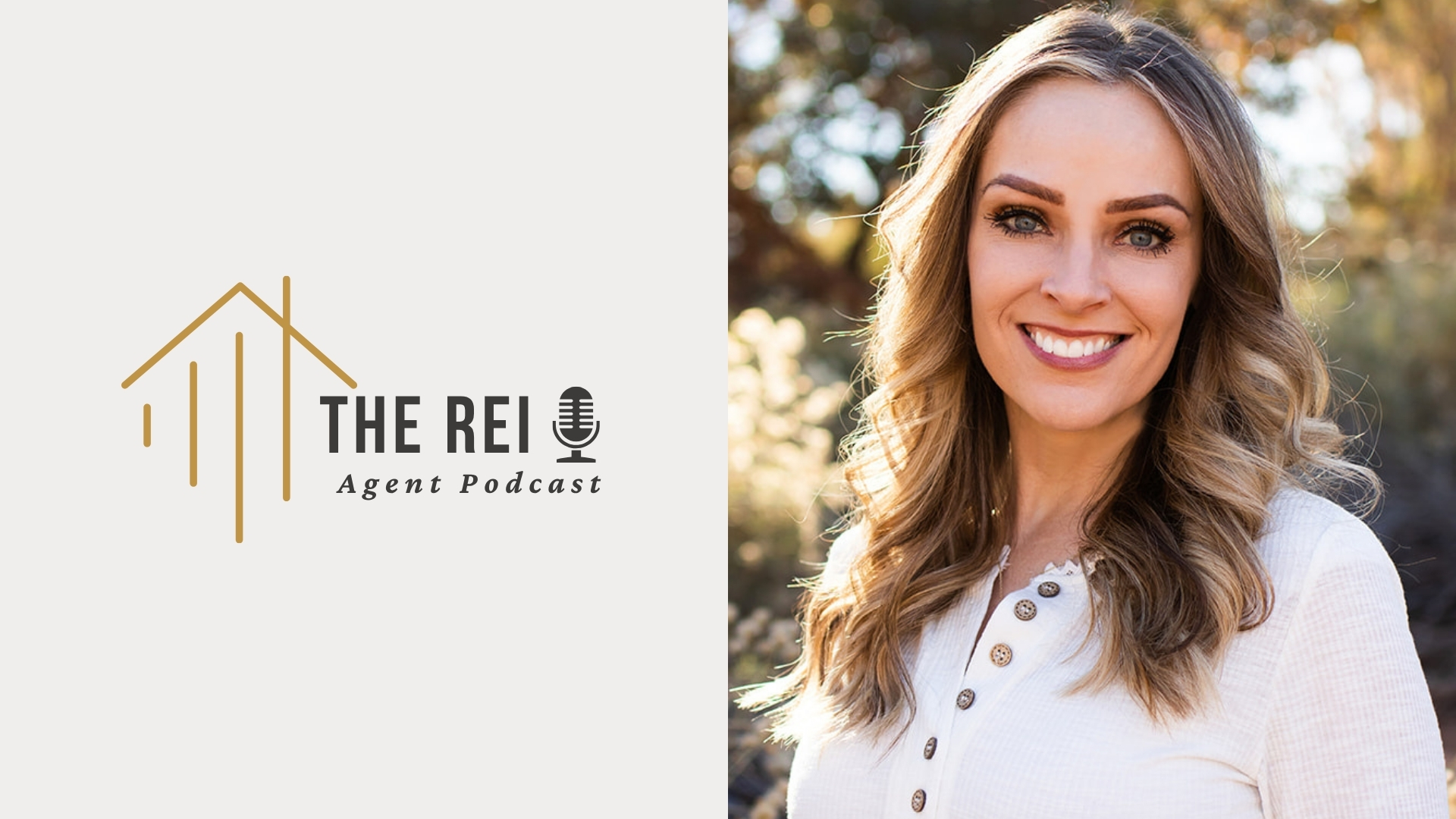
On The REI Agent Podcast, Mattias Clymer spoke with Elizabeth about Southern Utah’s changing housing market, rebuilding a career after moving to a new community, creating a successful YouTube presence, protecting personal boundaries, and learning that authenticity can become one of the most powerful business strategies available.
“If I’m going to work that hard, then why not do it for myself?”
That question became far more than a career decision. It became the beginning of a completely different way of building her business.
A Southern Utah Market That Changed Almost Overnight
Migration, Rising Prices, and a Return Toward Balance
Elizabeth serves Southern Utah through Stratum Real Estate Group, with much of her business centered around Cedar City and the surrounding region. It’s a market that experienced enormous change following 2020.
According to Elizabeth, Southern Utah saw substantial migration from places such as Las Vegas, California, and Arizona. At the same time, home prices rose dramatically. Inventory became incredibly tight, with the region at one point experiencing less than a month’s supply of homes.
That environment has changed.
Elizabeth explained that inventory has climbed to levels the area hasn’t seen in roughly a decade. With approximately five and a half months of supply in her market at the time of the conversation, Southern Utah was moving much closer to a balanced market.
Yet balance doesn’t always feel balanced to people who became accustomed to extreme conditions.
Sellers remember the days of intense demand. Buyers see homes remaining on the market longer and expect greater negotiating power. Both sides are adjusting their expectations to a market that operates differently from the one they experienced only a few years earlier.
For professionals working inside that transition, Elizabeth’s approach is straightforward. Education matters. Expectations matter. And trust matters even more.
Real Estate Became a Way to Reclaim Her Time
From Stay-at-Home Mom to Teacher to Entrepreneur
Elizabeth’s path into the industry didn’t begin with a lifelong ambition to sell homes.
After spending roughly a decade as a stay-at-home mother, she decided to earn a teaching license and return to work. She wanted to contribute financially to her family while continuing to help people.
Teaching provided that opportunity, but full-time work introduced another challenge. The schedule didn’t provide the autonomy she wanted as a mother.
Real estate offered something different.
It allowed Elizabeth to combine two things she already enjoyed: helping people and teaching them. More importantly, it offered the flexibility to organize her work around her family rather than forcing her family around her work.
She spent the first five years of her career in Las Vegas, where much of her business came through referrals and her existing sphere of influence. Then, in 2021, her family moved to Cedar City.
Suddenly, the business model that had worked before couldn’t simply be copied into a new city.
Elizabeth had to rebuild.
Starting Over Forced Elizabeth to Think Differently
A Small Community Required a Completely New Strategy
Moving into a smaller community presented an immediate challenge. Long-established relationships already existed. Residents knew agents. Families had connections. Elizabeth understood that simply arriving and announcing that she was available wasn’t going to build a meaningful business.
Initially, she partnered with a builder preparing to open a community. When mortgage rates began rising in 2022, the project was paused, and Elizabeth continued helping with the company’s marketing.
That experience sparked an important realization.
“We get stuck in working so hard for other people. We’re not willing to give ourselves the same commitment.”
If she was capable of investing that much effort into building someone else’s company, she could invest the same effort into building her own.
So she looked for a way to reach people before they ever arrived in Cedar City.
Her answer was YouTube.
YouTube Became Her Digital Introduction
Instead of Chasing Leads, She Started Educating Future Residents
Elizabeth recognized something powerful about relocation buyers. Long before someone chooses an agent, that person is already researching the destination.
They want to know about neighborhoods. They want to understand healthcare options. They want information about retirement, restaurants, subdivisions, driving routes, lifestyle, and everyday life.
Elizabeth decided to become the person answering those questions.
Her channel, Living in Cedar City Utah, became an educational library for people considering a move to the area. She began producing videos about virtually every part of living in Cedar City and Southern Utah.
The strategy wasn’t based on aggressive selling. It was based on familiarity.
“People work with who they know, like, and trust. Well, they can’t do that unless they know you.”
By the time many prospective clients contacted Elizabeth, they had already spent hours listening to her explain the community. They understood her personality. They knew how she communicated. They had already experienced the value she provided.
Some walked into her office feeling as though they already knew her personally.
That’s the remarkable advantage of educational content. The relationship can begin long before the first conversation.
Trust Grew Because She Refused to Sell the Fantasy
Honesty Became More Persuasive Than Persuasion
Elizabeth’s videos weren’t designed to convince everyone that Cedar City was perfect.
She intentionally talked about both the advantages and disadvantages of living there.
One prospective client once sat down with her and asked her to convince them why they should move to Cedar City.
Elizabeth refused.
“I’m not going to convince you to do anything.”
Her role, she explained, was to educate people about Cedar City, answer their questions, and provide enough honest information for them to make their own decision.
That response created immediate trust.
Instead of feeling like they were sitting across from someone attempting to close another transaction, they realized they were speaking with someone willing to tell them the truth even if that truth didn’t produce a sale.
Mattias connected that philosophy to another valuable habit for agents: learning enough about homes to point out potential issues before an inspector does.
Trust doesn’t always come from explaining why something is wonderful. Sometimes it comes from being willing to point out what isn’t.
The Camera Doesn’t Require Perfection
The First Videos Only Have to Exist
Starting a YouTube channel can feel overwhelming. There are cameras, microphones, editing, scripts, thumbnails, social platforms, and the uncomfortable experience of talking to a lens.
Elizabeth understands that anxiety because she experienced it herself.
Her teaching background helped. During the pandemic, she spent hours teaching students online, which made speaking toward a camera more familiar. Even then, she deliberately practiced.
She would sit in her car during her children’s activities and record herself speaking into her phone until the process became more natural.
Her early videos weren’t perfect.
They didn’t need to be.
“They’re not great, but people still watched them because they wanted the information.”
That lesson can free almost anyone who hesitates to create content.
The audience usually isn’t waiting to judge every pause, expression, or imperfect sentence. They’re searching for something useful.
Helpful information can outperform polished presentation when the person providing it is authentic and credible.
Authenticity Beats Trying to Become Someone Else
Play to the Strengths That Already Exist
Elizabeth also discovered that she didn’t have to create content the way someone else created it.
She feels comfortable producing talking-head videos from her office. Filming outside creates more anxiety because of wind, noise, distractions, and people watching.
Instead of forcing herself into a style that doesn’t fit, she focuses heavily on the format where she performs best.
Another agent might thrive walking through restaurants, touring neighborhoods, livestreaming, knocking on doors, making cold calls, or attending community events.
The lesson isn’t that everyone should become a YouTuber.
The lesson is that everyone should identify the method that allows them to consistently show up as themselves.
“If you can find what works for you and be consistent, that is the only reason the YouTube channel has done well.”
Consistency Quietly Builds Authority
People Notice Who Keeps Showing Up
Mattias shared a similar experience from the early years of his career when he consistently published a real estate blog.
The blog didn’t necessarily attract enormous readership. Yet consistently sharing those articles accomplished something else. Everyone in his social network knew what he did.
Elizabeth saw the same principle working through video.
Consistency communicates competence.
It shows that someone is researching the market. It shows dedication. It demonstrates that the person will continue appearing even when immediate results aren’t obvious.
Elizabeth noted that consistency also sends a message to prospective buyers and sellers. If an agent reliably creates valuable information week after week, that behavior can suggest how reliably the agent may show up when representing a client.
Trust is often built through hundreds of small signals rather than one dramatic moment.
Giving Away Information Didn’t Reduce Her Opportunity
Generosity Created a Bigger Network
Some professionals worry that sharing too much information will help competitors.
Elizabeth doesn’t view business that way.
Other agents watch her videos. Some local residents used her content extensively before moving but ultimately worked with another professional because they already had an established relationship.
Elizabeth is comfortable with that.
She believes people naturally gravitate toward the professionals whose personalities resonate with them.
“There’s enough business for everyone.”
That mindset has helped Elizabeth build relationships not only with relocation buyers, but also with other professionals in her community.
Her visibility contributed to stronger relationships throughout the local industry, and she became involved with the Iron County Board of Realtors.
Showing up publicly didn’t just generate leads. It helped establish her as a recognized and respected professional inside the community itself.
The Business Eventually Began Feeding Itself
Relocation Buyers Became Future Sellers
Educational relocation content initially made Elizabeth’s business heavily buyer focused.
But a business doesn’t remain frozen in its first stage.
Those buyers eventually became homeowners. Some later reached the point where they were ready to sell.
The result was an increasingly balanced business with both buyers and sellers.
What began as a strategy for finding people before they moved into the area gradually developed into a long-term client ecosystem.
That’s the difference between chasing individual transactions and building relationships that can continue for years.
Success Isn’t Worth Losing the Life It Was Supposed to Improve
Boundaries Became Part of Elizabeth’s Business Strategy
When Mattias asked Elizabeth for her biggest lessons, she returned to the idea that had shaped her journey from the beginning.
A successful business should fit the person operating it.
Elizabeth encouraged professionals to work according to their strengths, but she offered an equally important warning about the nature of the industry.
“Real estate will suck the life out of you.”
Buying or selling a home is a major transition for clients. Emotions can be high, decisions can feel urgent, and people can expect access to their agent throughout the day and night.
If boundaries aren’t created, work can expand until it occupies nearly every available moment.
Elizabeth learned to establish shutoff times, use Do Not Disturb in the evenings, take vacations, and create plans for handling client needs when she isn’t personally available.
Those decisions aren’t signs of reduced commitment.
They’re part of building a career that remains sustainable.
The Relationship Matters More Than the Transaction
People Aren’t Houses to Be Closed
Elizabeth also offered a powerful description of what she believes agents are really selling.
“Real estate isn’t about selling homes. It’s about selling yourself.”
She wasn’t talking about self-promotion for its own sake.
She was talking about demonstrating character.
Clients need to believe that the professional across from them is dependable. They need to know that person will show up. They need confidence that their goals matter beyond the commission attached to the transaction.
When the relationship becomes the priority, the professional begins seeing the person behind the property.
That shift can change the entire experience for both sides.
Not Every Client Has to Become Your Client
Sometimes Growth Means Knowing When to Walk Away
One of Elizabeth’s more recent lessons has been learning that accepting every opportunity isn’t always healthy.
Some personalities don’t work well together. Some expectations don’t align. Sometimes the relationship simply isn’t a good fit.
Earlier in a career, turning business away can feel almost impossible. Later, Elizabeth discovered that protecting the quality of her relationships also protects her enjoyment of the career.
“Not every client is your client and you’re not for everyone.”
When Elizabeth recognizes a poor fit, she can connect that person with another agent who may better match their expectations and goals.
There’s confidence in understanding that rejection and redirection aren’t always losses.
Sometimes they’re how healthier businesses are built.
The Question Behind the Question Changed Her Direction
Accountability Turns Frustration Into Action
When Mattias asked Elizabeth about a book that had influenced her, she selected QBQ! The Question Behind the Question.
Its message of personal accountability arrived at an important time in her career.
Instead of asking why the market was difficult, why interest rates weren’t lower, why sellers wouldn’t reduce a price, or why buyers weren’t appearing, Elizabeth began asking a different kind of question.
“What can I do about this?”
That shift changed where she placed her energy.
When her family moved to Cedar City, Elizabeth’s husband was still commuting to Las Vegas. She had strong motivation to create enough income for him to eventually work closer to home.
Waiting for conditions to become perfect wasn’t going to accomplish that goal.
She could control her marketing. She could control her consistency. She could control the quality of the information she produced. She could control how much effort she put into creating a business that could move the family forward.
That philosophy became a practical version of controlling the controllable.
A Career Can Become an Expression of Who Someone Really Is
The Best Business Model May Be the One That Feels Most Natural
Elizabeth Prisbrey’s story isn’t simply about YouTube, Southern Utah, or building a real estate business after moving to a new city.
It’s about alignment.
She didn’t become successful by forcing herself into every strategy the industry offered. She identified the qualities she already possessed, including teaching, educating, communicating, and helping people, then built a business around those strengths.
She learned that consistency can create authority. Honesty can create trust. Boundaries can preserve ambition. Generosity can strengthen a professional community. And personal accountability can replace frustration with action.
Most importantly, she demonstrated that professional success doesn’t have to require becoming someone else.
“If you can find what works for you and be consistent.”
That idea reaches far beyond one industry.
People often spend years trying to copy the tactics of someone whose personality, circumstances, strengths, or goals are completely different from their own. Elizabeth’s journey offers another possibility.
Understand who the person is first.
Then build the business around that person.
The Bigger Lesson Is to Build Something Worth Living With
Success Should Create More Life, Not Consume It
Elizabeth’s journey from stay-at-home mother to teacher, Las Vegas agent, Cedar City newcomer, educator, content creator, and established Southern Utah professional shows what can happen when someone stops asking how they’re supposed to build a career and starts asking what kind of career actually fits their life.
There will always be another tactic, another platform, another guru, and another supposedly perfect way to generate business.
But the most sustainable path may be much simpler.
Find the strengths that already exist. Serve people genuinely. Show up consistently. Protect the people and priorities that matter. Take responsibility for the things that can be changed. And have enough confidence to build success on personal terms.
Because the goal isn’t merely to create a thriving business.
It’s to create a thriving life that the business helps make possible.
Transcript
[Mattias]
Welcome back to the REI Agent. My guest today is Elizabeth Prisbrey, a real estate agent with Stratum Real Estate Group, serving Southern Utah corridor, including Cedar City and St. George. Elizabeth operates in one of the Mountain West’s most interesting secondary markets, an area that has seen significant migration pressure from California and other high cost states, and that has its own distinct dynamics most national natives completely miss.
She posts weekly market updates for Southern Utah on Instagram, bringing data forward, community rooted perspective to a market that is growing faster than most people outside the region realize. Elizabeth, welcome to the REI Agent Podcast.
[Elizabeth Prisbrey]
Thank you. I’m happy to be here.
[Mattias]
Yeah, no, I’m really curious about your market. And I am curious, I usually just jump into like how you got started, but I do want to ask quick, like what your dynamics look like now. I know that depending on who I talk to, where they’re operating, the market can be a little bit different in all the different states.
[Elizabeth Prisbrey]
Yeah. So Southern Utah had a mass migration. We are home prices pretty much doubled with 2020.
We saw a ton of people come from Vegas, California, Arizona, they’re still coming. We’re finally back to a more balanced market where buyers have some options for a while there. We had less than a month’s inventory of homes, which is really what pushed our home prices up.
Where I currently am, I’m in a smaller city, a little over 40,000 people. We’re just North of St. George that has over, well, the county itself has over 200,000 people. So a little bit different dynamics, but they’re kind of the same.
Now we’re to the point that we have more inventory than we’ve seen in 10 years in the area, but we’re just barely at a balanced market. So we’re sitting right around five and a half months supply and that stresses people out because they’re used to two and three months supply in the area.
[Mattias]
Yeah. Yeah. Yeah.
No, it’s a really interesting thing. I think our market isn’t quite there yet. We’re still a little bit more in the seller’s market side of things.
But what I’m seeing is that everybody’s just kind of frustrated. It’s like buyers have this feeling that a house has been on the market now for two weeks or whatever, and that’s not normal. So there’s something wrong with it.
It’s overpriced. We need to get a good deal to be satisfied. And sellers are experiencing the opposite where maybe they had to go through a bidding war to buy the house and they are expecting more demand and more excitement, more leverage on their end.
[Elizabeth Prisbrey]
Oh, that’s definitely what we’re seeing. Very similar in that sense.
[Mattias]
And then everybody’s just not happy.
[Elizabeth Prisbrey]
Exactly. We have sellers that think their home should be worth exactly what it was two years ago. And we have buyers that know these homes have been sitting longer.
They have more options. And so they really want a deal.
[Mattias]
Yeah. Yeah. It’s interesting.
It’s interesting time. Well, we can dive into that a little bit more, but I do want to hear about kind of what got you started with real estate in general.
[Elizabeth Prisbrey]
Yeah, absolutely. So I’ve been married, what, 26 years now. I was a stay at home mom for probably 10 years before I decided, hey, I’m going to go get a teaching license.
I’m going to teach. I’m going to help contribute to the family. And then I jump into work gone full time from stay at home mom to working all the time.
And I realized this is not helping my family. I need to find something that gives me more autonomy. I like helping people.
I like teaching people. So real estate kind of gave me an avenue to help people educate people, but then also give me the autonomy to still be a mom while helping my family earn an income.
[Mattias]
Yeah, that’s awesome. I can relate. I also came from a, well, I was in the behavior specialist kind of realm in schools before coming here, but doing the real estate thing.
But I admire, I think, people who are able to balance parenting and real estate like that. It is hard. I’m not saying I don’t.
I’m just saying that I don’t, I’m not the first person that is doing all the logistics and everything that is involved with, and you have a large family. So there’s, I’m sure there’s a lot involved. And I get so stressed out.
There’s something crazy happening on the phone and the kids have no concept of what, how important- What’s happening around you.
[Elizabeth Prisbrey]
Yeah.
[Mattias]
Their needs. And it’s like, I don’t want this color of yogurt or whatever their needs are. So kudos to you.
How’d you balance all that?
[Elizabeth Prisbrey]
So, I mean, at that point, my youngest was starting school. So after working full time as a teacher, there was like no issue with balancing because I now had the time where I could structure that into my day while the kids were at school. If something happened in the evenings, I’m sitting at my kid’s soccer game.
I was still able to feel it. I was used to feeling that balance by going back to school and teaching. So taking on real estate, it was kind of a smooth transition.
And honestly, when I first started in real estate, so I’ve been a realtor for 10 years now. The first five years I was in Las Vegas, migrated to Cedar city around when everybody else did in 2021. So I’ve been an agent here in Cedar city.
The first half of my real estate career was because I was a mom. I wanted to help contribute. I wasn’t the main breadwinner.
And I thought this is a way where I can help while still maintaining my role as a balance. So my career as a real estate agent in Las Vegas was very different than here in Southern Utah or in Cedar city. I had to basically start over that first part of my career was very much referral sphere of influence people, you know, and it was very lackadaisical.
I would say here, it’s been a completely different ride.
[Mattias]
Sure. Okay. So, um, yeah, no, I would imagine that then also your youngest would have been like, what, like 10 ish, um, 11 ish when you, when you moved and, um, yeah, so he was nine.
[Elizabeth Prisbrey]
He just started his freshman year yesterday.
[Mattias]
Yeah. Well, and that, that can help a little bit too, like to have, have kids be a little bit older, pretty independent now. Yeah.
But, um, what, what was it like to start, um, you know, start over. And so to really focus on a market where you may not have had as many people like a sphere to, to, to rely on for incoming, honestly, this is where my career is really pretty unique.
[Elizabeth Prisbrey]
It’s unique for where I’m at. It may not be unique for the country. I’ve definitely seen other agents do it, but for being in the small community that I’m in, um, I knew when I moved into a small town, it was going to be a very much good old boy club.
You know, everybody knows several agents. And so I knew I was going to have to do something different in order to continue to do real estate. So I, I partnered, I started with my brokerage, wonderful brokerage, but I partnered up right away with a builder.
I was going to open up a community because I did have some real estate experience, but that’s when mortgage interest rates, you know, started jumping in 2022. And so they kind of paused the community and I stayed on with them to do their marketing. And I thought, I don’t really love this.
If I’m going to be putting in this much work and effort to build a company, I’d much rather be putting that effort into my own business where if I’m going to work that hard, then why not do it for myself? You know, I think we get stuck in working so hard for other people. We’re not willing to give ourselves the same commitment.
So I started diving in and decided, you know what? I want to start a YouTube channel. I think if I capture people before they move to Cedar city, then I don’t have to worry about trying to, um, take this small town community and get them to see my value.
I will find a way to get people that are migrating here just like I did. So that’s really where I dove in. Um, I did a lot of research on how to start a YouTube channel and what people are looking for.
Like I said, I have a teaching background when I did move here because of everything that happened with the pandemic. I was actually teaching online for six hours a day, six classes. So I was speaking to a camera, middle school students sitting there.
And so I got comfortable just talking this black little dot in front of me and feeling like people were there. So I thought, okay, I can educate. I can talk to this little black dot.
I can do this. So I started a YouTube channel and I thought, you know, we always hear that saying people work with who they know, like, and trust. Well, they can’t do that unless they know you.
And so I thought, and we also hear that, you know, people want value. If you give them value, then they’re going to come to you. So that’s what I did.
I started a YouTube channel all about living in Southern or living in Cedar city, Utah. Of course I cover all of Southern Utah Cedar city specifically is where I live. So that’s what the channel is called.
And I just educate. I teach people about what it’s like living in Cedar city. What are I teach them about our subdivisions, what we offer for retirement, healthcare, whatever you can think of.
That’s what I’m offering different restaurants, driving tours, anything you can think of. I’m just doing like a 10 to 12 minute video each week that helps educate them by doing that. When people go and they search about Cedar city, I’m the one that pops up by the time they reach out to me.
They already feel like they know me. They already trust me. They already know the value that I bring because I’ve been sitting here educating them.
So when I get in a room with them, they talk to me like we’re best friends. I mean, they’ll bring their toddlers in and their toddler knows me because their toddler has been watching them. So that’s really how I started over completely different from Las Vegas, but it’s been really beneficial and it’s kind of shown that that model works even in a small town.
[Mattias]
Yeah. Well, yeah. I think the times that I’ve heard about YouTube working really well has been definitely times where people are relocating.
It’s a spot where people are thinking about moving to. I had one from Wyoming, a channel from Wyoming, and I think a lot of people had this romantic idea about living. It was Wyoming or Montana.
I can’t remember now, but had this romantic idea of moving out in the middle of nowhere and just had no realistic- Like Yellowstone? Idea. Yeah, yeah, yeah, yeah.
So then I think one of the most popular videos he had was like, why not to move to Cedar City?
[Elizabeth Prisbrey]
Yes. And that’s what I get from people is I’m very transparent and very honest. And so they like that I’m going to tell them the bad and the good, and I’m going to be honest.
I had one client come in, they sat in my office, they sat down and they said, okay, convince me why I should move to Cedar City. And I said, I don’t do that. I’m not going to convince you to do anything.
I tell you about Cedar City. I educate you about Cedar City. I answer any questions you want to know, but I am never going to try and convince you to move here because I don’t want to be held responsible if you don’t like it.
I’m telling you the bad so you can decide if that’s what you want. So you can have realistic expectations. And once I told them that it was like an immediate trust for me.
They knew I wasn’t the agent that was going to come in and pull the wool over their eyes and just try and get a sale. That’s not me.
[Mattias]
Yeah. The used car salesman slapping the hood of the car, right? Yeah.
No, I agree. Actually, I think that’s one of the things that I teach to newer agents about when you go through a house. If you’ve been through, first of all, attend as many home inspections as you can.
So you can start learning some things about houses, some common things in that area. And then when you’re going through a house, if you see one of those things, that will build your trust higher as if you’re pointing out something. Hey, this is a great house.
This isn’t that big of a deal, but this is something that’s going to come up the home inspection.
[Elizabeth Prisbrey]
Right. Right. Absolutely.
That builds the trust right away because they know that you’re looking out for their best interest.
[Mattias]
Yeah. Now starting a YouTube channel, I think it’s probably really daunting for a lot of people. There’s many layers to that.
I think there’s equipment, there’s skill, talking in front of a camera, like you mentioned. I think then also there’s editing. And then maybe even just thinking about how to upload it, am I going to do reels?
How would you recommend someone just start?
[Elizabeth Prisbrey]
Honestly, it is daunting and it is a lot to take on. And you’re absolutely right. There is a lot there.
With that being said, it is a lot of work, but so is sitting down for eight hours and calling leads, buying leads. That is a lot of work. So when I started, it was kind of like, okay, I don’t really have the income here yet, but I have the time.
So I’m just going to invest the time in learning all of this, teaching myself. We have YouTube university, so why not? But if you don’t have the money to put into getting somebody else to edit your videos and getting somebody else to put the B roll on there, then educate yourself, get on and learn how to do it.
Then I seriously sat in my car while I was at my kids’ sporting event. They were in practicing and I was just sitting in the car and I sat there and I just recorded myself on my phone talking until I got comfortable. Even though I had time teaching the middle school students, I thought I’m just going to do this until it feels natural.
And the first ones, they’re choppy. They’re not great, but people still watched them because they wanted the information because most people can’t do it either. So they’re not getting on and watching you judging everything you do.
And in reality, when you get past that ego, when you get past that, when you sit down with a client across from you at the table, you can’t do all these retakes. You can’t make sure your face looks good. You can’t re say something YouTube recording yourself, being able to edit it gets a lot less daunting.
When you just realize that this is how people are seeing you. If you can just talk naturally, pretend like you’re sitting across the table from them. It starts to relax you.
It also helps that you’re doing it in a room by yourself. You can take as many takes as you want to, and then just do it, just record it and do it. And maybe don’t start with YouTube.
Maybe just start doing it on Instagram or Tik TOK or Facebook, or maybe even just sending a short video to a client. You know, Hey, it was great meeting with you today. I loved hearing about this.
I’ll take care of this. And you have the time put in the work to get the education. If you don’t have the time and you have the money, pay someone to do it because that will take a lot of stress off.
And the investment is well worth it. It is well worth it. It works.
And honestly, I would help any agent here that wanted to do it. I talked to other agents and they say, Oh man, you’re really successful with this. How do you do it?
I could never do it. And I’ll tell them, honestly, I will sit down and I will help you with it. I will walk you through it because I’m of the mindset that people migrate to who they’re comfortable with.
They migrate to people that they, I’m losing the words for it, but what I mean is there can be several other YouTube. Yeah. There can be several other YouTubers here sharing the same information, but you’re going to choose the one that you resonate with.
And so I feel like there’s enough business for everyone. And if I can help another agent be successful, I’m going to, if they choose to work with that agent, they weren’t my client anyway.
[Mattias]
Yeah. No, I love that. One of the things that I’ve told people that would be a good thing to do to try, if you really are scared of talking in front of a camera, is to simply, and there is a difference between like, you know, saying, telling a story you’re going to send to a friend versus, you know, trying to say something that like, you know, about the market or whatever, like that seems like, you know, a little bit, I don’t know if you want to script it, you got to kind of probably figure some of that stuff out. Like, are you going to script it?
Have bullet points? Like, how are you going to do all that? But, but if you’re just getting past the talking to the camera part, do a 30 day challenge.
Say I’m going to, I’m going to talk to my camera for three to five minutes every day. And I’m going to put it in a little folder in my iPhone, whatever, you know, my album. And I’ll look back at them later.
But I’m not promising. I’m not posting any of this. I’m not going to post anything for 30 days.
And you might have something at the end of the 30 days that’s worthwhile, or you want to redo. And it was a good idea, but you’re going to learn so much. And you can probably see a difference from like what it was like the day one from day 30.
[Elizabeth Prisbrey]
And it’s just like, Oh, you’re definitely going to see a difference. If I were to go back and watch the first videos I did, I’d probably want to take them down and it would stress me out. Don’t, and people still watch those and they still comment on them and they still call me off of them.
And so it’s just realizing we don’t have to be perfect when we present ourselves, if we just talk authentically. And the thing is, is if you script it, it’s not authentic. It doesn’t come off like you and people know that.
So going in, yes, definite bullet points, definite plan before you go in to speak to the camera. Otherwise it’s not great. But if you can go in and speak authentically about what you know, cause you do know it, then it just allows people to get to know your personality.
And that’s what people gravitate to is the authenticity.
[Mattias]
Yeah. Now you mentioned iPhone or you mentioned phone in your car to start. People might also think they need to have like fancy equipment, but like really our phones are incredibly amazing cameras now.
And all the time. And it doesn’t matter. Like it doesn’t matter.
[Elizabeth Prisbrey]
And I still get anxiety with things. You know, I, when I go out away from my desk, when I’m not just a talking head, I stress bad. I stress about the noise.
I stress about the wind. I stress about who’s watching me. I realized that’s not my strength.
So I’m going to do as many talking head videos in my office as I can. And I’m going to play to my strengths and that works for me. But if you’d rather just go out and walk into a local restaurant and say, Hey, this is so-and-so with this real estate brokerage.
And, you know, I just wanted to showcase your place that might be more comfortable for you. It’s not for me. So I think pulling to your strengths is where it’s at.
[Mattias]
Yeah. Yeah, it’s true. And there’s also the whole live stream aspect of it as well.
You could definitely have like a, you know, I started, I think I did one.
[Elizabeth Prisbrey]
Yeah, no, I have not done any, I know live stream are super effective, but they stress me out.
[Erica]
Yeah. Yeah.
[Elizabeth Prisbrey]
It just stresses me out. So, and that’s where it goes back to, you know, there’s a million ways to do real estate by the leads, make the cold calls, knock the door, send the mailers. None of those resonate with me and who I am.
And so, but I do love helping people buy and sell homes. And so if you can find what works for you and be consistent, that is the only reason the YouTube channel has done well is consistency, just showing up every week, making sure you have something. One, the YouTube algorithm learns that you’re going to be there and it rewards you, but two, it also shows buyers and sellers that you’re dedicated.
You are consistent. They can rely on you to do what you say you’re going to do. So there’s a lot of benefits to that and just finding what works for you.
[Mattias]
That’s a really good point. I blogged when I first started and I don’t, I don’t, people didn’t read it. It was not much activity.
[Elizabeth Prisbrey]
You know, it’s hard to show up when you feel like they’re not, they’re not showing up. That’s, that’s hard to stay consistent.
[Mattias]
But what, what the benefit was, was sharing the blog. I shared, you know, consistently. So I started off three days a week, Monday, Wednesday, Friday, moved to Tuesday, Thursday for a while, did it for years.
And you know, I’ve said, nobody read it. I mean, people read it some, but like it wasn’t super, you know, it didn’t really take off, but everybody knew in my social media is that I did real estate because I shared consistently.
[Elizabeth Prisbrey]
And you show that you’re educated. You know, you show that you can help them. And I think that’s a big part of it too, is that I am doing the research.
I am showing up. I am showing that I, I’m the resource here. I’m the person they want to call.
And so that resonates with people, whether they know me or not.
[Mattias]
Yeah. And, and so like when you were talking about, you know, your leads coming from outside of the area of moving in you know, you’re building a sphere of people, like rewind to when you first started you’re building a sphere of people there as well. And they’re seeing you consistently post where they may already know the content that you’re sharing, or they may not want to click it, like researching what it’s like to live and where they live.
But they’re getting reminded that you are a real estate agent and that you are doing this consistently. And it, it, it works that way as well.
[Elizabeth Prisbrey]
They are. And what I will say is starting this way. Yes.
You’re predominantly a buyer’s agent. I’m now to the point that those buyers that have relocated are turning over and I’m transitioning more to balanced sellers and buyers. And so that eventually feeds itself.
Also probably half the people that are subscribed are local real estate agents that are watching the channel to get the information. And then occasionally I’ll have a realtor say, Oh, my client watches you. And I’ll say to him, well, they didn’t get it then because they were supposed to call me or I’ve run into somebody, you know, at like a local dessert place.
And they said, Hey, are you Elizabeth Prisbrey? And I said, yeah, I am. And they said, Oh, I watched you like crazy when I moved here.
And I, I laughed, I said, well then why didn’t you call me? Well, you know, um, I already had this relationship, so I didn’t, but I just really appreciated your videos. So, you know, you just have to be okay with sharing the information and knowing that it’s going to come back to you at some point.
[Mattias]
Yeah. Yeah. Yeah.
It’s, it’s definitely, you’re getting more than if you didn’t share anything out of fear that, you know, somebody would steal your content.
[Elizabeth Prisbrey]
Yeah, a hundred percent, a hundred percent, but it’s also created great relationships amongst the agents here. I have a really good relationship with most of the agents here. I actually serve on our iron County board of realtors.
And so being that face, being a presence, they’re showing up places. It has allowed me to not only, you know, attract relocation buyers, but also be more well known in the community amongst my community of agents. And to have that respect, I guess, they’re to be taken seriously because it’s really difficult in a small community to break in and let them know that you’re kind of a force to be reckoned with, I guess.
I don’t know how else to say that. There’s probably a more pleasant way, but.
[Mattias]
Yeah. Well, and I know that in, in our area as well, I think, um, there is, uh, it’s a tight knit community as well. We’re not a huge market, and, uh, I think though the relationship built with, um, agents, there is like, you know, the respect aspect for sure.
Uh, but also just the, um, you know, like, you know, I, I would rather work with that guy than, than that crazy person.
[Elizabeth Prisbrey]
Yes.
[Mattias]
And if, and if there’s, I know for a fact that like, if, if, if offers were exactly the same, cause you know, like that’s, that’s definitely important.
[Elizabeth Prisbrey]
Um, it would be a slight lean towards me over some other people that might be able to someone that you know is professional, someone that you know is showing up and is always having their buyer sellers interest as I’m losing track of my words here, but always having their best interest in mind.
[Mattias]
Yeah. Yeah. I think I, so yeah, I’ve definitely, I’ve served on the local board.
Uh, I was, I went through the whole thing and it was president. And then, um, as I was like leaving, somebody quit. And so I became president again.
[Elizabeth Prisbrey]
So how long is your term?
[Mattias]
I’m never leaving. So I mean, yeah, I mean for, sorry, we have like two year board positions and then you go on track, you have to go through like the, the whole like steps. And, um, usually the president’s only one year, then your immediate past.
[Elizabeth Prisbrey]
Right.
[Mattias]
But I, yeah.
[Elizabeth Prisbrey]
So we have our incoming president then president, then outgoing president and then the director’s two years.
[Mattias]
Yeah. Yeah. Same.
Did you, uh, did you, one thing that if, you know, agents listening to this, um, I got to travel then because of it, I got to go to Chicago for, um, the, like whatever tREIning of the, uh, you know, future presidents, uh, which was a lot of fun.
[Elizabeth Prisbrey]
Only the presidents and president Alex get to do that. We did, you know, obviously my state one. So we’ll go up to the Utah association of realtors and travel, travel and meet with the state boards, but I didn’t travel nationally.
[Mattias]
Yeah. So then I, I was able to go to like the, the national association conferences as well. And I was going to say like, if you haven’t been to one, uh, it’s a lot of fun.
[Elizabeth Prisbrey]
I have heard that I’ve heard that they’re really great.
[Mattias]
Yeah.
[Elizabeth Prisbrey]
I went, I went, I will attend at some point.
[Mattias]
I’m sure I went, uh, in San Diego. Um, and which was amazing. And it was also, you know, a different time because I think it was like 2021 and money was being pumped into the, into the real estate in general.
And, uh, home snap, uh, now homes.com was, uh, uh, rented out the entire gaslight district, gas lamp district. Sorry. And like, so they shut down all these super expensive restaurants for this event had Keith urban play.
[Elizabeth Prisbrey]
Um, they went all out.
[Mattias]
Yeah, it was nuts. Um, and yeah, it was just, it’s a lot of fun. Uh, I definitely recommend going and, and there’s great content, great things to learn, but, uh, realtors like to play hard and work hard.
So it’s always a good time.
[Elizabeth Prisbrey]
That is true. That is true.
[Mattias]
Um, yeah. Okay. So that, so you’ve been serving, you’ve, you’ve, uh, got the YouTube presence.
You’ve got the repeat business now as well. Um, curious what kind of a golden nuggets you have for our listeners.
[Elizabeth Prisbrey]
So I would say the first one is just honestly being authentic to yourself and working your business in a way that balances the type of life that you have, meaning work to your strengths. Cause I would not love real estate. If I was making cold calls all day long, I would not like it.
So I would say the first thing is just finding what works for you and what resonates for you and then hitting that heart and being consistent. Um, second thing I would say is don’t give up your life and your balance for it. It is still a job.
It is still a career and real estate will suck the life out of you because this is a big transition in people’s lives and they want access to you at all hours of the day. And if you give that to them, it will suck the life out of you. So I would say, and I, I had to learn this myself.
I had to learn that it was affecting my family when I felt like I needed to be available all the time. So setting those shutoff times, putting your phone on, do not disturb in the evening, you know, setting those boundaries and allowing yourself to go on vacation and have a plan. Should something happen if you are on vacation, but just kind of developing your business in a way that still allows you to maintain balance in your life.
Um, I think is huge. And then I would also say, if you make it about your relationship with them, I always say real estate isn’t about selling homes. It’s about selling yourself.
And I know that sounds really bad, but in reality, I am selling myself. I am showing people that I am someone they can trust. I am someone they can rely on.
I am someone that is going to show up for them. So when you do that, when you understand that, and it’s not about turning over homes, it also helps you understand the person that you’re working with and helps you invest in their goal. And, and they feel that they know that when they realize that, Hey, this is more about our relationship with each other.
That is about this realtor getting a paycheck.
[Mattias]
Yeah. I love those. Those are great.
And I think, uh, you know, if you haven’t done, you know, a lot of different, like, you know, Myers-Briggs or whatever, these, these kind of like, uh, assessments, I think it’s a good thing to do. I recently went through, um, a few different ones, including cultural index. And, um, there are distinct cultural index is kind of like disc.
And if you start really understanding these things and start understanding like kind of how you operate, you can really figure out or help yourself know that, Hey, it’s okay that I don’t want to do cold calls. I don’t want to be rejected a hundred times to get one person that will tolerate me on the phone. Um, so like, I think, I think knowing, you know, yeah, what your personality type is, there are people that are fine with that, that can do that really well.
And that’s great, but, but don’t, they actually thrive off of it. Yeah. Don’t, I don’t think that like, you know, cause one guru or one person says you need to do it this way, that that’s the only way and understand that there are different paths and that you can figure out by understanding yourself well, how you’re going to be the best in the business.
[Elizabeth Prisbrey]
That actually, I don’t know why it made me think of this, but it made me think of one more little golden nugget, because this has been huge for me lately is not taking every person that reaches out to me, knowing when we’re not compatible and letting them go, because that does a lot more for my inner peace and my joy for what I do. If I can realize, Hey, our personalities clash, the expectations aren’t aligned. And so I am to the point now in my career where I let people know, Hey, we’re not a good fit, but I’m happy to connect you with another agent that might align more with your goals and your values.
I, I know that that’s not always possible, especially when you’re grinding in the beginning and you’re getting your business going. But if you can get to that one set that not every client is your client and that you’re not for everyone, it will make this career a whole lot more enjoyable.
[Mattias]
Absolutely. It’s a, it’s a tough lesson, uh, firing people or starting with people. It’s it’s a, it’s a tough one.
Um, what about a favorite book, a fundamental book you think everybody should read or just one that you’re currently enjoying?
[Elizabeth Prisbrey]
So this one, I actually read a couple of years ago. It was right before I decided to do YouTube. Um, so it’s been a minute since I’ve read it and I’m sure you’ve heard of it, but it’s called QBQ the question behind the question.
Have you heard of that? Actually, I don’t think I have. It is a super simple read and very, very effective, but really it’s about taking accountability.
It’s about not asking the questions that say, why is this happening to me? Or if only interest rates were lower or what, why is the market like this? But really jumping in instead and saying, what can I do about this?
How can I change the situation? So I could have sat there and thought, all right. And I didn’t touch on this, but when we first moved to Cedar city, my husband was still commuting to Las Vegas.
So I had a real desire to bring in a good income and make it work so that I could bring him here. And so I had that motivation. And so instead of sitting there thinking, man, I hope I can get a client.
I hope this works out. I hope the market stays this way. Instead, I started changing the questions I was asking myself to more, how can I show up consistently?
What can I do with my marketing? If a home isn’t selling instead of complaining about, you know, why won’t my sellers drop the price or why won’t the market, why won’t buyers come see this instead? What can I do to change this controlling the controllables instead of complaining about it?
If you read the summary, it’s going to explain it way better than I did. But that was kind of my takeaway is I need to be in control of my life. And so I need to be asking the right questions, more positive questions, more questions that make me act versus ones that put me in a negative funk.
[Mattias]
I love it. I mean, that’s, that’s great life advice in general. I mean, that’s, um, Oh yeah.
[Elizabeth Prisbrey]
Works with kids too.
[Mattias]
Yeah. Yeah. Like as soon as I can get, uh, yeah.
Breaking through that victimization, breaking through, um, that’s just, it’s just a fundamental, uh, life shift that will change.
[Elizabeth Prisbrey]
That’s really what made me ask the question when I was working with the builder, it was okay. I can sit here and I can work this nine to fiber and wonder how I’m going to get my husband back. Or I can stop and think, okay, I’m doing this for him.
What can I do for myself to progress this forward? So it just, it’s a super simple read, but I felt like it really kind of changed the course I was heading in when I moved here.
[Mattias]
Awesome. I’ll have to check it out. Um, and if anybody is interested in seeing how you do YouTube, uh, seeing what you do on social media, interested in moving to Cedar city, what’s that?
I said, uh, where can they find you is, is where are you? Where social media is website.
[Elizabeth Prisbrey]
Yeah, sure. Well, my name’s Elizabeth Prisbrey. I am with Stratham real estate group, which is not a national brokerage.
It’s local to Southern Utah. Amazing brokerage. But if you want to find me on YouTube, the channels living in Cedar city, Utah, you can also, you know, just Google my name or look, you can put into the search “moving to Cedar city” and it’s going to pull up a lot of my videos.
As far as Instagram, it’s Elizabeth Prisbrey underscore realtor. I don’t even know what it is on Facebook. And it’s probably something similar on TikTok.
Just put my name in and put in Cedar city and you’re going to find me. I’m pretty easy to find.
[Mattias]
Yeah. So if, if you, uh, you know, are driving like a lot of agents are listening to this podcast, uh, definitely go to reaigent.com, um, sign up for our newsletter. Uh, these, uh, show notes will be, uh, sent out weekly summary of the two episodes every week.
Um, and, uh, you can then also read, uh, the blog version of the, every episode there. Um, but also there would be the show notes that would have the links to these things as well. So definitely check out reagent.com.
Um, Elizabeth, thank you so much for being on the show. It’s been a lot of fun talking to you.
[Elizabeth Prisbrey]
Yeah. Thank you for having me. It was great to chat with you.
[Erica]
Thanks for listening to the REI agent.
[Mattias]
If you enjoyed this episode, hit subscribe to catch new shows every week.
[Erica]
All content in the show is not investment advice or mental health therapy. It is intended for entertainment purposes only.