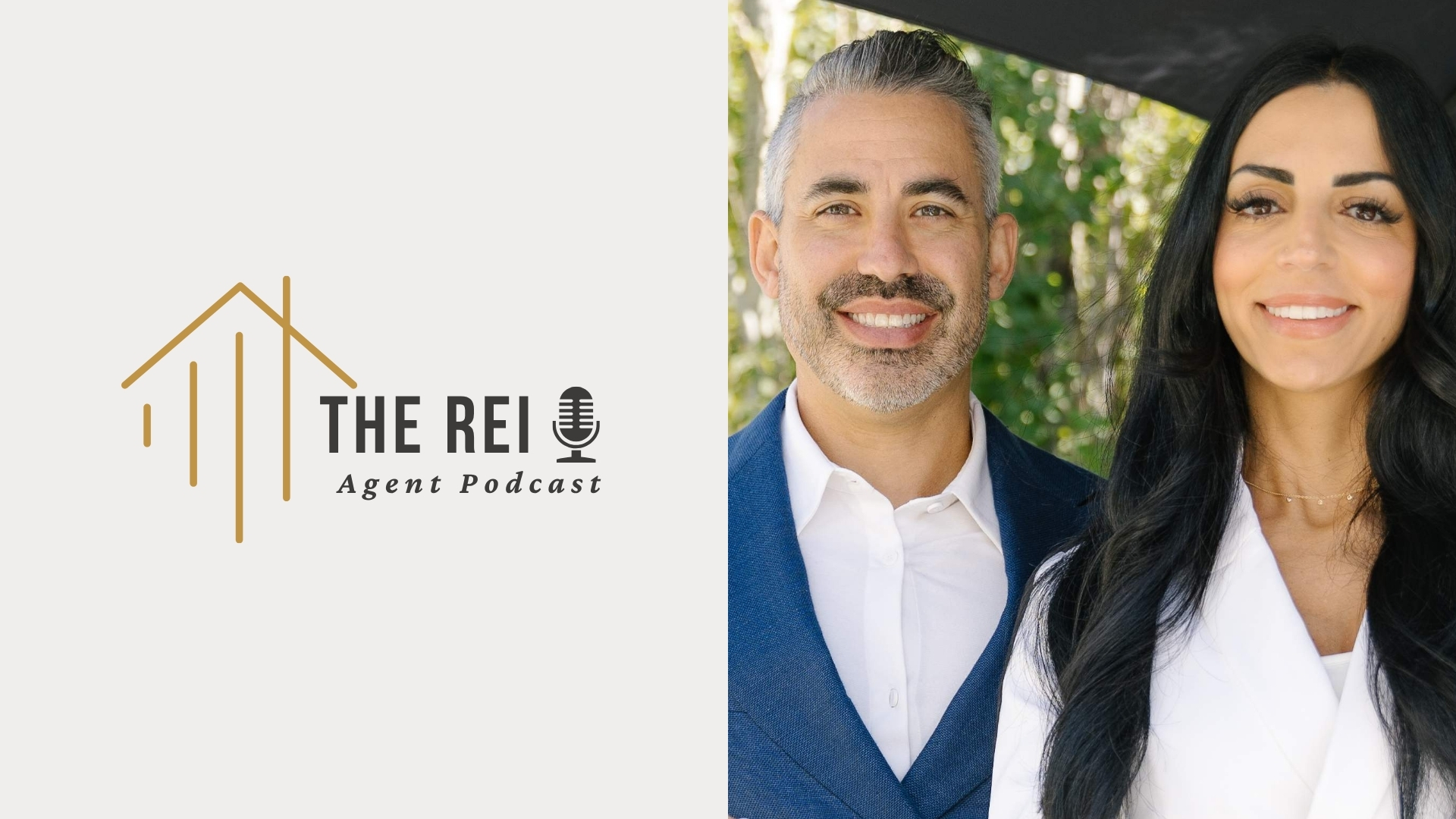
What Happens When Marriage, Family, and Ambition Move in the Same Direction?
Daniel and Tali Kowall have built far more than a successful business together.
The husband-and-wife duo has created a life where family, entrepreneurship, investing, and personal fulfillment support one another instead of constantly competing for attention.
As co-founders of Kowall Boutique Real Estate with eXp Realty in Calgary, Alberta, Daniel and Tali understand that meaningful success rarely comes from one dramatic decision.
It comes from choosing a direction, showing up consistently, adapting when necessary, and continuing to move forward when the results are not immediate.
Their journey includes custom cars, corporate careers, three children, door knocking, daily social media, investment properties, luxury renovations, unpredictable schedules, and one weekly tradition that helps keep their marriage grounded.
Through every chapter, one lesson continues to surface. The strongest businesses and the most fulfilling lives are built through intentional choices repeated over time.
Daniel’s Road From Custom Cars to a Boutique Business
A Family History in Property and a Personal Passion for Cars
Daniel grew up around commercial development. His father and grandfather were commercial developers who built shopping centers and strip malls throughout Calgary. His grandfather even built the first enclosed shopping mall in Western Canada.
Despite that family history, Daniel’s greatest passion was initially automotive work. He loved modifying cars, racing them, and understanding how every component worked. He earned a business degree specializing in the automotive industry and eventually opened his own shop.
The shop completed ambitious projects, including engine swaps and custom work on high-performance vehicles. It was exciting, hands-on work that matched Daniel’s interests. Unfortunately, passion alone could not make the business profitable.
After approximately five years, Daniel made the difficult decision to close the shop. That experience taught him an important distinction.
Working directly inside a passion can sometimes drain the joy from it. Building a profitable business can create the freedom to enjoy that passion without depending on it for survival.
“You can make money in a business and then use the money toward your passion, which keeps it more fun.”
Choosing Independence Instead of the Fastest Start
When Daniel entered residential sales, he considered several brokerages and received opportunities to join established teams.
A team could have given him faster access to systems, support, and business. It also would have required him to surrender a significant portion of his commissions and place his personal network under someone else’s brand.
Daniel chose the slower path.
He entered the business as a solo agent because he wanted to build something that belonged to him. He had spent years developing relationships throughout Calgary, and he believed those relationships could become the foundation of his own long-term brand.
“I wanted to build my own brand, and I was willing to start slow to build that.”
That decision reflected a principle that would later define nearly every part of Daniel and Tali’s growth. They were willing to trade immediate convenience for long-term ownership.
Tali Refused to Simply Become the Assistant
Leaving a Successful Career While Growing a Family
Before joining Daniel, Tali held a demanding director-level position with a sales company. Her team operated across multiple Canadian cities, which meant early mornings, late evenings, and a schedule that offered very little flexibility.
When Daniel began gaining traction, Tali saw an opportunity to create a different kind of life. She decided that if the business proved viable, she would leave her corporate position and join him.
She made that transition while pregnant with their third child.
Tali understood that joining her husband’s business could easily place her in a supporting role. That was not what she wanted. She did not intend to become Daniel’s assistant. She wanted to help build a business in which both partners contributed to growth, leadership, and client relationships.
“I don’t want to be your assistant. I want us both to grow the business.”
Instead of waiting for opportunities to arrive, Tali started creating them. She went door to door throughout their neighborhood, introduced herself, and began establishing her own presence.
She knew Daniel already had a strong network. Her job was to contribute something new rather than simply rely on what he had already built.
The Emotional Weight of Starting Over
Tali’s decision created greater flexibility for the family, but it also came with financial pressure. She had left a lucrative career and wanted to rebuild that level of income while caring for a new baby and helping raise three children.
The beginning was not easy. The income was less predictable, and the work had to fit around feedings, school schedules, appointments, and family responsibilities.
Still, Tali believed that the income would eventually follow the effort. That belief allowed her to endure the uncomfortable period between leaving a proven career and building a new one.
Her experience offers a powerful reminder that a courageous decision does not always feel exciting after it is made. Sometimes it feels uncertain, financially uncomfortable, and exhausting.
Courage is continuing to work while those feelings are present.
Building a Business While Raising Three Children
Flexibility Does Not Eliminate the Need for Coordination
Self-employment gave Daniel and Tali the ability to handle school drop-offs, sick days, extracurricular activities, showings, open houses, and client emergencies. That flexibility was one of the primary reasons they were drawn to the industry.
However, flexibility did not remove the pressure. It simply gave them greater control over how they responded to it.
There are still weekends when one parent is hosting an open house while the other cares for the children. There are evenings when showings collide with activities, meals, and bedtime. There are moments when both partners are needed by clients at the same time.
They do not have a nanny managing those conflicts. They coordinate, adjust, use aftercare when needed, call family members, and make the best decision available in that moment.
Their system is not built around creating a perfect schedule. It is built around remaining adaptable.
Shared Work Created Greater Empathy
Before they worked together, Daniel and Tali occasionally struggled to understand the pressure attached to the other person’s career. Each could feel that the other person’s responsibilities were being treated as more important.
Working in the same business changed that dynamic.
They now understand what it means when a client needs an immediate answer, a contract is being negotiated, or a deal demands attention while the children are asking for dinner. They can give one another space because both understand the stakes.
The business added another layer of coordination, but it also created a shared language. They no longer have to explain why a particular conversation or deadline matters. They are living inside the same mission.
The Weekly Tradition That Protects Their Marriage
A Nonnegotiable Saturday Night
Daniel and Tali have one rule that remains protected even during busy seasons. Every Saturday night is date night.
“One nonnegotiable we have is every Saturday night we always do a date night, no matter what.”
The tradition began during the 2020 shutdowns when restaurants and entertainment venues were closed. After putting the children to bed, they created date nights at home. They painted, played cards, played Scrabble, and found simple ways to reconnect.
When businesses reopened, they kept the tradition alive.
The ritual is valuable because it does not depend on whether the week went well. They do not wait until life becomes less hectic or until they feel more relaxed. The time is already reserved.
That consistency reflects the same philosophy they apply to prospecting, investing, and personal growth. What matters most receives a permanent place on the calendar.
The Discipline Behind Their Business Growth
Choose One Prospecting Method That Can Last
Daniel and Tali believe prospecting is essential, but they do not believe every agent must prospect in the same way. Open houses, cold calling, door knocking, community events, referrals, and social media can all work.
The better question is not which strategy appears most impressive. The better question is which strategy an individual can continue executing for years.
“What can an agent commit to for the next five to 10 years consistently and tangibly?”
Daniel and Tali chose social media as their primary platform. They post consistently, even when a piece of content receives limited views, likes, or immediate leads.
They do not allow temporary feedback to determine whether the strategy deserves another day. They keep publishing because long-term visibility is created through repetition.
Many professionals abandon a strategy after three months, six months, or even ten months because the results feel too small. Daniel and Tali believe that this is often the exact period when continued consistency could begin producing momentum.
The Small and Boring Work Creates the Breakthrough
Their philosophy extends far beyond marketing. Health, relationships, investing, and professional growth are all shaped by simple actions repeated regularly.
Goals provide the destination. Daily habits create the route.
The work that changes a life is not always exciting. It may be another social media post, another follow-up call, another workout, another saved dollar, or another difficult conversation handled with patience.
“Success boils down to doing the small, simple, boring stuff every day.”
People often admire the visible result while overlooking the repetitive work that made it possible. Daniel and Tali’s story shows that consistency is not merely a productivity tactic. It is a form of trust in the future.
Reading the Calgary Market Without Oversimplifying It
One City Can Contain Several Different Markets
Calgary has experienced tremendous growth and remains more affordable than major Canadian cities such as Toronto and Vancouver. Its proximity to the Rocky Mountains, comparatively lower taxes, and strong quality of life have attracted residents from other provinces.
However, Daniel and Tali caution against describing the entire city with one simple market label.
Conditions vary according to location, price point, and property type. Condominiums may face heavier inventory and buyer-friendly conditions, while detached homes in certain neighborhoods may still generate competition and multiple offers.
A broad citywide statistic cannot tell a seller exactly how a particular home will perform. Effective representation requires a more detailed understanding of the property’s segment.
Creative Marketing Becomes Essential When Listings Sit
That segmentation has forced Daniel and Tali to become even more creative with listing promotion.
For one luxury renovation project, they organized an event-style open house featuring exotic cars, catered food, local vendors, jewelry displays, and permanent jewelry services. The objective was not simply to unlock the front door and wait. They created an experience that gave people a compelling reason to visit the property.
The event reflected Daniel’s automotive background, their local relationships, and their willingness to challenge traditional expectations.
When the market changes, strong professionals do not merely complain that an old method is producing weaker results. They create a better reason for the market to pay attention.
Investing Made Them Better Advisors
A Portfolio Built Through Diversification
Daniel and Tali have built a diverse portfolio that includes rental properties, full duplexes, an apartment, a share in a commercial project, and renovation projects.
Their direct involvement has strengthened their ability to advise clients. Renovations have taught them how long projects actually take, which contractors can be trusted, how municipal approvals work, and what can happen when estimates are overly optimistic.
They can help clients see possibilities that may not be obvious in an outdated property. They understand how new paint, a changed layout, or a major renovation can transform both functionality and value.
They also understand the risks. Contractor relationships can fail. Permits can take longer than expected. Construction timelines can expand. Experience has helped them replace vague optimism with more realistic guidance.
The Hardest Part of Investing Was Beginning
Tali explained that their greatest investment obstacle was not finding a property. It was committing their own money to the first purchase.
Using hard-earned cash can feel frightening, especially when that capital will remain tied up for an extended period. Debt can also feel intimidating when it is viewed only as a burden.
For Daniel and Tali, the first purchase changed their perspective. Once they moved through the discomfort, investing no longer felt like an impossible leap.
“You just have to do it. Rip off that Band-Aid.”
They also learned that debt is not automatically harmful. When used responsibly to acquire an income-producing asset, leverage can help an investor grow beyond what personal savings alone would allow.
“When it comes to investing, sometimes that debt is needed to really take off.”
Why They Have Chosen to Stay Lean
Protecting the Client Experience
Daniel and Tali have considered building a larger team, but they are cautious about adding people simply for the sake of appearing bigger.
As a two-person operation, they know exactly what level of expertise and attention every client will receive. Both are licensed, both understand the business, and both are personally invested in its reputation.
They can also use their brokerage network when extra help is needed. Other agents may host open houses, assist clients during travel, or complete specific tasks for a fee. Technology and artificial intelligence have also helped reduce administrative work.
This structure allows the couple to remain lean without becoming completely isolated.
Scale Must Serve the Life They Want
Daniel learned through his automotive shop that employees will rarely care about a business exactly as much as its owner. That is natural, but it can create frustration when a founder expects every team member to operate with an owner’s urgency.
The couple recognizes that they may eventually need to grow. They also understand that expansion creates new responsibilities, including recruiting, training, mentoring, supervising, and protecting service standards.
They are not rejecting growth. They are refusing to pursue it without a clear reason.
The size of a business should support the owner’s desired life. It should not become a trophy that quietly creates a life the owner never intended to live.
Think Beyond Today’s Fear
The Future Rewards Decisions Made With Perspective
Daniel and Tali have both experienced the frustration of seeing a missed opportunity appreciate after they chose not to act. They have also experienced the gratitude that comes from owning a property purchased before the market moved higher.
Those experiences reinforced a forward-looking mindset.
“You can’t worry so much about where you are. You have to think about where you’re going to be.”
No purchase is guaranteed to work perfectly, and no market moves in a straight line. Still, waiting forever for certainty can become more expensive than taking a carefully evaluated risk.
Leverage, appreciation, loan repayment, and rental income can all compound over time. That compounding often appears slow in the beginning, just as business growth can appear invisible during the earliest months of consistent prospecting.
The reward tends to become obvious only after years of repetition.
The Books and Ideas That Reinforce Their Philosophy
The Slight Edge and the Power of Compounding
Daniel recommended The Slight Edge by Jeff Olson because its message closely reflects the couple’s approach to growth. Small actions can appear insignificant when measured over a single day, but they can become transformational when repeated for years.
The book’s lesson about a penny doubling in value illustrates how compounding often feels unimpressive before it becomes extraordinary.
Tali also recommended The Monk Who Sold His Ferrari, a classic story about purpose, balance, and personal transformation. She additionally highlighted the value she receives from listening to podcasts and continuing to expose herself to new perspectives.
Their recommendations reveal something important about their success. They continue learning even after reaching a strong level of production. Growth has not convinced them that they have arrived. It has shown them how much more remains possible.
A Business, a Marriage, and a Life Built One Decision at a Time
The Real Victory Is Alignment
Daniel and Tali Kowall’s story is not powerful because everything became easy after they entered the industry. Their story is powerful because they learned how to align the difficult parts.
They aligned their careers so they could better understand one another. They aligned their schedules around the needs of their children. They aligned their prospecting around a strategy they could sustain. They aligned their investments with the future they wanted to create. They even aligned their calendar around a weekly date night that protects the relationship beneath the business.
Their success did not come from chasing every opportunity. It came from choosing the right priorities and returning to them again and again.
For professionals building a business, couples building a life, and investors struggling to make the first move, their message is deeply encouraging. Progress does not require a perfect beginning. It requires a meaningful direction and the willingness to continue.
The life Daniel and Tali are building is the result of countless ordinary decisions. Each post, showing, conversation, purchase, renovation, family adjustment, and Saturday night has become another brick in something much larger.
That is how sustainable success is created. It is not built in one remarkable moment. It is built through the quiet courage to keep showing up.
Transcript
[Mattias]
Welcome back to the AI agent. My guests today are Daniel and Tali Kowall, co-founders of Kowall Boutique Real Estate with EXP Realty in Calgary, Alberta. Before real estate, Daniel owned and operated a auto shop and built custom cars.
That’s pretty cool. And it was the background in systems operations and hands-on craftsmanship that brought him into building a boutique real estate practice with his wife, Tali. Together they serve Calgary and the surrounding communities of, oh, you’re gonna have to help me with this one, Okotos.
[Daniel Kowall]
Okotos.
[Mattias]
Okotos, oh, blew it. Yeah. Cochrane and Airdrie?
Airdrie, yeah.
[Daniel Kowall]
They’re just kind of suburbs of Calgary.
[Tali Kowall]
Yeah.
[Daniel Kowall]
But most primarily in Calgary, but sometimes in those areas.
[Mattias]
My ignorance is showing, guys, I apologize. Combining a high-tech client experience with the discipline of a well-run business, Daniel and Tali, welcome to the REI agent podcast.
[Daniel Kowall]
Yeah. Thank you. Excited to be here.
[Mattias]
Yeah, no, so what in the world got you into real estate, coming from the custom cars? And tell us a little bit about that. That sounds really cool.
[Daniel Kowall]
Yeah, so my story, it’s a bit lengthy, I guess, but essentially, like I have corporate, or sorry, commercial real estate in my family. So my grandfather and my father were both commercial developers. So they did a lot of strip malls, shopping centers in the city.
My grandfather actually built the first enclosed mall in Western Canada. So a lot of history there in real estate, but my passion was always in cars. I loved cars, I loved tinkering on cars, driving cars, the whole thing.
So I actually went to a college in Ontario that specialized in a business degree in automotive. So I thought I was gonna pursue the automotive world, which I did for a long time. So I got out of school.
I did actually work with my father for about three years, and I just, I couldn’t do the desk job as more of a property management role. Just sitting at a desk, doing filing, that sort of thing, I just couldn’t handle. I need to be out and about.
More salesy stuff, more entrepreneur stuff. So I kind of ended up more pursuing automotive, did a couple advertising jobs with Kijiji Autos. I was the first sales rep for it, which Kijiji, I don’t know if you have that in the States, but it’s essentially a subsidiary of eBay, where it’s a local marketplace.
So they kind of rivaled AutoTrader at the time to get dealership advertising on their paper. So I was the first sales rep for there. And then my passion was always in more motor sports, modifying cars, racing.
So I eventually opened up a shop. We did some really cool stuff. We had some Porsches where we did some engine swaps and really cool things.
It’s a lot of fun, but at the end of the day, the business just wasn’t making money. So at the end of the five years, I closed it down. It’s kind of in between deciding what to do, and then Tali was kind of like the one you kind of get back into real estate.
It was tough at the time to get back into commercial because that sort of business, you kind of have to work your way up from kind of a young, prepared age. You kind of have to go to school for it to get to that point. And I didn’t want to start at the bottom again.
So that’s when kind of residential came in. It kind of gave the opportunity to be an entrepreneur, make some good money, put all my sales and marketing skills that I’ve acquired through being an entrepreneur and a business owner, and then apply it to another business where a lot of the same concepts applied and kind of grew it from there. So yeah, very happy where I’m at now.
[Mattias]
Putting all your commissions into cars.
[Daniel Kowall]
Yeah, exactly. So it came from a world where you’re actually working for your passion, which kind of killed that passion to a world where you can make money in a business and then use the money to your passion, which keeps it more fun.
[Mattias]
Sure, sure. That’s really interesting. Yeah, wow.
So it sounds like maybe the commercial world is a little bit different in Canada than here. And it’s, I mean, I think from the development standpoint, it’s certainly different than the sales side. If you get into commercial sales, this is different than actual development, et cetera.
So when you got started in real estate sales, you decided to go residential. Did you consider joining a team? What did you get started with as far as how do you choose your brokerage, that kind of stuff?
[Daniel Kowall]
Initially, when I first started, I mean, I interviewed a few local brokerages. And then I had kind of an acquaintance I knew that was also kind of a car guy, but a successful real estate agent. And he had some Lamborghinis and stuff.
So I kind of thought he was a cool guy. So I’m like, where is he at? So he kind of brought me into Remax.
There’s a nice local Remax brokerage at the time that was kind of inner city and kind of had a bit of a different vibe than some of the other Remax ones. So I started as a solo agent in Remax. I kind of got recruited to some teams initially, but at the end of the day, I decided that to really grow my career, I had to be solo.
I didn’t want to give, because I already built up a huge network from being born and REIsed in the city and through the various things I’ve done. I didn’t want to give my network to a team and have them capitalize off my network. And I wanted to build my own brand and I was willing to start slow to build that rather than kind of giving that to a team, taking half my commission and doing it that way.
So for me, I started as a solo agent there and then switched to eXp about three years later.
[Mattias]
Okay. And Tali, when did you start or join in with the real estate fund?
[Tali Kowall]
Yeah, so it’s pretty interesting. So we have three kids. And prior to real estate, I actually had a very time consuming career.
I was in a director role for a sales company and the hours, because the team wasn’t all in Calgary. We had team in Toronto, we had team in Vancouver. It was early mornings, late nights.
And I didn’t love that, especially when Dan had his automotive shop, he had more flexibility and I was always really stuck to that even more than a nine to five. I wanna call it an eight to six. So when I had said to him, maybe you should consider real estate and then he did.
I said, you know what, if it works, I’ll just leave my career and I’ll join you. So I did that when I was pregnant with our third child and he had already, like he said, he has a large network and a lot of his network was also my network because I wasn’t a realtor. So when I started, I had said to him, I don’t wanna be your assistant.
I want us both to grow the business. So yeah, I was pregnant and I started door-knocking our whole entire neighborhood just to introduce myself because I said, I gotta start somewhere, do something that he’s not doing to grow the business. So yeah, that’s how I joined him.
We’re very happy, yeah.
[Mattias]
That’s a lot of transition. I mean, I know we also have three kids and I tell everybody that for us, at least, it was the first kid is probably the biggest transition. That’s a whole different life.
You now are responsible for some other little, in the beginning, kind of a little slug that just, yeah, you gotta take care of that thing. And then the second one was more, but it wasn’t quite like adding number three into the mix where you’re playing zone defense instead of man-on-man. And so that’s a lot to start a new career as well as have three.
Was that challenging?
[Daniel Kowall]
I mean, yeah, for sure, there’s challenges too. I think that some of the challenges, which is why we both gravitated towards real estate was simple things like school drop-offs or if the kid’s sick, like if you’re in a corporate job or something, it’s difficult to leave and deal with that kind of stuff. Whereas if we’re both in the real estate world, planning our own days and schedules, it’s easy to work off each other that way.
And do those pickups and take care of the kids and do all the things you have to do.
[Tali Kowall]
For me, the biggest struggle was thinking I’m leaving a relatively lucrative career behind and now I wanna make that same income. But I was also realistic, I think, in that it will come if I put in the work. So yeah, I would say probably at the beginning, it was tough.
Then I had the baby home with me in my first year and I was still trying to grow the business. So yeah, I will say that financial component, at least in my head, maybe not for dad because he was already busy doing it. I was like, well, we got three kids and it’s not cheap.
So that was definitely, I think, the struggle. Whereas from a scheduling standpoint, that was easy. Now I could pick them up, drop them off if they’re sick.
There was more flexibility, but yeah.
[Daniel Kowall]
Yeah, it definitely took time to figure it all out, how we can work with our kids and have a work-life balance and do it all together. So it took time, but we’re in a good place now.
[Mattias]
I would love to dig into that a little bit more if you all don’t mind. I think that a lot of times, Erica and I have struggles with all the coordination that’s required just for parenting. Now that you all add in a business on top of it, is it easier because you’re kind of doing the same thing in work or is it add another layer?
I feel like it could add another stressor, if you will. Just having to just constantly coordinate with the same people. I hope you don’t mind.
I hope that’s not too personal of a question.
[Daniel Kowall]
No, no, not at all. Yeah, I think it’s a bit of both. It’s the same, for example, on the weekends where we have open houses to do.
One of us will be out doing the open house and the other one’s with all the kids on the weekend.
[Tali Kowall]
Or the other one has a showing while an open house and we have to coordinate the babysitter. Sometimes the showings and then in the evenings with the extracurricular activities and the showing, but then we also have kids and we don’t have a nanny. So it’s all, yeah, it is somewhat of a coordinating nightmare, but I feel like I’ve probably managed more of the coordinating and we just make it work.
This past year, the kids love aftercare. So they’re just at school for longer and they’re happy and that helped. So we had, we stretched the hours of the day, daycare.
So yeah, that helps us grow our business. But we have had conversations about maybe we wanna spend more time with the kids, is that going to contribute to more of a scheduling nightmare? And we just take it as we’ll try and see.
And if it doesn’t work, then we’ll find, put them, take them out of aftercare, put them back into aftercare or something like that.
[Daniel Kowall]
Yeah, I think working together definitely does help because we can, since we are together with the family, we can, at the end of the day, we can go over our work and we’re in the same place at the same time type thing. So we can, we don’t have to like, it’s like we’re sitting at an office and we have to talk about work then. We can pick and choose hours of the day more easily, but strategizing in terms of our careers as well.
[Tali Kowall]
Yeah, and we can relate to each other. So in my previous career, we couldn’t relate in that. And there was more disagreements because it was almost implying my job was more important or implying his business was more important.
And there was that struggle of balance there. Now it’s the same. Like we understand we’re equally as important.
It’s the same thing. So I think there’s less conflict in that regard.
[Daniel Kowall]
Someone’s doing a deal at five o’clock while the kids are yelling, wanting food on the table, then, you know, we get it. We can empathize and give them their space to do what they need to do, so.
[Mattias]
Yeah, toTali. I get that. That makes a lot of sense.
I know that when I started and we had more time to communicate, I mean, that’s just the struggle of communicating with each other is like, it’s real. We, you know, I think Erica knew everything, like knew all the deals, all the people I was working with, like every little step of the way that she was like kind of caught up with. But now it’s like, I don’t know how far back to like try to catch you up and like may help you understand like what I’m going through right now.
But like the kids screaming and I just, I was like, I need to step away or something. Like it’s a lot and I can see how being kind of more tied in with that would make sense. ToTali.
We haven’t done well with this recently, but one thing that really helped us, and I don’t know if this is more of a like, if you are in kind of different worlds, is we tried to have like a meeting every Sunday where we just kind of went over the week schedule and like, it’s like half the time I have no idea what’s happening. Like I said, it’s hard to keep up with all that stuff.
[Daniel Kowall]
All the activities and stuff going on.
[Mattias]
Even if I get a calendar invite, I’m gonna stuck it on my radar. So yeah, no, that’s been one thing that’s been helpful when we do it. And, you know, planning ahead, like if we trying to get date nights in, trying to, you know, have the vacations on the radar too, that kind of stuff can be helpful.
So something that I need to get back into the habit of for sure.
[Daniel Kowall]
So that’s one thing we do, you touched on date night. So we, one non-negotiable we have is every Saturday night we always do a date night, no matter what. So that’s one thing that, you know, keeps us grounded.
And we’re lucky we have some family in town that can always babysit. So we’re able to do that, step away for a night and, you know, take that time away from the kids, which is important as well.
[Tali Kowall]
Yeah, so we’ve been doing that since 2020 in the COVID times because all the restaurants closed down and we were like going nuts. So then we would put the kids to bed and have a date night at home. We’d have like a paint night, play cards, scrabble, whatever.
And then once everything opened back up, we’re like, this is great. Like, let’s keep doing it. So yeah.
[Mattias]
That makes sense. That’s awesome. Yeah, and I think a, man, a weekly would be really nice because I feel like that, the routine of it makes it like, I don’t know, it sticks in my bREIn better at least.
So that.
[Tali Kowall]
Yeah. Yeah, 100%.
[Mattias]
Need to get into that. Now you all have reached a really awesome level of production. A lot of agents would love to be there.
What is, what do you think is like the single most like operational discipline that you would point to as like one of the biggest reasons for your growth and success? And where do you see agents trying to do that that they don’t quite get right?
[Daniel Kowall]
Yeah, so, I mean, obviously prospecting is huge in real estate as an agent. I mean, you have to prospect to generate business and there’s so many different ways you can prospect. So I think it’s important to pick one way of prospecting that works for you and just be toTali consistent with it on a regular daily basis, nonstop forever.
So one thing that we’ve really chose to do that on is social media, like doing posts pretty much daily. And we get a lot of, you know, a lot of leads from our social media. So we decided early on that social media is gonna be our one main, I mean, we do a lot of things, but social media is our one main thing and we’re gonna do that regularly, consistently on a daily basis, no matter what, no matter if leads are coming in, if they’re not coming in, if we’re getting likes, views, whatever, if we’re not getting likes, views, no matter what, we’re focusing on this and that’s what we’re doing and we haven’t stopped.
And I think that’s very important because it’s easy for agents or new agents to just keep throwing stuff under the bag and be like, you know what, I tried this, I’m not seeing results, I’m gonna move on. Whereas if you actually see it through to the end and keep doing it regularly, that’s when you actually start to build momentum and results.
[Tali Kowall]
Yeah, I think that’s the biggest part. And that’s something we talk with new agents about all the time is consistency. And we’ve spoken with tons of different agents and even when we go to like eXpCon and we see the top producing, top selling agents around the world, they all have different prospecting models.
I don’t necessarily think one is better than the other. I think it’s a matter of what can you as an agent commit to for the next five to 10 years consistently and tangibly and that’s it. So for those people that do open houses, great.
If they’re gonna do two open houses, three open houses every week for the next five years, their business will grow, right? They’ll get better at it. If social media, hosting events, attending events, cold calling, door knocking, like the list goes on.
For us, it was a matter of, for me for sure, figuring out what I can actually commit to and then committing to it. So my first year was kind of like, tried the door knocking, did the events, tried some calls, like cold calling and spear calling and just calling social media. And then I realized, okay, what am I actually gonna commit to?
Where I like to say like for the rest of my life so that I can grow my business. I think that’s the biggest thing that contributed to our growth and also the biggest reason why struggling agents, I would say are struggling is because they try it, they don’t see results in three months, four months, maybe even 10 months, they don’t see enough of the results so they give up.
[Mattias]
Yeah, that’s really good. Consistency is really, really, really key. And there is just a grind phase.
I mean, I think people are maybe almost at a disadvantage if they started at the height of the market when interest rates were really low. If they started at 2020, 2021, it would have been a lot easier to get some success, get some fast traction. I started in 2014 and it was a grind.
I mean, it was just slow, slow market. Listings were on forever compared to now, right? But I just, I had to grind through and have that like long-term mindset and just not expect instant results.
But that consistency thing is so key. One of the things I tell my team and other new agents is that if you’re thinking about how you’re going to be consistent, do picture what it looks like if you do get good at it, which you will if you stay consistent, right? And is that what you wanna be doing, right?
Is that how you want your leads to be coming in? If you’re buying leads, do you wanna be focused on that and just be answering 100 phone calls to get one, that deal that’s gonna work or whatever your strategy is? And I think that’s important to really also factor in when you’re deciding how you’re gonna be successful long-term.
[Daniel Kowall]
100%, I love that mindset too of like, I use that in a lot of things, like basically work backwards, like where do you wanna, even with like buyers we have, I’ll use that same approach, like is this the house, like think about 10 years from now, is this the house you see yourself living in, growing a family, whatever it is? But that similar concept that you described even with marketing and consistency and prospecting, and you’re right, like what is it 10 years from now that you can still see yourself doing? You know, and it can be different for everyone, so it’s a great perspective for sure.
[Mattias]
Because like, I mean, the social media thing, for example, that’s a job, like that takes, maybe you’re in a rhythm with it that it’s not that as difficult, but it is. I mean, you have to count it.
[Daniel Kowall]
It takes a lot of time, for sure.
[Mattias]
Yeah, so there’s, you know, I get the privilege of talking to people all across the country, all across countries, and everybody kind of has a bit of a different take on the market. When I talk to certain markets, I’ve gotten some pretty doom and gloom kind of perspectives. I’m curious what you all are seeing about your market in particular, and if you have seen any opportunities within, you know, this for here is shifting, so if it’s shifting for you, you know, what does it look like and where are the opportunities?
[Daniel Kowall]
Yeah, for sure it’s shifted. Calgary’s a very interesting, unique market in Canada. It’s been one of the fastest growing cities the last, you know, four or five years.
It’s been an anomaly in the real estate market also the last four or five years. It’s been one that’s continued to excel where other markets have been declining. So it’s a very interesting place to be.
One of those reasons why it’s different is because it’s, I mean, it’s traditionally a very oil-based economy. So we are traditionally up and down with the oil when, you know, there’s oil crisis, crisis and whatnot, it really affected the market. So around 2014, that happened in Calgary and there’s a whole bunch of corporate oil offices downtown.
They kind of all left and then, you know, that affected everything in the economy, prices dropped. So basically, Calgary’s almost been rebuilding ever since, whereas other big cities like Toronto, Vancouver, they’re just being consistently growing no matter what because they’re not so dependent on oil. So as a result right now, Calgary is like the fourth biggest city in Canada and it’s the most affordable by far.
Like we’re, the average price of a home here is like half, literally half the price of Toronto and Vancouver. And we also have like, you know, the Rocky Mountains are an hour away. Like there’s, you know, we have less tax in a lot of those provinces.
We only have GST, they also have PST. So they have like 6% more tax. So yeah, it’s just a more affordable, it’s, you know, we have some of the most sunshine out of any city. So it’s really drawing a lot of people in migration over the last few years to this city, which is really fueling the real estate market.
So it’s really cool to be a part of. You have anything to add?
[Tali Kowall]
Yeah, the only other thing I’ll add is our market Calgary, it’s extremely segmented. So some folks will ask us, how is the market in Calgary? And we’re like, well, it’s not a simple answer.
Like I can report on it, right? Like sales are down because we have grown so much and just on the inter-provincial migration and the students that were coming in over the last several years, the government put a stop to that. So we’re seeing less immigration into Calgary, but nonetheless, like sales are down about 16% and inventory is up about 11% higher than what we would typically see this time of year.
So that brings us into a balanced market. We’re a little over three months of supply. So overall I could tell anyone Calgary, we’re in balanced market conditions, but it’s not that simple, right?
Because if we look in the condo market, there’s tons of pre-construction. Some of them are just being built for rentals, which will rival those folks who might think about buying, now they’re gonna rent, right? And then there’s more pre-construction that’s for sale.
So the inventory in the condo market is extremely high and months of supply are five months. So condo market is technically buyers conditions as well as for townhouses. Detached homes and semi-detached and depending on where in the city it is, like we’re seeing sellers conditions, multiple offers while others in let’s say newer communities continue to sit.
So the market is very, very interesting to see the least and very much segmented depending on where in the city it is and what’s the price point, what’s the property type.
[Mattias]
Does that segmentation like make you target different parts of the market then? Have you shifted your strategy for prospecting, et cetera, to account for some of that, like a variance across the market?
[Daniel Kowall]
I think for us, we really have a lot of listings now. We’re working with way more listings now than probably ever. So I think in terms of the segmentation, it really affects how we market our listings depending on where the property is.
Cause depending on the price point, the neighborhood, the area, we may, some still may sell in a week or two, whereas others are sitting longer. So we really have to be creative. Like for example, we have this one listing, it’s actually, so in terms of investing, which I know this podcast is about, it’s a flip that we’re solid partners in.
So it’s a luxury flip, toTali down to the studs, reno, beautiful property. It’s like 3,200 square feet, five bedrooms, gym, main floor office, triple garage, the whole thing. So this one, it has been sitting on the market a little bit longer than we wanted it to.
So we’ve done some really cool things. Like for example, last week we did an event open house where we brought in exotic cars, we brought in local vendors, where we had like, you know, jewelry displays. We had a tattoo girl there giving people tattoos.
[Mattias]
What?
[Daniel Kowall]
Permanent jewelry, like catered food, like a whole big event just to get people through the house. So really cool event. But yeah, things like that, a lot of creative stuff to really, you know, push marketing on some of those areas and segments that maybe aren’t doing as well as others, that’s kind of how we’ve had to shift.
[Tali Kowall]
Yeah, and in the past we have actually pivoted our social media strategy based on the audience we wanna talk to. So if we want more buyers, we pivot our content to speak towards the buyers. But we are now more focused on sellers because ultimately sellers, they go hand in hand, right?
If someone’s gonna be buying, they may as well be buying your listing than buying someone else’s listing. So we don’t do that as much, but we definitely have.
[Mattias]
Yeah, and that sounds like a really interesting open house. I don’t think I’ve ever heard of that kind of event. Have you all done much?
You said your partner’s in the flip of this. Have you all done much of flips or any kind of rental investing?
[Daniel Kowall]
So we’ve kind of done it all. We have a pretty diverse portfolio, I’d say. We have rental properties.
We have a few full duplexes with four doors each. We have a single apartment. We have a share of a commercial deal in Airdrie, one of those cities that maybe you can pronounce better now.
Yeah, and then a few flips. So we just kind of started getting into flips this year, I guess, so we have that one we did and we have another one that’s under construction. It’ll be done in about two months and it’s about actually a few blocks away from where we live, which is awesome.
So yeah, we definitely try to get into whatever we can to diversify cashflow and opportunities and that sort of thing.
[Mattias]
Sure. Have you noticed any benefits from doing renovations, for example, for your clients that you work with? Being able to suggest contractors or anything like that?
[Daniel Kowall]
For sure, having a really good… Contractors are tough, right? We’ve had it bite us in the ass, excuse my language, a few times with referrals where you think someone’s really good and then they all of a sudden turn out to be not so good.
So you really do have to have strong relationships with people you trust to be able to refer them to clients. So yeah, now we built that up as a result of this for sure. And yeah, it also helps just even understanding the construction of houses, like when you’re actually involved in a reno, seeing it built or even new construction, whatever, but when you’re involved to the point where you’re seeing it being built on a regular basis, you can better understand the product and better relay that information to your clients.
So lots of benefits for sure.
[Tali Kowall]
And even understanding timelines. We’ll have clients talking to us about wanting to do a renovation and how long they think it’s gonna take or they spoke to their neighbor and their neighbor knows someone who told them that the job they wanna do is gonna be complete in three months. And we have the experience today, right?
We can give them a more realistic idea so that they’re not disappointed. So there’s definitely a lot that we learn from being involved. Yeah.
[Mattias]
Okay. Yeah, that makes sense. And I was just thinking about like relating it back to your car experience.
Like I’ve kind of often related it to if you went to a used car salesman, like if you wanted to become really loyal to a used car salesman, one that was a mechanic, right? That really understood how the car functions and would have maybe some historical knowledge of like the different car brands, manufacturers, the models, the years that they’ve been in. And maybe like, oh, that year has terrible transmission.
I would stay away. But that kind of thing, that parallel like kind of is with if you are getting involved with the renovations or the construction of homes, you can really start seeing some of those things or in this circumstance of the possibilities, like you can see what it looks like to have a wall removed. You can see what it looks like to just have a fresh paint, a coat of paint.
Like that’s like makes a huge difference. And before you really live through like something that’s so drab and disgusting to like the after, right? It’s hard to fully grasp.
And we know that most of our clients have no idea about that stuff.
[Daniel Kowall]
Yeah, 100%. I mean, not only that, but even like dealing with approvals with the city, like how long things take when you have to get your permits and approvals or zoning changes or whatever it may be. Like, what does that process actually look like with the city and how long does that take?
What are the chances it will get approved or you’ll have problems with it or whatnot? So yeah, no, for sure.
[Mattias]
Now you all, it’s just the two of you, right? Have you hired anybody? Have you thought about bringing anybody else on the team?
[Daniel Kowall]
We’ve definitely thought about it a lot. We continue to think about it. We brought people like on our downline, like with obviously EXP, these brokerages, that’s a part of it too.
But yeah, in terms of a team, yeah, we constantly talk about it. We’re, I think it’d be nice to, it’s definitely a goal in our future to build that up.
[Tali Kowall]
Yeah, we have like spoken with tons of new agents and thought about the idea, but at this point I will say we know what we want and the majority of the new agents and folks that are looking to join won’t necessarily be bringing what we want. So I think it’s about positioning ourselves in a way or working towards positioning ourselves in a way better so that we can actually hire what we’re looking to hire. Yeah, there are a lot of agents in our market and there’s definitely a lot of options, but the last thing we wanna do is bring someone onto our team and then they leave or for any, right, for whatever reason shortly after.
[Mattias]
Yeah, toTali. And then there’s also the, that’s an extra responsibility, it’s an extra thing to do. And like, would you say that there’s any, like, is there, there’s positives to just being lean and the both, the two of you, right?
I mean, can you speak to that?
[Daniel Kowall]
Yeah, for sure. I mean, we have obviously full control over our business. We can, and we can get paid for every single deal without giving our business away.
Also like a brokerage like eXp and other brokerages are great because you can be collaborative with even other agents, you don’t even need a team. Like for example, like when we have an open house and we can’t do one, we like post in the broker’s group chat, can anyone do an open house? And we can usually find just another agent to do it.
Or even if we’re like out of town and we need someone to help with one of our buyers or whatever, we can like pay them a fee. We can usually just find someone in the network that can pick up some of that for us. So there’s, and then also like for admin stuff, like even with all the AI nowadays, you can get AI to do a lot of your admin work as well.
So there’s, yeah, there’s ways to still grow and diversify your business without necessarily needing a team.
[Tali Kowall]
Yeah, and I mean, the nice thing about just keeping it the two of us is we know what level of service and expertise every client is gonna get. So that’s something that I’ve struggled with when we have interviewed or thought about hiring is like, I probably wouldn’t even hand them over any of my clients, which I don’t wanna say, right? It’s just, I would just take care of it.
And then that gets to another point where, okay, well, what are we looking to do? Are we gonna be prospecting for them? Are we gonna be mentoring them?
What would they, right? So it kind of opens up a whole new conversation. So for now it works.
I mean, having us both licensed agents, we can do double and yeah, AI has definitely helped make tasks easier. So for now it’s working. True.
[Daniel Kowall]
I mean, I found out too, like when I was a business owner with my shop, like when you’re a business owner, you’re invested in your business like no one else is and you want to see the most success for your business. And when you hire people on or people work for you, they never have that same care and attention as you do, which is natural. I mean, it’s obvious they won’t because it’s not their business, but that can be frustrating at times because you want them to care and to do things at the utmost.
And a lot of times they just simply won’t because they just don’t have that same care as you do. So, but yeah, at the end of the day, it’s, you can only scale so much as the two of us. So we definitely will need to grow.
[Mattias]
Yeah. Well, yeah, I mean, you know, like it’s kind of what is the goal too? You know, I think that like it’s, if you want, if you’re looking at the end in mind, right, if you, do you want to be when this massive team is successful, be doing the things that would require a massive team to be successful day to day?
You know, it’s the same kind of question. And really like, as we talk about in the show all the time, you know, if you’re investing in other things, if you’re bringing up that passive income, like, you know, there’s other streams of income too, that it doesn’t have to always all just be massive sales amounts, right? Now we don’t, I also subscribe to the, you’re either growing or dying in business.
So I think there’s definitely truth to that as well, but it’s just good to step back and be intentional about your decisions. And it sounds like you all are definitely doing it without jumping right into, you know, hiring people or whatever, which is awesome. Yeah, 100%.
We’ve had a lot of golden nuggets already, but I do want to ask what golden nuggets you have prepared for our audience.
[Daniel Kowall]
You got some prepared?
[Tali Kowall]
Do I?
[Daniel Kowall]
Yeah.
I mean, one of them was definitely the consistency aspect, which we already talked about. I just think that’s so important in not only business, but everything you do. I know that, like, again, back to like holistic approach, what you guys talked about, like, whether you want to, you know, be healthier, work out, eat better, achieve more in your work, have more success, all of that just boils down to doing the small, simple, boring stuff every day on a day-to-day basis.
And that’s just, I think, just super important for everyone to understand and to execute.
[Tali Kowall]
Yeah, so even more on that one is goal setting. Like, take some time to just set some goals. And then once you have those goals set, that’s how you work backwards into what Daniel is saying, those boring, repetitive tasks that you’re doing every single day to reach those goals.
So you have that goal in mind and you’re consistent with it. The other golden nugget had to do with investing. I know that that’s a big part of your podcast.
And I think for us, the struggle with investing was starting, right? Like anything, trying something new, changing your kids to a new school, moving into a new house, thinking about a new community. Change is hard for anyone, changing your diet, whatever it might be.
So for us, investing, it was like, we always knew we wanted to invest, but it was a matter of, oh, it’s a lot of money. We either use our hard-earned cash, which is what we have to do for our first four-plex purchase, or we use debt. And in that case, it was our cash.
So it was, I don’t know, let’s call it a hard pill to swallow, where we know that cash is gonna be locked up relatively long-term. So I think a golden nugget on the investment side is it’s never easy. You just gotta do it.
Rip off that Band-Aid. Once you do it the first time, you’ll realize it really wasn’t that hard after all. And that’s what we realized.
And another part on investing is debt is not bad, right? Like that debt that you’re taking to purchase that investment, also the payments you’re making monthly toward that debt are an expense, right, that you have that works against, or for you towards that investment as well. And I think that’s something a lot of people are scared of, is taking on too much debt or having debt.
But when it comes to investing, sometimes you need that debt to really take off.
[Mattias]
Yeah, absolutely. I think one of the ways of talking about leverage that clicked for me too, was if you look at buying $100,000 portfolio stocks, you put in $100,000, if that goes up 20%, that would be $20,000, right? If you, and that would be at 20%.
So then if you buy $100,000 of real estate, you’d be probably putting down like $20,000, right? And if it goes up $20,000 in value, that’s kind of 100% instead of just 20. So it can be definitely, it’s an advantage of real estate investing for sure.
It also, I feel like it locks in today’s value of the dollar or value. Yeah, I mean, it’s just, it locks it in and we have seen inflation. It’s something that I know the US is very tuned in with.
I don’t know how bad it is for you all, but that is definitely something that happens. And we look back at what houses were 30, 40 years ago, and we forget that they were stressed out about how expensive that was at the time. And they were squabbling over, probably $200 in a home inspection.
And it’s laughable now, right? Their payment’s laughable now. Well, if you don’t lock it in now, if you never lock in that payment, it’s just gonna keep going up and you’re gonna miss out on it.
So locking that in definitely helps. And you’re absolutely right. It can be hard to start, but it’s definitely the best time to plant a tree and buy a house was what, 20 years ago?
Next best time is now.
[Daniel Kowall]
Yeah, I mean, I think about that a lot on both sides. It’s either the one side where like, oh, damn, there’s that property from three years ago that was a great property and I should have bought. And look where I would have been now if I bought that.
Or vice versa, we did buy a property three years ago and I’m so happy I did because look where the market’s at now. So for sure, you can’t worry so much about where you are. You have to think about where you’re gonna be.
[Mattias]
Yeah, and historically it’s been a great place to park money to own. And if you do the flips and if you do the burrs, you can potentially even kind of get that property for free, which is a fun little trick. What about a favorite book?
One that you think is fundamental that everybody should be reading or just one that you currently really enjoy?
[Daniel Kowall]
So for me, The Slight Edge by John Olson. Again, a book about consistency is really what it’s about, doing the smallest simple things on a regular basis. And he has one of my favorite metaphors in that book where he talks about a father giving money to, an offer to two of his sons.
He said, I can either give you a million dollars now or I can give you one penny that will basically have compounded interest on a daily basis. So of course, most people would take the million bucks now. They want, it’s an easy million bucks, take it and move on.
But the other son takes the penny. And if you actually like compound it up, the penny doubles every day. I think it was by day 25, he was at like $160,000.
He’s probably like thinking like, oh shit, like I should have taken a million. But then five days later, by day 30, he’s at like $10 million just by compounding interest on that penny. So just a great little thought experiment on how one little small thing done regularly on a consistent basis can really just compound your life drastically over time.
So it’s a great book.
[Mattias]
Love it.
[Tali Kowall]
I wanna say, I listen to tons of podcasts right now. So if you haven’t listened to Emma Greedy, I definitely recommend her podcast. There is a classic book that I read.
I haven’t read it, I feel like, for years. But it’s one of the classic ones that stands out, The Monk Who Sold His Ferrari. So yeah, just a couple.
[Mattias]
Awesome, thank you so much for those. If people are interested in following you on social media since you’re active there, where can they follow you?
[Daniel Kowall]
So we have, we got lots of stuff. But my Instagram is @DK_BoutiqueRealEstate. Hers is @Tali_BoutiqueRealEstate.
We have a YouTube channel, which is @KowallCalgaryRealtors. We also have Twitter, which is, or sorry, TikTok, which is, what is it?
[Tali Kowall]
Kowall Calgary.
[Daniel Kowall]
Kowall again, Kowall Calgary Realtors. Yes, those are our main platforms I’d say that we’re on.
[Mattias]
Awesome, we’ll have those in the show notes. Guys, thank you so much for being on the show. If you have gotten awesome knowledge from this and from other guests, definitely subscribe to the podcast wherever you listen to it.
Check out REIAgent.com. You can get a blog for all of these episodes as well. Subscribe to our newsletter.
You can get a weekly digest of the guests for that week. That’s another way to ingest the awesome tidbits that we get on this episode. And also check out our CRM on that website as well.
We have introductory promo. You can get 30 days free. Don’t have to enter your credit card or anything.
Definitely it’s a smart platform that will enable you and to connect with your clients in a real way, an authentic way, which I think is often missing from automated AI kind of things. It does have some of those features, but the goal is really to connect with your sphere so that they know, like, and trust you. And that’s how people wanna do business with people is that they know, like, and trust them.
But again, Daniel and Tali, thank you so much for being on the show.
[Erica]
Yeah, thank you very much for having us. Thanks for listening to the REIAgent.
[Mattias]
If you enjoyed this episode, hit subscribe to catch new shows every week.
[Erica]
Visit REIAgent.com for more content.
[Mattias]
Until next time, keep building the life you want.
[Erica]
All content in this show is not investment advice or mental health therapy. It is intended for entertainment purposes only.