What Happens When a Paycheck No Longer Feels Like Security?
For many professionals, a steady paycheck feels like the safest path forward. There is a predictable deposit, a career ladder, benefits, vacation time, and the reassuring idea that doing good work will create long-term stability.
John Casmon once lived inside that world. He worked in advertising and marketing, built a successful corporate career, raised a family, and followed a path that probably looked secure from the outside.
Then the last recession exposed just how quickly that security could disappear.
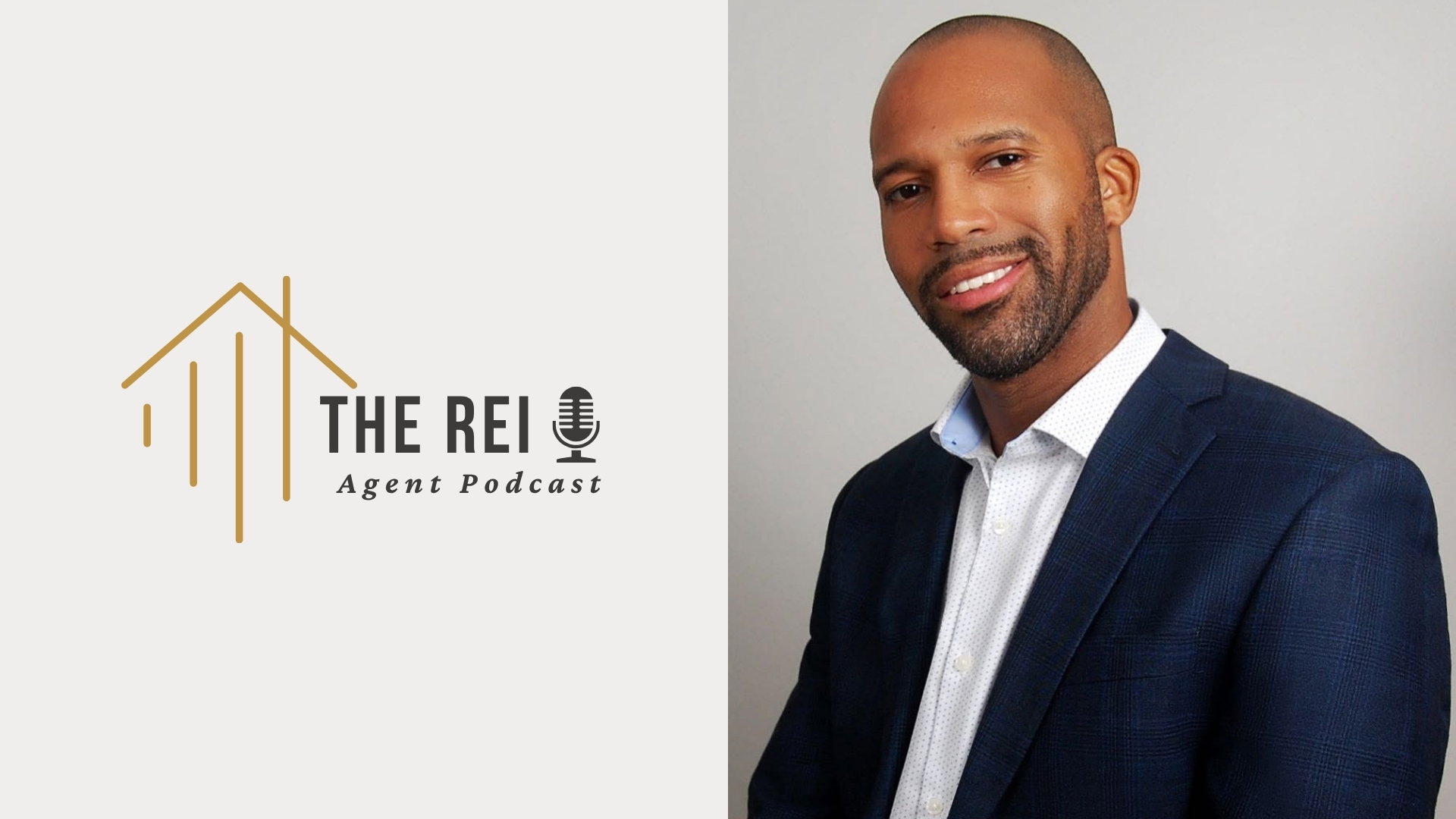
During his conversation with Mattias Clymer on The REI Agent Podcast, John shared how his experience at General Motors fundamentally changed the way he thought about work, money, ownership, and his future.
“I never wanted to be in a situation where I didn’t control my financial future.”
That realization didn’t instantly transform him into a major investor. It did something more important. It gave him a reason to begin.
What followed was a journey from a two-unit house hack to a multifamily portfolio of more than 2,000 units, built initially while John was still working full time, raising a family, and squeezing his investing activities into nights, weekends, train rides, and late-night work sessions.
His story is ultimately about much more than apartments. It is about becoming empowered enough to build options.
The Day Corporate Security Started Looking Different
John was working at General Motors during the economic turmoil surrounding the 2008 recession. Layoffs were happening around him, and longtime employees suddenly faced futures they had never expected to confront.
Some had spent decades inside the same company. They had strong salaries, impressive titles, corporate perks, and no obvious reason to build a Plan B.
Then circumstances changed.
John watched highly accomplished professionals suddenly try to determine what came next. That experience challenged one of the fundamental assumptions behind the traditional career path: that employment and financial control are the same thing.
They aren’t.
A person can have a great career and still depend on someone else’s decision to continue receiving that income.
John didn’t describe entrepreneurship as inherently more secure. In fact, he made an important distinction. The word he preferred was empowered.
“I don’t know if secure is the word I would use, but I definitely feel more empowered.”
That distinction matters. Ownership doesn’t eliminate risk. Markets change. Investments struggle. Business plans fail. Unexpected problems happen.
But ownership can create additional levers.
An owner can negotiate. An investor can reposition an asset. An entrepreneur can change strategy. A business operator can develop another skill, pursue another opportunity, or create another income stream.
John wanted more of those levers in his own life.
The First Deal That Changed Everything
Turning Theory Into Proof
John’s first meaningful step wasn’t a massive apartment acquisition. It was a two-unit building in Chicago that he purchased with his wife.
They lived in one unit and rented the other.
The house hack became their experiment. John had consumed information and researched investing, but eventually theory had to confront reality.
The results surprised him.
Using an FHA loan, they put only 3.5 percent down. Because they didn’t need as much cash for the down payment as originally expected, they invested additional money into improving the property. They renovated a unit, improved the exterior, worked on the doors and yard, and created tangible value.
About a year later, an appraisal revealed that they had created more than six figures in equity.
That equity allowed them to obtain a six-figure line of credit and eliminate their private mortgage insurance.
Suddenly, investing wasn’t an abstract wealth-building concept John had read about.
He had experienced it.
From Two Units to Three, Then Eight
John and his wife continued moving forward. Their next acquisition was a three-unit property. Two years later, they purchased an eight-unit building.
By then, John could see a possible future where investing wasn’t merely something happening alongside his career. It could eventually become his career.
But success uncovered a new constraint.
He kept running out of money.
John and his wife would work, save aggressively, purchase another property, and then find themselves needing to rebuild their capital before they could invest again.
As their family grew, so did their expenses. The process worked, but the pace created an obvious question.
How could he scale beyond whatever he and his wife could personally save?
The Breakfast That Expanded His Entire Vision
Sometimes growth begins because someone encounters proof that a bigger path actually exists.
John knew another investor who had grown from three units to nine. Later, he learned she had reached roughly 90 units.
That jump stopped him.
He wanted to know how someone could go from nine units to 90 so quickly, so he invited her to breakfast and asked.
Her answer introduced him to the power of partnerships and outside capital.
Investors had been following her online and eventually approached her about working together. She found opportunities. They brought capital. Together, they acquired larger properties.
For John, seeing someone he actually knew accomplish this mattered.
Large-scale investing was no longer something reserved for distant gurus or people on the internet.
Someone in his own network had done it.
“That was the first time I actually thought maybe I could raise money for deals.”
The shift didn’t erase his doubts. John admitted that he carried limiting beliefs about whether anyone would actually want to invest with him.
But the possibility had become real.
Within roughly 60 days, he met the person who became his mentor. He attended a conference, spoke with people who had raised capital, studied deal structures, and expanded his understanding of what was possible.
Within about a year, he participated in his first syndication as a general partner.
Multifamily Investing Is Really About Buying a Business
The Apartment Building Is the Business
One of the clearest lessons John shared was his framework for understanding larger apartment properties.
Instead of thinking about them like oversized rental houses, he thinks of them as businesses.
“The easiest differentiator I can tell you is that you’re buying a business.”
That mindset changes the entire analysis.
The investor isn’t simply buying walls, kitchens, bedrooms, and bathrooms. The investor is purchasing an operation that generates revenue and incurs expenses.
The next question becomes clear: How can that operation be improved?
Better management might reduce expenses. Property improvements might support stronger rents. Operational problems might be corrected. Occupancy can be strengthened. Collections can improve.
When net operating income improves, the value of the apartment business can improve significantly as well.
For John, value-add multifamily investing is about acquiring an existing business, executing a plan to improve that business, and ultimately creating additional value for everyone who owns a piece of it.
Passive Investors Don’t Have to Run the Property
John compared syndication ownership to owning shares in a company.
A shareholder can own part of Starbucks without deciding which seasonal drinks appear on the menu. Likewise, a limited partner in a multifamily syndication can have an ownership interest without managing tenants, hiring staff, overseeing contractors, or making daily operating decisions.
That responsibility belongs to the general partnership team.
It also means trust matters.
Passive investors need to evaluate the operators, understand the business plan, assess the opportunity, and determine whether they trust the team responsible for executing that plan.
The building matters, but the people running the building matter too.
Cheap Doesn’t Automatically Mean Opportunity
The Dangerous Seduction of a Low Price
John’s experience investing throughout the Midwest taught him another lesson that can save investors from expensive mistakes.
A property being inexpensive compared with another market doesn’t automatically make it a bargain.
Investors from expensive cities can look at Midwest pricing and immediately become excited. Properties may appear incredibly cheap relative to what those investors see at home.
But John offered a warning.
“If you see something that’s below that market’s value, it’s below that market’s value for a reason.”
That reason has to be understood.
Every market contains stronger and weaker neighborhoods. Every property operates inside a local ecosystem of residents, vendors, property managers, contractors, employers, regulations, expectations, and business practices.
A buyer who doesn’t understand those dynamics can mistake unfamiliarity for opportunity.
Local Knowledge Can Protect the Entire Deal
John experienced this himself after operating in Chicago and then purchasing property around Cincinnati.
Practices he considered normal in Chicago weren’t necessarily normal in Cincinnati. On one early property, he encountered a manager still tracking rents and expenses with a handwritten ledger.
That experience reinforced something important.
Investors can’t simply impose the assumptions from one market onto another.
They need people who understand how business is actually conducted locally.
John emphasized the importance of working with people who know the market because those local professionals can recognize issues an outsider might never think to investigate.
The cheapest acquisition price can become extremely expensive when the investor doesn’t understand what was purchased.
There Was Never Really a Perfect Work-Life Balance
The 2 A.M. Emails Nobody Saw
While John’s portfolio was growing, he was still working in advertising and raising a family.
That meant the business often had to be built whenever time was available.
Sometimes that was at 2 a.m.
John remembered writing emails late at night and scheduling them to be delivered during normal business hours. To the person receiving them, the communication looked ordinary.
Behind it was an entrepreneur building another future while the rest of his responsibilities continued.
He didn’t romanticize that season as perfect balance.
Instead, he pointed toward something that made the difficult season sustainable: alignment.
The Most Important Partnership May Be the One at Home
John and his wife shared a vision for the life they were trying to create. She was involved in the business as well, and both understood why they were making certain sacrifices.
That shared purpose became especially important when investments didn’t work.
John has experienced failures. He has lost money. Partnerships haven’t always performed as expected.
But when problems emerged, he and his wife could discuss what went wrong without reopening the entire question of whether they should have pursued the vision at all.
They could examine the decision, improve their process, and continue moving toward the larger objective.
John encouraged couples to begin with something deeper than asking whether they should buy property.
They should first understand what kind of life they want to create together.
Where do they want to be in five years? Ten years? Fifteen years?
If investing supports that shared future, the strategy has context.
If the future itself isn’t shared, every investment conversation can become an argument between possibility and fear.
Success Accelerated When John Changed His Environment
Mentorship Made the Journey More Personal
John believes strongly in education, but he also sees a major difference between consuming generalized information and having access to someone who can respond to a specific situation.
Books, podcasts, videos, and online resources can provide enormous value. A mentor can help an investor interpret what those lessons mean when a unique problem appears in real life.
John found that kind of guidance valuable as he grew.
He also intentionally immersed himself in the world he wanted to join.
During his Chicago commute, he listened to podcasts on the train. He regularly attended investing meetups and events. He surrounded himself with people who were already doing what he wanted to do.
Eventually, the people who once seemed exceptional became peers.
That changes what feels normal.
When someone regularly spends time around people analyzing deals, acquiring properties, raising capital, solving problems, and building portfolios, those activities stop feeling distant.
They become part of the environment.
John Casmon’s Three Principles for Stronger Investing
Cashflow First
John’s first principle is remarkably simple.
The deal needs to make money.
“Real estate investing is simple, but we make it so complicated.”
Some of John’s own unsuccessful investments were flip projects that weren’t generating income while the plan was being executed.
That experience influenced his preference for properties already producing cashflow with an opportunity to improve performance further.
Instead of racing against time to transform a losing operation into a profitable one, he prefers starting with something that works and making it work better.
Leverage Other People
John’s second principle is that significant growth rarely happens alone.
An investor may be able to purchase and manage one property independently. Scaling into a serious portfolio requires relationships.
Those relationships may include property managers, investors, lenders, partners, brokers, contractors, and agents.
Leverage doesn’t mean avoiding responsibility. It means recognizing that the right people can multiply what an individual can accomplish.
Own Everything
His third principle doesn’t mean purchasing everything.
It means taking ownership of outcomes.
“I could blame him all day long, but at the end of the day, I’m the one that decided to partner with him.”
When a partnership went wrong, John could blame the other person or examine the process that led him to choose that person.
The second option created improvement.
He could strengthen his vetting, change how funds were dispersed, require different insurance or licensing, improve references, and adjust the system before the next deal.
Taking ownership gives an investor something useful even when the outcome is painful.
It creates a lesson that can make the next decision stronger.
Atomic Habits and Becoming the Person Who Does the Work
When Mattias asked John about a favorite book, John chose Atomic Habits.
What resonated with him wasn’t merely setting better goals. It was the book’s focus on identity and becoming the kind of person capable of producing the desired result.
John applies that idea directly to investing.
An aspiring investor doesn’t have to wait until closing day to begin identifying as an investor.
Investors analyze deals. They tour properties. They submit offers. They spend time with other investors. They learn markets.
Someone who wants to raise capital can begin having conversations with investors, understanding deals, building relationships, and developing the skills required to communicate opportunities.
The identity is reinforced through repeated behavior.
“It’s changing who you are today to start acting like the future version of yourself.”
That idea may be one of the most inspirational lessons from John’s entire journey.
He didn’t become a successful multifamily investor and then begin acting like one.
He began repeatedly doing the things investors do while he was still working another job, commuting to work, raising children, attending meetups, saving money, making mistakes, asking questions, and figuring out the next step.
The portfolio came later.
The transformation started much earlier.
Build the Future Before It Feels Completely Possible
John Casmon’s Journey Is Proof That the Margins of Life Can Become the Foundation of Freedom
John Casmon’s story didn’t begin with unlimited capital, unlimited time, or a perfectly mapped path.
It began with uncertainty.
A recession showed him the vulnerability of depending entirely on employment. A two-unit property showed him that ownership could create wealth. An eight-unit building showed him that personal capital alone would eventually limit his growth. A friend’s success showed him that partnership could change the scale of what was possible. Mentorship and community helped him develop the skills to move forward.
And throughout that journey, John continued building while working, raising a family, learning, failing, adapting, and becoming more capable.
His story offers a powerful reminder for anyone who believes the next chapter can’t begin until life becomes less busy.
Sometimes the next chapter is built precisely inside those busy years.
It is built during train rides, early mornings, late nights, lunch meetings, uncomfortable conversations, first deals, mistakes, and small decisions that don’t look transformational when they’re happening.
Financial independence isn’t necessarily about eliminating uncertainty.
It can be about developing the knowledge, relationships, assets, habits, and confidence to create more choices when uncertainty arrives.
John once watched people around him suddenly discover that they needed a Plan B.
Instead of waiting until he needed one, he started building his.
Eventually, that Plan B became the path forward.
“I’d rather have control of my future.”
That may be the greatest lesson of all.
Transcript
[Mattias]
Welcome back to the REI Agent. My guest today is John Casmon, founder of Casmon Capital Group and a multifamily syndicator who has built a portfolio of more than 2000 units while working a full-time job in marketing, raising a family and doing it nights and weekends before he ever went full-time. Jon’s story is one of the most relatable and instructive in real estate investing, a corporate professional who figured out how to build serious wealth in the margins of a busy life.
He is also the host of the Multifamily Insights podcast and co-creator of Midwest Real Estate Networking Summit. Jon, welcome to the REI Agent podcast.
[John Casmon]
Oh, thank you for having me. Excited to be here today, and I appreciate that warm introduction.
[Mattias]
Yeah, absolutely, man. You clearly are not afraid of working hard and grinding, and that’s clearly worked out for you. We have this sub-theme of a holistic approach to life through real estate, so I’m definitely curious about how that looked for you throughout that journey, but let’s just get started to what your career was and how you started getting into real estate and what made you want to go there.
[John Casmon]
Yeah. Real estate is one of those things that I was always interested in, but never enough to do anything about it. Like many listeners, I worked at W2.
I worked in advertising and marketing and really enjoyed what I was doing. Unfortunately for me, I worked at a company that ended up going into bankruptcy. I read the headlines.
I saw it on the news. I was at General Motors during the last recession. We saw it coming, but nonetheless, when it hits, it’s still tough and difficult.
I remember there was a day where they were announcing layoffs, and I was told I was safe. That’s what my higher-ups told me. Nonetheless, I came into the office a little late that next day because I knew that was the D-day, and they were going to be doing layoffs.
I just didn’t want to be involved in watching people pack up their desk and things like that. By the time I got to the office, I saw a little red dot on my phone. It was lighting up for a voicemail, and my heart sunk.
I was like, man, they told me I was good, and here I am with this, because I never got voicemails. What? I listened to it.
It was actually a guy who sat kitty corner from me, and he was venting. He was a diabetic, so he needed the health benefits, and he didn’t know what he was going to do. Two things happened to me that day.
One, I felt a great sense of empathy for him and other folks like that in that situation, but I also realized I never wanted to be in a situation where I didn’t control my financial future. That loose interest in real estate turned into a more intentional game plan to say, how do I become a real estate investor? I set out on that journey.
Took me a while to figure out how the hell to actually invest in real estate, but moved to Chicago, got married. My wife and I bought our first piece of property, which was a two-unit building. We house-hacked, lived in one unit, rented out the other.
From there, we slowly started to build that portfolio while working a full-time job and while raising a family, until I was able to get to the point where I transitioned and went full-time into real estate.
[Mattias]
I think I have a lot to say on this, because there’s a number of things you’ve touched on that are really powerful. I think it sounds very clear that that day you defined your why. It was ironed into your soul, if you will.
I want to take the control into my own life and into my own hands. That’s definitely something that I talk about a lot. When people talk about thinking about becoming a real estate agent or just being in the world of being self-employed or owning a business, that kind of stuff, it feels scary.
It feels like you have to go out and you’re only going to eat what you catch. There’s something intimidating about it when you’re on that other side. Once you get into it, once you actually see the success, once you put in the work and you see the success from it, would you say that you feel a lot more secure in your position in life from a financial standpoint after having taken that income?
That stuff is now all on you. It’s no longer can be taken away from being laid off from a company.
[John Casmon]
It’s a great question. I don’t know if secure is the word I would use, but I definitely feel more empowered. What you’re getting at is, and to be clear, it’s easy in retrospect to say, in that day is the day I decided to become a real estate investor.
It didn’t happen. I decided it, but nothing transpired after that because I was in Detroit. This is 2008.
Anybody who owned real estate in Detroit in 2008 was trying to sell it. Anybody I talked to, they’re like, oh, you want to get into real estate? Sure, buy this, man.
This is a piece of crap. I want to get rid of it. Something was telling me like, all right, if everybody’s trying to give away the real estate they own, it’s probably not the right time to be investing or I’m missing something.
Again, I didn’t have the hindsight or the understanding that this was a global economic downturn. To me, this was my company. It was my company that was frontline.
It was up until the banking institutions took over those headlines. It was General Motors. For me, it was like, I need a plan B for this job.
Then I started to understand the larger economic impact that was being had. I say that because there were people at that company, and we’re all taught similar things, right? Go to college, get a great job, work great career, retire.
That’s what my father did. He’s a blue collar guy. He’s worked two jobs in his life for two companies.
He probably would have stayed at the one company if he wasn’t pushed to go to the second company, right? For me being at this company, I was there with lifers, people who had been there 15, 20, 25, 30, 35 years. There was no plan B for these people.
This was it. Why would you have a plan B when you’re making great six figures? You got a lot of corporate perks that come with working at a company like that.
You’re at headquarters, you’ve got expense budgets. There was no reason to have a plan B. When those folks got hit with the carpet being pulled from under them or the rug being pulled from under them, not only was there not a plan B, but you got to see how drastically different everyone approached it.
I saw VPs go from being just underneath a C-suite executive, right? A vice president of a large company like this to deciding they’re going to open up an ice cream shop in a small town in Michigan. I’m like, what?
There’s no transition plan here that they were thinking about. They’re literally trying to figure out their life. As I was watching that, that’s what I was like, you know what?
At any moment, somebody else can just decide I’m not their guy because you had to play the corporate politics games. You had to be aligned with this guy, but not too closely aligned with this guy where the next guy feels like he can’t trust you. It was all of that that really led me to the path to say, you know what?
I’m going to be better off just building my own thing. At some point, if I can build this where this is more valuable, there’s more to be gained by doing this full-time than the state job, then we’ll make the transition. I don’t know if it’s security because at any moment, things can happen.
We’re in an environment right now where multifamily is struggling and lots of deals are not working as people initially anticipated, but I feel in control. I know that there’s always levers that I can pull that I didn’t have before. When you only have a job and a resume, man, that’s scary to me because you’re relying on someone else to either A, hire you or B, retain you because they feel like you add value.
You don’t control that. You got to kiss a lot of ass and play the corporate game. You get tired of that.
For me, it’s just I’d rather have control of my future. I can take a look at my assets in my portfolio. I can pull different triggers.
I can make different moves. I can work a little bit harder. I can negotiate different deals.
I can lean on different skill sets. I feel way more empowered doing that if not.
[Mattias]
That’s a good reframe. I like that. That’s what I had thought too in the sense that at that moment, you had a reason to, not that you were immediately buying like an A-Plex after listening to that voicemail, but you had a strong reason to put in that grind because you were working.
You said that you had a family as well. I’m curious how many kids you had, but you were working another job and building this portfolio up. That’s not something that I think you have to have a strong why.
You have to have a future vision to go after to really put in the work. I did the same thing to start my real estate sales career. I was working another job.
A lot of people will say, if you want to become a successful agent, you really can’t work another job. You really have to go in and feel the fire, feel that you need to make this work. You have to get out there and grind.
For me, I was very, very dedicated to becoming an agent. At the time, we were wanting to pay off our student loans. We were just wanting to get that monkey off our back and start our newly married life together without having to worry about paying off over $100,000 in debt.
We were only making like $60,000 combined. That was our why. That’s why I put in the grind to get there.
I think that’s one thing that’s really important for people. I feel like to have that motivation to really put in the long nights, to put in the extra effort to get somewhere. Then to your point as well, sure, there’s never guarantees.
Markets go up and down. Real estate, just because you have net worth because of your real estate, that can go down too. There can be a lot of challenges in the space as well.
Like you said, you have now proven to yourself that you can go out and achieve something that just comes from you. That’s not reliant on somebody else. We have tenants.
We have other factors. It’s not that simple, but you know what I mean. You built a business.
You built something up that is now yours. If you had to start over in something brand new, you’d never want to really. You probably could figure it out.
You’ve done it before. You’ve proven that to yourself. You have maybe that extra empowerment, that extra security knowing that that’s within you because you’ve proven it to yourself.
[John Casmon]
Yeah. I think it’s important because at the end of the day, we all have to look within and our own belief system is what’s going to drive us. If you don’t have the belief that you can go out there and build this, then that security that you alluded to earlier is going to come from a W-2 job.
There’s a lot to like about it. When you know you get paid every two weeks or twice a month, and that direct deposit is going to hit, that’s awesome, man. You can live your life.
You can plan. You can budget. You can plan vacations and say, I’m taking off June, whatever.
When you don’t have that and your income fluctuates based on how successful you were that month or that week, and then you got to actually collect the money, it’s just a different world. It’s harder to take vacations. It’s harder to feel like you’ve done enough or whatever the case may be because you recognize that this is another thing.
It’s an entity. It’s an independent business that you have to maintain and it needs your attention just like your children need your attention. That is challenging for a lot of people and not everyone has that mindset.
There’s nothing wrong with it. I would tell people the beauty of real estate is you don’t have to be a landlord to be successful in real estate. There are lots of ways to invest.
You can wholesale. You can fix and flip. You can be a real estate agent.
You can invest passively through syndication deals like a lot of our investors do, investing alongside us. You can do private lending where you’re just putting your money out there. Real estate’s a wonderful vehicle because you don’t actually have to quit your day job to become a real estate investor to make money in it.
You just have to figure out what strategy makes sense for you based on your goals, your risk tolerance, and understanding your network and the opportunities that are presented to you.
[Mattias]
Yeah, that’s very true. One of the reasons we started this podcast was to help teach agents about… A lot of agents don’t invest in real estate.
I think that’s partly because they may have seen a lot of landlord situations gone bad or a tenant destroyed the property. Don’t want to have to deal with that. Don’t want to be getting calls about fixing toilets and that kind of stuff in the middle of the night.
But yeah, like you said, there’s so many different paths and teaching agents about syndications who may not have heard of it is definitely one as well because there’s tons of benefits there. Not only can you invest passively, but you can get accelerated depreciation. You’re a real estate designated professional, so you can get…
If you’re producing a lot, don’t have time to invest, it’s kind of the win-win. You can depreciate your taxes a good amount. I mean, take off your taxes, write off a bunch for your taxes through depreciation that you’re not having to manage.
So there’s definitely some wins there. I do want to hear more about kind of like, your journey about what kind of properties you started picking up. You said that the house hacking and then from there, where’d you go?
[John Casmon]
Yeah. So the house hack was really the test, right? This was taking all that theory and all that research that I’ve done.
And all right, man, you got to see if it’s real. And it was, we bought a two unit building, lived in one unit. We rented out the other side of it or the other unit and it went really well, better than I could have imagined.
First of all, at the time when we put together this plan, I didn’t know about an FHA loan. So we were able to save a significant amount of capital. We only put three and a half percent down for the down payment and we had money left over.
So that money that we thought we would need for the down payment, we actually invested into the property. So we fixed up the first floor unit. We fixed up the exterior, the doors, the yard, and we created a lot of value.
And I remember we were saving our money to get ready to buy another property. And the agent that we had brought on board, she started asking us questions about the two unit. And she’s like, I think you got a lot of equity in this place.
And we’re like, no, we just moved in last year. I don’t think so. And she’s like, no, I think you do.
Market’s really gone up and I think you’ve created a lot of value. And we were again, we’re like, okay, we hear you, but no, maybe what we put in, maybe we got that back. But we know real estate only appreciates 3% a year and we put in 50,000.
So maybe it went up close to that, but it’s highly unlikely. Well, we got an appraisal done and we had created over six figures worth of equity into this property to the point where we were able to get a six figure line of credit. We were able to wipe out our complete PMI.
So again, we only put three and a half percent down. We were able to get a lot of credit and wipe out our property mortgage insurance just with the amount of equity that we created in one year. So that was really the sign to me that not only was this real and doable, but I mean, I’ve pretty much made more on that deal in one year than I made in a year.
And we didn’t do that much work. I mean, it was work, but we bought stuff, we invested in it, but we hired general contractors. It’s not like I did everything.
So that was really the signal that this can absolutely work if done properly. So the next property, we bought a three unit building. We bought an eight unit building two years after that.
And right around that time is when I realized, okay, not only does this work, but this can be the thing. This is the transition point. I can do this real estate investing full time.
But I had a couple of issues. A couple of issues, and one was big and one I know every investor runs into. I kept running out of money.
So we would save our money to buy a property. And then I would be right back flat broke again, both making six figures, but we would save and save and save. And now as the family is growing, I got more expenses.
I got to take care of the kids. So when we bought the eight unit building, I remember feeling deflated because I was just thinking about this mountain I was going to have to climb before I could make the next investment. And I was like, man, how long is it going to take me to save up this kind of money again?
And I started warming up to the idea of like, man, if I could partner with somebody or somebody else could bring some of this money, that would make my life so much easier. And as fate would have it, I ran into a friend of mine, a person who became a friend of mine, was also a real estate investor. She ran a meetup and we’re just chatting like normal.
And she mentioned that she was up to 90 units. Now when I met her, she only had one three unit building. And then about maybe nine months after that, she had bought two more properties and she was up to nine units total.
And this is like maybe a year after that and she was up to 90 units. And I’m like, whoa, wait a minute. Huh?
Like how did that happen? How does one go from nine to 90 units? And I just remember not being able to shake that question.
And I asked her flat out and said, hey, I’d love to buy you breakfast. I just, I want to hear how you were able to scale. And she said, sure.
Let’s sit down. We’ll get breakfast. We’ll talk.
And I asked her directly. I said, how’d you do it? And she said she had these investors who were online, their own bigger pockets, and they were out in California.
They had been following her and they had been reaching out to her about investing with her and partnering with her. She was apprehensive at first, but ultimately decided to partner. She went out and found the property.
They put up the capital and they had a partnership. And that was the first time I had come across somebody in real life who had raised money for deals. Now, this was not necessarily what she set out to do, but it ended up working out that way.
And that was the first time I actually thought maybe I could raise money for deals. I had a whole bunch of limiting beliefs. I didn’t think anybody would want to invest with me.
I was having some success with real estate, but I wasn’t really a guru or an expert or anything like that. But that conversation really opened up my mindset. And from there, literally within the next 60 days, I met the guy who became my mentor.
I went to a conference where I was talking to a bunch of other folks who’ve raised capital for deals. We started talking about deal structures and how to make it work. And I think within the next year, I had done my first syndication as a general partner.
Wow. That’s amazing.
[Mattias]
That’s a big jump. And I think I should just maybe take a moment to kind of help people who are maybe not familiar with syndications kind of understand. The beauty of this kind of thing is it can be such a great win-win when executed properly.
So it may be a little bit hard to understand how somebody could just passively invest and it’d be worth their energy and then how somebody who’s leading this kind of thing might actually benefit from it as well. It’s all transparent. There’s all agreements to all this stuff and it’s all kind of above board.
But once you understand how the cap rate kind of game works and are you doing mainly, so has it been mainly the multifamily kind of value-add strategy?
[John Casmon]
Value-add multifamily, yes.
[Mattias]
So basically, if you can think about it like being a flip or if you’re familiar with a burr, but like at a much larger scale, that’s kind of the most simple way to understand it. And so you are going to take on an apartment building that the value isn’t based on other apartment buildings and what they’re selling for. It’s based on the cap rate, which is based off the NOI, the net operating income.
So you have a property that is maybe not performing as it could and so you’re going to go through and fix up the property. It might be that you fix up the property to be able to demand higher rent. It might be that you’re cutting expenses by managing it better.
It might be that you are kicking people out that are not paying rent. I mean, there’s a lot of different ways that it can happen and I’d love for you to share some of these strategies or what you’ve done. But basically increasing the profitability of the business, which then increases the value of the business.
And when you really understand how that multiplies with the cap rate, like if you have a cap rate and you increase $100 a door and it’s 100 unit property, that can be a huge difference in the overall value. And so all that to say is if you get other people to invest, the cashflow that’s coming in from the property is paying them. They’re getting a preferred payment typically to give them a similar return that they might be getting in a stock market or whatever.
It just depends on the deal. And then once the plan is executed by basically making it more profitable and being able to realize more equity, they can do an exit strategy, which will be a refinance of the property or a sale of the property. And so taking that extra equity created again by making the value go up through the business income, the NOI, you are then able to pay off the investors in full, or they might earn a profit from a shared profit from the whole deal.
Is that a pretty accurate description of how you’re operating?
[John Casmon]
Yeah. I mean, that’s it. For folks who understand stocks, another way of saying it is we’re buying a business.
And I love the fact that you talked about the business. Because I think that the biggest challenge, the biggest difference is people think about buying a single family house or rental, and they try to translate that into buying apartments and running it that way. And they really are different.
The easiest differentiator I can tell you is that you’re buying a business. Forget that it’s apartments. Forget that it’s real estate at all.
You’re buying a business based on its current operations. You want to have a business plan to improve the operations to make that business worth more money. And then you want to sell that business at some point in the not so distant future.
That’s all we’re doing. So I’m buying an apartment building. Let’s say it’s 100 unit apartment building.
I’m going to pull out the income statement. I’m going to see how much money it’s making now. I want to have a very clear vision of how I can make this apartment building make more money.
I’m going to go out and execute that business plan. And once we’re done, we’re going to distribute those proceeds to our investors. So going back to the stocks, when we buy this business, we are going to issue stocks or shares of the business.
We’re going to buy it. And you might get 10 shares. I got 10 shares, whatever it is.
We’re going to go out there. We’re all going to have shares of the business that we’re buying. So as we increase the value, our share value increases.
So once we sell, we’re going to sell at this point. Once we paid off all of our debt and our expenses, now the last is profits, which goes to our shareholders. And we get to partake in the proceeds.
The biggest thing here, just like in stocks, you and I can own shares of Starbucks. It doesn’t mean that we’re weighing in on what the fall offerings are going to be, right? There’s a team that makes those decisions, not us.
It’s the same thing here. We’re limited partners. When you invest in a syndication deal, you’re not making those decisions, right?
You’re going to vet the team. You’re going to vet the business plan. You’re going to say, all right, hey, I’m going to put my money up.
Trust you guys to go out there and do your thing and go create value. So there is some trust that’s needed because you are going to be handing over control to that general partnership team that’s going to go out there and oversee the day-to-day operations. They’re going to be the ones making all the hiring and firing decisions, implementing the business plan, making any alterations to the business plan.
So you want to make sure that you select the right team to invest with. But just like in shares and stocks, you’re going to go out there. You’re going to try to take in all the information that’s available to you and find the right options that you believe in moving forward.
[Mattias]
Yeah. I love that analogy. And that was really well said.
And one of the points I often make too is if you’re in real estate already, if you’re a real estate agent, it is a lot more easy to understand that business that you’re talking about, departments, than it would be to understand how Starlink is going to work or how SpaceX, what the valuation of SpaceX is. That’s a lot more nebulous. That’s a lot more hard to grasp because it’s not your business.
And so I think you need to be careful. But if you’re comparing it to… I kind of think of it a little bit like the Realtors 401k, right?
You get the tax benefits by investing in it. You can get saved for retirement. You might get the money back early and you’re going to get money you can actually use along the way instead of having to wait.
But it can be a really good win-win for a real estate professional in general. But yeah, like I said, you can more easily understand how the economics, how everything works with this kind of deal than some other random business.
[John Casmon]
If I can elaborate on that point, right? Because there’s so many variables when it comes to stocks or other companies, right? You have the corporate team themselves, right?
And you don’t know what’s going on with those individuals on a day-to-day basis. You have vendors, you have supply chain, you have competitors, you have economic changes, you have technology and AI changes. So there are so many threats or things that can derail or impact the performance of a business.
The thing with real estate and real estate-centric businesses is it still comes down to basically rents, right? Your expenses are there and rental income. So if you can get a reputable management company that has a proven track record, they have the resources to manage a property accordingly, yes, you’re still susceptible to other economic pressures.
But at the end of the day, people are always going to need a place to live, right? And if this building or this business has demonstrated a track record of being 90, 95% occupied over the last three to five years, it’s generated rents at $1,000. You have a proven documented track record of what that property has been able to perform.
It is more likely if you take a look at the data, you look at population trends, you look at rent growth and rent demand drivers, you look at these things, you can make some fairly decent assumptions as far as what’s going to happen. That’s not going to be 100% accurate, right? Because it could go down.
We’re seeing some of that in different markets, but it’s usually not going to drop to zero. It’s not going to drop to 20% occupancy if it’s at 90%, so yeah, can it drop down to 80, 85? Of course.
Can rents go from $1,000 down to say $950? Of course. But you’re not going to see this massive drop off where it’s worth nothing.
And some of those businesses, they can, right? You can have a lawsuit wipe out big earnings, big winnings. So there’s definitely things you need to pay attention to to protect your investment.
But on the same note, we love the fact that it’s a brick and mortar, that it is an essential service. It’s something that everyone needs. It’s housing.
Particularly, I’m talking about multifamily, not just all commercial real estate. When it comes to multifamily, we know there’s an affordable crisis that’s going on with interest rates being higher. Some folks are waiting now for rates to drop before they want to buy a home.
All those factors tend to work well when it comes to apartment investing.
[Mattias]
And if one wanted to, they could also diversify what type and locations they’re investing in across different syndications. They could mobile home parks. They could do parking garages.
They could do self-storage. There’s all different avenues that you could get into there. But like your point, I think investing in things that people can’t do without is certainly helpful.
I would rather be in the lower cost tier of housing than in the luxury investing space. I think that’s just more challenging to be confident long term. I’m sure there’s lots of people being very successful in it though.
Can you describe, are you mainly in the Chicago area then investing or have you expanded where you are investing?
[John Casmon]
Yeah. I’m in Cincinnati now. I used to live in Chicago.
I was there for eight years. We invest primarily in Cincinnati and surrounding markets. We go about a two hour radius up to Columbus, down to Louisville.
We love Indianapolis, even though we’ve never bought anything in Indianapolis, but we do like that market a lot. We invest in mostly the Midwest markets. We do like the Southeast region as well.
Typically, we’ll partner with other operators in those markets if we do deals there. But we felt so strong about the Midwest in particular, again, Cincinnati, Louisville, Columbus over the last year or two, that that’s really been our primary focus. We think there’s a lot of opportunity there.
That really comes down to supply and demand, just looking at some of the trends that are coming with supply, meaning how many new apartments have come online over the last couple of years. The thing about the Midwest is it’s stable in a sense that the people who live here choose to live here. They live here because they grew up here.
They have family here. They’re not chasing jobs necessarily. They’re not chasing a lifestyle.
They didn’t leave for promotion in Silicon Valley or something like that. The people want to be here. It’s a bit more stable.
It doesn’t grow quite as fast because of that, but it’s a little more predictable when it comes to what you can expect when you’re running your projections. Yeah.
[Mattias]
I think typically or historically, the rent to purchase ratios are more favorable. I have family in the Columbus area. I’ve even gone to look at a couple of duplexes while I’ve been over there.
I just said to check it out. I’m just like, are you kidding me? Both of them for what?
[John Casmon]
Yeah.
[Mattias]
Where are you based? I’m out of Virginia. Oh, yeah.
Yeah. Right. But then also, I know that there was a lot of growth happening as well around the Columbus area.
We are actually just near Cincinnati a couple of weeks ago.
[John Casmon]
Okay. Here’s what I’ll say about that too, Mattias, is that every market has desirable and undesirable sub-markets. So what ends up happening with investors, particularly my New York and California investors, is they just light up when they see some of the prices in the Midwest.
What I would caution all investors to do, just because you’re not going to live there doesn’t mean you get to get the most value, the cheapest thing that you see. Understand, if you see something that’s below that market’s value, it’s below that market’s value for a reason. So you have to have that same business plan as far as what do you actually want to invest in, what kind of residents do you want to serve, what’s the business plan, and make sure it makes sense.
Because I can’t tell you how many times, and I was very close to being a victim of this myself. When I lived in Chicago, I would come down to Cincinnati and they would light up like, oh, look at this big Chicago investor. Because they love out-of-towners, right?
They think we’re all suckers. And quite frankly, I’m like, I’m about to run circles around these guys, right? I’m about to come in here.
They don’t even know how good they got it. This is a discount. I’m about to buy this at 30,000 a door.
Listen, man, it was a reason it was 30,000 a door. And it’s not as easy as we may think. And there are factors in play that are really hard to comprehend until you get into a market.
Like the things I was able to do in Chicago, I just couldn’t do in Cincinnati. The market’s different. The way people operate is different.
I remember the first property we bought here, and this was not that long ago, this was like 2018. The property manager I hired, they still had a paper and pen ledger, right? They were writing rents and expenses.
And I would ask them to send it to me. And this guy would have to go and scan this thing and send me a PDF. And I’m like, you don’t have anything digitally.
You don’t use Excel. You don’t have any of the programs that people are using, podium, anything like that. No, this dude literally just wrote down the ledger, unit 17 to pay rent of 800.
And I’m like, holy smoke. And again, I’m not local, right? So I got to trust this guy’s notes.
And I’m like, this ain’t going to work. But that was the first time I really started to understand, I got to change the way I think about how to operate in this market, because these guys can absolutely take advantage of you when you’re not local. And you may think that your level of sophistication, and I hope I’m not coming across as talking down.
That’s not my intention. What I’m saying is people have an old school way of doing things here. And if it works for them, that’s how they do it.
And if you don’t know how to navigate that market, you may think you’re going to be the one taking advantage of the situation, but these guys are super savvy. They will absolutely take advantage of you. So it’s really important to work with people who are local in those markets, because they’re going to know things you could never even imagine.
And when you’re looking at these ledgers, you’re looking at the notes, people just do business in a different way. And you got to learn the ways of the land. And I’ve seen a lot of people who thought they had a good deal.
I had a conversation with a very successful investor out in Texas. They bought a property up here, actually closer to Dayton, and it’s a 22 unit property, and they’re getting their tail handed to them on it. And it’s the same thing, right?
They bought it, thought they had a good plan, they’re going to hire this manager. Manager did not deliver for them. And they missed some things in that process.
And now they’re upside down. And I ran the numbers, and they’re like, I don’t think you’re ever going to get to the point where this thing is worth what you pay for, ever. After five years, after you do everything you can do, I don’t think you’re going to get it back to where you paid for it.
And that’s the caution I would give people is don’t get so caught up with, oh, well, this is cheaper than what I see in my market. It’s got to be a deal. Not so fast, my friend.
[Mattias]
Yeah, that’s good. Definitely good reminder. And I think buying out of state definitely is something out of your market that is a skill in itself.
And I think that there are many people who do it, a lot of people who… And you can think about it this way, too. If you’re wanting to establish cash flow as your base, if you really want to have like replace your income or cover your expenses or something, and you really want to focus on cash flow, so you try to seek out the best markets, which may not be the one you’re living in, there’s definitely some cautionary tales there.
And I think there’s definitely a lot of strategies that can help with that. But yeah, that’s probably for another episode. I am curious about how you were able to try to balance the job, the family, and building this new business along the way.
I mean, I say the word balance, but I don’t think it really is a thing. So how did that go? And any lessons that you learned from that process when you really had to really burn the candle on both ends?
[John Casmon]
I definitely was burning the candle on both ends. I can’t tell you how many 2 a.m. emails that I… So we used to work in Gmail.
The day job I had was in advertising. I went to an agency in Chicago, and they had a feature that I think it just came out around that time where you can schedule emails to send. I can’t tell you how many emails I wrote at 2 a.m. that I scheduled to go out at regular business hours to look like that’s all I did. In truth, I didn’t have time to touch some of that stuff until 2 a.m. A lot of work, but I will tell you this, the biggest lesson I have is be really clear on the vision that you want to have for yourself and for your family. So my wife and I were completely aligned with what we were trying to build. So there was never a question about why I was doing something or why I missed something.
And she worked with me in the business, so she would do some stuff too. And we just had to understand it like, hey, here’s what needs to happen for the business. Here’s what needs to happen for my kid or for my work or for us.
And we just managed through it. And I think that alignment is key. I meet a lot of couples where one wants to get into real estate or one wants to start investing and the other is not so sure.
And they typically never end up doing anything if that’s where they’re at. And I push everyone to say, take it away from the investing and start to understand the kind of life you want to live together. What are your goals?
What are your priorities? What do you envision 5, 10 years from now, 15 years from now? And how do you get there?
And if real estate is a vehicle to help you get there, that’s when you can now align on real estate investing. But if you all don’t see the same future together, you can never really have this conversation because one person is only going to see risk and what could go wrong. They’re not going to see the vision of what you’re trying to do.
And we have failed as investors. We’ve had deals that didn’t pan out in our personal portfolio. And it was very frustrating when it happened.
I can’t imagine if I had to then look at my partner and have her question why we even did in the first place. You know what I mean? So when it happened, we both were frustrated, but we know why we did it.
We know what we’re trying to do. We can sit and have a strategic conversation about, OK, well, what happened here? OK, we partnered with the wrong person.
OK, well, how did we miss this? This is why we missed this. OK, we need to vet for this in the future.
We need to ask these questions in the future. We need to check these references moving forward. We could get a solution, but it didn’t change our objective.
And I think so many people, when you talk about balance or, you know, trying to make trying to get over the hump right to the point where it’s more manageable, it’s tough because if you don’t have that support and you guys are not aligned or where you’re trying to go, you feel like you’re really fighting two battles. And now you’ve got the pressure of, you know, not even being able to be fully honest and transparent because you run into those hardships. You don’t want to share with the person who’s going to be like, I told you this was a bad idea, right?
Like you’re like you’re like you got to eat all of that yourself. You got to carry that burden. You got to put on a happy face.
You got to pretend like you’re not losing your ass over here on this deal. And that’s that’s tough, man. That’s tough.
That’s tough for investors when things are going great. It’s it’s almost impossible when you’ve got someone who’s supposed to be on your team and they don’t see your vision. So I think the biggest thing is get that alignment and stay focused on your why.
Stay focused on the goal and the life you want to create together. Be honest, have the conversations. And then to get a little tactical, keep invested in yourself.
I mean, one of the one of the biggest things I was able to do is I got a mentor and I know a lot of folks say, you know, oh, you know, you can learn a lot on the Internet and YouTube. Sure. But, dude, it’s way different when you can just call a real person and you can call them and ask them directly and get some direct feedback on your unique situation or your unique challenges, because there’s not going to be a perfect YouTube video to explain how to do everything that you’re facing.
The conversation I just had. Right. What were you getting there to talk with your spouse when you think she really doesn’t believe in you and you don’t even know if you really believe in you?
And now she’s created this doubt. You know, I mean, like they’re not talking about that. They’re going to tell you the good stuff.
Oh, man, just you just go out there and do it. Look, bro, it’s hard when you’ve got self-doubt that you haven’t verbalized. You got a partner who doesn’t really believe in you because maybe you tried something else a couple of years ago and I failed and or her mom invested real estate and that failed or she watched her parents, have to foreclose their home.
Dude, when you got that kind of baggage you’re dealing with, it’s real tough to put on a happy face and just say, oh, let’s just go do it. So having a mentor, having somebody who’s done it, who’s in your corner, who can talk to you off the ledge, you can tell you that’s completely normal, but ignore the noise and lock in on the specific steps. Just keep doing this right to know when you can pull the trigger to know when to do certain things.
That’s key. And listen to podcasts. I mean, every day when I took the train, when I lived in Chicago, I took the train to work.
I listened to a podcast to work from work every day. Every day I was listening to a podcast and that just got me in the mindset. I was going to real estate meetups every month.
I probably went to two or three real estate meetups a month or events a month plus the podcast. So I’m saying all that to say I was conditioning myself to be a real estate investor even before I really started investing in real estate. So then once I actually invested, now these are peers.
That person I talked to you about went from nine to 90 units. She was on one of the early episodes of BiggerPockets. And I’m like, well, that’s my friend.
I know her for real. Like for real, I can call her, I can text her. So when you start to change your network and these are your peers now, it just, it kind of forces you to elevate.
And I think that was, it forces you to, right? Because you’re running in a different circle. So I think that’s the biggest thing you can do.
It’s not really balance, it’s really pushing yourself to just play the game a little bit differently.
[Mattias]
I love it. So you’re setting the clear vision and you’re aligning your vision with your partner. And then you’re brainwashing yourself more or less, right?
I mean, you’re putting yourself in the position that you’re going to be, you’re not just on doom scrolling. You’re listening to things that are going to get you into that mindset. And you’re surrounding yourself with people that aren’t negative Nancy’s, that aren’t just scared and trapped in the scarcity mindset.
They’re out there winning big and not always winning big, but have experience as well to help you avoid those. So those are great. I feel like I just asked you for your three nuggets and you just gave them, but do you have other nuggets for us?
[John Casmon]
I wrote down a couple. Yeah. So I would say these are, I think, really important.
So first of all, cashflow first. The deals I mentioned that didn’t work out for me, well, that’s why they were flip projects and they didn’t work out because it wasn’t making money. Real estate investing is simple, but we make it so complicated.
Make money. If the deal doesn’t make money, you’re going to struggle and it’s going to be hard. And yes, you can have a vision of how to make it make money, but I would just say cashflow first.
So for us, one of our guiding principles does the deal, make money out of the gate, right? And I want to buy stuff that’s already making money and I can make it make more money. I don’t want to do deals where it’s losing money or it’s not making any money.
And I got to go and race the clock to generate a profit versus what exists already. So cashflow first. Second thing is leverage others.
It is really difficult to do this solo. And yes, you can buy a single family house and manage everything yourself. But if you want to scale a portfolio, you’re going to need to leverage others, whether that is a property manager, whether that’s investors, lenders, partners, brokers, real estate agents.
You’re going to need to leverage other people to help you scale this portfolio. So do that. And then third is own everything.
And what I mean by own, I mean take ownership. So not literally buy everything you see, but take ownership. When I lost money on those deals, I had to own it, right?
Well, why do we lose money? I pick the bad partner. We pick the developer who did not have the system.
He had a great system. He didn’t have the mindset to understand how to grow and scale a business. And that was on me.
I could blame him all day long, but at the end of the day, I’m the one that decided to partner with him. So I need to look at what I can control, which is my vetting process, vendors that I partner with, how we disperse funds, how we do our draws, what kind of licenses, insurance, bonds that we require from people that we work with. Those are the things I can control, right?
You’re going to have a bad hire, a bad vendor from time to time. But if you can always improve your systems, then you’re taking ownership and you can control and you can minimize those mistakes moving forward. So own everything.
[Mattias]
I love it. I agree completely. What about a favorite book?
One you think that’s fundamental that everybody should read or just one that you’re currently really enjoying?
[John Casmon]
One I’ve loved for a while, man, it’s Atomic Habits. And it gets into, I mean, there’s a lot to love in a book. The reason I love that book so much, though, is the first, you can call them self-help or development book, whatever you call it.
But it’s the first one I read that was immediately actionable. Every other book I read was like, oh, this is really good. We should do this or I’m going to start doing this.
That book was like, oh, I can do this now. This is not a wait situation. This is something I can implement immediately.
And I’ll give you a little quick example. Like I have these marbles on my desk and I use them as a moniker just to help me with phone calls. I realize, hey, this is something we’re struggling with.
So do a phone call, take one marble, put it in the other bucket. And the point of it is the book helps you learn how to become the person you want to be, not to just achieve a goal. It’s to become a different person.
When you talk about real estate investing, well, real estate investors do what? They analyze deals. They hang out with other real estate investors.
They’re touring properties. They’re putting in offers. So you just change how you measure who you are, what you do.
It’s not about whether you actually own real estate yet. It’s about, are you doing what real estate investors do? And when you change your mentality and you change your habits to be those kinds of things, you’re ultimately going to become a real estate investor.
If you want to raise capital, you have to do what people who raise capital do. You got to talk to investors. You got to share deals.
You got to do those things. Now, whether you’ve actually raised money before or you’re raising money now, it doesn’t matter if you’re doing the things that people who raise money do. So it’s just starting to shift how you act and how you behave.
And it’s really an immediate thing. It’s not this future version of yourself that many people strive to. It’s changing who you are today to start acting like the future version of yourself.
[Mattias]
Wow. That’s fantastic. And you know, very true.
I’ve read that book, but that is a really good perspective on it as well. John, if people want to listen to your podcast, if people want to follow you for more, want to learn about future deals, where can they find you? Social media, websites, et cetera?
[John Casmon]
Yeah. Best place is go to our website, CasmonCapital.com. We have a download of “Seven Questions You Must Ask Before Investing in Apartments.”
That is CasmonCapital.com slash seven questions. And then our podcast, anywhere you listen to podcasts, it’s called Multifamily Insights. It’s the number one rated multifamily podcast.
We’ve done over 800 episodes. So lots of great content that you can sift through there to find some ideas and some things that can help you along your investing journey.
[Mattias]
Well, John, hey, thank you so much for being on the show. This has been a lot of fun talking to you and really informative for our audience.
[John Casmon]
Absolutely. Hey, thank you for having me. Great time today.
[Erica]
Thanks for listening to the REI Agent.
[Mattias]
If you enjoyed this episode, hit subscribe to catch new shows every week.
[Erica]
Visit REIAgent.com for more content.
[Mattias]
Until next time, keep building the life you want.
[Erica]
All content in the show is not investment advice or mental health therapy. It is intended for entertainment purposes only.