The Courage to Start Again
A Conversation About Grit, Adaptability, and Staying Human in the Business
Some careers are built in one place, one market, one community, and one familiar rhythm. Cara Ameer’s journey is different.
Her story is about starting from scratch, building trust one relationship at a time, and then having the courage to do it all again across the country.
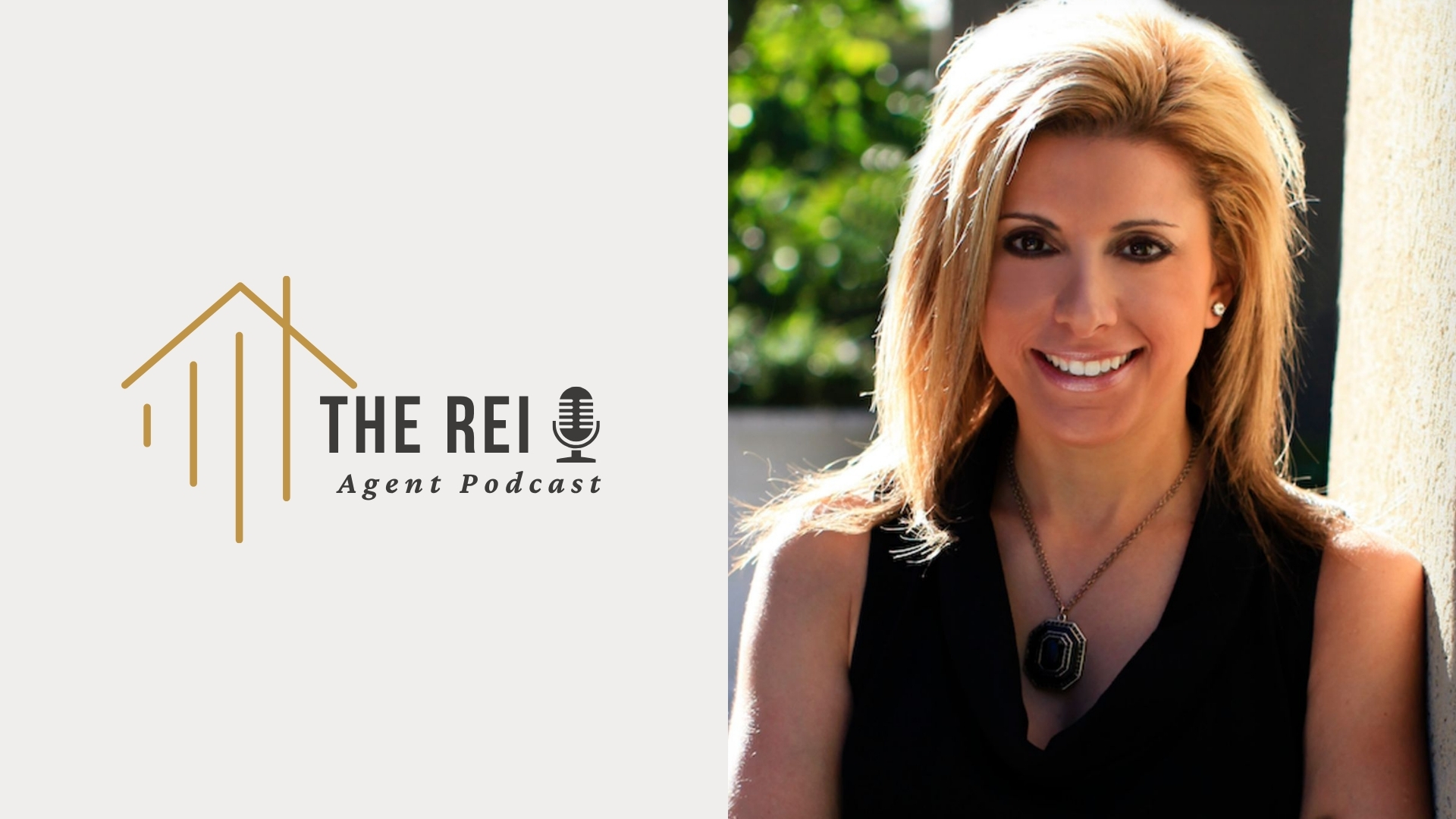
On this episode of The REI Agent Podcast, Mattias Clymer sits down with Cara Ameer, a bi-coastal agent serving both Jacksonville, Florida, and Orange County, California. These two markets could not be more different.
One is spread out, comparatively affordable, and shaped by Florida’s growth and insurance challenges. The other is expensive, highly regulated, document-heavy, and driven by lifestyle.
Yet Cara does not speak about these differences with fear. She speaks about them with clarity. Her journey shows that long-term success is not just about knowing how to sell. It is about learning constantly, staying grounded, serving people well, and building a platform that reflects who an agent truly is.
“The lights have dimmed a little bit on both coasts.”
That simple line captures the honesty of the episode. Cara is not pretending the market is easy. She is not hiding behind broad talking points. She sees what many experienced professionals understand deeply: every property tells its own story, every market has its own personality, and every transaction requires attention to the details that matter most.
From Paralegal to Real Estate Professional
The Skills That Followed Her Into a New Life
Cara’s path into the business began in late 2001, when she and her husband relocated from the suburbs of Chicago to the Jacksonville area. Before that move, she had worked in the legislative and legal world as a paralegal. At first glance, that may seem like a totally different career. But as her story unfolds, it becomes clear that those skills became part of her advantage.
She had been watching agents work while selling her own home and found herself curious about the process. Who were these people walking through the house? Why did showings happen at the last minute? What did agents really do all day?
That curiosity turned into a career pivot. Jacksonville was growing. The local economy was tied to construction, development, and housing. Cara saw an opportunity to use her legal background in a more active, people-focused way.
“I had no sphere. I had no connection to real estate. And I had to build it from the ground up.”
That is one of the most powerful parts of Cara’s story. She did not enter the business with a built-in network. She did not inherit a database. She built her foundation through floor time, door knocking, expired listings, community involvement, and old-fashioned hard work.
Her first two sales came from floor duty. She walked miles in Florida heat. She joined groups. She created relationships from nothing. In an industry that often celebrates shortcuts, Cara’s beginning is a reminder that there is still no substitute for showing up.
When One Market Becomes Two
Why Reinvention Requires Humility
Years later, Cara and her husband began spending more time in Southern California. Family connections and his career opportunities made the West Coast more appealing. Cara became intrigued by condo properties in the area where she now lives. That curiosity eventually led to purchasing a property that could serve as either a rental or a landing place during a cross-country transition.
But Cara did not simply move and hope for the best. She prepared. She got licensed in California before arriving full time. She studied the local process. She connected with an agent colleague. She watched, listened, absorbed, and learned.
That humility matters. A seasoned professional might assume experience in one state automatically translates to expertise in another. Cara knew better. She understood that every market has its own customs, systems, expectations, and unwritten rules.
“You really couldn’t be in two more opposite markets.”
That contrast became one of the defining themes of the episode. Jacksonville and Orange County are not just different in price. They are different in process, paperwork, disclosures, contingencies, inspections, buyer expectations, seller expectations, and local customs.
Cara’s ability to respect those differences is exactly what makes her perspective valuable. She does not flatten the industry into generic advice. She pays attention to the details that shape real outcomes for clients.
California Precision vs. Florida Flexibility
The Shock of Learning a Completely Different System
One of the most fascinating moments in the conversation comes when Cara explains the difference between California and Florida transactions. In California, she says, there are several hundred forms. There is a form for nearly everything. The system is precise, technical, and deadline-driven.
Florida, at least in her Jacksonville market, operates with a very different cadence. It is looser, more flexible, and less document-intensive. Expectations that are normal in California can feel excessive in Florida.
“There’s a form for everything.”
That may sound funny, but it reveals something serious. Agents must understand the culture of the market they are serving. In California, proof of funds may be expected not only for the down payment, but also for closing costs. Buyers may complete multiple inspections, including structural and soil-related evaluations. Sellers must navigate extensive disclosures. Missing details can become costly problems after closing.
In Florida, the process can feel more relaxed by comparison. The disclosure environment is different. Inspection norms are different. The style of negotiation can be different. What builds confidence in one market may create friction in another.
This is where Cara’s paralegal background, attention to detail, and adaptive mindset become so important. She is not simply memorizing paperwork. She is learning how each system protects people, where each system leaves gaps, and how to guide clients through the reality of the market they are actually in.
The True Cost of the Lifestyle
Why Price Is Only the Beginning
The episode also digs into affordability, renovations, insurance, and the deeper cost of ownership. Cara explains that Jacksonville can show average prices in the $300,000 to $400,000 range, while beach communities can be significantly higher. Orange County, by contrast, often starts at a completely different level.
In Southern California, a little over a million dollars may not buy a turnkey luxury property. It may buy a smaller single-family home with older systems, cosmetic needs, and structural concerns. Cara frames this clearly: California is often about lifestyle more than the house itself.
“It’s all about the lifestyle in California and not about the house so much.”
That line says a lot. Buyers are not only purchasing square footage. They are buying proximity, weather, amenities, lifestyle, and long-term location value. But those benefits come with costs. Renovations can be more expensive. Contractors may charge more. Regulations and permits can add layers to the process.
Florida has its own cost pressures, especially around insurance. Cara explains that insurance costs have risen, with flood insurance adding another layer depending on the location and property type. Condos have been especially challenged after the Surfside collapse and the resulting focus on structural integrity, reserves, and major component replacements.
Through it all, Cara brings a grounded perspective. She does not describe the market as collapsing. She describes it as more nuanced, more challenging, and more dependent on property type, location, condition, and timing.
Relationships Still Win
How Cara Built a New Network Without Becoming Pushy
When Cara arrived in California full time in the fall of 2020, the world was still dealing with pandemic restrictions. Open houses were not happening. Groups and clubs were limited. Traditional networking paths were disrupted.
So she adapted. She curated lists of people who owned property in both of her markets and reached out by mail. As things opened up, she leaned into open houses, alumni groups, tennis, her homeowners association, and organic community involvement.
What stands out is her respect for relationship-building. Cara describes herself as sphere-based rather than a cold-call or door-knocking person. That does not mean she is unwilling to work. Her early career proves the opposite. It means she understands that trust is built through connection, consistency, and shared community.
“I approach it the way I would want to be treated.”
That sentence may be one of the best business philosophies in the entire episode. In a world full of spam calls, suspicious texts, scams, and aggressive outreach, Cara’s approach feels refreshingly human. She builds in a way that reflects how she would want someone to approach her.
For agents trying to grow in a new market, that lesson is huge. The gym, the tennis club, community organizations, alumni groups, neighborhood boards, and social circles are not just places to find leads. They are places to become known, trusted, and remembered.
Thought Leadership Is No Longer Optional
Why Agents Need More Than Listings and Sales
Cara’s work with Inman began after she participated in a panel about video and real estate at Inman Connect. She met the contributors editor, was invited to write, and began sharing her perspective on the industry. What started as a voluntary writing opportunity became a major platform for visibility, connection, and credibility.
Her writing opened doors to media commentary, speaking opportunities, and deeper industry awareness. It also helped her stay ahead of major changes, including class-action litigation and shifting consumer questions.
For Cara, thought leadership is not about ego. It is about responsibility. Clients see headlines. Agents hear rumors. Consumers want clarity. Industry professionals need to understand what is happening before they can explain it with confidence.
“You have to have more than just, I list and I sell.”
That line lands hard because it speaks to the future of the profession. Agents are no longer competing only on access to listings or basic transaction support. They are competing on perspective, communication, trust, and the ability to interpret complexity.
Mattias connects this to podcasting, board involvement, conferences, and professional leadership. Cara’s experience reinforces the same point: visibility creates confidence. When people see that an agent is engaged, informed, and willing to speak into the issues shaping the industry, it can strengthen trust before the first consultation ever happens.
The Emotional Weight of the Work
Why Agents Need Health, Support, and Perspective
The conversation eventually turns toward balance, energy, clarity, and the personal habits required to keep serving people well. Cara is deeply committed to holistic health. She eats clean, makes nutrient-rich smoothies, plays tennis, works out five to six days a week, and takes walks near the ocean.
Her point is not that every agent needs the exact same routine. Her point is that agents must take care of themselves. The work is stressful. Clients are emotional. Money pressure is real. Deals can become intense quickly.
“If you don’t take care of yourself, then you’re no good to really anybody else.”
That is not just a wellness statement. It is a business statement. Agents cannot show up with calm, clarity, and leadership if they are depleted all the time. Cara also emphasizes the importance of trusted friends and colleagues. Sometimes an agent needs another professional to help frame a situation, offer perspective, and remind them that they are not alone.
She also gives a memorable description of what happens when consumers are under pressure.
“They often turn into, instead of bridezilla, real estate zillas.”
It is funny because it is true. Buying or selling a home can bring out fear, defensiveness, urgency, pride, and panic. A seller may see the house as their lottery ticket. A buyer may see inspection issues as overwhelming. One side may dig in. The other side may react. Suddenly, the deal becomes less about the property and more about people.
AI Can Help, But It Cannot Replace Judgment
The Human Side of the Transaction Still Matters
Mattias brings up the growing conversation around AI, technology, and the future of agents. Cara does not reject AI. In fact, she says she uses it in her business and sees its value. But she also makes a crucial distinction.
“AI doesn’t walk through these houses.”
That sentence is the kind of line that deserves to be remembered. AI can generate language. It can summarize. It can assist. But it is not present during the tense conversation after an inspection. It does not feel the seller’s defensiveness. It does not watch the buyer’s expression change. It does not understand the full emotional, physical, and strategic context unless a human accurately provides that context.
Cara warns that if agents rely on AI as their mouthpiece without reading, understanding, and applying judgment, they could cause serious damage.
“You could completely screw up a transaction if you’re just relying on that to be your mouthpiece.”
That is not anti-technology. It is pro-responsibility. The future belongs to professionals who can use tools intelligently while still bringing judgment, empathy, experience, and accountability to the table.
Cara’s Golden Nuggets
The Wisdom That Comes From Experience
Near the end of the episode, Cara shares several golden nuggets that summarize the heart of her experience.
“All problems in real estate are solvable, but it’s the people that can make them unsolvable.”
That wisdom applies far beyond transactions. Problems can often be worked through with information, options, patience, and creativity. But pride, fear, stubbornness, and poor communication can turn manageable issues into broken deals.
Her second nugget is equally powerful.
“Surprise is never a good thing in real estate.”
She applies this to inspections, disclosures, ownership questions, trust and LLC documents, title review, and anything that could derail a deal late in escrow. Cara encourages agents and sellers to uncover issues early, communicate clearly, and avoid letting hidden problems explode when everyone is already emotionally and financially committed.
Her final insight brings the conversation back to platform-building.
“We all need a platform to showcase our knowledge.”
For some agents, that platform may be writing. For others, it may be podcasting, social media, video, newsletters, speaking, community leadership, or education. The format matters less than the willingness to share perspective. A one-dimensional agent lists and sells. A trusted professional teaches, interprets, communicates, and leads.
Communication Is the Foundation
The Book Cara Recommends for Every Professional
When Mattias asks Cara about a favorite book, she recommends Exactly What to Say by Phil Jones. For her, communication is central to the work. Agents are communicators. They guide people through the largest financial decisions of their lives. They explain risk, negotiate emotion, clarify confusion, and help people move forward under pressure.
Cara’s recommendation reflects the deeper theme of the episode. Success is not only about market knowledge. It is also about language. Words can calm a client, create clarity, reduce conflict, or accidentally intensify a problem. The best professionals keep learning how to communicate better because people are complicated and misunderstandings are easy.
“We can never stop learning to be more effective and better communicators.”
That line perfectly captures Cara’s growth mindset. Even after more than two decades in the business, she is still learning, refining, and paying attention. That may be the real secret to longevity.
The Life Built Through Service
A Final Reminder to Keep Growing, Keep Learning, and Keep Showing Up
Cara Ameer’s story is not just about working in two markets. It is about what happens when an agent refuses to become stagnant. She built from scratch in Florida. She learned a new system in California. She created a platform through writing. She stayed connected to clients across both coasts. She embraced wellness, relationships, communication, and thought leadership as part of her professional foundation.
Her journey is a reminder that reinvention does not require abandoning what came before. Sometimes it means carrying the best parts of one season into the next. Her legal background became an asset. Her Florida sphere remained valuable. Her California learning curve became a source of wisdom. Her writing became a platform. Her wellness routine became part of her resilience.
For agents listening to this episode, the inspiration is clear. Build relationships the right way. Learn the customs of the market. Take care of the human being behind the professional role. Use technology, but do not surrender judgment. Create a platform that shows what you know and who you are. And above all, keep showing up with clarity, humility, and heart.
“It’s not enough to just list and sell properties.”
That is the challenge and the opportunity. The future belongs to professionals who can do more than close deals. It belongs to the ones who can guide, teach, communicate, adapt, and serve with wisdom.
Cara Ameer has built that kind of career, one coast, one client, one relationship, and one hard-earned lesson at a time.
Transcript
[Mattias]
Welcome back to the REI Agent. I wanted to quickly plug our website before we get into our awesome guests today. We have redesigned the REI Agent website, so REIAgent.com.
Go there and check it out. We’ve got some free tools. We have all the episodes, or most of the episodes have now been converted into blogs with a full transcript.
So you should be able to find the content you love there. Sign up for our newsletter because we will be also sending out the information from our guests, all the golden nuggets, all the great things that they give us on a weekly basis. So stay tuned for that.
But without further ado, my guest today is Cara Ameer, a real estate agent who has done something most agents never attempt, built an active practice in two completely different markets at the same time. Cara works in both Jacksonville, Florida and Orange County, California, two markets that represent almost opposite ends of the affordability and growth spectrum. She is also a regular contributor in Inman News where she writes about real estate practice, market dynamics, and the business of being an agent.
That combination of hands-on dual market experience and industry level perspective gives her a point of view on this business that is genuinely rare. Cara, welcome to the show. I’m looking forward to this conversation.
[Cara Ameer]
Thanks so much for having me.
[Mattias]
Now, talking to people in different markets all across the country, it is very apparent that there’s different outlooks in different markets about what is happening. I have people that are doom and gloom and think that this is gonna be the biggest recession we’ve ever seen, looking at an Arizona market. And honestly, there’s been some doom and gloom from Florida, understandably, with the insurance stuff and all that.
So what does that perspective for you, how’s that, is California still kind of rolling and is Florida a little bit more doom and gloom? Can you give us some insight there?
[Cara Ameer]
You know, the lights have dimmed a little bit on both coasts, let’s just say. And I think, again, to your point, all real estate is local, right? So it depends on where it is, what it is.
You can’t even talk anymore about broad areas. I mean, every data point or statistic tells a story. So it really comes down to what is the property?
What is it competing with? What is the condition? What is the price point?
And certainly some things are easier to sell than others right now. I think in many markets, and certainly both in my Northeast Florida, Jacksonville market and Orange County.
[Mattias]
No, that makes a ton of sense. Well, let’s hear how you got to be in two markets and how you got to be in this crazy business to begin with.
[Cara Ameer]
Well, I started in late 2001 when we relocated to the Jacksonville area for my husband’s job. I had been in the legislative sort of legal arena before that, I was a paralegal. And I got really interested in real estate when we were selling our house in the suburbs of Chicago.
And I’m like, what do these real estate people do all day? But it was just kind of interesting, who are all these people coming through the house? Then we wouldn’t hear anything.
They’d pop up at the last minute and wanted a showing. So I thought when we were relocating to Florida, this was a chance to use my paralegal skills in a different way. The market in Jacksonville at that time was growing.
It’s a young city and every job seemed to be related to building, development, construction, real estate. And I thought, I don’t wanna sit in an office all day. So my husband was in Florida first.
I was back in Chicago trying to sell the house. It was on the market and I’m working. And I sent him to a real estate school career orientation night so he could learn about it.
I actually got very inspired by the agent that we were working with on our relocation. She was just so polished, so professional. And to this day, we’re still very good friends.
So that was my first opportunity. I had no sphere, I had no connection to real estate. And I had to build it from the ground up.
I was at a very traditional company that offered a lot of training, kind of the old school training they don’t do today. But I did the old fashioned things, the floor time, that was highly coveted, where there were newspaper ads and people actually called. They actually went into the office and you got to engage with them.
And my first two sales actually came from floor. Doorknocked, walked a lot of miles in the hot, humid weather of Florida. That was an interesting exercise.
Went after expires, kind of did it all, got involved in a lot of groups to just establish myself and build that sphere through good old fashioned hard work. Flash forward now, many years later, right around the time or before the pandemic, we have family in California. My husband’s in an industry where there’s more in Southern California for what he does, being in sports, related television.
So he had an opportunity to come out to the West Coast. We had been out here many times. We came out here to cool off a lot of times, especially in the summer.
And it kind of got me thinking, I was starting to check out real estate. I’m like, what could you get even for an investment? Maybe I want to buy something out here.
And I became very intrigued with some condo properties around the area where I now live, connected myself with an agent. We hit it off. I became very intrigued.
We bought this property and it was going to be either a rental or a landing place as we transitioned because we had made the decision to move. And that obviously takes time to make a cross country move like that. But I got my license in advance, doing that at night online, came into the state to take the test and got out of here full time in the fall of 2020 and officially launched my business as a bi-coastal agent, put a team in place in Florida where I’m still very involved, but I needed boots on the ground.
[Mattias]
Yeah. Wow. So had you already established a network of people that could help when you were in another location in Florida when you did this move or did you realize you just had to get that rolling when you were making that decision?
[Cara Ameer]
Oh, actually I had people that wanted to transact in California while I was in Florida. So I did work through my agent colleague and referred business to her. It was a great learning experience because I’m like, okay, she set me up on MLS feeds so I could kind of stay connected to, okay, what are these people looking at?
I would talk to her a lot, just kind of absorbed the whole process like a sponge because you really couldn’t be in two more opposite markets as far as the way things are done, the volume of forms and just processes and procedures and sort of those internal customs that you’re not going to find out until you’re in that market.
[Mattias]
Yeah, no, I can imagine. I mean, what are some of the contrasting things between the two markets?
[Cara Ameer]
Well, in California we have several hundred forms. There’s a form for everything, which is great. I appreciate that everything is well thought out.
There’s a form for that. You don’t have to worry about it. You don’t have to think about it, but that’s a lot.
It’s like starting all over. We have active contingency release versus in Florida, we have passive contingency release. Everything in California with the forms is very precise, very technical.
You really have to think through things like your contingencies and your deadlines and the strategies and there’s things in place to force a buyer to perform. You don’t have that in Florida. So it’s really two opposite markets and you really have to be a very sharp thinker.
Things that are expected in California would not fly in Florida. I mean, as far as you make an offer, you have to provide proof of funds, not only for the down payment, but for the closing costs. There needs to be a lot of vetting and verifying.
And in Florida, it’s very loosey-goosey, I found in my market. I mean, yes, absolutely. I expect to see at least a pre-approval.
But if you start doing a lot of things that they ask for in the California market, in Florida, they’ll look at you like you have two heads. It’s like overkill.
[Mattias]
Yeah, I can imagine. We’re in a tertiary market and there’s a lot of trust in our culture. And I can imagine asking that many questions or asking for those kinds of things.
It would be like, who are you?
[Cara Ameer]
Like, I’m done. I’m not dealing with you.
[Mattias]
Yeah, that’s fascinating. Is California a disclosure state? Do the sellers have to just make a bunch of disclosures about the property in Florida?
[Cara Ameer]
Yes, we do have a disclosure in Florida. There’s a home or seller’s property disclosure and a flood disclosure. But in California, we have two property disclosures, a transfer disclosure statement and a seller property questionnaire.
Then if you’re a rental property owner, you’re required to fill out rental disclosures. I mean, we don’t do that in Florida. So it’s just, yeah, the disclosure is extremely important.
A lot of the claims post-closing in California stem from lack of disclosure, incomplete disclosure issues.
[Mattias]
Wow, that’s intense. We are a buyer-viewer state. So we have a disclosure form that basically says the seller makes no warranties other than if they know of any zoning or code violations.
[Cara Ameer]
Wow, wow.
[Mattias]
And so there’s a list of things that the buyer has to do their own due diligence on, which most people are expecting. But yeah, people that come to our market from other areas can sometimes be taken aback by that.
[Cara Ameer]
Oh, sure. I mean, I’ve had California buyers or California people relocating to Florida that are buyers. And they’re just like, well, what about this, this, and this?
I mean, you don’t ask for them? No. Yeah, they’re just not used to it because their brain is so wired for all these things.
And in California, you’re gonna get five, six, seven different kinds of property inspections. In Florida, home inspection, termite inspection, if it has a pool, you get that checked out. Where in California, you’re getting every component of that house checked out and then some plus structural, plus soil.
So very, very different. Wow.
[Mattias]
How much are people spending on those kinds of inspections?
[Cara Ameer]
No, easily over $2,000. That’s just a baseline for, let’s say, what’s a normal size house. I mean, something that’s under 2,000 square feet.
If you’re starting to get into a large home, luxury property, multiple components, I mean, it would not be unusual that you’re spending eight, $10,000.
[Mattias]
Wow, yeah. Yes, that is totally different from my market as well. What are we dealing with for median sales prices between the two markets?
[Cara Ameer]
Well, Jacksonville is very spread out. It’s one of the largest cities of contiguous landmass in the United States. So it kind of can mean a lot of different things.
It’s not broken up into all these different suburbs like you have other cities. So Jacksonville is a very broad brush. But if you look at an average of Jacksonville just on paper, I mean, you’ll see average prices in the $300,000 to $400,000.
Now, is there a luxury property that is $5,000,000, $10,000,000, $20,000,000? Sure. But the beach communities, which are very popular because they’re by the coast for obvious reasons, that’s a much higher price where you’re seeing the average price there is around $800,000, for example.
[Mattias]
Sure.
[Cara Ameer]
Now, Southern California, Orange County, average price is a little over a million dollars. And that doesn’t get you much. I mean, that is not a turnkey luxury property.
That’s a three-bedroom, two-bath, single family, under 2,000 square feet. And you can expect to have to deal with a lot of, not only cosmetic things, but probably structural things. The roof is probably older, the systems are older.
So yeah, it’s all about the lifestyle in California and not about the house so much.
[Mattias]
What about the things that people may not expect? Like, if you do have to go do some renovations to a house, is it a lot more expensive to do that in Orange County?
[Cara Ameer]
Yeah, I mean, everything is a little more expensive here, certainly because of the regulations, the permits, just the cost of living, the contractors are gonna charge a little more. But labor and materials have gone up everywhere. I mean, even in Florida, I mean, the cost of putting on a shingle roof in Florida that used to be under $10,000 is now like 15 on certain size homes.
So they’ve certainly seen it too post-pandemic as well.
[Mattias]
No, absolutely. I have a friend that renovated houses or renovates houses in, I think it’s Portland. And he like, yeah, when we would compare notes about like cost of doing things, he’s just like, I don’t understand how you can get that done for that price.
So I know that often in higher costs of living areas, it’s gonna be a little bit more expensive. Now, what are insurance costs looking like in Florida? Is that tamed down at all or is it still pretty crazy?
[Cara Ameer]
It’s definitely higher, I mean, from a baseline perspective, but it’s more money. It has tamped down a little bit, but you can expect minimally four to five, $6,000, on an average property. If it’s new construction, you’re gonna get the best deal where you might find something more around 3,000.
And certainly the closer you go to the coast, the bigger the home, you can expect much more. And then there’s flood insurance on top of that. And your flood insurance used to be $400.
Now, you might be looking at six, seven, eight, nine, 10, a thousand dollars, maybe more, depending again on size of home, where it is, on the water, on the marsh, those kinds of things.
[Mattias]
Yeah, wow, that’s definitely. So has that impacted then the home values? Have they gone down kind of as a correlated factor with the insurance prices going up?
[Cara Ameer]
The only sector of the market that has seemed more challenging value-wise has been the condos. Obviously, they’ve been really hit with a lot because of the surfside collapse, all these requirements that were put into place with structural integrity inspections and having adequate reserves for all these major component replacements that these buildings just don’t really have the budgets for. So there is kind of a stigma associated with condos.
People don’t wanna feel like they’re buying into a problem. Single-family homes, no, the values have held their own. I’d say it’s more the high prices that shot up after the pandemic, plus the interest rate situation is really what’s caused, people are still selling, making money unless they bought within the last couple of years and they’re competing with maybe new construction.
But that’s more what’s kind of tamped down the appreciation a little bit, but by no means is it tanking or anything like that.
[Mattias]
Okay, that’s fascinating. I mean, you really have to, I mean, we’ve just kind of outlined a whole bunch of stuff that buyers are gonna be asking, et cetera, but it just shows how much you have to know for two different markets to be able to do, to be successful in two different markets. It’s a lot of knowledge.
What about, what strategies were different for you in kind of starting up the business in Orange County later on? Did you have floor time, door knocking, those kinds of things, or did you do other things to kind of get involved and build that business?
[Cara Ameer]
So when I got out to California, most everything was shut down. So no open houses were allowed, there weren’t any groups or clubs or things to get involved in. So you really were sort of just sitting behind the veil, if you will.
So what I did is I curated lists of people that own property in both my markets and I did a lot of outreach there, because you could still send letters, that was allowed. And as things opened up, certainly open houses are huge. In Orange County, we have great weather and I feel like open houses are a sport.
I mean, when a listing comes on, it’s brand new, you’re just mobbed. It’s a very different cadence than Florida, but also a lot of the same building blocks that I did in Florida. I got involved with things I did there, connected with groups like my sorority alumni group, my Panhellenic group, got involved in tennis, just met a ton of people through that, got involved in my homeowners association, I’m on my board there.
So again, it’s just sort of this organic building and networking of making connections and friends. So I’m more of a sphere-based person and sort of that cold call, door knocking kind of person. And a lot of communities, and this was the same where I was in Florida, there’s a lot of gated communities in both and there’s no soliciting.
So you have to be respectful of that as well.
[Mattias]
Yeah, and I think the amount of calls, texts, I mean, I think all that stuff has, I think you’re just making people mad more than do good. I’m sure there’s still success in it. I shouldn’t pooh-pooh that completely, but I know personally, I’m just gonna be very annoyed if I get a phone call or somebody’s coming to my door or whatever, I would much rather work with somebody that I’ve gotten to know through whatever.
I think, I swear, a gym or a tennis club or whatever, that kind of stuff, I think that’s gold for building up a network of people. I think a gym, you’re gonna go to, especially if you go to a class where you’re in the same, kind of the same time, you get to know your tribe of people really well, you suffer together, so you have that trauma bond that you’ve gotten through. And then, I think it’s a great way, if you’re new to a market, to really start networking with people.
[Cara Ameer]
Yeah, I mean, I’m not the type that would respond to somebody knocking on my door that I don’t know. So yeah, I approach it the way I would wanna be treated. And yeah, today, everything is a scam.
People are very suspicious. We as agents get bombarded with so many fraudulent texts and spam calls, it’s hard to know what’s real and what’s not.
[Mattias]
Yeah, for sure. Well, tell me a little bit about how you’ve gotten involved with Inman.
[Cara Ameer]
So back in 2015, I was asked to be on a panel about video and real estate at their Inman Connect event, which used to be held in San Francisco many years ago. And that summer one has now transitioned to San Diego. So when I was there and I was meeting a bunch of the different Inman people, I met the contributor’s editor and she asked me, would you ever want to write for us?
And I really didn’t know what was involved with that. And she said, oh, we have this agent contributors program and you can write on different things going on in the industry. We give you topics or you have an ideas.
I said, sure, great, sign me up. And it’s a voluntary thing, it’s not paid. But what I did not realize, I’ve always had a knack for writing.
Maybe I was channeling my high school newspaper days. I’d brief stint with that. But just got involved in writing about different things that were going on in the industry or my point of view based on things that I’ve experienced in the industry.
And it’s just been extremely rewarding. I mean, it’s just, you know, Inman goes out to so many people, industry thought leaders and just being able to connect with all kinds of interesting people that I never would have. And it’s just certainly opened up a lot of doors that I never thought with respect to media commentating and speaking.
And I just think it’s great to be on the forefront of, you know, knowing what’s going on, especially in light of what our industry went through with Sitzer Burnett and all that class action litigation. You know, consumers would see something, you know, on the news or they’d read some clickbait headline and, you know, they wanna come to you and they want you to be able to explain with clarity and confidence what’s going on. So I could help clear up a lot of the noise and the misperception.
And then there’d be agents calling me that are like, oh, what’s going on? I’ve heard there’s some lawsuit and I’m thinking I would never wanna be so out of it that I didn’t know what was going on with something that major in our industry.
[Mattias]
Yeah, that’s so true. I mean, I equate that a little bit to, you know, some stuff that I do here with the podcast, kind of, you know, we’re talking to agents, for agents, not necessarily growing the real estate sales business, but then also my work that I’ve done with like the local real estate board, going to, you know, the state level conferences and trying to be involved in those things. It doesn’t have a direct correlation with your, necessarily your business, that your actual sales, but how could you, how do you see the benefit in your business?
I know you just said that, you know, you are on top of it, you’re on the forefront, et cetera. Have you seen anything else from the clients? Do they recognize you for it?
[Cara Ameer]
Yeah, I mean, you know, BrandsView is an industry thought leader. And I think, you know, I’ve now in the business, gosh, over 23, 24 plus years, you know, you have to have more than just, I list and I sell, I think. I think, you know, at this point, you do have perspective, you do have insight, you do have, you know, information and perspective to share, and that can be translated to the consumer.
You know, all of my in-man articles, you know, they’re shared across social media platforms. So someone’s looking for me, you know, and they see that. I think that helps instill confidence, like, wow, this is a person really involved in her industry.
She knows what, you know, she’s talking about. And, you know, I should work with her because of that.
[Mattias]
Yeah. Did you get an increase of people being like, do you have time to work with me? Like, do they, people get the perception at all, like that you might be too busy for them then?
[Cara Ameer]
I have not had that, no. So I’m, you know, I’m glad, but yeah, I mean, I know, you know, online perceptions can make people think, oh, they’re here, they’re there, they’re everywhere. They’re, you know, writing about this or that.
They wouldn’t have time for me. So no, I’m thankful that has not happened. That’s great.
[Mattias]
Yeah, no, I think that I have not broadcasted this platform as much on my local channel, partly because of that, but definitely I’m working towards merging the kind of everything I do into one kind of clear thing. And I think, especially with being a team lead, attracting other agents to be, you know, part of your team, et cetera, could, there’s definitely benefit there. Like, so that, you know, you’re obviously involved with, you’re a great leader because you know you’re involved with what’s happening across the country, especially you, right?
[Cara Ameer]
Yeah, we would hope so.
[Mattias]
Maybe not as much in Kansas, but at least the coast, right? So how much time do you spend between like both markets?
[Cara Ameer]
Well, you know, I’m always got my hands in the weeds with both, you know, day to day. I mean, you know, Florida business tends to be more in the morning because I’m on the West Coast. I’m, you know, already three hours behind, but, you know, I deal with whatever comes up as it comes up.
You know, I have, you know, team members that are boots on the ground in Florida, you know, to handle showings and, you know, being present for inspections and anything like that kind of thing, you know, taking the buyer out. So I try to really apportion 50-50. I mean, I’m equally in touch with my sphere in Florida.
I’m always reaching out, saying hi, you know, I go back. I make it a point to visit everybody, you know, visit clients. And what’s really interesting is, you know, when you live there, you’re so day to day, you get so busy in the day to day of where you live and you don’t really make that time.
So I was like, you know, all these years, I never did that when I lived there. And so it’s kind of nice to, you know, when you’re there for a week or two, you, you know, set up all these appointments to visit people, meet for lunch, meet for coffee or go over to their house. And it’s just fun, you know, driving around, catching up.
And I think that, you know, really means a lot to them. And it means a lot to me because I, you know, I want to keep these relationships going. I’ve built this business from scratch in late 2001 and I don’t want to shut it off.
[Mattias]
No, that makes sense. That’s, that’s awesome. And do you use a transaction coordinators?
Do you have different ones per both States since it sounds like it’d be totally different?
[Cara Ameer]
In California, you definitely need one. So I most certainly use one here in Orange County, just the volume of the paperwork and the documents and everything that has to be uploaded to files, you know, for compliance. Sure.
In Florida, it’s not as intensive and I’ve been able to manage it. I do have those services available to me at the company I work, but I’ve so far has been able to, you know, manage it. I’m a pretty hands-on person.
So I really like to kind of get in the weeds and make sure everything is done correctly.
[Mattias]
Sure. No, that makes sense. And yeah, it sounds like California, you would definitely need one.
[Cara Ameer]
Oh yes. Oh yeah. There’s, you know, every page has initials and different things.
And it’s very easy to miss something and, you know, you get everything negotiated and then it’s sort of like document cleanup when you’re opening escrow. And then, you know, of course you get to each part of the transaction, like after inspections and then you have these repair requests and all this other stuff that’s going back and forth and contingency release forms that you have to iron out. So, and you gotta make sure you’re on track with your deadlines because you don’t wanna risk, you know, our escrow deposits are typically 3% of the, you know, offer price.
That’s a lot. Yeah. You’re talking about, you know, 1 million, 2 million plus properties.
That’s a lot more than Florida where we just don’t even have any hard guidelines in Jacksonville. It’s kind of like, well, whatever, you know, it’s this price range. Yeah, this might work.
See if that works. If they want more, they’ll counter back.
[Mattias]
Yeah, when I started, it was, man, I wanna say like most people are doing like 500 bucks or something, which is crazy.
[Cara Ameer]
Yeah, exactly. Oh yeah, no, that wouldn’t fly today. That’s for sure.
[Mattias]
That’s actually like a requirement or like a regulated thing in California is how much you need to have down.
[Cara Ameer]
No, it’s actually just local custom. You know, again, there’s some of these quirky customs that there’s no law. I really don’t know how this came to be that, you know, this is recommended 3%, but you know, if you even try to do a little bit less, oh no, you know, they’re gonna counter back and want three.
[Mattias]
Yeah. No, I can see that. That’s, you know, what is the market norm?
And again, that’s exactly what is difficult about working multiple markets. And, you know, we all know that your different areas that you work in, like, you know, for us, it’s like the city versus county or the various little towns around are gonna be different. They’re gonna have different cultures.
We’re gonna have different customs or market norms, but certainly that plus then completely different like states, completely different coasts. I’m sure that’s a lot to keep track of. Do you ever get confused when you talk to a client and be like, oh, wait, wait, wait, I’m sorry.
I’m sorry. We’re Florida now.
[Cara Ameer]
No, no, I’m pretty good about, you know, turning off the switch for one and turning on the switch for the other in my brain. No, thankfully I haven’t. But it is kind of funny because some properties in both my markets, you know, the streets are the same.
Like, oh, they have a street named this year too. Oh, how funny. You know, it’s kind of interesting.
[Mattias]
Now, what do you do to keep yourself as, I don’t know if balanced is the right word, but just keep yourself going. I like to have the energy, to have the clarity, to be in the right head space on the day-to-day.
[Cara Ameer]
That’s so important, right? Because we just have so much coming at us all the time from different people. We’re incoming, you know, I think leading a healthy lifestyle.
I’m very committed to eating healthy and clean holistically, you know, really don’t drink. I try to make my very healthy smoothies where I put like a lot of, you know, good stuff in it, like, you know, beets and blueberries and, you know, spinach and kale, you know, those kinds of things. I think you have to take care of yourself.
And then I’m also really committed to fitness, you know, play tennis, you know, every week, you know, workout five to six days a week, you know, going for walks. There’s just some amazing, you know, beach trails and things around where I live. And that’s just such a stress reliever to just be able to go on this pretty walk down to the ocean and just look at the scenery and, you know, sort of all these other things that are eating at you or, you know, racing through your mind just kind of don’t matter.
So I think really being whole, you know, committed to that holistic lifestyle, because if you don’t take care of yourself, then you’re no good to really anybody else, whether that’s your family or, you know, the clients that you serve.
[Mattias]
Absolutely, definitely. There’s times where I’m like, okay, I can’t respond to this person until I go to the gym. It’s not gonna go well.
So we’ll get that done first. But I think, you know, walking is such a, I mean, it’s like the healthiest thing you can do, I think, for both your mind and your body. It’s just so good for you.
And I think, you know, so many writers, that’s their way they process information or they finally get things out. I think you can really process that in sleep, right? You can really get through a difficult situation.
If you sit there down and try to think about it, your mind might just be kind of racing and cloudy or whatever. But if you go for a walk, that can really help, I don’t know, break up the noise maybe. But physical activity, I think is just so important for mental health and clarity.
It’s irreplaceable.
[Cara Ameer]
And I think too, you need in this business, right? You need trusted friends and colleagues that you can talk to. I mean, I have a few of those.
And, you know, we talk almost every day about what’s going on. And just, I think it’s helpful for them, helpful for me, maybe to help, you know, frame a situation that they’re dealing with or that I’m dealing with. And, you know, just to have that support, like, yeah, no, it’s not you, it’s them.
It’s the, you know, it’s not, you know, because look, this is a very stressful thing that consumers go through. It’s the single largest transaction they make. And, you know, they often turn into, instead of bridezilla, real estate zillas.
I don’t think they really know, you know, sometimes how they’re behaving because they’re just so in it, they’re in the weeds. And, you know, they could be the nicest people in the world, but, you know, you start putting money and pressure and, you know, some of these price points involved. And it’s, you just don’t know how it’s going to turn out sometimes with how people react to different situations because we can’t control the other side.
We can’t control, you know, what a buyer or seller does, you know, depending on the side run, you know, the property they’re crossing. We can make them aware of things, but, you know, sometimes, you know, you know, these are very personal things to people. It’s people’s, you know, for a seller, this is, you know, they’re looking at this like, this house is my lottery.
This is, you know, all I have. And, you know, they’re trying to grab every dollar. And so, you know, when a buyer comes at them with these inspection reports, the boxing gloves can come off and, you know, they get very defensive.
[Mattias]
Oh, yeah. It’s an invasion of their, you know, their pride, their, you know, their home. I mean, it’s such a personal thing.
This was, I was just talking to somebody who was telling me about how he was reading about all the money being poured in from all the big names to, you know, do away with the agent, basically, do away with the MLS, do away with the agent. AI is going to replace us, all this kind of stuff. And I was like, I don’t think you understand that side.
I know that some people are treating their AI companion as kind of a therapist, but like, I don’t, yeah. Like just the amount of emotional volatility and that stuff that we have to help with. I mean, it is almost therapy getting through some of these clients to the finish line.
[Cara Ameer]
Yeah, I mean, AI doesn’t walk through these houses. They’re not present with these conversations or situations that come up. And, you know, AI is helpful, certainly.
I’m a big fan. I use it, you know, as much as I can to help with my business. But, you know, it’s going to output what you put in it.
And so, you know, there may be things not characterized right or overlooked. And so, you know, the output you get may not fit with really what’s going on in the situation. And if you’re not really reading that, understanding that, saying, okay, is this applicable?
You could completely screw up a transaction if you’re just relying on that to be your mouthpiece.
[Mattias]
Yeah. And, you know, there might be a couple people that all they care about, and we’ve all met them, that all they care about is the, you know, the saving as much money as possible. What they say is like 80% of the people want really good service.
10% of the people want the cheapest thing possible, the cheapest deal possible. And another 10% want to pay more because they think they’re getting better service that way. I don’t know if those numbers are exactly right, but you get the point.
I think there will be people that would be willing to do it. But then I think a lot of people would just be like, this is one of the biggest things I’m going to do financially in my life. And I’m going to just trust the robot.
[Cara Ameer]
Yeah, and those are expensive mistakes, right? If it doesn’t go so well. These are very expensive mistakes.
There’s no returning the property after you bought it either, so.
[Mattias]
Yeah, yeah, 100%. Cara, what golden nuggets do you have for us, for our listeners today?
[Cara Ameer]
Well, one of my favorite sayings of real estate that I’ve come to, you know, develop is all problems in real estate are solvable, but it’s the people that can make them unsolvable. So, you know, I’ve seen this many times in negotiations and transactions where we were right there. You know, there was something that happened, but, you know, one of the parties was so stubborn, they dug their heels in and, you know, the whole thing blew up all because of that.
[Mattias]
Absolutely, like zoom out.
[Cara Ameer]
Yeah, yeah. Another one I always say is surprise is never a good thing in real estate. And this goes, you know, speaking to inspections, you know, it depends on your market and the kinds of homes, but, you know, especially here in Orange County, you have a lot of homes right now, sellers that are selling them have been in them a long time.
Somebody has passed away, or maybe they’re going into assisted living, or they’re selling a long time rental property. And these properties are at the point of needing a lot of things. And they, you know, if the, you know, the walls could talk, what would they say?
And so, you know, these buyers go through all these inspections and it’s like shock and awe. You know, there’s all these things, oh my gosh. And, you know, everything just seems so overwhelming and so expensive.
Maybe some things aren’t, certainly some things are, but if, you know, more sellers, for example, just took the time to do a pre-listing inspection, we could help avoid this shock and awe surprise, you know, and manage that upfront because, okay, here’s the reports. We’re going to show them to you. We’re going to disclose them to you before you ever write an offer.
And, you know, this way you can decide. And so then we’re not losing, you know, all that time and energy spent on trying to get this property under contract and for the buyer to blow it up and walk away. And now it’s stigmatized.
Oh my God, what happened? And the property’s back on the market. Oh, there must be something awful.
[Mattias]
Yeah.
[Cara Ameer]
So, yeah. And this crosses so many different situations in real estate too. I mean, take the time.
Who owns the property? Who has authority to sell? I mean, especially in California, we have so many properties held in trusts and LLCs.
And, you know, you need to verify all that or, you know, have your title company review these things because there could be a problem. And, you know, there’s not a problem until there’s a problem and you don’t want to find out. Three quarters of the way through escrow.
And, you know, this, obviously everybody’s stressed there. Now they’re making plans to move. Their rate lock is on the line if they’re getting a mortgage.
So that’s my second one. Surprise is never a good thing in real estate. And lastly, I would say, you know, as an agent today, we all need more than, you know, you need a platform.
We, you know, it’s not just enough to, you know, list and sell. We all need a platform to showcase our knowledge, you know, our thought leadership, our insight, whatever that is for you. You’re doing, you know, this podcast, social media is an incredible platform to be able to do that.
There’s many agents just doing some amazing things, you know, on social media, but it’s not enough to just list and sell properties. To me, that’s just a very one-dimensional agent that there’s nothing more there. Like, I want to know what you’re about.
I want to know what your perspective is. I want to know what you have to say about certain things. And I, you know, obviously we have the tools and the technology to do that today.
[Mattias]
Yeah, absolutely. You know, and I think the last, last times people have like the fear of being in front of the camera. I’m, I don’t, I’m not a very good speaker.
Listen to me.
[Cara Ameer]
We all feel that way.
[Mattias]
But, but, you know, like it’s, it’s one of those things that I’ve told people, if you can just, not everybody has to do videos and, you know, reels and Instagram, that kind of stuff. That’s not the only way to do this, but it is a good way. And if you want to practice, like set a challenge up for yourself.
Do, like, just get on and talk about something on, just record it on your phone. You promise yourself you’re not going to post anything for 30 days, do it every day. And you’re going to be amazed how much easier it is once you get past that 30 days.
And maybe you’ll have some content you’ll want to use at the end of it. But if you promise yourself you’re not going to post it, you take the pressure off of it, you get the reps that you need to get more comfortable with it. It just, yeah, just get out there and start doing it.
[Cara Ameer]
For sure. And we’re communicators. I mean, that’s a big part of our business.
So if we can’t communicate properly, then how are we translating to the people that we are, you know, interacting with that are trusting us with their single largest investment or to help them, you know, buy.
[Mattias]
100%. What about a favorite book? Do you have one that you think is fundamental that everybody should read or one that you’re just currently enjoying?
[Cara Ameer]
So this goes back to communication, exactly what to say by Phil Jones. It’s a short book. You can reread it, but it’s all about being an effective communicator.
And, you know, across any business, doesn’t have to be just real estate, but, you know, you read that and you really learn, gosh, okay, you know, I need to start maybe editing the way I say things or incorporate this phrase. And it’s all meant to be very, you know, natural, of course, but I think, you know, we can never stop learning to be more effective and better communicators because people are complicated, communication is complicated and so many things get misconstrued, right? We have all these different ways to communicate through, you know, messaging on social media platforms and texting and, you know, emails and hardly anybody makes phone calls anymore to people, but, you know, it’s kind of become a lost art, but we can always be, you know, working on our communication skills.
[Mattias]
Yeah, 100%, I agree completely. Cara, where could people find you if they wanted to follow you on social media, websites, et cetera?
[Cara Ameer]
I am across all platforms. You can find me on Instagram, Facebook, X, LinkedIn. I’m on YouTube.
You can just put my name in Google and come right up.
[Mattias]
Yep, and we’ll have links in the show notes, so definitely check that out. Well, Cara, thanks so much for being here today. It’s been an incredible conversation and I know our audience is gonna have a ton of value from listening to this.
Everybody that’s listening, please don’t forget to subscribe to the REI Agent Podcast on your preferred platform. Leave us a review. That would help us grow more.
And then again, check out REIAgent.com to sign up for our upcoming newsletter release. So, Cara, thank you again so much for being on the show. It was my pleasure talking to you.
[Cara Ameer]
Thanks so much.
[Erica]
Thanks for listening to the REI Agent.
[Mattias]
If you enjoyed this episode, hit subscribe to catch new shows every week.
[Erica]
Visit REIAgent.com for more content.
[Mattias]
Until next time, keep building the life you want.
[Erica]
All content in the show is not investment advice or mental health therapy. It is intended for entertainment purposes only.